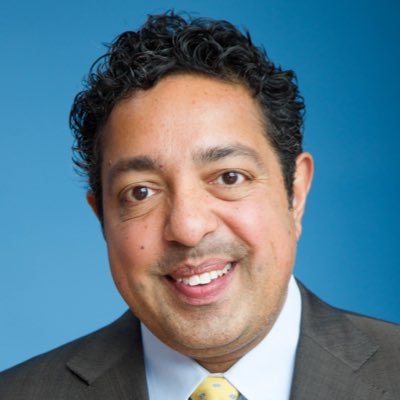
Chief Data Scientist @UofCAHealth・Director, Bakar Computational Health Sci Institute @UCSF_BCHSI・Distinguished Prof @UCSF・Entrepreneur・He/him・Opinions ⇨ my own
Joined March 2011
- Tweets 34,843
- Following 4,035
- Followers 29,395
- Likes 46,487
3,048 Photos and videos

Pinned Tweet

30 May 2019
All the data in the world will not make a difference, unless there are people ready to use it.
42
156
766
Atul Butte retweeted

17 Mar 2025
Researchers at @UCSF have enabled a man who is paralyzed to control a robotic arm that receives signals from his brain via a computer 🦾 bit.ly/4iJZbHk
12
47
22,818
Atul Butte retweeted

Transparency is key to advancing #AI in #healthcare. In
a response letter to the White House’s Artificial Intelligence Action Plan, JCHI's @kdpsinghlab & @CALonghurst, @UCSDHealth along with @SaraMurrayMD & @atulbutte are advocating for clearer guidelines that help health systems make informed decisions.
Read ⤵️
healthinnovation.ucsd.edu/ne…
8
21
11,096
Atul Butte retweeted

10 Mar 2025
Congrats to UCSF's @AnnaMolofskyLab & @MartinUCSF 2025 Bowes Biomedical Investigators! Their research is redefining brain science, revealing how immune signals and genetics connect neuropsychiatric and neurodegenerative diseases to unlock new treatments. tiny.ucsf.edu/szg96P
4
22
123
25,856
16 Feb 2025
Yeah! All 10 campuses of the @UofCalifornia are now considered R1 research institutions!
buff.ly/3EyOkkH
1
29
4,670
Atul Butte retweeted

12 Feb 2025
“Minimal residual disease (#MRD) #CancerTesting is becoming an increasingly essential part of patient management, as studies show it benefits patients. It enables medical teams to make earlier and more informed decisions in the recovery stages. This shift from reactive to proactive care reduces guesswork and helps provide better peace of mind for patients worried about their #cancer returning.”
Read more from Richard Chen, MD, MS, Chief Medical Officer and EVP of R&D at Personalis on his thoughts on advances in #PersonalizedMedicine reshaping patient care: bit.ly/419zytD.
#PrecisionOncology #ctDNA
3
12
3,539
Atul Butte retweeted

10 Feb 2025
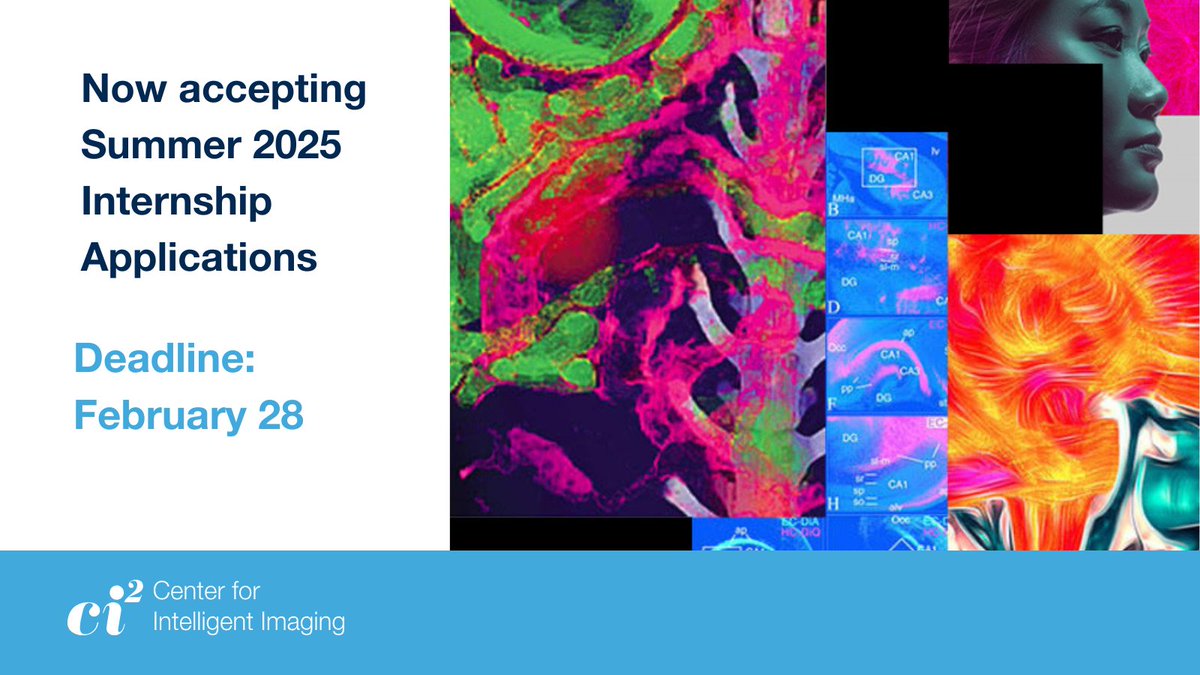
The 8 – 12 week summer internship program at @UCSF_ci2 is open to all undergrad, grad & medical students. Don't miss this chance to collaborate with researchers on #AI & #MachineLearning projects!
Repost to share with your networks!
bit.ly/4jhdLaq
5
6
3,407
25 Jan 2025
1
14
3,219
25 Jan 2025
Great new article showcasing how researchers across @UofCAHealth are using @UofCalifornia Health Data Warehouse to study endometriosis, glaucoma, rare disease, cirrhosis, and more! Includes the work of @ManishButte @msirota84 @DrJonWatanabe and many others! bit.ly/4h5lmrh
1
8
17
3,853
Atul Butte retweeted
21 Jan 2025
Last week, we published new data 📊 in Nature Medicine highlighting TRACERx lung cancer study pre-operative ctDNA results with NeXT Personal®:
- 81% sensitivity for lung adenocarcinoma (LUAD) and 100% for non-LUAD
- LUAD patients who were ctDNA-negative preoperatively achieved 100% 5-year overall survival rates while ctDNA-positive patients exhibited poor clinical outcomes
- Substantial portion of LUAD patients had pre-operative NeXT Personal detections in the ultra-sensitive range <80 PPM
Discover more:
bit.ly/40NDJvb
bit.ly/40I2R6g
bit.ly/4h6rYpk
bit.ly/4h3aoSO
#PrecisionOncology #ctDNA #TRACERx #LungCancer #NSCLC
1
3
23
3,077
Atul Butte retweeted

19 Jan 2025
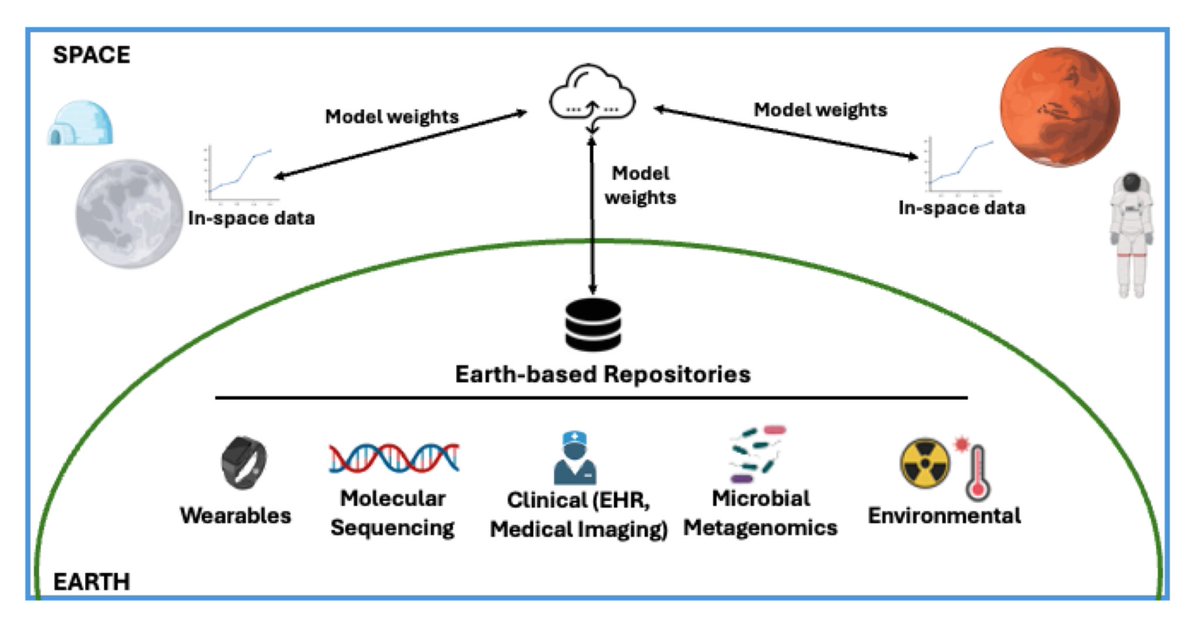
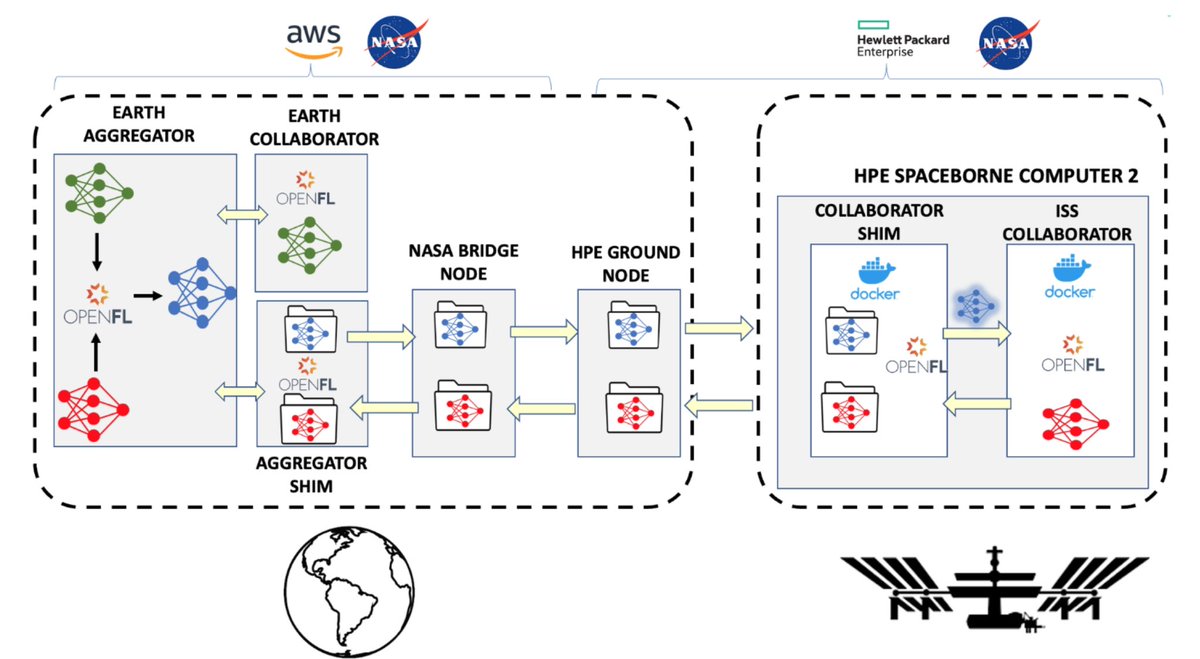
Thrilled to share our pre-print on 1st Federated Learning model deployed between Earth & @Space_Station 🚀 Huge thanks to @HPE (SpaceBorne Computer), @intel (OpenFL), & @NASA @NASAGeneLab @NASAAmes Open Science Data Repository. Let’s build & move the ball forward! 🌅 Link below
5
23
67
10,961
18 Jan 2025
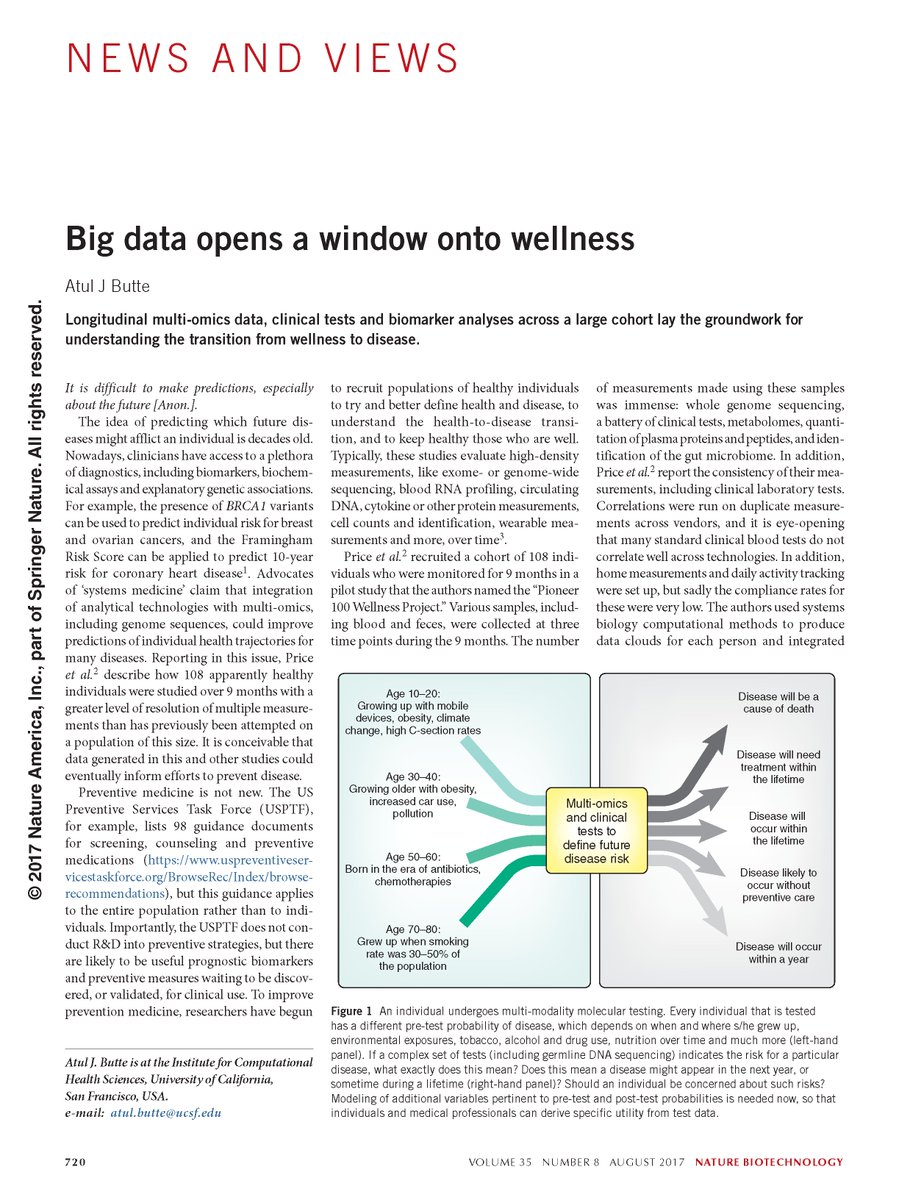
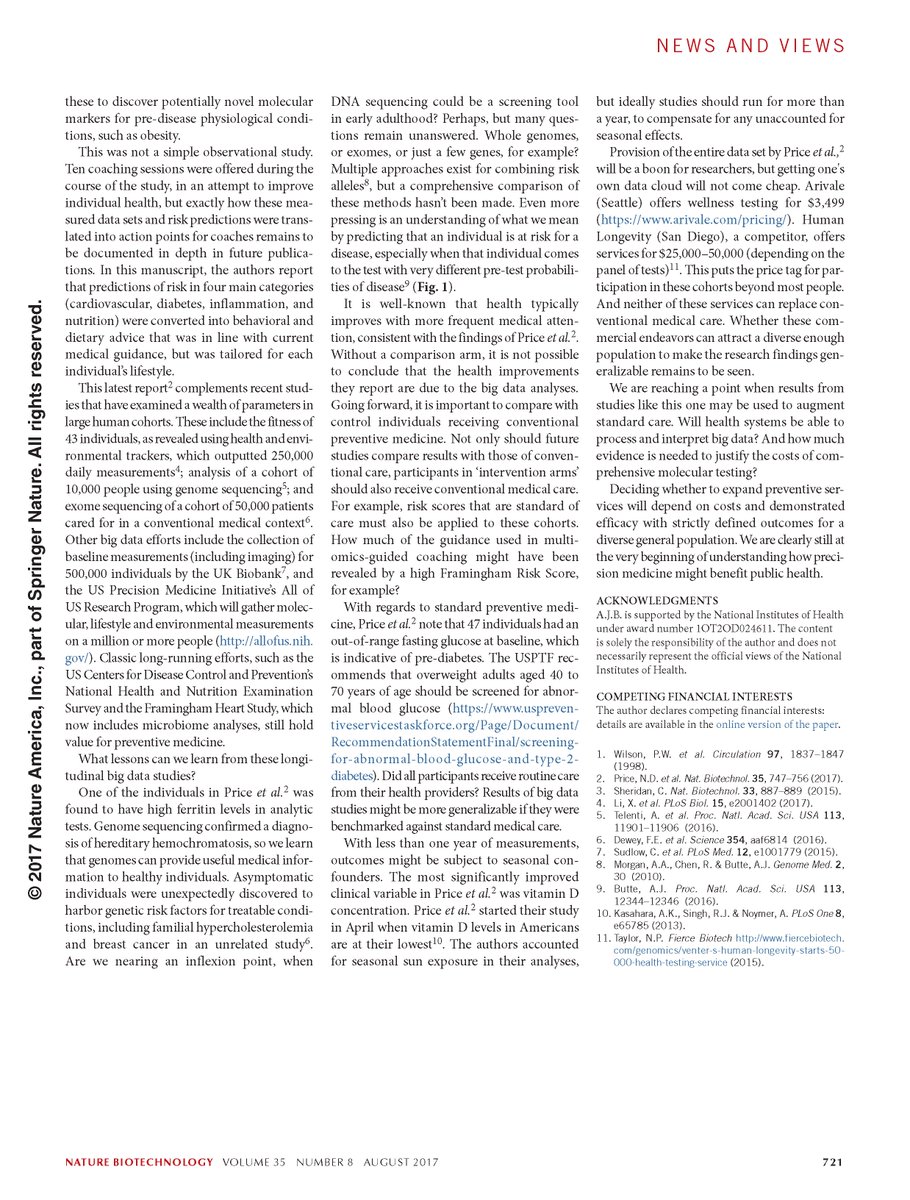
Just saw this old tweet… my thinking from seven years ago on what it means to actually predict the future of disease in an individual…
8 Aug 2017

My commentary on recent big multi-omics studies, now out in @NatureBiotech! #BigData opens a window onto wellness nature.com/nbt/journal/v35/n…
1
16
3,624
Atul Butte retweeted
16 Jan 2025
AI isn’t replacing imaging specialists, but it has health care experts reimagining the field. From faster diagnoses to better brain scans, here are four ways AI is changing health care at UCSF Center for Intelligent Imaging. tiny.ucsf.edu/zi6Vuc @UCSF_Ci2
7
10
2,424
16 Jan 2025
So awesome! “Daily ferry service is sailing toward Mission Bay.” Imagine commuting directly to @UCSF Mission Bay via high-speed zero-emissions boat! Scheduled to begin service in 2027. Now all we need is service to the South Bay! 😊
ucsf.edu/news/2025/01/429306…
1
1
22
2,238
Atul Butte retweeted

15 Jan 2025
“People are often surprised that we don’t have a drug to treat #TBI,” our chief of neurotrauma Geoffrey Manley, MD, PhD, told @sfchronicle. He is now leading a clinical trial at UCSF evaluating three drugs as potential treatments:
sfchronicle.com/health/artic…
@ZSFGCare @UCSFHospitals
1
11
2,441
Atul Butte retweeted

13 Jan 2025
A month ago we @vevo_ai announced that we have generated the largest single-cell perturbation atlas in history, Tahoe-100M. Today, we announce that we will fully open-source Tahoe-100M in Feb, as part of a collaboration with @NVIDIAHealth to train cell state models.
3
50
363
40,148
Atul Butte retweeted

12 Jan 2025
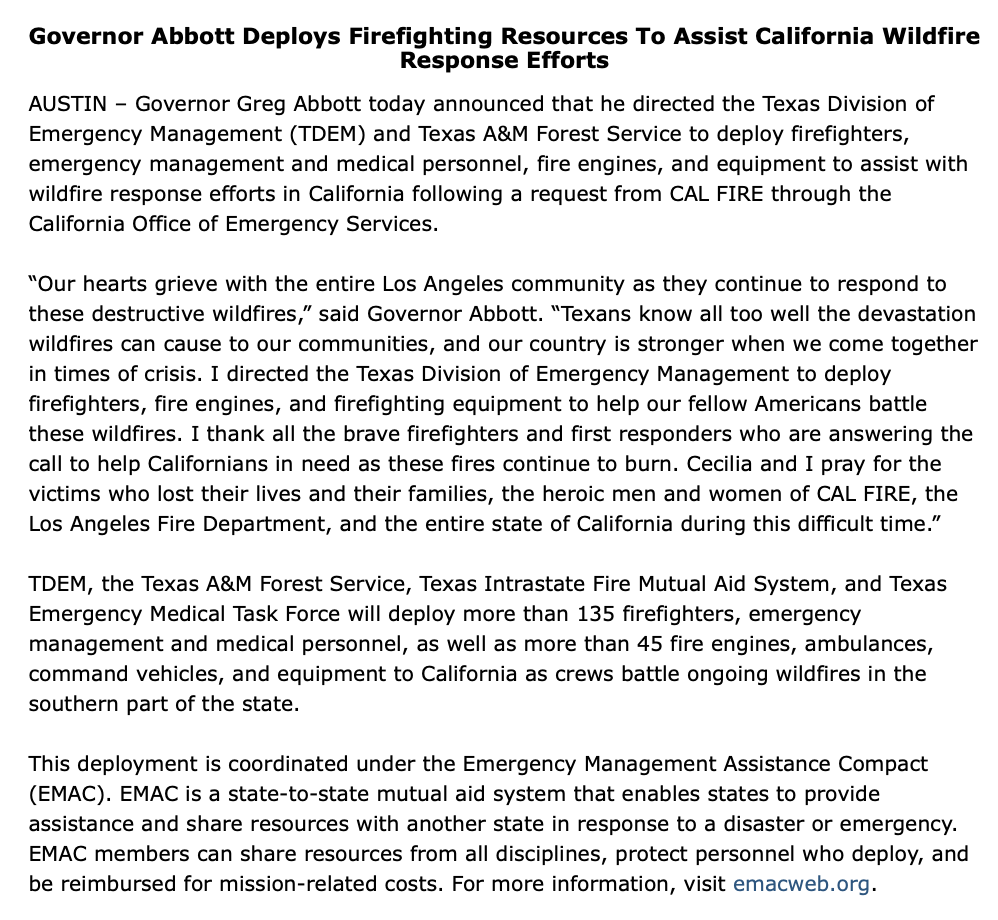
Red, blue, republican, democrat -- in moments like this we come together. Thank you, @GregAbbott_TX.
11 Jan 2025

Today, I directed @TDEM to deploy firefighters, fire engines, & firefighting equipment to help battle wildfires in California.
Join Cecilia & me in prayer for those who lost their lives, for the heroic first responders, & for California.
Texas stands with our fellow Americans.
2,599
1,585
18,840
1,330,850
Atul Butte retweeted

10 Jan 2025
A $4.2M @NIH grant will expand @ucsf/@UCClimateHealth research into how climate-related events, such as wildfires, affect health. These events particularly affect young children, seniors and people with chronic diseases, researcher Arianne Teherani says. ucsfh.org/407VW50
3
9
1,749
Atul Butte retweeted

9 Jan 2025
Please join me in donating to the following fund to help friends and colleagues at NASA JPL who have lost homes or otherwise have been severely impacted by the ongoing wildfires in LA. gofund.me/0c17ffcf
8
6
15
1,930
Atul Butte retweeted
9 Jan 2025
Can AI help diagnose rare diseases faster? Researchers from UCSF and UCLA Health used AI to spot patterns and speed up diagnoses like acute hepatic porphyria with 93% accuracy. tiny.ucsf.edu/ZFBFlt
6
11
2,683