
AML and Security for Stablecoins, Digital Assets and x402 Payment in the Blockchain Agents & Privacy Era 🧢 #AML #KYT #MemPoolDefense
Joined July 2025
- Tweets 68
- Following 802
- Followers 371
- Likes 82
23 Photos and videos


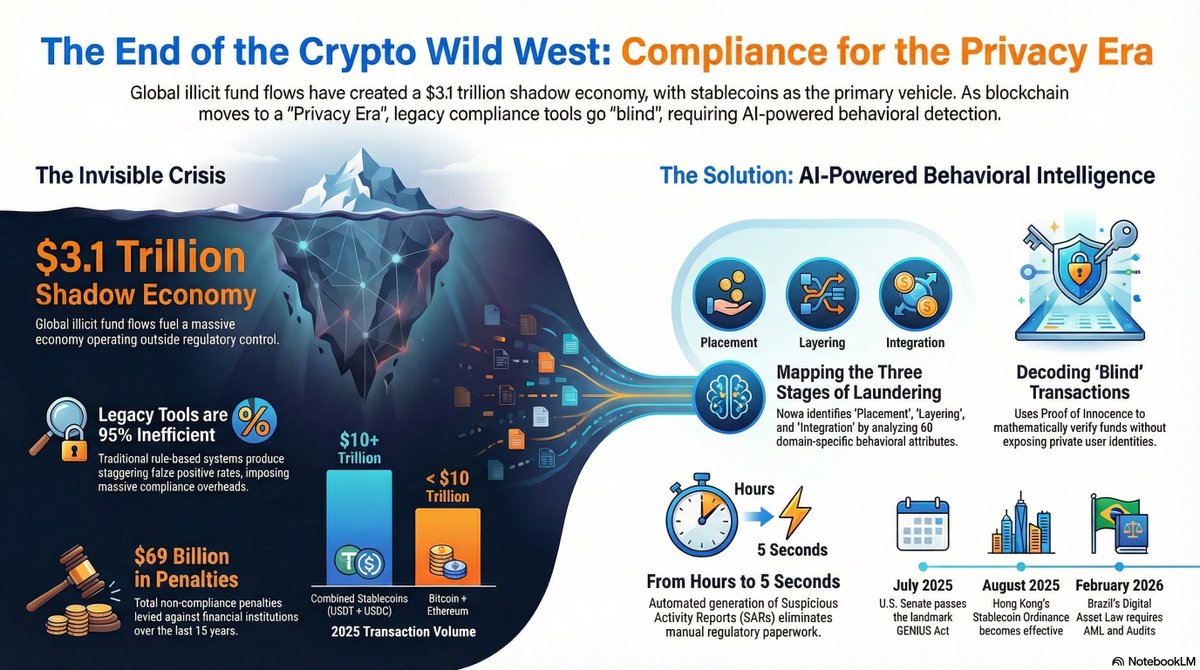







In 2025, regulators fined crypto platforms over $1 billion for AML failures. OKX alone paid $505M.
Here's the uncomfortable part: these companies HAD compliance tools.
Why the tools failed
Every legacy compliance tool works the same way: it reads the blockchain's public event logs AFTER a transaction settles.
That worked when every transaction was public and slow-moving.
Both assumptions just died.
Assumption 1: "everything is public."
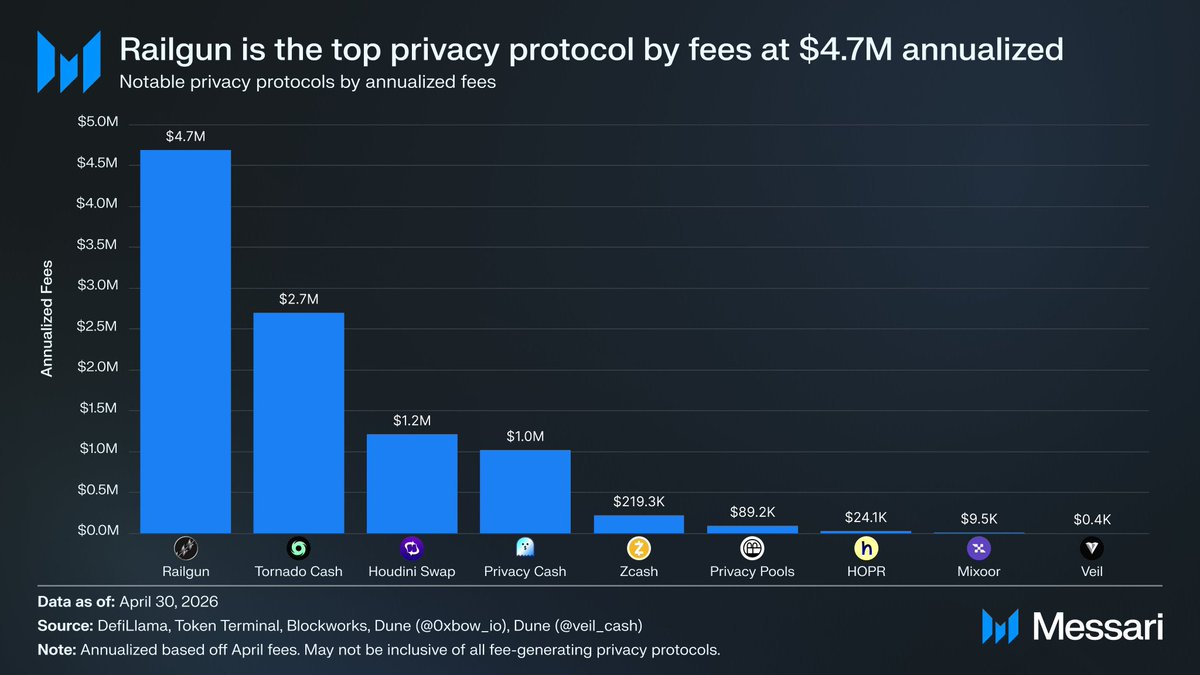
Over $4B in volume now flows through zk-privacy systems like Railgun and Aztec. Inside them, there are no public logs to trace.
Probabilistic tracing doesn't degrade there. It goes blind.
Assumption 2: "humans have time to react."
A human analyst takes up to 48 hours to file a Suspicious Activity Report.
An on-chain exploit settles in 400 milliseconds.
That's not a gap. That's a different universe.
Firms now spend $29B/yr on compliance staff, and roughly 60% of that work is manual stitching across fragmented tools.
The money is being spent. It's just being spent on humans doing what software should do, after the crime is already permanent.
The fix isn't a better dashboard. It's moving compliance BEFORE settlement: screening transactions in the mempool, while they can still be stopped.
1
2
31

Preventing fraud today requires verifying KYC records, navigating complex regulations, and managing ZK-Privacy Pools. Legacy systems can’t keep up with modern threats.
@AuditKey is a Privacy-first compliance infrastructure to enable safe scalable stablecoin adoption for fintechs
3
3
94
À medida que os sistemas financeiros evoluem para ativos digitais e transações em tempo real, fortalecer as capacidades de AML nas Américas se torna cada vez mais importante.
Acreditamos que infraestrutura de compliance blockchain terá papel central nisso e estamos trabalhando para ajudar a construir esse futuro. 🇧🇷Coffee & Silicon Valley 🇺🇸

Uma das maiores ameaças à segurança em nosso hemisfério é a lavagem de dinheiro, que é essencial para que cartéis e narcoterroristas transformem o tráfico de drogas, o contrabando de pessoas e outras atividades ilícitas nos recursos financeiros de que precisam para promover violência contra nossas sociedades.
O governo Trump apoia fortemente os esforços dos países de nossa região, incluindo o fortalecimento da legislação quando necessário e a aplicação de suas próprias leis contra a lavagem de dinheiro, para combater criminosos que lucram com atividades ilegais.
2
4
120
Why is compliance AI’s biggest enterprise opportunity? a16z explains how AI is turning compliance from a slow cost center into a 24/7 revenue driver by transforming complex regulations into executable code. The old playbook of "throwing more humans at the problem" is broken

3
4
138
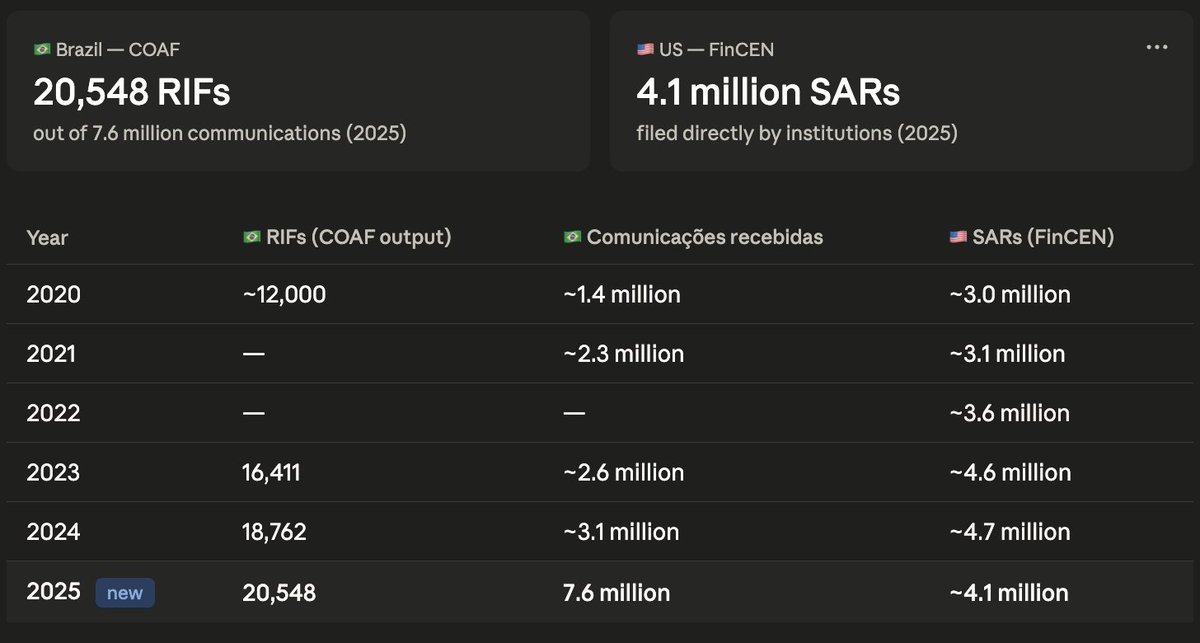
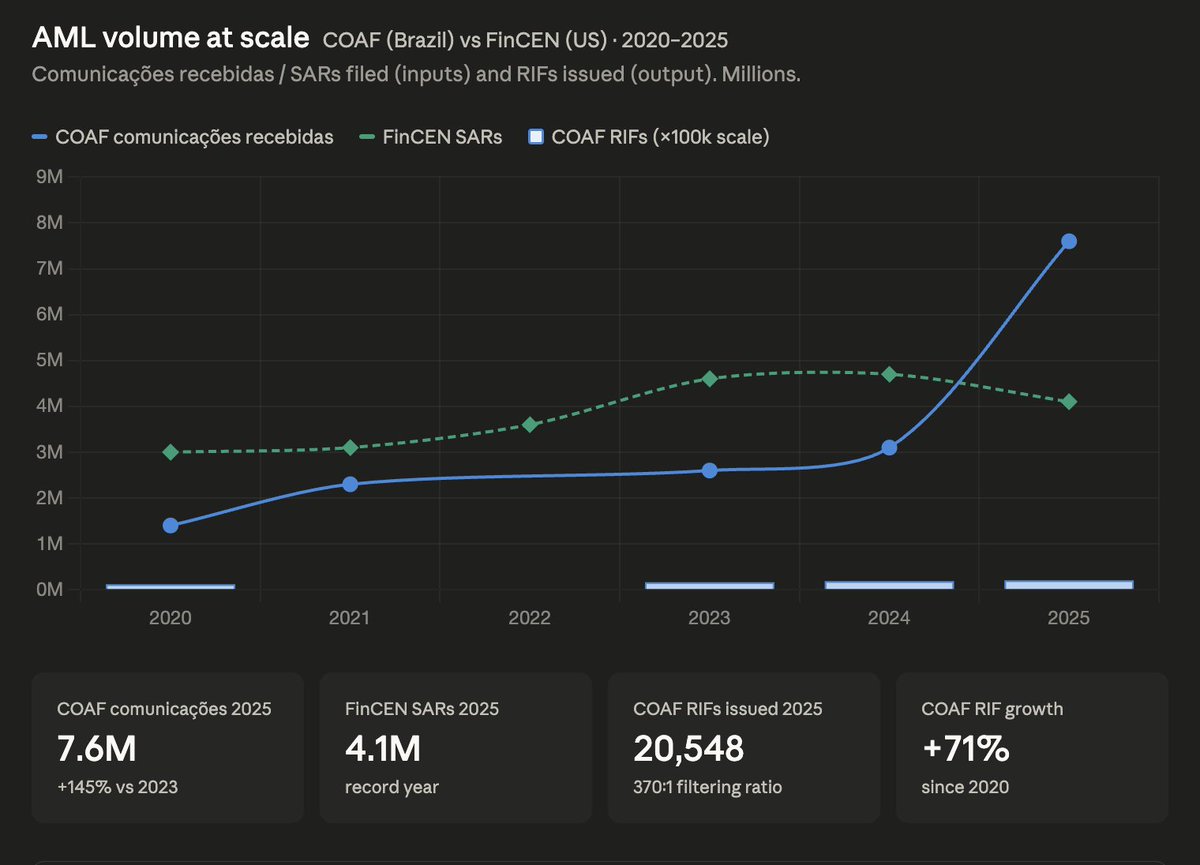
The volume of suspicious activity reports sent to COAF grew 2x year-over-year, while the team still needs to turn that into actionable intelligence for law enforcement.
And it's not just Brazil. FinCEN processes millions of SARs annually in the US, a volume no compliance team can manually triage at speed.
No human workflow scales at that rate. But an agent trained on on-chain patterns, transaction graphs, and regulatory context can.
The future of AML isn't more analysts. It's smarter systems that know what to escalate and what to ignore.
#AML #BlockchainCompliance #AI #FinancialIntelligence #RegTech
2
4
67
This is the reason that we created agents to manage Proof of Innocence and Audit keys in Privacy Pools that have already processed $4 billion worth of transactions @RAILGUN_Project @SuiNetwork @aztecnetwork @OasisProtocol
May 25

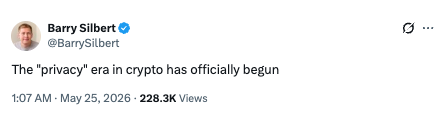
🚨 TODAY: Grayscale’s Chairman Barry Silbert says, “The "privacy" era in crypto has officially begun.”
2
6
127
Mythos and the new generation of agentic AI systems change the cyber threat landscape completely.
Attackers are no longer limited to manual research and execution. Autonomous systems can test vulnerabilities, simulate attack paths and operate at machine speed.
That’s why blockchain defense cannot remain post-incident.
Our approach monitors the mempool before settlement and can trigger defensive actions before the exploit reaches the chain.
We also found that many attackers rehearse on testnets before mainnet execution. In some analyzed cases, traces appeared before the actual exploit.
The future of blockchain security is predictive, not forensic.
1
3
8
226
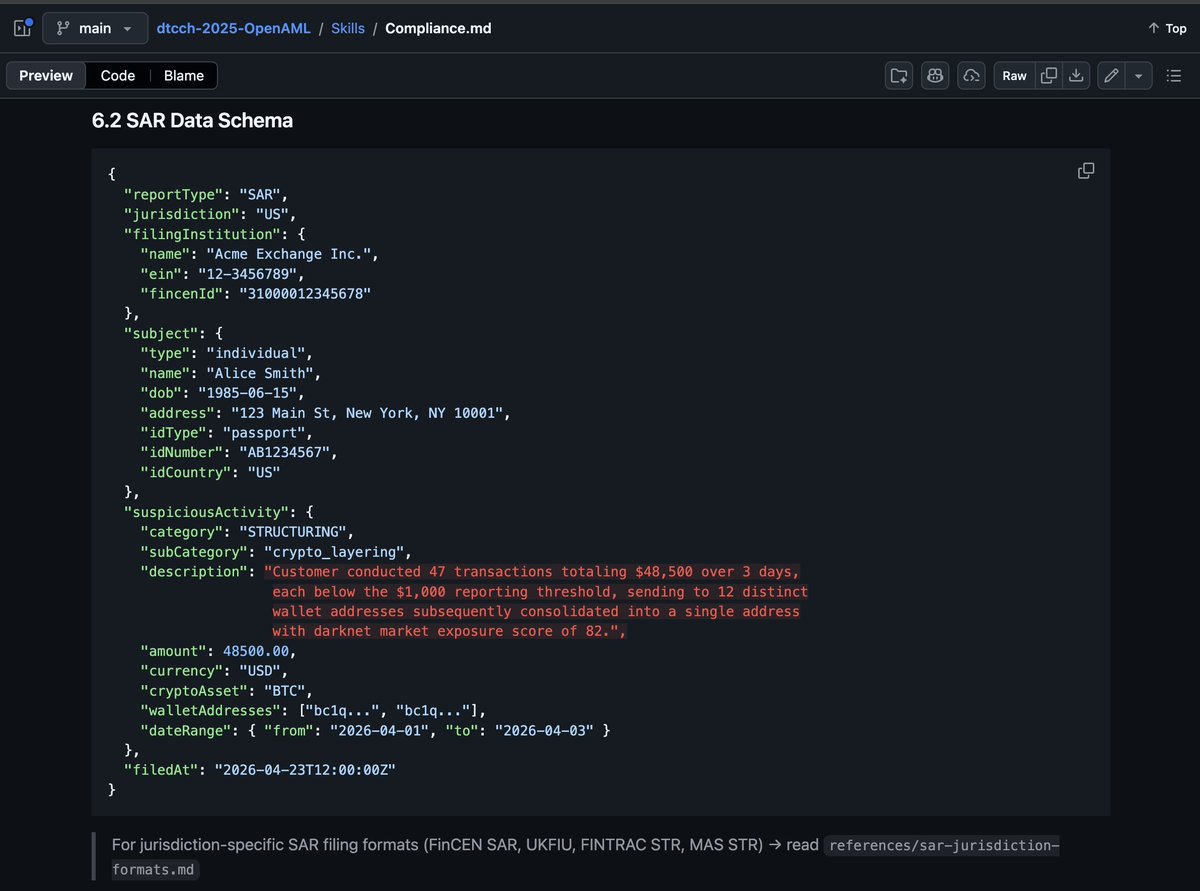
Check out what vitalik.eth is doing with his wallet. #OpenSource #VibeInvestigation #Blockchain #AML
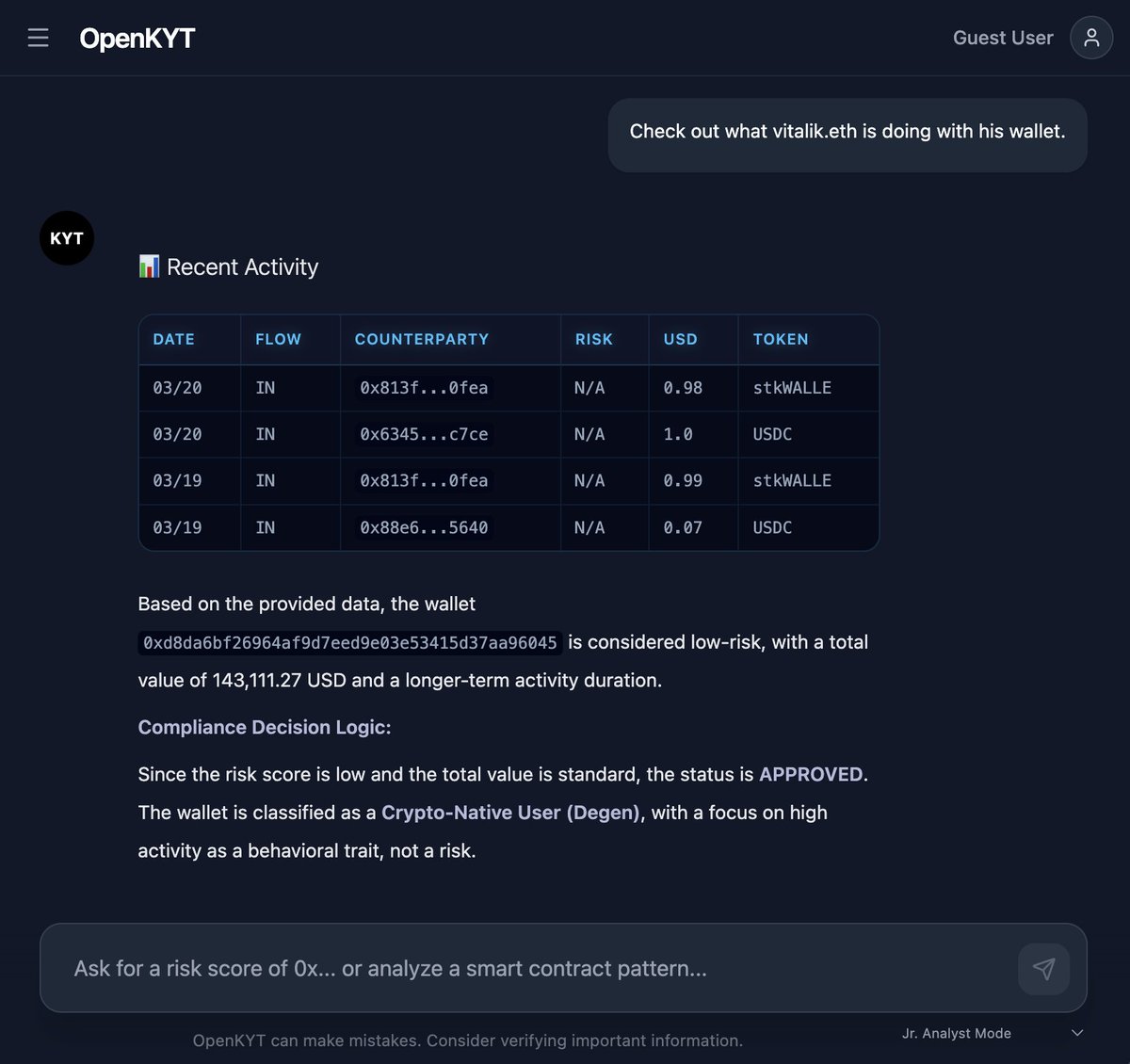
ALT Open source Vibe Investigation Chat
2
4
123
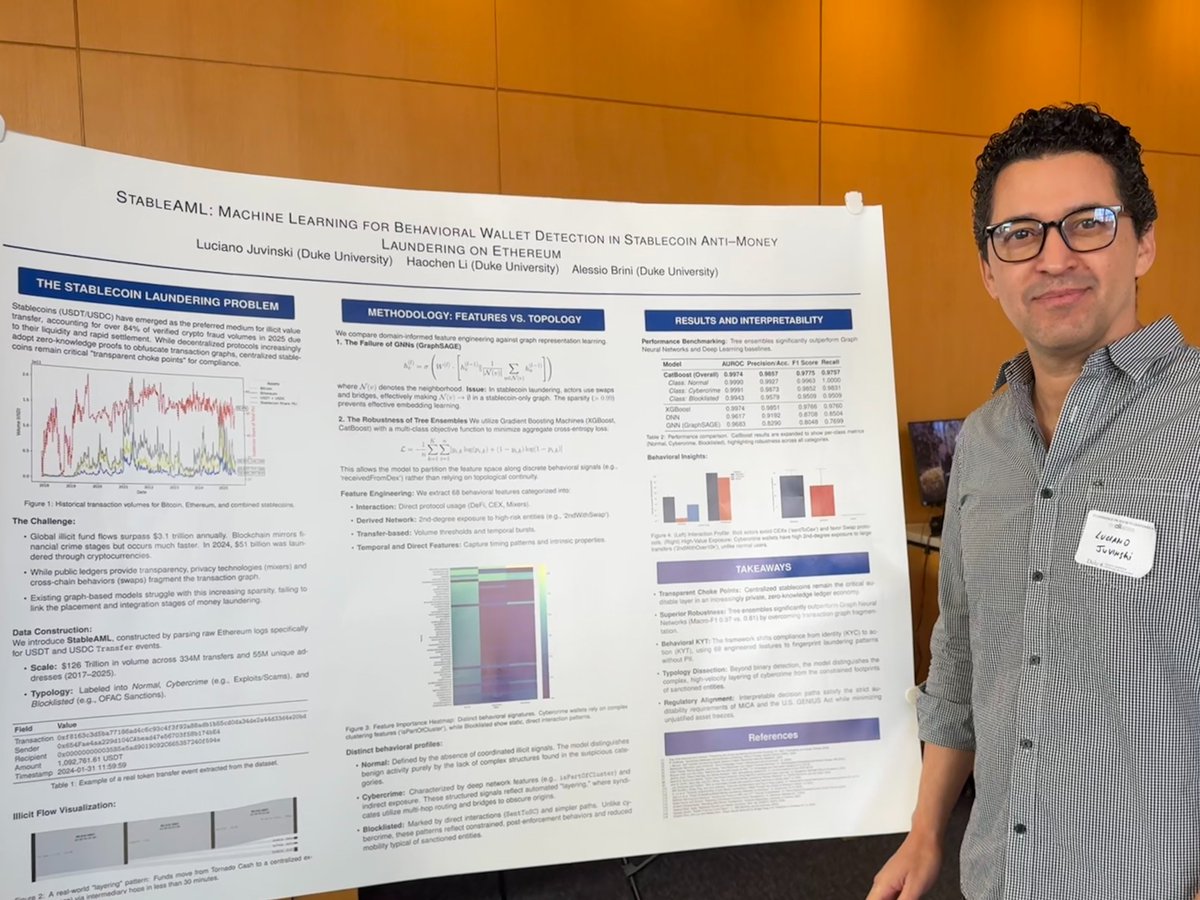
To address the challenges of stablecoin compliance, we built an open-source forensic framework at Duke FinTech. It integrates on-chain data collection counterparty identification, and risk scoring, grounding its analysis in updated AML legislation via RAG. openkyt.com
1
1
4
211
In the Privacy Pools era, the Audit Key bridges privacy and accountability.
Enforcement won’t mean tracing everything — it will mean selective disclosure.
And as the dominant liquidity rail, stablecoins become the natural anchor for that mechanism.
1
3
3
171
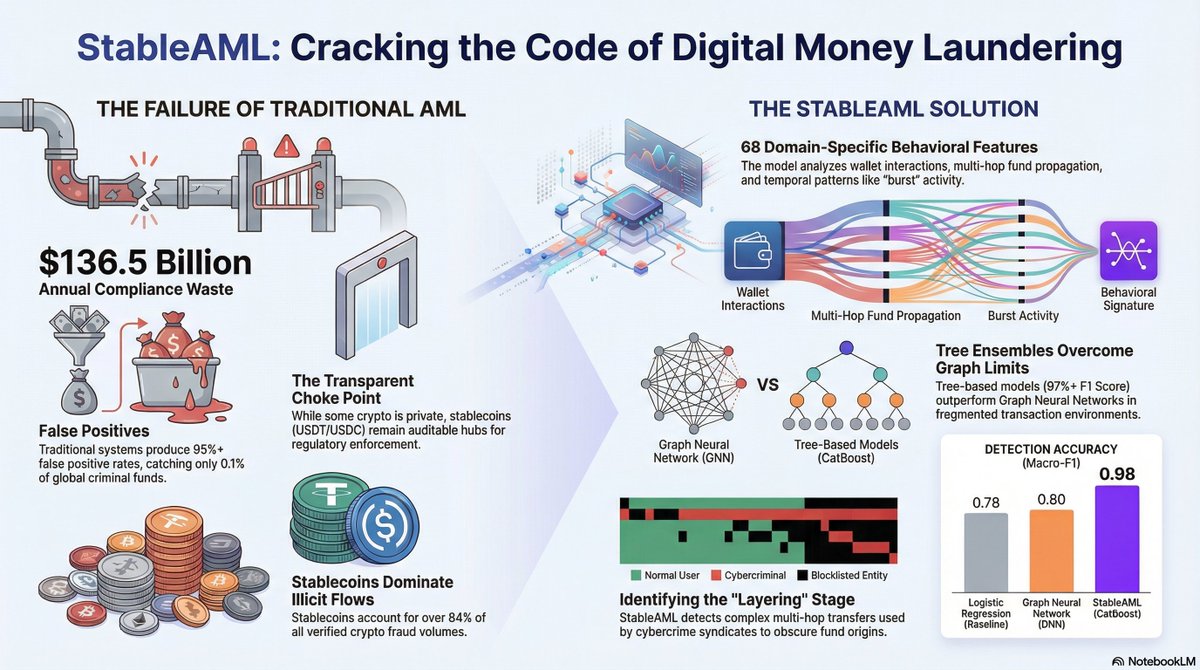
Over the past year, I’ve been researching a structural paradox:
What happens to Anti-Money Laundering (AML) when blockchain privacy increases?
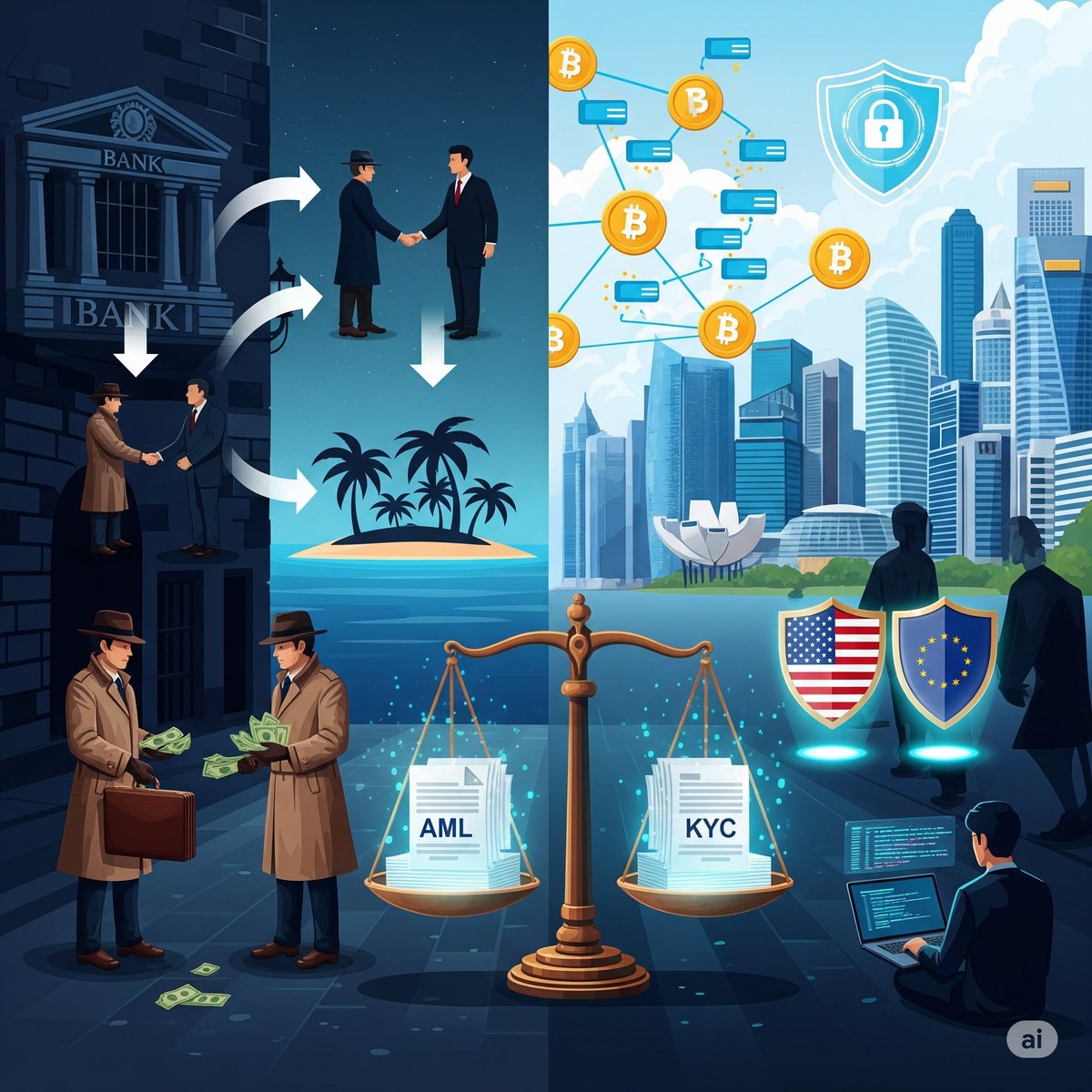
Traditional AML is failing costing billions in compliance overhead while intercepting only 0.1% of illicit funds.
1
3
4
150
Crypto requires privacy, but it also needs to comply with AML regulations. Zero-Knowledge Proof with selective disclosure, such as proof "I'm not sanctioned" without revealing your address, is on the way!
22 Oct 2025

1
3
323
The true cost of financial crime - Nasdaq Verafin Report
📊 Global scale:
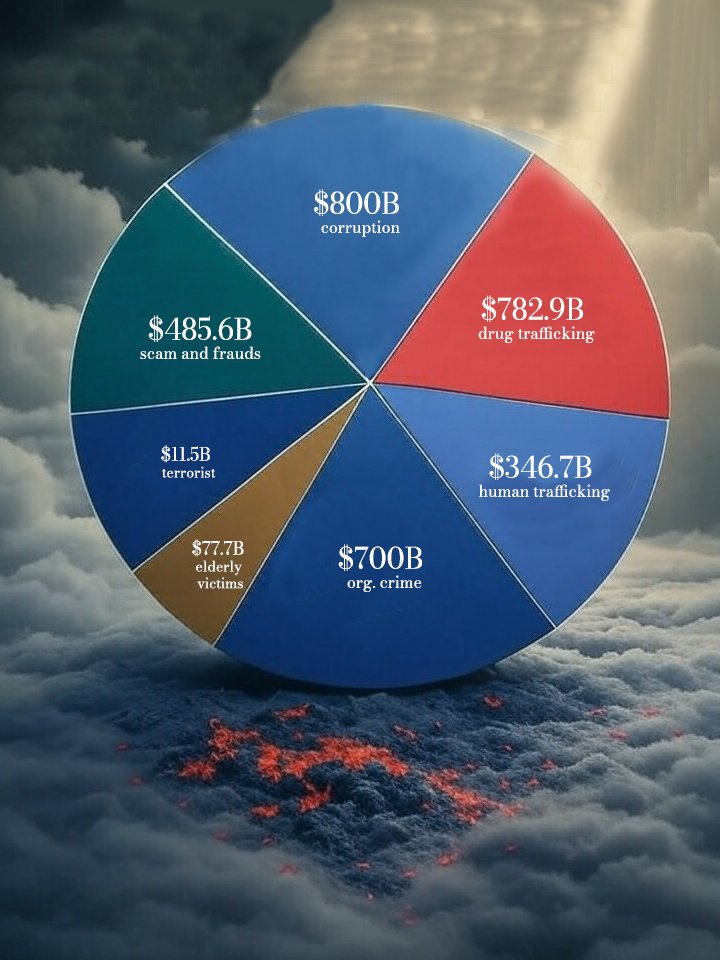
$3.1 trillion illicit funds laundered worldwide
$1.4T Corruption & Organized Crime
$782.9B linked to drug trafficking
$346.7B from human trafficking
$11.5B in terrorist financing
$485.6B fraud (payments , scams, card )
$77.7B fraud losses tied to elderly victims
🇺🇸 U.S. impact
$845.3B illicit funds laundered — about 3.1% of U.S. GDP (same scale as the Accommodation & Food Services sector)
$138.3B in fraud losses:
• $127B bank fraud
• $11.3B consumer & business scams
20M U.S. households (≈15%) reported being victims of scams
Average household loss: $575
⚠️ Economic impact:
Without fraud, U.S. GDP growth in 2023 would have been 0.5 p.p. higher
Productivity would have risen from 1.5% → 1.9%
Banks hit by financial crime can lose up to 6% of deposits; contagion risk spreads losses of ~4% to peers
Financial crime is not abstract — it drains trillions from the global economy, funds trafficking and terrorism, and robs millions of families of wealth and security.
#AML #FinancialCrime #FraudPrevention #Compliance
2
5
199
New Research on AML in Stablecoins
Money laundering remains one of the biggest threats in digital finance. But what happens when we turn machine learning loose on hundreds of millions of USDT/USDC transfers?
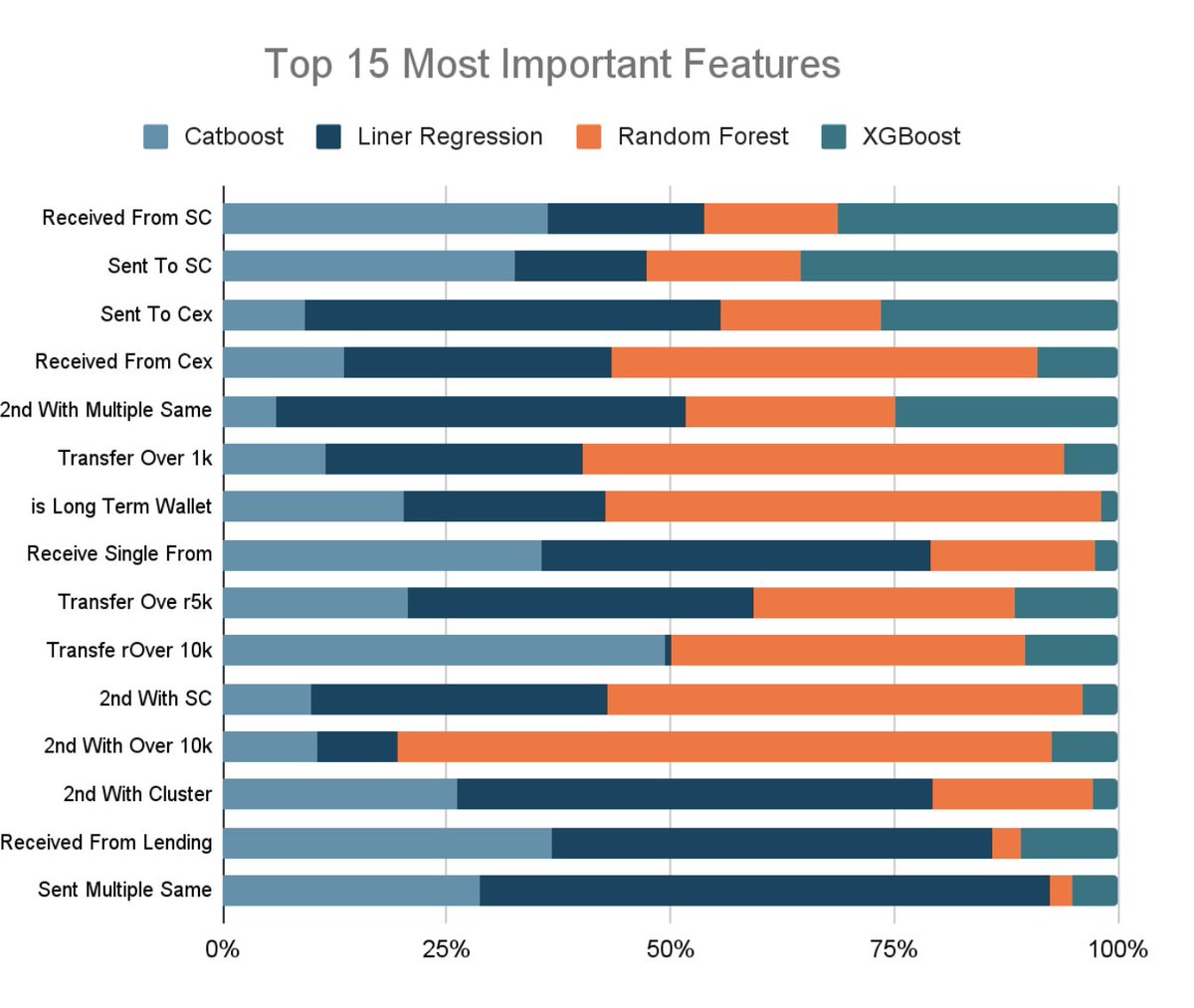
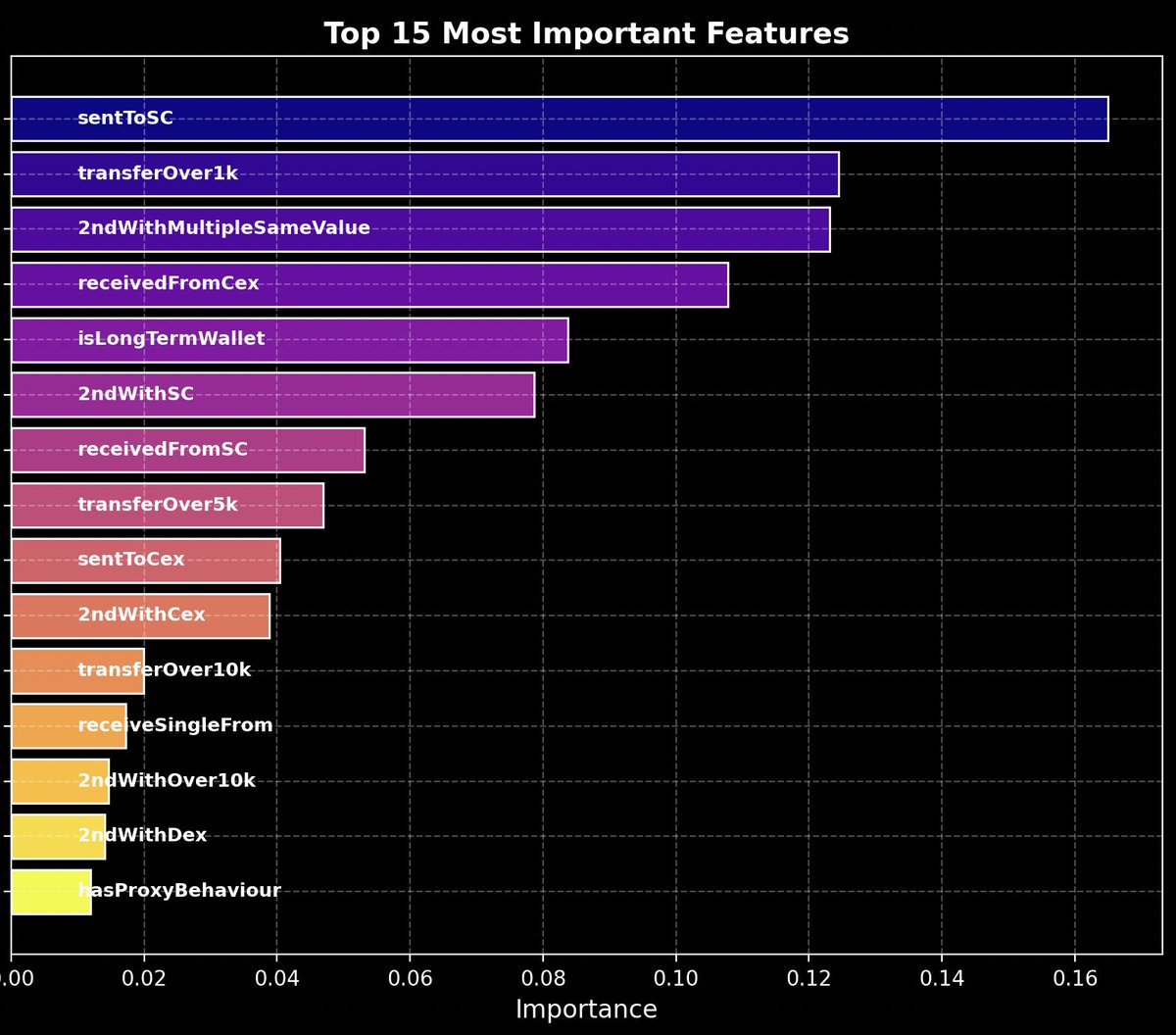
🔎 In our latest study, we analyzed 334M Ethereum-based stablecoin transfers involving 55M wallets — with over 360K flagged as illicit.
💡 Key findings:
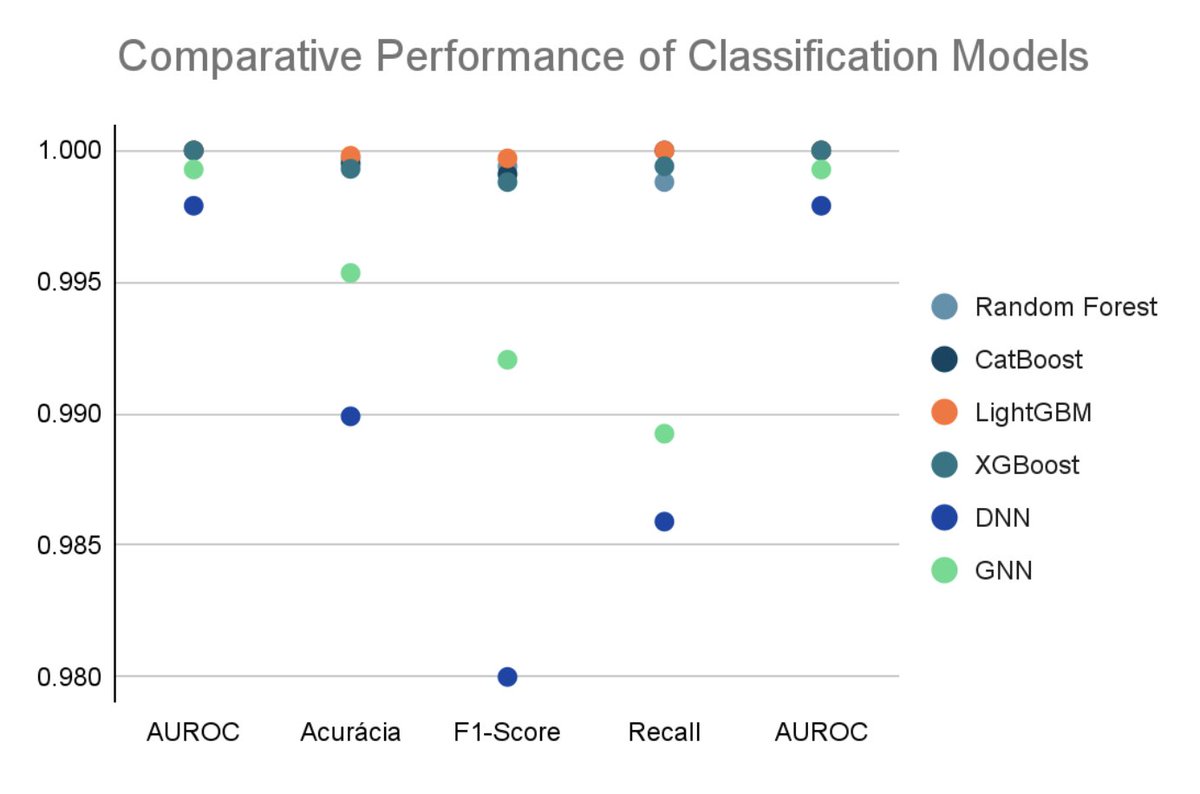
Tree-based models (Random Forest, LightGBM, CatBoost, XGBoost) achieved near-perfect detection (AUROC ≈ 1.0, F1 > 0.99).
Deep models (DNN, GNN) also performed strongly, but feature engineering was the real differentiator.
Feature importance revealed classic laundering fingerprints:
Smart contract interactions
Clustering of repeated transfers
High-value thresholds
Fund flows via CEXs, DeFi, and mixers.
📊 Even when expanding to three classes (normal, hacks/exploits, irregular/manual laundering), accuracy remained at 97.9% — with hack/exploit wallets easier to detect due to consistent automated patterns, and manual laundering showing weaker, noisier signals.
This work shows how AI blockchain transparency can reshape AML/CFT in the era of stablecoins.
👉 Full paper coming soon. Stay tuned!
ALT Top 15 most Importante feature for AML tree machine learning models
1
5
228
Fighting Money Laundering on Blockchain with Deep Learning Graph Neural Networks
🔹 Placement
The stage where illicit funds first enter the financial system.
📌 Key features:
receivedFromCex → inflows from centralized exchanges.
sentToCex → outflows to CEXs, often used as entry/exit points.
sentToSC / receivedFromSC → interaction with smart contracts as an initial layer of placement.
🔹 Layering
The critical stage of obfuscation, where funds are moved in layers to conceal their origin.
📌 Key features:
transferOver1k, transferOver5k, transferOver10k → movement across significant thresholds.
2ndWithMultipleSameValue → indirect connections with wallets showing repeated same-value transfers.
hasProxyBehaviour → pass-through wallets that receive and forward funds almost immediately.
2ndWithSC and 2ndWithCex → second-degree links to high-risk entities.
🔹 Dispersion
The stage where “cleaned” funds re-enter circulation.
📌 Key features:
isLongTermWallet → addresses holding funds over long periods before dispersal.
2ndWithOver1k/5k/10k → exposure to large-value movements at indirect levels.
receivedFromMixer / sentToMixer (when present) → reinsertion after anonymization attempts.
⚙️ How the model works
Our pipeline combines Deep Learning with Graph Neural Networks (GNNs) to capture both:
1. Individual wallet behavior (direct transfers, transaction size, activity history), and
2. Relational structures (indirect links, clusters, dispersion networks).
This dual perspective is essential to detect sophisticated layering and dispersion strategies that would remain hidden under traditional transaction-level analysis.
💡 The graph-based approach enables us to see not only what a wallet does, but also how it connects within the wider ecosystem — a key capability for tracing complex laundering cycles in crypto.
1
5
170
5 major behaviors criminals use to hide money in crypto in 2025
1️⃣ Layering & Fund Dispersion Stolen assets are rapidly split across multiple wallets, then pushed through complex chains of transactions. The goal: bury the trail & make it nearly impossible to trace back to the source.
2️⃣ Exploiting DeFi Services Decentralized Exchanges (DEXs), lending markets & cross-chain bridges are prime tools. 🔄 Swap tokens (e.g. USDT → DAI) 🌉 Move funds across blockchains (ETH → BTC) Why? No KYC. No gatekeepers. No traditional oversight.
3️⃣ High-Frequency, Low-Balance Transfers Instead of big moves, criminals go fast-in / fast-out: ⚡️ Zero-out accounts that immediately push funds onward 💸 Countless small-volume transfers instead of large ones This “churn” helps avoid freezes & detection.
4️⃣ Fake Tokens & Counterfeit IDOs Scammers create fake projects or liquidity pools to cycle dirty funds. 🎭 Masquerade as ordinary speculators 💰 Manipulate token prices → sell → convert into “clean” assets Result: illicit gains disguised as investment profits.
5️⃣ Mixing Services Mixers like Tornado Cash pool many users’ crypto together, then redistribute. The outcome? A broken transaction trail. Add ZK tech & privacy protocols → tracing becomes nearly impossible.
💡 These methods highlight the cat-and-mouse game between launderers & regulators. As Web3 evolves, so do the laundering tactics—and so must detection & AML/CFT strategies on OpenAML and OpenKYT.
1
7
211