My opinions are my own
Joined September 2010
- Tweets 2,084
- Following 1,183
- Followers 482
- Likes 90,851
3 Photos and videos

Social media ban, I don’t if it is a good thing or bad thing but…
To implement a ban requires ID checks; it’s the back door to digital ID. It is also technically difficult, as kids use VPNs, fake accounts, and borrow devices.
There is no evidence that it has any meaningful effect. Kids don’t go offline; they change usage, so screen time doesn’t reduce.
Many kids use social media apps as an education tool for information. It can have positive uses, such as creativity, activism, and staying connected with friends and families.
There are also freedom of expression and government overreach concerns.
11
Average J retweeted

Jun 12
95% of Tesla spacex revenue is non government. Prior loans 15yrs ago were paid back early with interest. $12B of this is regulatory credits paid to Tesla from other automakers not the government. Musk has paid >$11B in federal taxes to the gov, the most of any private citizen in history.
Did you not want the world leader in EV and space to be in the US?
34
84
1,039
9,666
Average J retweeted

Peter, this is complete misinformation. I've never refused a DBS check. I actually have an enhanced DBS check for work and sports coaching.
I have already provided Wigan Council with a copy of my DBS certificate. Check your facts before spreading lies.
Jun 8

Why would the Reform candidate in Makerfield refuse a DBS check?
607
2,302
11,175
386,717
Average J retweeted

Jun 1
I'd never done an interview about net zero.
What @KathrynPorter26 told me gave me sleepless nights. Pls like & share - others like me need to know what's going on.
67
553
1,550
102,743

Average J retweeted

Let me categorically Debunk this utter rot. @sainsburys.
I am a poultry Breeder. The hens that lay white eggs (Amberline/White Star) DO NOT have a lower carbon footprint.
Yes they eat a bit less and produce roughly the same amount of eggs as the Brown egg layers (Bovan/Lowman/ISA Brown) but they live shorter lives, are prone to dying suddenly when startled, a flighty and nervous and because they live shorter productive lives (12 -18mnths) vs brown 18/24mnths (both commercial farmed), you have to incubate more which is increased (Electricity/gas costs) and their eggs are not the same quality.
I breed and keep 20 different breeds, including: ISA Brown hens and White Stars. All my hens are 100% free range, Not a single barn kept bird, I have ISA browns that are 5yrs old and still laying beautiful Brown eggs, I have not seen a White star live beyond 3yrs and certainly none have laid eggs past 18-24mnths.
White stars Lay themselves to death. They are slender birds and because they dont eat a lot, it drains their personal vitality to keep up laying the eggs you want to sell because of the nonsensical lie that they are "More Carbon Neutral"
You want to know about eggs, come talk to someone like me, Don't rely on some hairbrained imagination of a buyer who's trying to squeeze the profit margin for a few extra pennies at our expense and to the poor hens detriment.

1,136
9,001
24,717
679,132
Average J retweeted

Jun 1
Conventional wisdom says that leaving the European Union has harmed the British economy.
Listen to almost any Brexit debate – over the airwaves or on the professional conference circuit – and it’s invariably taken for granted being outside the EU has done serious economic damage.
Now we're in June, and as the 23rd approaches – the ten-year anniversary of that hotly-contested, era-defining referendum – this message will be rammed home again and again.
But it simply isn’t true.
My latest "Economic Agenda" column in @Telegraph
🧵1/7
telegraph.co.uk/business/202…
122
1,219
3,201
140,597
Average J retweeted

Poor math...
Who is getting richer?
Who is getting poorer?
Largely, the top 10 - 20% of the wealthiest in the country will be fine - wealthy via assets.
If you do not get yourself into this group, you are going to continue to get materially poorer.
The math is very simple - inflation will continue, not the CPI number, that is bullshit. If your wage growth is not 7-12% a year, you are going to get poorer every year.
It will be slow and hard to notice at times, but dinner out, holidays etc... you'll be cutting back.
Inflation will continue as none of the leading parties have the knowledge or desire to fix it - also none of you will vote for what fixes it.
26
37
265
8,505

May 18
apparently it needs saying: I’m not a bloody bot.
Started this account in 2010, got 400 followers, and suddenly several accounts are convinced I’m some AI sleeper agent.
if I was a bot I’d have at least 10k followers and wouldnt need a blue tick by now.
Proof I’m human:
• I watch cricket for hours and still get irrationally angry when we collapse in the middle order.
• I burn the roof of my mouth on pizza at least twice a month like a complete idiot.
• I can’t stand Keir Starmer. Proper can’t stand him. Bots love the man, that tells you everything.
• I’d rather vote for the Monster Raving Loony Party than Labour, and I mean that sincerely.
Also, I genuinely can’t be arsed chasing followers. I reply to people, I call out bullshit when I smell it, and I scroll on. That’s it. Not running a growth agency.
Real person. Old account. Low follower count. Zero fucks given about the optics. If that screams “bot” to you, that’s your problem, not mine
1
151
Average J retweeted

17 Mar 2025
STARMER - " I'll cut Government waste" and then he created 27 pointless new QUANGOS
Here's the list of 27 bollocks departments created by Starmer in 9 months to funnel £ BILLIONS of your tax into private consultants.
▪️Regulatory Innovation Office - To erm... "streamline regulations and promote economic growth by reducing bureaucratic hurdles for businesses". HAHAHAHA😂
▪️National Infrastructure & Service Transformation Authority - This merges the National Infrastructure Commission with the Infrastructure and Projects Authority. Apparently to speed up infrastructure by adding MORE red tape 🤡
▪️Great British Energy - Not an energy company but a risky investment vehicle spending $8.4BILLION of tax payers money, on erm... experimental energy ideas 🤡
▪️Mission Control - (seriously it's embarrassing) to oversee and coordinate the government's Clean Power 2030 Action Plan. Which the previous 2 above should be doing🤡
▪️National Energy System Operator - Created to manage the transition to a fully decarbonized and efficient energy system. Shouldn't the 3 above all be doing this? 🤡
▪️Solar Taskforce - Set up to accelerate the deployment of solar energy across the country & destroy farmland 🤡
▪️Border Security Command - focusing on tackling smuggling gangs facilitating illegal migrant crossings over the English Channel. Abject failure already, with more boats landing than before it was established 😂
▪️Jet Zero Taskforce - Created to advise on the development of sustainable aviation fuels and strategies to reduce aviation emissions. Also means, interfering in the private sector that they know nothing about.🤡
▪️British Infrastructure Taskforce - Formed to build business confidence in UK infrastructure investments and develop a 10 year infrastructure strategy. er... 4 OTHERS similar, no idea why this group exist at all 😂🤡
▪️Creative Industries Taskforce - Established to support and promote growth within the creative sectors. Centralised control of the creative industries by the civil service? 😂🤡
▪️Circular Economy Taskforce: Set up to drive initiatives that promote recycling and sustainable resource use. Also known as Non Job eco grifting 🤡
▪️Tree Planting Taskforce - Created to oversee national tree-planting, as part of environmental conservation efforts. Utterly pointless! we already have the forestry commission, which by the way is behind schedule on planting trees... which is its remit 🤡
▪️Child Poverty Taskforce - Formed to reduce child poverty across the nation. There would be less child poverty if we spent more money on children and less on bollocks QUANGOS.🤡
▪️Flooding Resilience Taskforce - Established to enhance the country's preparedness and response to flooding incidents. Pointless non jobs, we already had this within the environment department.🤡
▪️Motor Insurance Taskforce - Private industry central government control. Created to tackle issues within the motor insurance industry and protect consumers. (we already have this function within government)🤡
▪️New Towns Taskforce - Set up to plan and develop new towns to address housing shortages. Which we wouldn't need had the Border QUANGO stopped the boats.🤡
▪️Onshore Wind Industry Taskforce - Established to promote and expand the onshore wind energy sector. Which is what 4 of the above QUANGOS were set up to do.🤡
▪️Skills England - Created to oversee and enhance skills development and vocational training. Non Jobs, we already have this covered by DfE.🤡
▪️Industrial Strategy Council - Formed to provide independent advice on the government's industrial strategy. What? advisors advising advisors?😂🤡
▪️Passenger Standards Authority - Established to monitor and improve standards in public transportation. Non Jobs for pen pushers. 😂🤡
▪️National Jobs and Careers - Created to provide guidance and support for job seekers and career development. Total non jobs,could be done by the Skills England above & should be done under DWP anyway.
▪️Ethics and Integrity Commissioner - Appointed to oversee ethical standards within public institutions. NON Jobs, that's what HR is for 🤡😂
▪️House of Commons Modernisation Committee - Formed to propose and implement reforms within the House of Commons. Not an entirely shit idea.✔️
▪️School Support Staff Negotiating Body - Established to negotiate terms and conditions for school support staff. What? 🤡
▪️Independent Football Regulator - Set up to oversee the governance of football, aiming to ensure transparency and fairness within the sport. Total Non Jobs to interfere & centrally control a private industry🤡
▪️Fair Work Agency - Created to promote fair work practices across various sectors, ensuring equitable treatment and conditions for workers. Non Jobs for no reason. See above point about HR. 🤡
▪️Defence Innovation Agency - Established to drive innovation within the defense sector. What then is the point of the department of defence? isn't that literally its job?🤡
No private organisation would EVER run in such a wasteful and pointless way, over centralising and creating competing departments of bollocks, within the same sector. We don't need a chainsaw we need a bulldozer.
All of the above need closing immediately 💣
227
2,561
4,915
158,828
Average J retweeted

May 17
LABOUR’S BREXIT BETRAYAL: WHY MAKERFIELD MATTERS
In 2016, 17.4million Brits voted to Leave the EU
It was the biggest anti-Establishment roar in British political history
But the Establishment wouldn’t accept it. They spent years trying to cancel it
Top of the pile was the People’s Vote leader Keir Starmer
When he failed, he pretended the issue was dead. But he then set about a “death by 1000 papercuts” approach: More pro-Brussels treaties. More surrenders. More freedom of movement. More planned £Billions to Brussels
Now he is a dead man walking, enter Andy Burnham & Wes Streeting: two committed Rejoiners
One of them is likely to be our next Prime Minister
Brexiteers are awake to this betrayal. The cosy Westminster bubble, inc its supportive media chumocracy, would have us believe this is all a conspiracy theory
But remember the same Establishment was always stuffed with Remainiacs
And now the fate of this grand deception lies with the voters of Makerfield
The Brexit battle has been reignited in a 66% Leave constituency
The message “stop the Brexit betrayal by stopping Burnham” will be hugely resonant
The Establishment has always hated the working classes since they refused to bankroll their globalist bollox. Now let’s see them once again wake up and tell the pro-Brussels quislings to bugger off
147
489
1,696
19,258
Average J retweeted

May 15
I am not a supporter of any political party however, I see a lot of Labour supporters making a fuss about Farage and how he has spent the £5million he was gifted unconditionally. Here is an explanation of gifts and why Farage was free to use the money to buy a house.
Gifts: Unconditional vs. Conditional, What UK Law Says.
When Person A gives Person B money or property as a gift during their lifetime (an “inter vivos” gift), the legal position is clear under English law.
If it is an unconditional gift, once the money has been transferred (for example by bank transfer or cash handed over) and accepted, it becomes the absolute property of Person B. Person B can then use, spend, save, invest or dispose of it in any way they wish. Person A generally has no legal right to demand it back, impose conditions after the fact, or control how it is spent.
For a lifetime gift to be valid and complete, three elements must be satisfied: (1) clear donative intent by the donor to transfer ownership immediately and irrevocably as a gift, (2) delivery of the money or asset, and (3) acceptance by the recipient. Once these are met for an unconditional gift, the transfer is complete and cannot easily be undone.
If Person A wants to impose enforceable conditions on how the money is spent (for example, “only for a house deposit”, “only for education” or any other specific restriction), simply handing over the money with a verbal understanding or informal expectation is not enough. In that scenario, the parties need a formal written contract or agreement signed by both, clearly setting out the conditions, the intended use and the consequences if they are not met. For even stronger protection and ongoing control, the funds should instead be placed into a properly drafted trust with the recipient as beneficiary subject to those restrictions.
Without proper documentation, courts will usually treat the transfer as an unconditional gift and the recipient’s absolute ownership will prevail. Informal “understandings” rarely hold up in court.
49
35
127
3,901


Average J retweeted
May 14
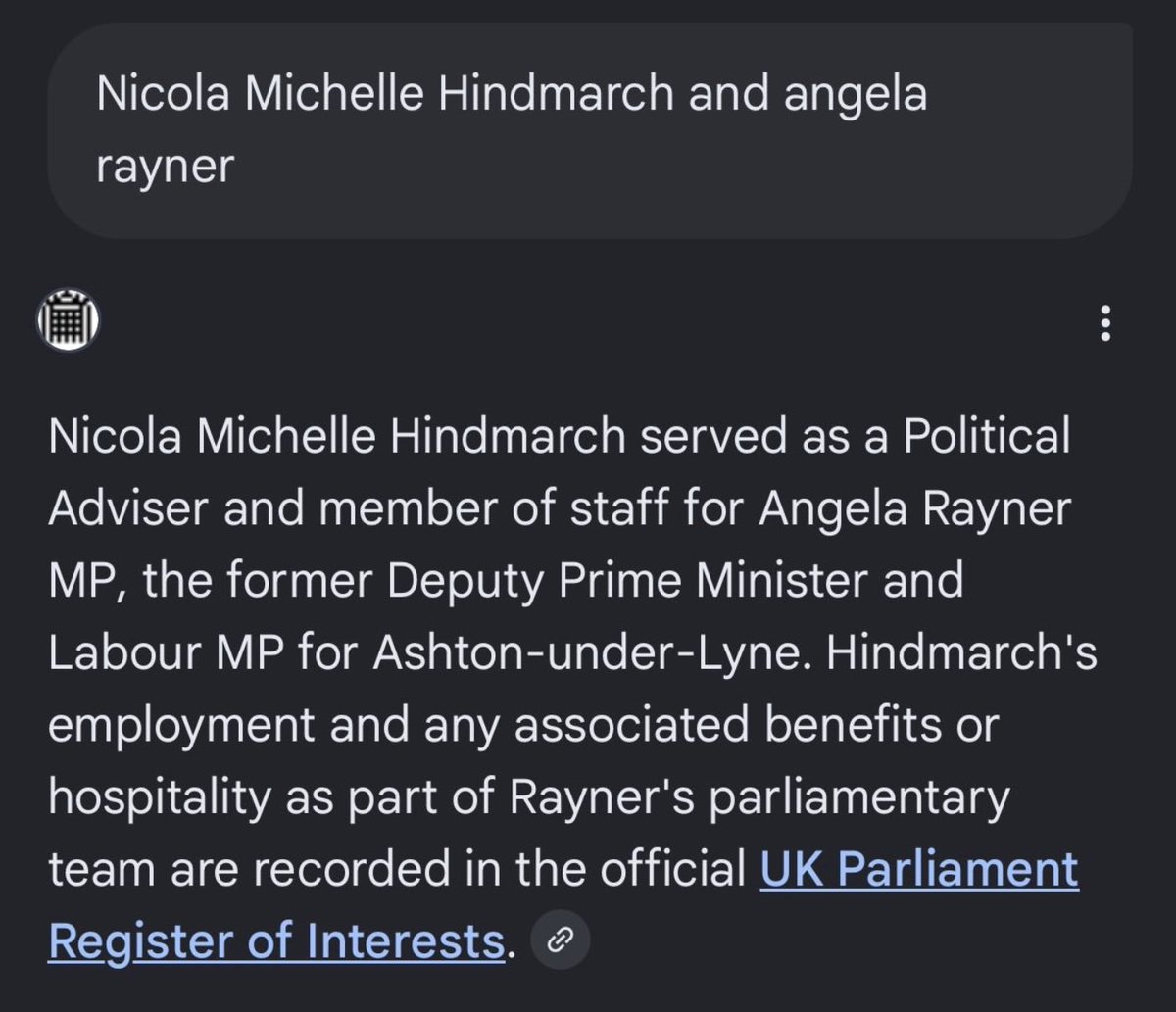
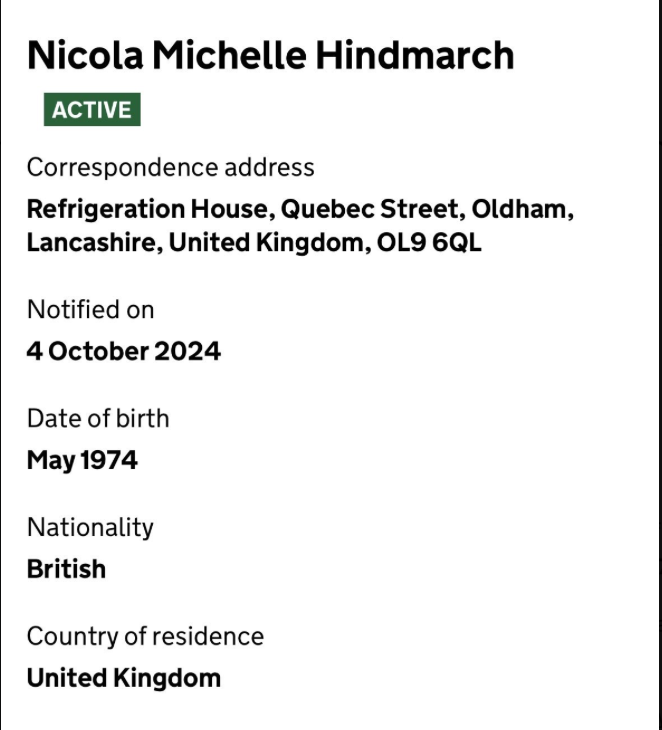
Did you wonder why a recently formed company donated £150,000 to Angela Rayner? A shareholder of Refigeration House Ltd is a former member of Rayners staff.
56
665
1,599
20,477
May 13
This entire Labour government is bizarre and tone-deaf. We’ve just had local elections and the voters are telling them they don’t like the direction Labour is heading, so Starmer thinks more of the same but harder. Wes and Ed think a new leader is required to do exactly the same but harder.
Andy Burnham thinks he can steal someone else’s seat, become PM, with no democratic mandate to do exactly the same but even harder.
It’s madness they can’t be this thick.
1
1
1
78
May 12
The idea that Andy Burnham can just drop in and save Labour is a dangerous precedent to set. What gives him the right to be PM without campaigning or being an MP in the last GE? He would have to call a GE so voters can decide if they want his policies.
If the Tories, Reform, Lib Dems or Greens did this, Labour would have a complete meltdown about how undemocratic it is.
1
45
Average J retweeted

11 Sep 2025
If you believe free speech is for you but not your political opponents, you're illiberal.
If no contrary evidence could change your beliefs, you're a fundamentalist.
If you believe the state should punish those with contrary views, you're a totalitarian.
If you believe political opponents should be punished with violence or death, you're a terrorist.
14,692
135,840
597,279
24,530,766
May 9
I honestly didn’t think Labour could be worse than the Tories. I was so naive. What comes next will probably be worse.
I’m starting to believe that the fourth turning is real. I just don’t know where we are in the cycle.
2
40
Average J retweeted

It just gets worse.
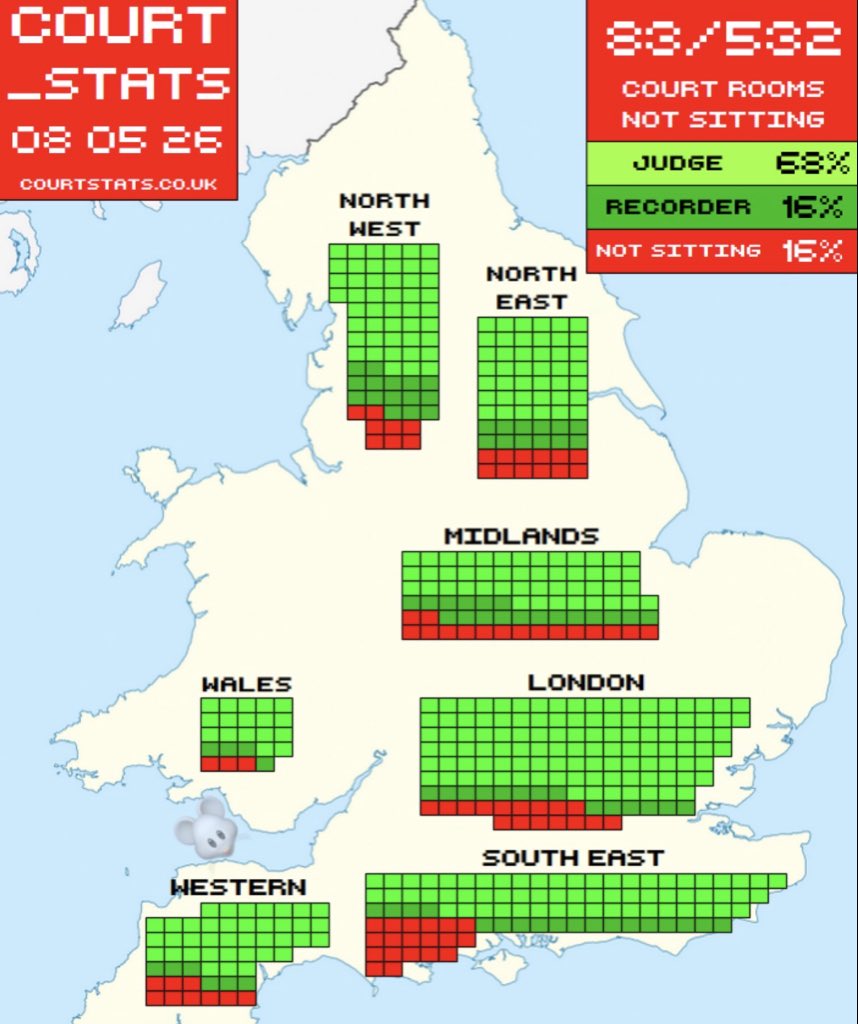
Today, 83 of the 532 Crown courtrooms in England and Wales are sitting empty — that’s 16 per cent.
David Lammy claims the only way to tackle the backlog of 80,000 Crown Court cases is to curb our fundamental right to trial by jury. He says this without any credible evidence.
The truth is blindingly obvious: jury trials are not the problem. The problem is that the courts are not sitting.
Open the courts. Save jury trials.
22
878
1,850
16,028
May 8
Starmer must be planning a jolly out of the country. At the first sign of trouble, he usually leaves and gives away billions to some foreign entity.
1
31