
Founder Merk Investments. USD ~4bn in gold & miners. Weekend rancher. tweets ≠ advice
Joined June 2012
- Tweets 40,596
- Following 1,053
- Followers 21,222
- Likes 638
4,224 Photos and videos





Billionaire's problem: avoid California's wealth tax, if it passes:
* donating unvested shares
* delaying fund raising rounds at higher valuations
* buying a yacht out of state
* buying Treasuries
--> taxing the rich yields a fraction of expected revenue
wsj.com/personal-finance/tax…
1
97

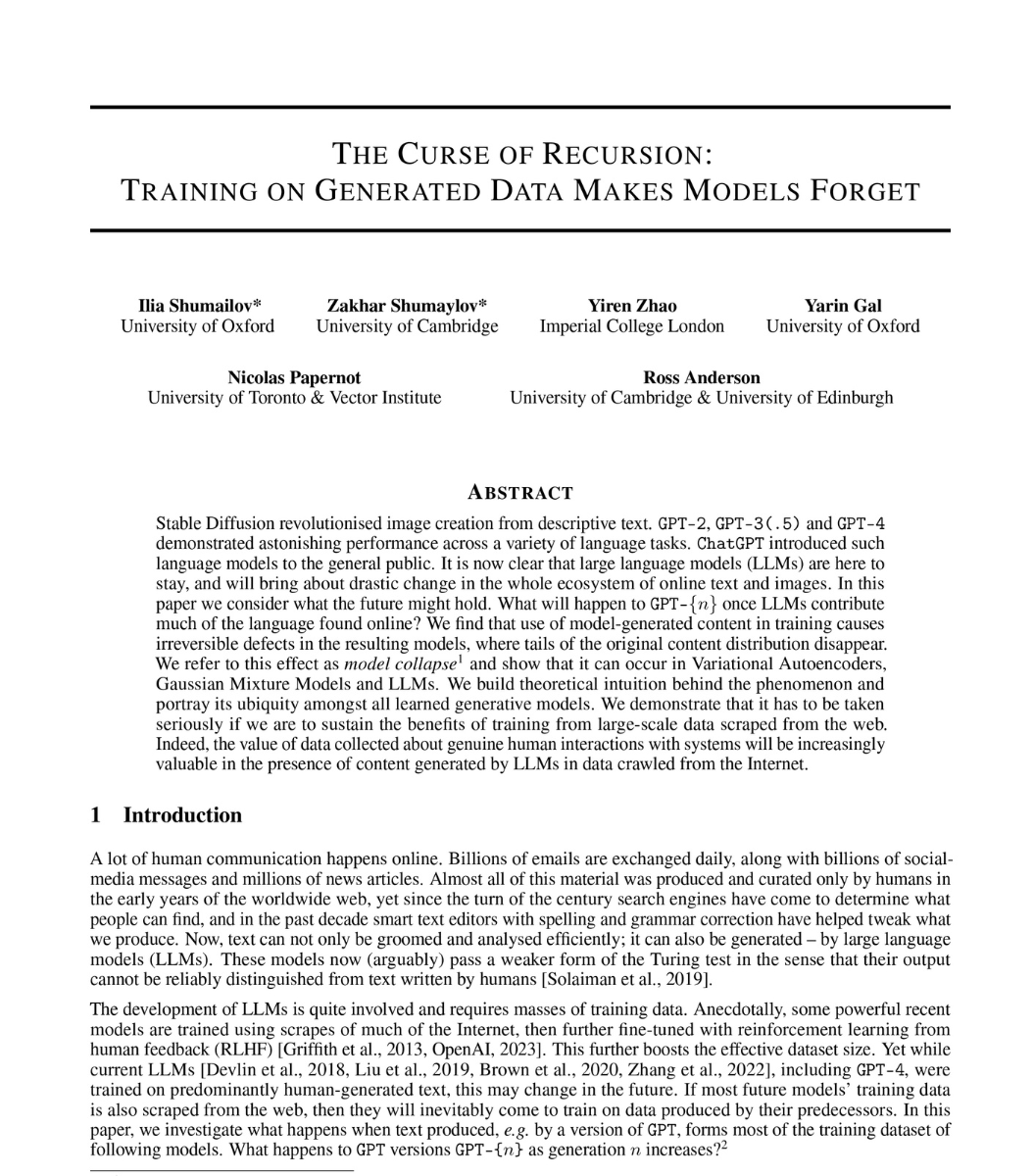
"AI trained on AI-generated data gets dumber every generation......the next generation of AI is being trained on the output of the current generation." 🤔
Jun 10

You have noticed it. ChatGPT feels dumber than it used to. Your prompts that worked six months ago produce worse results now. The writing sounds flatter. The ideas sound safer. The internet itself feels like it is shrinking. Every article reads the same. Every email sounds the same. Every answer sounds like it was written by the same voice.
You thought it was you. It is not you.
Researchers at Oxford and Cambridge published a paper in Nature proving what is happening. They call it Model Collapse.
Here is the mechanism in one sentence. AI trained on AI-generated data gets dumber every generation until it forgets what real human data looked like.
The internet is filling with AI-generated content. Blog posts. Articles. Reviews. Comments. Social media. AI companies scrape the internet to train the next generation of models. Which means the next generation of AI is being trained on the output of the current generation.
Each cycle loses information. Not randomly. It loses the rarest, most unusual, most creative parts first. The researchers call these the "tails of the distribution." The weird ideas. The unexpected perspectives. The things that made the internet feel human. Those disappear first.
What remains is the average. The safe. The expected. The bland.
Then the next generation trains on that. And loses more. And the next generation trains on that. And loses more. The researchers proved this is not a slow decline. Major degradation happens within just a few iterations. Even when some of the original human data is preserved.
They tested it on large language models. On image generators. On statistical models. The pattern was the same every time. The output converges toward a narrow, flattened version of reality that looks nothing like the original data.
The lead researcher put it plainly. "Large language models are like fire. A useful tool. But one that pollutes the environment."
The pollution is invisible. You cannot see which sentence on the internet was written by a human and which was written by AI. Neither can the AI that is about to train on it. And once the tails are gone, they do not come back. The damage is irreversible.
This is not a prediction anymore. It is a diagnosis.
The internet you grew up on was built by humans writing things no algorithm would have written. Strange, personal, imperfect, alive. That internet is being diluted. One generation of AI at a time. And the models trained on what remains are learning a smaller and smaller version of the world.
Model Collapse is not a technical problem. It is a cultural one. The thing that made the internet worth reading is the thing that disappears first.
1
908
Taken together, my read is the ECB simply signaling that it will do the right thing to maintain their medium term target. It sounds boring, but the point is that they allow inflation to be elevated in the short-term, taking "measured" steps only but are not complacent.
1
613
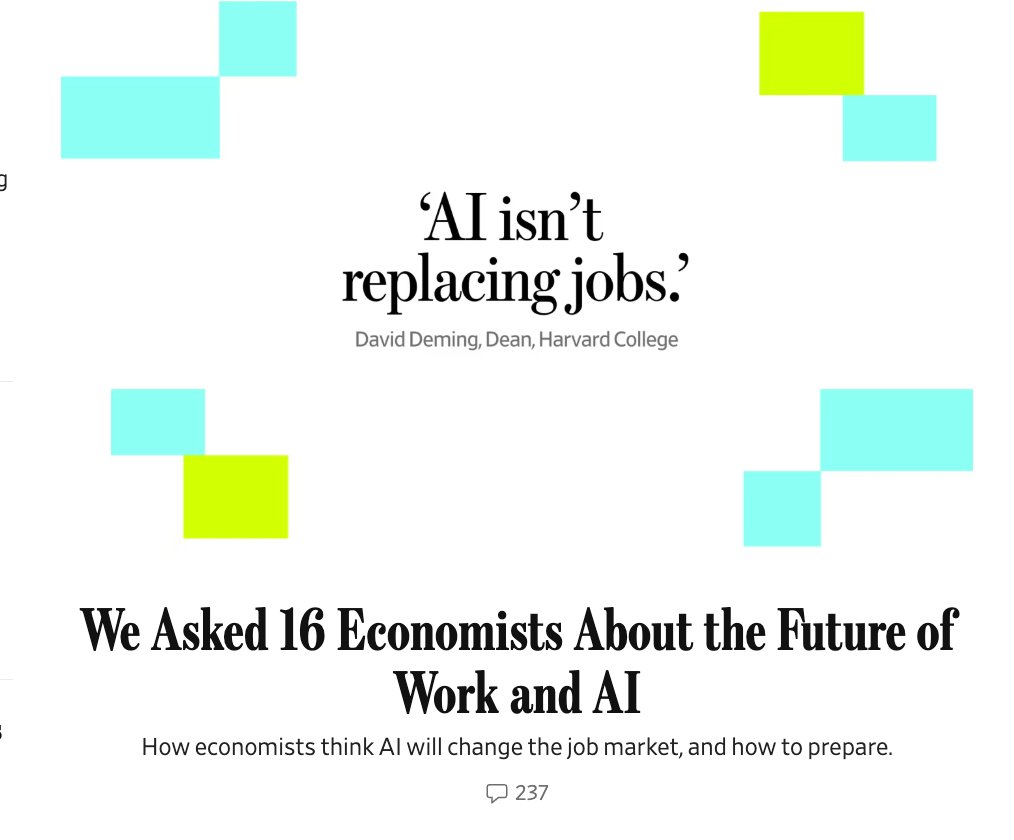
WSJ is asking 16 economists about "the Future of Work and AI" --- nice try, but you'll get 16 wrong answers. I though it was settled that we should watch the Simpsons, or possibly South Park for a more useful crystal ball. 🤷♂️ wsj.com/tech/ai/economists-w…
2
3
547
WSJ has thought provoking article why teens take fewer summer jobs.
"For the affluent teenager, skipping the paycheck is genuine optimization. She trades the lifeguard chair for a research internship, science camp, an SAT tutor...the retreat steepest in exactly the most educated, highest-income households...the unpaid internship and the enrichment program, are precisely the ones a low-income family can’t afford...For the poor teen, 'choice' is usually the wrong word, because the teenagers who most need a summer job are the ones who can’t find one."
The author argues it's not the minimum wage because it hasn't kept up with inflation.
wsj.com/opinion/why-teenager…
1
511
A 'tax the rich' tax failed in San Francisco wsj.com/politics/elections/s…
1
713
Axel Merk retweeted

Jun 9
"Ultimately, what gold is competing against is the purchasing power of the currency in the long run." -Axel Merk
@AxelMerk
@merkinvestments
@MoneyMetals

ALT "Ultimately what gold is competing against is the purchasing power of the currency in the long run." Axel Merk, Merk Investments, Money Metals Exchange.
3
4
19
1,209
Axel Merk retweeted

Jun 9
Great story. And here's the @WSJ obituary if you aren't familiar with Gordon Wood's huge contribution to American historiography: wsj.com/opinion/gordon-s-woo…
Jun 8

I never met Gordon Wood, but I have a story about him.
In one of my grad school seminars, we read Wood’s Creation of the American Republic. The sheer erudition and evidentiary depth of the book bowled me over.
Back then, before kids and before life accelerated to warp speed, I used to call my mother every Sunday to catch up. Lots of times, we ended up talking about what I was reading that week in my grad seminars or for leisure. Mom had an omnivorous mind, and she was always looking for something else to read. She was a true intellectual—curious about almost everything, always eager to integrate new arguments or ideas into her existing schemas of how the world worked or to have those schemas challenged and changed.
When we talked that particular Sunday, I think I tried to describe to her part of Wood’s argument about the relationship between the state constitutions during the Articles of Confederation era and the federal Constitution. Maybe I was tired, maybe I didn’t completely understand her questions, but the end result of the conversation was that Mom had questions about Wood’s argument that I didn’t answer satisfactorily. I told her that she should probably just read the book, and we said goodbye.
She did eventually read the book, but the next Sunday, Mom started our conversation by saying, “Well, I had a lovely conversation with Gordon Wood this week.” For a split second, I thought she was joking, but then I remembered who I was dealing with. I started to sweat. “How?” I asked. A whole variety of unlikely scenarios in which the foremost historian of the American Revolution and my mother, who lived in Wichita, Kansas, might have met ran through my mind. “Oh, I just looked up his office phone number on Brown’s website and called, and he picked up!” Mom said. I decided I would have to find another profession.
As it ended up, Gordon Wood spent about an hour on the phone with my mother answering her questions about the Constitution. Ever since, I’ve had a soft spot for the man when I imagine him picking up the phone in Providence and finding Becky Elder from Wichita on the other end of the line. His generosity in that moment spoke very well of him.
Rest in peace, professor.
2
39
218
45,851
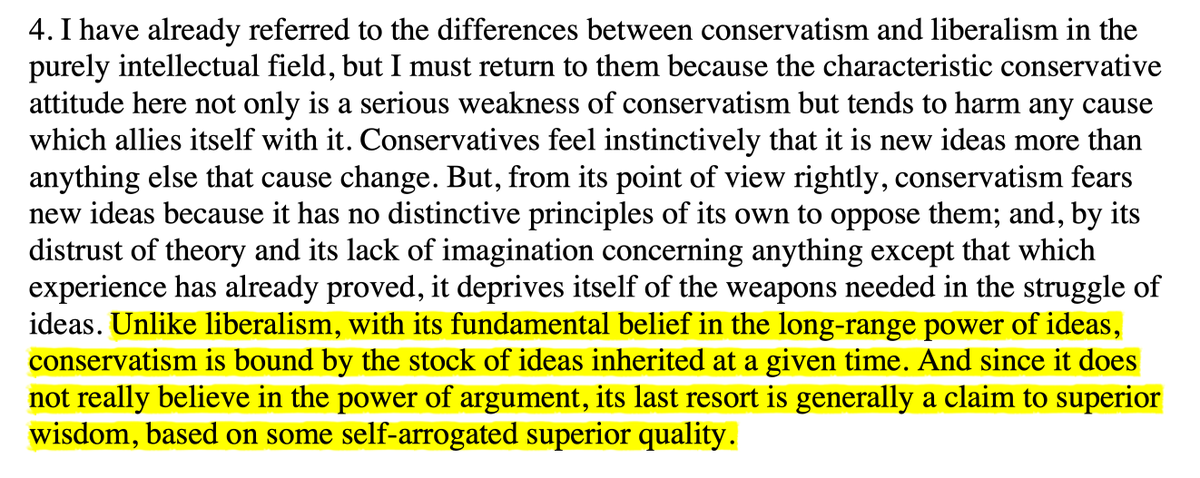
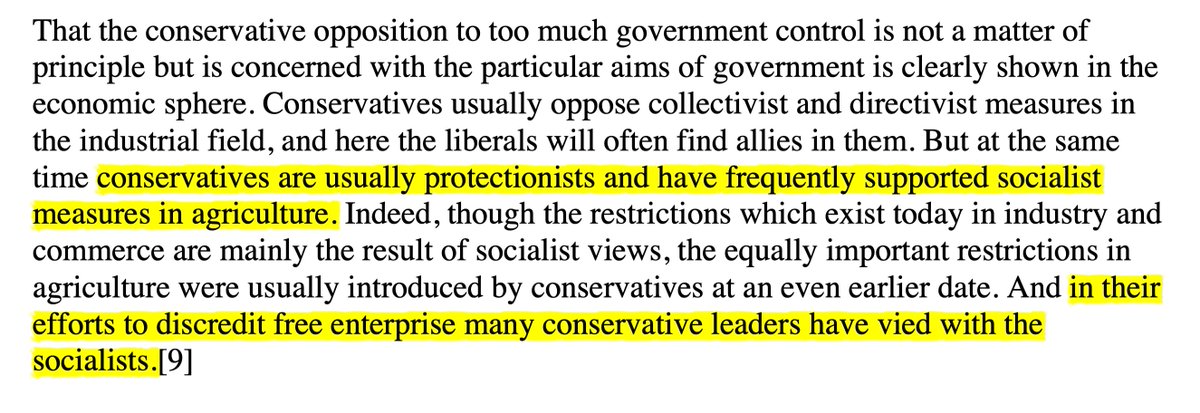
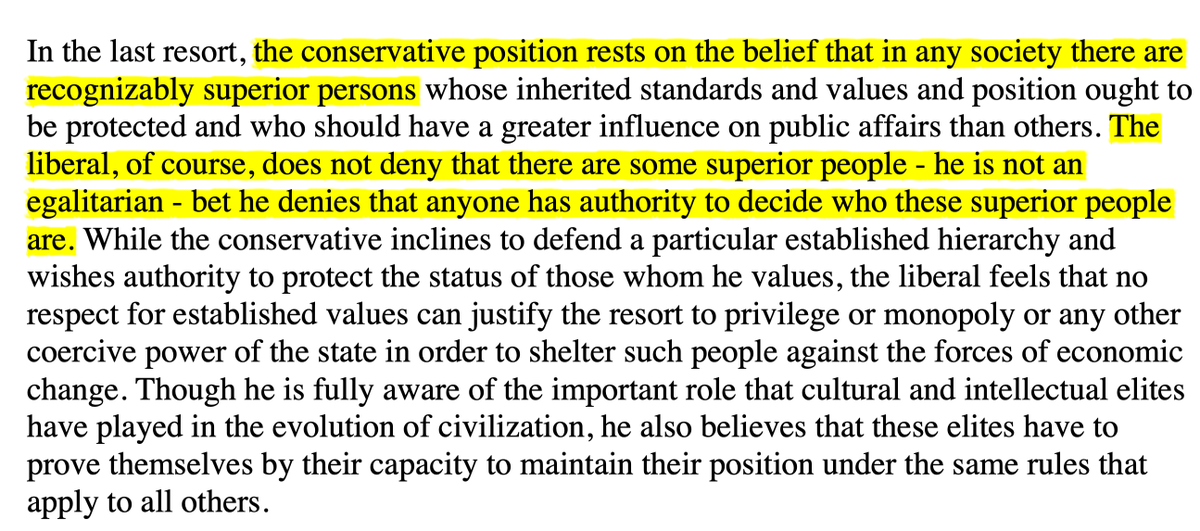
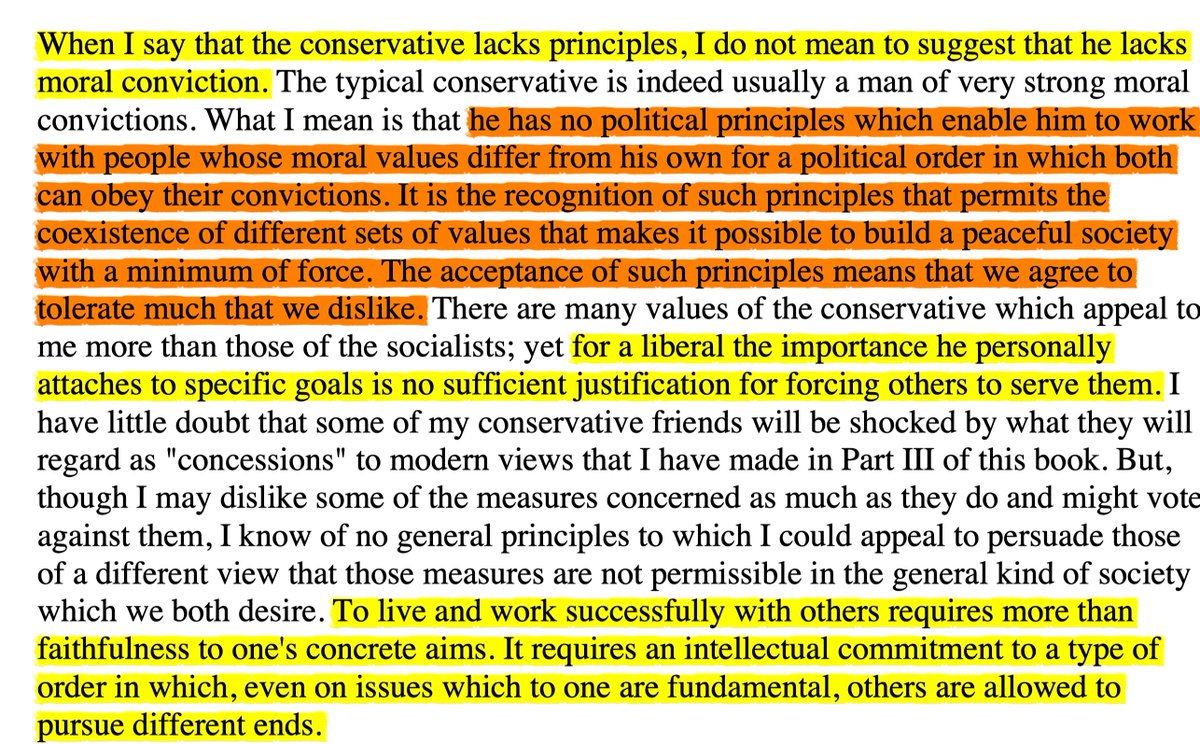
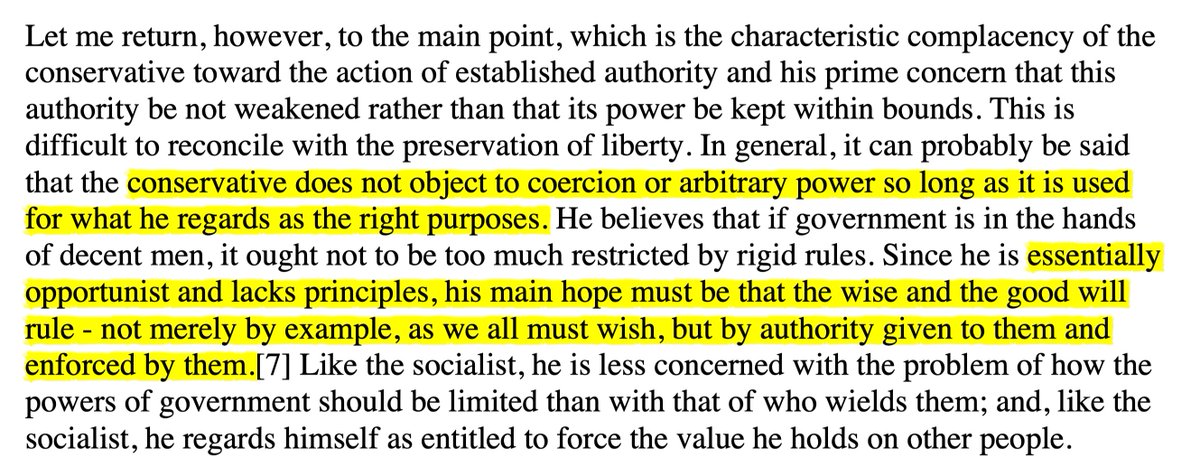
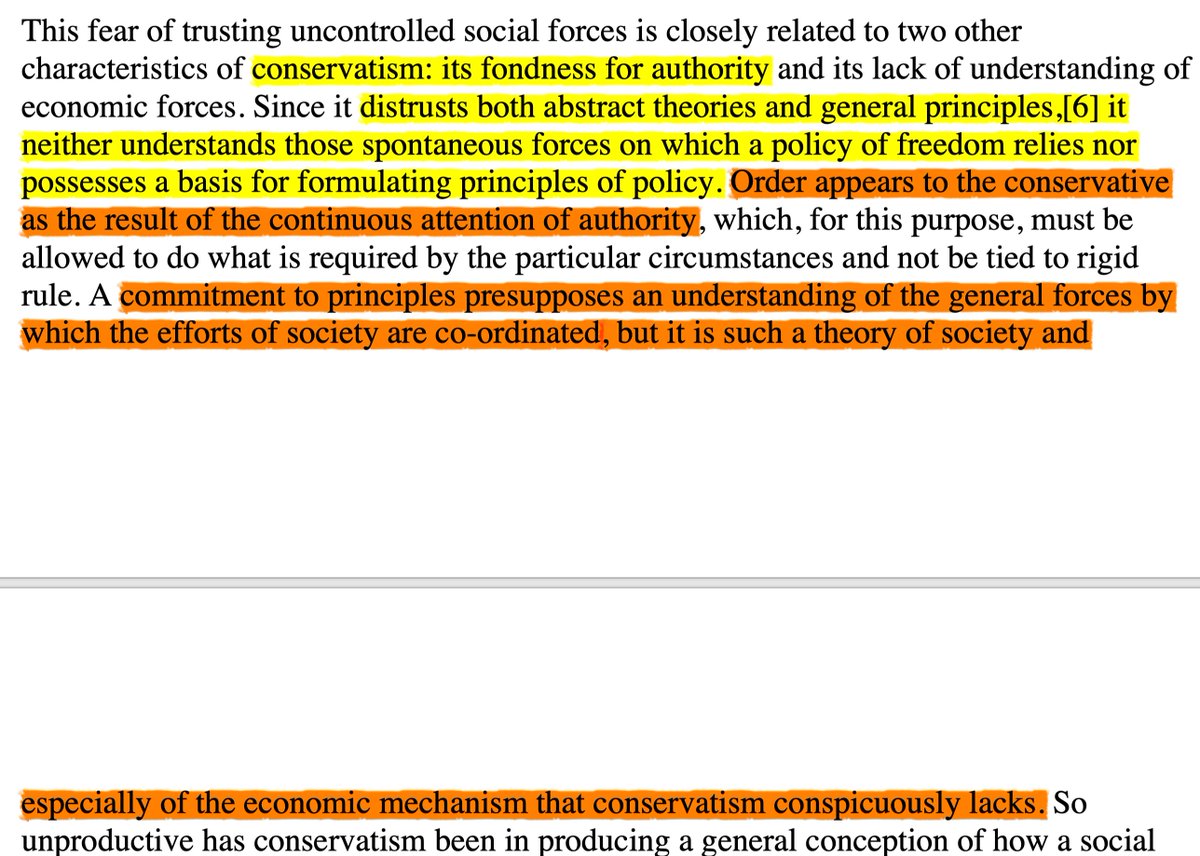
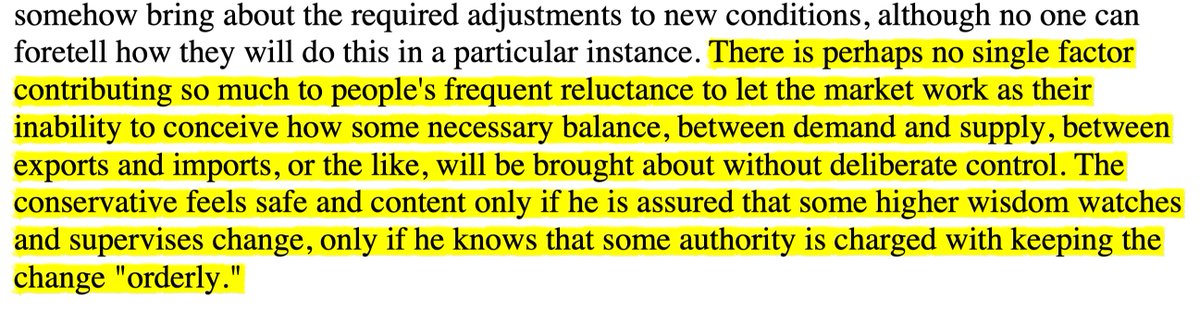
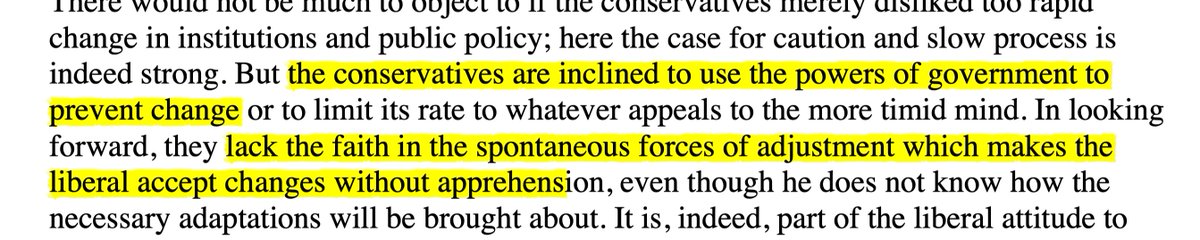
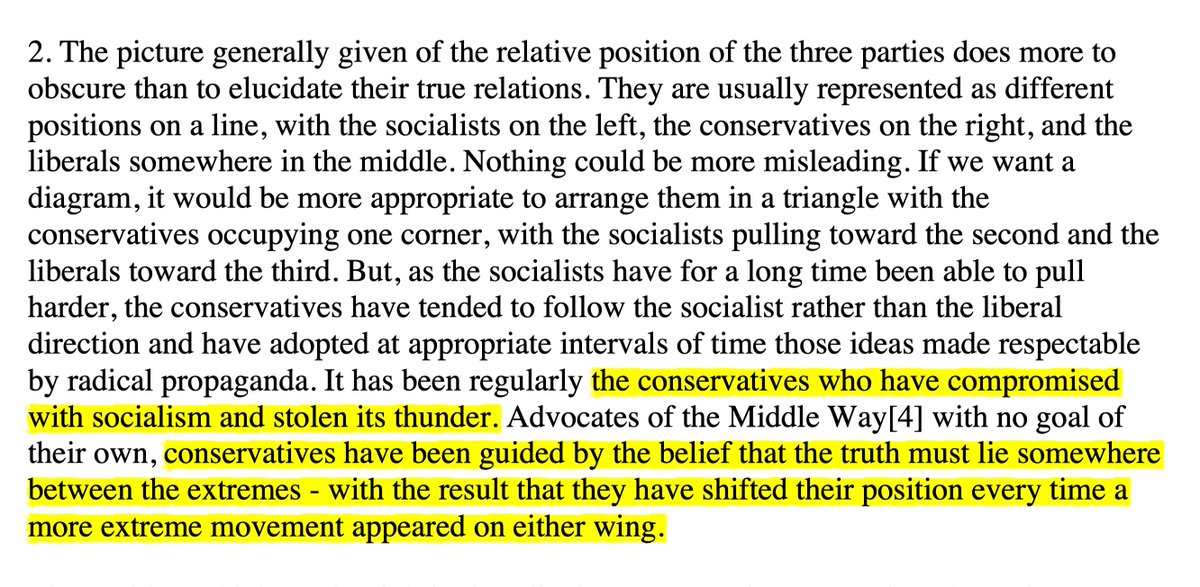
Read FA Hayek's complete essay of 'Why I am not a Conservative' - it's a Sunday read well spent. cato.org/sites/cato.org/file…
1
2
868
FWIW, I've often wondered why it is that I get along from folks from across the political spectrum more than my peers. Hayek has the answer: the classical liberal deems government necessary; strives to minimize government coercion; and is tolerant of different schools of thought. I can relate to that.
1
1
870

Milton Friedman: “I am not a conservative. I’ve never been a conservative. Hayek was not a conservative… We are liberals in the true meaning of that term: concerned with freedom.”
682
In "Why I Am Not a Conservative" -- first published in 1960 -- FA Hayek explains why society is so divided today and has a path forward.
A worthy Sunday read: cato.org/sites/cato.org/file…

FA Hayek in 1960 discusses why society is so divided today. In "Why I am not a Conservative" he delineates classical liberalism from conservatism. Get ready to be offended.
The conservative resists change, gets pulled in the direction of the socialist.
cato.org/sites/cato.org/file…
3
992