
Commentator on Lebanon’s never-ending financial crisis. International structured and project finance.
Joined August 2012
- Tweets 10,304
- Following 577
- Followers 21,974
- Likes 17,772
869 Photos and videos




Pinned Tweet

27 Nov 2024
An analysis of the ceasefire deal:
The question of who won and who lost this war is not particularly interesting. Each side will claim whatever is in its best interest to claim. The more meaningful question is: what will be its impact on the various actors, particularly in Lebanon?
Hezbollah's local opponents view the ceasefire deal, and the war in general, as having diminished its domestic power. With provisions aimed at dismantling its military infrastructure and bolstering the Lebanese army, the ceasefire seems intended to reduce Hezbollah's influence by weakening its military capabilities.
But Hezbollah’s strength within Lebanon has never been confined to its weapons. Even if it were disarmed tomorrow, its domestic political objectives, its popular grassroots support, and its representation within state institutions would remain intact. This ceasefire, far from sidelining Hezbollah, nudges it to deepen its power domestically by turning its attention inward.
The structure of this agreement, if implemented as written, risks further fracturing the country. It pits an already weakened Lebanese state—represented by its army—against Hezbollah. Hezbollah remains the country’s strongest and most organized political and military entity, as well as the legitimate representative of the largest community in Lebanon.
The Lebanese Army
The Lebanese army finds itself in an impossible position. Its mandate to enforce the ceasefire is undermined by its inability to challenge Hezbollah directly. To suggest that it can disarm or dismantle Hezbollah’s infrastructure is, frankly, absurd. Hezbollah is not just an armed group; it is a deeply rooted political force with widespread popular support that extends far beyond its weaponry. It is represented in the army, in the army leadership, and in the political branches that command the army. It is not an external force but an integral part of Lebanon's social and political structure.
The army, one of the few entities that enjoys broad-based respect across sectarian lines, is being set up to fail. Any perceived weakness in fulfilling the ceasefire’s terms risks further eroding its credibility, domestically (with half the country) and internationally. Yet confronting Hezbollah, if it were even plausible, risks political and societal backlash, along with a backlash within the army ranks, further destabilizing the country.
This leaves the army walking a fine line: attempting to meet international and domestic expectations without overstepping into conflict with Hezbollah. Ultimately, this fragile balancing act reinforces the narrative that Lebanon’s state institutions are ineffective, which they are when perceived to be acting against the interests of one of Lebanon's communities.
Hezbollah
This brings us to the core issue: Hezbollah’s internal strength lies not in its arsenal (at least not exclusively) but in the fact that it is the legitimate representative of millions of Lebanese. This war and ceasefire do little to change that basic fact.
To frame Hezbollah solely as an armed militia and foreign proxy is to misunderstand its role in Lebanon and the basis of its power. It is a domestic political project as much as a regional military one—a project that, like it or not, champions the interests of the community it represents. It is fundamentally a rational actor whose actions are driven by clear incentives. It pays lip service to national unity and power-sharing while steadily increasing its control over the state and its institutions in line with the growing numbers and strength of its community. That is exactly what any other actor in its position would do given the incentive structure created by Lebanon's political system (i.e., maximizing your share of power/resources relative to others is an existential imperative in a system designed to pit communities against one another).
This is what makes the ceasefire’s disarmament provisions largely symbolic. Far from weakening Hezbollah, the terms of the ceasefire incentivize it to further entrench itself within legitimate state institutions like the army and the government (the enforcers of the ceasefire).
Lebanese communities opposed to Hezbollah’s dominance may find themselves increasingly sidelined due to their fatal misreading of the true source of Hezbollah's power and the incentives that shape its actions. These groups charactarize their problem as being *only* with Hezbollah's weapons. They demand it be disarmed and its military wing folded into the army, as if these actions would weaken the group's domestic influence or alter its political objectives.
The reality is that Hezbollah's domestic political objectives are shaped by incentives—primarily, the pursuit of power and resources within the state structure to serve the perceived interests of the community it represents (as understood by that community itself, not by Hezbollah’s opponents). The group’s influence is fundamentally tied to the size and cohesion of that community. Consequently, Hezbollah’s influence will inevitably pull the state and the army toward its own objectives rather than away from them. Even if its military capabilities were partially or entirely dismantled, the group’s domestic power and objectives would remain largely unaffected. For Hezbollah’s opponents, the core problem therefore lies elsewhere even if they fail to see it.
Israel
Israel, by agreeing to the ceasefire, consolidates international support, particularly from the United States, and positions itself as a cooperative actor regardless of the actual reason why it agreed to the ceasefire. Should the ceasefire unravel, Israel will be well-positioned to act with the moral and political backing of its allies, especially given incoming Trump administration.
For Israel, the ceasefire is a low-cost gamble. If it works, it buys temporary stability. If it fails, Israel retains the freedom to strike (as it would regardless of whether this provision is explicitly stated in the terms of the ceasefire), with the added justification of Lebanon’s inability to uphold its commitments. This ensures that Israel can respond to violations on its own terms, while placing the burden of enforcement squarely on the Lebanese government and army.
A Fragile Illusion
The ceasefire offers a welcome break after many months of war. But its terms risk worsening Lebanon's serious domestic challenges by hastening shifts in the balance of political power among Lebanon's communities and exposing the failure of its power-sharing system to manage these changes effectively. Unless these underlying issues are confronted, Lebanon's society will remain fragile and continue to fragment with communities being provoked against one another. Unfortunately, Lebanon's political leadership has absolutely no vision for how to resolve these challenges.
19
38
190
46,787
Mike Azar retweeted

Jun 12
🟥 #EconomicCrisis | War revives debate over partial sale of Lebanon’s gold to fund return of deposits
Two courses of action with Lebanon’s gold reserves are said to be under discreet consideration to guarantee a minimum repayment to depositors.
Read @Mouniryouniss and @StephBechara's article below
today.lorientlejour.com/arti…
2
5
3,477
Mike Azar retweeted

Jun 10
They want to bankrupt the country completely including its last safety net.
Jun 10

Momentum is growing to use Lebanon's gold reserves, including potentially to finance government spending, before restructuring the public debt and financial sector. I'm concerned that doing so would delay meaningful economic, governance, and political reform while squandering one of the country’s last remaining national assets.
Lebanon should keep BDL’s gold reserves off the table until it has restored a minimum level of public trust, restructured the public debt and financial sector, and placed the country on a credible path to political and economic recovery. None of that has happened yet. I am worried about the precedent we are setting: using $1 billion of gold today becomes $5 billion next year, then $10 billion the year after, until there is nothing left and nothing has changed.
A $40 billion national asset, managed under the right governance framework, could radically change the course of Lebanon’s future and benefit generations to come. We have a responsibility not to squander it.
1
4
965
Jun 10
Momentum is growing to use Lebanon's gold reserves, including potentially to finance government spending, before restructuring the public debt and financial sector. I'm concerned that doing so would delay meaningful economic, governance, and political reform while squandering one of the country’s last remaining national assets.
Lebanon should keep BDL’s gold reserves off the table until it has restored a minimum level of public trust, restructured the public debt and financial sector, and placed the country on a credible path to political and economic recovery. None of that has happened yet. I am worried about the precedent we are setting: using $1 billion of gold today becomes $5 billion next year, then $10 billion the year after, until there is nothing left and nothing has changed.
A $40 billion national asset, managed under the right governance framework, could radically change the course of Lebanon’s future and benefit generations to come. We have a responsibility not to squander it.
7
12
75
7,681
Mar 18
The GCC may have more to lose from Iran surviving this war than almost anyone else.
The Gulf’s economic model depends on capital-intensive, fixed/immovable physical assets: oil and gas fields and pipelines, LNG and gas-processing plants, refineries, petrochemicals, fertilizers, aluminum, steel, cement, power and desalination plants, ports, storage terminals, and logistics infrastructure. These assets require hundreds of billions of dollars in long-term financing, and that financing depends on the physical security of the assets for 15 years.
If Iran retains the ability to strike and heavily damage this infrastructure at any time in the future (and shows a willingness to do so), the financing risk changes fundamentally. A persistent Iranian threat would directly undermine the GCC economic model and the bankability of its industry.
10
6
63
15,016
Mar 19
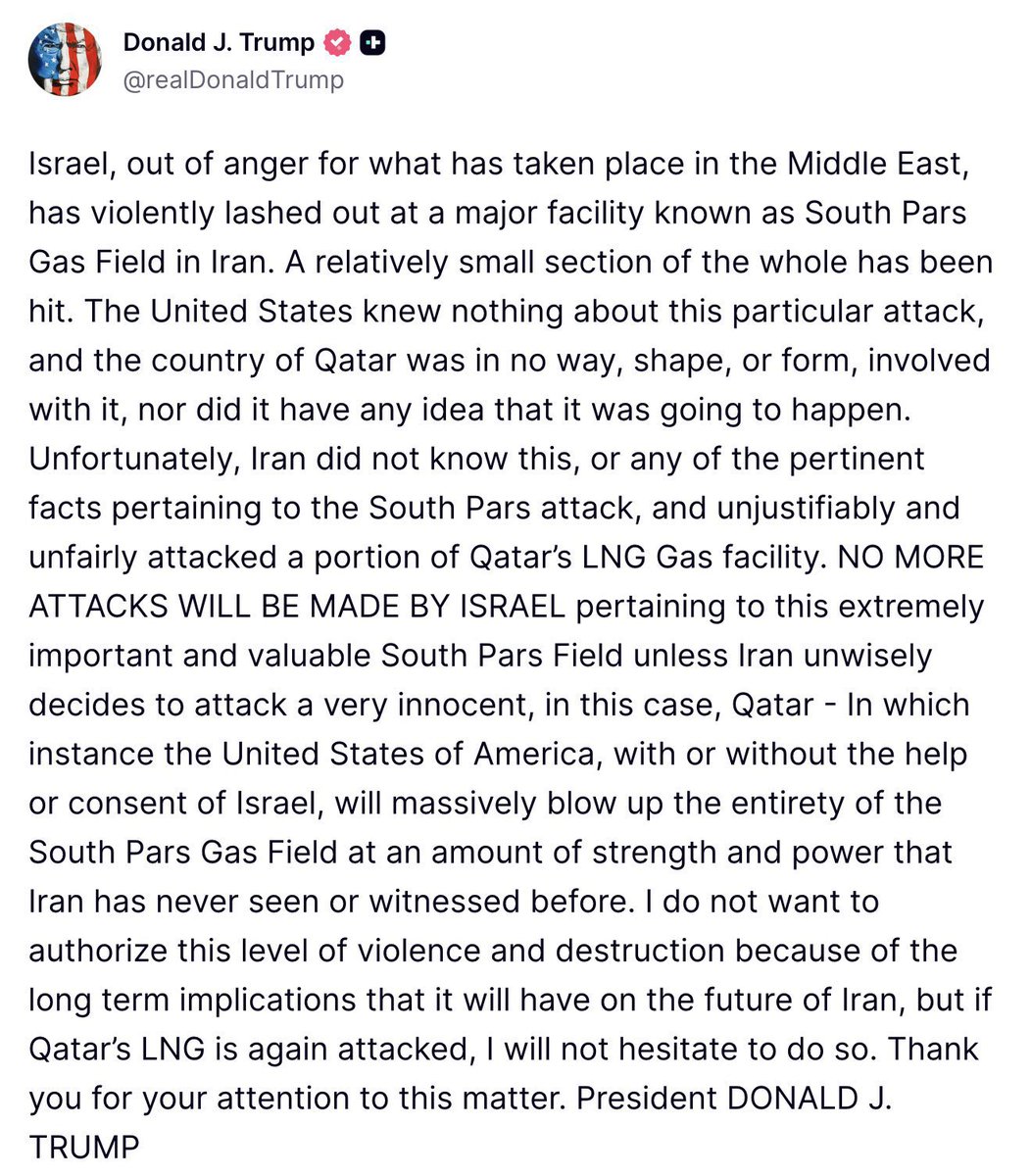
Trump’s statement sends a clear message to Iran that its real leverage in this conflict is its ability to threaten and target GCC infrastructure and logistics. GCC will remain in the crosshairs as a result, and there’s not much they can do about it.
4
1,471
Mar 18
Israel’s strategy is pretty obvious.
The biggest long-term loser from the current Iran-Israel-US war may be the GCC. The Gulf’s economic model depends on capital-intensive, fixed/immovable assets: oil and gas fields and pipelines, LNG and gas-processing plants, refineries, petrochemicals, fertilizers, aluminum, steel, cement, power and desalination plants, ports, storage terminals, and logistics infrastructure. These assets require hundreds of billions of dollars in long-term financing, and that financing depends on the physical security of the assets for 15 years.
If Iran retains the ability (after showing the willingness) to strike and heavily damage them at any time in the future, the financing risk changes fundamentally. From that perspective, the GCC may have more to lose from Iran surviving this war than almost anyone else, because a persistent Iranian threat could directly undermine the bankability of its entire industrial base.
Mar 18

BREAKING: Iran says natural gas facilities associated with offshore South Pars field have been attacked
🔴 LIVE updates: aje.news/b8762y?update=44128…
5
3
37
16,502
Mar 14
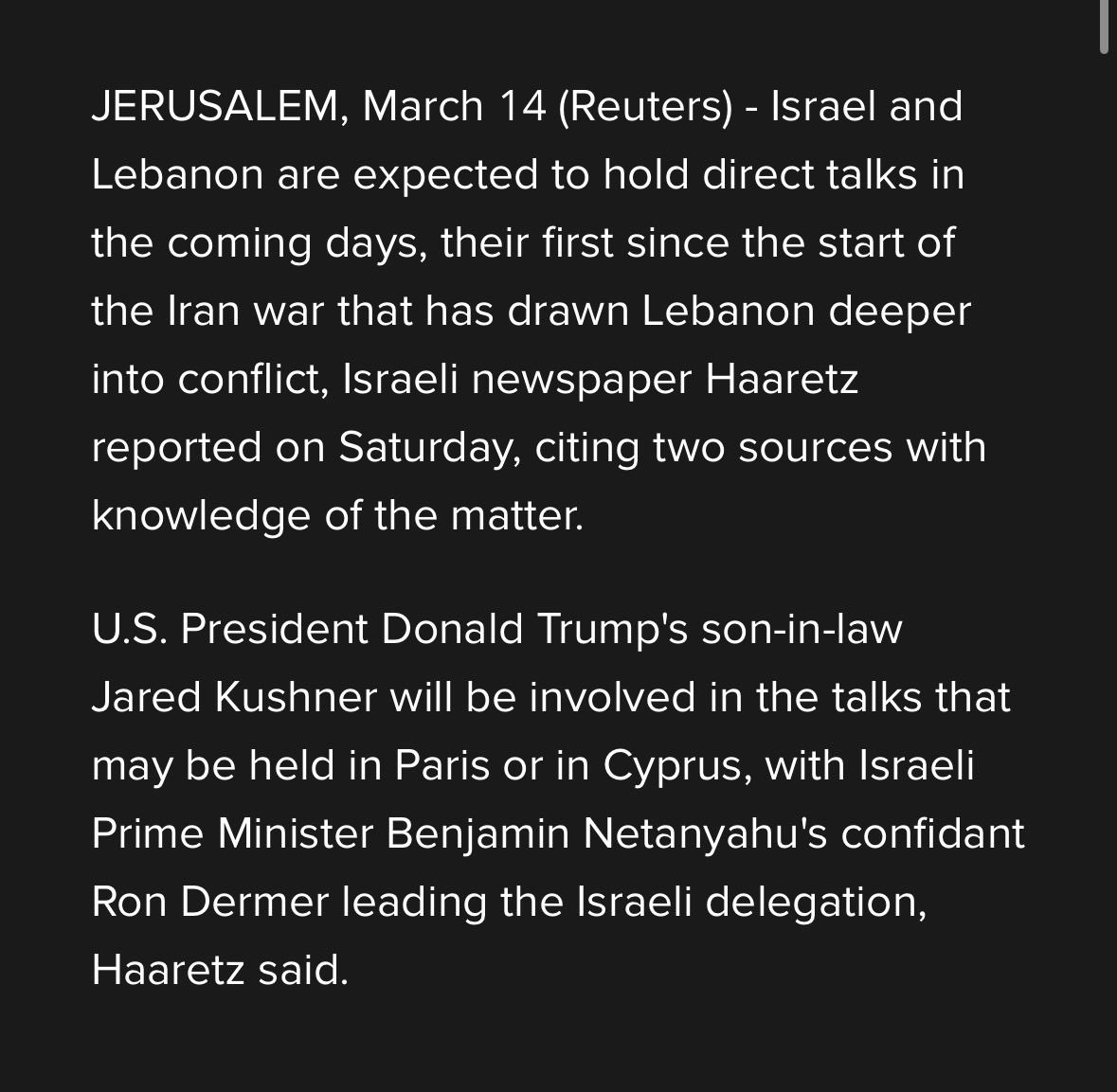
I have little confidence, but I hope Lebanon appoints a negotiating team with real experience in high-stakes international negotiations. Working at a think tank or being close to a political leader does not make someone an effective negotiator. Lebanon comes into these talks with a very weak hand. Israeli negotiators will run circles around any Lebanese team chosen through nepotism rather than competence.
15
8
85
10,280
Mar 9
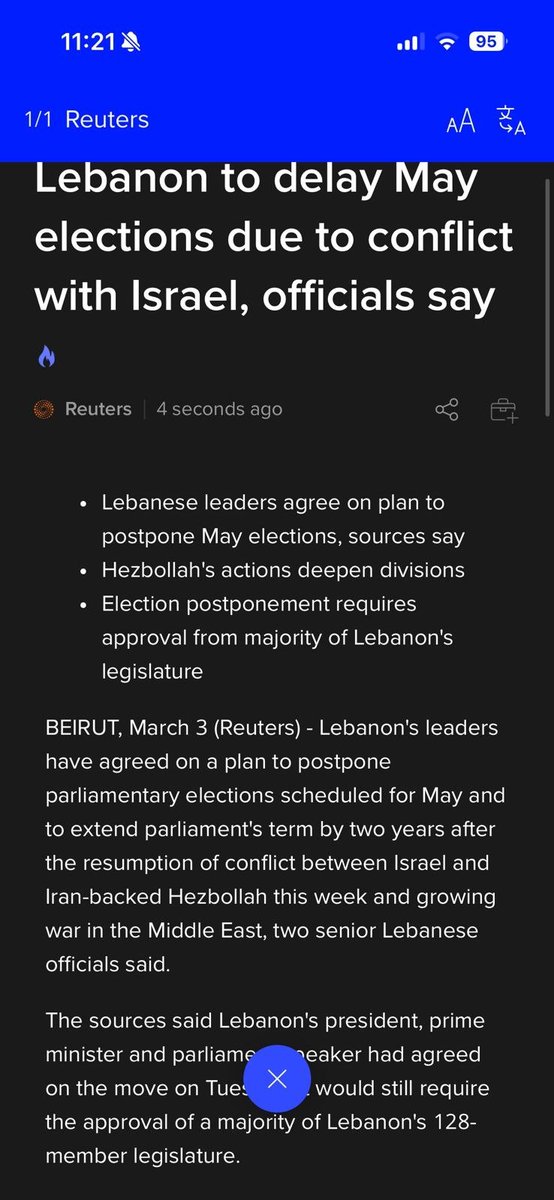
It is difficult to see how a two-year extension is not, on its face, unconstitutional. Any suspension of the ordinary democratic process should be permitted only in truly exceptional circumstances, and only for so long as those circumstances strictly require. If elections can be postponed for two years without a valid constitutional basis or a specific justification for that period, on what principle could they not be postponed for ten years?
Mar 9
A two-year extension of Parliament's term is undemocratic, unjustifiable, and totally unnecessary. Extremely disappointing and a terrible precedent to set for the "new" Lebanon.
3
3
43
4,947
Mike Azar retweeted

الطبقة السياسة تستفيد من الحرب وتمدد لنفسها لسنتين!!! يراوغون في حصر السلاح، يكذبون في الاصلاح، لكنهم حازمون في التمديد.
9
37
213
10,685
Mar 9
A two-year extension of Parliament's term is undemocratic, unjustifiable, and totally unnecessary. Extremely disappointing and a terrible precedent to set for the "new" Lebanon.
11
19
134
11,418
Mike Azar retweeted
Mar 2
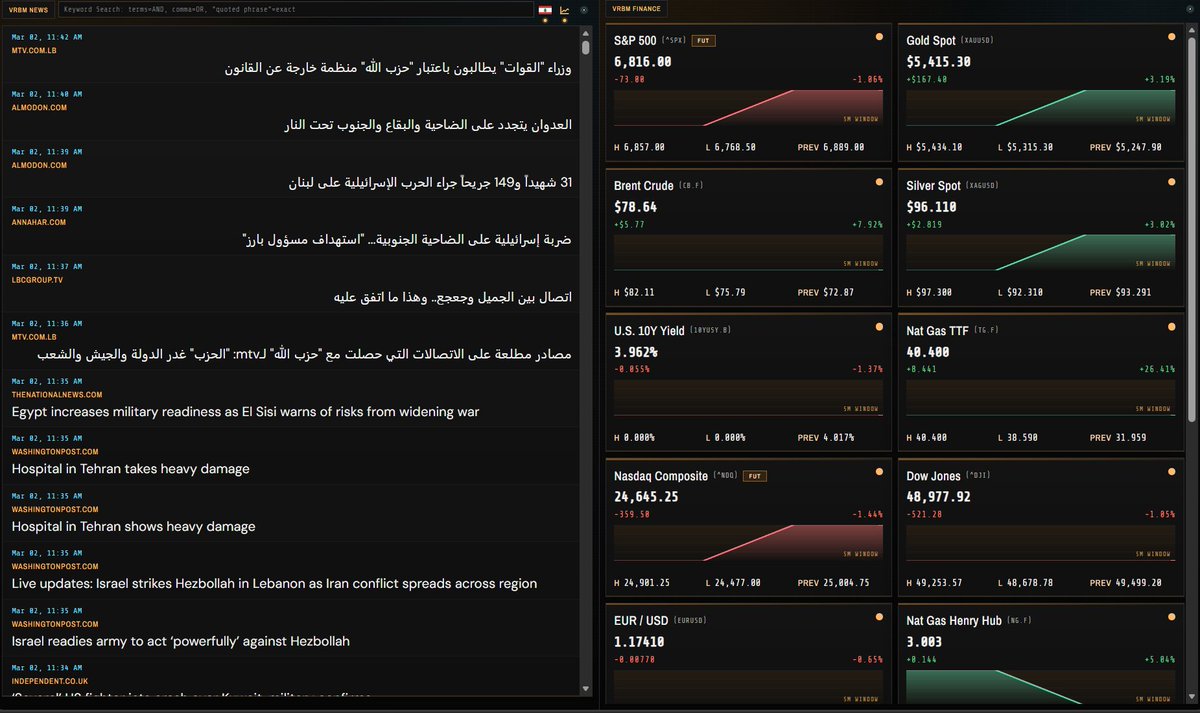
Since everyone is sharing their "monitoring the situation" app, here is mine. It's a simple split screen news financial feed. The news feed updates continuously from 100 news sources. You can filter by topic/keyword and toggle local Lebanese news.
vrbm.ai/NewsApp/
8
8
75
14,931
Mar 3
A two-year delay in Lebanon's elections is unjustified and an illegitimate usurpation of power.
2
10
72
6,081
Feb 28
Khameini was killed.
Feb 28

Feb 28 (Reuters) - Iran's Supreme Leader Ayatollah Ali Khamenei was killed in Israeli, U.S. strikes, senior Israeli official told Reuters on Saturday.
2
14
11,518
Mike Azar retweeted

Feb 28
Feb 28 (Reuters) - Iran's Supreme Leader Ayatollah Ali Khamenei was killed in Israeli, U.S. strikes, senior Israeli official told Reuters on Saturday.
3
21
27
30,410
Mike Azar retweeted
Feb 28
Loud bang heard near Dubai's Marina neighborhood @Reuters
25
187
759
460,190
Mike Azar retweeted
Feb 28
U.S. military to carry out a multi-day operation against Iran, U.S official tells Reuters
13
37
7,593
Mike Azar retweeted
Feb 28
Tehran preparing for retaliation, the response will be "crushing," Iranian official tells @Reuters
1
5
18
3,526