
Graphs, maps and data journalism from the Bloomberg Graphics team.
- Tweets 12,696
- Following 172
- Followers 77,765
- Likes 3,811
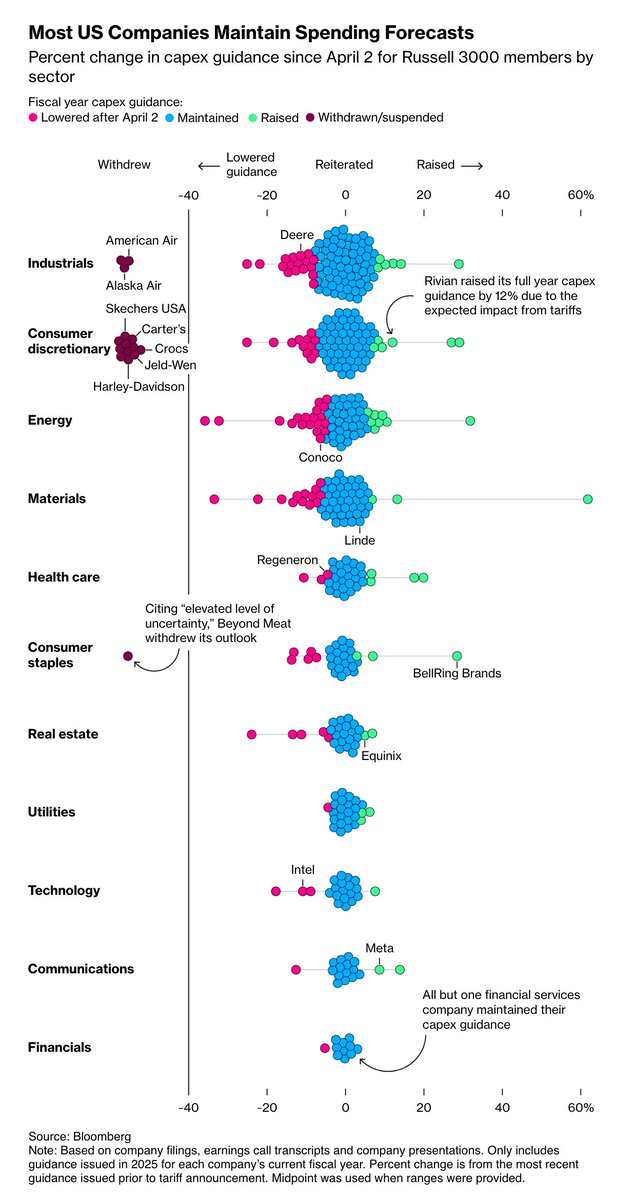
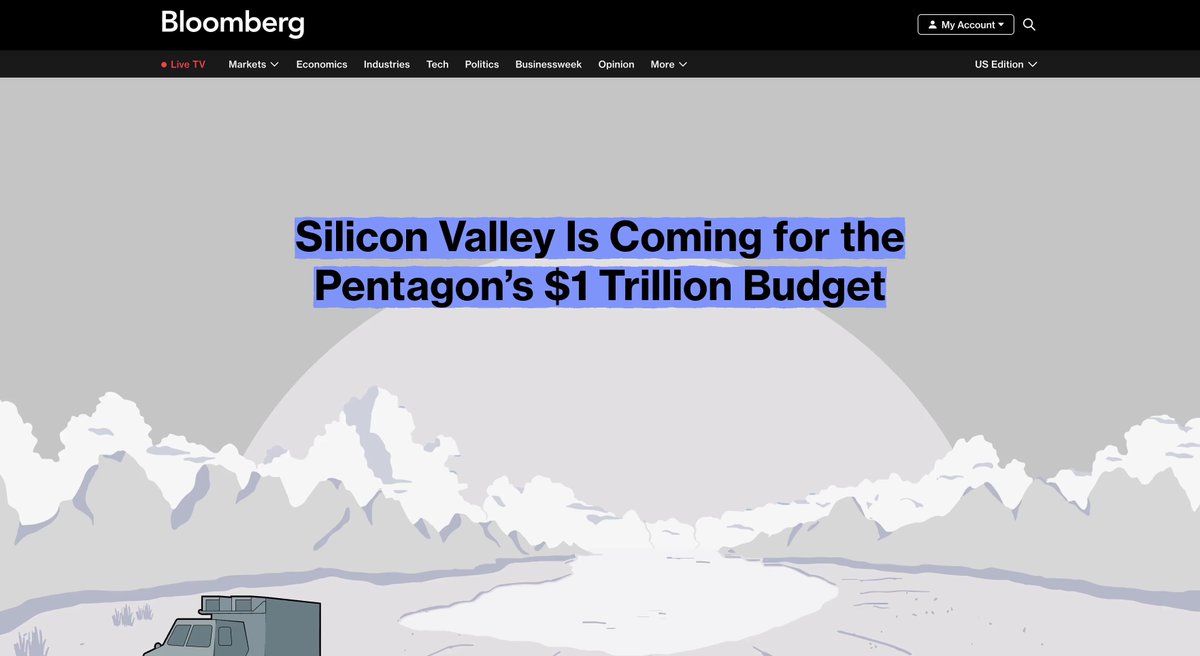
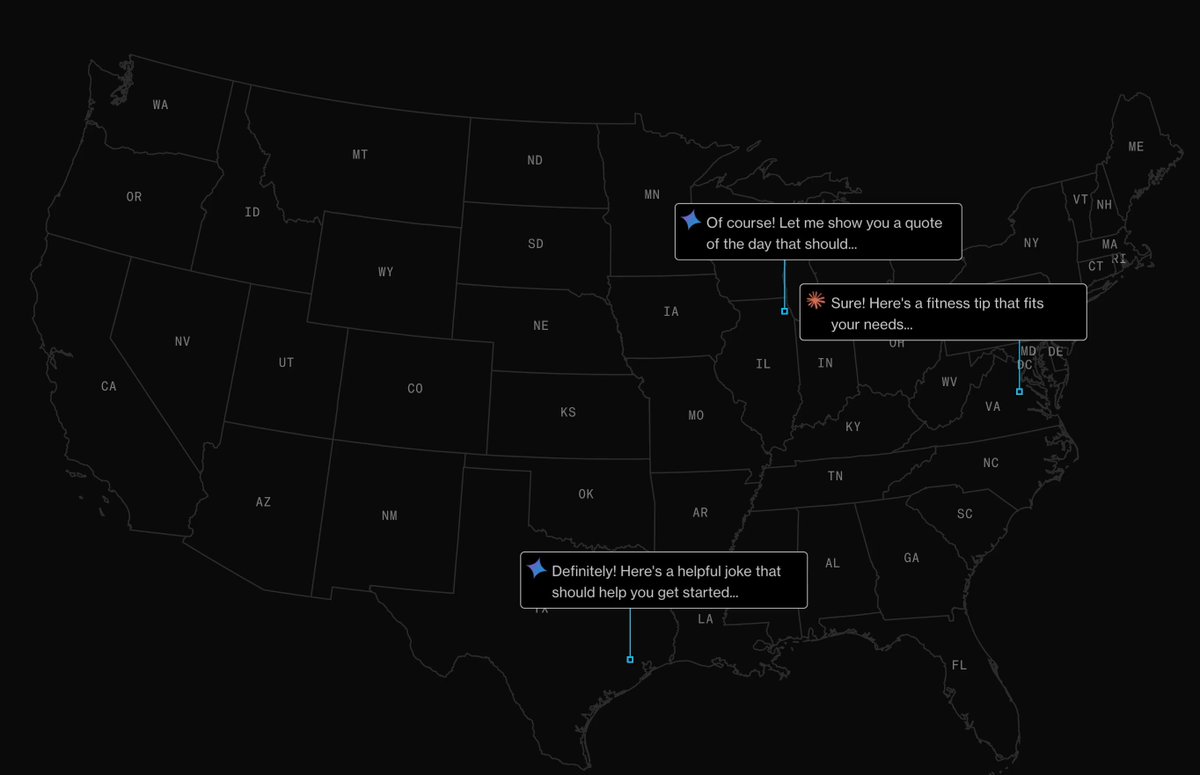
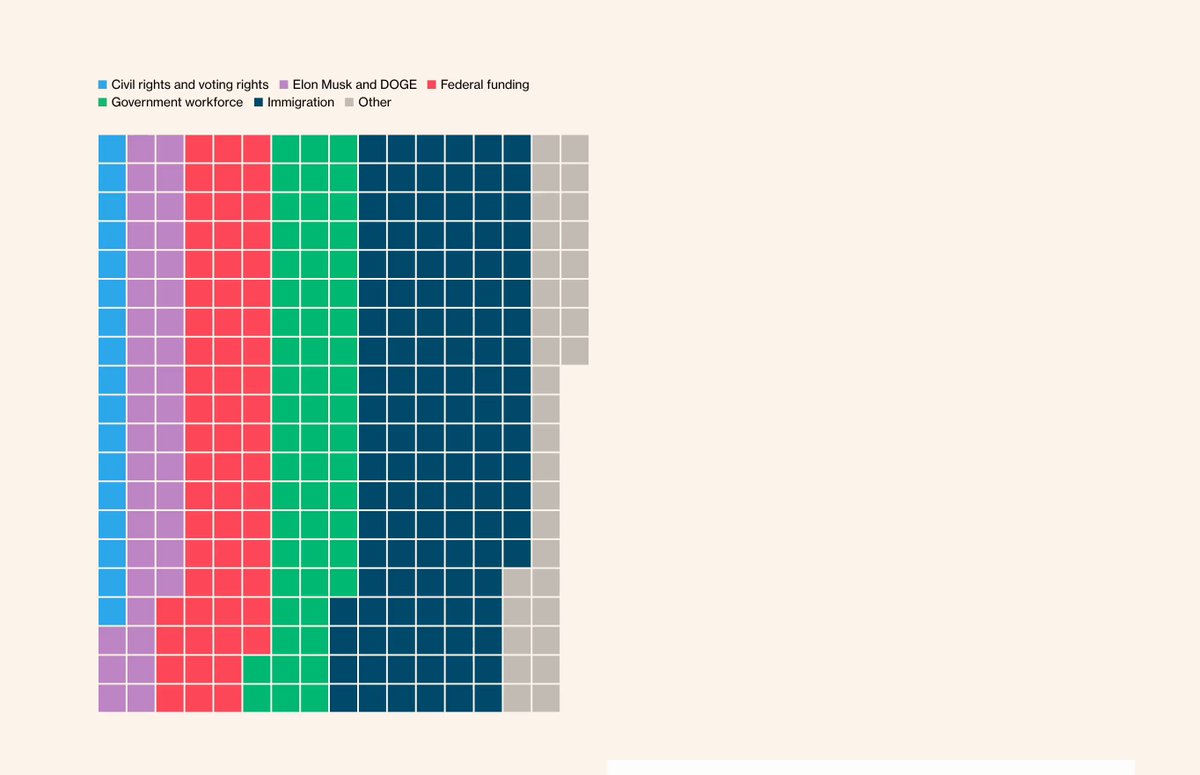

ALT Eleven beeswarm charts plotting percent change in capex guidance for US companies, grouped by their sector. The companies are color-coded by their guidance, whether they were lowered after April 2 (magenta), reiterated (cyan) or raised (green). Further, some companies, seen in the left margin, had their guidance withdrawn. The majority of companies had their guidance reiterated. Some sectors saw more companies that had their guidance lowered or withdrawn, particularly in Industrials and Consumer discretionary. American Airlines, Alaska Airlines, Sketchers USA, Carter’s, Crocs, Harley–Davidson, Jeld Wen and Beyond Meat were examples of companies whose guidance was withdrawn. All but one financial services company maintained their capex guidance. Rivian was one of the companies mentioned as having raised its full year capex guidance (by 12%).
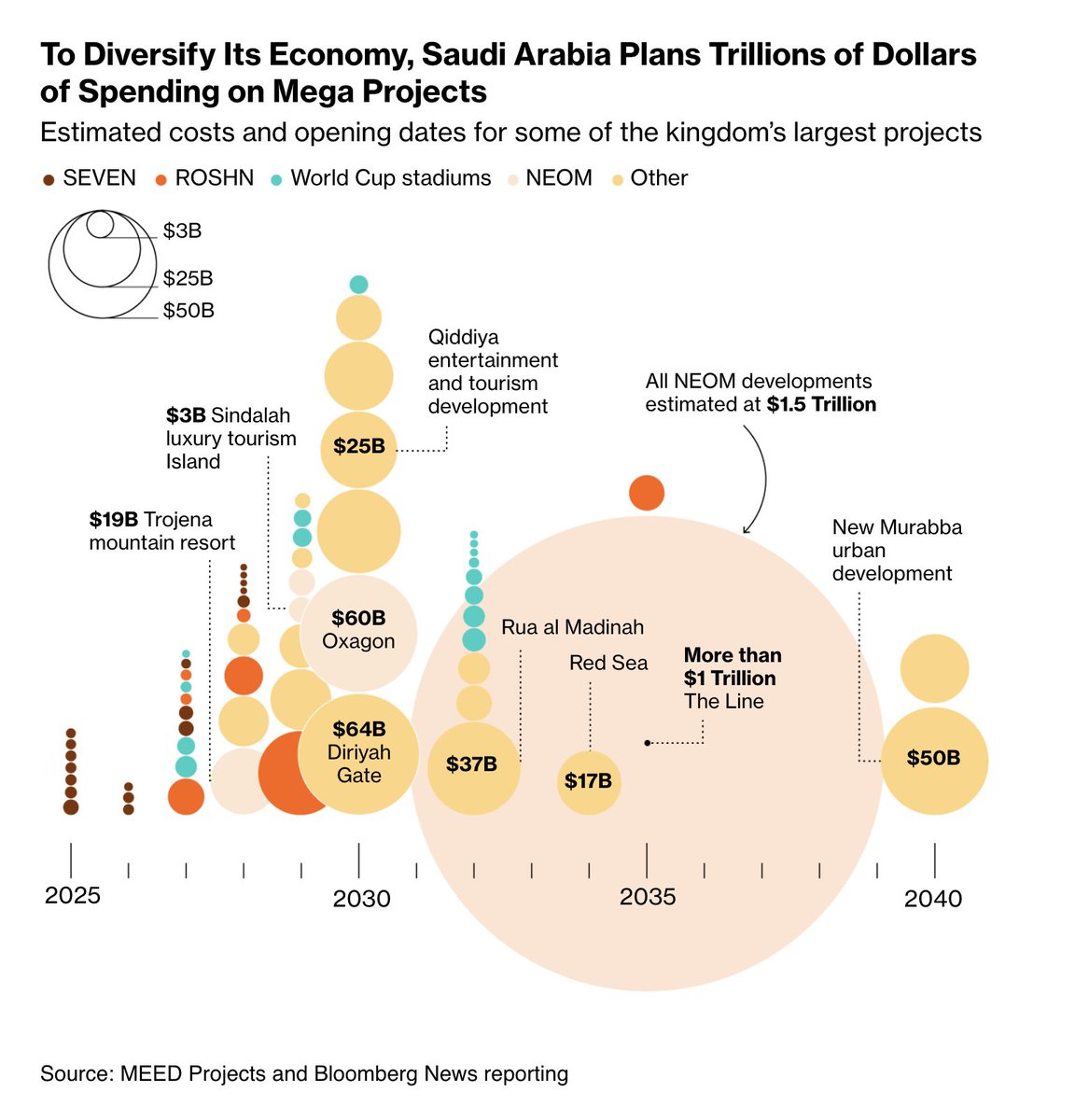
ALT A chart about Saudi Arabia spending on mega projects, plotted by completion year, from 2025 to 2040. Each project is represented as a circle, sized by cost, up to about $1.5 trillion for the largest by far (NEOM’s The Line, for 2035). The circles are color-coded by project: SEVEN (dark red), ROSHN (orange), World Cup stadiums (turquoise), NEOM (beige) and others (yellow). 4 of the largest projects, from 25 to 64 billion dollars, are planned for 2030, and include the Diriyah Gate ($64B) and Oxagon ($60B).
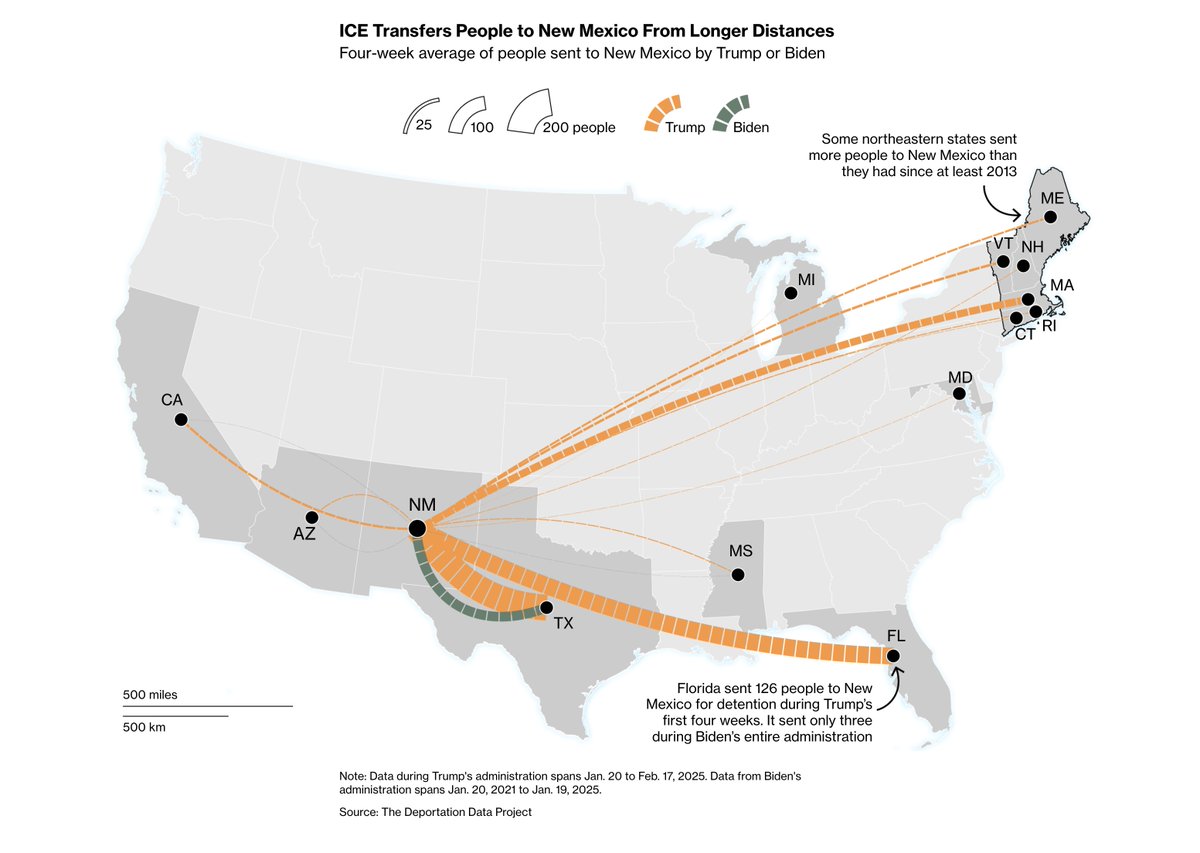
ALT A map of the United States about ICE transfers of people to New Mexico, from states across the country, highlighted in gray. Dashed lines sized in width for the four-week average of the number of people (range from 25 to 200) and colored by sitting president (orange for Trump and green for Biden, where Trump had lines from 13 states in the southern border and mainly the northeast, and Biden only had one that was wider than a pixel, Texas). The thickest lines were from Florida and Texas, for Trump, representing 126 people for Florida and about 200 for Texas. A note pointing to the northeasternmost block of states said “Some northeastern states sent more people to New Mexico than they had since at least 2013”. Another note on Florida said “Florida sent 126 people to New Mexico for detention during Trump’s first four weeks. It sent only three during Biden’s entire administration”.
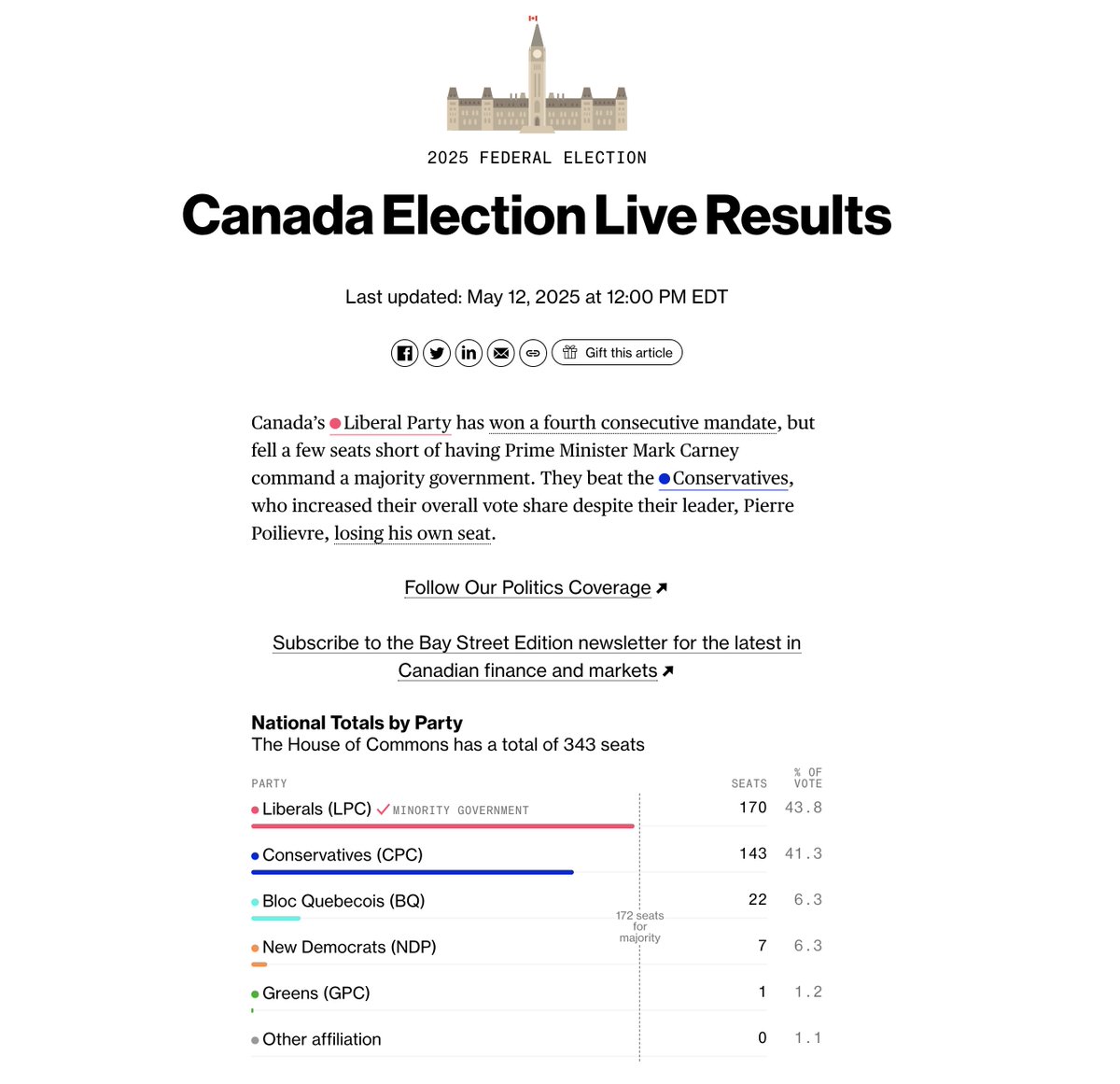
ALT Screenshot of the top of Bloomberg’s Canada Election Live Results for the 2025 Federal Election. A leaderboard chart at the bottom shows that the Liberals won 170 seats with 43.8% of the national vote, trailed by the Conservatives at 143 seats and 41.3% of the national vote.
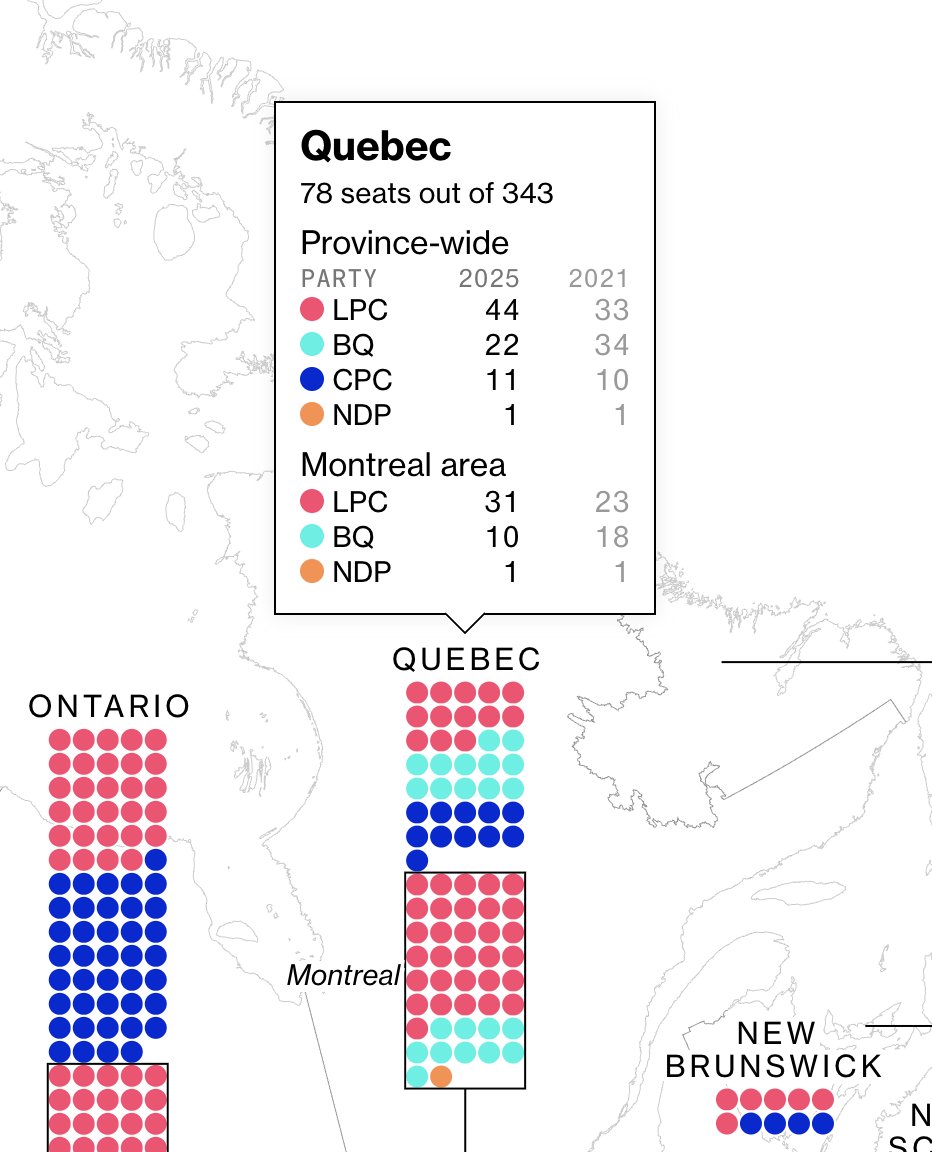
ALT Closeup of results of the 2025 Canada Federal Election in Quebec, with a breakdown of seats for the whole province (total seats 78, with LPC 44, BQ 22, CPC 11, NDP 1) and only for Montreal (LPC 31, BQ 31, NDP 1).


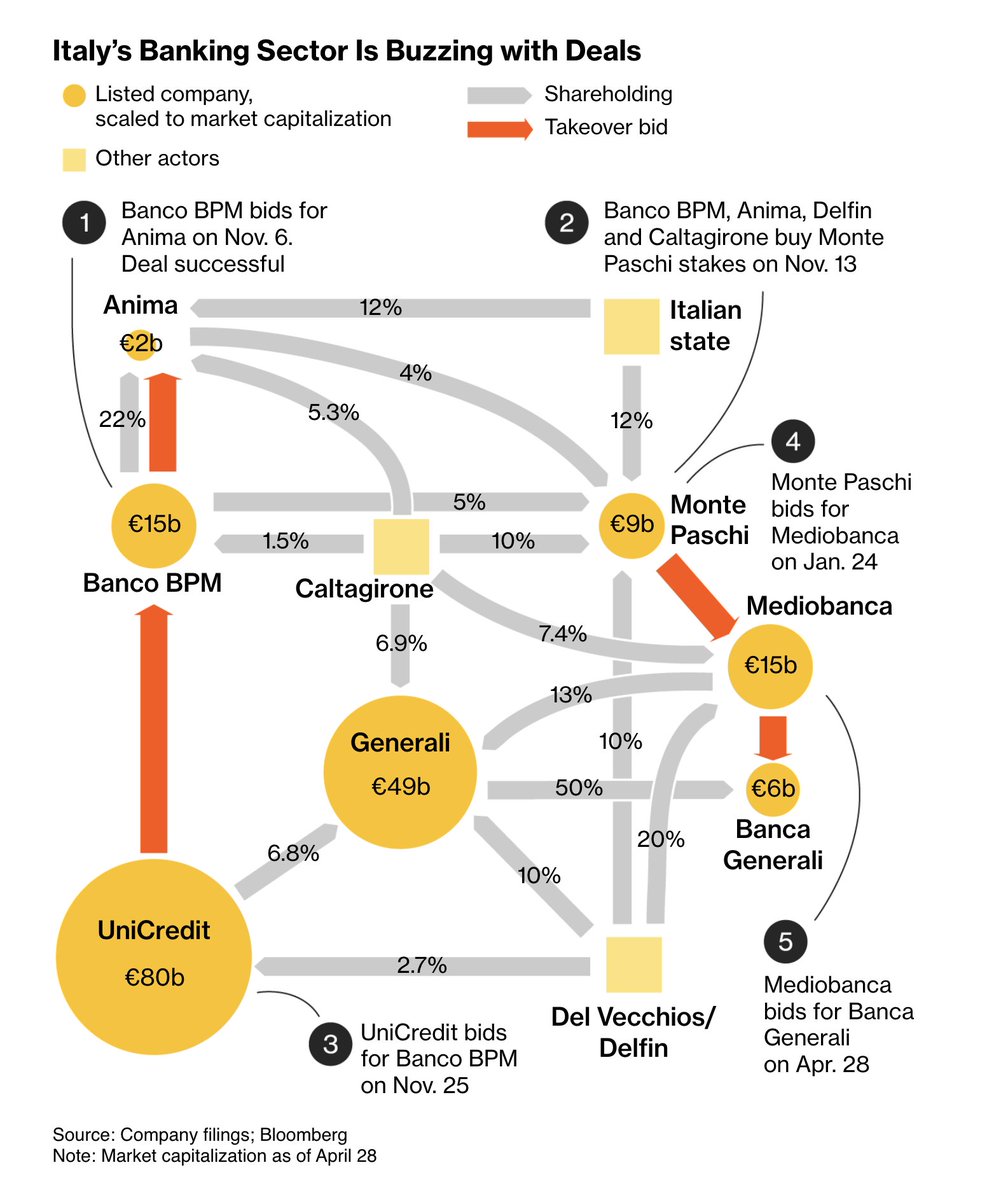
ALT A network map on Italian banking, between 6 listed companies, represented as orange–yellow circles scaled by market capitalization, and 3 other actors, such as the Italian state, as yellow squares. Shareholding is marked as gray arrows and takeover bids as orange–red arrows between the entities, sized by percentage. The largest entities were UniCredit (€80b) and Generali (€49b). Note 1 says that Banco BPM (€15b) bid for Anima (€2b) on November 6 and that the deal was successful. Note 2 indicates that a week after the Banco BPM bid, Anima, Delfin and Caltagirone buy stakes in Monte Paschi (€9b). The Italian state also held 12% of shares in each of Monte Paschi and Anima. Note 3 indicates that UniCredit bid for Banco BPM (€15b) on November 25. A fourth note on Monte Paschi said it bid for Mediobanca (€13.5b) on January 24. The last note says that Mediobanca bid for Banca Generali (€6b) on April 28. Market cap as of April 28.

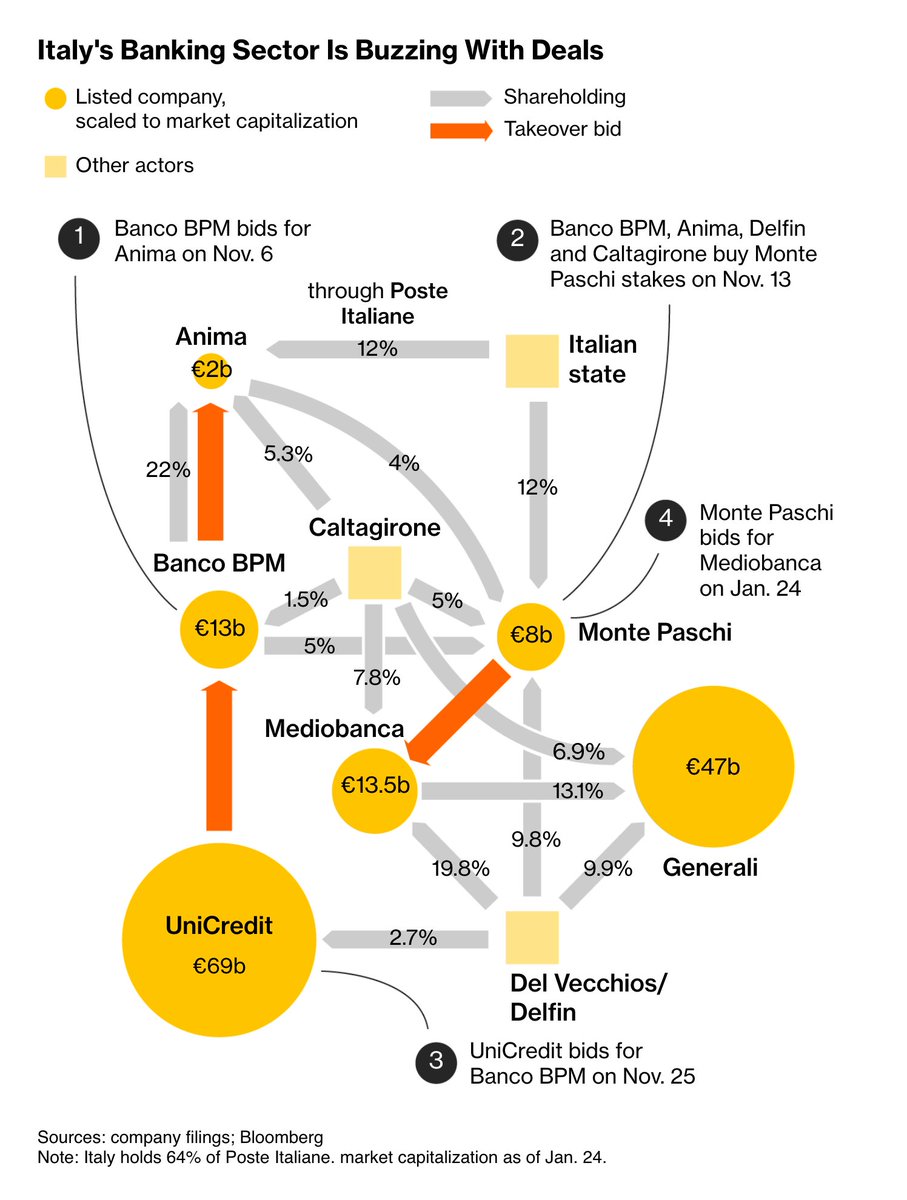
ALT A network map on Italian banking, between 6 listed companies, represented as orange–yellow circles sized by market capitalization, and 3 other actors such as the Italian state as yellow squares. Shareholding is marked as gray arrows and takeover bids as orange–red arrows between the entities, sized by percentage. The largest entities were UniCredit (€69b) and Generali (€47b). Note 1 says that Banco BPM (€13b) bid for Anima (€2b) on November 6. Note 2 indicates that a week after the Banco BPM bid, Anima, Delfin and Caltagirone buy stakes in Monte Paschi (€8b). The Italian state also held 12% of shares in Monte Paschi. The state also owned 12% in Anima, through Poste Italiane (Italy owned 64%). Note 3 finally indicates that UniCredit made a takeover bid for Banco BPM (€11b). A fourth note on Monte Paschi said it bid for Mediobanca (€13.5b) on January 24. Market cap as of Jan. 24
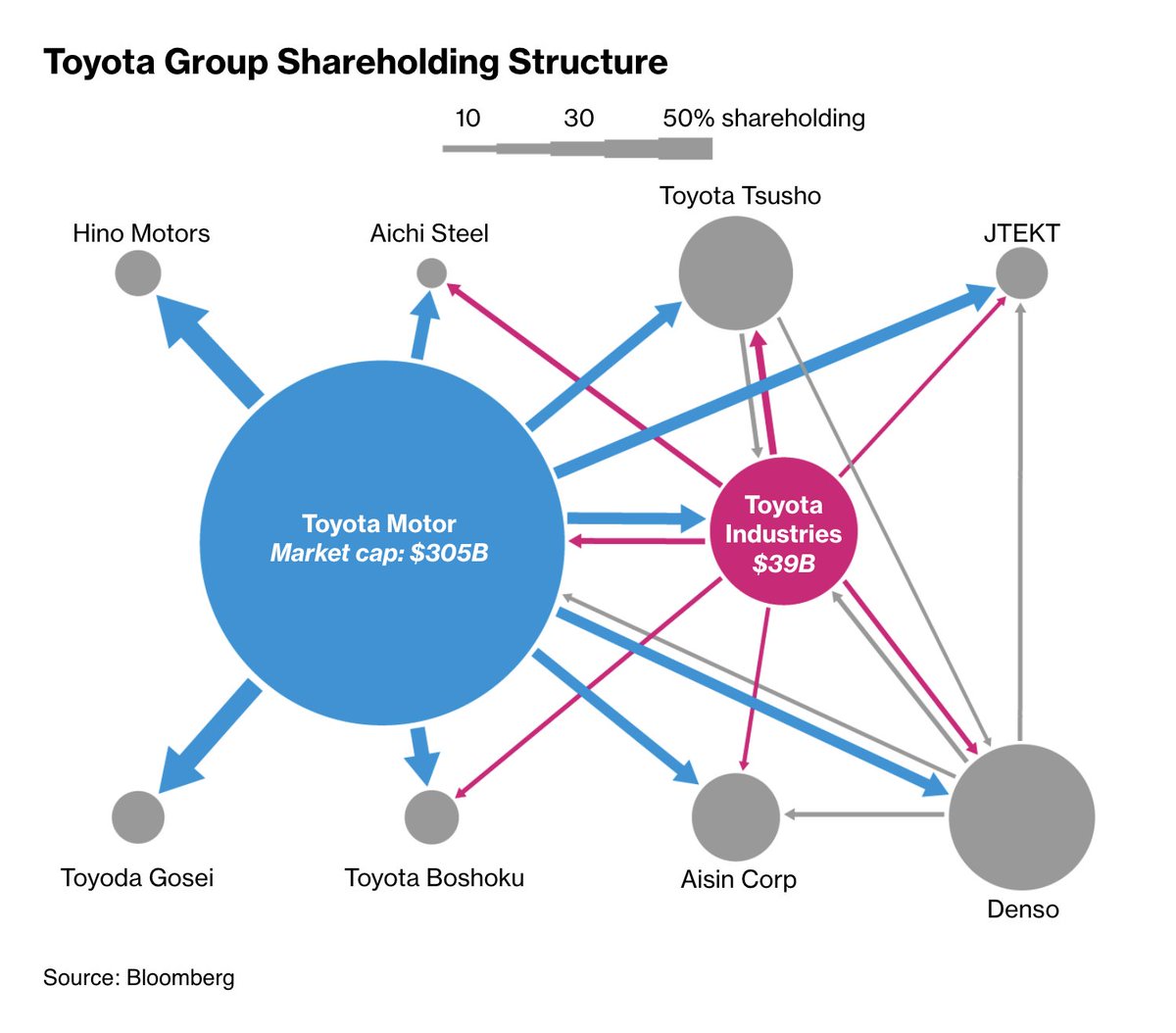
ALT A graph that represents Toyota Group’s shareholding structure, where 10 circles represent the companies, sized by their market capitalization and arrows between them whose thickness represent their % shareholding, from 10 to 50%. Toyota Motor with a market cap of $305B is the largest by far and is colored in blue. Toyota Industries, next to it, is $39B, with an arrow from Toyota Motor at about 20–30% shareholding. Other of the larger circles are Denso and Toyota Tsusho.
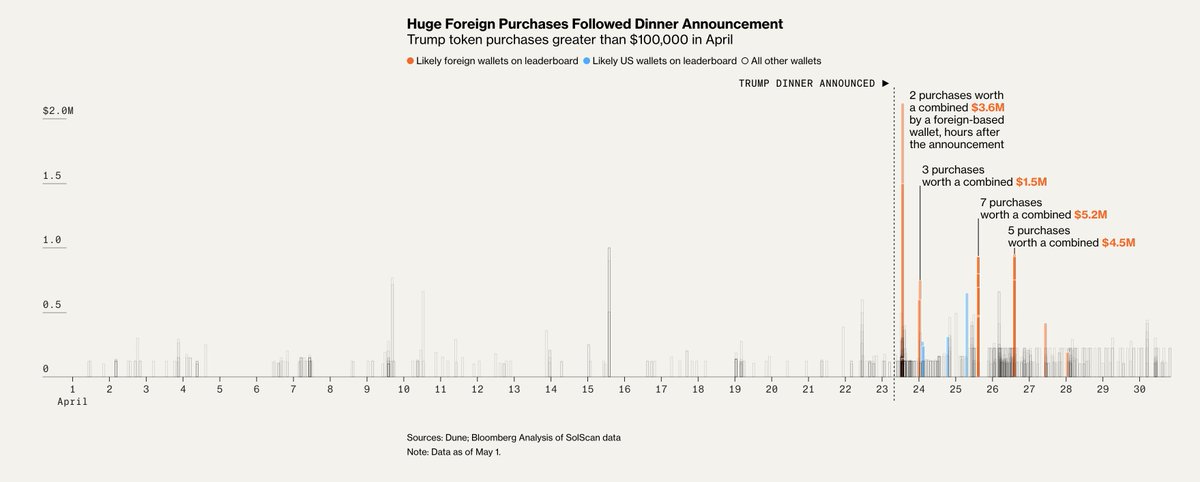
ALT A bar chart by hour of Trump token purchases greater than $100,000 in April 2025, with a y-axis scale that has a maximum of $2.0 million and bars that overlap to show the frequency and maximum amount of each purchase. The Trump dinner announcement is annotated as a dotted vertical line on April 23, with spikes in purchases up to 5 days after, annotated in orange (likely foreign wallets on leaderboard) and cyan (likely US wallets on leaderboard). The highest spike on April 23 said “2 purchases worth a combined $3.6M by a foreign-based wallet, hours after the announcement”, where the maximum of the two bars nearly reaches $2.0 million.
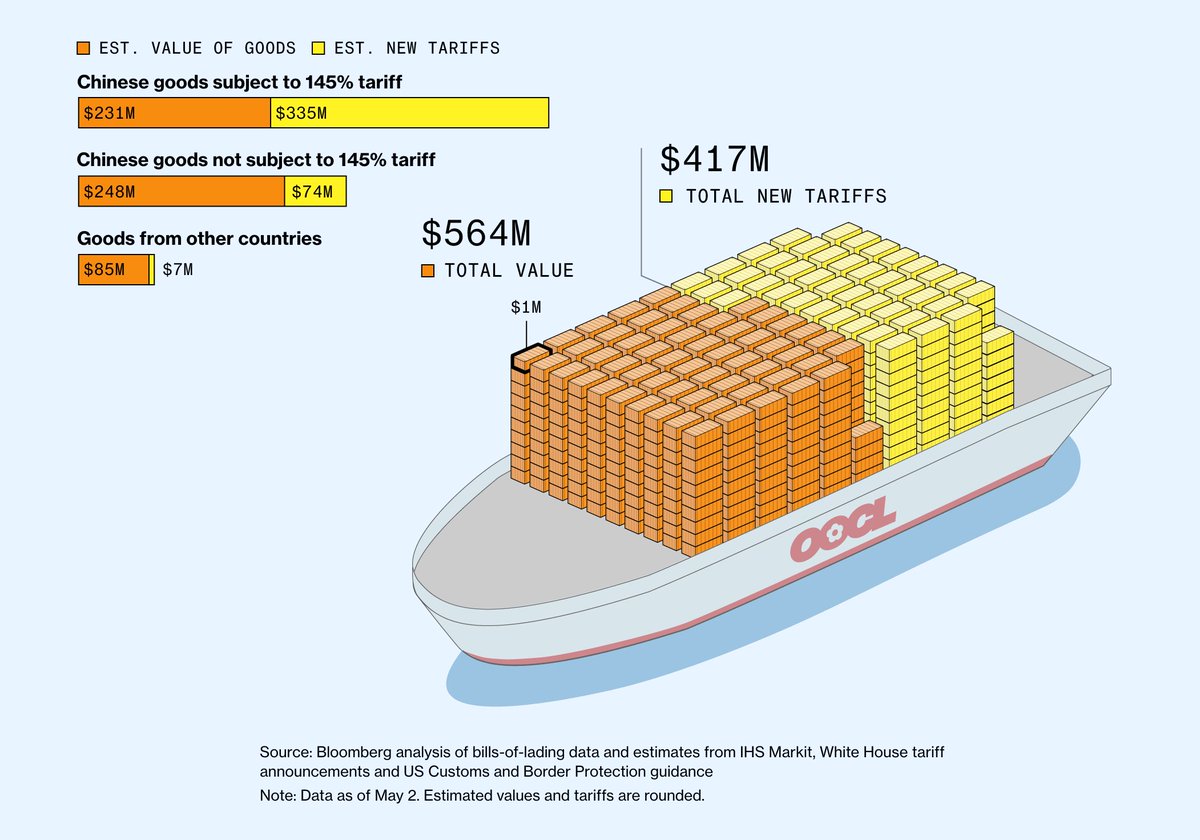
ALT An illustration of a ship with the OOCL logo, with container units representing $1M of value each of the cargo transported by the OOCL Violet that was being unloaded at Long Beach on April 24. The containers are split in two groups: the total value of goods in orange ($564M) and the total new tariffs in yellow ($417M). Three bars on the top left showed the breakdown between value of goods and estimated new tariffs in the same colors, breaking down the types of goods: more than half were Chinese goods subject to 145% tariff ($231M value of goods and $335M in new tariffs), while about a third were Chinese good not subject to the tariffs ($248M value of goods and $74M in new tariffs), and the remainder were good from other countries ($85M value of goods and $7M in new tariffs).
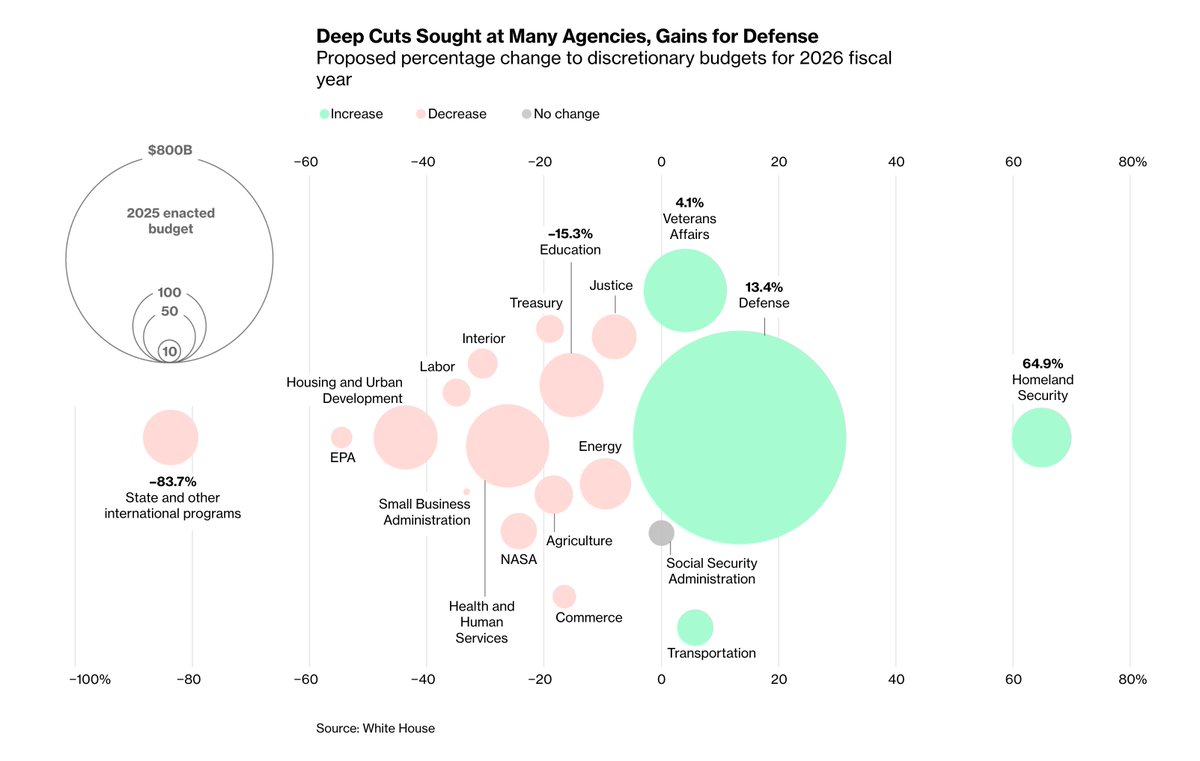
ALT A sparse beeswarm chart visualizing changes in the US 2026 preliminary budget proposed by the White House, where each circle is the discretionary budget for a department, sized by 2025 enacted budget, arranged on an x-axis by their percentage change for the 2026 fiscal year. The largest circle by far was defense (about $800B), and it was on the positive change side, at 13.4%. Homeland Security had the largest positive change by far, at 64.9% (sized to about $50–100B). Other larger circles, those representing more than about $50B, include Veterans Affairs (4.1%), Education (-15.3%), Health and Human Services (around -25%), Housing and Urban Development (-45%) and State and other international programs (-83.7%).
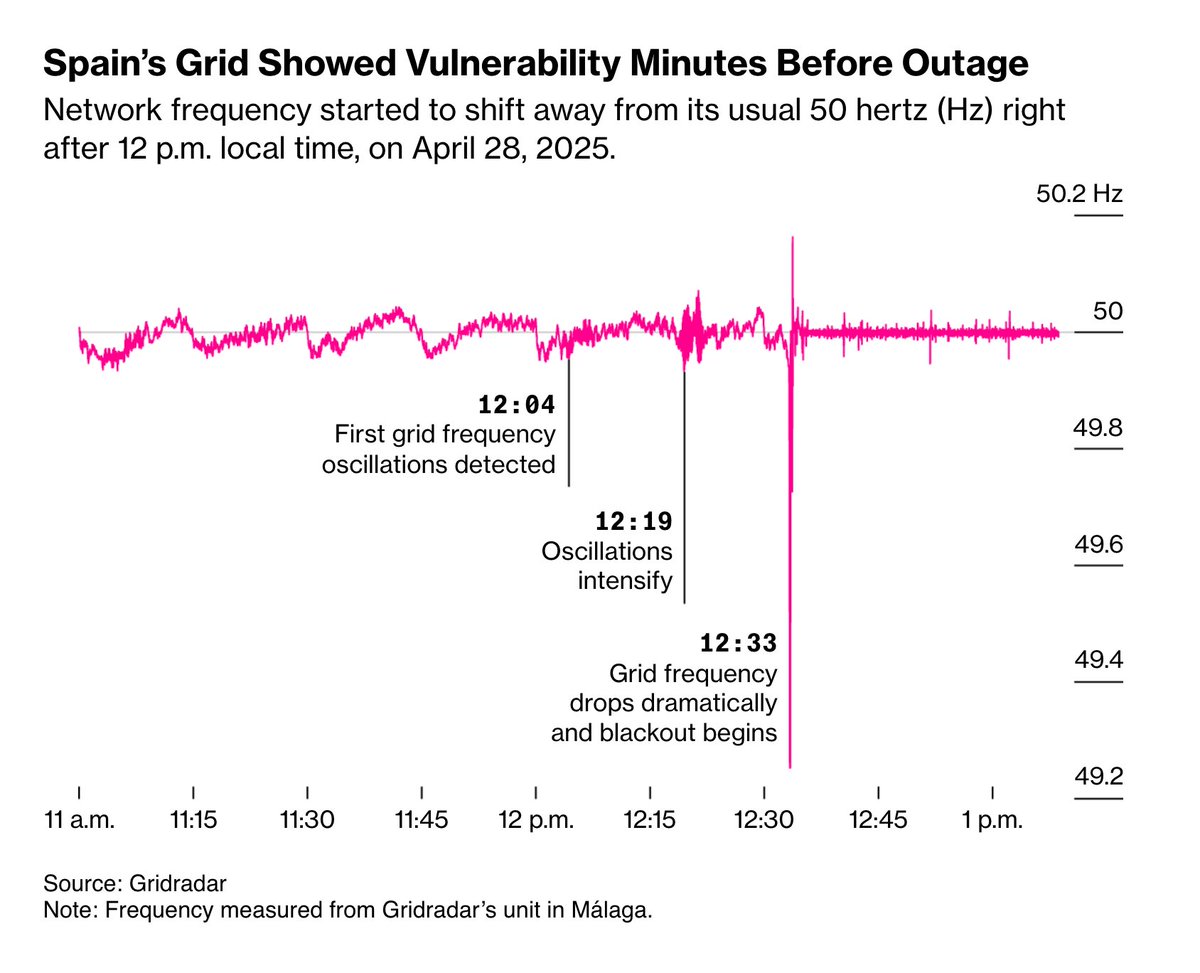
ALT An annotated line chart visualizing the network frequency (in hertz) in Málaga, prior and during the power outages in Spain and Portugal on April 28, 2025. Three events when frequencies started shifting away from the usual 50 hertz (y-axis range from 49.2 to 50.2) are marked: at 12:04 local time, “First grid frequency oscillations detected” (not much deviation), at 12:19, “Oscillations intensify” (a few spikes deviating less than 0.1 hertz around 50), and at 12:33, “Grid frequency drops dramatically and blackout begins” (spike spans the whole y-axis range).