
Behavioral & Brain Sciences (est 1978). Publisher = @CambridgeUP, ed. @paulbloomatyale & @neuro425. RT/like =|= editorial endorsement. Tweets by @joseph_fridman
Joined December 2013
- Tweets 2,129
- Following 3,838
- Followers 7,758
- Likes 3,094
117 Photos and videos
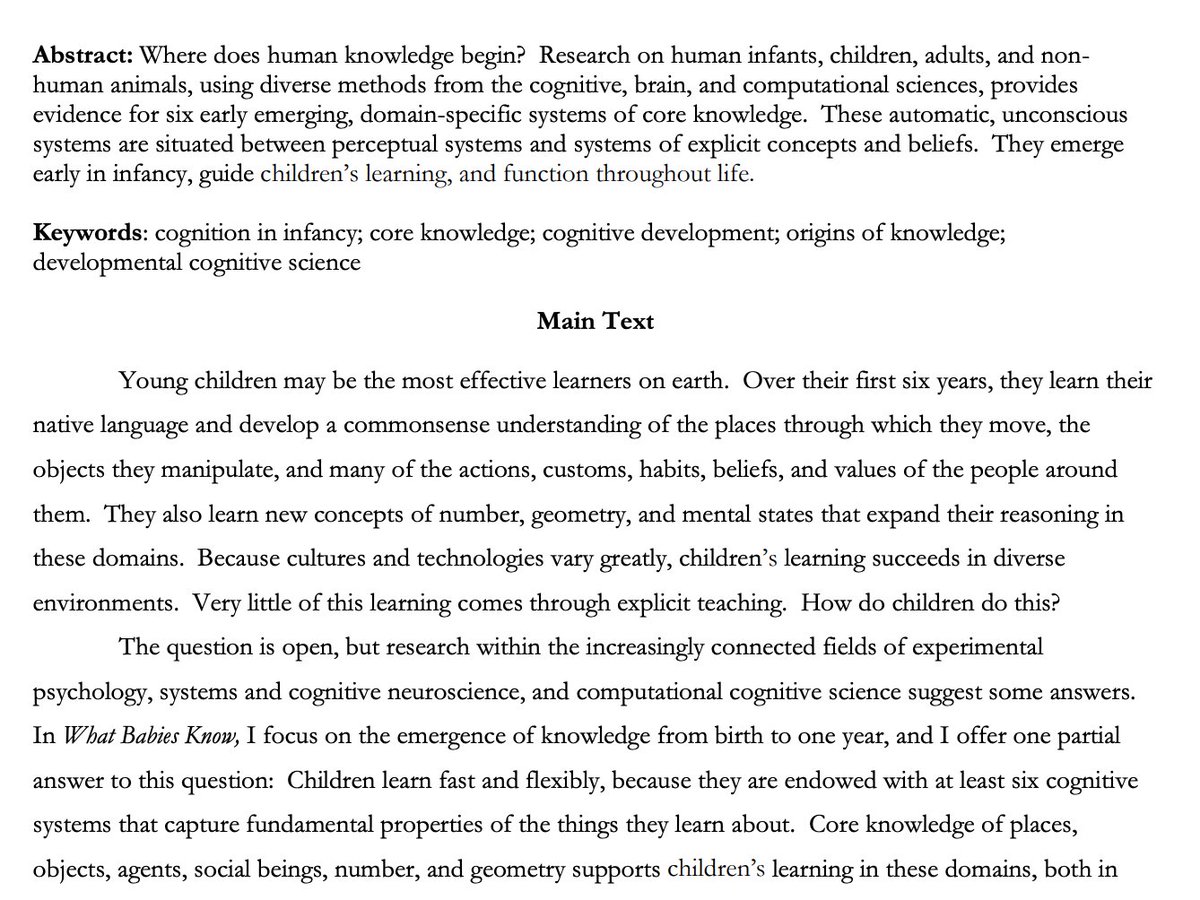
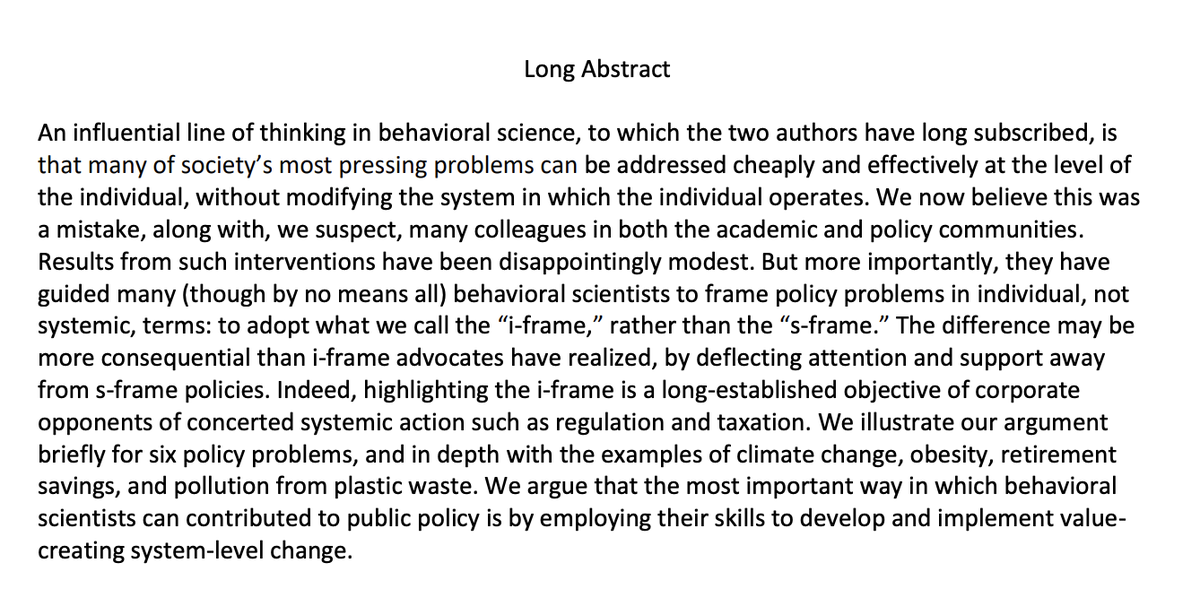
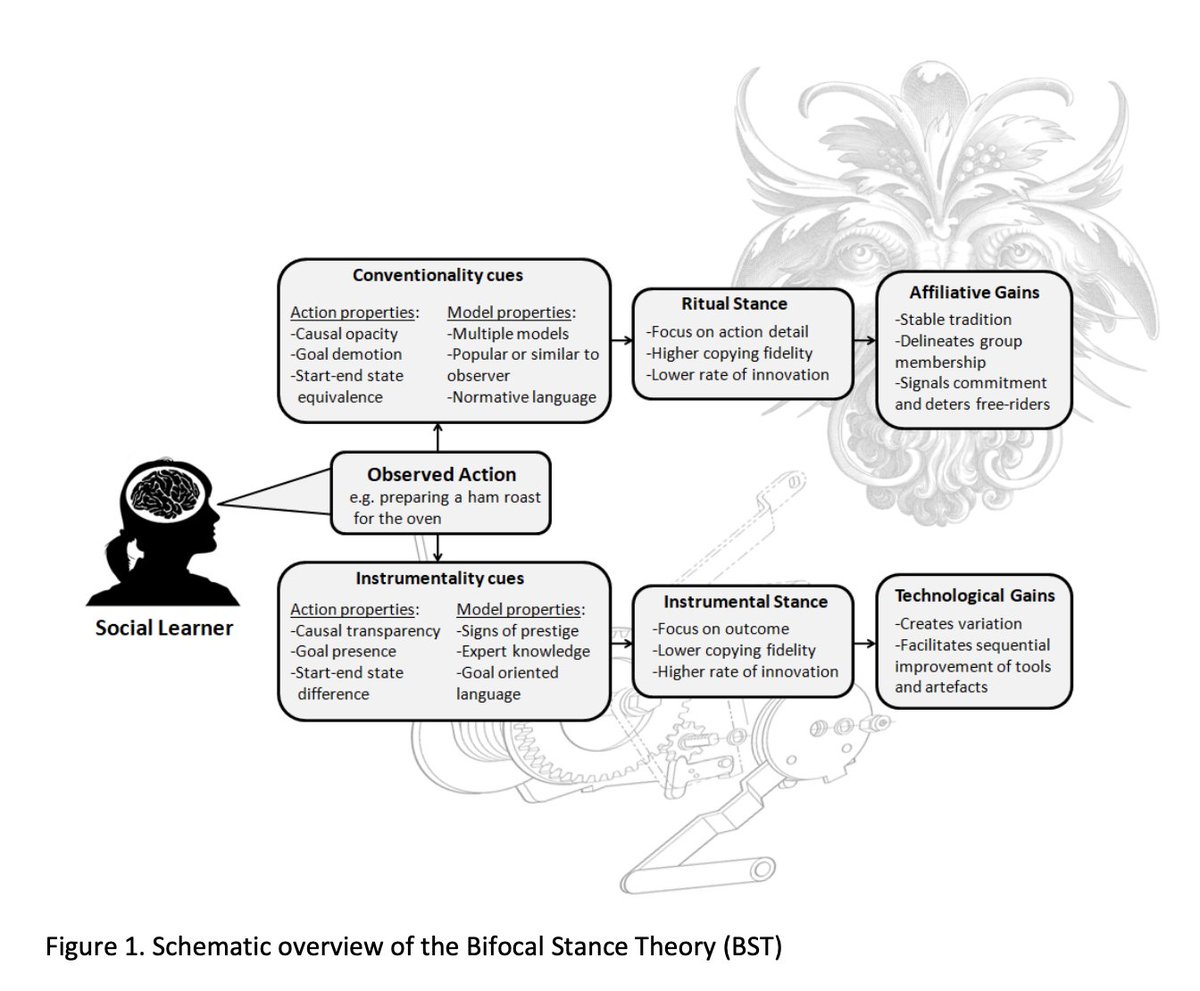
Behav. Brain. Sci. retweeted

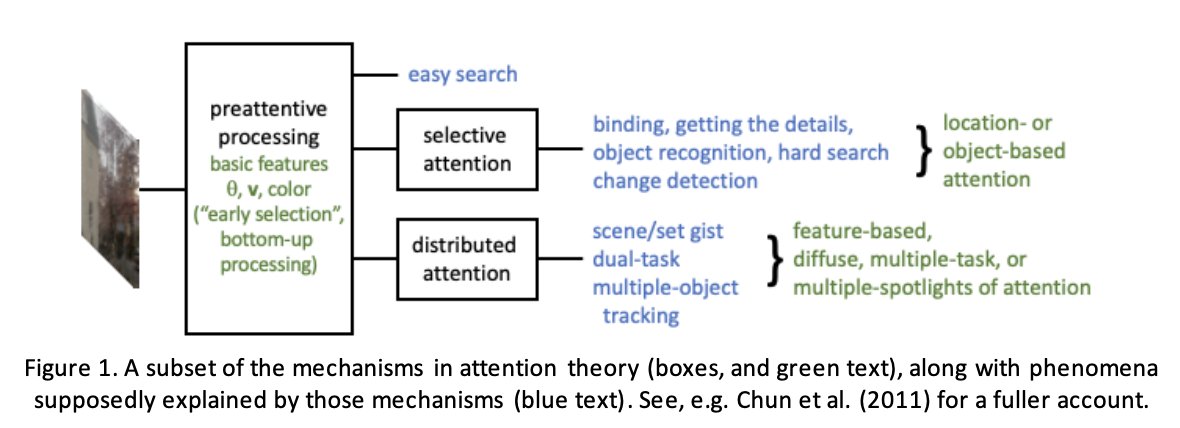
5/28 (木):「視覚的注意の危機」
視覚的注意の実験や概念等の限界と、来たるべきパラダイムシフトについて論じているBBS論文をとりあげます。
Rosenholtz, R. (2025). Visual Attention in Crisis. Behavioral and Brain Sciences, 48, e130. doi.org/10.1017/S0140525X240…
3
3
738
Behav. Brain. Sci. retweeted

18 Jun 2025
Interestingly several people have asked me about this paper on neural coding. As soon as the preprint was posted, a student asked me about it. I think it's a thoughtful and clearly written paper, though most of the ideas presented are obvious to me. It was fascinating to read the BBS responses, as many of the people who wrote commentaries didn't seem to understand it. I recently had a chance to chat with Romain about this impression, and he completely agreed with me. He too was surprised that so many people didn't understand the paper. Just shows how much brainwashing there is in neuroscience. cambridge.org/core/journals/…
2
5
33
5,335
What if the brain has more representational capacity than it needs
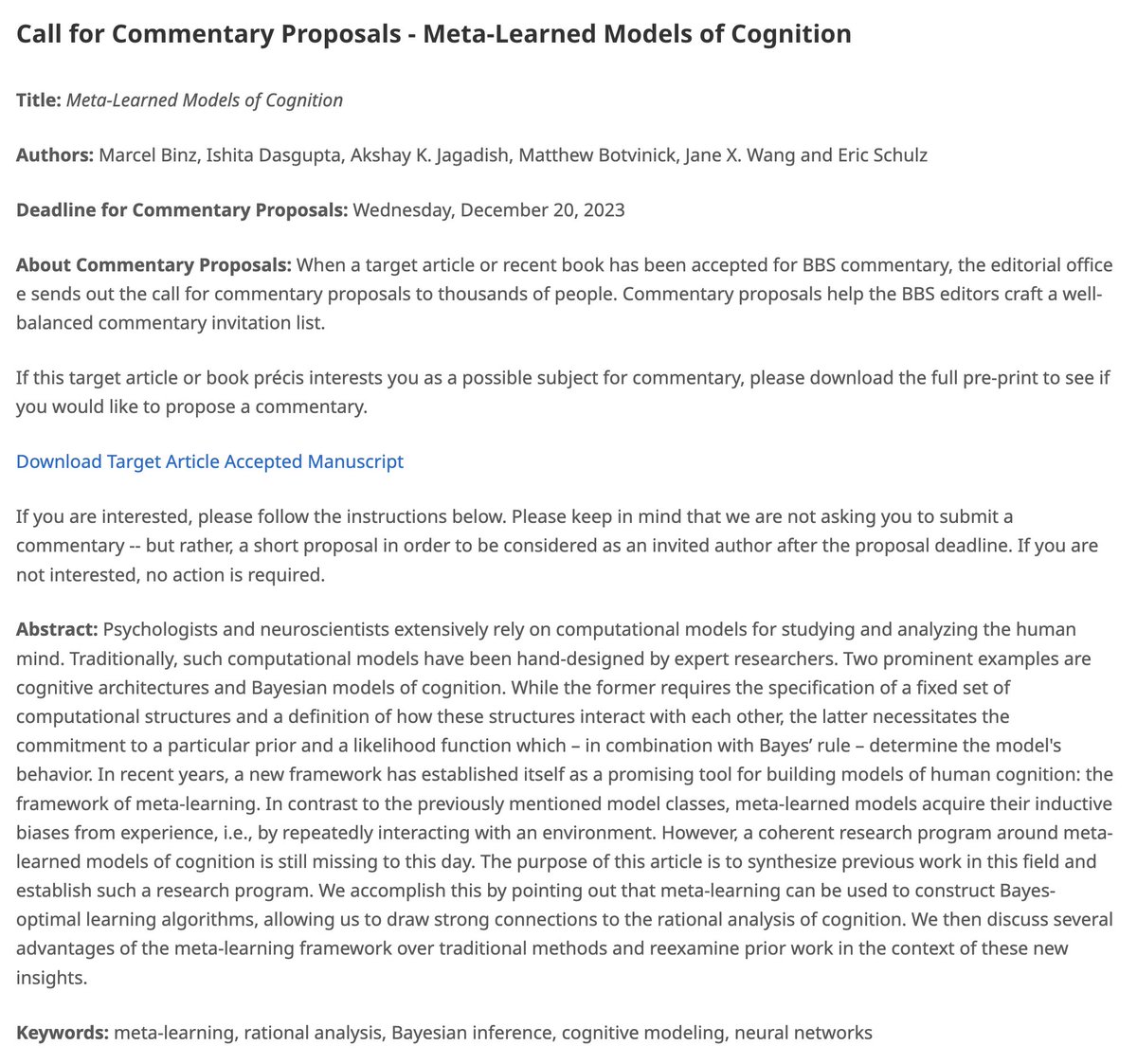
Call for commentary proposals on "Excess Capacity Learning" by @dubova_marina & @sabinasloman!
Propose your comment here: cambridge.org/core/journals/…
Preprint: cambridge.org/core/services/…
6
22
2,009
Behav. Brain. Sci. retweeted

Apr 20
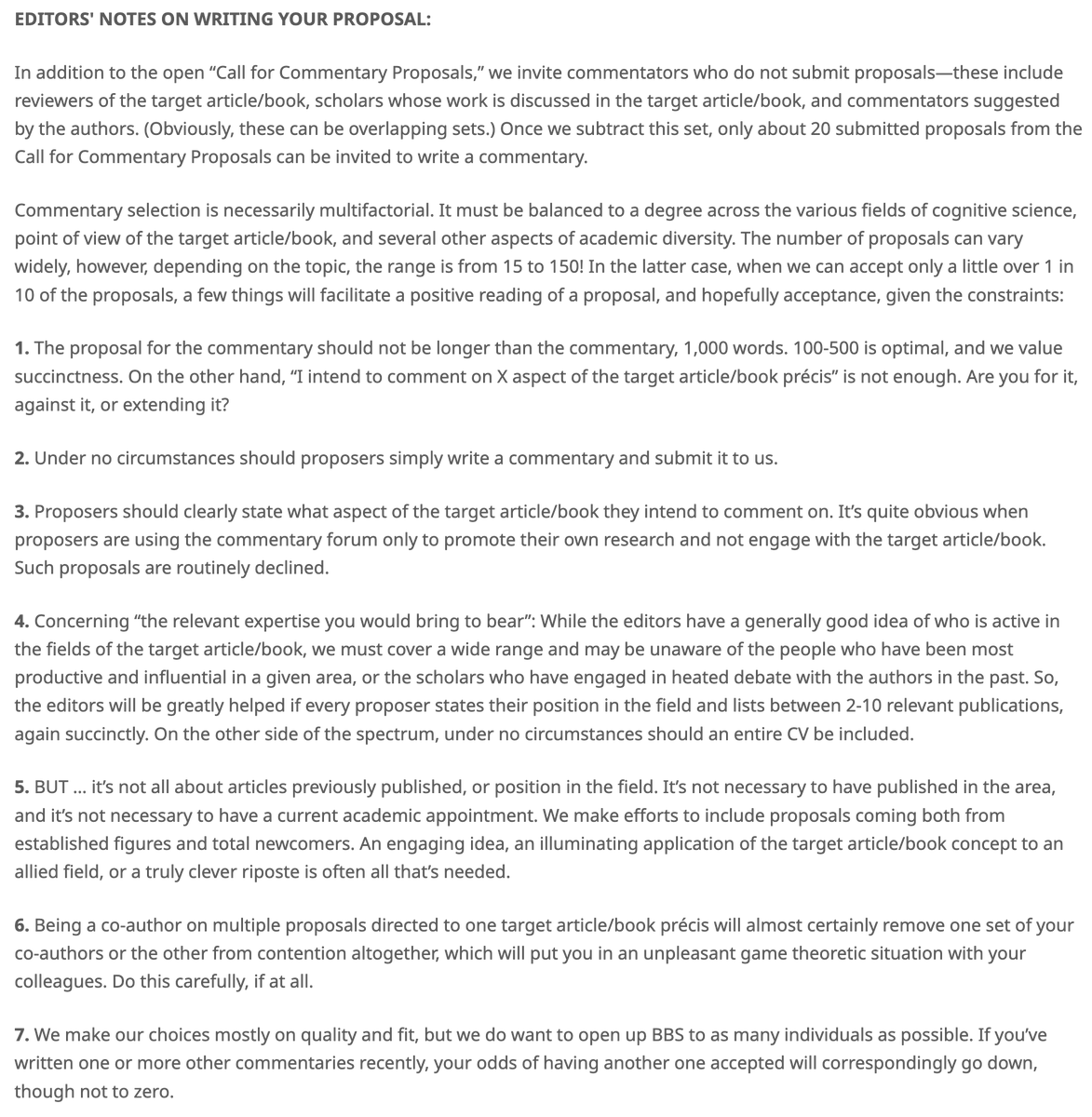
full manuscript supplementary materials: osf.io/preprints/psyarxiv/vx…
accepted manuscript: cambridge.org/core/journals/…
instructions for commentary proposals: drive.google.com/file/d/1XkB…
1
1
381
Behav. Brain. Sci. retweeted
Apr 20
Ever thought we acquire generalizable knowledge by discarding details and compressing our experiences?
In a new BBS paper, Sabina Sloman and I argue otherwise, proposing a way of studying human learning inspired by double descent in ML.
Disagree? Commentaries due May 15 :)
1
3
8
734
Why is it so hard to lie with your whole body?
Call for commentary proposals on Multimodality as a safeguard of honesty in communication and language: from Animals to Humans by @HexSeverine, Erin Isbilen, @MH_Christiansen & Daniel Rubenstein!
Learn more: cambridge.org/core/journals/…
2
6
581
Behav. Brain. Sci. retweeted

In poverty, do people take risk? Some theories contend that they avoid risk out of caution. Others that they take risks (e.g. crime) out of desperation
In our new paper in BBS, we show that they are the two sides of the same coin: the desperation threshold
cambridge.org/core/journals/…
1
2
9
843
Behav. Brain. Sci. retweeted

27 Nov 2025
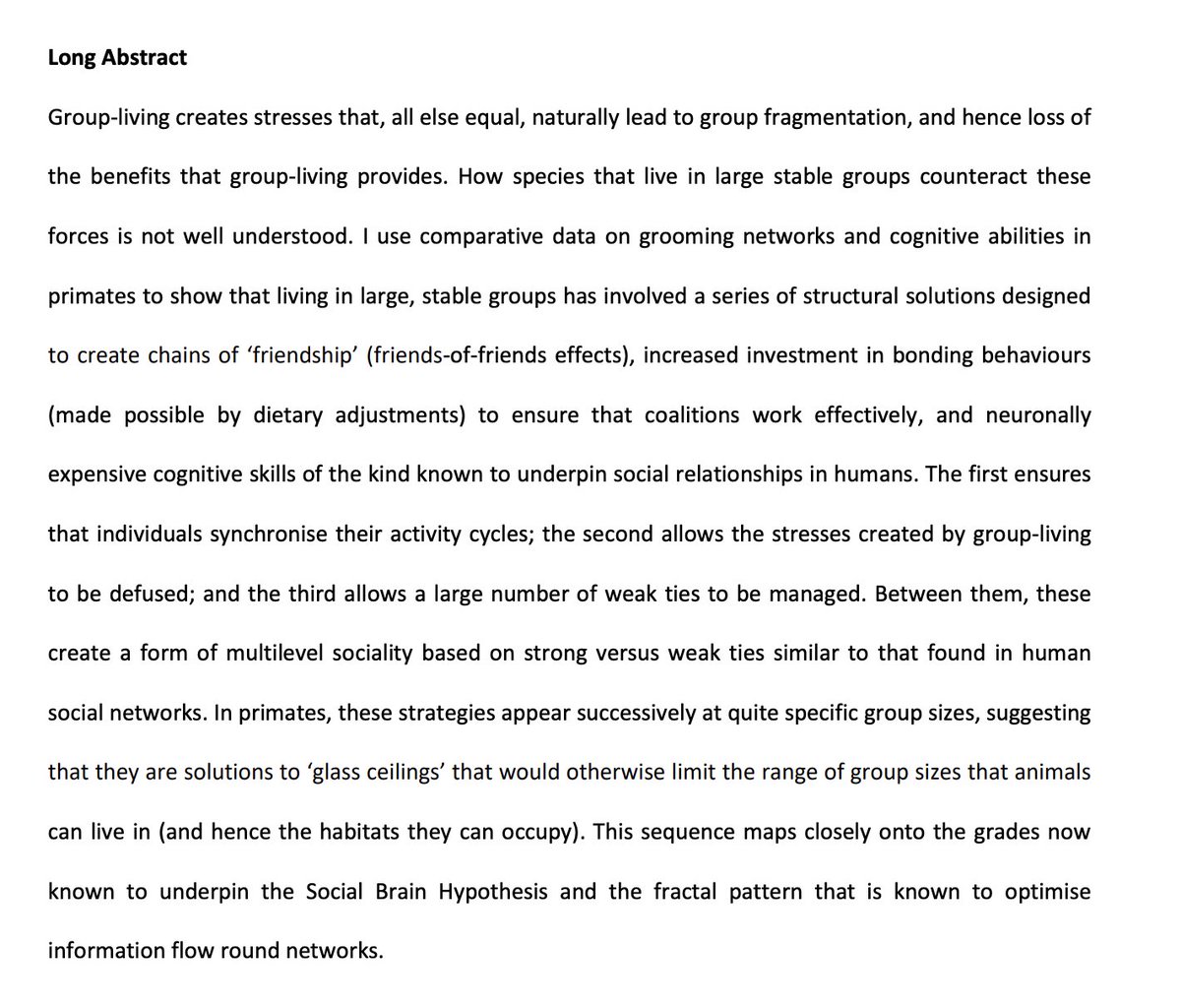
Just out! 👇 Check my commentary to Robin Dunbar's great target paper in BBS
✅ Dunbar's paper 👉
cambridge.org/core/journals/…
✅My commentary 👉
cambridge.org/core/journals/…
5
9
1,116
Behav. Brain. Sci. retweeted

1 Dec 2025
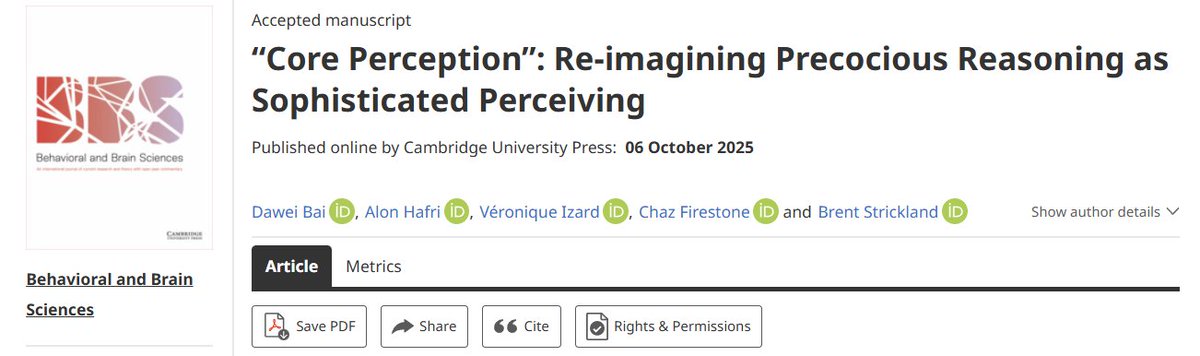
📣The call for commentaries is now open for our BBS paper 'Core Perception' (until Dec. 29)!
For details, visit: cambridge.org/core/journals/…
9 Oct 2025

Our @BBSJournal target article has been accepted: "Core Perception": Re-imagining Precocious Reasoning as Sophisticated Perceiving
With @AlonHafri , Véronique Izard, @chazfirestone & @stricklandbrent
Read it here: doi.org/10.1017/S0140525X251…
A short thread [1/5]👇
4
4
720
Behav. Brain. Sci. retweeted

18 Nov 2025
📣New BBS Article!📣
"Models casting egalitarian societies as crucibles of equality perpetuate the uninformed notion that foragers are somehow more noble. Critiques portray egalitarianism as romantic fantasy. Neither characterization is wholly justified"
doi.org/10.1017/S0140525X251…
3
15
39
7,447

4 Dec 2025
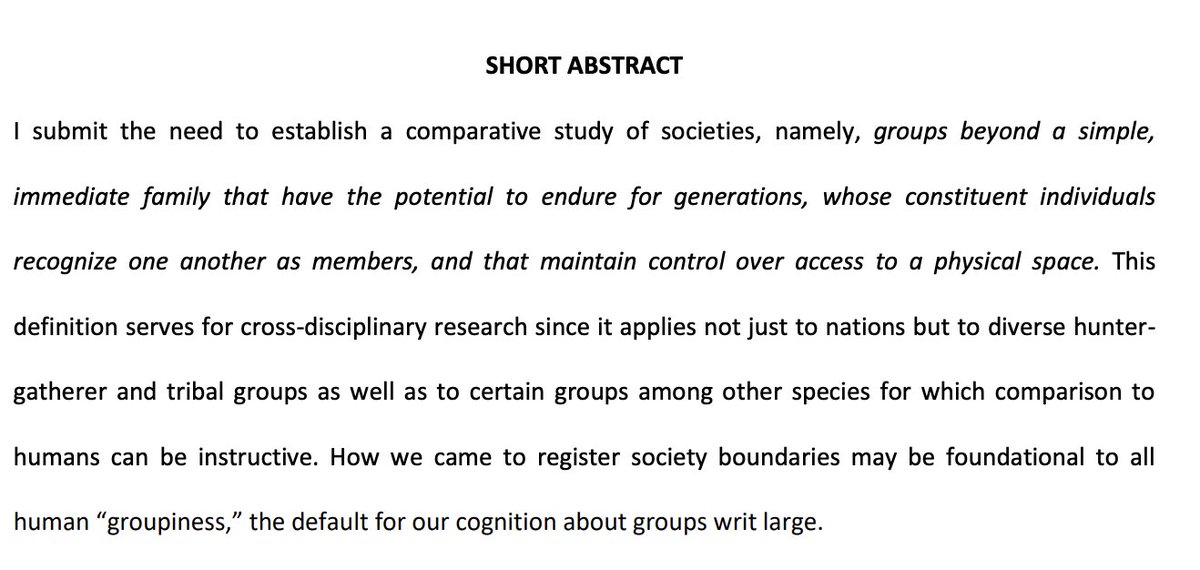
Call for commentary proposals on “Social Tinkering: The Social Foundations of Cultural Complexity” by @NickJChater & @MH_Christiansen!
How do local tweaks to social rules scale?
Propose your comment here: cambridge.org/core/journals/…
Preprint: cambridge.org/core/services/…
3
407
3 Dec 2025
"The human brain makes up just 2% of body mass but consumes closer to 20% of the body’s energy."
Press release about this new target article by Philipp Haueis and David J. Colaço: aktuell.uni-bielefeld.de/202…
And submit your proposal to comment here: cambridge.org/core/journals/…
4
4
991
Behav. Brain. Sci. retweeted
9 Oct 2025
Our @BBSJournal target article has been accepted: "Core Perception": Re-imagining Precocious Reasoning as Sophisticated Perceiving
With @AlonHafri , Véronique Izard, @chazfirestone & @stricklandbrent
Read it here: doi.org/10.1017/S0140525X251…
A short thread [1/5]👇
1
10
28
7,762
Behav. Brain. Sci. retweeted

4 Jul 2025
@mnvrsngh on “Subjective selection, super-attractors, and the origins of the cultural manifold” in BBS cambridge.org/core/journals/…
1
2
13
625
Behav. Brain. Sci. retweeted

2 Oct 2025
The call for commentaries on our BBS paper is out now (deadline Oct 15): shorturl.at/Hu3Yu. In the paper (shorturl.at/4Rbk6), we provide recommendations and outstanding issues for studies on unconscious processing
1
2
5
335
Behav. Brain. Sci. retweeted

25 Aug 2025
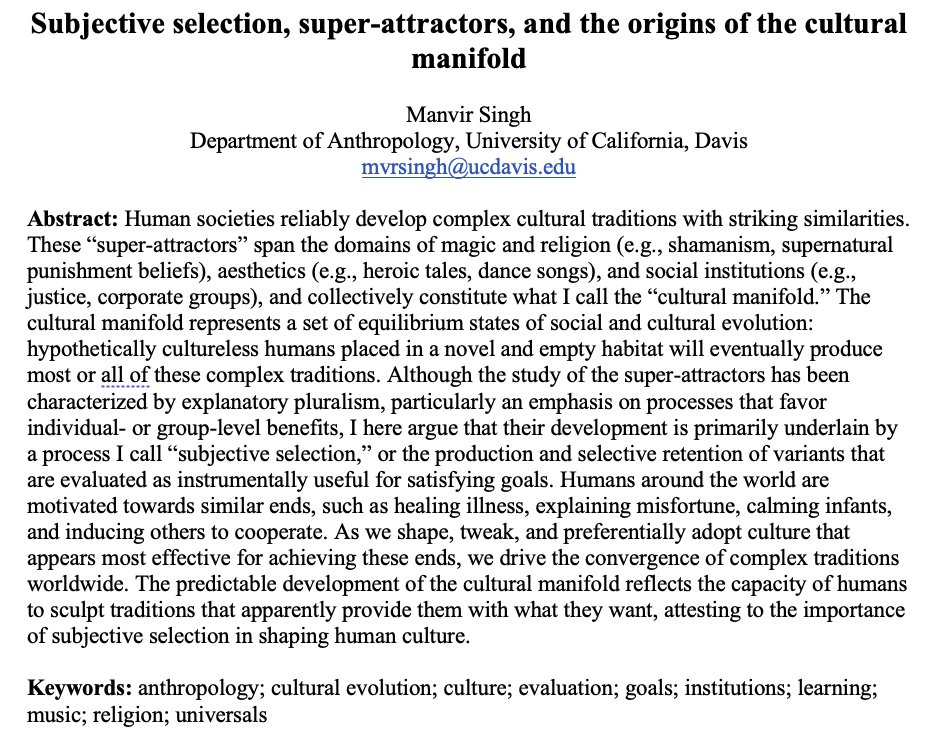
I've called this process "subjective selection" and argue that it underlies much of cultural evolution, including the predictable development of these complex near-universals.
Download: cambridge.org/core/journals/…
Call for commentaries: cambridge.org/core/journals/…
2
3
22
1,524
Behav. Brain. Sci. retweeted
25 Aug 2025
Why do societies reliably develop strikingly similar traditions like dance songs, hero stories, shamanism & justice institutions?
In a @BBSJournal target article, I propose a theory for such "super-attractors" the evolution of culture more broadly. Online & open for commentary
7
56
222
44,924
24 Jul 2025
Propose your commentary by Aug 15!
Learn more: cambridge.org/core/journals/…

"we present scientific arguments, w/ evidence, that developmental psych theories, & in consequence developmental research, need to be updated, considering the diversity that exists in the human species but is ignored w/in current theories of human nature" cambridge.org/core/journals/…
1
1
654

"we present scientific arguments, w/ evidence, that developmental psych theories, & in consequence developmental research, need to be updated, considering the diversity that exists in the human species but is ignored w/in current theories of human nature" cambridge.org/core/journals/…
1
2
1,127
Behav. Brain. Sci. retweeted

28 Jun 2025
🚨New in @BBSJournal:
"Ecological Affordances across Life Stages: An Affordance Management Framework" is out as a target article & now open for commentary proposals! Ever wonder why an environment once full of promise 🥰 can later feel constraining 😮💨? doi.org/10.1017/S0140525X250… 🧵
2
11
19
1,668