
I write about business and economics for @nytopinion. If you like these tweets, try my book, The Economists' Hour: bit.ly/3F9vFGF
Joined November 2009
- Tweets 23,897
- Following 1,065
- Followers 91,063
- Likes 3,472
Photos and videos

30 Nov 2024
The animating principle of the Democratic Party is that government can improve the lives of the American people. The housing crisis is manifest proof that government is failing to do so.
nytimes.com/2024/11/30/opini…
8
4
34
6,377
26 Nov 2024
I was under the impression that it's only an official legally binding definitely happening policy if the president tweets it. Does Truth Social have the same status? Legal scholars please weigh in.
3
1
17
6,010
12 Nov 2024
Fun to think who I'd put on an American Mt. Rushmore. For me maybe Faulkner, McCarthy, Cather & Wharton.
12 Nov 2024

My Mt Rushmore of Russian novelists: Dostoevsky, Tolstoy, Solzhenitsyn, Grossman. Can any other nation come close?
6
8
7,752
29 Oct 2024
And local coverage isn't just in the local section. I have a regular appointment on Friday mornings with Tom Sietsema's weekly Q&A about local restaurants in the Weekend section.
29 Oct 2024

It's important to have more than just one or two papers providing national news and commentary in a country of 335 million.
Despite all the cuts, the local section still provides essential coverage of a major metro area.
They have two of the best art critics.
#whyisubscribe
7
7,744
29 Oct 2024
I subscribe to the Washington Post because it provides excellent, essential coverage of my community. DC is very lucky to still have a great local newspaper. #WhyISubscribe
8
4
49
10,288
Binyamin Appelbaum retweeted

29 Oct 2024
I know many of you will roll your eyes at this, but that's OK; I wouldn't be in this field if I was afraid of being dunked on every now and then.
When I first came to The Washington Post in 2017, I was extremely wary it would be too establishment for me. Too corporate. Too deferential to power.
What I have instead found over the last seven years is that the paper has consistently given me a unique, awesome platform to fulfill the highest calling of journalism -- to comfort the afflicted, and to afflict the comfortable.
The Post has spared no resource in allowing me to pursue this mission. It flew me to Puerto Rico to interview hurricane victims cut off from federal food stamp aid. To Maine to cover the long-term care crisis facing the nation's elderly. To Kentucky to document the closure of a steel plant. To Las Vegas to cover the housing crisis. To Wisconsin for farmers caught in the crosshairs of a trade war. To Detroit for a story on the nation's unraveling safety net. To the Bronx to chronicle appalling public housing conditions. (OK, I took the train there.) To Ukraine to cover a war. To Indonesia for meetings of the world's most powerful financial leaders.
Since the beginning of the year, the Post has devoted thousands of manpower hours to a series -- six parts published thus far -- on the unintended consequences of U.S. sanctions. This effort included paying me and a team to travel to northeast Guatemala to chronicle an economic calamity almost 2,000 miles away from my desk, in one of the poorest parts of the world. At least 20 people have worked on this series alone. The Post did not greenlight this series because it thought there would be huge pageviews in U.S. sanctions policy; it did so because it's important for the public to understand how the surging use of the tool is affecting the world and the nation's foreign policy. It did so because the story matters.
I fully understand the misgivings people have expressed about billionaire control over our journalism. (I published a story today -- pitched by an editor, put by editors on today's front page -- about billionaires threatened by Trump who are now hedging their bets.) But these are stories that require more than just substantial resources; they require a devotion to journalism that seeks to document how machinations in Washington affect the lives outside it.
I could try a Substack where I spout off whatever happens to be in my head that day. I could work for a publication that only caters to lobbyists and elite insiders. But there are precious few publications still doing the coverage -- however incomplete; however still in need of improvement -- aimed at serving the broader public at large. I believe The Washington Post is one of them.
I am not here to tell anyone what to do. We are imperfect. My work can suffer from negativity bias, recency bias, imperfect data, faulty assumptions, motivated sources. I get things wrong. My journalism can be flawed and you should yell at me on twitter when it is. I want to be more transparent about the decisions I make and the stories I publish.
But I promise you: I and many, many other journalists throughout this newsroom would quit The Washington Post if we ever felt our work was not in service of the public at large. That is the point of the job. That is why I hope we get to do it for as long as possible.
444
527
3,479
1,127,188
25 Oct 2024
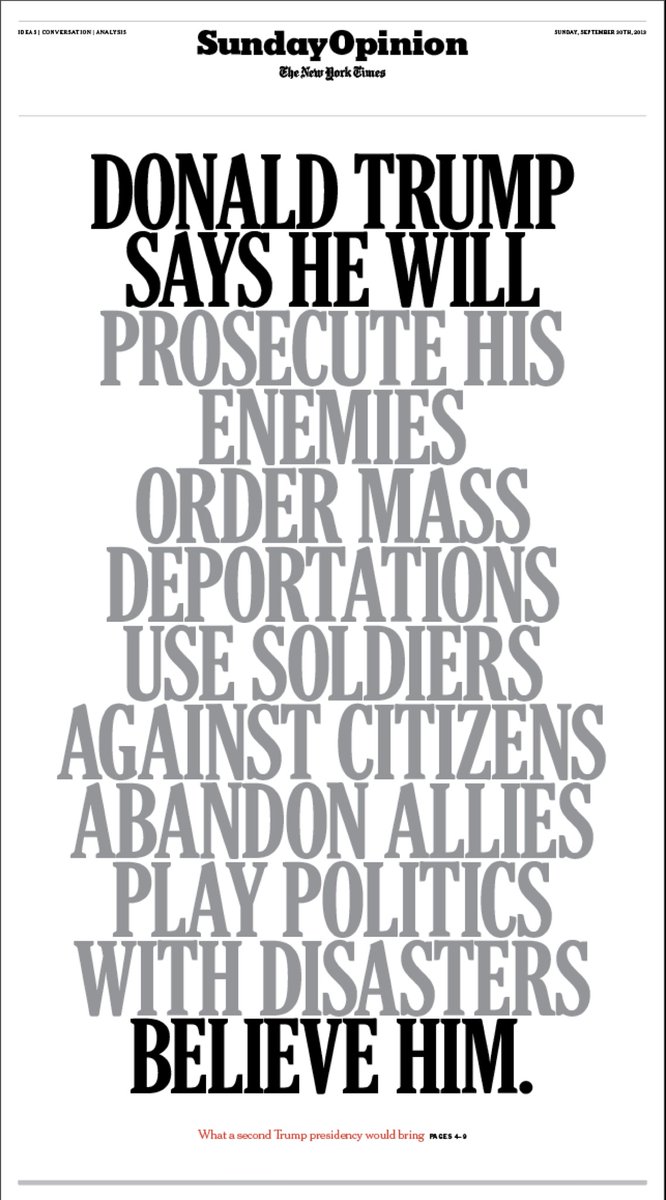
Trump is telling us what he would do. Believe him.
nytimes.com/interactive/2024…
1
1
5
2,897
22 Oct 2024
Has there ever been an American president who would make a good or even a decent babysitter? I guess Jimmy Carter is the obvious answer and well...
22 Oct 2024

.@Liz_Cheney: If you wouldn't hire somebody to babysit your kids, you shouldn't make that guy the President of the United States
11
20
11,027
Binyamin Appelbaum retweeted

30 Sep 2024
About 1 month before the election, I interview @BCAppelbaum @greg_ip @HorsleyScott & @byHeatherLong for @EconoFactOrg Chats on Candidates views on #FederalReserve , #Immigrationpolicy #Tariffs #SupplyChain & more econofact.org/podcast/the-ne…
3
6
4
13,627
28 Sep 2024
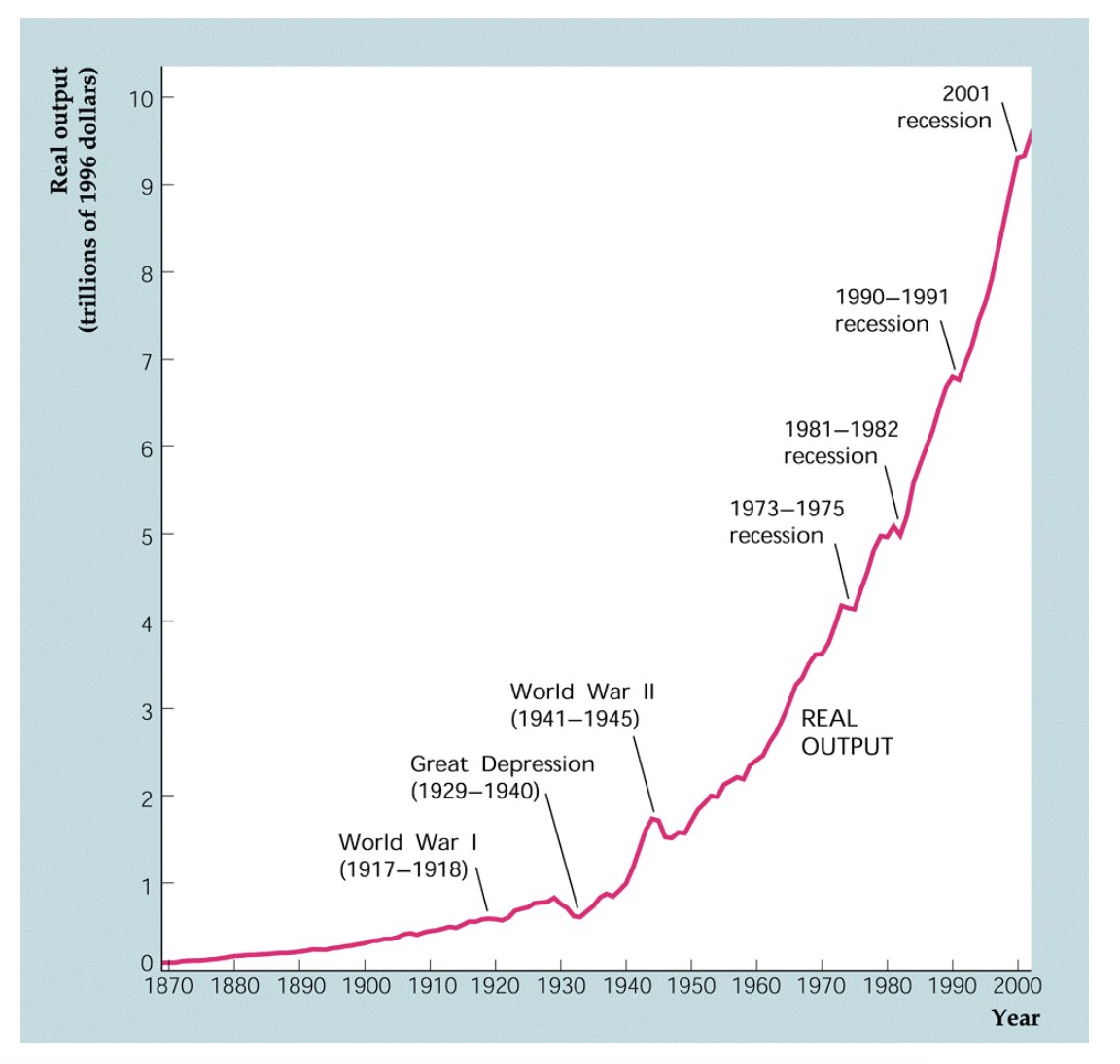

Trump: In the 1890's, our country was probably the wealthiest it ever was because it was a system of tariffs. We had a president, you know McKinley. Remember Mount McKinley?
16
69
273
124,204
12 Sep 2024
I'm not sure what a "prosperity economy" is but I do know this much: Donald Trump's economic agenda would be a disaster. nytimes.com/2024/09/12/opini…
4
10
3,446
Binyamin Appelbaum retweeted

11 Sep 2024
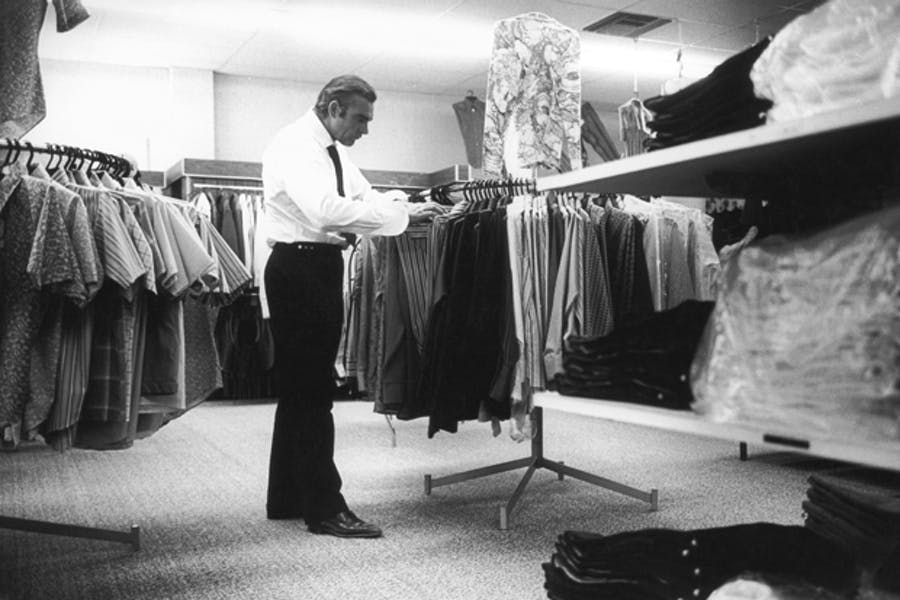
Some misinformation in today's US presidential debate about who bears the cost of tariffs. So let's talk about how tariffs affect what you pay for a suit. 🧵
609
7,093
41,094
6,140,339
11 Sep 2024
Commercials during presidential debates are a disgrace.
3
3
64
7,466
10 Sep 2024
Ms. Harris has begun to describe thoughtful plans that could help American families to better afford the things they need and want. Mr. Trump has offered a mix of bad ideas and promises that he can’t keep.
nytimes.com/2024/09/09/opini…
2
4
10
5,893
6 Sep 2024
Maybe interview a bus rider next time?
1
30
5,824
5 Sep 2024
Click here for an exclusive preview of Melania's memoir:
amazon.com/Becoming-Michelle…

2
11
5,650
3 Sep 2024
“Eden Bowen Montgomery, an interior designer whose focus is dorm rooms…” nytimes.com/2024/08/30/reale…
1
2
7
5,730