May is Ehlers-Danlos Syndromes Awareness Month. What are the Ehlers-Danlos syndromes (EDS)?
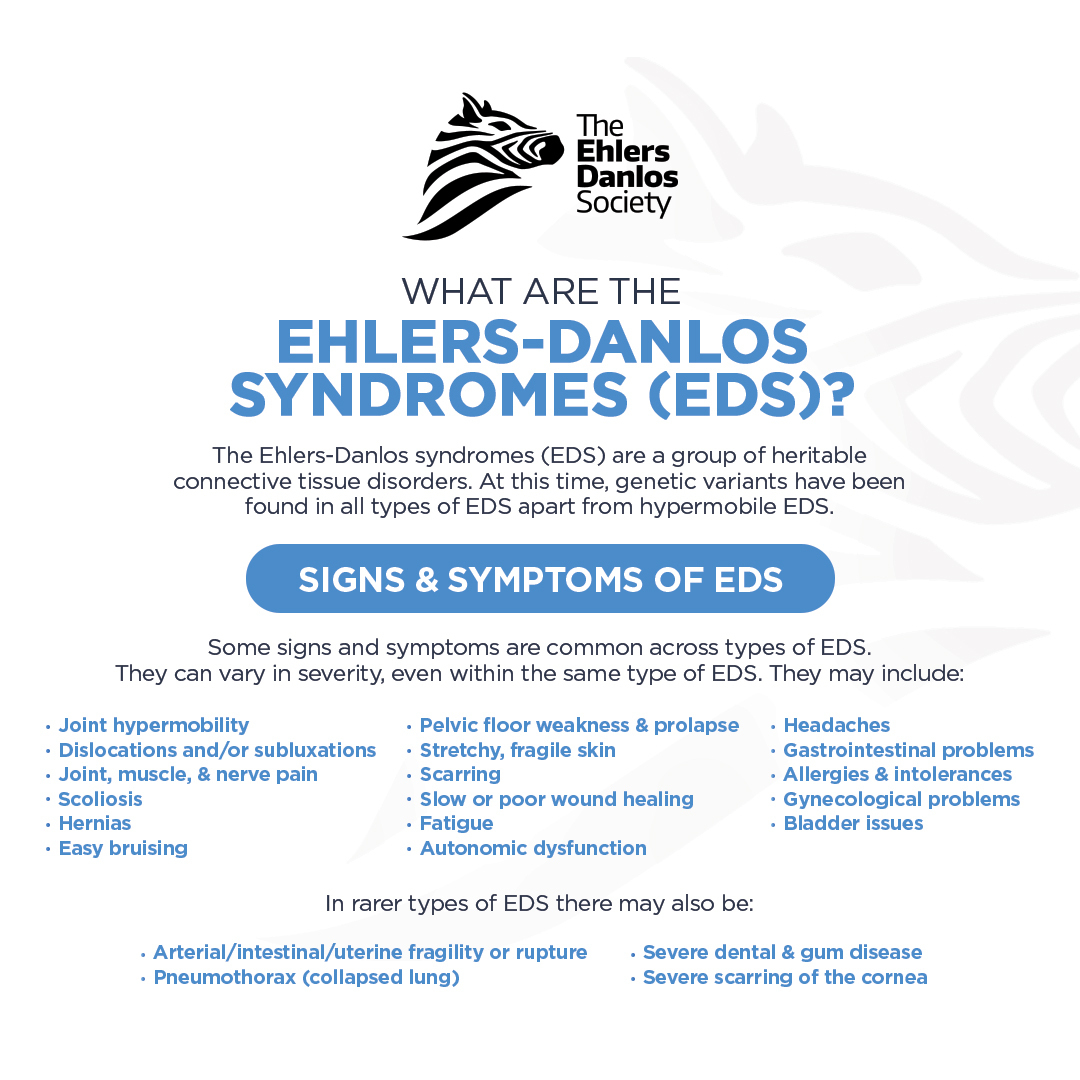
The Ehlers-Danlos syndromes (EDS) are a group of heritable connective tissue disorders that vary in how they affect the body and their genetic causes. 🧬
Variants in the genes that determine how the body makes collagen and other proteins that work alongside collagen have been shown to cause EDS.
At this time, genetic variants have been found in all types of EDS, with the exception of hypermobile EDS (hEDS).🔬
Connective tissue is everywhere in the body. It provides support and structure to other tissues and organs, including bone, ligaments, tendons, blood vessels, lymphatic vessels, the tissue that holds the gastrointestinal tract in place, etc.
❓️Signs and symptoms
Some certain signs and symptoms are common across all types of EDS. However, these can vary in severity between individuals, even with the same type of EDS.
These include:
• Joint hypermobility
• Joint instability with dislocations and/or subluxations
• Injury to connective tissues in and around joints
• Joint, muscle, and nerve pain
• Scoliosis
• Hernias
• Pelvic floor weakness and prolapse
• Easy Bruising
• Stretchy skin
• Fragile skin
• Scarring
• Slow or poor wound healing
In rarer genetically-defined types of EDS, there are specific concerns with certain tissues of the body that can present with complications such as:
• Arterial/intestinal/uterine fragility or rupture (usually
associated with vascular EDS (vEDS))
• Pneumothorax (collapsed lung)
• Severe dental and gum disease
• Severe scarring of the cornea of the eye
Across all the types of EDS, a number of conditions and symptoms are now also recognized as common. These include:
• Fatigue
• Autonomic dysfunction (such as fast heart rate and/or low blood pressure)
• Headaches
• Gastrointestinal problems
• Anxiety disorders
• Heavy and painful periods and bladder pain
• Allergies and intolerances
➡️ Learn more here:
ehlers-danlos.com/what-is-ed…
❓️What would you like people to know about EDS?
#MedTwitter #MedEd #EhlersDanlosSyndrome #Healthcare #Hypermobility
ALT The Ehlers-Danlos syndromes (EDS) are a group of heritable connective tissue disorders. At this time, genetic variants have been found in all types of EDS, with the exception of hypermobile EDS (hEDS).
Signs and symptoms
Some certain signs and symptoms are common across all types of EDS. However, these can vary in severity between individuals, even with the same type of EDS.
These include:
• Joint hypermobility
• Joint instability with dislocations and/or subluxations
• Joint hypermobility
• Joint instability with dislocations and/or subluxations
• Injury to connective tissues in and around joints
• Joint, muscle, and nerve pain
• Scoliosis
• Hernias
• Pelvic floor weakness and prolapse
• Easy Bruising
• Stretchy skin
• Fragile skin
• Scarring
• Slow or poor wound healing
In rarer genetically-defined types of EDS, there are specific concerns with certain tissues of the body that can present with complications such as: