
Joined February 2026
- Tweets 65
- Following 97
- Followers 655
- Likes 25
29 Photos and videos










Pinned Tweet

Calling all faculty and PhD candidates – if you teach and/or research Bitcoin, we want to hear from you.
BEI is proud to announce our First Annual Conference, which will be held at the George Washington University in Washington, DC, on July 31, 2026. The Conference is by academics, for academics.
We’re offering honoraria for selected speakers:
💰 $3,000 – Teaching Talk
💰 $1,500 – Research Talk
💰 $500 – Grad Student Poster Session
The only rule? The topic must be specific to Bitcoin – nothing that addresses crypto or blockchain in a general sense. We're reviewing applications are on a rolling basis.
Apply here:
🔗 Teaching Talk: tinyurl.com/57xxrx6b
🔗 Research Talk: tinyurl.com/e4rh6pws
🔗 Poster Session: tinyurl.com/33crj98c
And if you're interested in simply, register for free here: tinyurl.com/h42awjyy
See you in DC! ⚡️ #Bitcoin #BEI #HigherEd
1
8
492
Bitcoin is hope, in written code. It's a lifeline for families in unstable economies, a sanctuary for long-term thinkers, and a quiet revolution for anyone who believes the future can be freer and fairer than the past.
Start learning today.
1
1
49

What Bitcoin topic deserves better beginner-friendly education?
1
70
A new paper, “Beyond Money, Hedge, and Energy: Evaluating Bitcoin as Power Projection Technology,” by Maurício Carvalho (Aeronautics Institute of Technology) argues that Bitcoin isn’t just money or a hedge — it’s a form of power projection technology.
The idea is that Bitcoin’s mining network functions like a globally distributed energy-backed security layer, closer to a digital navy than a financial asset.
Carvalho shows how mining converts energy into credible commitment, deterrence, and resilience. This reframes Bitcoin as an infrastructure asset whose value comes from its ability to project security across borders without relying on states.
This matters because it identifies a function of Bitcoin beyond store of value, medium of exchange, and settlement. If Bitcoin is a power-projection system, its geopolitical relevance is only beginning to surface.
Full paper here:
techrxiv.org/doi/10.36227/te…
1
45
Bitcoin is pro-choice in money. Nobody is forced to use it. That’s the point. It simply gives every person a choice that never existed before.
3
1
2
82
Bitcoin learning curve check:
What felt harder to understand at first: wallets, mining, private keys, nodes, or why Bitcoin matters?
1
35
Who helped you understand Bitcoin better?
Tag a teacher, writer, podcaster, builder, friend, or mentor who made the ideas clearer.
2
2
100
Dr. Yosef Bonaparte (@Bonaparte20), professor of finance at the University of Colorado Denver, studies FinTech, cryptocurrency and blockchain, asset pricing, portfolio choice, behavioral finance, and AI in finance. His work has appeared in leading journals, including the Journal of Financial Economics, Management Science, and the Journal of Monetary Economics, and he has also written on cryptocurrency, decentralized finance, blockchain, and robust trading strategies.
His Bitcoin work connects digital assets to major questions in finance, policy, inflation, sanctions, and household portfolio decisions. By studying Bitcoin adoption alongside macroeconomic and geopolitical pressures, Dr. Bonaparte helps explain why Bitcoin matters not only as an investment asset but also as part of a changing global financial system.
Dr. Bonaparte has agreed to speak at the BEI Annual Conference in Washington, DC, on July 31st. Register for the conference here: docs.google.com/forms/d/e/1F…
1
1
4
92
Dr. Alfred Lehar (@AlfredLehar), professor of finance at the University of Calgary’s Haskayne School of Business, studies fintech, bank regulation, financial stability, corporate finance, and blockchain technology. His research examines how blockchain systems reshape finance, including work on Bitcoin market fees, decentralized exchanges, liquid staking, decentralized lending, and miner extractable value.
His work connects blockchain design to core finance questions about market structure, settlement, liquidity, and systemic risk. By studying private settlement in blockchain systems, Dr. Lehar helps explain how decentralized markets handle coordination, conflict, and value transfer without relying on traditional financial intermediaries.
Dr. Lehar has agreed to speak at the BEI Annual Conference in Washington, DC, on July 31st. Register for the conference here: docs.google.com/forms/d/e/1F…
47
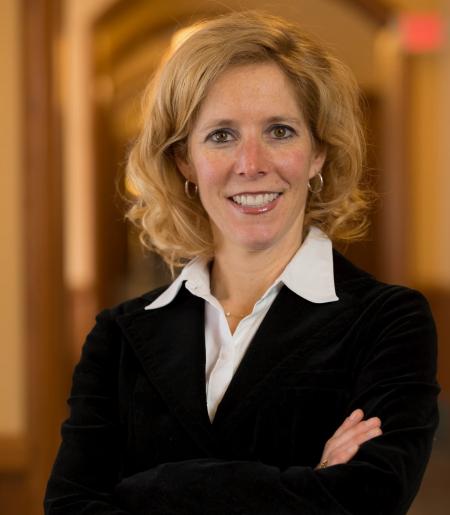
Dr. Sarah Kreps (@sekreps), John L. Wetherill Professor in the Department of Government at Cornell University, studies emerging technology, international politics, and national security. She also directs Cornell’s Tech Policy Institute, serves as a Senior Fellow at the Bitcoin Policy Institute, and has written extensively on technology, war, public policy, and democratic accountability.
Her work brings Bitcoin into broader questions about institutions, geopolitics, and public policy. Through projects like the Cornell Bitcoin Adoption Index, Dr. Kreps helps students and policymakers think systematically about how Bitcoin adoption develops across countries, markets, and political environments.
Dr. Kreps has agreed to speak at the BEI Annual Conference in Washington, DC, on July 31st. Register for the conference here: docs.google.com/forms/d/e/1F…
2
85
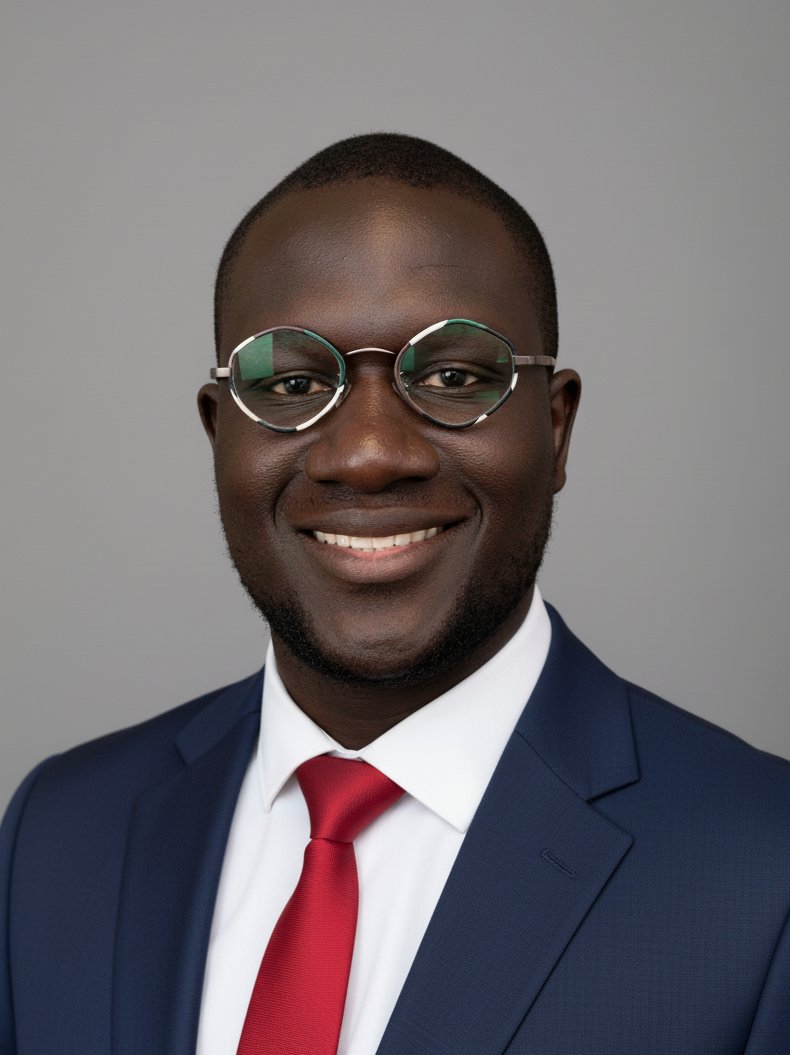
Dr. Abdoulaye Ndiaye (@AbdouNdiayeNYU), assistant professor of economics at NYU, studies macroeconomics, public finance, and market design. His recent blockchain research examines how protocols choose fee policies, including the trade-offs between quantity controls and price controls in decentralized systems.
His work brings rigorous economic theory to one of the core design questions in Bitcoin and Ethereum: how scarce blockspace should be allocated. By comparing fee mechanisms across protocols, Dr. Ndiaye helps explain why Bitcoin and Ethereum differ in how they manage congestion, pricing, and user demand.
Dr. Ndiaye has agreed to speak at the BEI Annual Conference in Washington, DC, on July 31st. Register for the conference here: docs.google.com/forms/d/e/1F…
2
69
We’re curious: what is one Bitcoin concept you understand now that once felt impossible to grasp?
Your answer might help someone else get there faster.
2
1
71
John Olson, assistant professor of Occupational and Environmental Safety and Health at the University of Wisconsin-Whitewater, teaches courses in occupational safety, environmental safety, and environmental law. His work with Paul Nylen on “Charitable Deductions of Hashrate” brings Bitcoin mining into a practical discussion of tax, charitable giving, and environmental/safety-related considerations.
John Olson has agreed to speak at the BEI Annual Conference in Washington, DC, on July 31st. Register for the conference here: docs.google.com/forms/d/e/1F…
2
56
A new study, “Governance, Economic Freedom, and Bitcoin Pricing in Diverse Regulatory Environments: Cross-Country Evidence from Bitcoin Markets,” by Ayrin Sultana of Hajee Mohammad Danesh Science and Technology University, Motahar Hossain of Khwaja Yunus Ali University, Monowar Uddin Talukdar and Reday Chandra Bhowmik of the University of Brahmanbaria, Rony Masud of Rikkyo University, and Rejaul Karim of Varendra University, examines how political institutions and regulatory environments shape Bitcoin pricing across countries.
The results point to real cross-country segmentation. Where institutions are weaker, Bitcoin markets show wider spreads and sharper local deviations from global benchmarks.
This study matters because it shows Bitcoin is still sensitive to local frictions. The global
market exists, but national institutions still mediate how prices form.
3
84
Paul Nylen, associate professor of accounting at the University of Wisconsin-Whitewater, teaches tax, accounting, and blockchain-related courses at both the undergraduate and graduate levels. He created and taught the first blockchain course in the University of Wisconsin System, introducing students to Bitcoin, distributed ledgers, monetary history, economic theory, accounting, and taxation.
His work brings Bitcoin into accounting and tax education in a practical, rigorous way. As a CPA, attorney, professor, and Faculty Director of UW-Whitewater’s Blockchain and Cryptocurrency Institute, Nylen helps students understand Bitcoin’s legal, tax, accounting, and environmental implications.
Paul Nylen has agreed to speak at the BEI Annual Conference in Washington, DC, on July 31st. Register for the conference here: docs.google.com/forms/d/e/1F…
1
65
Good Bitcoin education should make people feel more capable, not more confused.
What makes an educator or resource trustworthy to you?
1
36
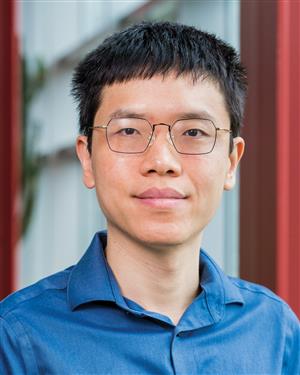
Dr. Ling Ren, an associate professor at the University of Illinois Urbana-Champaign, incorporates Bitcoin education into undergraduate/Master and Master/PhD courses on computer security and distributed algorithms. He teaches Bitcoin’s consensus algorithm with a rigorous proof of correctness, then contrasts it with classic permissioned consensus, highlighting innovations, trade-offs, and efficiency. This method addresses common misconceptions that Bitcoin is either “just a currency” or “totally revolutionary,” guiding students toward a deep, nuanced understanding.
Dr. Ren’s teaching emphasizes the core algorithmic and security innovations of Bitcoin while situating them in the broader context of distributed systems research. Students engage in focused lectures, carefully analyzing what makes Bitcoin truly innovative compared to classical consensus protocols. Dr. Ren’s approach equips students to critically evaluate Bitcoin’s technical foundations and its societal and economic impacts.
Bitcoin is a highly impactful topic, blending elegant ideas in algorithms, computer security, and cryptography. Dr. Ren stresses that understanding these innovations is crucial for meaningful engagement with the Bitcoin ecosystem. His work bridges rigorous computer science with real-world Bitcoin applications and societal relevance.
Dr. Ren has agreed to speak at the BEI Annual Conference in Washington, DC, on July 31st. Register for the conference here: docs.google.com/forms/d/e/1F…
75
What’s the most helpful Bitcoin resource you’ve ever shared with a beginner?
A book, article, video, podcast, course, thread, or conversation all count.
4
1
3
410
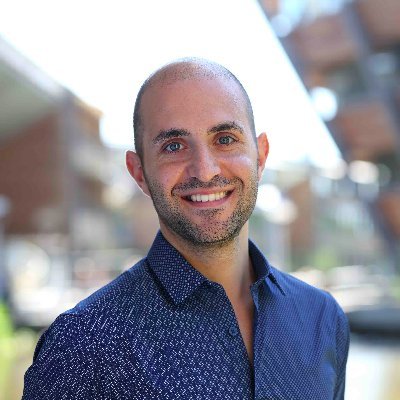
Dr. Danilo Mascia (@DaniloMascia), Chair in Banking and Finance at the University of Leeds, studies SME finance, banking, sustainable finance, and financial markets. His research includes work on bank capital requirements, financial market behavior, social media and markets, and cryptocurrency price dynamics.
His Bitcoin research examines how extreme price movements and nonlinear dynamics emerge in Bitcoin markets. By studying overreaction, explosivity, and market instability, Dr. Mascia helps explain how Bitcoin behaves under stress and why its price dynamics require tools beyond standard financial models.
Dr. Mascia has agreed to speak at the BEI Annual Conference in Washington, DC, on July 31st. Register for the conference here: docs.google.com/forms/d/e/1F…
1
60
A new paper, “The dual nature of Bitcoin's tail risks: Linear persistence vs. nonlinear
dynamics,” by Jianye Wang (Chongqing Technology and Business University) and Xuebin Chen (Sichuan University), breaks down Bitcoin’s tail risks into two modes.
👇
Kurtosis is stable and persistent, but skewness is nonlinear and jumps unpredictably.
The authors also show that simple models often outperform complex ones, except when
machine learning captures rare regime breaks that linear models can’t see.
This matters because risk systems need both linear tools for steady-state monitoring and
nonlinear tools for detecting sudden stress.
75