Official account of Baloch Women Forum. A symbol of hope for Baloch Women.
Joined September 2020
- Tweets 984
- Following 0
- Followers 6,857
- Likes 2
879 Photos and videos

Jun 12
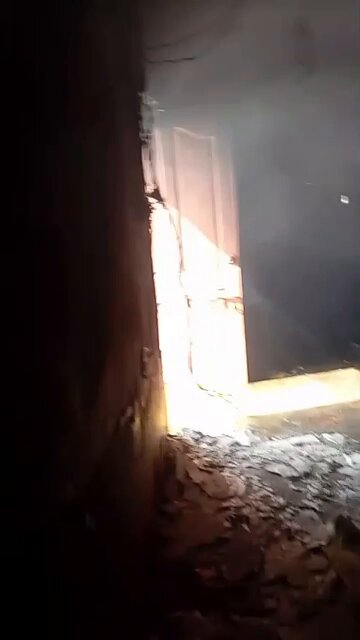
𝐂𝐢𝐯𝐢𝐥𝐢𝐚𝐧 𝐇𝐨𝐦𝐞𝐬 𝐁𝐮𝐫𝐧𝐞𝐝, 𝐅𝐚𝐦𝐢𝐥𝐢𝐞𝐬 𝐀𝐛𝐮𝐬𝐞𝐝: 𝐂𝐨𝐧𝐝𝐞𝐦𝐧𝐢𝐧𝐠 𝐭𝐡𝐞 𝐌𝐢𝐥𝐢𝐭𝐚𝐫𝐲 𝐎𝐩𝐞𝐫𝐚𝐭𝐢𝐨𝐧 𝐢𝐧 𝐆𝐨𝐦𝐚𝐳𝐢, 𝐓𝐮𝐦𝐩
We strongly condemn the military operation conducted today in Gomazi, Tump during which security forces reportedly carried out widespread acts of violence against the civilian population. According to credible local reports dozens of homes were set ablaze, women, children and elderly residents were subjected to physical abuse and intimidation and personal belongings including money, gold and other valuables were confiscated or taken during the operation.These actions constitute a grave violation of fundamental human rights and represent a deeply troubling practice of collective punishment, the militarization of civilian spaces and the erosion of the rule of law. The deliberate targeting of civilian communities, the destruction of private property and the mistreatment of vulnerable populations constitute serious violations of human rights.
Such measures not only inflict immediate suffering on affected families but also contribute to growing insecurity, social instability and political marginalization. The use of coercive force against unarmed civilians undermines public trust, weakens democratic accountability and raises serious concerns regarding the state’s compliance with its obligations under international humanitarian and human rights principles.
We call for the immediate cessation of all actions that endanger civilian lives and demand an independent, transparent and impartial investigation into the reported abuses. Those responsible for any unlawful conduct must be held accountable through due process. Furthermore, affected families must be provided with protection, restitution and access to justice.The international community, human rights mechanisms, civil society organizations and democratic institutions must urgently take notice of the situation in Kech Balochistan and press for accountability, transparency and the protection of civilian populations. Silence in the face of such allegations risks emboldening further abuses and perpetuating impunity.
𝐂𝐞𝐧𝐭𝐫𝐚𝐥 𝐒𝐩𝐨𝐤𝐞𝐬𝐩𝐞𝐫𝐬𝐨𝐧 𝐁𝐖𝐅
45
66
1,471
Jun 10
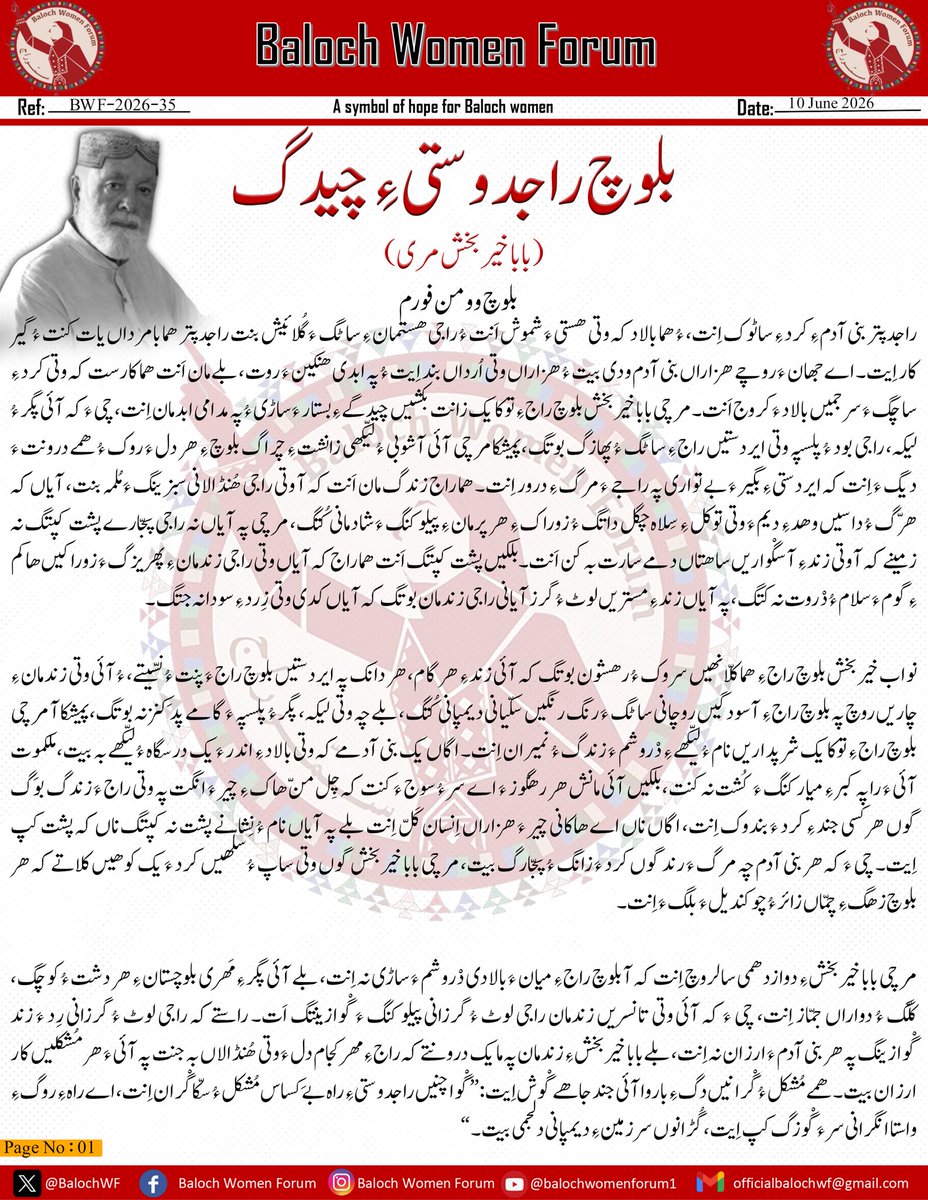
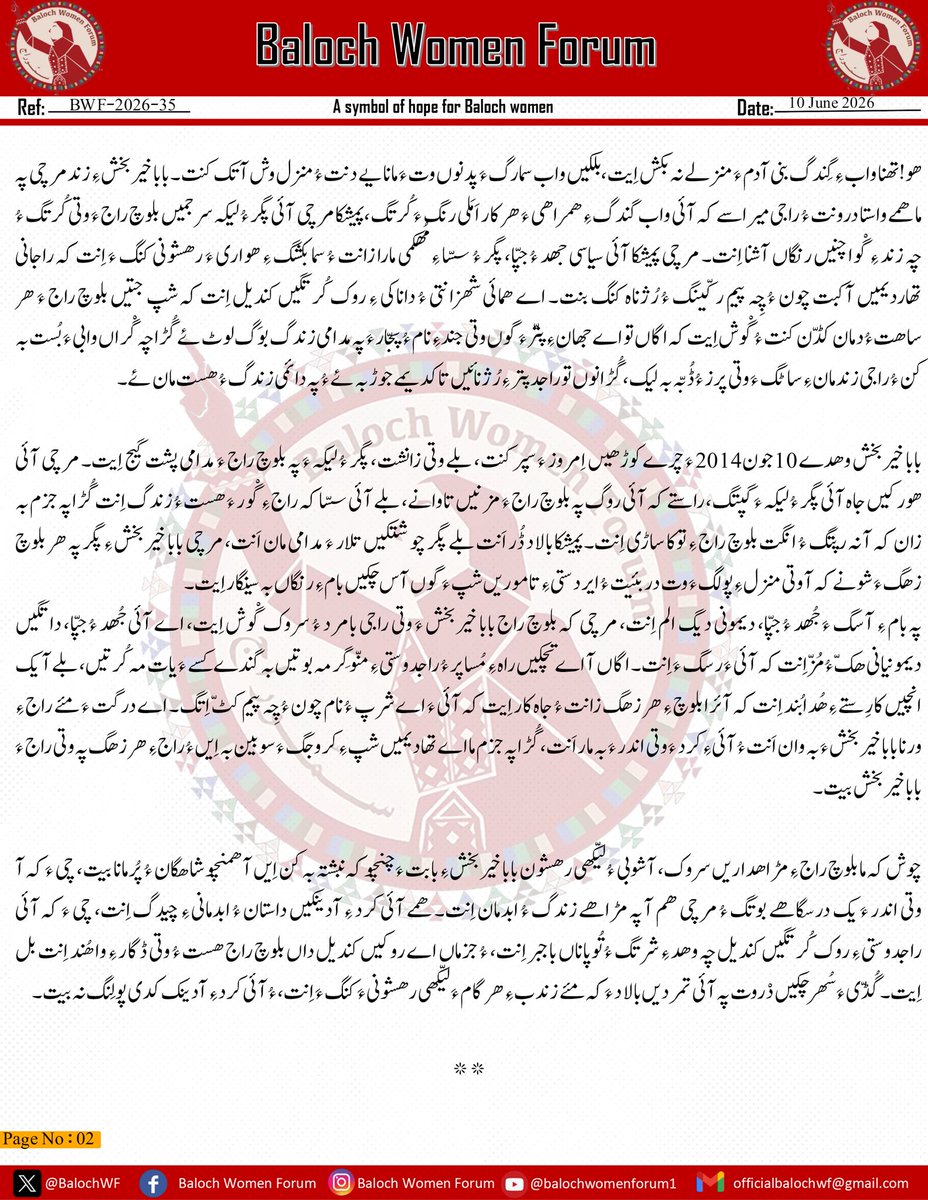
بلوچ راجدوستی ءِ چیدگ
(بابا خیربخش مری)
بلوچ وومن فورم
11
23
52
1,615
Jun 8
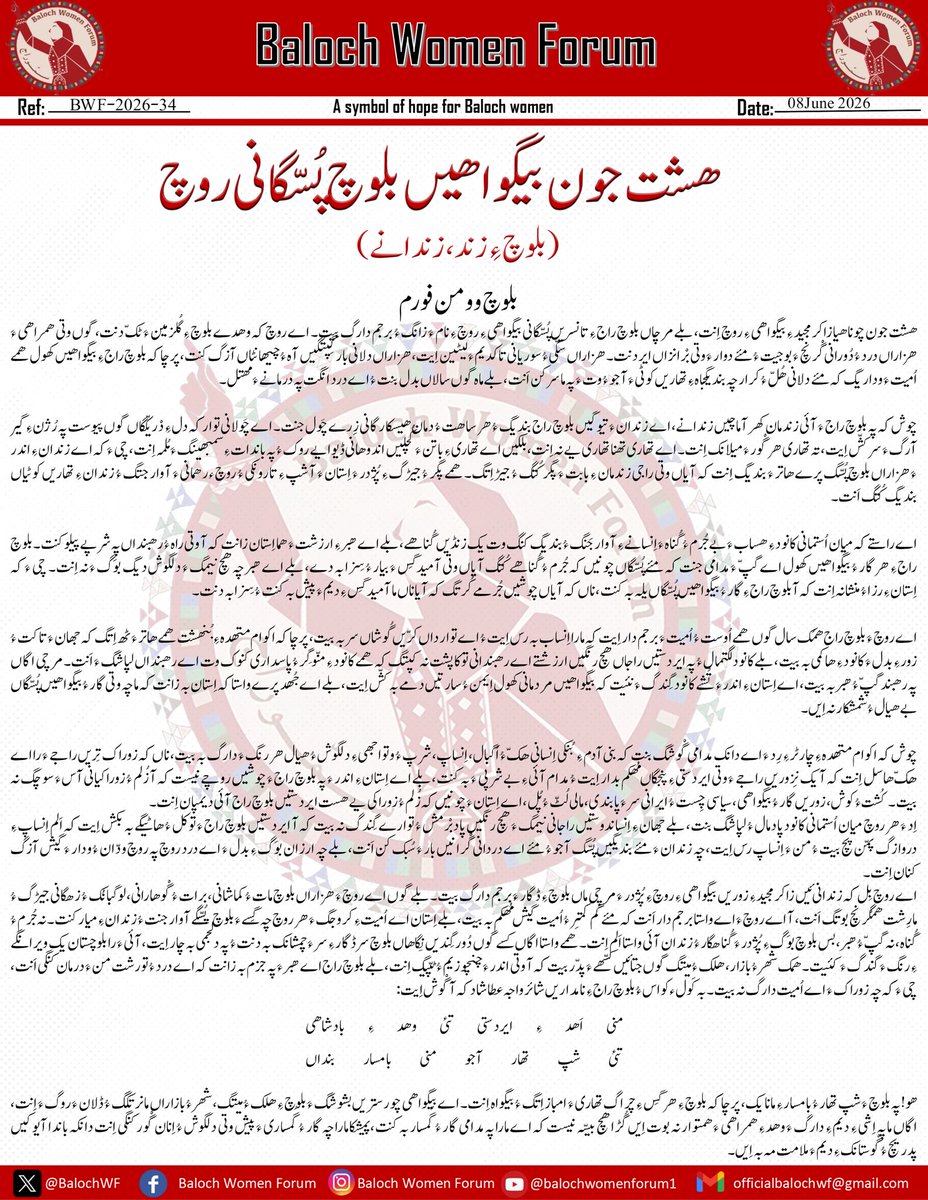
ھشت جون بیگواھیں بلوچ پُسّگانی روچ
(بلوچ ءِ زند، زندانے)
بلوچ وومن فورم
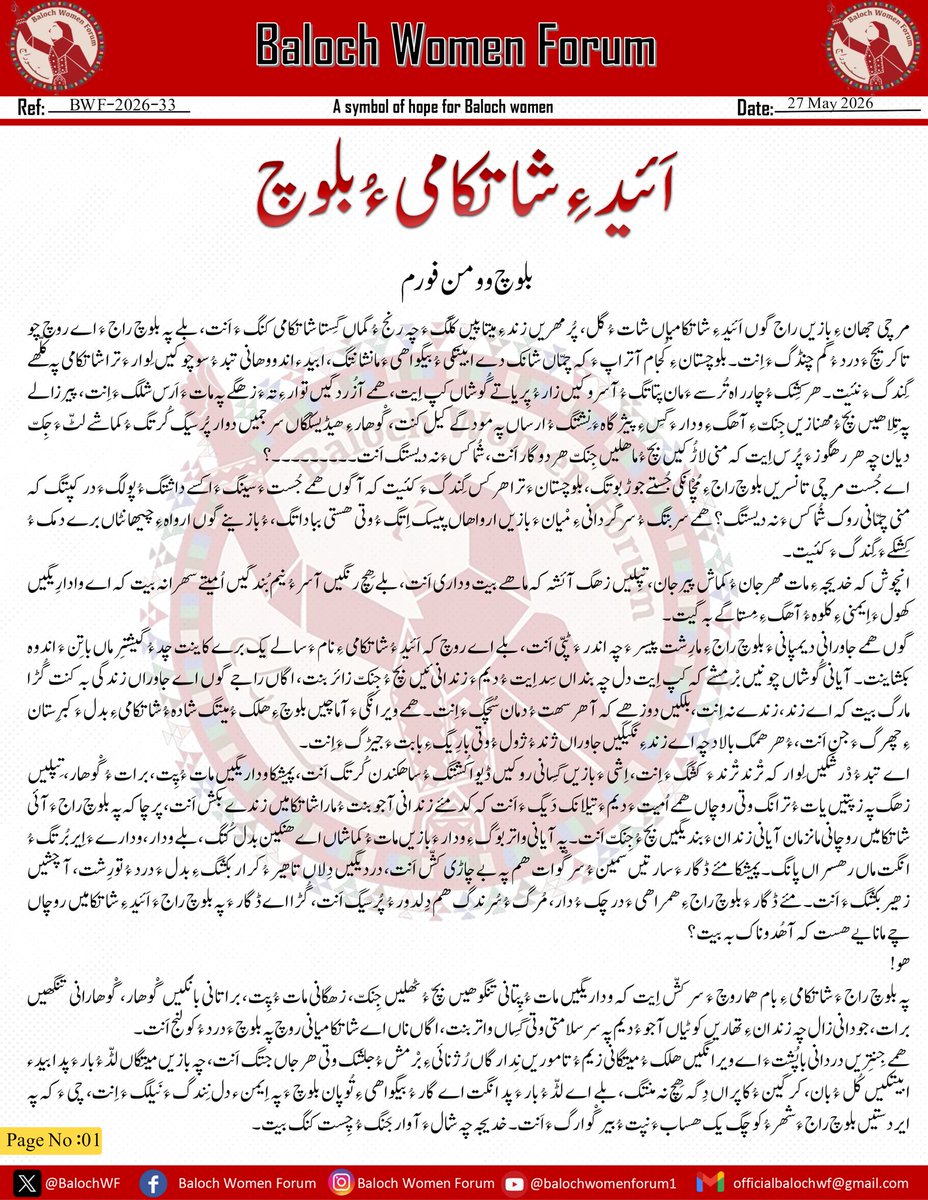
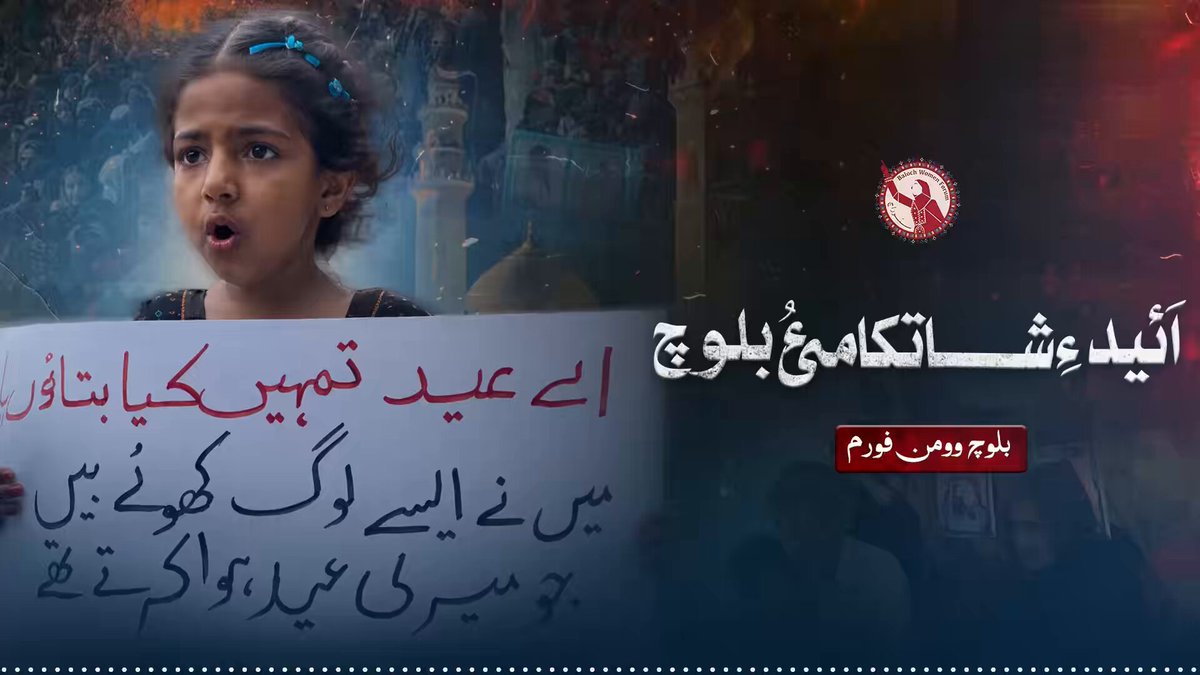
ھشت جون چوناھیا زاکر مجید ءِ بیگواھی ءِ روچ اِنت، بلے مرچاں بلوچ راج ءِ تانسریں پُسّگانی بیگواھی ءِ روچ ءِ نام ءَ زانگ ءُ برجم دارگ بیت۔ اے روچ کہ وھدے بلوچ ءِ گُلزمین ءَ ٹکّ دنت، گوں وتی ھمراھی ءَ ھزاراں درد ءُ دُورانی گْرنچ ءَ بوجیت ءُ مئے دوار ءَ وتی بْرانزاں ایر دنت۔ ھزاراں سکّی ءُ سوریانی تاکدیم ءَ لیٹین اِیت، ھزاراں دلانی بار گِپتگیں آہ ءُ چیھانٹاں آزگ کنت، پرچا کہ بلوچ راج ءِ بیگواھیں کھول ھمے اُمیت ءَ وداریگ کہ مئے دلانی ھُلّ ءُ کرار چہ بندیگجاہ ءِ تھاریں کوٹی ءَ آجو ءُ وت ءَ پہ ما سر کن اَنت، بلے ماہ گوں سالاں بدل بنت ءُ اے درد انگت پہ درمانے ءَ مھتل۔
چوش کہ پہ بلوچ راج ءَ آئی زندمان کھر آماچیں زندانے، اے زندان ءَ تیوگیں بلوچ راج بندیگ ءُ ھر ساھت ءُ دمان ھیسکارگانی زِرے چَول جنت۔ اے چَولانی توار کہ دل ءِ دْریکّگاں گوں پیوست پہ رُژن ءِ گیر آرگ ءَ سرکشّ اِیت، تہ تھاری ھر گْور ءَ میلانک اِنت۔ اے تھاری تھنا تھاری یے نہ اِنت، بلکیں اے تھاری ءِ باتن ءَ کُچلیں اندوھانی ڈیوایے روک ءُ پہ باندات ءِ سمبھینگ ءَ مُلمہ اِنت، چی ءَ کہ اے زندان ءِ اندر ءَ ھزاراں بلوچ پُسّگ پرے ھاتر ءَ بندیگ اِنت کہ آیاں وتی راجی زندمان ءِ بابت ءَ پگر کُتگ ءُ جیڑ اِتگ۔ ھمے پگر ءُ جیڑگ ءِ پُژدر ءَ اِستان ءَ آ شپ ءِ تارونکی ءُ روچ ء رھمانی ءَ آوار جتگ ءُ زندان ءِ تھاریں کوٹیاں بندیگ کُتگ اَنت۔
اے راستے کہ میان اُستمانی کانود ءِ ھساب ءَ بے جُرم ءُ گُناہ ءَ اِنسانے ءِ آوار جَنگ ءُ بندیگ کنگ وت یک زنڈیں گُناھے، بلے اے ھبر ءِ ارزشت ءَ ھما اِستان زانت کہ آ وتی راہ ءُ رھبنداں پہ شرپے پیلو کنت۔ بلوچ راج ءِ ھر گار ءُ بیگواھیں کھول اے گپّ ءَ مدامی جنت کہ مئے پُسّگاں چونیں کہ جُرم ءُ گُناھے کُتگ آیاں وتی آمیدگِس ءَ بیار ءُ سِزا بہ دے، بلے اے ھبر چہ ھچ نیمگ ءَ دلگوش دیگ بوَگ ءَ نہ اِنت۔ چی ءَ کہ اِستان ءِ رزا ءُ منشا نہ اِنت کہ آ بلوچ راج ءِ گار ءُ بیگواھیں پُسّگاں یلہ بہ کنت، ناں کہ آیاں چوشیں جُرمے کُرتگ کہ آیاناں ما آمیدگِس ءِ دیم ءَ پیش بہ کنت ءُ سِزا بہ دنت۔
اے روچ ءَ بلوچ راج ھمُک سال گوں ھمے اُوست ءُ اُمیت ءَ برجم دار اِیت کہ مارا اِنساب بہ رس اِیت ءُ اے توار داں کرّیں گُوشاں سر بہ بیت، پرچا کہ اکوام متھدہ ءِ بُنھشت ھمے ھاتر ءَ ٹھ اِتگ کہ جھان ءَ تاکت ءُ زور ءِ بدل ءَ کانود ءِ ھاکمی بہ بیت، بلے کانود لگتمال ءُ پہ ایردستیں راجاں ھچ رنگیں ارزشتے اے رھبندانی توکا پشت نہ کپتگ کہ ھمے کانود ءِ منّوگِر ءُ پاسداری کنوک وت اے رھبنداں لپاشگ ءَ اَنت۔ مرچی اگاں پہ رھبند گپّ ءُ ھبر بہ بیت، اے اِستان ءِ اندر ءَ تُشے کانود گِندگ ءَ نئیت کہ بیگواھیں مردمانی کھول اِیمن ءُ سارتیں دمے بہ کشّ اِیت، بلے اے جُھد پرے واستا کہ اِستان بہ زانت کہ ما چہ وتی گار ءُ بیگواھیں پُسّگاں بے ھیال ءُ شمشکار نہ اِیں۔
چوش کہ اکوام متھدہ ءِ چارٹر ءِ رِد ءَ اے دانک مدامی گْوشگ بنت کہ بنی آدم ءِ بُنکی اِنسانی ھکّ ءُ اُگبال، اِنساپ، شرپ ءُ وتواجھی ءِ دلگوش ءُ ھیال ھر رنگ ءَ دارگ بہ بیت، ناں کہ زوراک تِریں راجے ءَ را اے ھکّ ھاسل اِنت کہ آ یک نِزوریں راجے ءَ وتی ایردستی ءِ پنجگاں مُھکم بدار اِیت ءُ مدام آئی ءِ بے شرپی ءَ بہ کنت، بلے اے اِستان ءِ اندر ءَ پہ بلوچ راج ءَ چوشیں روچے نیست کہ آ زُلم ءُ زوراکیانی آس ءَ سوچگ نہ بیت۔ کُشت ءُ کوش، زوریں گار ءُ بیگواھی، سیاسی چِست ءُ ایرانی سر ءَ پابندی، مالی لُٹّ ءُ پُل، اے اِستان ءَ چونیں کہ زُلم ءُ زوراکی یے ھست ایردستیں بلوچ راج آئی دیمپان اِنت۔
اِد ءَ ھرروچ میان اُستمانی کانود پادمال ءُ لپاشگ بنت، بلے جھان ءِ اِنساندوستیں راجانی نیمگ ءَ ھچ رنگیں پادبْرمش ءُ توارے گِندگ نہ بیت کہ آ ایردستیں بلوچ راج ءَ توکل ءُ ھاٹیگے بہ بکش اِیت کہ اَلم اِنساپ ءِ دروازگ پمّن پچ بیت ءُ من ءَ اِنساپ رس اِیت، چہ زندان ءَ مئے بندیگیں پُسّگ آجو ءُ مئے اے دردانی گْرانیں بار ءَ سُبک کن اَنت، بلے چہ ارزان بوَگ ءِ بدل ءَ اے درد روچ پہ روچ ودّان ءُ ودار ءَ گیش آزگ کنان اِنت۔
1/2
1
35
53
1,565
Jun 8
اے روچ بِل کہ زندانی ئیں زاکر مجید ءِ زوریں بیگواھی ءِ روچ ءِ پُژدر ءَ مرچی ماں بلوچ ءِ ڈگار ءَ برجم دارگ بیت۔ بلے گوں اے روچ ءَ ھزاراں بلوچ مات ءُ کماشانی، برات ءُ گْوھارانی، لوگبانُک ءُ زھگانی جیڑگ ءُ مارِشت ھمگْرنچ بوتگ اَنت، آ اے روچ ءَ اے واستا برجم دار اَنت کہ مئے گم کمتِر ءُ اُمیت گیش مُھکم بہ بیت، بلے اِستان اے اُمیت ءِ کروجگ ءَ ھرروچ چہ گِسے ءَ بلوچ پُسّگے آوار جنت ءُ زندان ءِ میار کنت۔ نہ جُرم ءُ گُناہ، نہ گپّ ءُ ھبر، بس بلوچ بوَگ ءِ پُژدر ءَ گُناھگار ءُ زندان آئی واستا اَلم اِنت۔ ھمے واستا اگاں کسے گوں دُورگِندیں نِگاھاں بلوچ سرڈگار ءِ سر ءَ چمشانک بہ دنت ءُ پہ دلجمی بہ چار اِیت، آئی ءَ را بلوچستان یک ویرانگے ءِ رنگ ءَ گندگ ءَ کئیت۔ ھمک شھر ءُ بازار، ھلک ءُ میتگ گوں جتائیں کسّھے ءَ پدّر بیت کہ آ وتی اندر ءَ چنچو زیم ءُ ٹپّیگ اِنت، بلے بلوچ راج اے ھبر ءَ پہ جزم بہ زانت کہ اے درد ءُ تورشت من ءَ درمان کنگی اَنت، چی ءَ کہ چہ زوراک ءَ اے اُمیت دارگ نہ بیت۔ بہ کَول ء کواس ءُ بلوچ راج ءِ نامداریں شائر واجہ عطاشاد کہ آ گْوش اِیت:
منی اَھد ءِ ایردستی تئی وھد ءِ بادشاھی
تئی شپ تھار آجو منی بامسار بنداں
ھو! پہ بلوچ ءَ شپ تھار ءُ بامسار ءِ مانا یک، پرچا کہ بلوچ ءِ ھر گِس ءِ چراگ تھاری ءَ امباز اِتگ ءُ بیگواہ اِنت۔ اے بیگواھی چو رستریں بشوشگ ءَ بلوچ ءِ ھلک ءُ میتگ، شھر ءُ بازاراں مانرتکگ ءُ ڈلان ءَ روگ ءَ اِنت، اگاں ما پہ اِشی ءِ دیم ءِ دارگ ءَ وھد ءِ ھمراھی ءَ ھمتوار نہ بوت اِیں گُڑا ھچ بیسّہ نیست کہ اے مارا پہ مدامی گار ءُ گُمسار بہ کنت، پمیشکا مارا چہ گار ءُ گُمساری ءَ پیش وتی دلگوش ءُ اِنان گْور کنگی اِنت دانکہ باندا آیوکیں پدریچ ءُ گْوستانک ءِ دیم ءَ ملامت مہ بہ اِیں۔2/2
3
6
317
Jun 6
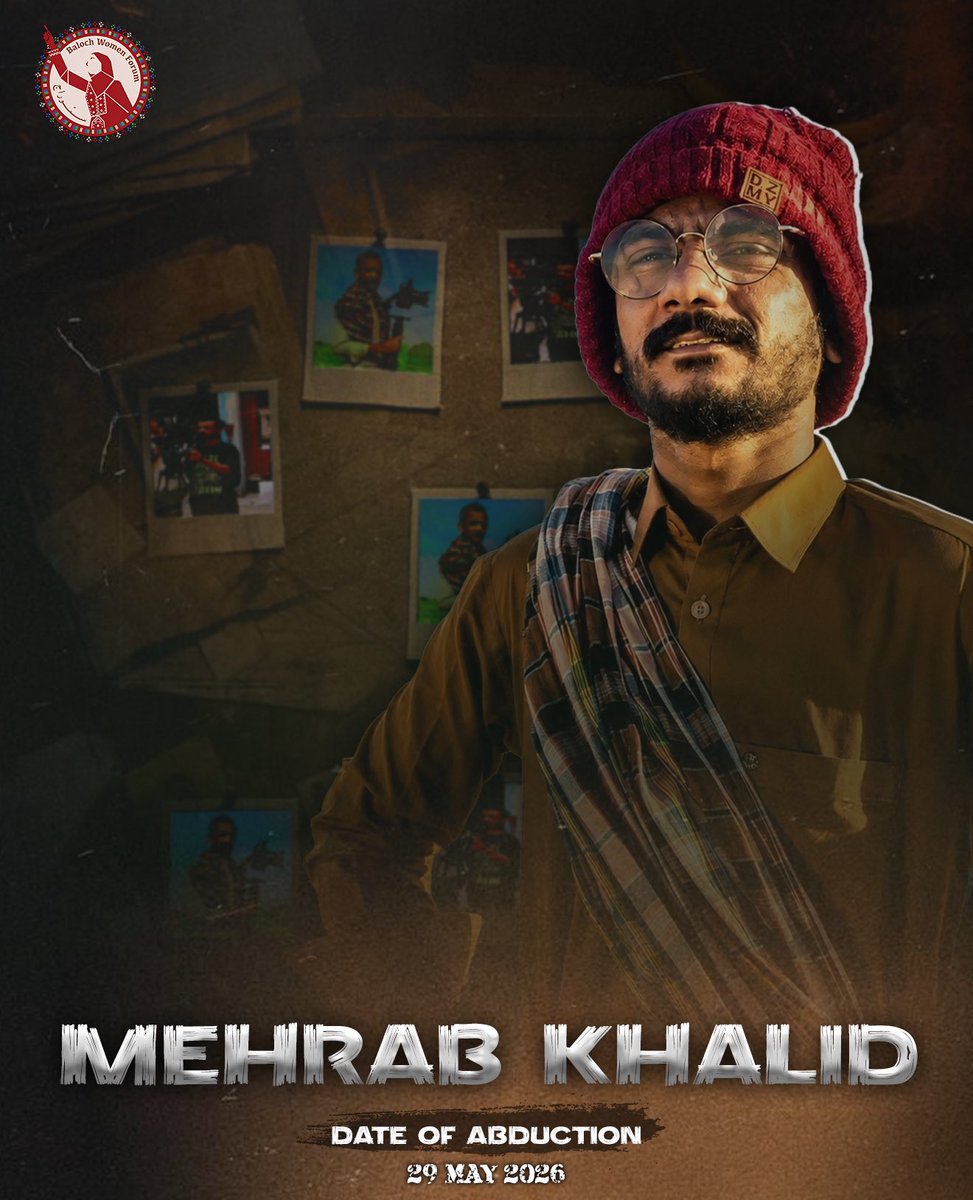
𝐅𝐨𝐫𝐜𝐞𝐝 𝐃𝐢𝐬𝐚𝐩𝐩𝐞𝐚𝐫𝐚𝐧𝐜𝐞 𝐨𝐟 𝐌𝐞𝐡𝐫𝐚𝐛 𝐊𝐡𝐚𝐥𝐢𝐝: 𝐂𝐨𝐧𝐭𝐢𝐧𝐮𝐢𝐧𝐠 𝐀𝐬𝐬𝐚𝐮𝐥𝐭 𝐨𝐧 𝐁𝐚𝐥𝐨𝐜𝐡 𝐒𝐭𝐮𝐝𝐞𝐧𝐭𝐬
The enforced disappearance of Mehrab Khalid, a filmmaking student at NCA Lahore is a matter of grave concern and highlights the persistent vulnerability of Baloch students within academic spaces. On 29 May 2026,Mehrab Khalid was forcibly disappeared by security forces in Lahore and taken to an undisclosed location. Despite the passage of time no authority has acknowledged his detention or provided any information regarding his whereabouts or legal status.
Mehrab’s disappearance raises serious questions about the security and freedom of Baloch students pursuing higher education across the country. Wherever they pursue their studies Baloch students continue to face surveillance, harassment, arbitrary detention and enforced disappearance. The targeting of students extends beyond individual cases. It directly affects the principles of academic freedom, intellectual inquiry and the right to political expression. When students, artists and researchers face reprisals for their ideas or activism, educational institutions risk becoming environments of fear rather than spaces dedicated to learning, creativity and critical thought.
The continued concealment of Mehrab Khalid’s whereabouts represents a serious violation of fundamental rights and further contributes to the climate of impunity surrounding enforced disappearances. His family is entitled to answers and he is entitled to the protections guaranteed under law. We demand the immediate disclosure of Mehrab Khalid’s whereabouts and his unconditional release.
𝐂𝐞𝐧𝐭𝐫𝐚𝐥 𝐒𝐩𝐨𝐤𝐞𝐬𝐩𝐞𝐫𝐬𝐨𝐧 𝐁𝐖𝐅
33
52
1,023
Jun 4
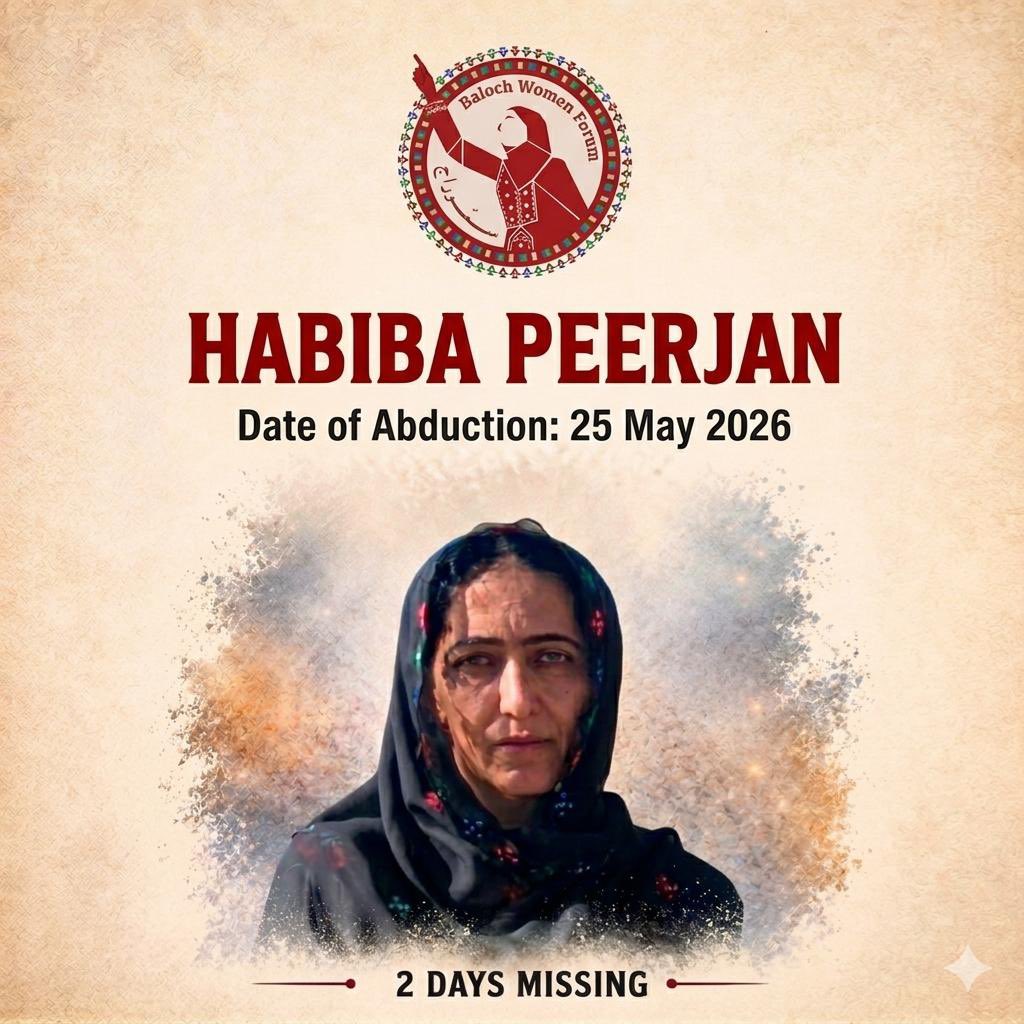
The enforced disappearance of Habiba Peerjan, a Balochi poet, from Karachi on 25 May 2026 is a matter of serious concern. This is the second time she has been subjected to enforced disappearance, having previously been detained in 2022. Reports indicate that following her abduction, security forces raided her home confiscated the mobile phones of family members and damaged household belongings, further intensifying the suffering and uncertainty faced by her family.
Habiba Peerjan’s disappearance comes amid the increasing targeting of Baloch women through enforced disappearances and other coercive measures. The inclusion of women in such practices marks a troubling escalation, demonstrating that no segment of Baloch society remains beyond the reach of repression. These actions constitute grave violations of fundamental human rights and contribute to an environment where fear, insecurity and impunity continue to prevail.
Amid this ordeal, Habiba Peerjan’s daughter Hina Baloch has appealed to the Baloch nation to raise its voice for her mother and demand her safe release. Her appeal is a reminder that enforced disappearances do not affect only those who are taken,they also leave families trapped in a relentless struggle for answers, justice and the return of their loved ones.
We call upon human rights organizations, literary circles, journalists, academics and all people of conscience to raise their voices for Habiba Peerjan and demand her immediate release. The continued targeting of Baloch women through enforced disappearances cannot be normalized and must be met with sustained public attention and international concern.
#ReleaseHabibaPeerjan
#SaveBalochWomen
2
63
111
10,732
Jun 1
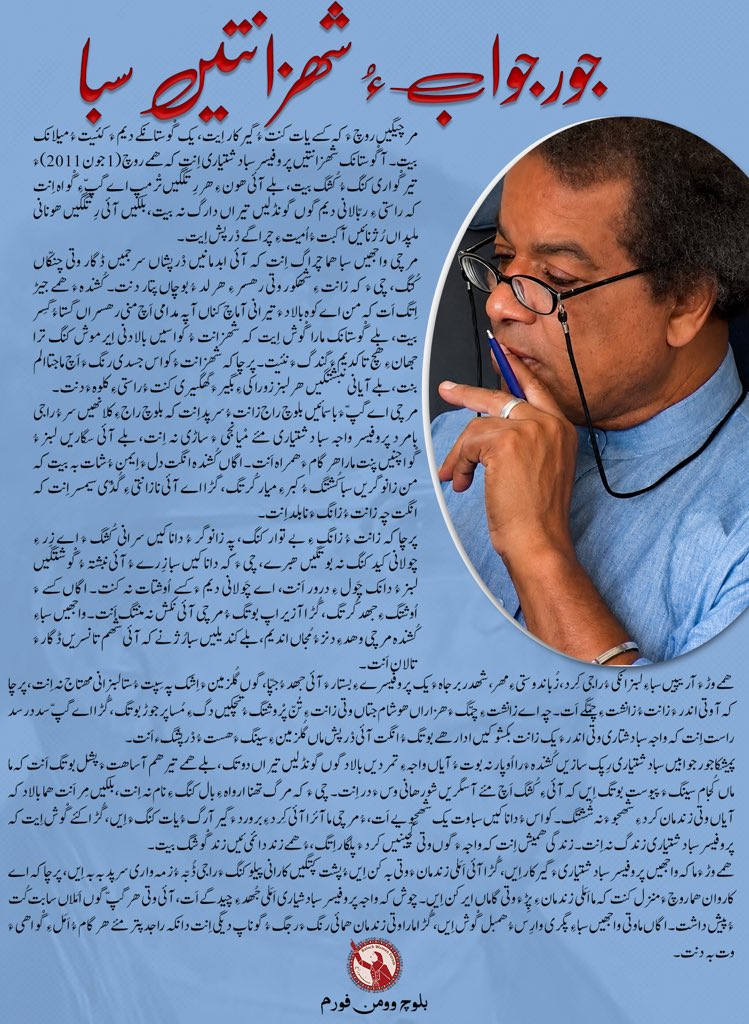
جورجواب ءُ شھزانتیں سبا
بلوچ وومن فورم
مرچیگیں روچ ءَ کہ کسے یات کنت ءُ گیر کار اِیت، یک گْوستانکے دیم ءَ کئیت ءُ میلانک بیت۔ آ گْوستانک شھزانتیں پروفیسر سبا دشتیاری اِنت کہ ھمے روچ (1 جون 2011) ءَ تیرگْواری کنگ ءُ کُشگ بیت، بلے آئی ھون ءِ ھر رِتکگیں تْرمپ اے گپّ ءِ گْواہ اِنت کہ راستی ءِ ربّالانی دیم گوں گونڈلیں تیراں دارگ نہ بیت، بلکیں آئی رِتکگیں ھونانی ملپداں رُژنائیں آکبت ءُ اُمیت ءِ چراگے دْرپش اِیت۔
مرچی واجھیں سبا ھما چراگ اِنت کہ آئی ابدمانیں دْرپشاں سرجمیں ڈگار وتی چنکّاں کُتگ، چی ءَ کہ زانت ءِ شھکور وتی رھسر ءِ ھر لد ءُ بوچاں پتار دنت۔ کُشندہ ءَ ھمے جیڑ اِتگ اَت کہ من اے کوہ بالاد ءَ تیرانی آماچ کناں آ پہ مدامی اَچ منی رھسراں گستا ءُ گِسر بیت، بلے گْوستانک مارا گْوش اِیت کہ شھزانت ءُ کواسیں بالادنی اِیرموش کنگ ترا جھان ءِ ھچ تاکدیم ءَ گندگ ءَ نئیت۔ پرچا کہ شھزانت ءُ کواس جسدی رنگ ءَ اَچ ما جتا الم بنت، بلے آیانی نبشتگیں ھر لبز زوراکی ءِ بگیر ءَ گھگیری کنت ءُ راستی ءِ کلوہ ءَ دنت۔
مرچی اے گپّ ءَ باسمائیں بلوچ راج زانت ءُ سرپد اِنت کہ بلوچ راج ءِ کلانھیں سر ءُ راجی بامرد پروفیسر واجہ سبا دشتیاری مئے مْیانجی ءَ ساڑی نہ اِنت، بلے آئی سگاریں لبز ءُ گْواچنیں پنت مارا ھر گام ءَ ھمراہ اَنت۔ اگاں کُشندہ انگت دل ءَ اِیمن ءُ شات بہ بیت کہ من زانوگریں سبا کُشتگ ءُ کبر ءِ میار کُرتگ، گڑا اے آئی نازانتی ءِ گُڈّی سیمسر اِنت کہ انگت چہ زانت ءُ زانگ ءَ نابلد اِنت۔
پرچا کہ زانت ءُ زانگ ءِ بے توار کنگ، پہ زانوگر ءُ داناکیں سرانی کُشگ ءَ اے زِر ءِ چولانی کید کنگ نہ بوتگیں ھبرے، چی ءَ کہ داناکیں سبا زِرے ءُ آئی نبشتہ ءُ گْوشتگیں لبز ءُ دانک چَول ءِ درور اَنت، اے چَولانی دیم ءَ کسے اُوشتات نہ کنت۔ اگاں کسے ءَ اُوشتگ ءِ جھد کُرتگ، گُڑا آ زیراپ بوتگ ءُ مرچی آئی نکش نہ منتگ اَنت۔ واجھیں سبا ءِ کُشندہ مرچی وھد ءِ دنز ءُ مُجاں اندیم، بلے کندیلیں سبا رُژنے کہ آئی شھم تانسریں ڈگار ءَ تالان اَنت۔
ھمے وڑ ءَ آریپیں سبا ءِ لبزانکی ءُ راجی کِرد، زُباندوستی ءِ مھر، شھدربرجاہ ءَ یک پروفیسرے ءِ بستار ءَ آئی جھد ءُ جپّا، گوں گُلزمین ءَ اِشک پہ سِپت ءُ ستا لبزانی مھتاج نہ اِنت، پرچا کہ آ وتی اندر ءَ زانت ءُ زانشت ءِ چمّگے اَت۔ چہ اے زانشت ءِ چمّگ ءَ ھزاراں ھوشام جتاں وتی زانت ءِ تُنّ پْروشتگ ءُ تچکیں دگ ءِ مُساپر جوڑ بوتگ، گُڑا اے گپّ سد درسد راست اِنت کہ واجہ سبا دشتاری وتی اندر ءَ یک زانت بکشوکیں ادارھے بوتگ ءُ انگت آئی دْرپش ماں گُلزمین ءِ سینگ ءَ ھست ءُ دْرپشگ ء اَنت۔
پمیشکا جورجوابیں سبا دشتیاری رِپک سازیں کُشندہ ءَ را اُوپار نہ بوت ءُ آیاں واجہ ءِ تمردیں بالاد گوں گونڈلیں تیراں دوتک، بلے ھمے تیر ھم آ ساھت ءَ پشل بوتگ اَنت کہ ما ماں کُجام سینگ ءَ پیوست بوتگ اِیں کہ آئی ءِ کُشگ اَچ مئے آسگریں شورھانی وس ءَ در اِنت۔ چی ءَ کہ مرگ تھنا ارواہ ءِ بال کنگ ءِ نام نہ اِنت، بلکیں مِر اَنت ھما بالاد کہ آیاں وتی زندمان کرد ءِ شھجو ءَ نہ شُشتگ۔ کواس ءُ داناکیں سبا وت یک شھجویے اَت، ءُ مرچی ما آئرا آئی کِرد ءِ برورد ءَ گیر آرگ ءُ یات کنگ ءَ اِیں، گُڑا کئے گْوش اِیت کہ پروفیسر سبا دشتیاری زندگ نہ اِنت۔ زندگی ھمیش اِنت کہ واجہ ءَ گوں وتی گچینیں کرد ءَ پلگار اِتگ، ءُ ھمے زند دائمی ئیں زند گْوشگ بیت۔
ھمے وڑ ءَ ما کہ واجھیں پروفیسر سبا دشتیاری ءَ گیر کار اِیں، گُڑا آئی اَمَلی زندمان ءَ وتی بہ کن اِیں ءُ پشت کپتگیں کارانی پیلو کنگ ءَ راجی ڈُبّہ ءُ زمہ واری سرپد بہ بہ اِیں، پرچا کہ اے کاروان ھما روچ ءَ منزل کنت کہ ما اَمَلی زندمان ءِ پِڑ ءَ وتی گاماں ایر کن اِیں۔ چوش کہ واجہ پروفیسر سبا دشیاری اَمَلی جُھد ءِ چیدگے اَت، آئی وتی ھر گپّ گوں اَمَلاں سابت کُت ءُ پیش داشت۔ اگاں ما وتی واجھیں سبا ءِ پگری وارِس ءُ ھمبل گْوش اِیں، گُڑا مارا وتی زندمان ھمائی رنگ ءَ رجگ ءُ گوناپ دیگی اِنت دانکہ راجدپتر مئے ھر گام ءُ اَمَل ءِ گْواھی ءَ وت بہ دنت۔
1
21
28
860
May 28
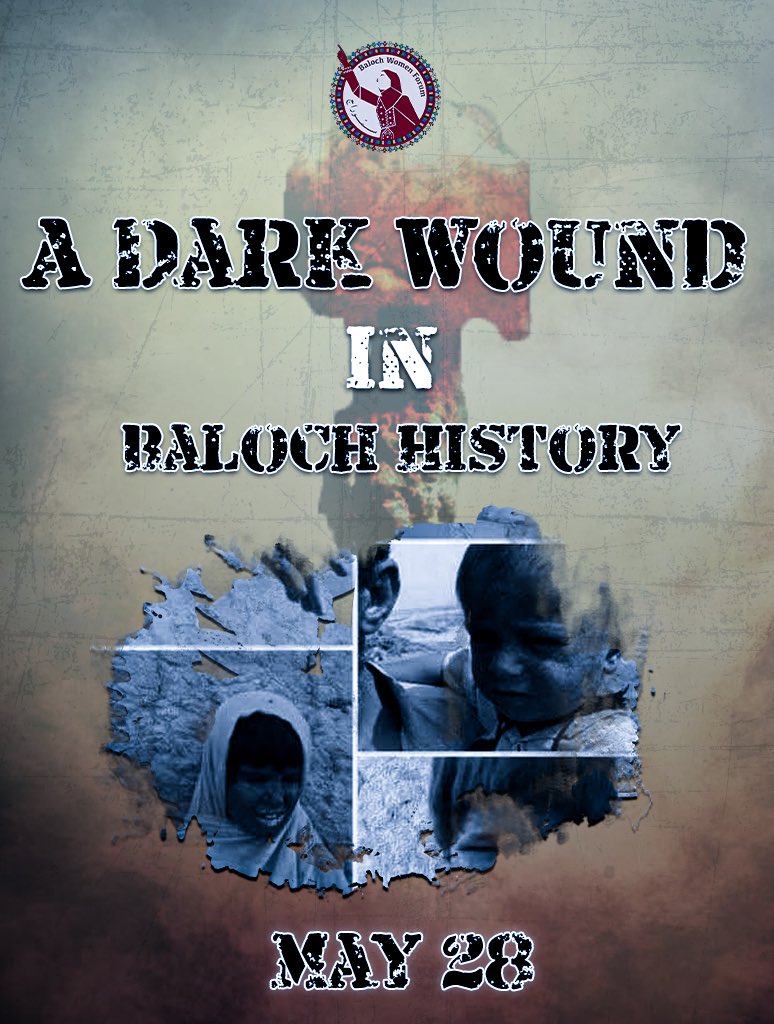
𝟐𝟖 𝐌𝐚𝐲 — 𝐀 𝐃𝐚𝐫𝐤 𝐖𝐨𝐮𝐧𝐝 𝐢𝐧 𝐁𝐚𝐥𝐨𝐜𝐡 𝐇𝐢𝐬𝐭𝐨𝐫𝐲
𝑭𝒐𝒓 𝒕𝒉𝒆 𝒔𝒕𝒂𝒕𝒆, 28 𝑴𝒂𝒚 𝒊𝒔 𝒄𝒆𝒍𝒆𝒃𝒓𝒂𝒕𝒆𝒅 𝒂𝒔 𝒂 𝒔𝒚𝒎𝒃𝒐𝒍 𝒐𝒇 𝒑𝒐𝒘𝒆𝒓 𝒂𝒏𝒅 𝒎𝒊𝒍𝒊𝒕𝒂𝒓𝒚 𝒂𝒄𝒉𝒊𝒆𝒗𝒆𝒎𝒆𝒏𝒕.
𝑭𝒐𝒓 𝒕𝒉𝒆 𝑩𝒂𝒍𝒐𝒄𝒉 𝒏𝒂𝒕𝒊𝒐𝒏, 𝒊𝒕 𝒓𝒆𝒎𝒂𝒊𝒏𝒔 𝒂 𝒑𝒂𝒊𝒏𝒇𝒖𝒍 𝒓𝒆𝒎𝒊𝒏𝒅𝒆𝒓 𝒐𝒇 𝒔𝒖𝒇𝒇𝒆𝒓𝒊𝒏𝒈, 𝒅𝒊𝒔𝒑𝒐𝒔𝒔𝒆𝒔𝒔𝒊𝒐𝒏𝒂𝒏𝒅 𝒉𝒊𝒔𝒕𝒐𝒓𝒊𝒄𝒂𝒍 𝒊𝒏𝒋𝒖𝒔𝒕𝒊𝒄𝒆.
The nuclear explosions carried out in the mountains of Chaghi in 1998 did not merely shake the earth, they permanently altered the lives of generations. The surrounding regions of Raaskoh were left to endure radiation, disease, environmental destruction, economic collapse and collective trauma. While the world witnessed a display of nuclear capability, the indigenous Baloch population was neither protected nor considered worthy of basic human safeguards.
The land of the Baloch has repeatedly been used for strategic and military purposes by the colonizers, while the lives, rights and existence of the indigenous population continue to be sacrificed in the name of state interests. From exploitation of natural resources to militarization and enforced displacement, Balochistan has long been treated as a territory to control rather than a homeland inhabited by a nation with its own identity, history and political aspirations.
Today the people of Chaghi continue to suffer the consequences of those nuclear explosions. Cases of cancer, leukemia, genetic disorders, respiratory diseases, blindness, infertility, thyroid complications and other life threatening illnesses have become increasingly common in the region. Alongside the humanitarian crisis, fertile lands turned barren, water resources were contaminated and traditional livelihoods were destroyed, pushing entire communities into poverty and neglect.
For the Baloch nation, the tragedy of 28 May is not merely an environmental disaster, it is deeply political. It symbolizes the systematic disregard for Baloch lives and reflects a broader structure of oppression imposed upon Balochistan. The continued exploitation of Baloch land without the consent, welfare or protection of its people is viewed by many Baloch as part of the ongoing process of Baloch genocide, where a nation is gradually erased politically, socially, environmentally and demographically.
Youm-E-Aasrok stands as a collective reminder that the wounds of Chaghi are still alive. It is a call for historical truth, environmental justice, medical support for the affected population and accountability for the irreversible destruction inflicted upon Baloch land and people.
This day reminds us that our grief is collective and our silence only strengthens oppression. Chaghi is not an isolated tragedy, it is part of the broader suffering endured by the Baloch people for decades. Unity, political awareness and national solidarity are essential for defending our history, identity, land and future generations.
The humanitarian consequences of nuclear militarization cannot be ignored when marginalized populations are forced to bear its burden. We urge international human rights bodies, environmental organizations and democratic institutions to acknowledge the long term impact of the Chaghi nuclear explosions and raise their voices for justice, truth and accountability.
28 May is not a day of celebration for the Baloch nation. It is a dark wound that continues to burn across the mountains of Chaghi and in the collective memory of the Baloch people.
𝐂𝐞𝐧𝐭𝐫𝐚𝐥 𝐒𝐩𝐨𝐤𝐞𝐬𝐩𝐞𝐫𝐬𝐨𝐧 𝐁𝐚𝐥𝐨𝐜𝐡 𝐖𝐨𝐦𝐞𝐧 𝐅𝐨𝐫𝐮𝐦
5
25
34
3,148
May 27
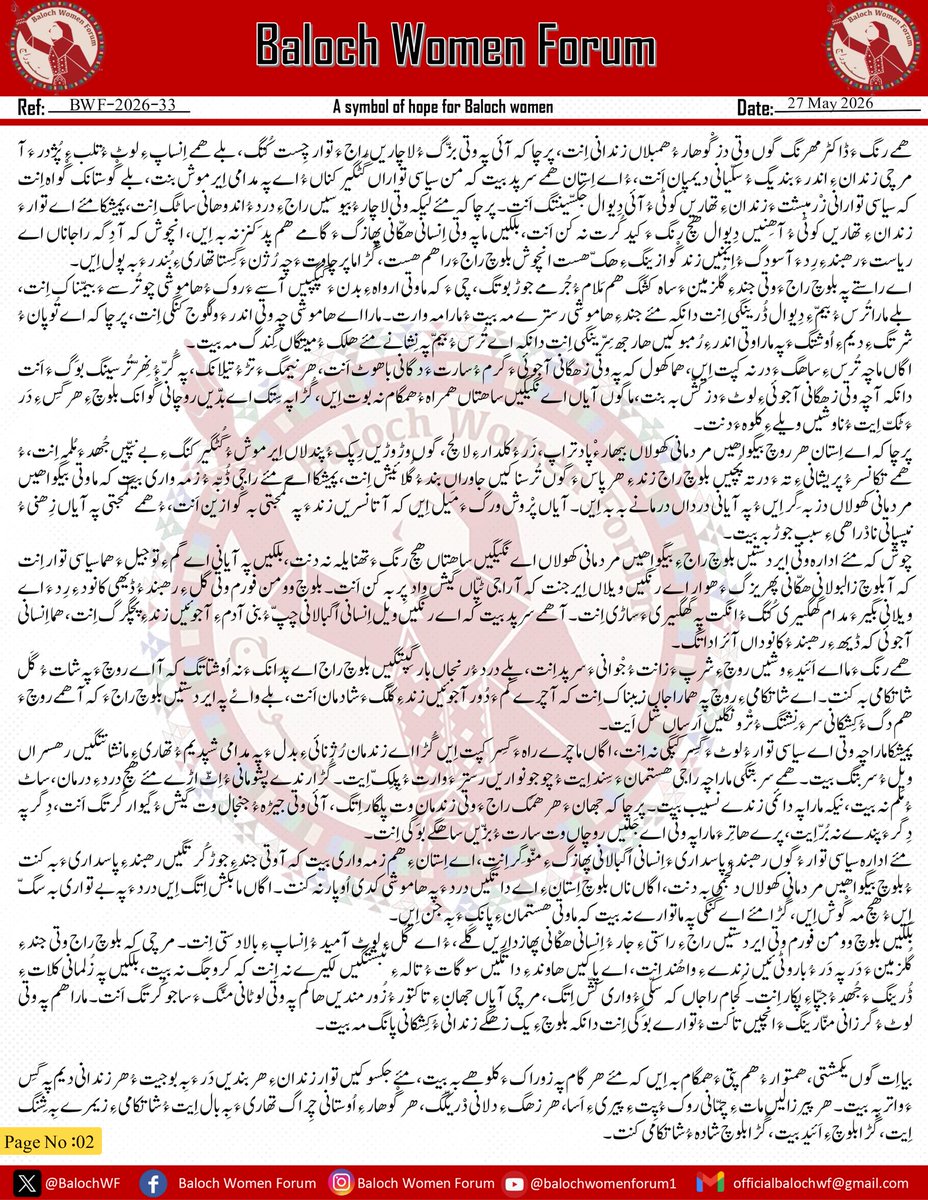
Habiba Peerjan, a resident of Nazarabad Tump and currently based in Karachi, was forcibly disappeared by security forces on 25 May 2026 after a raid at her home in Baldia Town, during which she was taken to an undisclosed location. This marks her second enforced disappearance, as she was previously detained in May 2022 and released after several days.
The repeated targeting of Baloch women through enforced disappearances highlights a deeply troubling system of repression and collective punishment. It has created an atmosphere of fear and instability, leaving families in prolonged uncertainty without access to information, legal remedy or accountability. The psychological impact on affected families is severe with prolonged trauma, anxiety, depression and other long term mental health consequences becoming increasingly common.
The Baloch Women Forum has strongly condemned the enforced disappearance of Habiba Peerjan and described it as part of an ongoing strategy of intimidation against Baloch women. It has demanded her immediate and unconditional release, calling for an end to enforced disappearances and urging human rights organizations to take urgent notice of the escalating violations in Balochistan.
#SaveBalochWomen
1
44
67
1,177
May 22
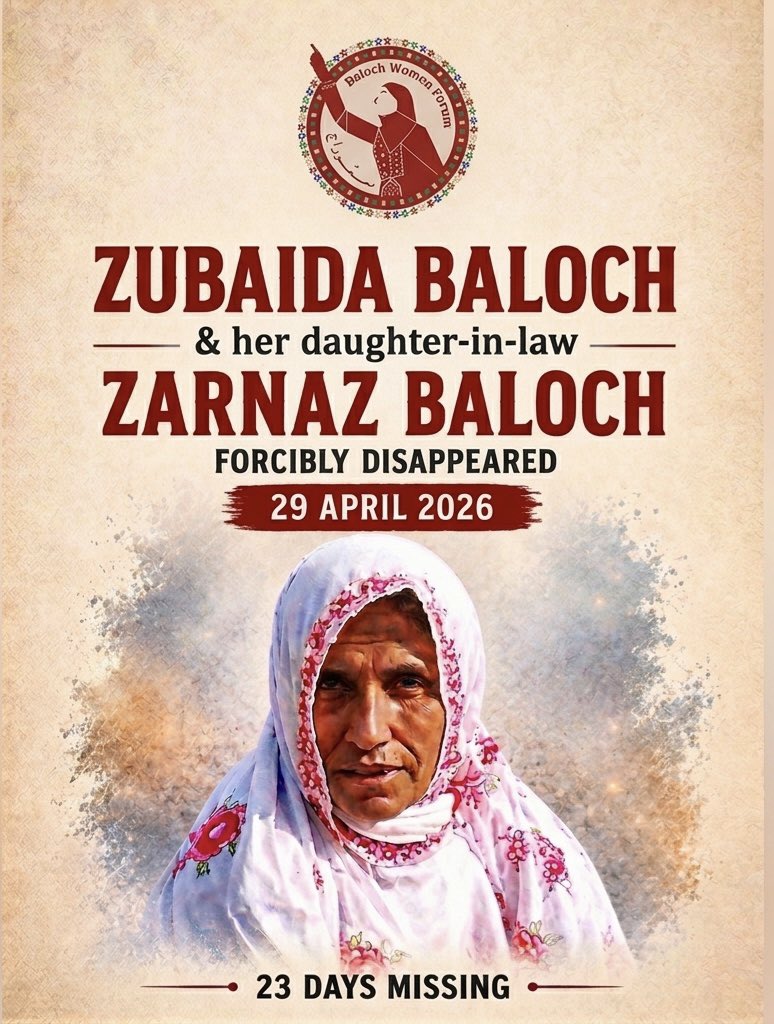
Zubaida Baloch and her daughter in law Zarnaz were forcibly abducted by security forces on 29 April 2026 from Tejaban Kech.Since then, no information has been made public about their whereabouts or legal status, leaving their family in prolonged anguish and unanswered questions.
This incident follows the killing of Daulat, husband of Zarnaz, on 18 February 2026 in an incident involving state backed death squads.The repeated targeting of this family highlights a continuing reality in which abduction of Baloch women is being normalized within the prevailing security framework raising serious concerns of collective punishment directed at civilian families in Balochistan. Urgent disclosure of their whereabouts and accountability for those responsible is demanded.
The growing institutional acceptance of enforced disappearances of Baloch women signals a deterioration in rule of law standards and weakening of civilian protection mechanisms. It further indicates the use of coercive state practices amounting to family based reprisals, where entire households are subjected to intimidation and deprivation of liberty, deepening political repression and eroding fundamental rights guarantees.
#SaveBalochWomen
3
33
44
2,090