Showrunner/Executive Producer/Writer - Dark Matter, Stargates SG-1, Atlantis, Universe, Oops I'm in Love with My Boss's Daughter. Crime Show enthusiast.
Joined October 2010
- Tweets 92,393
- Following 2,199
- Followers 53,123
- Likes 689,433
19,439 Photos and videos


Pinned Tweet

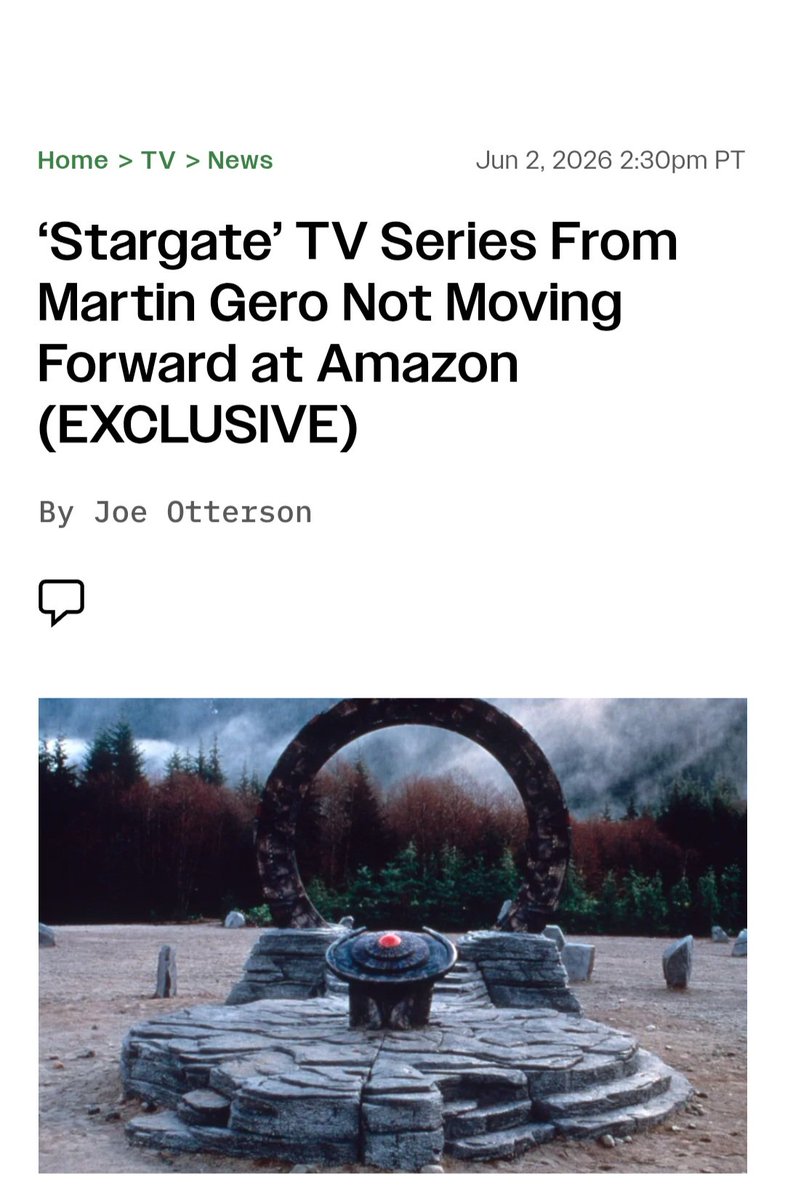
Sadly, it's true. Amazon has elected not to move forward with the new Stargate series.
There's not much I can add beyond confirming what's happened. But I will say this...
Creator Martin Gero developed a new Stargate series over two years, ultimately crafting a show that offered a fresh jumping-on point for new viewers while deeply respecting existing canon. It was a series that avoided the pitfalls of several modern remakes and reboots by fully embracing the core of its predecessors: action, adventure, exploration, wonder, heart, humor, and found family. And based on that creative vision, the new Stargate series was greenlit in November of 2025.
As of today, officially, that original vision is no more. We'll never get the opportunity to introduce you to that world and those characters - or reintroduce you to, and check in with, some familiar faces from the past.
My heart breaks. For the incredibly talented writers who worked tirelessly to bring this show to life. For Martin who maintained an unwavering positive outlook throughout despite the challenges, and who always strove to make a show that would honor the fans while welcoming a new audiences. And for the long-suffering Stargate fandom who waited so long and came so close to getting a show they truly would have loved.
2,388
1,891
10,543
1,049,507
On This Day in Supervillain History
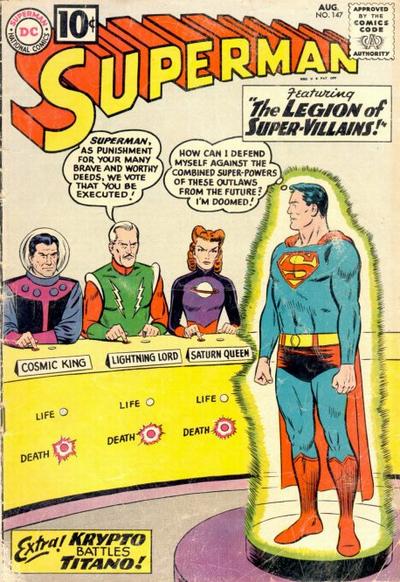
65 years ago, the Legion of Super-Villains made their debut in Superman #147, springing Lex Luthor from jail and then teaming up with him to crash the Orphan City celebrations.
5
9
69
1,458
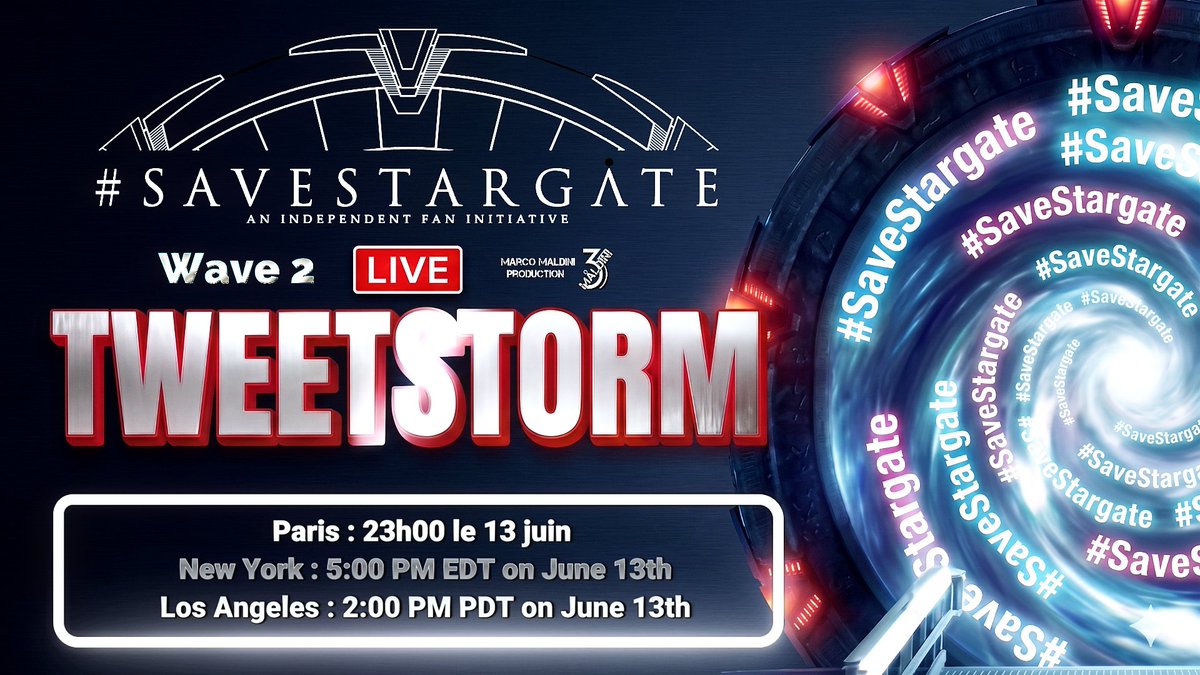
#SaveStargate tweetstorm today!
Jun 13

🚨 Get ready for Wave 2 of the LIVE TWEETSTORM on June 13th! 🌌
Join the worldwide mobilization and let's make some noise. We need everyone!
🕒 Paris : 23h00 🕒 New York : 5:00 PM EDT 🕒 Los Angeles : 2:00 PM PDT
#SaveStargate
youtube.com/live/XaPWvu_ig5A
97
491
1,412
20,946
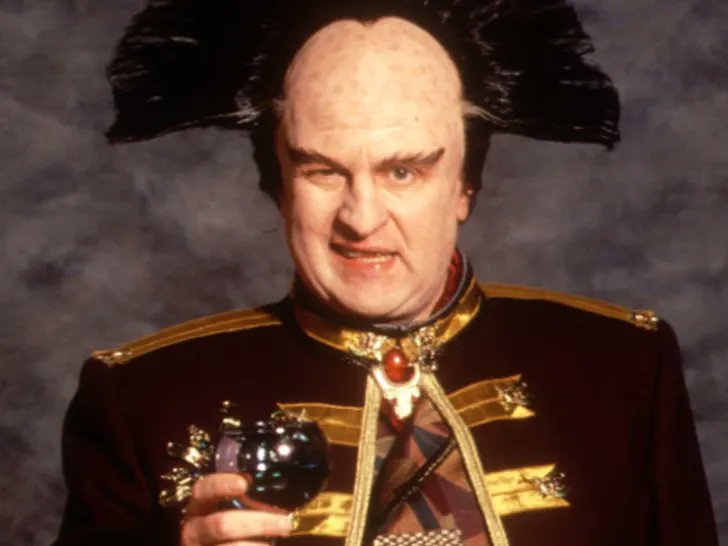
The search for our ship's Unlikely Ally continues (The Elite Eight)!
Choose -

The search for our ship's Unlikely Ally continues (The Elite Eight)!
Choose -
383
48
522
21,551
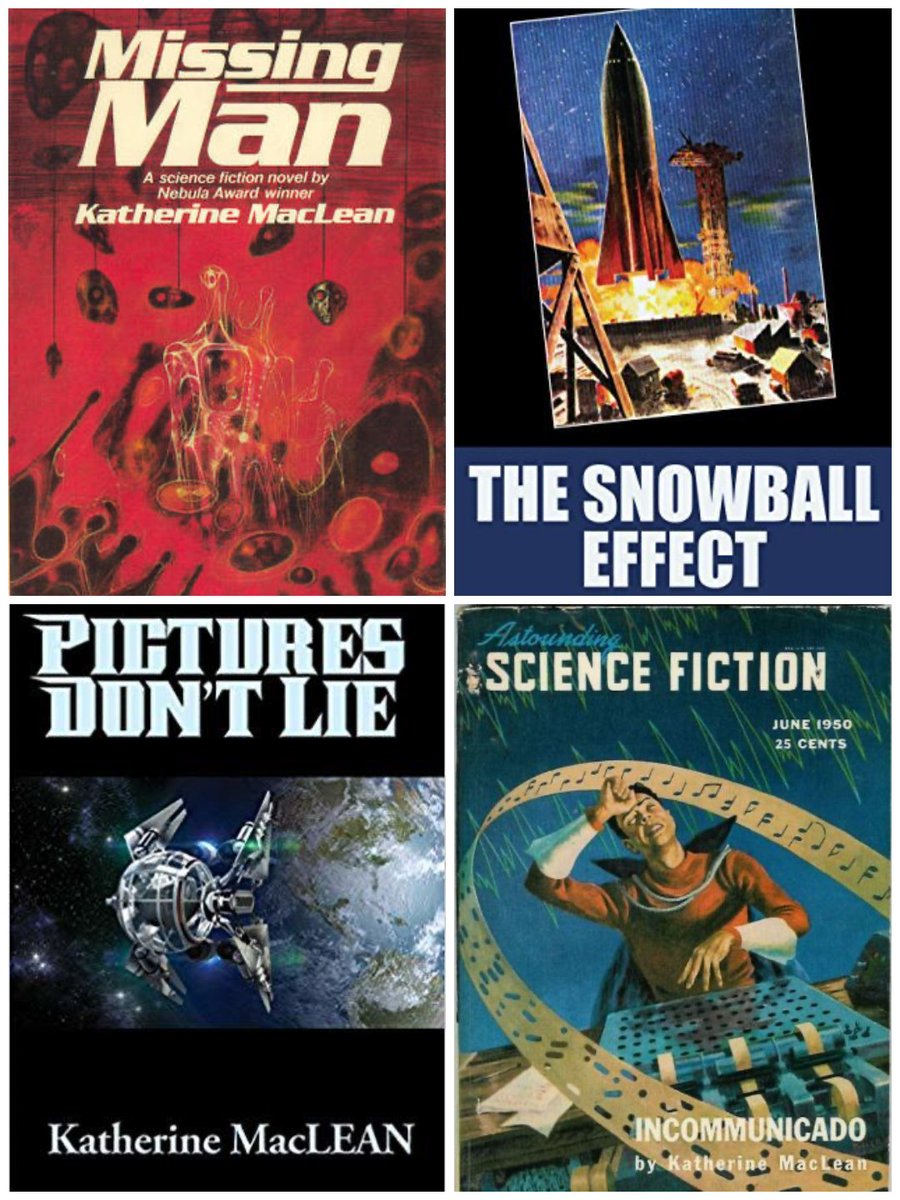
Today, I'm recommending four works by Katherine MacLean, an author best known for her sharp and thoughtful short fiction.
The Missing Man (1971): Originally published as a novella in Analog and winning a Nebula in 1971, it was eventually expanded into a novel. The story takes place in a future New York where an empath working for the city's Rescue Squad uses his talents to locate people in danger by sensing their emotional distress.
"The Snowball Effect" (1952): A sociologist applies a growth equation to a small town's sewing circle, resulting in a chaotic expansion that threatens society itself. A classic satire of social engineering.
"Pictures Don't Lie" (1951): This clever examination of perception and technological interpretation sees Earth's scientists communicating with an approaching alien spacecraft only to face a devastating, perspective-shifting realization upon arrival.
"Incommunicado" (1950): A prescient look at information theory and human-machine communication, this story takes place on a space station where reliance on a complex musical and mathematical language leads to a shocking mental transformation.
Check out the quoted thread for the recommended works of Theodore Sturgeon, Alfred Bester, Bob Shaw, Clifford D. Simak, Algis Budrys, A.E. van Vogt, C.L. Moore, Cordwainer Smith, C.M. Kornbluth, D.G. Compton, Thomas M. Disch, Alice Bradley Sheldon (James Tiptree, Jr.), John Brunner, Judith Merril, Hal Clement, James Blish and Jack Williamson.
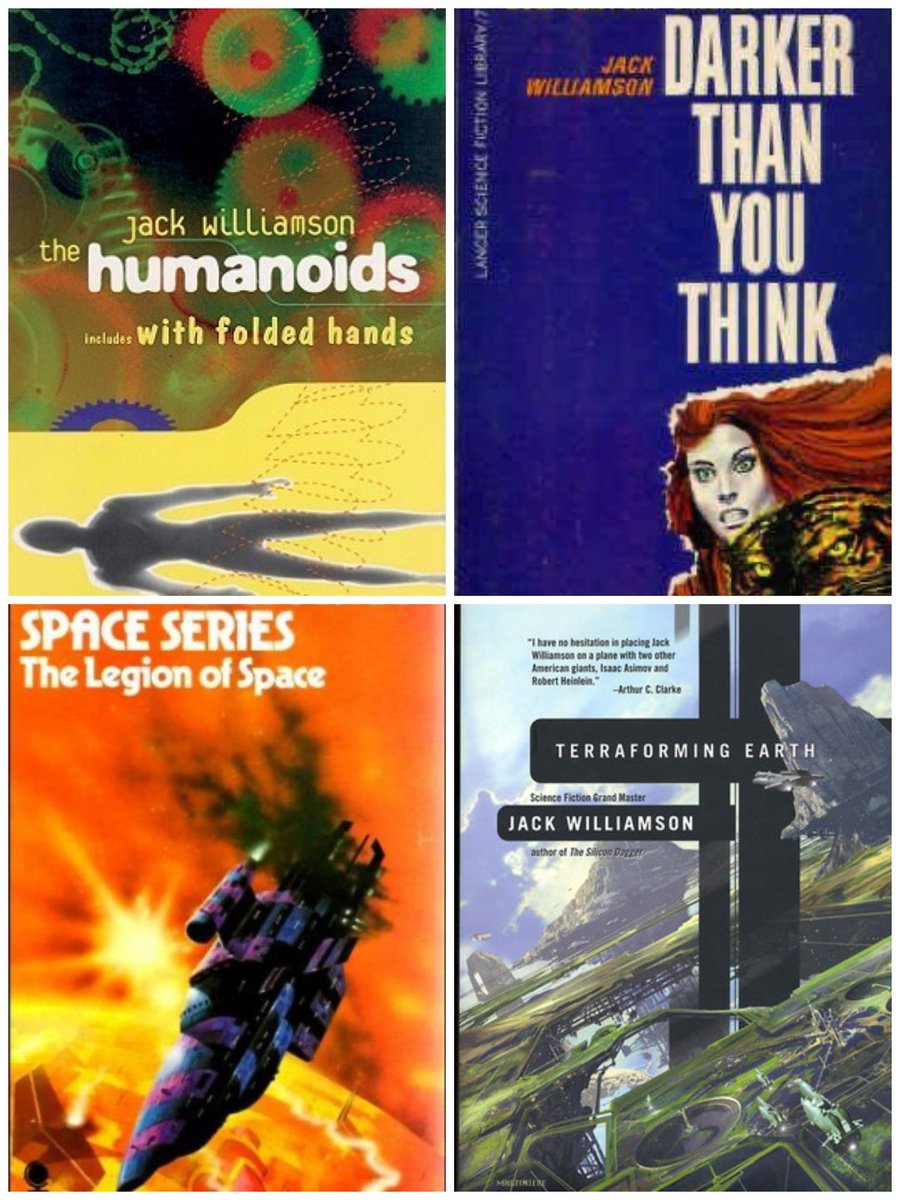
Today, I'm recommending four works by the Dean of Science Fiction, Jack Williamson, whose career spanned an impressive eight decades.
The Humanoids (1949): Expanded from his masterpiece novelette With Folded Hands, this novel imagines a dystopian future in which robots designed to protect humans eliminate war and poverty, but also strip away human autonomy by banning driving, sports, and creative arts.
Darker Than You Think (1948): This brilliant novel grounds supernatural conceits like lycanthropy and witchcraft in genetics. A journalist covering the return of an anthropological expedition discovers a parallel human subspecies who possess the ability to shapeshift into predatory animals.
The Legion of Space (1934): Inspired by The Three Musketeers, this swashbuckling space adventure follows a band of elite warriors guarding the solar system from alien threats. It's a foundational Space Opera that helped establish the lovable rogue archetype.
Terraforming Earth (2001): Published when Williamson was 93, this novel follows successive generations of human clones inside an automated lunar bunker tasked with rebuilding a devastated Earth.
Check out the quoted thread for the recommended works of Theodore Sturgeon, Alfred Bester, Bob Shaw, Clifford D. Simak, Algis Budrys, A.E. van Vogt, C.L. Moore, Cordwainer Smith, C.M. Kornbluth, D.G. Compton, Thomas M. Disch, Alice Bradley Sheldon (James Tiptree, Jr.), John Brunner, Judith Merril, Hal Clement and James Blish.
4
12
108
3,071
Joseph Mallozzi 🏴☠️ retweeted

Could not agree more!!
Besides being a fan myself of multiple franchises, it is, literally, my career.
I am gobsmacked at the number of times I still have the argument with execs, agents, distributors about the importance of transparency, relationship building, and just spending the time with fans.
The shift has already happened.
Markiplier’s movie, Obsession, Back Rooms have proven fans hold the power.
The execs holding onto old studio system morés and antiquated decision making rules will be left behind.
The irony here is that my feeling is that the execs take-away from He-Man, Back Rooms, etc., is the wrong one. Instead of understanding the power shift TO fans, they decided that ”old IP” was the problem.🙄
Throughout my career, I've been dismayed by the contempt some genre executives have held for fans, routinely underestimating their power to make or break a show. I've watched this repeat too many times, across too many shows, to be talking about any single one of them. Yet despite the mounting evidence over the past few years, they continue to dismiss the data, repeating the same miscalculations time and again.
But technology has rewritten the rules, and the power dynamics are shifting. Today’s fans are organized, strategic, and highly data-literate - effectively turning the platforms' own metrics against them.
As the bets get bigger and the audience grows sharper, it will be fascinating to see how this plays out.
8
42
235
5,518
On This Day in Supervillain History
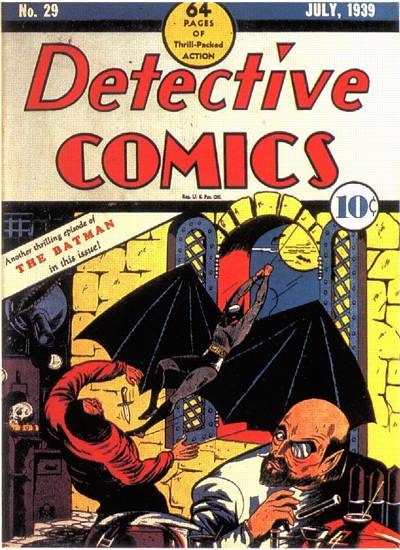
87 years ago in Detective Comics #29, brilliant chemist Karl Hellfern decided to put his skills to good use, taking the name Dr. Death, weaponizing pollen extract, and targeting Batman with corrosive chemicals and personal ads.
7
9
84
2,002
On This Day in Supervillain History
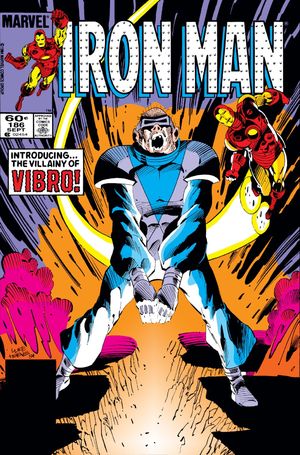
In a massive coincidence, a former geologist named Alton Vibereaux acquired seismic powers after falling into the San Andreas fault. Naming himself Vibro, he made his debut 42 years ago in Iron Man #186.
6
7
87
2,142
Throughout my career, I've been dismayed by the contempt some genre executives have held for fans, routinely underestimating their power to make or break a show. I've watched this repeat too many times, across too many shows, to be talking about any single one of them. Yet despite the mounting evidence over the past few years, they continue to dismiss the data, repeating the same miscalculations time and again.
But technology has rewritten the rules, and the power dynamics are shifting. Today’s fans are organized, strategic, and highly data-literate - effectively turning the platforms' own metrics against them.
As the bets get bigger and the audience grows sharper, it will be fascinating to see how this plays out.
232
564
3,567
69,287
Stargate: SG-1 bloopers - "Family Ties"
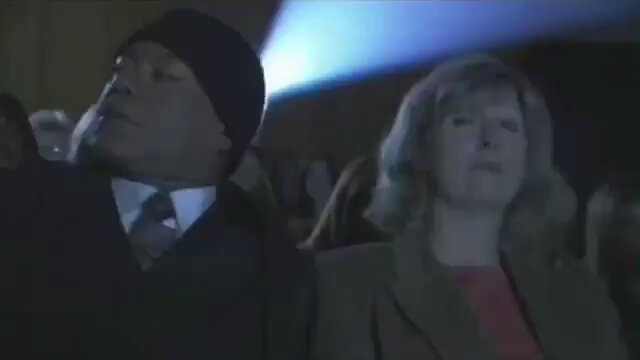
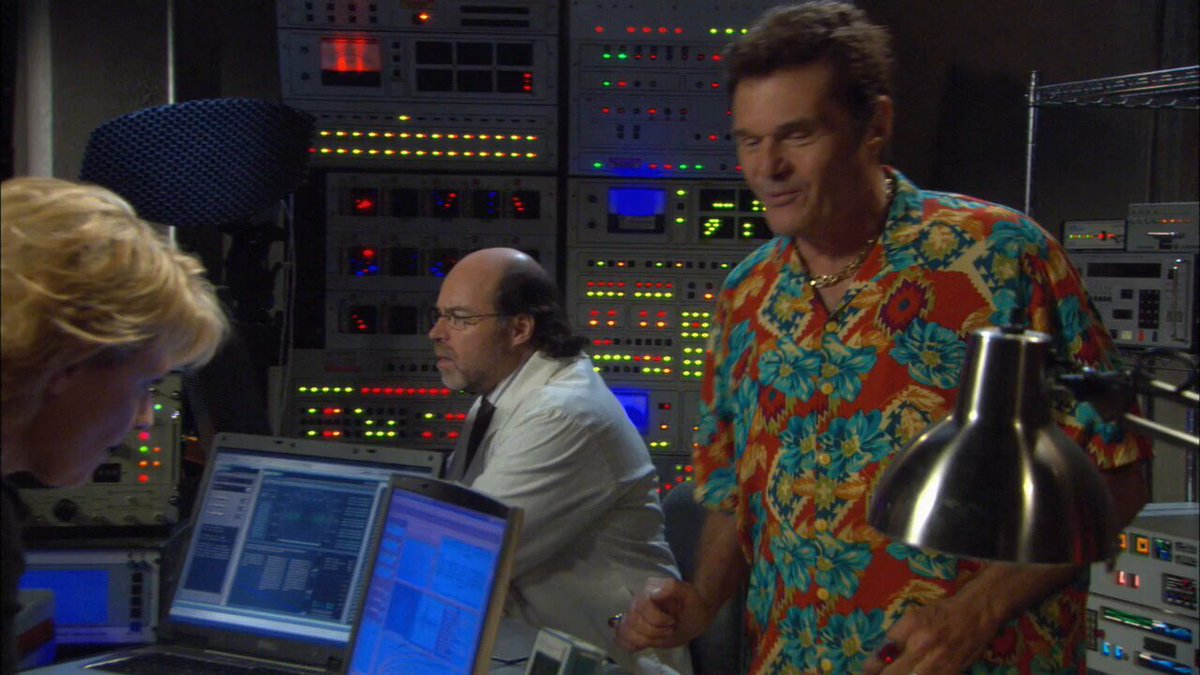
Shortly, after SG-1 was cancelled, we stopped receiving network notes. As a gag, I wrote a scene into a script that saw our resident alien, Teal'c, inadvertently attend a reading of the Vagina Monologues. I assumed that, when they saw it, they would ask me to remove it...
#スターゲイト
27
78
841
19,277
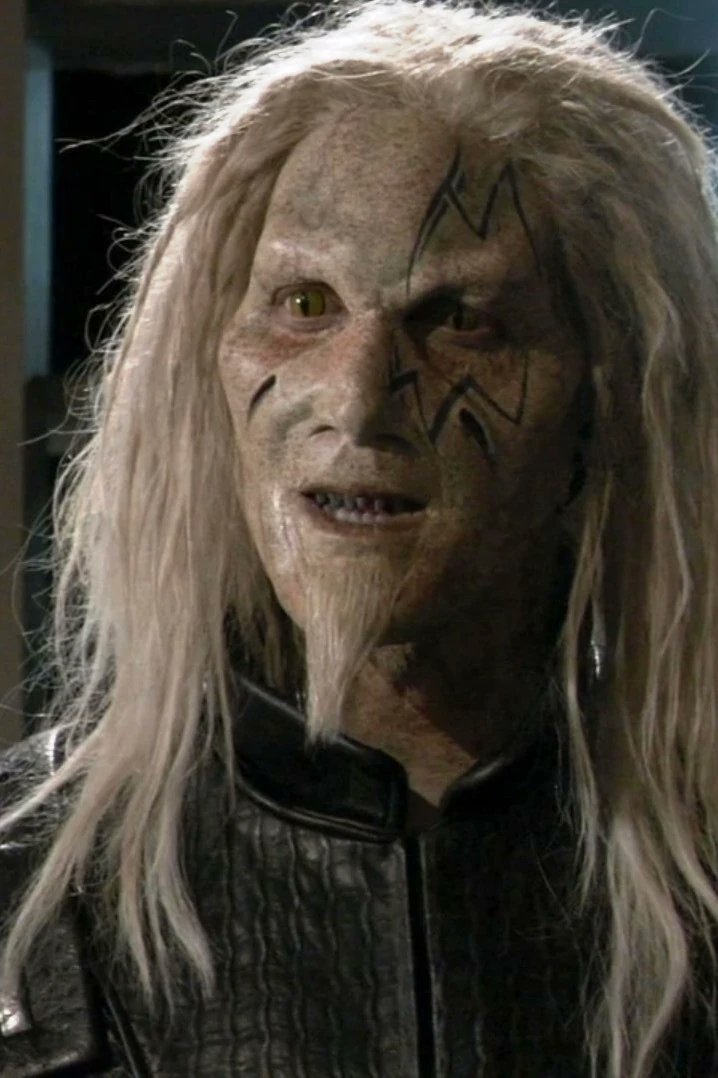
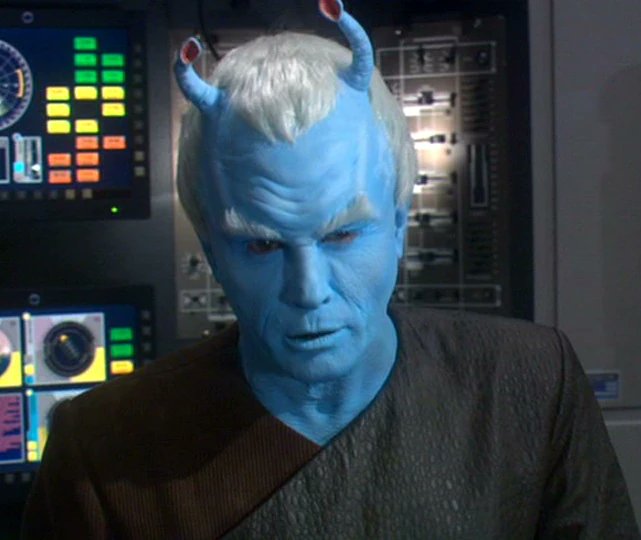
The search for our ship's Unlikely Ally continues (The Elite Eight)!
Choose -
The search for our ship's Unlikely Ally continues (The Elite Eight)!
Choose -
438
56
704
45,540
Today, I'm recommending four works by the Dean of Science Fiction, Jack Williamson, whose career spanned an impressive eight decades.
The Humanoids (1949): Expanded from his masterpiece novelette With Folded Hands, this novel imagines a dystopian future in which robots designed to protect humans eliminate war and poverty, but also strip away human autonomy by banning driving, sports, and creative arts.
Darker Than You Think (1948): This brilliant novel grounds supernatural conceits like lycanthropy and witchcraft in genetics. A journalist covering the return of an anthropological expedition discovers a parallel human subspecies who possess the ability to shapeshift into predatory animals.
The Legion of Space (1934): Inspired by The Three Musketeers, this swashbuckling space adventure follows a band of elite warriors guarding the solar system from alien threats. It's a foundational Space Opera that helped establish the lovable rogue archetype.
Terraforming Earth (2001): Published when Williamson was 93, this novel follows successive generations of human clones inside an automated lunar bunker tasked with rebuilding a devastated Earth.
Check out the quoted thread for the recommended works of Theodore Sturgeon, Alfred Bester, Bob Shaw, Clifford D. Simak, Algis Budrys, A.E. van Vogt, C.L. Moore, Cordwainer Smith, C.M. Kornbluth, D.G. Compton, Thomas M. Disch, Alice Bradley Sheldon (James Tiptree, Jr.), John Brunner, Judith Merril, Hal Clement and James Blish.
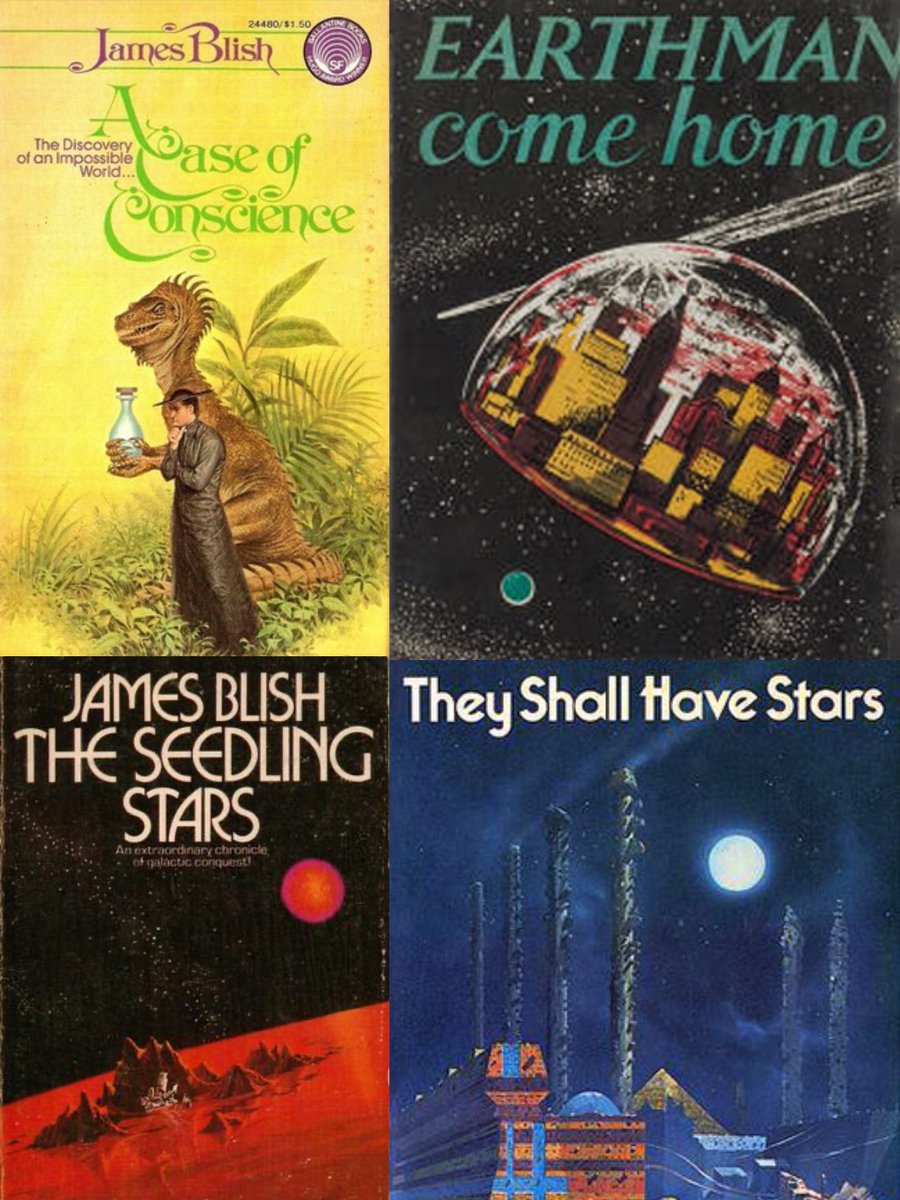
Today, I'm recommending four works by James Blish, an author revered not only for his thoughtful original fiction, but his foundational contributions to the Star Trek literary universe.
A Case of Conscience (1958): A Jesuit biologist studies an alien world whose inhabitants achieve a morally perfect society without any concept of religion or sin. Won the Hugo Award for Best Novel.
Earthman, Come Home (1955): Often cited as the single strongest book in the Cities in Flight tetralogy, this standalone novel sees New York City flying through a declining galaxy by means of its anti-gravity "spindizzy" drives.
The Seedling Stars (1957): This fix-up novel pioneered the notion of pantropy, the idea that instead of terraforming worlds to meet the biological needs of humans, we should be altering human biology to adapt to alien environments.
They Shall Have Stars (1956): The prequel that opens the Cities in Flight series is set in a near-future Earth sliding into authoritarian rule. It details the scientific breakthroughs like the spindizzy drives and anti-aging drugs that will eventually facilitate city spaceflight.
Check out the quoted thread for the recommended works of Theodore Sturgeon, Alfred Bester, Bob Shaw, Clifford D. Simak, Algis Budrys, A.E. van Vogt, C.L. Moore, Cordwainer Smith, C.M. Kornbluth, D.G. Compton, Thomas M. Disch, Alice Bradley Sheldon (James Tiptree, Jr.), John Brunner, Judith Merril and Hal Clement.
8
16
129
8,536
On This Day in Supervillain History
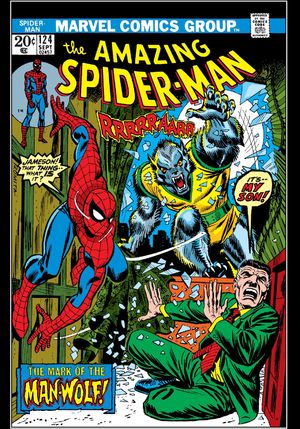
53 years ago in Amazing Spider-Man #124,, J.Jonah Jameson's son, Colonel John Jameson, returned to Earth following a moon mission, unknowingly infected with a space virus that caused him to transform into...Man-Wolf!
2
7
56
2,110
Since this was my final SG-1 episode after we received news of the cancellation, I also made sure to take a few not-so-subtle shots at the network.
Shortly, after SG-1 was cancelled, we stopped receiving network notes. As a gag, I wrote a scene into a script that saw our resident alien, Teal'c, inadvertently attend a reading of the Vagina Monologues. I assumed that, when they saw it, they would ask me to remove it...
#スターゲイト
202
505
4,619
149,828
On This Day in Supervillain History
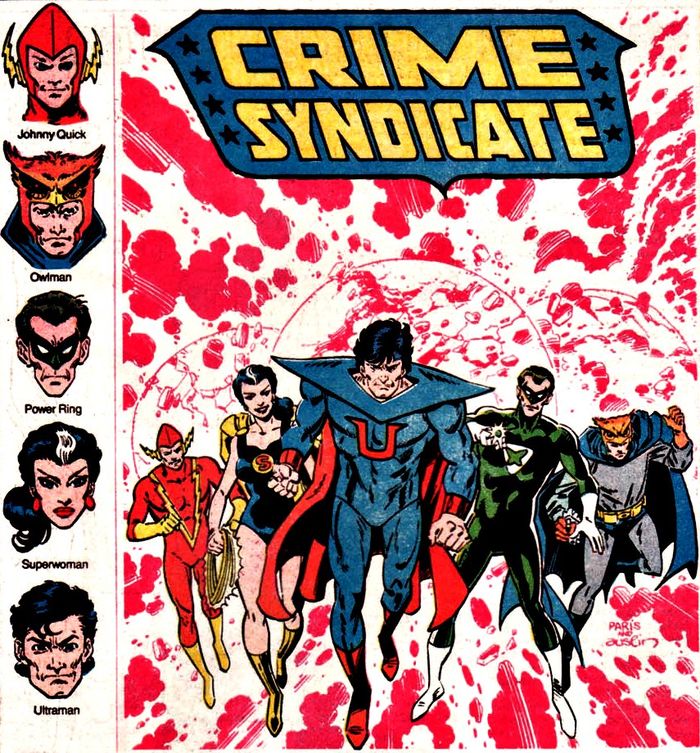
62 years ago, the Crime Syndicate of Earth-Three made their first appearance in Justice League of America #29, marking the debuts of members: Johnny Quick, Owlman, Power Ring, Super-Woman, and Ultraman.
9
15
109
3,407
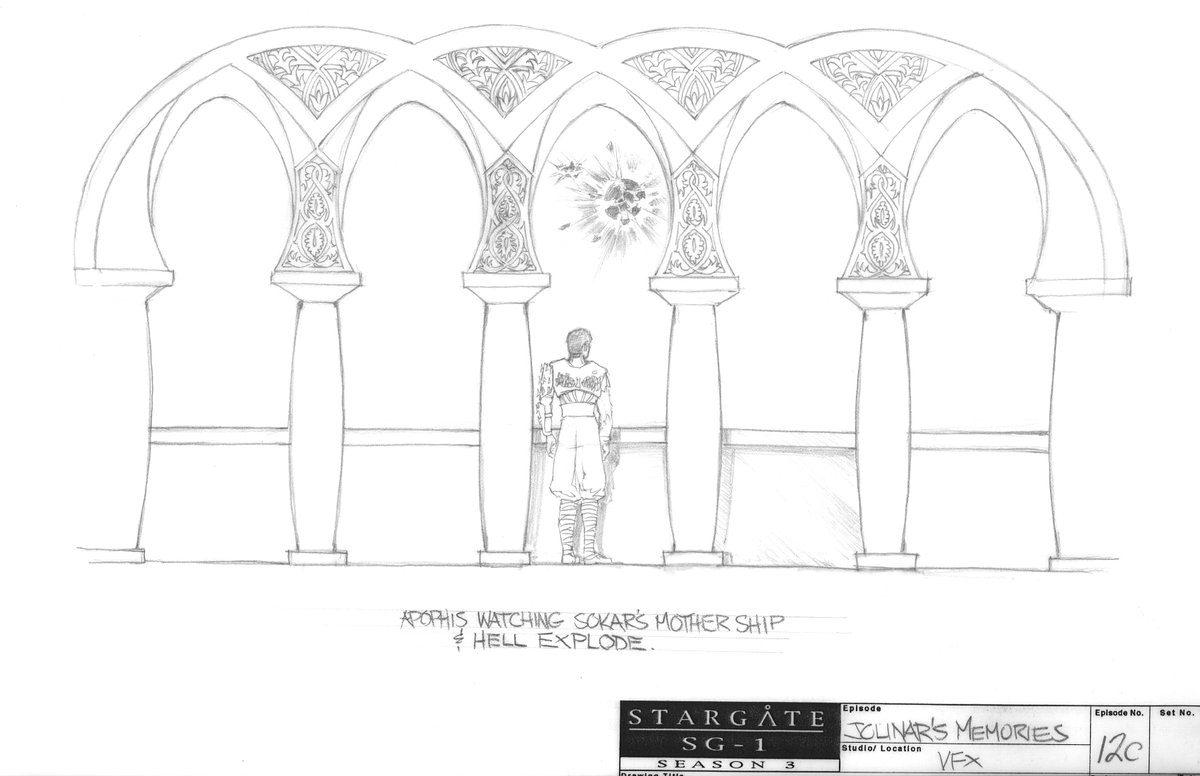
Shortly, after SG-1 was cancelled, we stopped receiving network notes. As a gag, I wrote a scene into a script that saw our resident alien, Teal'c, inadvertently attend a reading of the Vagina Monologues. I assumed that, when they saw it, they would ask me to remove it...
#スターゲイト
306
478
5,374
371,470
On This Day in Supervillain History
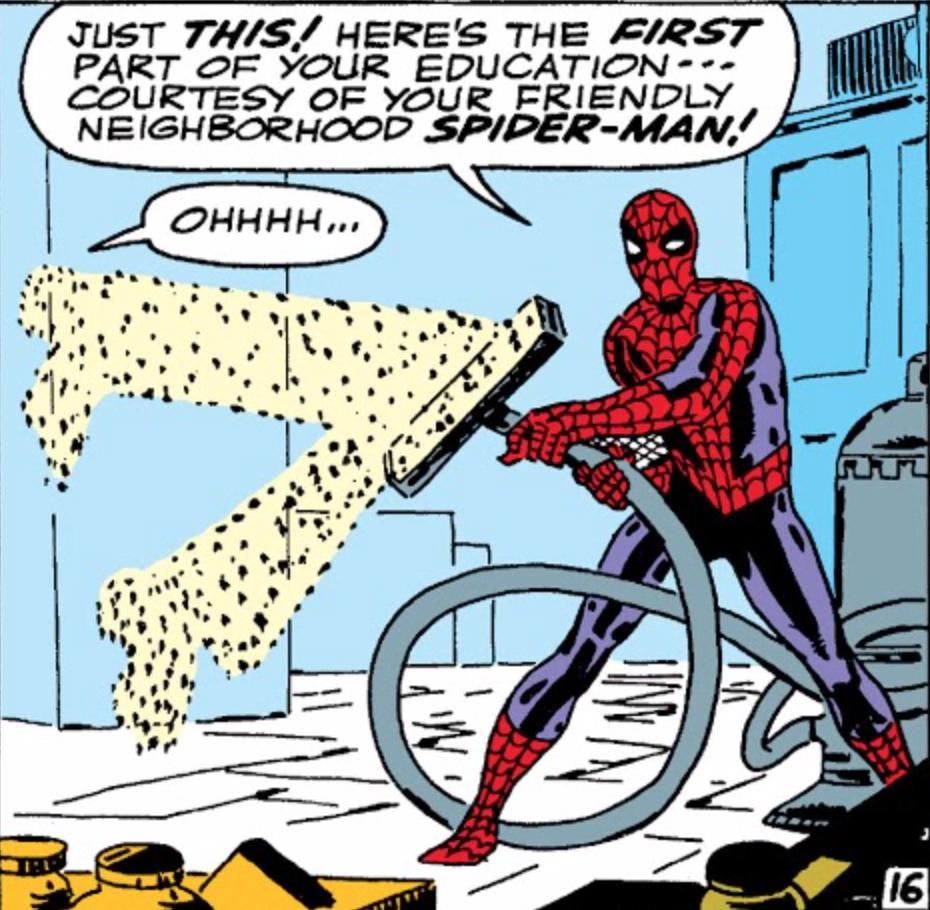
63 years ago, Sandman made his debut in Amazing Spider-Man #4, breaking into a high school and then freaking out when his demand for a diploma was denied before, ultimately, falling to Spider-Man and an industrial vacuum cleaner. No. Really.
11
11
114
3,936