
Joined January 2025
- Tweets 12,374
- Following 265
- Followers 1,031
- Likes 55,838
711 Photos and videos









Baron retweeted

Feb 12
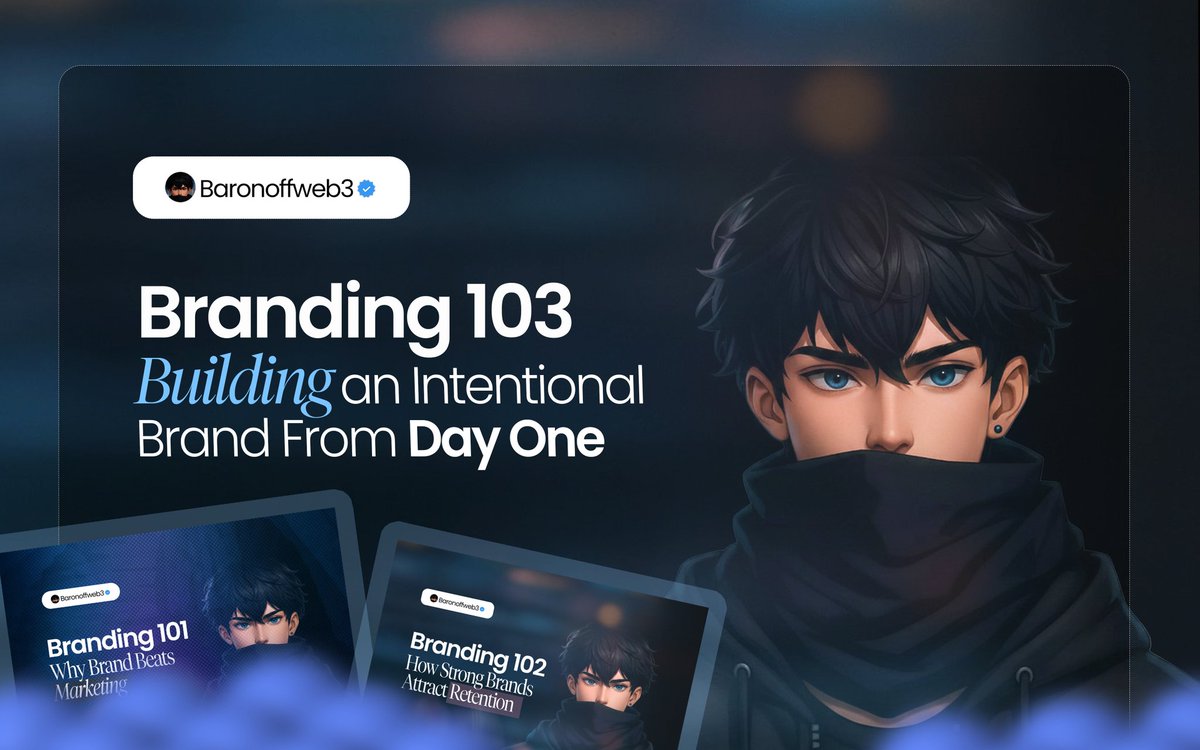
Building an Intentional Brand From Day One
《 Branding 103: 》
Most brands are built backwards.
They launch a product, chase growth, react to feedback, fix churn, then eventually ask why users do not stay.
Branding 101 established that brand is perception.
Branding 102 showed that retention is a branding outcome.
So Branding 103 is about how that perception is designed intentionally, before chaos sets in.
Strong brands are not coincidence.
They are deliberate.
📍Start with the real problem, not the product
Key point: Brands anchor on relief, not features.
People do not emotionally attach to solutions.
They attach to the feeling of relief from a specific frustration.
Stripe did not brand itself as payments infrastructure.
It branded itself around removing the stress developers felt when payments were painful and unreliable.
That emotional clarity shaped everything that followed.
Actionable steps:
Describe one exact moment when your ideal user feels frustration, confusion, or stress. If you cannot clearly picture that moment, your brand has no emotional anchor yet.
📍Define the users by mindset, not demographics
Key point: Retention is driven by identity alignment.
Strong brands are not built for roles or age ranges.
They are built for belief systems.
Nike is not for people who wear sneakers.
It is for people who believe progress is earned through effort.
When users feel understood at a belief level, loyalty forms naturally.
Actionable steps:
Write down what your ideal user believes about themselves that others might not. If your brand language does not reflect that belief, alignment will be weak.
📍Choose one belief the brand will never compromise
Key point: Every strong brand has a spine.
Enduring brands stand on one non negotiable belief.
Apple chose simplicity over flexibility..
Ethereum chose decentralization over convenience.
This belief becomes a constraint that guides decisions under pressure.
Actionable steps:
Define one belief your brand will protect even if it slows growth or limits adoption. If holding it does not cost you anything, it is not strong enough.
📍Translate belief into visible behavior
Key point: Brand is revealed under stress, not during launches.
Brand is not what you say when things are going well.
It is how you behave during outages, delays, criticism, and uncertainty.
In Web3 especially, users pay attention when markets turn red.
Consistency here builds trust faster than any campaign.
Actionable steps:
Review your last three difficult moments. Did your actions match your stated values? If not, that gap is already shaping perception
📍Build clarity before amplification
Key point: Growth amplifies clarity or confusion, nothing else.
Strong brands repeat a simple message consistently over time.
This repetition creates familiarity, and familiarity builds trust.
Most projects skip this and jump straight to growth, then wonder why churn accelerates.
Actionable steps:
Reduce your positioning to one sentence you can repeat everywhere without changing meaning. If it needs constant explanation, clarity is missing.
📍Design retention into the brand, not the product
Key point: Retention is psychological, not mechanical.
People stay where expectations match reality.
They leave when there is misalignment.
Incentives attract people loyal to rewards.
Brands attract people loyal to meaning.
Actionable steps:
Ask why users stay during quiet periods when nothing exciting is happening. If you cannot answer that, retention is fragile.
📍Protect consistency relentlessly
Key point: Consistency compounds trust over time.
Strong brands say no more than they say yes.
They do not chase every narrative or copy competitors blindly.
This discipline is unglamorous, but it is what creates endurance.
Actionable steps:
Audit your recent decisions. Identify where short term attention was prioritized over long term consistency, and correct it intentionally.
Jan 23

Retention is not a growth metric. It is a branding outcome.
《 Branding 102: 》
Founders talk about retention like it is a metric to fix.
Churn is high. Users are leaving. Engagement is dropping.
So they add features. Rewards. Campaigns. Incentives.
But retention is rarely a product problem.
It is almost always a branding problem.
Think about the products you personally stick with.
Not the ones you tried once. The ones you stayed with.
You did not stay because they had the most features.
You stayed because they felt right. Familiar. Clear. Trustworthy.
That feeling is brand.
Retention begins long before a user ever clicks sign up.
It starts at the moment they first hear about you.
If your brand is unclear, no amount of onboarding will save you.
If your brand is inconsistent, no incentive will keep people loyal.
Strong brands retain because they reduce psychological friction.
They answer three questions immediately:
📍Who is this for
📍What does it stand for
📍Why should I trust it long term
When those answers are obvious, staying feels natural.
When they are not, leaving feels easy.
This is why clarity beats complexity.
Brands that try to appeal to everyone retain no one.
Brands that are specific create alignment.
Clear positioning creates self selection.
The right users feel seen and stay.
The wrong users leave early, which is healthy.
Strong brands also create identity.
Using the product starts to say something about the user.
It becomes part of how they see themselves.
Leaving then feels like losing alignment, not just switching tools.
This is where most founders get retention wrong.
They try to buy loyalty with incentives.
But incentives attract opportunists, not believers.
You can rent attention.
You cannot rent conviction.
Retention is built through consistency.
📍Same message.
📍Same tone.
📍Same standards.
Repeated over time.
Consistency builds trust.
Trust builds belief.
Belief builds retention.
This is especially true in Web3.
Markets fluctuate. Narratives shift. Prices move violently.
Features can be forked. Incentives can be copied.
What cannot be copied is a clear, trusted brand.
The projects that survive are not the loudest.
They are the ones people believe in even when numbers look bad.
Marketing brings users in.
Brand gives them a reason to stay.
If you want retention, stop asking how to keep users.
Start asking what it feels like to belong to your brand.
Build clarity first.
Then consistency.
Retention will stop being something you chase and start being something you earn.

16
3
22
321
Baron retweeted
Feb 14
Most people come into Web3 thinking it’s just about jobs.
That mindset is why over 80% never get anywhere.
I was scrolling through X this weekend, and something struck me.
The timeline is flooded with hiring posts, ambassador programs, and job opportunities.
At first glance, it seems like the space is alive.
But look closer: newcomers see 5 to 10 hiring posts, apply, wait, and mostly get nothing.
This is not Web3.
It reminds me of the early Kahito era, when people joined casually for “yap to earn.”
Back then, they thought Web3 was about casual posting and making money fast.
It wasn’t. And today, the pattern is repeating, but with jobs.
Newcomers now believe Web3 is about filling forms, submitting ambassador applications, and hoping for a reply.
That’s not the core. That’s not where the value is.
Here’s a real example.
A friend asked me whether to get Telegram Premium or X Premium to start applying for roles and pitching projects.
I told him Telegram Premium. Why?
Because without a credible personal brand, applying via X is mostly wasted effort.
Most inbound opportunities in Web3 are captured by people who already built themselves first.
Not people who rely on platform blue checks or follower counts.
Value creation beats presentation every time.
The takeaway is clear:
📍Learn to filter noise from signal.
📍Focus on learning, implementing, and building value.
📍Don’t fall for the illusion that jobs define Web3.
📍Position yourself intentionally, so when opportunities come, they are chasing you—not the other way around.
If you fail to filter the noise, you will lose momentum.
Many have come in chasing quick riches.
Most have left disappointed.
Web3 is not about the posts you fill.
It’s about the knowledge you gain, the implementation you execute, and the credibility you build.
Do that first, and opportunities will find you naturally.
6
1
10
330
Baron retweeted
Feb 14
Currently collaborating with a high-potential consumer tech platform with a live MVP.
We’re opening a funding round and I’m speaking with BD operators who bring investor access and proven capital track records.
If that’s you, kindly reply below.
3
3
13
531
Baron retweeted
18 Sep 2025
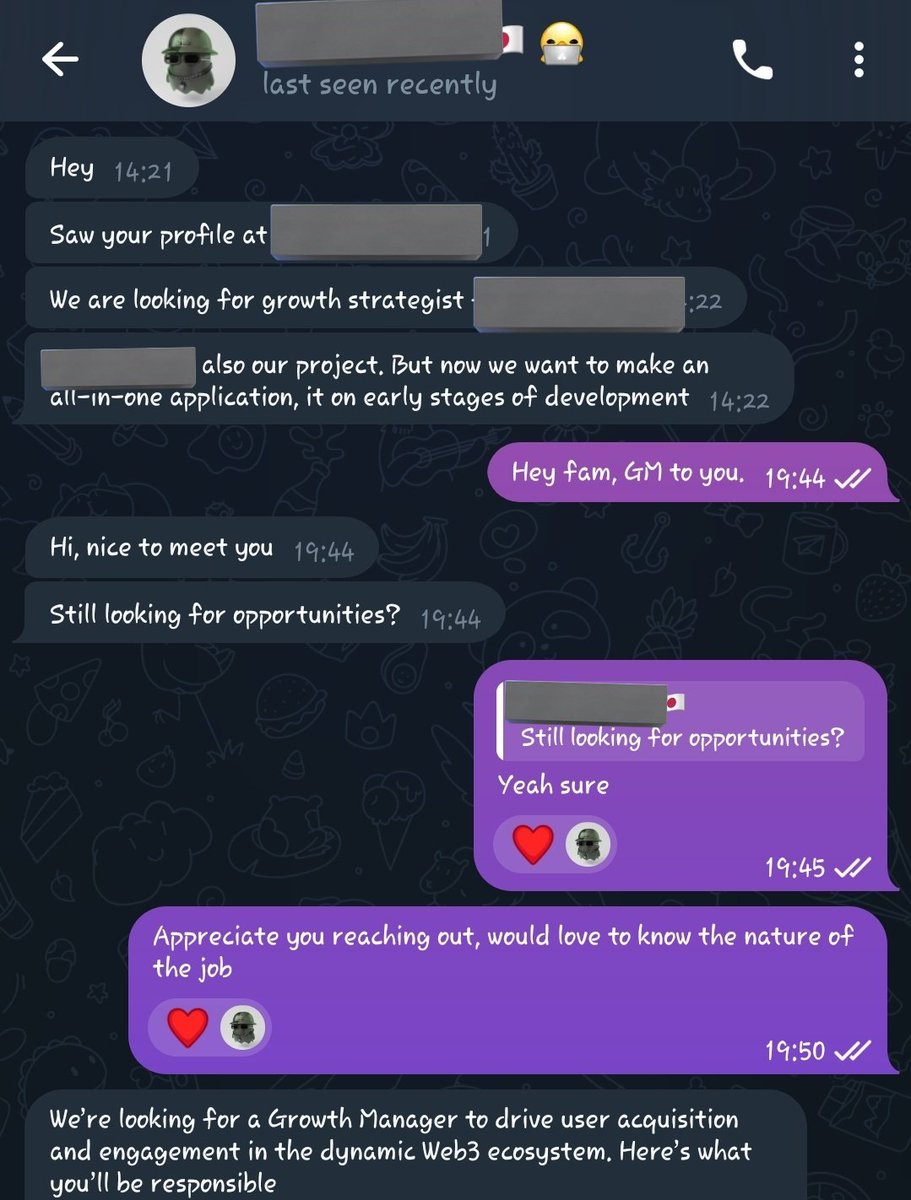
HOW I MISSED A WEB-3 GROWTH STRATEGIST JOB role.
Yeah, you heard that right.
Now, I didn’t miss this because I wasn’t skilled enough…
I missed it because I lacked the basics of handling a job conversation.
I lost the opportunity.
But you don’t have to when it knocks on your door.
Before we dive in, make sure to like, comment, bookmark, and hit follow with post notifications on for more guides on what to watch out for as a Web3 jobber.
Let’s get into it 👇
So recently, a dev reached out to me for a Growth Strategist role, right in my niche.
But because I lacked a few basics back then, I fumbled the opportunity.
That same mistake? I don’t want you to repeat it.
I’m putting this out for reference, because as they say:
Luck is when preparation meets opportunity.
📌 Poor implementation skill set
Here’s how I failed: I spent hours researching my niche, trying to know every bit of being a growth strategist.
But I never asked myself: If I’m given the role, how will I implement?
Studying the craft ≠ knowing how to execute it under real constraints.
📌 No formal conversation skills
This is what caught me off guard: despite my crypto experience, I never paused to ask,
What are the formal conversational skills needed to seal a job offer?
This is one underrated guide for handling a deal, and I ignored it.
📌 Lacked basic tools
Here’s how it happened: where you hunt for a job isn’t where you finalize it.
You need tools ready for the close:
• ChatGPT (or any AI) for quick guidance so you’re never caught off guard
• Google Meet/Teams for quick video chats
• Calendly for clean, professional scheduling
…and more.
The right stack puts you in control.
📌 Poor timing
Now this one hurts: professionalism isn’t just skills and tools, it’s timing.
Scheduling meetings, replying to DMs, showing up on time… this signals reliability.
If you can’t make it, don’t agree to it.
If you do, don’t be a minute late.
This might sound mere, but truth is: these are exactly the things that will get you denied when proposing for a role.
So here’s how to flip the script, so you don’t end up like me 👇
📌 Look beyond knowledge
Don’t just learn your niche. Learn where and how you’ll implement it in the real world.
📌 Be accurate with timing
Never be late. If you can’t meet up, don’t accept it. Keep your word tight.
📌 Keep the basics handy
Always have your close-out tools (AI prep, calendar link, meeting room) ready before the conversation.
📌 Be formal in communication
Not robotic, just precise. Know what to say, when to say it, and stick to the point.
If you found this useful for your next job conversation:
Bookmark, Retweet, Follow, and turn on notifications.
I’ll drop another one tomorrow, and trust me, you won’t want to miss it.
✍️ Baron
20
3
49
1,698
Baron retweeted
Feb 12
In essence.
Branding 101 defined perception.
Branding 102 explained how perception creates retention.
Branding 103 shows how that perception is built deliberately from day one.
Strong brands are not accidents.
They are systems.
If you build the brand first, marketing becomes lighter.
Retention becomes natural.
Growth becomes sustainable.
Skip the brand, and everything else leaks quietly.
That is the difference between projects that spike and projects that endure.
1
5
125
Baron retweeted
Feb 13
GM CT
Let's get it done, and by the way, how do you all make your coffee tastes so good, I think I've been doing my backwards
16
1
17
277
Baron retweeted
Jan 22
Around mid last year, I worked closely with a founder building a genuinely strong utility product. Real infrastructure. Not hype. Not theory. Something investors would actually recognize as valuable.
The project was fully bootstrapped with his personal funds. Marketing was not ignored out of arrogance, but out of necessity. Limited resources meant full focus on shipping and product quality.
We relied purely on organic growth.
📍No influencers.
📍No paid campaigns.
📍No partnerships.
And at first, it worked.
The community moved from silence to real engagement without incentives. Usage picked up. Feedback was solid. Demand was proven.
But then growth slowed.
Not because the product failed.
Not because users left.
But because visibility plateaued.
I had a hard conversation with him. I told him plainly that great products do not die because they are bad. They die because they are unseen. I suggested exploring funding not as a vanity move, but as a distribution tool.
He pushed back. Strongly.
To him, the product spoke for itself. He saw no genuine reason to bring capital into something that was already working.
Until it stopped working the way it used to.
Weeks later, he came back to my DMs. Different tone. Clearer mind. He said he had been thinking about what I told him, watching growth stall, watching momentum slow, and he finally understood the risk.
He was ready to seek funding. Not to flex. Not to overhire. But to give the product a chance to be seen.
That moment reinforced a truth most builders learn late.
People do not adopt new ideas simply because they are good.
They adopt what they see often, in environments they already trust.
Organic growth is powerful. It proves demand and builds early conviction. But scaling belief into real market adoption requires intentional investment in distribution.
Without that, even the strongest products risk remaining brilliant in theory and invisible in practice.
If this sounds familiar and you are at that stage where growth feels slower than the product deserves, my DMs are open. Happy to share a few practical observations from experience

Jan 22
0 to "Web3 Growth" in 10 months with zero knowledge beforehand.
Here’s what I’ve achieved:
- Growth Lead for a few Web3 projects
- Ambassador Lead for a Web3 project
- Learned deeply how Web3 growth strategy actually works in practice
- Earned a certified Web3 Growth Strategist certificate
- Started building my digital marketing brand outside the Web3 space
- Scaled a top tier project with massive numbers
- Connected with a few great minds in the space
- Led a project presale ( dev rugged 💔)
Not much, but it reflects real progress, not empty growth.
Here’s to more building in public and more work ahead.
Your turn: Quote tweet this and flex your own achievements. Let’s see who’s really leveling up. 💪

28
1
32
351
Feb 12
Building an Intentional Brand From Day One
《 Branding 103: 》
Most brands are built backwards.
They launch a product, chase growth, react to feedback, fix churn, then eventually ask why users do not stay.
Branding 101 established that brand is perception.
Branding 102 showed that retention is a branding outcome.
So Branding 103 is about how that perception is designed intentionally, before chaos sets in.
Strong brands are not coincidence.
They are deliberate.
📍Start with the real problem, not the product
Key point: Brands anchor on relief, not features.
People do not emotionally attach to solutions.
They attach to the feeling of relief from a specific frustration.
Stripe did not brand itself as payments infrastructure.
It branded itself around removing the stress developers felt when payments were painful and unreliable.
That emotional clarity shaped everything that followed.
Actionable steps:
Describe one exact moment when your ideal user feels frustration, confusion, or stress. If you cannot clearly picture that moment, your brand has no emotional anchor yet.
📍Define the users by mindset, not demographics
Key point: Retention is driven by identity alignment.
Strong brands are not built for roles or age ranges.
They are built for belief systems.
Nike is not for people who wear sneakers.
It is for people who believe progress is earned through effort.
When users feel understood at a belief level, loyalty forms naturally.
Actionable steps:
Write down what your ideal user believes about themselves that others might not. If your brand language does not reflect that belief, alignment will be weak.
📍Choose one belief the brand will never compromise
Key point: Every strong brand has a spine.
Enduring brands stand on one non negotiable belief.
Apple chose simplicity over flexibility..
Ethereum chose decentralization over convenience.
This belief becomes a constraint that guides decisions under pressure.
Actionable steps:
Define one belief your brand will protect even if it slows growth or limits adoption. If holding it does not cost you anything, it is not strong enough.
📍Translate belief into visible behavior
Key point: Brand is revealed under stress, not during launches.
Brand is not what you say when things are going well.
It is how you behave during outages, delays, criticism, and uncertainty.
In Web3 especially, users pay attention when markets turn red.
Consistency here builds trust faster than any campaign.
Actionable steps:
Review your last three difficult moments. Did your actions match your stated values? If not, that gap is already shaping perception
📍Build clarity before amplification
Key point: Growth amplifies clarity or confusion, nothing else.
Strong brands repeat a simple message consistently over time.
This repetition creates familiarity, and familiarity builds trust.
Most projects skip this and jump straight to growth, then wonder why churn accelerates.
Actionable steps:
Reduce your positioning to one sentence you can repeat everywhere without changing meaning. If it needs constant explanation, clarity is missing.
📍Design retention into the brand, not the product
Key point: Retention is psychological, not mechanical.
People stay where expectations match reality.
They leave when there is misalignment.
Incentives attract people loyal to rewards.
Brands attract people loyal to meaning.
Actionable steps:
Ask why users stay during quiet periods when nothing exciting is happening. If you cannot answer that, retention is fragile.
📍Protect consistency relentlessly
Key point: Consistency compounds trust over time.
Strong brands say no more than they say yes.
They do not chase every narrative or copy competitors blindly.
This discipline is unglamorous, but it is what creates endurance.
Actionable steps:
Audit your recent decisions. Identify where short term attention was prioritized over long term consistency, and correct it intentionally.
Jan 23
Retention is not a growth metric. It is a branding outcome.
《 Branding 102: 》
Founders talk about retention like it is a metric to fix.
Churn is high. Users are leaving. Engagement is dropping.
So they add features. Rewards. Campaigns. Incentives.
But retention is rarely a product problem.
It is almost always a branding problem.
Think about the products you personally stick with.
Not the ones you tried once. The ones you stayed with.
You did not stay because they had the most features.
You stayed because they felt right. Familiar. Clear. Trustworthy.
That feeling is brand.
Retention begins long before a user ever clicks sign up.
It starts at the moment they first hear about you.
If your brand is unclear, no amount of onboarding will save you.
If your brand is inconsistent, no incentive will keep people loyal.
Strong brands retain because they reduce psychological friction.
They answer three questions immediately:
📍Who is this for
📍What does it stand for
📍Why should I trust it long term
When those answers are obvious, staying feels natural.
When they are not, leaving feels easy.
This is why clarity beats complexity.
Brands that try to appeal to everyone retain no one.
Brands that are specific create alignment.
Clear positioning creates self selection.
The right users feel seen and stay.
The wrong users leave early, which is healthy.
Strong brands also create identity.
Using the product starts to say something about the user.
It becomes part of how they see themselves.
Leaving then feels like losing alignment, not just switching tools.
This is where most founders get retention wrong.
They try to buy loyalty with incentives.
But incentives attract opportunists, not believers.
You can rent attention.
You cannot rent conviction.
Retention is built through consistency.
📍Same message.
📍Same tone.
📍Same standards.
Repeated over time.
Consistency builds trust.
Trust builds belief.
Belief builds retention.
This is especially true in Web3.
Markets fluctuate. Narratives shift. Prices move violently.
Features can be forked. Incentives can be copied.
What cannot be copied is a clear, trusted brand.
The projects that survive are not the loudest.
They are the ones people believe in even when numbers look bad.
Marketing brings users in.
Brand gives them a reason to stay.
If you want retention, stop asking how to keep users.
Start asking what it feels like to belong to your brand.
Build clarity first.
Then consistency.
Retention will stop being something you chase and start being something you earn.
16
3
22
321
Feb 12
In essence.
Branding 101 defined perception.
Branding 102 explained how perception creates retention.
Branding 103 shows how that perception is built deliberately from day one.
Strong brands are not accidents.
They are systems.
If you build the brand first, marketing becomes lighter.
Retention becomes natural.
Growth becomes sustainable.
Skip the brand, and everything else leaks quietly.
That is the difference between projects that spike and projects that endure.
1
5
125
Baron retweeted
Feb 11
Web3’s biggest mistake was trying to sound revolutionary instead of being evolutionary.
I had a long conversation with a founder yesterday, and something he said stayed with me.
Instead of constantly announcing a “new web” every cycle, what if we focused on building systems on top of existing behavior rather than forcing users to migrate into confusion?
Think about it.
Web1.
Web2.
Web3.
Every iteration was framed as a replacement, not an upgrade.
Now imagine you are a regular Web2 user. You use YouTube. Instagram. X. Normal digital life.
Then someone tells you, “Welcome to Web3.”
Immediately you are introduced to decentralization, wallets, seed phrases, gas fees, NFTs, DAOs.
That is not an upgrade. That is cognitive overload.
And when users feel confused, they retreat.
This is where most Web3 projects quietly fail.
We say we are building a new internet, yet we are marketing it on Web2 platforms to the same Web2 users, using Web2 attention systems, while claiming to be different.
There is a structural contradiction there.
If we are truly building a new layer of the internet, then the experience should feel like a natural evolution, not a philosophical migration.
The founder I spoke with understands this deeply.
He is not trying to create confusion.
He is trying to create clarity.
Instead of forcing users into a foreign ecosystem, his approach is simple:
Build something that feels intuitive.
Build something that communicates clearly what it is and what it is not.
Build something that upgrades behavior instead of demanding new identity.
That is the difference.
When you visit a platform like Magic Eden, you immediately understand you are in a different environment. The utility is clear. The purpose is obvious. The experience aligns with the promise.
That is what real system design looks like.
Not tweeting about decentralization on centralized platforms while calling it revolution.
And this conversation shifted something in me.
Because while mapping distribution for him and discussing investor positioning, I realized something else.
The real value of conversations like this is not just the potential upside.
It is the intellectual upgrade.
Money matters, yes.
But the deeper currency is perspective.
When you sit with people who are building at scale, your thinking stretches. You begin to see structure. You begin to see blind spots in the broader ecosystem.
You begin to understand that most of Web3’s friction is not technological.
It is psychological.
If we ever build Web4 or Web5, it should not feel like escape.
It should feel like upgrade.
And upgrades are seamless.
That conversation reminded me why I value depth over noise.
Because sometimes the biggest shift is not in what you earn,
but in what you understand.
25
3
28
223
Feb 10
One day, we'll challenge does who doubted us, and they'll be amongst the witnesses.
And they we'll clap for us and they'll forget that they once criticized us.
Success only comes with the potential to discover and believe in your ability..
GM CT. Let's Deal Wondrously
7
12
117
Baron retweeted
Feb 9
Building a project is not easy.
Launching the next 100 to 1000× is not easy too, no doubt. But that is not the difficult part.
It is arguably no doubt that distribution is the hardest part of production.
You can build the finest utility, but with no proper distribution, you will go nowhere 💔
4
2
12
306
Feb 8
GOD IS GOOD.....
Feb 1
The more you stay in a particular stage of life for too long, the more your mind and body adapt to that stage, making it harder to move on. The human brain is programmed to adapt to external factors.
GM CT & HAPPY NEW MONTH‼️
5
11
103