
CEO @Azumuta. Father of 2. European Dynamist. Optimist in general.
Joined April 2009
- Tweets 5,086
- Following 259
- Followers 394
- Likes 4,147
539 Photos and videos










Pinned Tweet

8 Jun 2020
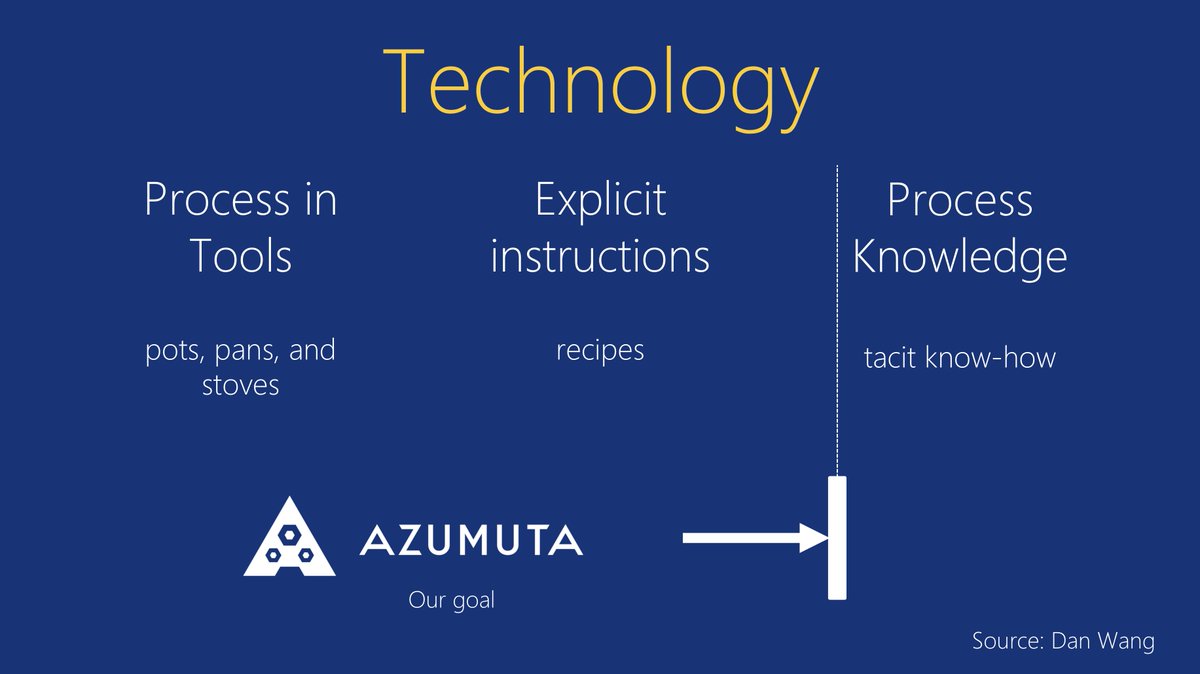
I finally added a slide based on the excellent essay danwang.co/how-technology-gr… by @danwwang to define @Azumuta's role in pushing the boundary between explicit instructions & tacit know-how
1
9
Jun 6
This is cool! I bet they'll add context pruning pretty fast. That would be a serious edge imo.
Jun 4

Cursor can now show your agent's context usage as an interactive report in a canvas.
The context explorer breaks down where tokens go across the system prompt, tool definitions, rules, skills, and more.
13
May 21
2
8
May 1
Damn, feels very much like a 3 body problem sophon attack…
Apr 30

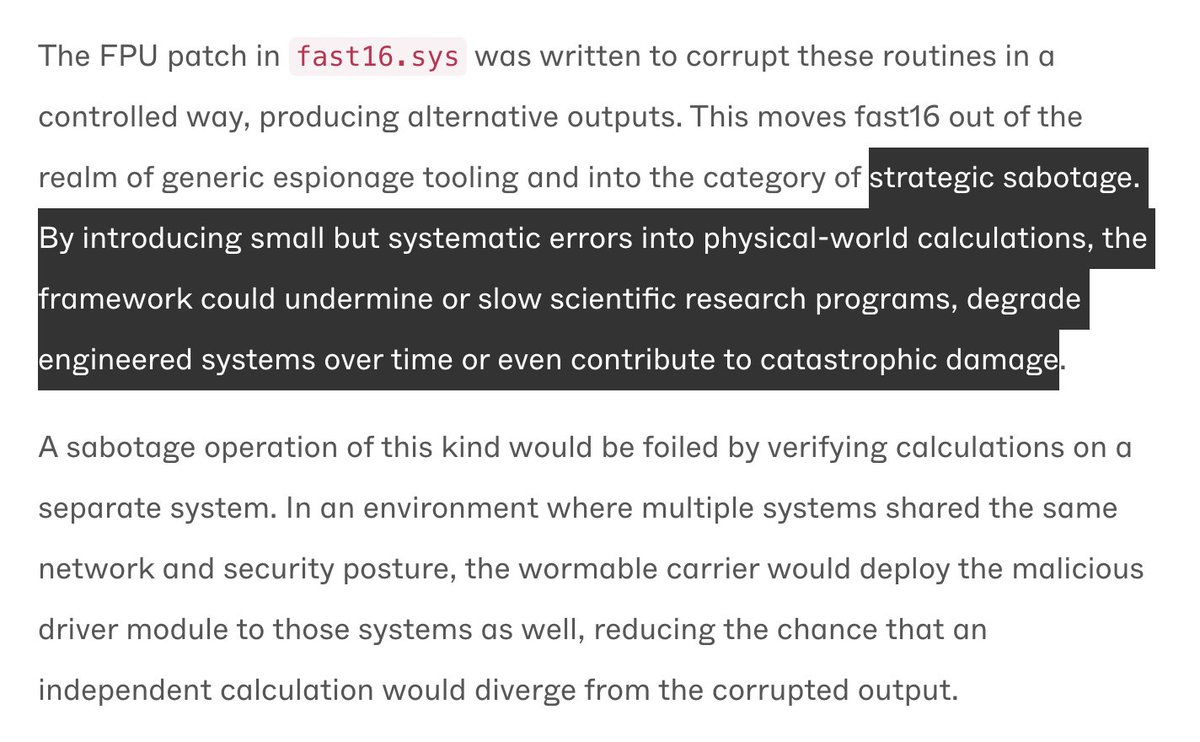
A 2005 state-designed worm designed to corrupt physics simulations sat undetected on VirusTotal for nearly a decade. Fast16, intercepted executable files at the kernel level and silently rewrote floating-point calculations to make them produce slightly wrong answers. Targets: high-precision engineering suites used for structural analysis, crash simulations, and physical process modeling, including LS-DYNA, a tool cited in reports on Iran's nuclear weapons research. The sabotage vector relied on deployment of the driver across a network via worm, corrupting calculations on every machine, and eliminating the possibility of cross-checking results against a clean system. Stuxnet got the documentary. Fast16 got twenty years of nothing. sentinelone.com/labs/fast16-…
60
Batist Leman retweeted

Mar 25
A student in Zurich sleeps in a camper van outside a hangar every night. Just to have more hours to build a humanoid robot. He’s obsessive. He's not alone. 2,500 students across Europe are getting into robotics right now.
And now they united and just launched: ESRA, the European Student Robotics Association. 🇪🇺🦾
They are bringing together highly talented young people, give them space, give them resources and let them build. By now already 13 robotics clubs. 8 countries. 2,500 students.
I visited several of them over the last weeks to get to know them and let them tell their stories. We've also been helping behind the scenes where we can, because this is exactly what Europe needs.
Several multiple billion dollar companies will come out of the ESRA network. Right here in Europe.
If the Bay Area had a student robotics network like this, they would never shut up about it.
Time we do the same. 😤🔥🇪🇺
It only needs a few crazy ones to fix a continent. Turns out they're already building. 🇪🇺
55
158
1,211
116,360
Batist Leman retweeted
Feb 27
Let's do a robots watch party! 😉
This is a whole video where we go through videos of real-world use cases for robotics – industry per industry – 20 minutes – only the coolest robot stuff out there. 🤖🔥
And I have the perfect person to join me: @lukas_m_ziegler, 300k followers across platforms, million views, one of the leading influencer voices bringing robotics mainstream.
We start with five markets that are mature: 📦 Logistics, ⚡ Energy, 🌾 Farming, 🏗️ Construction, 🔒 Security.
Robotics, real world, actually happening. Not pitch decks. We explain the context and what opportunities we see.
👀 Then we get into the weird stuff. Robot skin made from human cells. Brain-controlled robots. Robots in Brains. Fight clubs. A happy robot whose only job is to stop grain bins from exploding.
If you ever wondered what the robotics landscape actually looks like right now: This is it.
00:00 Intro
00:37 Logistics 📦
03:04 Energy ⚡
05:22 Farming 🌾
07:47 Construction 🏗️
09:46 Security 🔒
11:20 Humanoids 🧍♂️
13:48 😵 Freak section
16
30
223
28,611
Batist Leman retweeted
Feb 13
This week we celebrated @OpenClaw Conf in Vienna. 🔥
One thought stuck with me. We're entering a world where custom software is normal.
Everyone has their own insta-coder, their own personal appstore.
Soon software will exist on the fly, only when you need it. Just for one moment. Then it's gone. Personalized, disposable, one-shot. 🤯
Code can now be autogenerated.
So if code is "no longer worth anything" (hyperbole speaking) and you can auto-build any idea into existence (slop gods be kind):
What is the future of software development – especially for founders?
I made a video on this. Spoilers: we had the working title: "Software Development is f**d"
This video is maybe more questions than answers – especially for SaaS founders.
But I also cover POVs of mine:
Eg why GitHub is obsolete, why open source might actually be dead soon, the Mexican standoff between designers/engineers/PMs, why prompt injection could be bigger than SQL injection, and what I'd actually do as a SaaS founder right now.
But there is also a paradox in all of this:
Now might be the most exciting time to build software. Ever. 🦾
Thanks as always for watching.
Likes, shares, subscribes, goat slaugthering, and any other algo magic you can throw at this: deeply appreciated.
Trying to build this YouTube channel up and your support genuinely helps. Link to the channel in the reply ❤️
38
45
302
67,519

31 Oct 2025
🚀

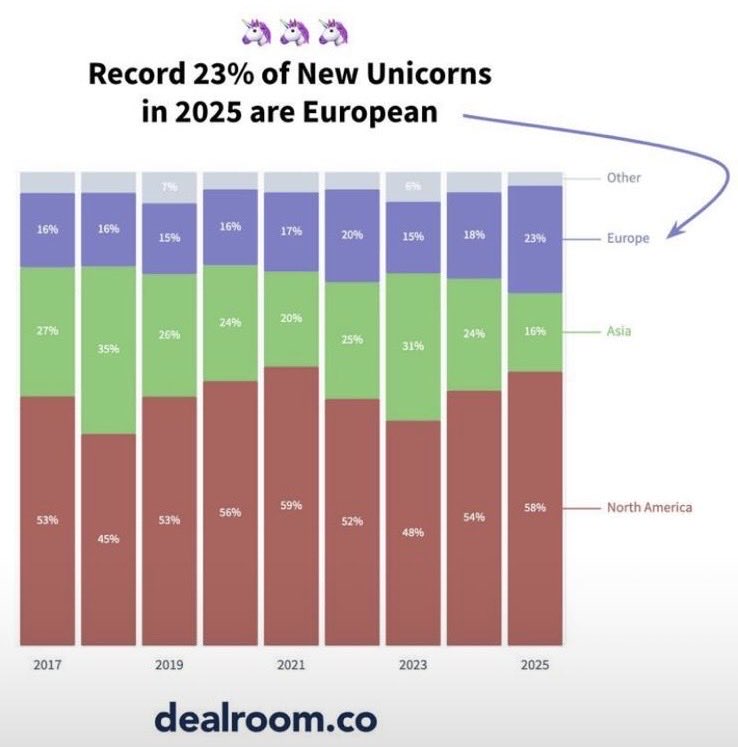
Europe’s share of newly created unicorns 🦄 is rising to currently 23% 🇪🇺
Asia 🇨🇳 🇯🇵 🇰🇷 🇸🇬 is at 18% and shrinking and U.S. 🇺🇸 still leading at 58%
More of this
1
31
16 Oct 2025
🔥

"Most people don't realise that Europe is the second largest manufacturing hub, that we're world leading in automation, precision manufacturing and in robotics."
Andreas Klinger (@andreasklinger) on going behind the scenes of hardware-heavy European tech companies and the legit claim it makes more sense sometimes to start a robotics company here.
3
151
Batist Leman retweeted

9 Oct 2025
Introducing Figure 03
659
1,133
7,242
1,300,183
Batist Leman retweeted

6 Oct 2025
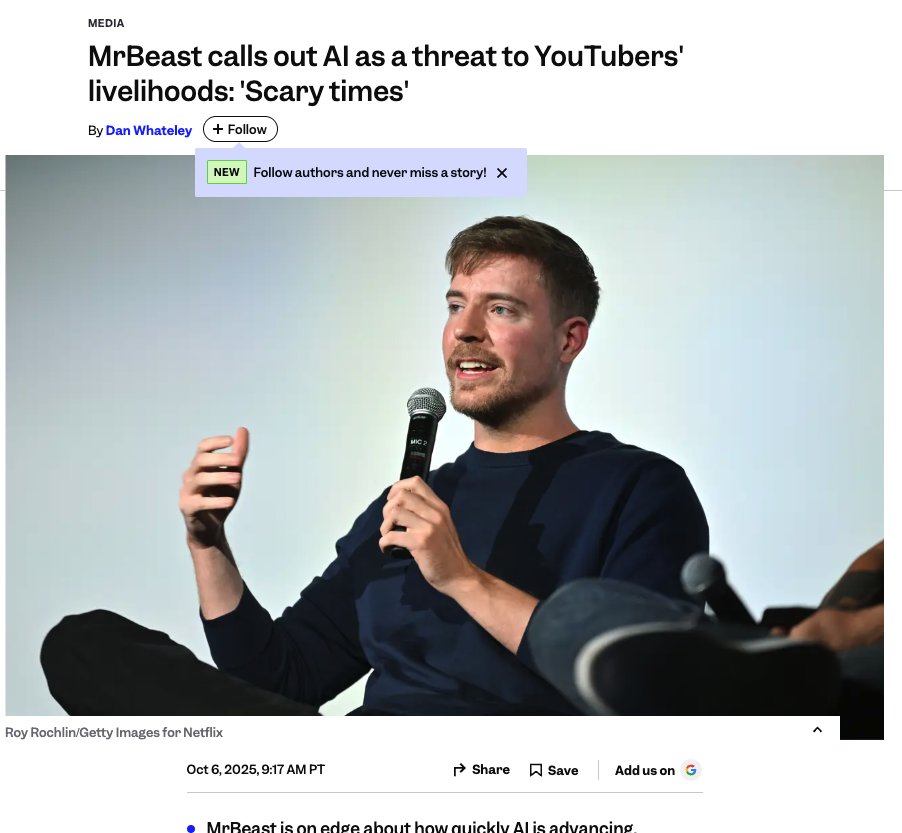
Most successful creator of manual slop worried about AI slop... which seems correct. but non-issue for non-slop creators.
250
231
5,791
308,129
4 Oct 2025
I agree, but manufacturers shouldn’t care about this, have your processes & your training methods under control and it won’t matter if the next hire is a robot or a human!
4 Oct 2025

Spicy take. I think humanoids are a terrible idea until at least one of these criteria is met.
≥ human level intelligence
≥ human level dexterity
If we’re not at parity on at least one, it’s not going to pencil out. Full stop. It’s just not economically viable. How could it be, when you can literally hire a person? Humans are SO absurdly good. For $15–$75/hr I can have a system with the following specs:
• 20 W multimodal self-training 100 petaflop supercomputer
• 18 years supervised unsupervised pretraining (publicly funded)
• ATP-based biochemical energy system (accepts donuts)
• 50 MP stereo vision on 3-DOF gimbal with dynamic range adaptation
• 244-DOF compliant actuator network with haptic feedback
• Self-healing, self-repairing, self-assembling biological substrate
• ~5 million analog force-feedback sensors across digits and dermis
• Autonomous recharge via oxidative metabolism (~16 h duty cycle)
• Recursive genome-encoded firmware with continuous self-updates
• Natural language interface with context-adaptive inference
• Multi-objective optimizer (survival, novelty, dopamine gradients)
• Emotionally fault-tolerant stochastic control architecture
• Multi-sensor fusion: proprioception, vestibular, nociceptive arrays
• Adaptive gait control with terrain classification and self-righting
• Wideband acoustic output for communication and threat signaling
• Olfactory chemical sensing array (volatile organic detection)
• Load-bearing skeletal truss with self-lubricating joints
• Hydrophobic dermal coating with cellular self-regeneration
• Distributed thermal management via vasodilation and evaporative sweating
• Predictive maintenance through pain and fatigue heuristics
This is how I look at it: can I make money on it versus hiring a person?
If you’re not viewing automation through a brutalist economic lens, you’re out of your mind. I’ve said this for years. In the year of our Lord 2025, I’m extremely pro-automation for deterministic problems.
Completely against it for nonlinear, non-deterministic, non-closed-form ones.
I’ve spent more time telling people what not to automate than what to. This isn’t armchair talk. I’ve built some of the largest manufacturing robots around.
64 axes of synchronized high-speed motion. Hundreds of I/O channels. Written vel/acc/jerk trajectory planners from scratch. Closed MIMO loops with vision and thermal sensors. 5-axis toolpath generation, laser point-cloud fusion — all the “hard” stuff. Except it’s not. Those are easy because they’re closed-form.
The real world isn’t.
What blows my mind is how few people grasp the scope difference.
This isn’t a gap of degree. It’s a gap of kind.
I can look at a millisecond-timed multi-axis servo platform and feel actual joy. Then I watch a vision-guided arm try to unload a dishwasher and I want to scream.
A decade ago I said: forget human-replacement automation until AGI is real. I still stand by it. Humans are so good, so brutally efficient, that parity isn’t enough. You need super-parity.
2
196
25 Sep 2025
I hope I’m wrong but it feels like they are fishing for something to get downed, so they can use a tactical nuke in Ukraine… imo it’s best not to bite.
25 Sep 2025

BREAKING: Danish media reveals that a Russian Navy Ropucha-class landing ship, Aleksandr Shabalin has been spotted by helicopter lurking ~12 km off southern Langeland/Lolland in Denmark with its AIS transponder switched off.

1
30
24 Sep 2025
Can I come to the party like this?
24 Sep 2025

Sharing some acceptable examples of attire for the @eutncom launch party below:




22
24 Sep 2025
👀🍿

22
Batist Leman retweeted

21 Sep 2025
A recent reflection, based on conversations with economists and policy leaders, is that there are two superficially similar but importantly different perspectives one can hold with respect to US manufacturing:
* Affinity for manufacturing and physical production is an anachronistic fetish, embodied by populists with outdated attraction to hard hats and clanging forges. A great deal of manufacturing has departed the US, which is certainly fine and probably even quite good. It's unpleasant labor, and countries ought to each specialize in their respective comparative advantages.
* Manufacturing is the ultimate network effects and economies-of-scale business. As services are substituted by AI, and as datacenter deployment accelerates, the relative importance of manufacturing is likely to grow. To think that one can pick and choose sectors in which one will excel ("let's win in drones but not in dishwashers") is a fallacy. Manufacturing is hence of paramount strategic importance. However, we don't know how to make the US the world's preeminent manufacturing power (given its cost base and given the current center of gravity in China) -- indeed, we don't know whether it's even possible -- and this is a significant strategic problem for the country.
I have zero direct expertise here, but my outside view is closer to #2 than #1: it seems that the ecosystems and supply chains create strong gravity across the board. I also asked @elonmusk, who has clearly done more over the past decade to advance sophisticated US manufacturing than anyone else, and this appears to be his view. Most economists, on the other hand, are much closer to #1, and I don't think that the economics profession considers the absence of good ideas for reviving US manufacturing to be a problem of particular significance. (There are lots of snide epithets about the efficacy of industrial policy.) It seems to me that there's even some amount of backwards reasoning happening, where, because we don't know how to do #2, #1 is subconsciously a much more comfortable position to hold.
Talking about winning particular manufacturing sectors feels to me a bit like talking about winning individual biological research sectors or winning particular software sectors. That is: it seems that the strong default assumption should be that "the place that is best at biology research sector X will also be best at sector Y", and similarly in software, because the skills and inputs needed are so transferable. As such, my guess is that if the US seeks meaningful sovereignty or preeminence in any of drones, robotics, solar, batteries, pharma, etc., we need to bite the bullet, and win at manufacturing across the board.
Overall, I'd love to read more arguments for and against these perspectives, particularly from those with direct expertise.
260
311
2,768
713,550
Batist Leman retweeted
1 Sep 2025
“AC this, wash dryer that, US woohoo, EU boohoo” - Why are we eating this brand-warfare from the outside about us up?
Europe has the strongest precision manufacturing in the world, we have leading teams in AI, CV, robotics. Europe is a leader in Automation and Frontier Tech!
Not a single NVIDIA chip could be produced without European machines. Not a single American cloud, robotics, or deep-tech firm would operate without European manufacturing or suppliers.
But we are too humble. Brainwashed to never celebrate Europe. By outsiders and our local politicians.
Time for a change.
Europe is the birthplace of industrialization.
The home of frontier tech.
Time, we act like it.
Welcome to the real Europe! 🔥🇪🇺
153
409
2,154
310,168
Batist Leman retweeted

28 Jul 2025
Introducing Lume, the robotic lamp.
The first robot designed to fit naturally into your home and help with chores, starting with laundry folding.
If you’re looking for help and want to avoid the privacy and safety concerns of humanoids in your home, pre-order now.
1,728
401
6,567
4,182,173
9 Jul 2025
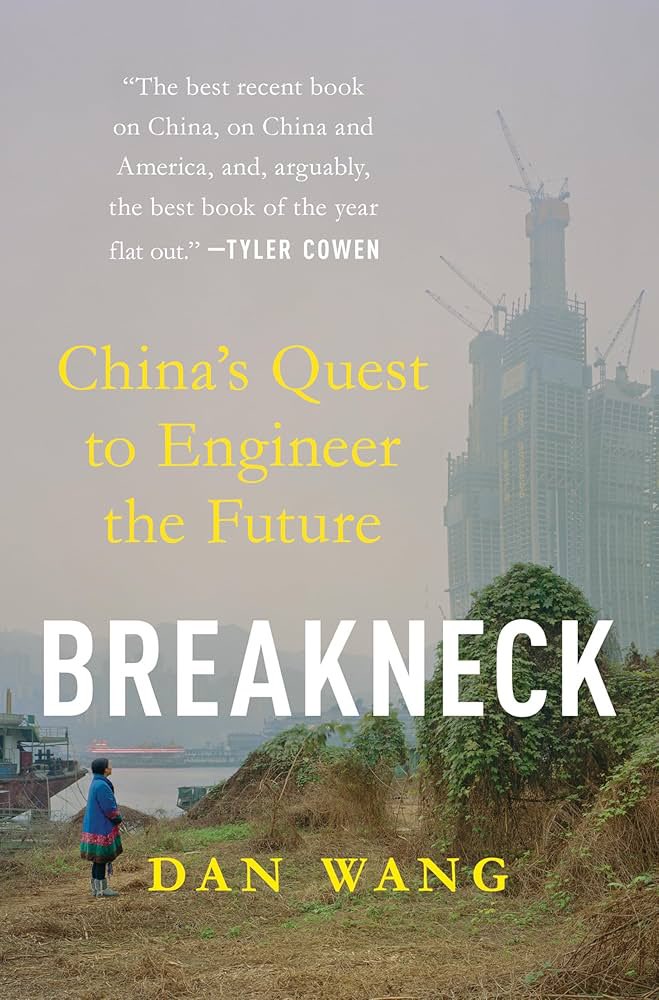
This is the kind of book you just preorder. Thank me later.
9 Jul 2025

My friend @danwwang’s book Breakneck is up for pre-order! So proud of him. This book gave me a new framework for understanding China-US relations. Anyone who cares to understand this critical geopolitical rivalry should read it. amzn.to/4lHPb2P
1
33
7 Jun 2025
1 hour = 24 hours
Infinite focus
7 Jun 2025

Watch Helix's neural network do 60 minutes of uninterrupted logistics work
Helix now incorporates touch and short-term memory and it's performance continuously improves over time
2
2
202