
Joined September 2010
- Tweets 21,952
- Following 52
- Followers 592,522
- Likes 1,713
2,096 Photos and videos










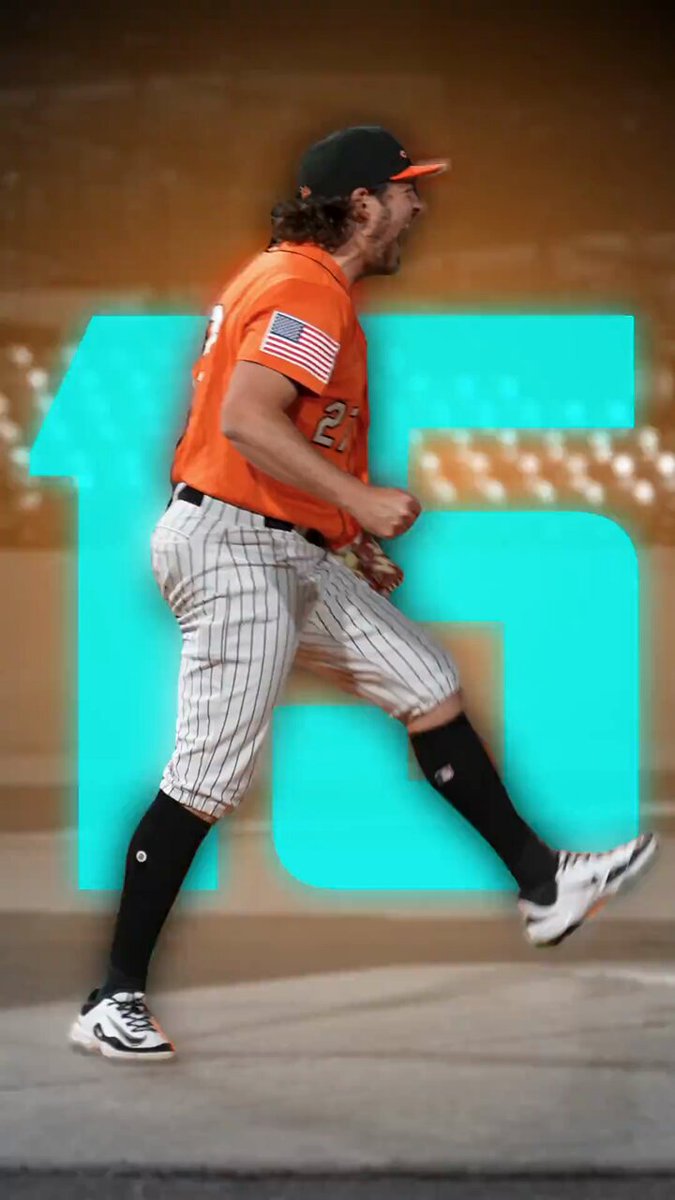

I Nearly Got Pulled… Then Made Franchise History
7
12
286
31,273
Throwing harder doesn't cost you movement. It gives you more of it.
Velo and spin rate are directly linked. The harder you throw any pitch, the more spin it carries.
More spin = more movement. That's true for every pitch — fastball, slider, curveball, sinker, cutter.
Low velo doesn't mean more movement. It means less spin, which means less movement potential.
A soft tosser betting on his breaking ball is betting on a smaller version of what a hard thrower already has more of.
There's a second layer too. The harder you throw, the less time the hitter has to decide.
He speeds up his swing to catch the fastball. That means he commits earlier. Which means even a bad breaking ball gets a worse swing than it would against a soft arm.
Velo doesn't just help the fastball. It makes every pitch harder to hit.
So the choice isn't velo vs. movement. Choose velo. You get both.
8
14
142
24,749
Tommy John surgery is not bad luck. It's a math problem.
Every time you throw, your elbow takes stress. Tommy John happens when the stress on your joint is bigger than what your joint can handle. Stress beat capacity. That's the whole story.
To stay healthy, you have to work both sides of that equation.
Side one: reduce the stress. That comes down to mechanics.
The more efficient your movement, the less stress reaches your elbow. You'll never get to zero — throwing is hard on the arm. But cleaner mechanics is the only way to shrink that stress number.
Side two: raise the capacity. Train your body to handle more load.
That means tendon work. Training the forearm — flexors, extensors, deviators. Building stability in the elbow. Building stability and mobility in the shoulder.
Here's what most people miss: if your shoulder can't absorb the stress, it sends that stress straight into your elbow.
Your elbow ends up paying for a problem that started in your shoulder.
Two sides. Drop the stress. Raise the capacity. Do both consistently and you'll stay on the mound a lot longer.
14
85
800
501,704
Every Punchout From My 15 Strikeout Game
10
18
242
22,848
You don't need 95 mph to win at-bats. You need a system.
Here are the three things that actually matter when you can't overpower hitters:
1. LIVE AHEAD IN THE COUNT
No velo means I can't survive 2-0 or 3-1 counts. Hitters sit dead red and I have nothing to beat them with. So first pitch strikes are the most important pitches I throw. I want to be 0-1, then 1-2 or 0-2. Put the pressure on them early. Force them to defend instead of hunt.
2. READ REACTIONS
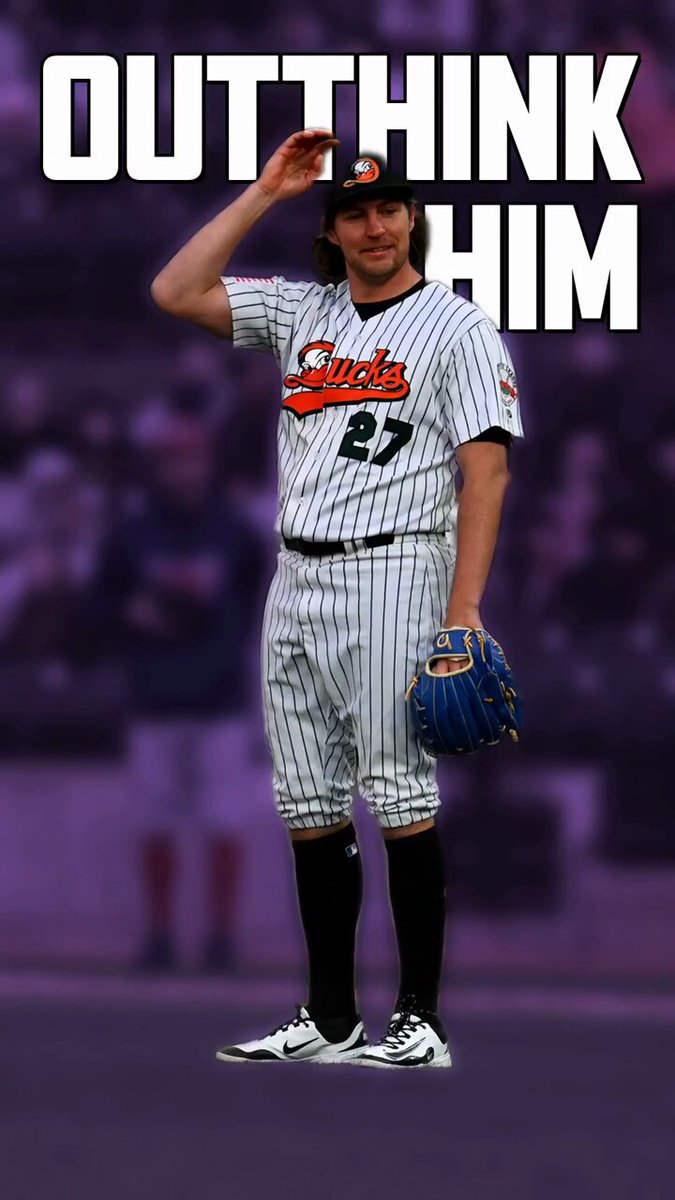
Every swing tells you something. Was he early? Late? Did he foul it the other way? Take a strike on the outer half? I can't out-stuff him — I have to out-think him.
Pop up on a fastball = he's late. Ground ball on a curveball = he's early. Ends up on his toes after a swing = early or looking away. Ends up on his heels = late or looking in.
My formula: slow, slower, slowest. Three different speeds he still has to respect. Mess with timing and you mess with the hitter.
3. TUNNEL AND MOVEMENT
Build 2-3 pitches that look identical out of the hand but go different directions. One runs arm side. One cuts. One drops. If he can't pick up the ball early, he can't find the barrel.
That's the only real edge a soft tosser has — keeping hitters guessing.
Strike one. Timing. Tunnel. That's the whole playbook.
6
29
431
51,250
Most pitchers panic when they're getting hit. I run a four-step diagnostic instead.
Step 1: Am I giving up hits in hitter counts or pitcher counts?
If they're hitting me in hitter counts, I'm losing the at-bat before they even swing. The fix is simple — work ahead. Get into pitcher counts. If they're squaring me up in pitcher counts, that's not a count problem. Move on.
Step 2: Am I actually executing?
Am I hitting my spots? If I'm missing my locations, nothing else matters. Fix the command on my fastball first. If I'm hitting my spots and still getting lit up, move to step three.
Step 3: Is my sequence backwards?
The rule is most hittable early, least hittable late — for both location and pitch shape. Early in the count I can afford to throw something more hittable and take my chances. But in 0-2 and 1-2 counts, a ball in play can hurt. That's when I need my nastiest pitch in my nastiest spot. If I've got it flipped — throwing my most hittable stuff with two strikes — that's exactly where they're getting me.
Step 4: They've figured out my pattern.
If I'm clean on steps one through three and they're still squaring me up, they're sitting on my approach. So I look at what's getting hit hard versus soft, in versus out — and I flip it. If they're punishing hard stuff late, I start hard and finish soft. If they're punishing soft stuff late, I start soft and finish hard.
The second you flip the pattern, they have nothing to sit on.
9
45
440
63,726
The pitch most pitchers are missing isn't their nastiest one. It's the boring one in the middle.
Here's how I build an arsenal that actually works:
Three pitches. Three speeds. Three movement shapes. All coming out of the same tunnel.
Up-and-down: fastball, gyro slider, curveball.
Lateral: sinker, cutter, sweeper.
Fast, mid-speed, slow.
The middle pitch is the anchor. Most guys skip it. That's the mistake.
Reason one: the smaller the movement, the easier it is to throw for a strike. So in fastball counts, when I need the zone, I throw the mid-speed pitch. High strike percentage, and it tunnels with the fastball. The hitter sees the same window out of my hand and has no idea what's coming. He's guessing on speed alone. That's where pitchers win.
Reason two: once that middle pitch is doing its job, I never have to throw my curveball or sweeper for a strike. I save the big breaker for two-strike counts, for chase situations, for the moments when missing the zone is actually the right play.
A fastball and a breaking ball is just two pitches. Add the middle pitch and you have an arsenal.
Most pitchers are one pitch away from being almost unhittable. They just keep looking for something nastier when the answer is something simpler.
13
32
343
51,758