
Building the modern OS for book publishing
Joined December 2010
- Tweets 23,989
- Following 1,878
- Followers 5,380
- Likes 54,561
1,492 Photos and videos





Pinned Tweet

4 Dec 2024
Here's an interesting trend I've noticed among non-fiction authors: The Direct Pre-Order.
Instead of doing pre-orders through Amazon, B&N, and other major marketplaces, you sell your books directly through your own (or your publisher's) online store.
Why do this? There are three huge benefits:
1. Build a direct connection with your readers
2. Offer bundles and unique pre-order perks
3. Keep 40% more of each sale by avoiding Amazon royalty fees
Plus, it's just a better experience for your readers. Look at the examples I share in the video.
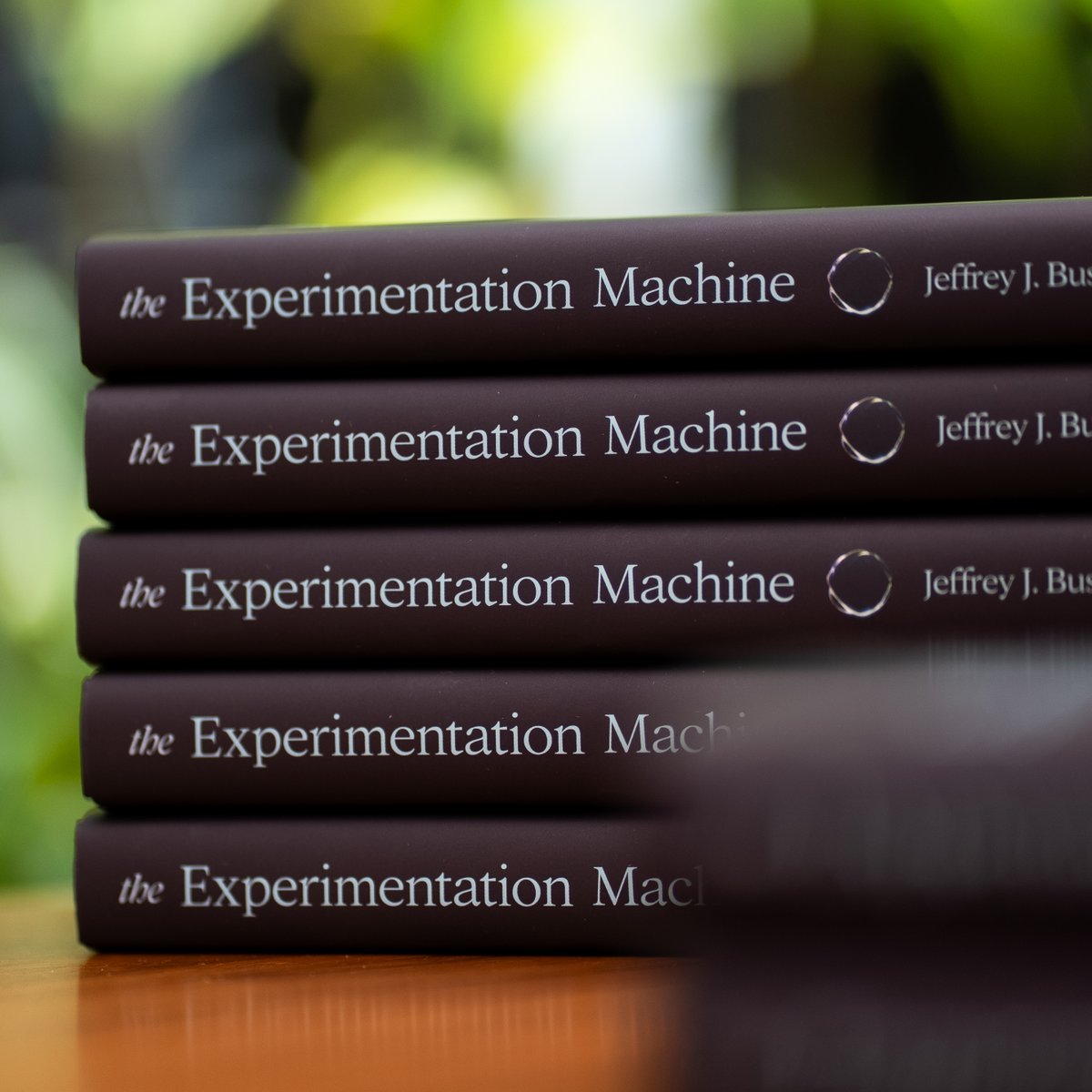
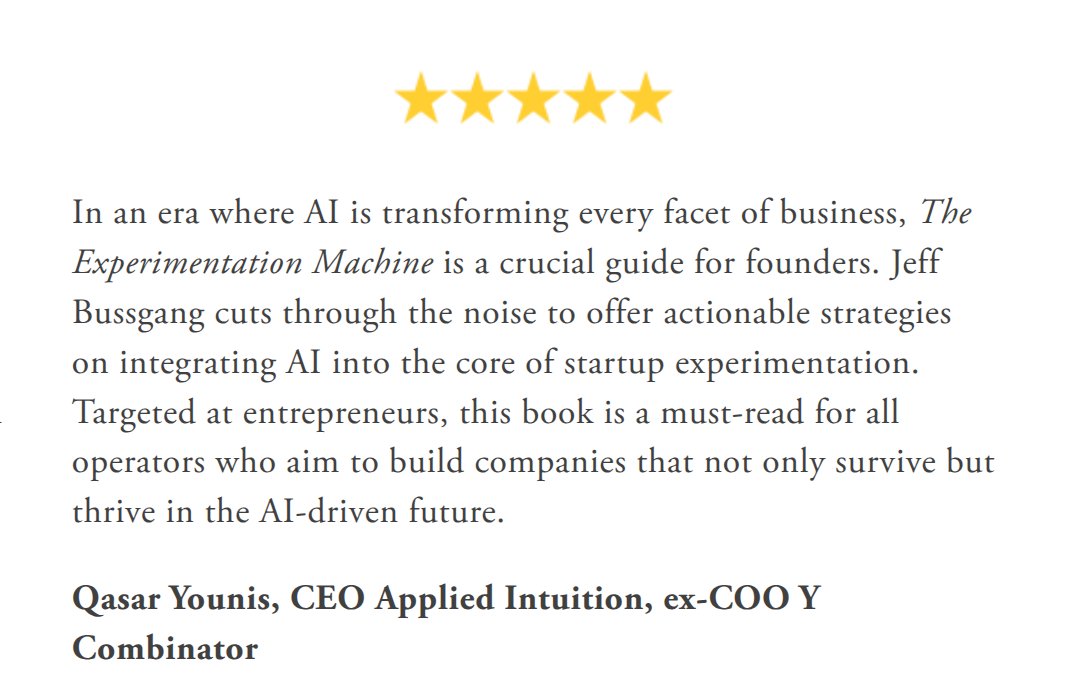
We are doing direct pre-orders for Damn Gravity's two upcoming titles: 'The Experimentation Machine' by @bussgang and 'Building Rocketships' by @ojiudezue and @ezinneudezue
But we aren't the only ones. @jposhaughnessy is doing this with his new book (published by @infinitebooks). Louis Grenier and @justinmooretfam are too (@TiltPublishing ).
It's not a new thing... HBR and other indie publishers have experimented with this for a long time. But now it's easier than ever to pull off with platforms like Shopify, WooCommerce, etc.
The Direct Pre-Order has tradeoffs... your sales don't count towards major lists and shipping is a bit more expensive (compared to FREE via Amazon Prime).
But I believe it's worth the direct connection to you make with your readers.
We will offer our books on Amazon, B&N, and all the major platforms when we launch early next year. But for Pre-Orders, we love being direct.
What do you think?
11
2
45
10,265

Pizza Hut's 'BOOK IT!' Summer Reading Program Returns to Provide Voracious Young Readers with Pizza Parties and More people.com/pizza-huts-book-i…
141
2,705
9,671
4,173,076
Ben Putano 📚 retweeted

Apr 13
Years ago @tylercowen and @AvitalBalwit wrote that AI increases the value of secrets.
It clearly also increases the value of *print*. (Regardless, the Internet Archive is an invaluable resource and it would be horrible to lose or neuter it.)

As major news outlets cut off the Wayback Machine, journalists and advocacy groups are rallying to protect the Internet Archive’s vast collection of web pages. wired.com/story/the-internet…
1
15
161
19,750
Ben Putano 📚 retweeted

Apr 10
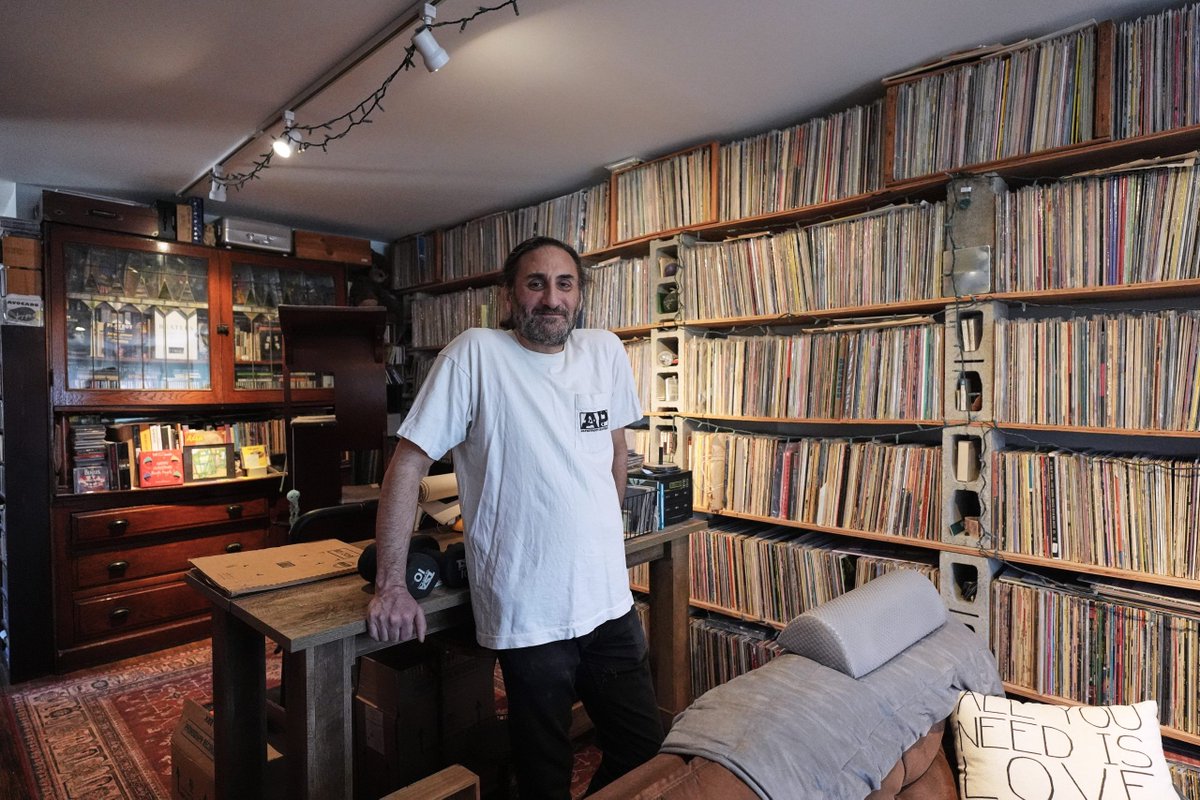
From early Nirvana to Phish, a Chicago fan’s secret recordings of 10,000 shows are now online. blockclubchi.co/4t6zW7R
263
5,229
24,247
6,783,856
Apr 7
What makes reading special is that it's NOT a passive form of content consumption.
The pace of it leaves room for tons of idea generation.
When I read, I keep a journal next to me to write down ideas that come to me.
That doesn't happen with any other medium. Video is way too distracting. It's truly passive.
Reading is not. Reading is active. That's what makes books great.
3
1
195
Apr 3
My vision for the future of books is media brands like this become the new publishers.
@futurecommerce is already doing it! But current infrastructure isn't really built for modern media.
Imagine if starting a publisher was as easy as starting a newsletter.
That's the dream.
Apr 2

Others out there forging the way:
@Emily_Sundberg /Feed Me
@daisandconfused /@dirtyverse
@KleinKleinKlein /Zine
@caseymlewis /After School
@bmorrissey /The Rebooting
@benthompson /@stratechery
@fromedome /@newconsumer
@default_friend /American Dreamland
@lukeburgis /@ClunyJournal (more than media)
(Obviously @philwinkle and myself /@futurecommerce)
...just off the top of my head there are many more of you
1
2
98
Mar 31
You finished your book. 🥳
You spent months (maybe years!) on research, writing, rewriting, and agonizing over every chapter. And you’ve finally hit publish.
But then… nothing.
No flood of sales. No word-of-mouth wildfire. Just you, staring at a dashboard, wondering what went wrong.
You're not alone. I've spent the last several months interviewing authors about their publishing experience, and I keep hearing the same thing:
Marketing your book is harder than writing it.
One author told me he was completely disillusioned after launch. He'd assumed book sales would be strong. Then he learned the reality: less than 6% of traditionally published books sell 1,000 copies in their first year. His biggest regret? "I would have been far more aggressive building a large social media platform WHILE writing the book rather than waiting."
Another author published a gorgeous full-color book through Amazon's KDP. The printing cost? $18 per copy. "I'm not making any money!" he said. "I'm basically giving them away at the price point I'm having Amazon print them at."
A third author sold about 250 copies, then hit a wall. Marketing stalled. Not because he didn't care, but because the sheer effort of building a sales funnel the website, the email list, the ads — was overwhelming. He was blocked by the complexity and cost of the tools he was supposed to use.
Sound familiar?
The Paralysis Problem
It's not that authors don't want to market their books. It's that they don't know where to start … and every option feels like a trap.
One author — a guy who's built products, led teams, done impressive work in tech — told me point blank: "I really struggle with the email thing. Do I have multiple email lists or one email list? Do I just write a newsletter, or do I sell something? I've never been able to grow an email list. It's an embarrassing statement for me. I've had the damnedest time."
Another had 3,000 people on a newsletter and still couldn't figure out how to make it work. "Email newsletter is like the 'So What' test," he said. "3k people on there… what do I do with it? It wasn't monetizing."
Here’s the problem: the publishing industry expects authors to pour months or years into their book, but NOT expect anything in return.
One author I talked to said it best:
"The primary challenge is connecting marketing efforts directly to revenue. Without clear ROI, authors risk either wasting effort on ineffective activities or doing nothing due to uncertainty."
Wasting effort, or doing nothing. Those are the two options most authors see. And neither one is acceptable.
The System Is Broken
The deeper I dug, the more I realized this isn't an author problem. It's a system problem.
Publishers (yes, even the big ones!) have made it clear:
Marketing is the author's responsibility.
One author kept asking his publisher, "How many books do I need to sell? What does success look like?" Their answer was basically a shrug.
Another spent $8,000 a month on an outside PR agency. The ROI? Impossible to say, but not enough that they will sign on again.
Amazon and other retailers take 50-75% of every sale… and don't share a single piece of buyer data. You can sell 12,000 books in a year and have no idea who bought them. No emails. No names. No way to build a relationship with the people who loved your work.
One author summed up the whole industry in a sentence: "Growth and marketing seems to be the constraint for a lot of authors."
He's right. And it's been the constraint for too long.
There's a Better Way: The Lean Book Launch
At Damn Gravity, we've launched 13 titles and sold nearly 40,000 books, including 15,000 in 2025 (out best year yet!)
We've generated tens of millions of social media impressions, thousands of email subscribers, and dozens of media hits for our authors. Our best authors make $40 per direct sale instead of $3 through Amazon. And they own the customer relationship.
And for the first time, I’ve captured our entire sales and marketing process in one place:
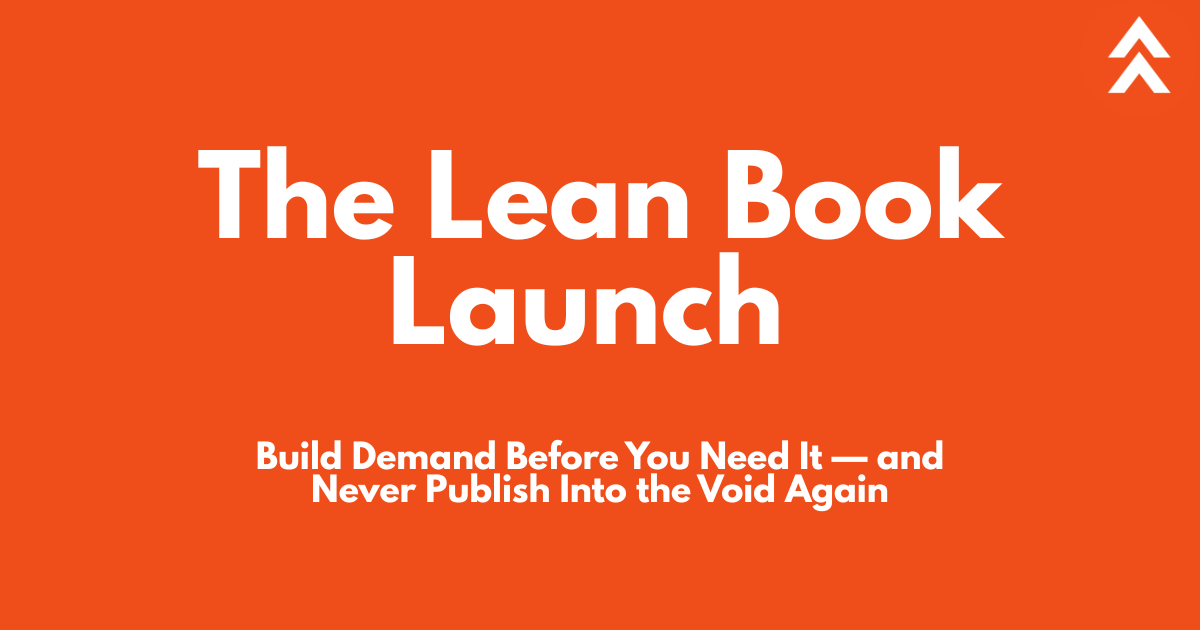
The Lean Book Launch: Build Demand Before You Need It — and Never Publish into the Void Again
The Lean Book Launch borrows its philosophy from the startup world: validate before you build, test before you ship, grow before you launch. It's broken into 6 phases:
Positioning — Find your book-market fit before you go too far
Beta Readers — Write with your audience, not for them
Build Your Audience — Start marketing on Day 1, not after the book is done
Direct Pre-Order — Sell direct, own the data, fund your print run
Launch — Create a word-of-mouth explosion, not a bestseller stunt
Growth — Scale through other people's audiences
This isn't advice to "post more on social media" or "build your personal brand." This is a step-by-step system with tools, templates, and checklists for every phase.
If you've ever finished a book and thought, "Now what?" … this is your answer.
Subscribe to read The Lean Book Launch (link below)
(P.S. If you use Notion, feel free to duplicate the book into your workspace)
2
1
271
Mar 28
Heading to the park with my iPod shuffle and a great book 😌
Mar 28

genuinely fascinating that we’ve hit a point where the full monetization of the internet and ai bot takeover has led to a majority of people wanting tech minimalism
1
193
Ben Putano 📚 retweeted

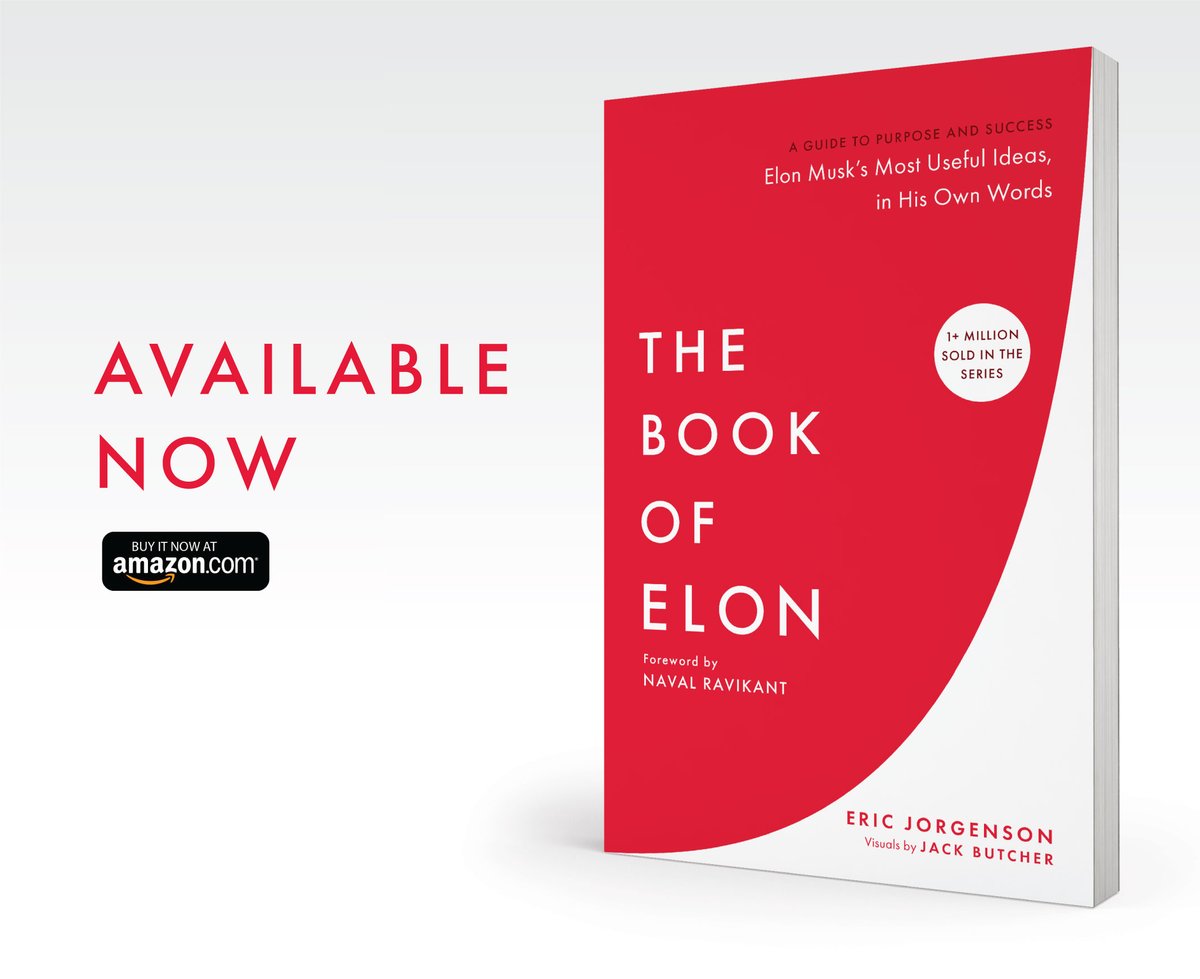
🚨📕 THE BOOK OF ELON IS NOW LIVE!!! 🎉🚀
This is the book we WISHED @elonmusk would write…
“All of Elon's most useful ideas, in his own words.”
Learn directly from the world’s greatest entrepreneur, like you’re sitting across from him at dinner.
It took FIVE YEARS to make this for you.
Because it's built from hundreds and hundreds of Elon's public appearances.
I went through 3,000,000 words to collect the most useful and timeless ideas.
The final book is ~50,000 words.
Every word is USEFUL.
(This is what I do. My first book, The Almanack of Naval Ravikant, is one of the top 100 most highlighted books of all time on Kindle.)
Then, I spent $50,000 on editing and design so it looks and feels beautiful.
Then…
> Foreword by @naval.
> Visuals by @jackbutcher.
> Blurb from @mrbeast.
> Published by @scribemediaco.
> And yes, approval on this idea from Elon himself, thanks to @samteller.
I went Maximum Effort to make this an all-timer.
We got 10/10 on reviews from early readers, then worked on it for ANOTHER YEAR.
Why so much effort?
My mission is to create One Million Musks.
For a generation to lift our gaze and build, so our grandchildren live in a world beyond our wildest dreams.
I’m an independent author.
I don’t get an advance.
I risk my own time and money to make these books.
Then we give away millions of them. Digital versions are free.
I believe this book can benefit every human, and if you can’t pay five bucks for it, I want to personally gift it to you.
Because I know it is useful.
Useful how?
You may be seeking purpose, a mission worthy of your life’s effort.
You may have a clear purpose and seek the tools for success.
You will find both in this book.
Get the benefits of Elon’s entire life of hard-won lessons in a five-hour, easy read.
(I checked, it’s a 5th-grade reading level.)
You’ll feel personally mentored by the greatest entrepreneur in history.
Click below to buy it now on Amazon, Audible, or directly from me.
Amazon: amzn.to/47avSuh
Audible: lnkd.in/gi_7HrFP
Me: lnkd.in/gS2xWUWH
If you’re not sure it’s worth $4.99 yet, just start reading the free version.
PLEASE take 6 seconds to Like, Bookmark, and Repost.
Even better: send this to your friends, team, or Group Chats!
I guarantee this book will improve their lives.
Spread the word!
Every little thing helps.
Your support spreads good ideas around the world, helping people and making the future better for everyone.
Thank you!
Forward. Together.
659
812
5,432
2,371,211
Mar 16
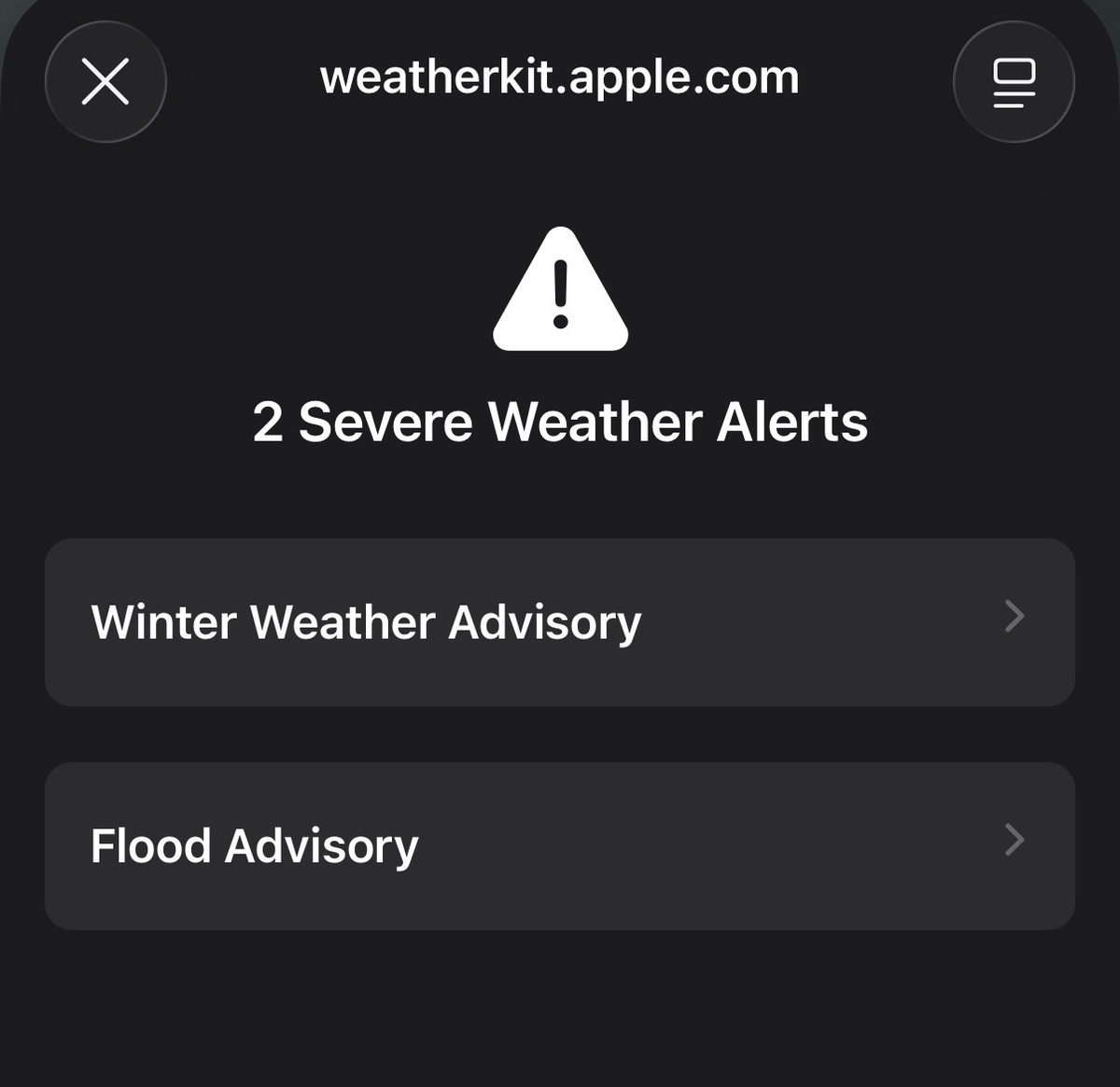
It’s the perfect Second Winter here in Chicago.
Winter storm AND flood alerts on the same morning :)
89
Mar 5
It's March 5th and so far this year I've built two tools that will save me $8,000 in software subscriptions.
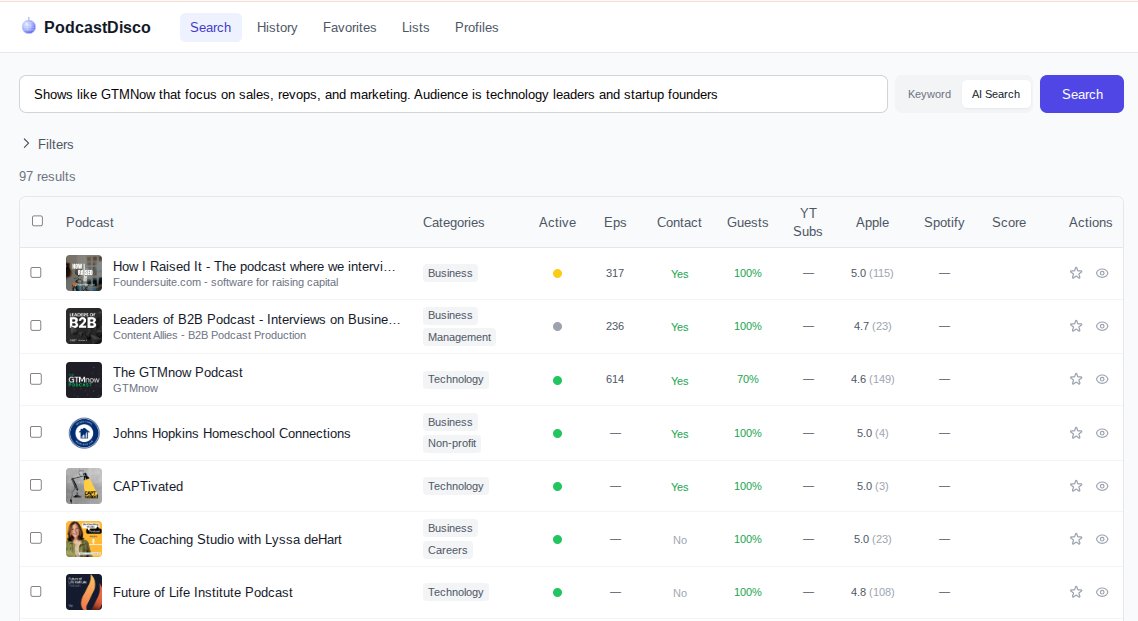
Latest product: PodcastDisco, an AI-powered Podcast PR Agency for authors and business leaders.
Last year I spent $3,000 on a podcast database just to find relevant shows for my authors. This database was supposed to provide contact information for the shows but it was only accurate 30-40% of the time. It also promised concierge list-making services, but they would take 2-3 business days to get back to you.
On top of all that, I had to write and manually send each email. Very time-intensive.
PodcastDisco is built on the same free API as the $3k tool... It has access to 4M shows and uses AI to rank them for relevance.
There are 3 steps:
- First: Natural language search and author context. I upload a profile of my author to the platform. Then I tell PodcastDisco what types of shows I'm looking for. Add filters like minimum episodes or reviews. Then it searches and returns shows.
- Next: Contact info. PodcastDisco finds ACTUALLY relevant work emails for hosts, not generic company inboxes that no one monitors.
(Right now I'm using a tie-in with Clay to find this contact info, might try another tool that can be more deeply integrated into the platform.)
- Last step: Custom pitches. This is something the $3K podcast database didn't even pretend to offer. PodcastDisco will generate a custom pitch email for each host. Context is pulled from the show description, past episodes, and the author's profile.
The hardest part of building this so far is getting the search and filtering algo right. It's getting better and better... I'm also going to build a self-reinforcement loop so that the tool learns what good results look like.
This has been super fun to build and is going to save me probably 10 hours a week.
Not to mention that $3k!
2
6
531
Feb 25
I've been drowning in royalty reporting for years.
Each DG title is sold through 4-8 different channels, all with radically different reports and payout periods. Each royalty report takes me ~1.5 - 2 hours to do manually.
That was ok when I had just 1 or 2 titles. But now that we have 10, it's become impossible to keep up.
I started looking into royalty reporting software. The cheap tools couldn't ingest Shopify or Amazon Seller Central reports -- literally our two biggest channels.
The software that COULD ingest these reports cost $450/month 🤯
So I built my own royalty reporting tool:
1. No spreadsheet mapping -- it automatically identifies the sales channel, titles, units sold, costs, and net income.
2. Can ingest ANY file -- From CSVs to barely-formatted PDFs
3. Creates beautiful reports for me and authors
4. Super easy to update: If I add a new sales channel, I ask Claude to write a new pattern to ingest it moving forward.
5. Instantly splits royalty payments.
Generating a royalty report literally takes 5 minutes now.
I just download the sales data from each channel, one-shot upload them to the Royalty Calculator, review the mapping (which it gets right 99% of the time) and then hit "Generate report."
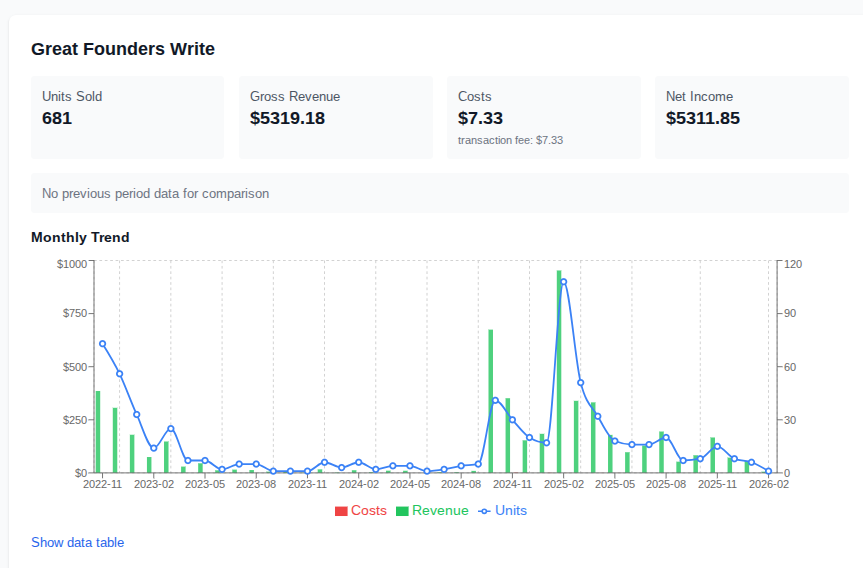
Bonus: I can easily pull historical reports for any book(s) over any time period. Earlier today I wanted to see the sales patterns for Great Founders Write. Report took less than 30 seconds to pull.
So not only did I save $450/month (not including my Claude Code subscription, which I use for 5-6 other projects), I built EXACTLY what I wanted.
We live in incredible times!
1
192
Feb 20
Talked to a very successful surgeon the other day. He flies from Chicago to Florida every weekend so his daughters can ride horses.
I said, "That's so cool."
"It's awful," he replied.
Getting everything you want isn't always what you need.
1
2
122
Ben Putano 📚 retweeted

Feb 10
Ring paid somewhere between $8 and $10 million for a 30-second Super Bowl spot to tell 120 million viewers that their cameras now scan neighborhoods using AI.
The math is wild. Ring has roughly 20 million devices in American homes. Search Party is enabled by default. The opt-out rate on default settings in consumer tech is historically around 5%. So approximately 19 million cameras are now running AI pattern matching on anything that moves past your front door. Today the target is dogs. The same infrastructure already handles “Familiar Faces,” which builds biometric profiles of every person your camera sees, whether they know about it or not.
Ring settled with the FTC for $5.8 million after employees had unrestricted access to customers’ bedroom and bathroom footage for years. They’re now partnered with Flock Safety, which routes footage to local law enforcement. ICE has accessed Flock data through local police departments acting as intermediaries. Senator Markey’s investigation found Ring’s privacy protections only apply to device owners. If you’re a neighbor, a delivery driver, a passerby, you have no rights and no recourse.
This tells you everything about Amazon’s actual product. The customer paid for the camera. The customer pays the electricity. The customer pays the $3.99/month subscription. And Amazon gets a surveillance grid that would cost tens of billions to build from scratch, with an AI layer activated by default, and a law enforcement pipeline already connected.
They wrapped all of that in a lost puppy commercial because that’s the only version of this story anyone would willingly opt into.
Feb 9

if you’re not ripping your ‘Ring’ camera off your house right now and dropping the whole thing into a pot of boiling water what are you doing?
730
16,796
74,818
6,985,899
Jan 20
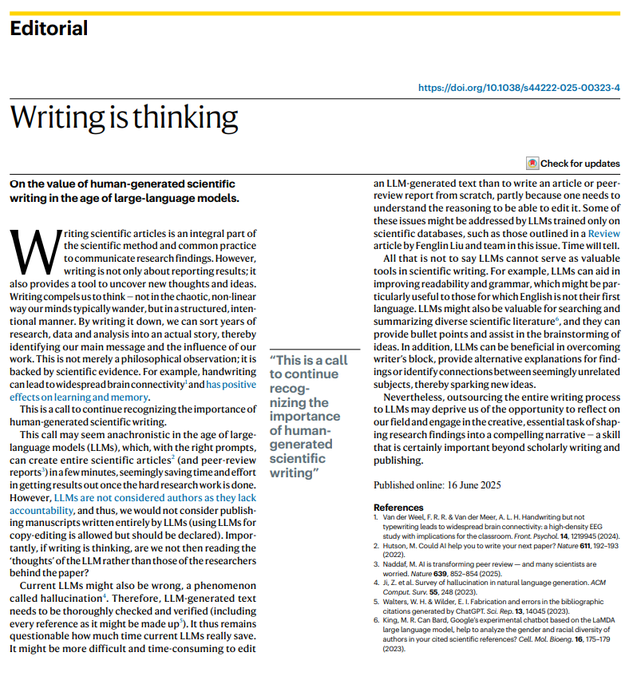
Writing scientific articles is an integral part of the scientific method.
Writing is not just administrative work. It is part of the creative process and the search for knowledge.
Jan 18

Writing is thinking
Outsourcing the entire task of writing to LLMs will deprive us of the essential creative task of interpreting our findings and generating a deeper theoretical understanding of the world.
5
117
Jan 14
Hot Take: I think OpenAI loses to Anthropic and Google long-term.
Gemini will replace Google as the defacto entry point to the consumer internet and Claude Cowork will take over B2B.
ChatGPT fighting a two-front war and will lose on both.
1
79
Ben Putano 📚 retweeted
26 Dec 2025
One potential upside of AI allegations: we might see a lot more work-in-progress, esp from creatives.
More sketches, more unfinished work, and, eventually, a richer public record of how things are actually made. I think that would be a very good thing.

Merry Christmas Eve, Carol. Be sure to leave some milk out for Santa.

ALT An illustration of three smiley-face cookies on a plate—one with a bite taken out—on a tiled table, next to a blue carton of milk. In the background, there’s a Christmas tree decorated with lights, and a fire in the fireplace.
6
9
141
74,491
19 Dec 2025
It's both hopeful and heartbreaking just now NORMAL these kids' lives seem to be again now that they don't have their phones in school.
Like, a kid wants a bike to hang out with his friends on the weekends? Girls coloring and sketching during break? These are victories?
I didn't realize just how bleak school had become. Can we nationalize phone bans now?
18 Dec 2025

I confess I was not totally convinced that the phone bans would work, but early evidence suggests a total @JonHaidt victory nymag.com/intelligencer/arti…
1
219
Ben Putano 📚 retweeted

18 Dec 2025
This is the golden age for writers
Late enough to benefit from internet distribution, early enough to be irreplaceable by AI, just in time to have the most valuable and singularly human skill that everyone is finally realizing is worth paying a lot for
110
191
1,794
151,144
Ben Putano 📚 retweeted

26 Sep 2025
The smartphone era has been an extinction level event for hobbies. So many pastimes have disappeared or are in the process of disappearing into the glowing event horizon of the screen
175
1,699
17,520
927,099