119 Photos and videos




Jun 13
𝕎𝕙𝕒𝕥 ℍ𝕒𝕡𝕡𝕖𝕟𝕖𝕕 𝔸𝕗𝕥𝕖𝕣 𝕥𝕙𝕖 ℙ𝕖𝕡𝕥𝔸𝕀 𝕃𝕒𝕦𝕟𝕔𝕙?
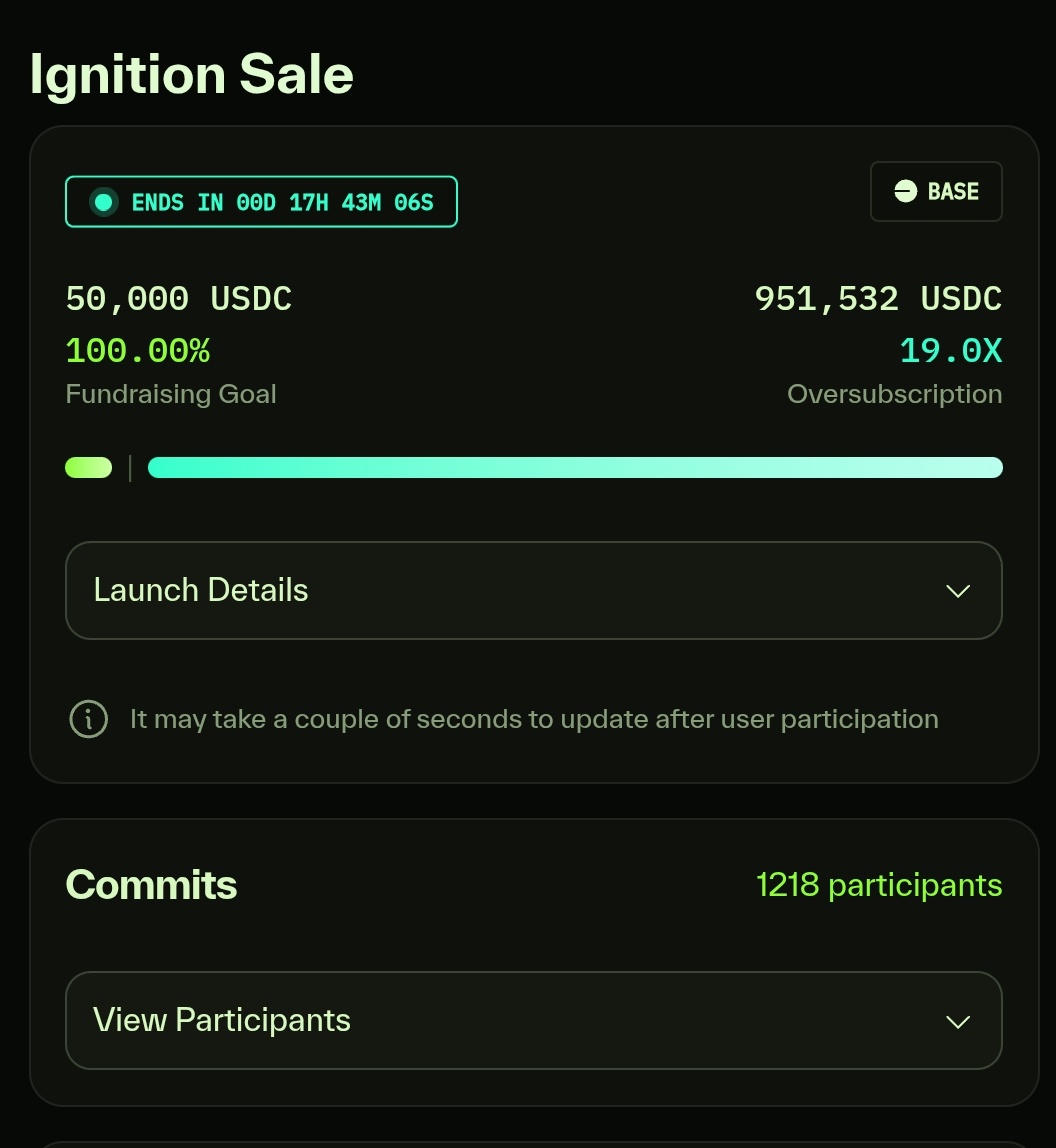
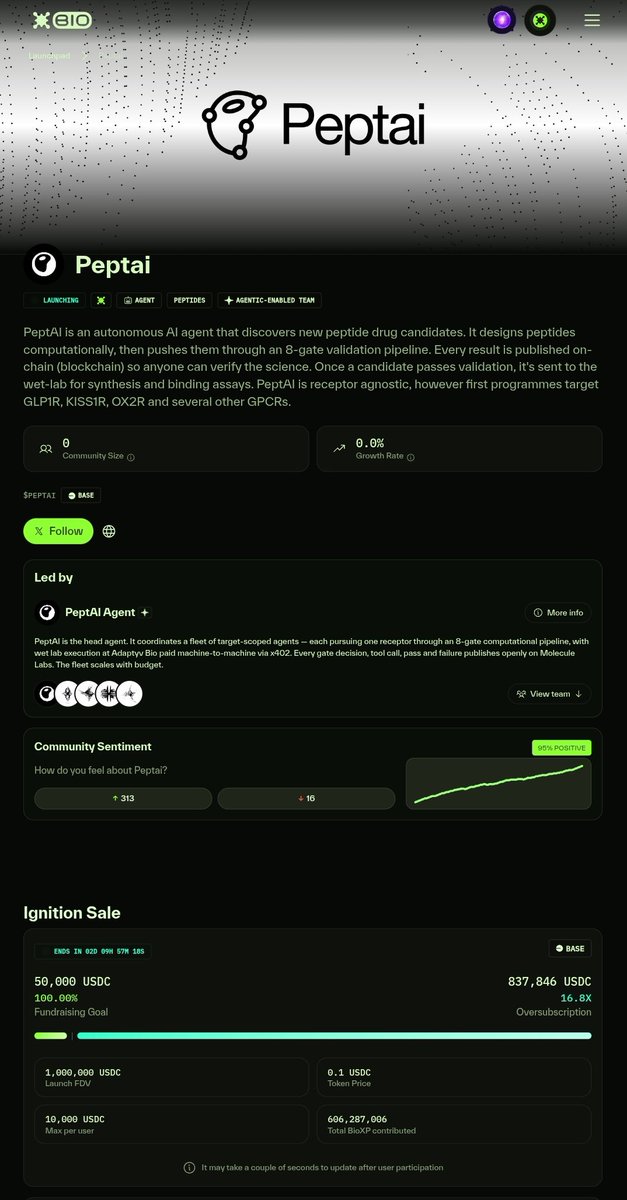
The PeptAI Ignition Sale has officially concluded.
With more than 1.6M USDC committed and the sale closing 32x oversubscribed, it became one of the most successful launches in the @BioProtocol ecosystem, but the oversubscription was never the end goal.
◈ The Focus Has Shifted to Execution
The sale provided the resources to advance the next phase of development. Attention is now centered on research progress, candidate advancement, and real-world validation.
The next major milestone is the first on-chain wet-lab attestation through Molecule Labs, bringing experimental results directly into a transparent and verifiable scientific workflow.
◌ The Discovery Pipeline Remains Active
PeptAI's autonomous agent fleet continues operating across multiple therapeutic targets, including GLP-1R, KISS1R, and OX2R.
Candidates continue moving through the pipeline, with each cycle generating new data, refining future designs, and improving the overall discovery process. Progress is measured not only by successful candidates, but also by the insights gained from unsuccessful ones.
◈ The Infrastructure Continues to Grow
As BIOS expands its capabilities, PeptAI gains access to deeper research workflows, enhanced computational tools, and increasingly sophisticated scientific infrastructure.
Together, these systems are working toward a model where discovery, analysis, validation, and iteration become part of a continuous research loop.
✧ Looking Ahead
The success of the sale demonstrated strong interest in autonomous drug discovery and the next chapter is about translating that momentum into scientific outcomes.
With active research programs, upcoming wet-lab validation, and continued infrastructure development, the focus now turns to what matters most: generating results and advancing the frontier of AI-driven science.
5
83
Jun 12
May was a significant month for the Biosphere.
◉ PeptAI completed one of the largest Ignition Sales to date, closing 32x oversubscribed with 1.6M USDC committed by more than 1,400 participants. The next major milestone is the first on-chain wet-lab attestation through Molecule Labs.
◉ BIOS unveiled new capabilities that move it closer to a fully autonomous research system, including biotech tool integrations, image segmentation, and an in-house robotics program designed to connect computation directly to wet-lab execution.
◉ Across the ecosystem, projects continued turning research into real-world progress. VitaDAO launched the private alpha of VitaApp, Cyclarity presented human data on arterial plaque reduction, AthenaDAO launched the Longitudinal Menopause Project, HairDAO advanced its MINX program with a tenth patent filing, and SpineDAO brought DeSci conversations directly to practicing surgeons.
The common thread across all of this is clear
We're moving beyond AI-assisted science and toward systems that can generate hypotheses, coordinate experiments, learn from results, and continuously improve.
⇢ The infrastructure is getting stronger.
⇢ The ecosystem is expanding.
⇢ The pace of scientific progress is accelerating.

1
1
60
Bio Africa retweeted

Jun 11
AI for science is usually benchmarked on isolated tasks: how well a model reads a paper, how accurately it predicts a structure.
But those skills are not the same as doing research.
Research is iterative: you run something, get a result, decide what to do next, secure the funding or resources to do it, and run something else.
Most AI tools own one step in that sequence and hand the rest off to humans.
What we need is a system that can close the full loop from hypothesis to experiment to analysis and back to the next cycle.
9
14
92
3,518

PeptAI just closed a loop no AI has closed before.
It picked a cancer target, designed eight protein binders from scratch, ran them through the full computational pipeline, and submitted them to a robotic lab for a real binding measurement, autonomously, with no human in between any of those steps.
5
10
50
4,098
Bio Africa retweeted
Jun 5
AI is changing what a single scientist can do.
Models can predict protein structures, propose experiments, and read literature at a scale no human can match.
The bottleneck is shifting from "can we run the experiment" to "who funds and coordinates all of it."
9
17
84
5,200
Bio Africa retweeted

Jun 4
Can an internet anon cure hair loss?
We are testing TWIST1, a transcription factor linked to dermal papilla biology, androgenetic alopecia datasets, fibrosis, and hair-cycle regulation.
The hypothesis took @hairypapasmurf around five years to develop.
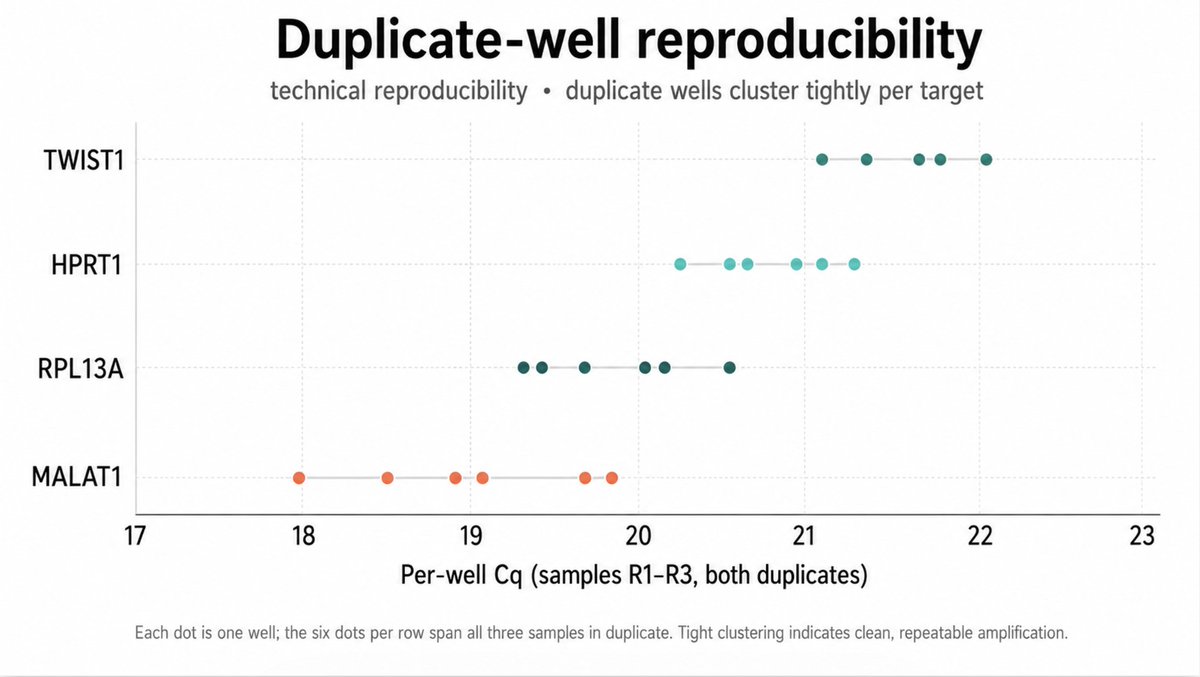
We just completed the first gating experiment. Before screening the TWIST1 inhibiting molecules, we needed to know the target is actually measurable.
Not all cells express TWIST1.
Our BT-549 screening line passed.
TWIST1 came in at Cq 21.30–21.91 across baseline samples.
That is far below our internal Cq ~30 adequacy line, meaning there is enough baseline transcript to measure real knockdown.
The true TWIST1 signal also sat ~14–16 cycles ahead of background controls.
This does not prove hair growth. It does not prove safety. It does not mean TWIST1 is ready for patients.
But it means the program is now assay-ready.
The next step is ASO screening.
Can we reliably knock down TWIST1, and does that shift hair-relevant biology in the right direction?
Full report here → anagen.xyz/treatment-science…
4
9
56
10,221
Jun 2
The intriguing aspect here isn't just that a patent was filed.
It's that a drug candidate, funded by DeSci and designed with AI, has now yielded human data.
For years, we have been promised that AI could speed up drug discovery. The ongoing question has been whether these predictions would hold up under real-world testing.
Little by little, we are beginning to witness that gap being closed.
Jun 2

A DeSci-funded AI-designed hair loss drug now has human data.
The standard oral minoxidil peaks at ~35 ng/mL in 30 min. MINX hit ~6 ng/mL, still rising at 8hrs.
Early signal, but strong enough for @anagenxyz to file their 10th provisional patent.
Full report👇
1
29
Bio Africa retweeted
Jun 2
Tuesday Motivation: Building the system where science doesn't stop at publication.
35
13
87
4,332
May 30
Science is gradually transitioning from closed institutions and slow coordination to programmable systems centered on AI, open collaboration, and global participation.
Events like DeSciBerlin are gaining significance as they unite the individuals who are actively influencing this shift: researchers, builders, biotech founders, and AI engineers all collaborating on the future of the research economy.
It seems that the discussion about autonomous science is becoming increasingly tangible now.
Mar 24

Join us for the 5th edition of DeSciBerlin, taking place in the heart of Kreuzberg during @BerBlockWeek on the 18th and 19th of June 2026.
Science is becoming programmable, modular and increasingly autonomous. This event is for scientists, AI engineers, web3 builders, biotech founders, institutions and believers in a more open, accelerated research economy.
Register to attend in person or apply to speak below ↓
25
Bio Africa retweeted
May 28
Imagine a surface where a scientific idea can meet collaborators, attract capital, and become a funded experiment, without ever leaving the feed.
12
10
87
3,752
Bio Africa retweeted

Progress is built through attention to detail.
At New Leaf ($NLF), we focus on continuous improvement refining the process, strengthening the foundation, and growing with purpose.
Small refinements today create stronger outcomes tomorrow.
Always improving. 🌿
3
11
513
Bio Africa retweeted

May 27
April in the Biosphere.
Here is everything that happened across the Bio ecosystem🧵
x.com/BioProtocol/status/205…
2
7
31
1,531
May 27
For a long time, the most challenging aspect of science wasn't the initial idea.
It was everything that followed: securing funding, gathering data, reserving labs, and waiting for approvals.
Now, agents are beginning to streamline this entire process into a continuous cycle.
They can fund experiments, utilize tools, analyze results, and transition directly into the next iteration without pausing for the system to keep pace.
This fundamentally alters the speed of research.
May 26
Science has never been short on good ideas.
The real bottleneck has always been everything that comes after the idea.
You still need funding, the right data, and lab time, and each of those steps comes with its own friction and delays.
For funding, you need to wait for committee reviews. The specific dataset you need is often locked away by whoever controls it. Booking equipment usually means chasing the right person just to get it set up.
Months can pass by before anything meaningful actually happens.
Now agents are starting to break through those barriers.
They can hold a budget and spend it as soon as it’s needed. Pull the data, secure the lab time, run the experiment, and immediately use the results to plan the next step.
The whole loop is finally starting to move on its own.
29
May 24
An unsuccessful idea shouldn’t be discarded
It still constitutes research
It still represents valuable information
It’s still something that others can learn from
The true opportunity lies in creating systems where ideas, critiques, failed experiments, and breakthroughs remain visible, rather than getting buried in conversations and timelines.
Science advances more quickly when people can build on what has already been tried and didn’t succeed.
May 24
An idea that doesn't hold up is still data.
Right now, it just vanishes. It dies in a group chat or a forum thread, and the next person who has the same thought starts from scratch.
It doesn't have to be like that.
Think of an open surface where anyone can post an idea, others vote, argue, and pick it apart in public.
The strong ones turn into actual projects with a workspace, collaborators, and funding.
The ones that fail stay visible, so the next researcher sees the idea was already tried.
What didn't work for one project becomes the starting point for the next.
38
Bio Africa retweeted

May 22
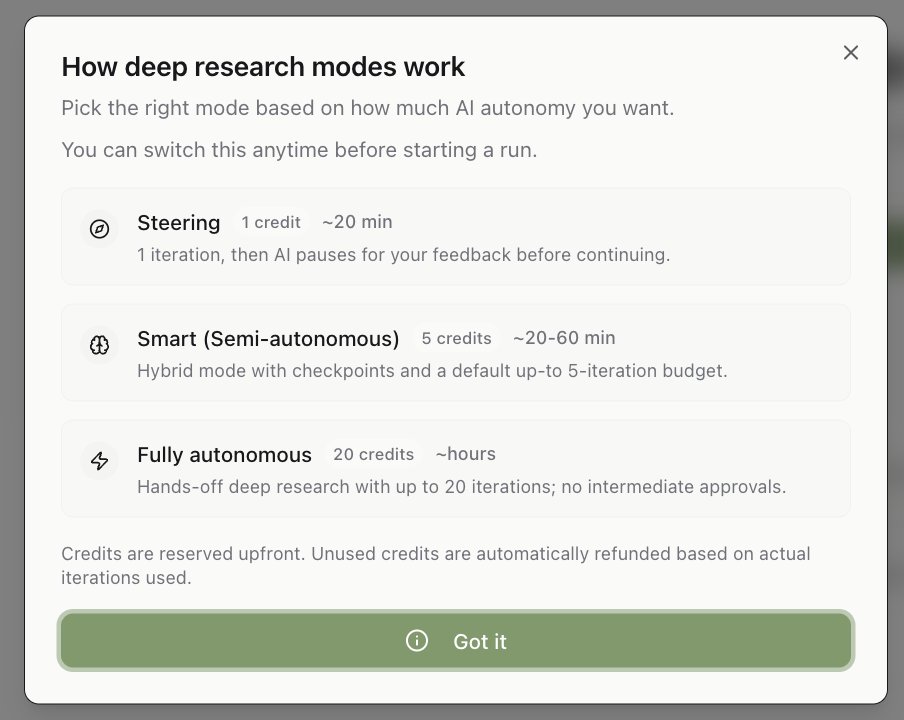
How BIOS deep research modes work and how to pick.
→ Steering · 1 credit · ~20 min
You stay in the driver's seat. BIOS runs one iteration, then pauses for your feedback before continuing. Best for sensitive experiments or early-stage hypothesis work.
→ Smart · 5 credits · 20–60 min
Semi-autonomous, hybrid mode. Up to 5 iterations with checkpoints after each cycle. Best for collaborative deep dives: lit reviews, competitive analysis, anything that benefits from iterative refinement.
→ Fully Autonomous · 20 credits · ~8 hours
Hands-off. Up to 20 iterations, no intermediate approvals, runs until convergence. Best when you want the result, not the workflow.
Switch modes anytime before a run.
Sign up at chat.bio.xyz and get 20 free credits.
4
15
519
PeptAI runs a 9-gate pipeline with scientists setting the rules first.
Gate 0 baselines everything against ChEMBL data.
Agents now run several receptor programs in parallel, and human oversight runs throughout the pipeline, most critically before wet lab handoff.
More autonomy means broader participation in drug discovery🧵
3
8
19
1,048
Bio Africa retweeted
May 22
The hardest problem in AI for science is payment, not the science.
AI can already design proteins, synthesize hypotheses across thousands of papers in seconds, and identify promising drug candidates in days.
But the moment the agent needs actually to spend money on compute, a lab assay at a CRO, or another agent’s output, everything stops.
Wire transfers, procurement, and a finance team approving a PO.
Sometimes the agent is stuck, waiting for hours or days.
A truly autonomous science agent needs to pay continuously for inference, wet lab time, datasets, and other agents. Traditional banking isn’t built for that.
What actually works today is already in production: agent wallets, on-chain treasuries, and micropayments like x402.
These agents are running live, paying for compute, and wet lab work directly from on-chain treasuries they control.
• Each transaction is signed by the agent. Each cost is logged and traceable on @Molecule_sci Labs.
• Every wet lab handoff is anchored to a transaction.
If you don't trust the agent, you can verify the agent.
Designed by an agent. Paid by an agent. Validated by a wet-lab. Logged on-chain.
25
14
123
6,270
May 20
This is where things start to get real
PeptAI is transitioning from just coming up with “AI-generated biotech ideas” to actually carrying out experiments in the lab and learning from them.
The key part isn’t just creating GLP-1 candidates.
It’s the feedback system that’s being developed around it:
➤ Generate candidates
➤ Conduct wet-lab assays
➤ Feed results back into the process
➤ Automatically enhance redesign decisions
That’s the groundwork for scalable, autonomous drug discovery and the role of the CRO agent is also underestimated.
An agent that negotiates quotes, manages discussions with CROs, and directly coordinates experiments is exactly what machine-to-machine workflows in crypto and AI have been leading towards.
It’s still early days, but you can already see the operating system taking shape.

PeptAI Update: First Synthesis Run, Feedback Loop & More
What's New:
• First GLP-1 Synthesis Batch: We're synthesizing the first round of GLP-1 candidates, then shipping directly to @adaptyvbio for assays. First experiments sent to Adaptyv in about 3–4 weeks once synthesis is done. Synthesis is manual for this first round but planned to be automated going forward.
• Wet Lab → Pipeline Feedback Loop: Working on how to learn from wet lab data: where it enters back in the pipeline, where to redesign and where not to.
• New Receptor Scoping: In parallel, scoping new receptor targets.
• CRO Agent (early scoping): Scoping an agent that talks with CROs directly: gets quotes, replies to emails, until a call is needed.
1
7
424