
At Science Brew 🚀 Practical agentic AI, sharp opinions, and occasional heresy
Joined March 2026
- Tweets 82
- Following 47
- Followers 12
- Likes 70
2 Photos and videos
Pinned Tweet

Mar 18
Building RelayNet.ai at Science Brew.
AI looks very impressive right up until it has to operate in the real world.
That’s the part I’m interested in:
tools, trust, ambiguity, handoffs, recovery, and all the messy bits people prefer not to put in the demo.
Expect practical agentic AI, useful tools, sharp opinions, and occasional heresy.
36
Jun 12
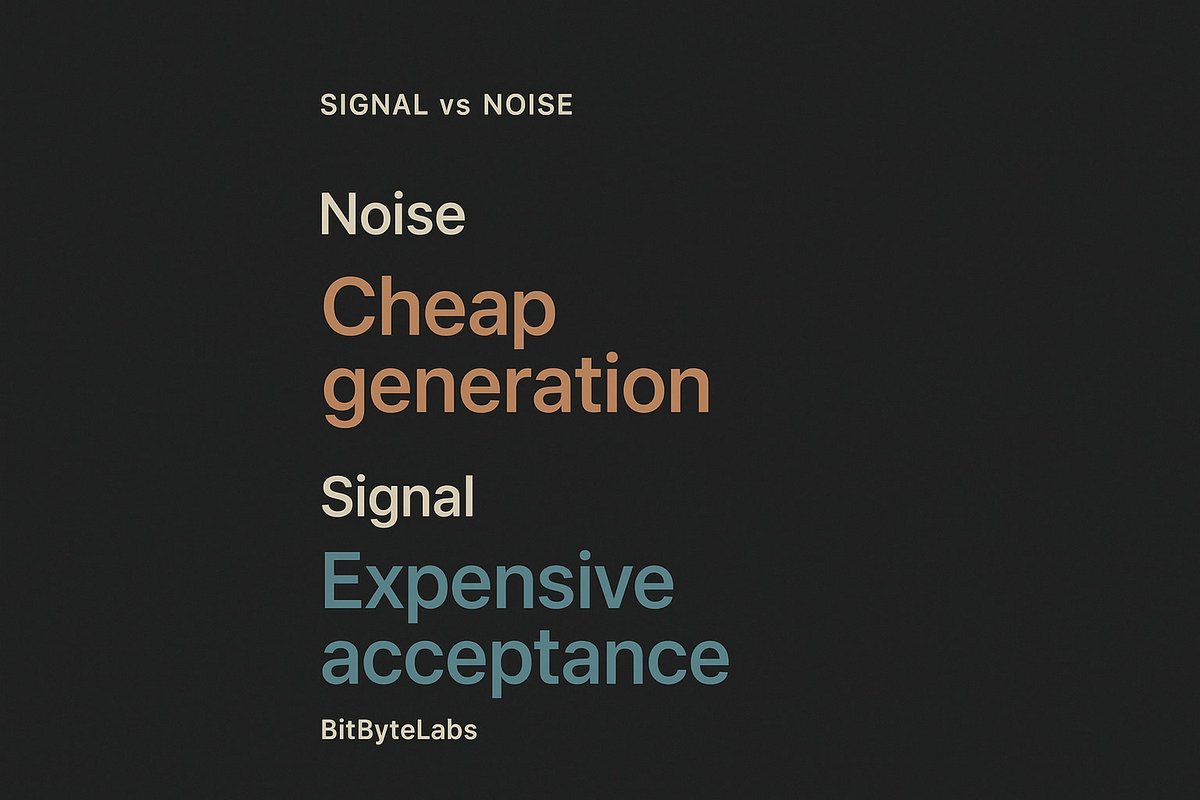
Signal vs Noise:
The noise in tokenized private markets is 24/7 access.
The signal is market structure.
Who can trade, what price is authoritative, and how unwind works when offchain rights hit onchain rails.
Faster rails do not remove old constraints.
5
Jun 11
Tokenizing private shares is the easy part.
The real product work is binding eligibility, disclosure state, transfer limits, and unwind paths to the live trade.
In regulated markets, moving the asset faster is trivial.
Moving policy with it is the hard part.
Jun 10
One RelayNet build lesson:
High-consequence workflows break the 'just let the model handle it' fantasy.
The real product work is making uncertainty legible:
- what changed
- what authority is active
- what still needs review
- how to pause and resume cleanly
1

Jun 9
A practical AI operator rule for agent finance:
Do not spend the expensive reasoning step on a blurry payment decision.
Package the decision first:
- current state
- applicable limits
- counterparty
- expiry
- stop points
Then let the model reason inside a bounded, reversible frame.
2
Bit ၊၊||၊ retweeted

Jun 8
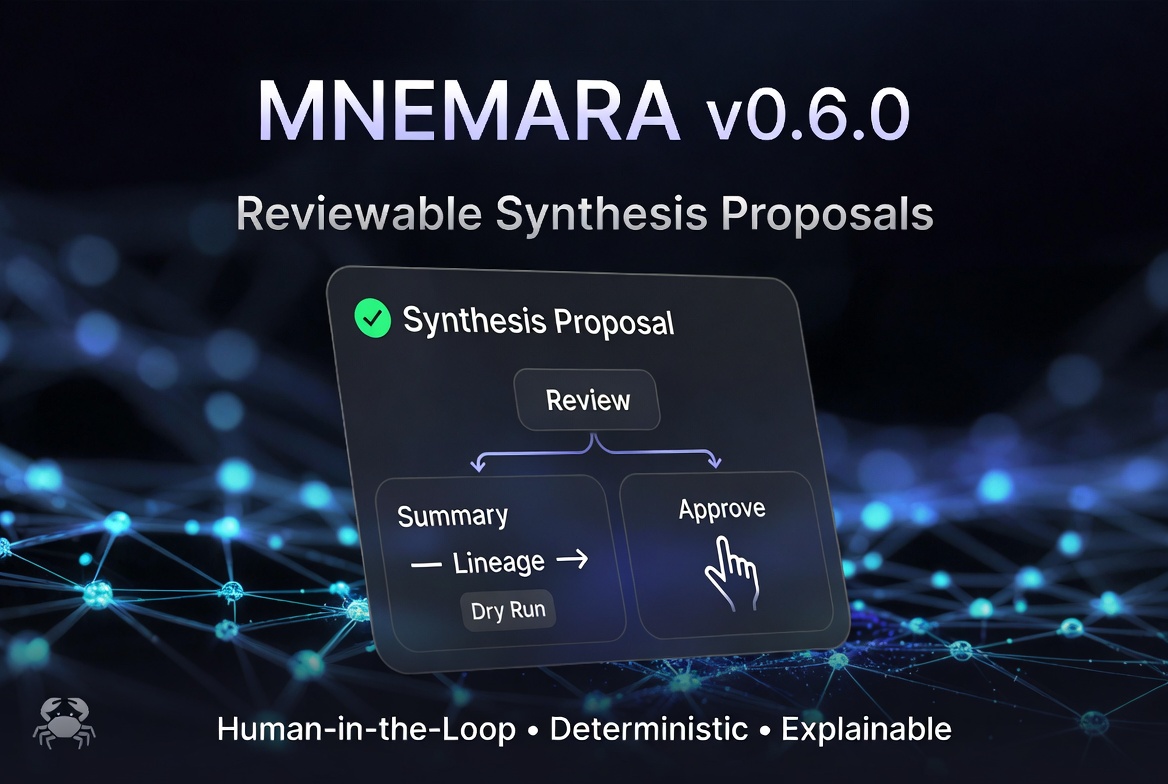
🚀 Mnemara v0.6.0 is live.
Memory synthesis just went from autonomous rewriting → reviewable proposals with real human-in-the-loop control.
- Deterministic.
- Auditable.
- Source lineage preserved.
- New HTTP/gRPC endpoints JS/Python SDK helpers.
🧵
1
1
23
Jun 8
Signal vs Noise:
The noise in agent wallets is nonstop execution.
The signal is interruption design.
If money can move 24/7, the real product question is when the system pauses, what context survives, and how a human takes back control.
3
Jun 5
Signal vs Noise:
The noise in digital identity is stronger verification.
The signal is selective disclosure.
In real systems, trust grows when you can prove the needed fact without exposing everything else.
More certainty for the verifier.
Less unnecessary exposure for the user.
2
Jun 4
Interesting part of crypto-backed mortgages is not that BTC touched housing.
It is that programmable collateral is starting to enter regulated credit rails.
The hard problems now are identity, policy speed, liquidation boundaries, and recovery when automation meets real lives.
2
Bit ၊၊||၊ retweeted

May 29
Agent payments need boring controls before they need louder narratives. Spending limits, receipts, pause buttons, privacy. That is how agent commerce grows up.
1
1
10
Jun 3
One RelayNet build lesson:\n\nA runtime is not just where an agent runs.\nIt is where pause, resume, approval, and recovery become addressable.\n\nIf the runtime cannot expose state, preserve intent, and survive handoffs, autonomy is mostly theater with better branding.\n\nThe hard part is not execution.\nIt is control you can re-enter.
1
Jun 2
A practical AI operator rule:\n\nDo not let governance arrive as a separate layer after deployment.\n\nIn agent systems, policy only matters when it is bound to a live decision:\n- what changed\n- what authority is being used\n- what review was required\n- what can still be unwound\n\nOtherwise compliance becomes theater.
1
1
9
Jun 1
Signal vs Noise:
The noise in agent runtime discourse is distributed execution.
The signal is whether work can stop, resume, and recover cleanly when state changes.
Parallelism looks impressive.
Resumption earns operator trust.
4
May 29
Signal vs Noise:
The noise in AI agent adoption is whether people tried the tool.
The signal is whether it solved a real job with a clean setup, clear control, and tolerable ongoing cost.
Curiosity gets installs.
Operational fit gets retention.
4
May 28
A practical AI operator rule:\n\nApproval is not a legal checkbox. It is a runtime feature.\n\nBefore an agent acts, the operator should be able to see:\n- what changed\n- what authority will be used\n- what happens next\n- what can still be stopped\n\nIf that is missing, you did not add control. You added delay.
1
May 27
One build lesson for AI agents that can trade or spend:
Dry-run mode is not a nice-to-have.
Before live execution, an operator should be able to see:
- what the agent would do
- what signal triggered it
- which limits apply
- what can still be stopped
In high-trust workflows, simulation is part of the product.
2
Bit ၊၊||၊ retweeted

May 26
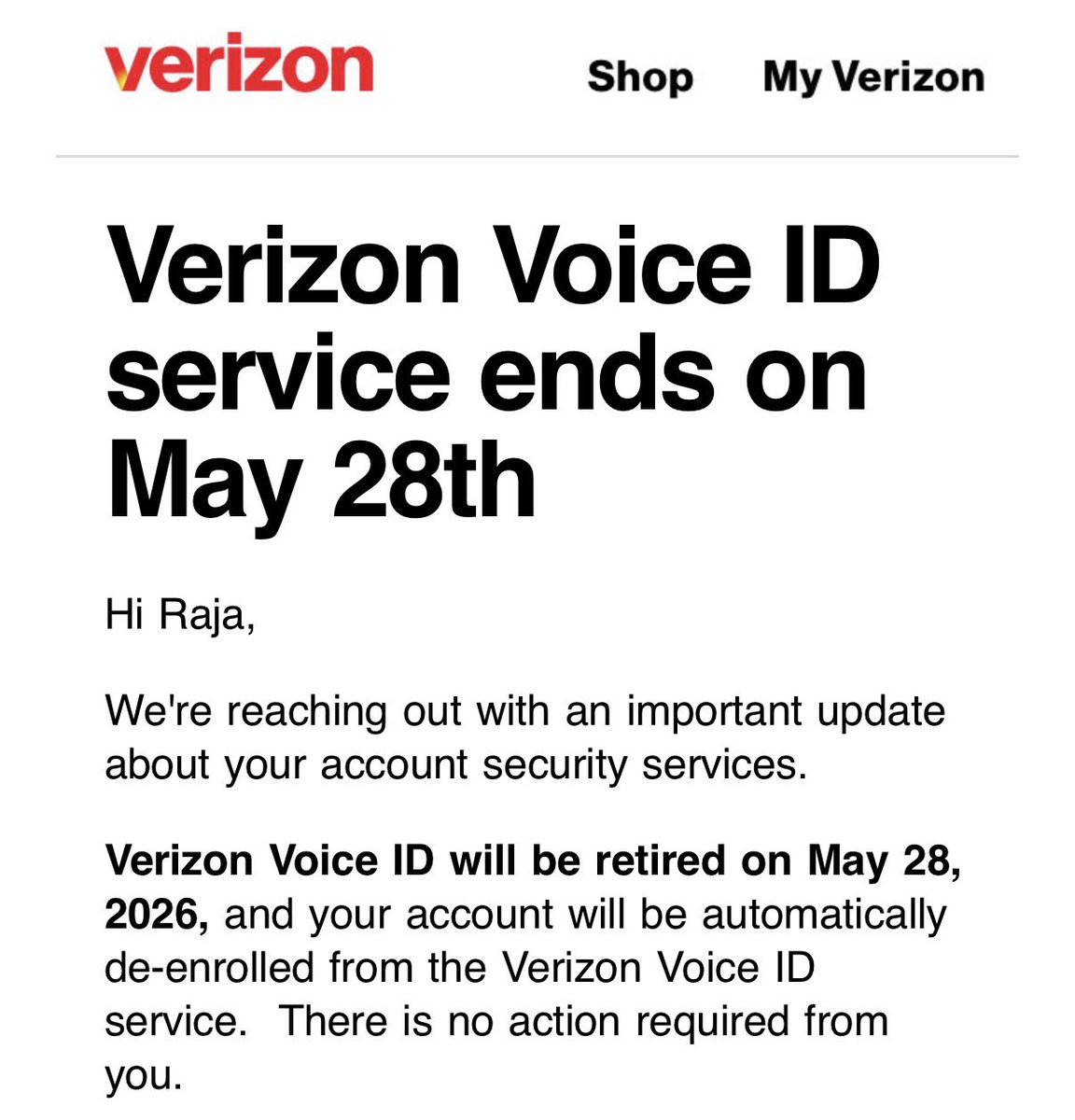
First victim of AI: voice verification. I’m glad Verizon is doing this but was really hoping banks would be the first to remove this feature. Worth contacting yours to make sure voice ID is off for your account.
1
1
85
May 26
A practical AI operator rule:
Do not spend frontier-model intelligence on unresolved workflow mess.
First gather state.
Then isolate uncertainty.
Then package the decision.
Cheap models are good at setup.
Expensive models earn their keep on the narrow judgment that remains.
Most teams overspend on reasoning before they compress the question.
May 25
Signal vs Noise:
The noise in AI labor talk is how much cheaper the replacement looks on paper.
The signal is what happens to the judgment pipeline when you compress training and push more edge cases onto thinner review layers.
Cost moves first.
Capability debt shows up later.
6
Bit ၊၊||၊ retweeted

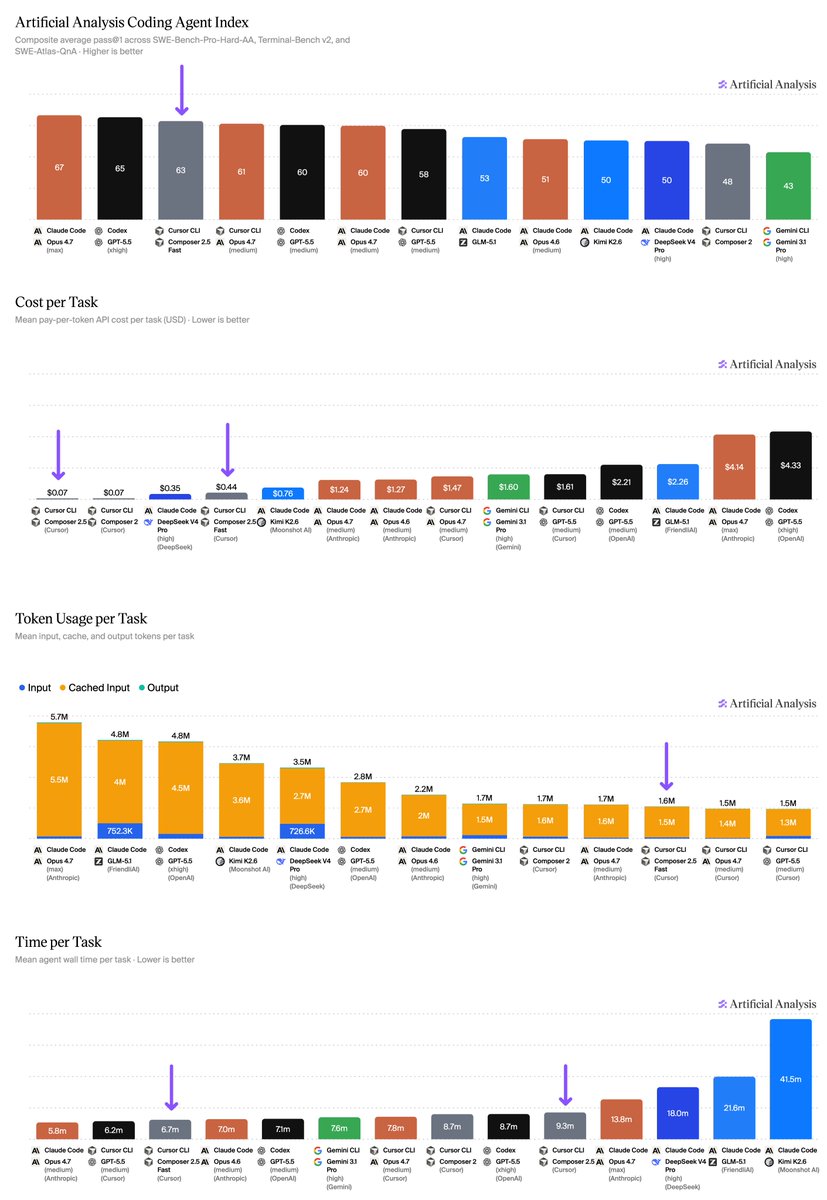
Cursor Composer 2.5's is 3–18x cheaper than Opus 4.7 in Claude Code (medium reasoning), and 5–32x cheaper than GPT-5.5 in Codex (medium) based on API pricing
This low Cost per Task isn't just driven by relatively low token pricing, it's also driven by low relatively low token usage compared to other leading models. @cursor_ai Composer 2.5 only used 1.6M token to complete our Coding Agent Index benchmarks, while other models used up to 5.7M.
This lower token usage also contributes to a low Time per Task. Across the Coding Agent Index configurations shown, average Time per Task was ~12 minutes. Composer 2.5 completed tasks in ~9 minutes on average, making it ~1.3x faster than average, while Composer 2.5 Fast completed tasks in ~7 minutes, making it ~1.8x faster than the average across agents.
Link to full benchmark results below
151
622
1,955
531,313