
Joined April 2020
- Tweets 945
- Following 38
- Followers 113,990
- Likes 20,619
292 Photos and videos










Pinned Tweet

How to Stop Crypto From Hitting $10 Trillion
Charlie Munger liked to say: "Invert, always invert." Instead of asking how to succeed, ask how to fail. So here are a few reliable ways to make sure crypto never becomes a $10 trillion market.
Today, we're inverting the question to find the path forward.👇
~~ Article by @kenzixbt ~~
Assume the World Cares About Our Chains
Since the inception of crypto, the industry has operated around chains. And for a long time, that was the correct thing to do. Chains are the foundation on which everything else runs. So it's very important that we get that part right.
And that's exactly what we did.
Over the first fifteen years of crypto, blockchains became the most heavily funded category in the industry. The smartest minds, from Satoshi to Vitalik to Anatoly, have spent the prime of their lives building blockchains the way they believed they should be built.
And this practice of building around chains has had lollapalooza effects on how everything else happens in the industry.
Value accrual has long been understood to accrue at the chain layer, popularized by the fat protocol thesis. Chain tokens have been the best performing assets in the history of crypto. From ETH to SOL to BNB, these have provided some of the best returns to investors over the last decade. Wallets became the most widely used interfaces in the industry, tools designed primarily to help users interact with what's happening onchain. Builders and users began organizing themselves around chains, gravitating toward the ecosystem that resonated with them.
This framing has worked really well for us. The industry needed an anchor in crypto's early years. Chains became that anchor. They became flagbearers for different versions of the crypto ethos, each optimizing for a different set of trade-offs. Crypto is now a $4 trillion market.
All of this made sense. But this moment should also mark the beginning of the end of the idea that crypto should revolve around chains. Because today, this same framing is starting to work against us.
And the simple reason is fragmentation.
Fragmentation of liquidity. Fragmentation of capital. Fragmentation of users. Fragmentation of talent. Fragmentation of attention.
Under chain-first thinking, we're fragmented at the core and operate in isolation. We behave as if things happen in isolation in this industry. While in reality, crypto is a tightly coupled collection of small markets, which together operate as a single universal market.
Think about this question posed by a16z crypto's X account: Which chains are you building on? It shows exactly what's wrong with this thinking around chains.
Why does it matter if someone is building on Ethereum or Solana or xyz chain? What matters is that they're building in crypto. It's one market.
Yet because we frame crypto as a collection of separate chains, we allocate resources accordingly. Liquidity, capital, users, and builders are spread thin across different environments, each optimizing its own walled garden. That local optimization comes at the expense of global outcomes.
This is the inversion we need to make as an industry.
We need to stop building for our chains and start building for crypto. Otherwise, we risk optimizing individual pieces while stifling the growth of the market as a whole.
The analogy we can learn from is countries.
Countries are divided into states to improve local execution, but they compete and operate as a single economy on the global stage. The states work together as a united front. No serious country optimizes its states at the expense of its national market.
Crypto needs a similar unification moment.
Chains are the states. Crypto is the country. We're all divided into states like chains, but we're all part of one big country called crypto—and we have to come together as a united front to make crypto a bigger market.
Markets, not chains. That should be the rallying call for the future of crypto.
To the outside world, this is already the truth. When institutions, fintechs, governments, or consumer platforms evaluate crypto, they don't see chains, they see a large, growing market.
If we want the next leg of adoption, we have to align with that reality and be willing to set aside internal incentives, tribal loyalties, and bag bias. That means convincing the world why crypto as a market is a massive opportunity: to rebuild financial rails onchain. Rails that are globally accessible, rooted in transparent public ledgers, and that move value faster and cheaper for everyone.
Build Things and Wait for People to Come
One of the lazier criticisms of crypto is that it hasn't built anything people actually want. I don't buy it.
That narrative is consensus because it's easy to take a shot on crypto. In reality, it starts from the wrong expectations and applies the wrong mental model.
It assumes crypto should have produced consumer social apps, when in reality crypto has been rebuilding the financial layer of the world from scratch—so it's inevitable that we have applications that look financial and speculative by nature.
And I think that's the actual innovation of crypto.
Crypto embeds the ability to move value directly into the internet layer. This was missing from the world and we're changing that. Any crypto application will, in some form, express that property.
Crypto has built a lot of cool things. But the negative outlook comes from the fact that all of them are financial primitives or linked to speculation somehow. But on that point, I'd like to point that the whole world operates on speculation, and crypto is rebuilding the legacy financial system from scratch with new principles.
So it's no surprise that the most widely used crypto applications today include trading terminals, exchange frontends, leverage platforms, and memecoin markets. From the outside, this looks like financial nihilism. But in reality, it's just crypto serving the needs of the world.
In doing so, we've created entirely new markets. Memecoins turn attention and internet culture into tradeable assets. Prediction markets present a way to speculate on the events of the world. NFTs created a native digital form for art and ownership rights. DeFi rebuilt lending and borrowing without credit scores, replacing reputation with collateral and math.
But where the industry does face a real challenge now is not application building, but distribution.
Up to this point, crypto could grow by building better technology and assuming users would eventually show up. That phase is over. From here on, growth depends on whether we can reach people who don't already care about crypto.
Hence, crypto has a distribution challenge. Our problem is simple but hard to solve: how do we market to the world that doesn't live on crypto twitter?
Right now, crypto marketing is overwhelmingly inward-facing. We talk to builders, traders, and power users on Crypto Twitter and convince ourselves we're "educating the market." In reality, we're preaching to the same audience over and over again.
I think we need distribution channels that already reach the mainstream. And a lot of you will hate me for saying this but, centralized exchanges have the reach, trust and familiarity to take crypto mainstream:
They have the household name brand recognition already. They have revenues and marketing budgets that allow them to market to the mainstream. They have products that the average investor wants.
Think about it: How many people outside of crypto know about Uniswap? Very few. How many people outside of crypto know about Binance / Coinbase? A lot.
So maybe CEXs become the gateway for onboarding the next wave of users. But the lesson to take from CEXs for crypto's growth is that we need to prioritize distribution and market crypto to the world in simple terms. Build trusted brands and market to the average investor and not just the average crypto bro.
From here on, crypto's success depends less on better protocols and more on better communication. We need to think like marketers, not just builders. If we want adoption, we have to make crypto legible, desirable, and accessible to the rest of the world, and actively bring users in instead of waiting for them to show up.
Sell Our Soul to the Suits
One quick way to make sure crypto fails is to sell out to the suits at the finish line.
After spending fifteen years proving that crypto deserves to be taken seriously, there will be a temptation to make compromises to "close the deal" with institutions. To soften positions in the name of pragmatism. To meet the market where it is.
That would be the biggest mistake we could make.
As institutions come onchain, it becomes even more important for crypto to hold the line on the things that actually make it valuable: self-custody, censorship resistance, permissionless access, and open participation.
Now that crypto has a seat at the table, the worst thing we could do is pretend those principles are negotiable.
If we do this, we will lose. Because if we remove what makes crypto fundamentally better, we'll be left competing with incumbents on their terms.
There are a few obvious ways this can go wrong.
Take stablecoins. They are simply a better way to move value over the internet: faster settlement, lower costs, global reach. Treating CBDCs as acceptable substitutes would undermine the entire point.
Or take private chains. People often push them as a reasonable middle ground to onboard institutions to crypto, but in reality, they're just mid-curving. Private chains sacrifice transparency and composability—and these are not acceptable trade-offs we should be willing to take. If institutions want to build in crypto, they should build things that align with the crypto ethos.
Crypto doesn't need to prove it belongs anymore. That argument is over.
Now we need to preserve the properties that made it worth adopting in the first place.
No trade-offs at the home stretch.
Conclusion
If crypto wants to fail to become a $10 trillion market, the playbook is clear:
Obsess over chains instead of markets. Fragment into walled gardens. Build applications without figuring out distribution. Abandon our ethos.
Instead of going down this forbidden path, we need to prioritize around the right things:
Markets matter more than chains. Applications matter more than infrastructure. Access to crypto as a market matters most. Doubling down on properties that make crypto, crypto.
Crypto doesn't need a miracle to get to $10 trillion. It just needs to stop doing the things that prevent it from getting there.
Invert those habits, and the rest takes care of itself.
Markets usually do.

296
145
2,116
5,806,376
As far as NFT metadata is concerned, the ghosts of the past will continue to haunt us.
~~ Analysis by @punk5268 ~~
There are a variety of ways to underpin the media of NFTs. For durability I've always gravitated toward onchain projects, of which there are many shades:
• Semi-onchain — some metadata is stored onchain, but not all
• Hashed onchain — NFT contracts host a cryptographic hash that permanently references offchain data
• Hybrid onchain — a project deploys a separate onchain collection to archive an earlier offchain collection
• Fully onchain — all the data needed to display an NFT lives within the collection's smart contract
• Inchain — NFT visuals are generated live by fully onchain code at render time rather than stored as files
Each method has pros and cons. Yet broadly speaking, putting things onchain is costlier than offchain storage and requires more smart contract expertise.
As such, offchain storage, where only NFT tokens live onchain while their metadata is hosted on external platforms like IPFS or private servers, is the status quo for most NFT collections from the past 5 years.
The problem is that IPFS pinning often wanes with time, and many startups go bust and shutter their private servers. In these cases, only the tokens remain as worthless remnants that can no longer display their imagery.
There are plenty examples of lost NFTs from recent years, but you can see for yourself. The new NFTimeless app lets non-guest users get a condition report for their NFT collections showing which NFTs are offchain and broken.
For collections that are already broken, there's nothing to be done. But fortunately for projects with offchain storage that haven't been lost yet, they can employ a rising technique for retroactive durability that doesn't require deploying a second collection: ERC-4804.
This standard is like an HTTP-style system for Ethereum, introducing a new kind of URI web3:// that lets NFT metadata be fetched directly from smart contracts. The URI doesn't point offchain, but rather describes an onchain read.
When an NFT marketplace sees a web3:// URI, it can translate the provided ENS link into an eth_call, execute it against a smart contract, and treat the returned data as NFT metadata.
For example, imagine an NFT contract whose tokenURI(123) returns web3://testcollection.eth/tokenURI/123:
➢ A marketplace resolves testcollection.eth via ENS to an Ethereum address
➢ It calls tokenURI(uint256) on that contract with argument 123
➢ The contract returns JSON metadata (name, description, image, attributes)
➢ The marketplace renders the NFT using that data, just like it would with IPFS but without any offchain dependencies
This approach means metadata can be generated or stored entirely onchain, either in the same NFT contract or in a separate metadata resolver contract. The web3:// scheme makes calls verifiable and independent of any gateway staying online.
This is powerful because it's a straightforward way for old NFT collections to keep their original token contracts untouched, deploy new onchain metadata contracts, and update their baseURIs to point to the relevant web3:// ENS link. It's just a new pointer system, so no NFT migrations are needed.
After any updates, marketplaces would fetch metadata directly from Ethereum itself, and thanks to the URI anyone can reproduce the necessary calls forever.
This standard also matters because even projects that do store their art and metadata onchain have historically been forced to publish ipfs:// or https:// baseURIs as apps and wallets didn't know how to read anything else. Now these projects have a viable onchain alternative.
Another important wrinkle: @opensea just added support for ERC-4804. It's a big validation for the standard and an indication that it can gain serious traction from here. The minting platform Carve is already planning on adding support, and more integrations will follow.
As we look ahead, one thread I'll be watching is ERC-4804 adoption. It could quietly become one of the most important tools we've seen yet for NFT durability in the Ethereum ecosystem.
21
10
185
20,052
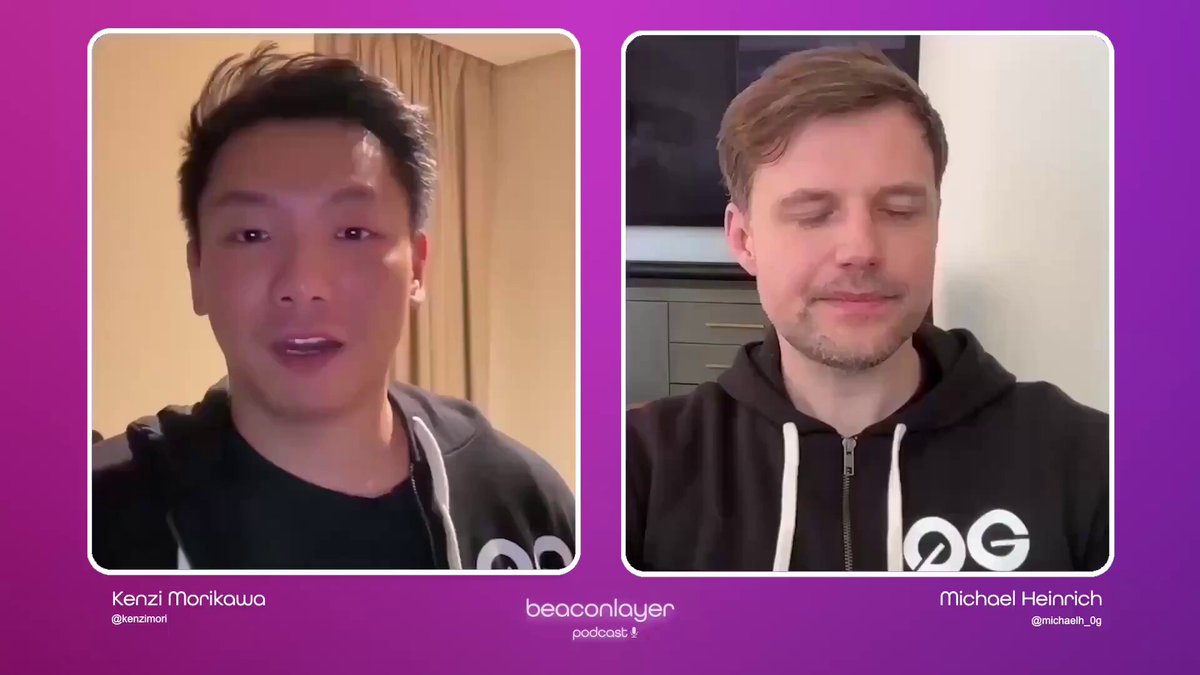
“After moving from Berlin to Silicon Valley, I found myself bored at a new school — so I started spending time at my dad’s SAP Lab: fast internet, endless reading, and the beginning of my love for technology.”
Our host @kenzixbt sits down with @michaelh_0g (@0G_labs) to trace his origin story — from early curiosity and a growing obsession with tech to his path into Web3, and ultimately, the founding of his company.
25
27
246
46,611
“DA layers really differ across three dimensions: performance, programmability, and AI-native design — because on-chain AI can’t operate in a world measured in mere megabytes per second.”
@sachitakahara catches up with @michaelh_0g, Founder of @0G_labs, to break down how 0G compares with Celestia, Avail, and EigenDA: why throughput needs to increase by orders of magnitude, how to move beyond the broadcast bottleneck, and why a decentralized storage network is essential for ultra-fast data ingestion and retrieval.
43
24
224
33,934
“Back in 2016–17, crypto felt like a true idea factory — hundreds of experiments, zero gatekeeping, and pure creative energy.” Our host
@dikshaarden sits down with @michaelh_0g, Founder of
@0G_labs, to explore one of the most exciting parts of building in Web3: a culture shaped by experimentation first. They also dive into how tokenization creates new ways to fund and sustain projects — including open-source work — beyond the limits of the traditional Web2 business model.
24
15
207
29,864
This week’s episode features Michael Heinrich (@michaelh_0g), founder of 0G Labs (@0G_labs).
We dive into Michael’s journey from high school boredom to building 0G Labs, the first modular AI blockchain platform, and how an unconventional path shaped the way he thinks about leadership, focus, and company building.
The conversation explores how spiritual practices like meditation influenced Michael’s mindset as a founder, helping him build with more clarity, discipline, and long-term conviction.
Michael also breaks down the future of decentralized AI infrastructure, and why community-owned data and compute networks may become one of the most important foundations for the next era of artificial intelligence.
We dig into how 0G Labs is building AI blockchain tools and applications that connect decentralized networks, unlock data infrastructure, and make storage, machine learning, and AI systems more open for businesses and builders.
At its core, this episode is about the intersection of AI, crypto, data ownership, and founder psychology — and why the next wave of AI infrastructure may need to be decentralized from day one.
30
24
98
23,525
Stablecoins are the plumbing of DeFi—yet most of today's supply is tethered to TradFi approaches.
When a stablecoin is custodial, you inherit the issuer's worldview, legal pressures, and blacklisting risks. If it's backed by real-world assets like U.S. Treasury bills, holders don't get direct, onchain redemption rights.
This is why trust-minimized stablecoins matter, and why three new projects are worth watching.👇
~~ Analysis by @KieranSolberg ~~
Trust-minimized stablecoin protocols run on immutable code, use crypto-native collateral, and offer redemptions via onchain mechanisms. We've seen various projects over the years, including @SkyEcosystem's Single Collateral DAI, @reflexerfinance's RAI and HAI, and @CurveFinance's crvUSD, but none have seen breakout success.
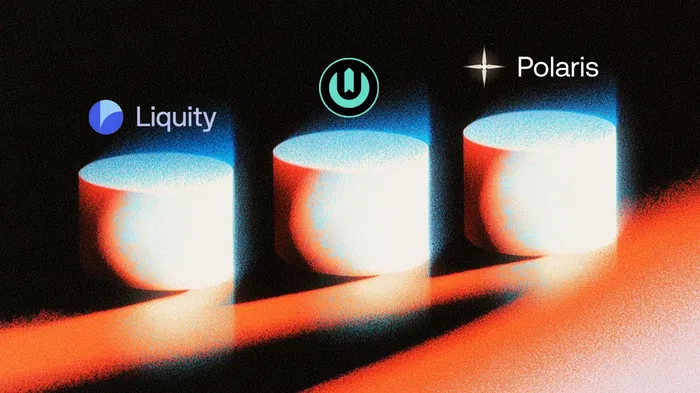
This niche is getting interesting again as newer designs pave fresh paths forward. Today, we're looking at three recent shots on goal: Liquity V2, Money League, and Polaris.
Liquity V2
@LiquityProtocol V1 earned its reputation by being stubbornly narrow. It runs on immutable contracts, only supports ETH as collateral, and largely eschews governance.
Liquity V2 kept that DNA but widened the design space when it launched in 2025. Now, the borrowing protocol lets users deposit ETH or liquid staking tokens like WETH, wstETH, and rETH to mint BOLD, a USD-pegged stablecoin.
Beyond expanded collateral support, V2 introduced user-set interest rates.
Instead of governance deciding borrow rates, V2 borrowers choose their own, and the protocol uses those market rates as a core stabilizer for BOLD. Think of this like a market-driven monetary policy system that responds to BOLD being above or below $1.
V2 routes its economic flows back to users via two avenues:
▻ Stability Pools ("Earn"): Deposit BOLD to earn yield sourced from borrowers' interest payments plus liquidation gains.
▻ Protocol-Incentivized Liquidity ("PIL"): A hard-coded slice of revenue supports BOLD liquidity, directed by LQTY stakers via gauge voting.
The result: a project that aims to turn stablecoin stability into a competitive onchain market. The model is readily extensible via Liquity's Friendly Forks program, which allows other teams to deploy their own licensed stablecoins using the V2 framework.
Money League
Want to deploy a custom stablecoin, but you don't have the technical know-how to manually fork the Liquity V2 codebase or don't want to enter a licensing agreement?
This is where @0xMoneyLeague has positioned itself. It's an EVM platform being designed so anyone can readily deploy censorship-resistant stablecoins through a factory model.
Instead of teams needing to design an entire bespoke stablecoin protocol from scratch, Money League provides standardized plug-and-go modules derived from the RAI/HAI stables lineage.
The protocol lets you handpick your stablecoin's supported collateral (e.g. ETH only), peg mechanics (e.g. floating), risk parameters, and beyond. From there, your deployment operates as its own independent stablecoin protocol.
All deployments are linked through a shared incentive layer built around the MERIT token, which can be redeemed for Money League treasury assets. Stablecoins compete for emissions by routing fees or offering incentives to gauge-style veMERIT voters.
Instead of yet another stablecoin aiming for perfection, Money League is fostering many stablecoin experiments in parallel, creating a market where the best designs win liquidity, legitimacy, and distribution.
Polaris
The newest arrival in the trustless stables category is
@polarisfinance_.
In its early stages, this stablecoin protocol will be fully onchain, and instead of generating yield from external RWAs, it will do so by harvesting internal volatility around its pUSD and pETH tokens through a special bonding curve mechanism.
As adoption around Polaris grows, the system's own onchain activity increases, so the central yield source scales upon expansion rather than being compressed away as is often seen with RWA-centric stablecoins when their deposits grow.
The second central idea: Polaris is also openly positioning itself as forkable stablecoin infrastructure, where many stable assets (like pGOLD) can share the same pETH collateral base and grow together as a mutualistic constellation.
For now, we'll have to wait and see how Polaris fares—how its bonding curve operates, how its system behaves under stress. But the builders are posing an ambitious new crypto-native vision for stablecoins in DeFi.
Different Approaches
Looking at these projects side-by-side, it's clear they're not clones. They're different technical attacks on making better DeFi-native stablecoins:
▻ Liquity V2 wants to make a better trustless dollar stablecoin by letting the market set rates and routing revenues toward stability.
▻ Money League wants to make stablecoin experimentation cheap and permissionless and to surface the best performers.
▻ Polaris wants to escape the yield scaling trap by harvesting its own onchain volatility instead of relying on offchain RWAs.
There's no guarantee any one of these models wins outright, but that's besides the point. What matters is that the trustless stablecoins frontier is moving again, and these are the projects setting the tone today and inspiring the stables of tomorrow.
46
21
152
14,733
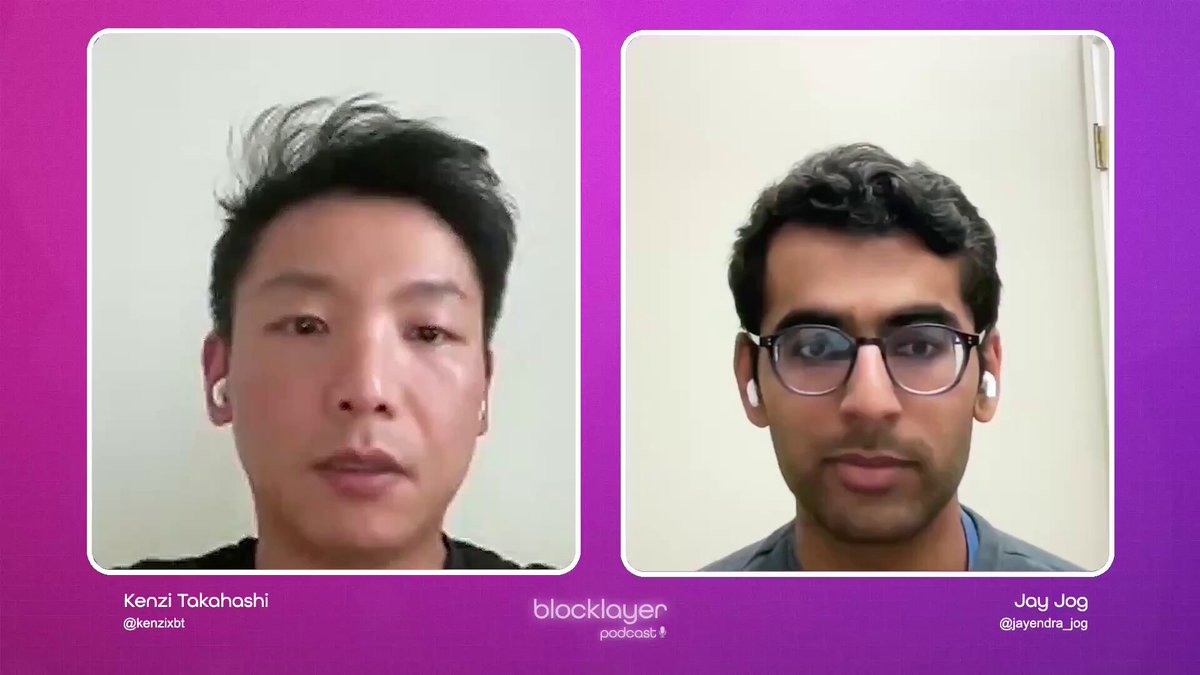
“What happens when someone inside one of the most iconic retail platforms of the last cycle sees its limits up close?”
@kenzixbt speaks with @jayendra_jog, Co-Founder of @SeiNetwork, to trace the path that took him from the early days of Robinhood in Palo Alto — through hypergrowth, the IPO era, and the shock of the GameStop moment — to building in crypto.
They discuss how witnessing the mechanics and constraints of traditional financial infrastructure firsthand reshaped his thinking, why the suspension of buys during one of retail’s most defining episodes left such a lasting impression, and how that experience ultimately pushed him toward systems designed to be more open, more resilient, and less dependent on centralized control.
44
25
318
70,935
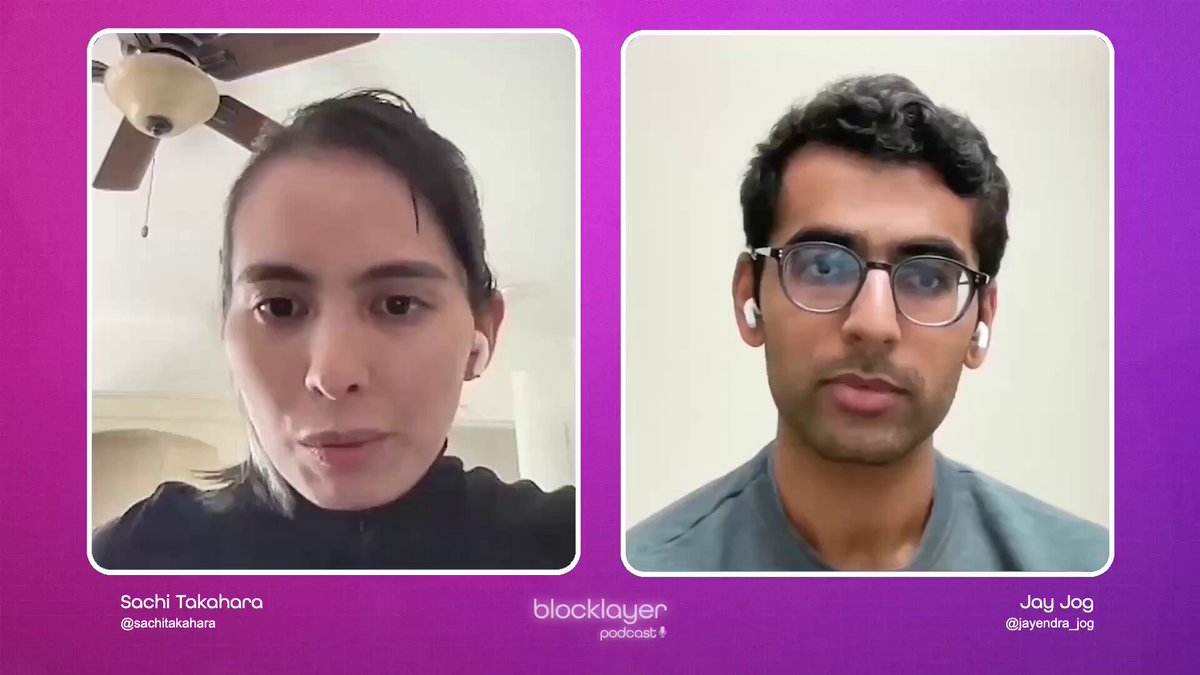
“High-performance infrastructure only matters if it expands what users can actually do onchain — and makes that experience accessible at scale.”
@sachitakahara sits down with @jayendra_jog, Co-Founder of @SeiNetwork, to examine why parallelized execution is becoming increasingly important for the next generation of onchain applications.
From trading and DeFi to high-frequency user activity that simply breaks in low-throughput environments, they discuss how lower fees and greater execution capacity can fundamentally reshape the user experience — especially for smaller participants who are otherwise priced out.
They also explore how this plays out in practice through projects like Bancor’s Carbon DeFi, where Sei has emerged as the ecosystem driving the strongest activity and volume, underscoring how performance advantages translate into real adoption.
40
34
267
47,160
“Virtual machines are like cities — once they reach critical mass, they become magnets that are incredibly hard to displace.”
@dikshaarden catches up with @jayendra_jog, Co-Founder of @SeiNetwork, to unpack this idea at a deeper level — why systems with flaws can still dominate simply because that’s where the activity, liquidity, and people already are.
From New York and San Francisco to onchain environments like the EVM, they explore how network effects compound over time, why newer ecosystems struggle to pull users away even with better tech, and what it actually takes to break that inertia.
30
24
209
34,070
This week’s episode features Jayendra Jog (@jayendra_jog), Founder of @SeiNetwork.
We dive into Jay’s journey from traditional finance at Robinhood to building Sei Network, and unpack how his view of markets, users, and product feedback shaped the way he thinks about blockchain infrastructure.
The conversation explores the parallels between established cities and virtual machines: why dominant systems like the EVM are so difficult to displace, what makes developers stay, and what it actually takes for a new ecosystem to earn attention.
We also dig into the need for higher throughput in Web3, how parallelization can help solve today’s performance limits, and why scalability matters if crypto applications are going to serve real users at a much larger scale.
Jay also reflects on the role of memecoins, not just as speculation, but as community-driven movements that can reveal how culture, attention, and network effects form onchain.
31
27
133
44,722
“If researchers join because of incentives, you're already losing.”
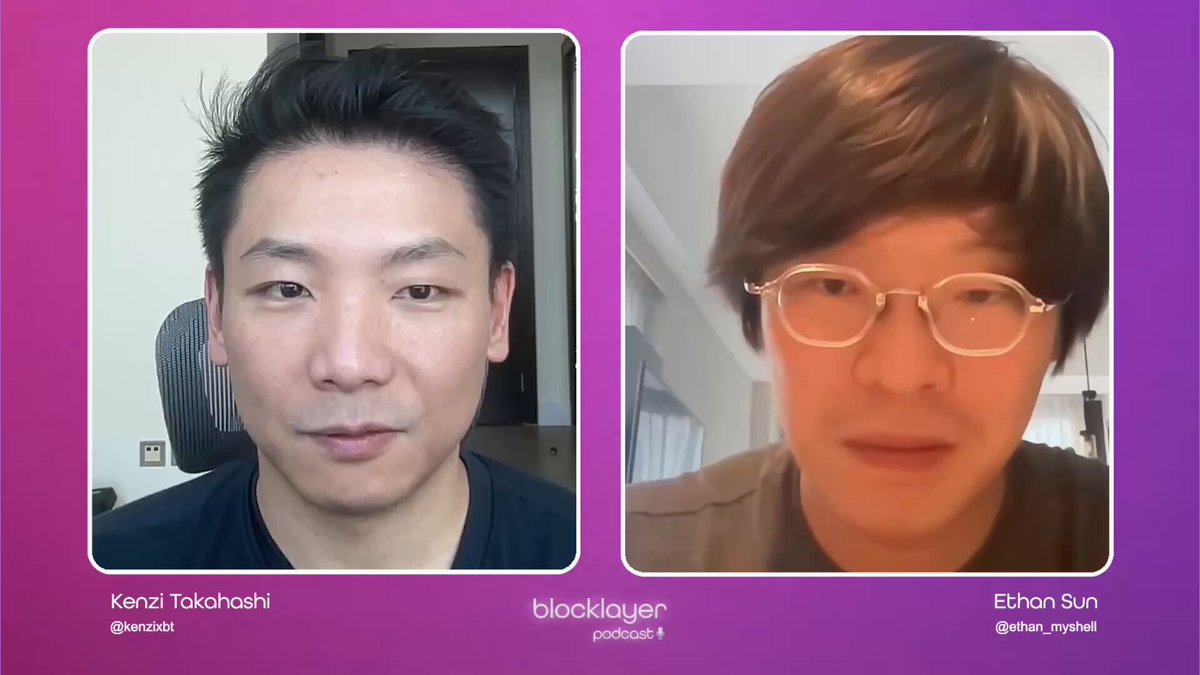
@sachitakahara talks with @ethan_myshell, Founder & CEO of @myshell_ai, about the AI talent crisis in crypto, why many researchers view the industry as speculative, and how open-source releases, real product-market fit, and world-class audio models helped build a community focused on technology rather than tokens.
41
34
270
63,375
“Oxford, computer vision, VR, gaming, crypto, AI — one founder arc across every major tech wave.”
@kenzixbt catches up with @ethan_myshell, Founder & CEO of @myshell_ai, to unpack how skipping classes at Oxford led him from frontier research into consumer products and eventually AI x crypto: why researchers often miss mass adoption, why consumer instinct matters more than ever, and how the next generation of crypto AI products can break out beyond the niche.
38
32
176
52,142
“I mined Bitcoin in 2011, but I completely missed why it was important.”
@dikshaarden sits down with @ethan_myshell, Founder & CEO of @myshell_ai, to unpack why AI and crypto may finally be converging: Ethereum's shift from static ledgers to programmable applications, the infrastructure breakthroughs behind account abstraction and social login, and why years of progress in AI, machine learning, and robotics are now colliding with a crypto ecosystem that may finally be ready for real-world products.
32
19
151
29,251
This week’s episode features Ethan Sun (@ethan_myshell), founder of MyShell (@myshell_ai).
We dive into Ethan’s journey at the intersection of blockchain and AI, and the founding story behind MyShell - a platform built to make powerful AI models accessible to non-technical creators.
The conversation explores how MyShell is opening up a new wave in the creator economy, where users can build, share, and interact with AI agents without needing deep technical knowledge.
Ethan also breaks down MyShell’s transition from Web2 to Web3, the role blockchain plays in the platform, and why crypto can unlock better coordination between users, creators, and open-source AI researchers.
We also dig into the unique perspective on crypto and AI from China, the rise of consumer-facing AI products, and why the next major wave may come from platforms that connect creators directly with open AI infrastructure.
A deep episode on AI, crypto, creators, and the consumer layer needed to bring AI to the next generation of users.
28
24
144
40,066
“What if the real unlock for AI x crypto is not speculation — but proving intelligence can be trusted?”
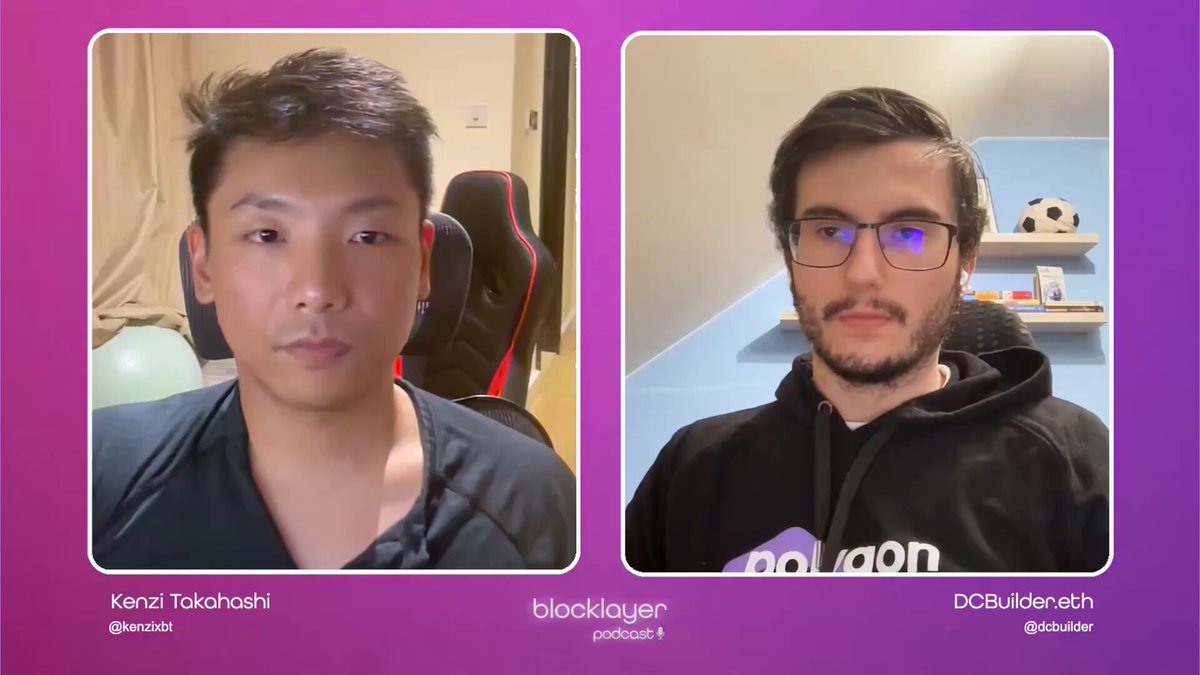
@sachitakahara sits down with @dcbuilder for a deep dive into the intersection of AI and crypto, from DC’s work building the ZKML community to why zero-knowledge machine learning could become a core trust layer for AI on the internet.
They break down how ZKML makes it possible to prove that a machine learning model produced a specific output from specific inputs — without forcing everyone to rerun the full computation themselves.
The conversation also explores why this matters for model accountability, transparency, and verifiable AI at scale, plus the projects pushing the space forward, from Modulus Labs and Giza to EZKL and new research around proof of inference.
56
55
210
44,855
“What if a Web3 identity starts less as a brand — and more as a challenge to yourself?”
@kenzixbt catches up with @dcbuilder for a deep dive into the origin of the DC Builder name, pseudonymous identity, and why crypto culture made merit feel more important than background.
They break down how the 2021 analyst wave, DeFi Twitter, and the ability to be judged by ideas alone shaped the way DC entered the space — first as a researcher and writer, then as someone who wanted to become a builder.
The conversation also explores why “Builder” became a social forcing function, how pseudonyms create contrast and memorability, and why in Web3, what you think and what you build can matter more than who you are offline.
29
47
194
39,505
“Why does Web3 research feel more alive than any other industry?”
@dikshaarden joins @dcbuilder for a conversation on what makes crypto research so unique: the open debates, the public forums, and the fact that anyone can go from reading an EIP to DMing the people shaping Ethereum’s future.
They break down why Web3 research isn’t locked behind institutions or closed rooms — it happens in real time, across threads, forums, chats, and communities where ideas can move fast and still go deep.
The conversation dives into how this openness changes the role of a researcher: not just observing the space, but actively entering the flow of proposals, technical debates, and protocol-level thinking before they become mainstream.
25
50
143
35,505
This week’s episode features DC Builder (@dcbuilder), Research Engineer at the Worldcoin Netwrok (@worldnetwork).
We dive into Worldcoin’s mission to democratize digital identity and finance worldwide, and why proving personhood could become one of the most important primitives for the next era of the internet.
The conversation explores the challenges behind verifying real humans at global scale — from web of trust systems to biometrics — and how Worldcoin approaches identity, privacy, and fair wealth distribution.
DC also breaks down the role of Semaphore, zero-knowledge proofs, and privacy-preserving infrastructure in making digital identity usable without turning it into surveillance.
We also dig into the emerging ZKML space, the intersection of crypto and AI, and why machine learning, verification, and decentralized systems may become one of the most exciting frontiers in Web3.
A deep episode on identity, trust, ZK, AI, and the infrastructure needed to make the digital world more human.
31
31
144
29,117
Selling crypto to cover expenses hurts: you trigger taxes and lose exposure.
DeFi borrowing fixes both. Instead of selling your ETH, lock it as collateral, borrow USDC instantly onchain, spend like cash, and stay long — no taxable event in the U.S.
And now, do this directly through Coinbase👇
~~ Analysis by @punk0439 ~~
This is an integration I can happily recommend to my family and friends, as @coinbase is one of the most trusted and easy-to-navigate crypto exchanges, while
@Morpho is one of the most proven and dependable DeFi lending protocols.
With this integration, you can now borrow against your ETH without leaving the comfort of the Coinbase app. Assuming you already have some ETH holdings on Coinbase, you just:
1. Click on your ETH balance to bring up your Ethereum dashboard.
2. Scroll down to the "Borrow" tab and press "Start."
3. Review the primer info—your Borrow up to amount (based on your ETH deposited to Coinbase), the Variable rate (the fluctuating interest Morpho will charge on your loan), and the Liquidation LTV (the "loan-to-value" point at which your underlying ETH could be liquidated for repayment)—and then press "Continue."
4. Input the amount of USDC you want to borrow, then click "Review loan."
5. Check that your loan details are satisfactory. When ready, press "Borrow now," then "Accept and continue." Your loan will be submitted, though it may take a minute or two to finalize in Coinbase's UI.
That's all it takes to get started!
If you open a loan, navigate to your Coinbase "Cash" tab and in the "Borrow" section you'll see a "Manage Loans" button. Go here for the "Repay" option to pay back the USDC you borrowed over time.
These ETH-backed loans have a flexible term, so you don't have to pay back specific amounts per a specific schedule. Just repay whenever in whatever amounts suit you, though keep a close eye on your loan health to avoid liquidation.
Also, keep in mind that USDC borrowed on Coinbase can't be used for buying crypto on Coinbase, so this particular avenue is meant for cashing out and spending.
As far as DeFi onramps go, this integration is about as simple and safe as it gets. If you or someone you know hasn't gotten around to borrowing against ETH yet, this is certainly a good place to start.
41
47
159
34,491
After 7 years, Aztec’s Ignition mainnet is live.
Yet zero transactions or apps work yet. The chain is deliberately empty – because true protocol-level privacy can’t be rushed.
Here’s how this phased, decentralization-first launch positions Aztec as the leading private L2 on ETH👇
~~ Analysis by @KieranSolberg ~~
What's Actually Running
Think of Ignition like Ethereum's beacon chain from 2020. The governance and consensus infrastructure is operational, but the execution layer remains offline. The team is running what amounts to a live stress test with real money on the line.
Each sequencer staked at least 200K $AZTEC tokens to participate. They're producing blocks, provers are generating validity proofs, and the whole system is settling on Ethereum, just without any transactions.
The goal of running Ignition with real economics for 2-3 months will (hopefully) surface any remaining issues before transactions go live in early 2026, while setting the network up to be decentralized from day one.
The Decentralization Push
In Aztec's eyes, launching an L2 with a centralized sequencer from the get go rarely translates to decentralization down the road.
Centralized sequencers generate $40-150M annually in fees. Once you're locked into those cash flows, decentralization means making transactions slower and more expensive. The tension never resolves.
Instead, @aztecnetwork will launch fully decentralized from day one across three dimensions:
➢ Ownership is decentralized through $AZTEC token holders who control network parameters, fee schedules, and protocol upgrades.
➢ Block Production runs through 617 decentralized sequencer nodes using proof-of-stake. These nodes order transactions and produce blocks. To prevent any single party from gaining control, a small committee of sequencers is randomly selected to validate blocks before they are submitted to Ethereum.
➢ Proving is permissionless from the get-go. Provers generate the zero-knowledge proofs that cryptographically confirm all transactions in a batch are valid. They aggregate blocks and submit a single, final proof to Ethereum for verification, guaranteeing the integrity of the entire rollup.
When transactions go live, Aztec will qualify as a Stage 2 rollup, the highest decentralization tier for L2s. Most chains have pushed boundaries in one direction. Hitting all three pillars simultaneously is rare.
In Aztec's eyes, decentralization isn't optional for privacy. Centralized sequencers would face pressure from governments to install backdoors. Privacy requires cryptography plus decentralization, not one or the other.
What Happens Next
There are two major upcoming events, one technical and one token-related.
On the technical side, Ignition will remain live for 2-3 more months with sequencers producing empty blocks while the team monitors for issues. Early 2026 is when transactions flip on. Users will be able to send payments, deploy smart contracts, and interact with applications. By the end of 2026, block times should drop from the current 36-72 seconds down to 4 seconds, faster than Ethereum's 12-second blocks.
On the token side, the pre-allocation for the $AZTEC token sale is currently live, with the sale beginning December 2nd and running for 4 days. The sale uses @Uniswap's continuous clearing auction mechanism, meaning if you bid early, part of your bid clears at early prices and part clears later. This levels the playing field between early and late participants while letting price discovery happen naturally. When the auction ends, it automatically creates a Uniswap V4 liquidity pool at the final clearing price.
To participate in the sale, you must register prior to December 2nd.
For compliance, Aztec is using @ZKPassport, enabling people to prove cryptographically that they're from allowed jurisdictions and not on sanctions lists without traditional KYC. The sale is open to US retail and nearly every country worldwide, with the exception of sanctioned countries on the standard OFAC list.
The current 500 sequencers already staked $AZTEC tokens they purchased in a whitelisted genesis sale. They're earning rewards in $AZTEC right now. However, all tokens, whether from the genesis sale, the current public auction, or insider allocations, are non-transferable until Token Generation Event (TGE).
There is no set date for when TGE occurs, rather the community votes on it. However, the earliest date it can go live is February 11th, 2026. Once TGE happens, tokens purchased in the public auction unlock 100%.
7 Years in the Making
Overall, Ignition and the $AZTEC token sale demonstrate both the complexity of successfully executing privacy, as well as the extent to which Aztec is going to get this right.
First you have the need for decentralization from the get-go to ensure privacy endures, a feat unaccomplished by countless L2s launched so far. Then you have the tension between privacy and compliance, which the token sale's integration with ZK Passport helps solve.
Regardless of how mainnet goes, and I'm hopeful all goes well, this launch process shines as a testament to diligent design, demonstrating that forces like decentralization, privacy, and compliance can all coexist.

18
24
110
26,579