
The First Official USD1-native launchpad | Built to power adoption & scale across chains
Joined July 2025
- Tweets 296
- Following 13
- Followers 18,766
- Likes 207
162 Photos and videos
Pinned Tweet

Apr 30
The last few months for Blockstreet have been a journey, for both the team and for the community. What started as a vision is now taking shape as real infrastructure with real world application.
Today, we’re announcing our acquisition by @AiFiCorp, formerly Alt5 Sigma.
This acquisition is both timely and intentional in nature. This is happening when liquidity is returning, tokenization is accelerating, and on-chain markets are maturing with clearer regulatory guidance, we see it as a massive step forward. DeFi is scaling rapidly and merging with TradFi even faster. For that integration to succeed, the world needs technology that robust enough to support global financial networks. That is what Blockstreet will deliver with our new partner Alt5 Sigma.
For our community, this also represents a meaningful step forward, strengthening the infrastructure behind what we’re building and enabling the next phase of liquidity across on-chain financial markets.
Where Wall Street meets Web3.
The next block starts now.
Read the full release below:
morningstar.com/news/accessw…
34
64
161
26,930
May 31
April was dedicated to reorganization and internal calibration with our new partner @AiFiCorp who acquired Blockstreet.
May was dedicated to redefining the possibilities of our infrastructure and technology to support agentic commerce and scale as well as planning H2 initiatives.
June will be an exciting month for Blockstreet.
We're continuing to build out regulatory compliant tech that will the support the future of Wall St. finance on-chain.
23
26
85
8,995
May 20
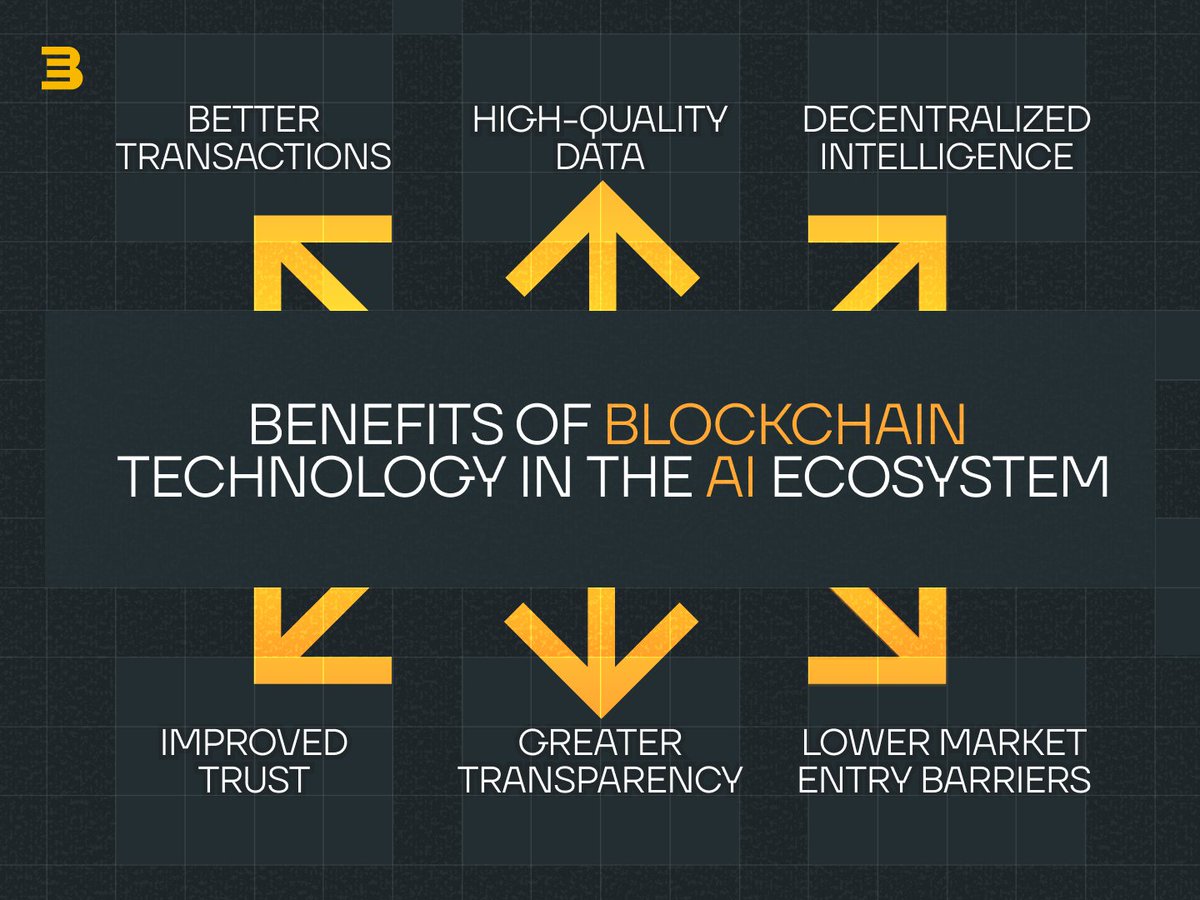
A world exists where the overlap in the Venn Diagram between artificial intelligence and blockchain technology becomes so big, the two become inseparable. That's our world.
Blockstreet is building the future infrastructure for Wall Street to come on-chain in a compliant and secure way. To do this successfully at scale, we are integrating the necessary configurations for agentic commerce to transact and interact on global financial rails.
One block at a time. 🟧
20
24
77
4,687
May 5
What started in the trenches
ran through the streets
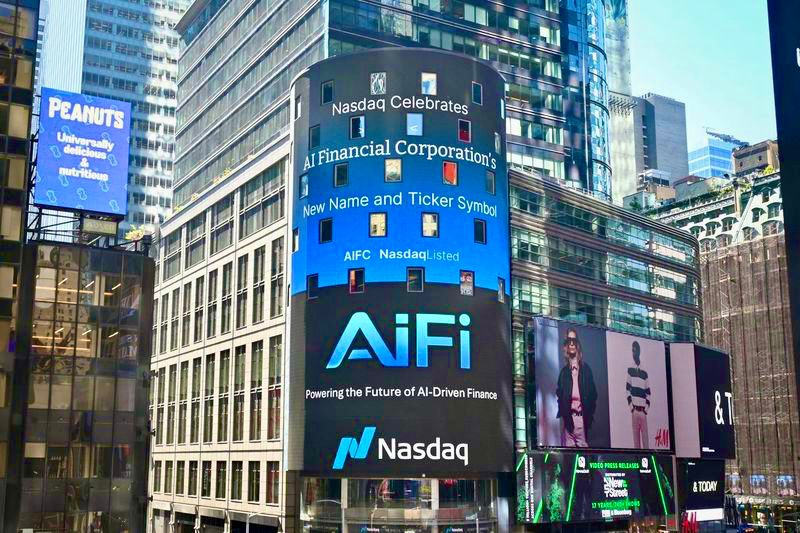
and now stands on the @Nasdaq Tower.
Big moment for @AiFiCorp.
Blockstreet is proud to be part of what comes next; where culture, capital, and markets finally connect.
Block by block. 🟧

A milestone moment.
AI Financial Corporation (AiFi) featured on the @Nasdaq Tower following our recent name & ticker transition to $AIFC.
#AiFi #AiFiCorp
5
33
88
8,437
May 4
Strong week across the board.
Appreciate the recognition @CoinMarketCap, Blockstreet’s inclusion reflects the recent acquisition by @AiFiCorp and continued momentum behind infrastructure bridging institutional finance and on-chain markets.
We’re focused on execution and building alongside a strong cohort pushing the space forward.
Block by Block. 🟧
May 4

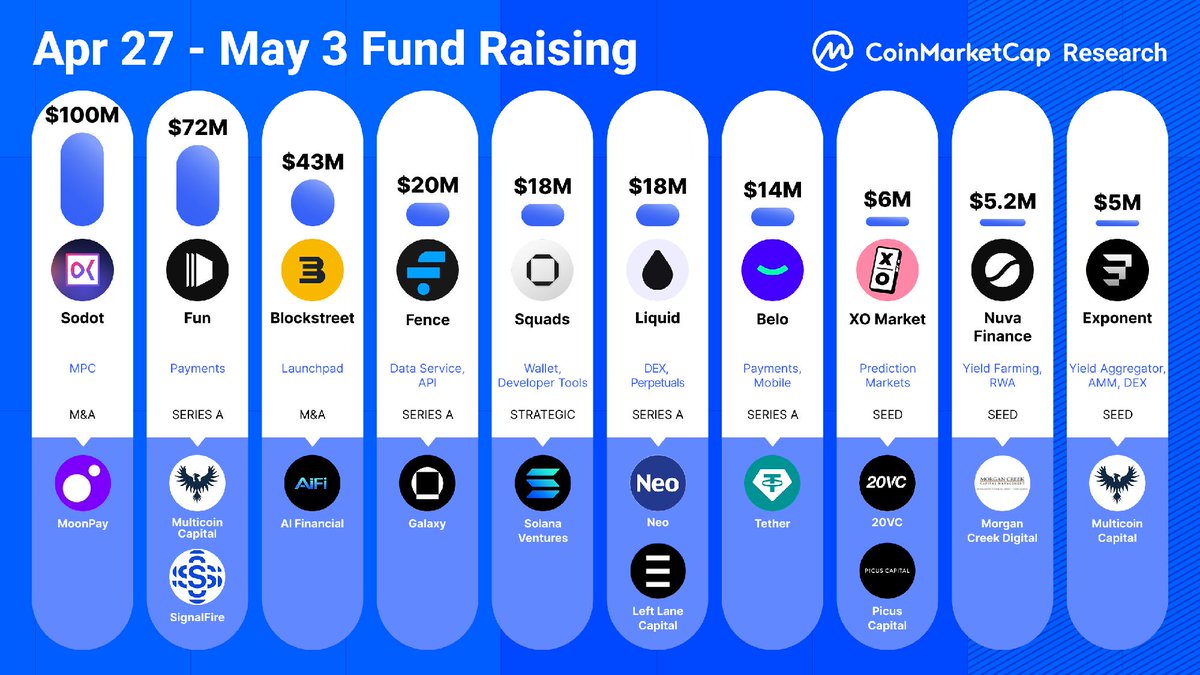
👀 Top Crypto Fundraising Last Week
1️⃣ Sodot (@sodot_hq) - $100.0M; MPC
2️⃣ Fun (@fun) - $72.0M; Cross-Chain
3️⃣ Blockstreet (@blockstreetxyz) - $43.0M;
4️⃣ Fence (@fence_finance) - $20.0M; Data Service, API
5️⃣ Squads (@multisig) - $18.0M; Wallet, Developer Tools
6️⃣ Liquid (@liquidtrading) - $18.0M; DEX, Perpetuals
7️⃣ Belo (@belo_app) - $14.0M; Payments, Mobile
8️⃣ XO Market (@xomarket) - $6.0M;
9️⃣ Nuva Finance (@NUVAFinance) - $5.2M; Yield Farming, Marketplace
🔟 Exponent (@exponentfinance) - $5.0M; Yield Aggregator, AMM
9
39
101
9,678
May 4
Let’s clear this up.
@coingecko and other aggregators are currently misattributing the recent AI Financial acquisition to $BSB.
That is incorrect.
This is exactly the risk of automated news tagging without proper verification; wrong asset, wrong narrative, real market impact. Especially in markets where information moves fast.
We encourage platforms to fix this and do proper research!
Now, what actually matters:
Our acquisition by AI Financial is about building real infrastructure. It’s about building the future integration where regulated financial rails meet on-chain markets.
This is about:
🟧 Bridging traditional finance and digital assets
🟧 Enabling compliant capital formation
🟧 Powering the next phase of tokenized markets
The foundation we are building is significantly bigger than a headline.
Stay focused. We continue to bridge Wall Street to Web3. Block by Block. 🟧
16
36
102
7,161
May 1
Blockstreet's April Recap
These last few weeks have been anything but quiet. From strategic integrations to expanding our role across institutional digital asset infrastructure, Blockstreet continues to move with intention.
Here’s what’s happened:
🟧 Announced our integration into the @AiFiCorp ecosystem, aligning Blockstreet with proven digital asset trading, settlement, and payments infrastructure that has processed over $8B in volume
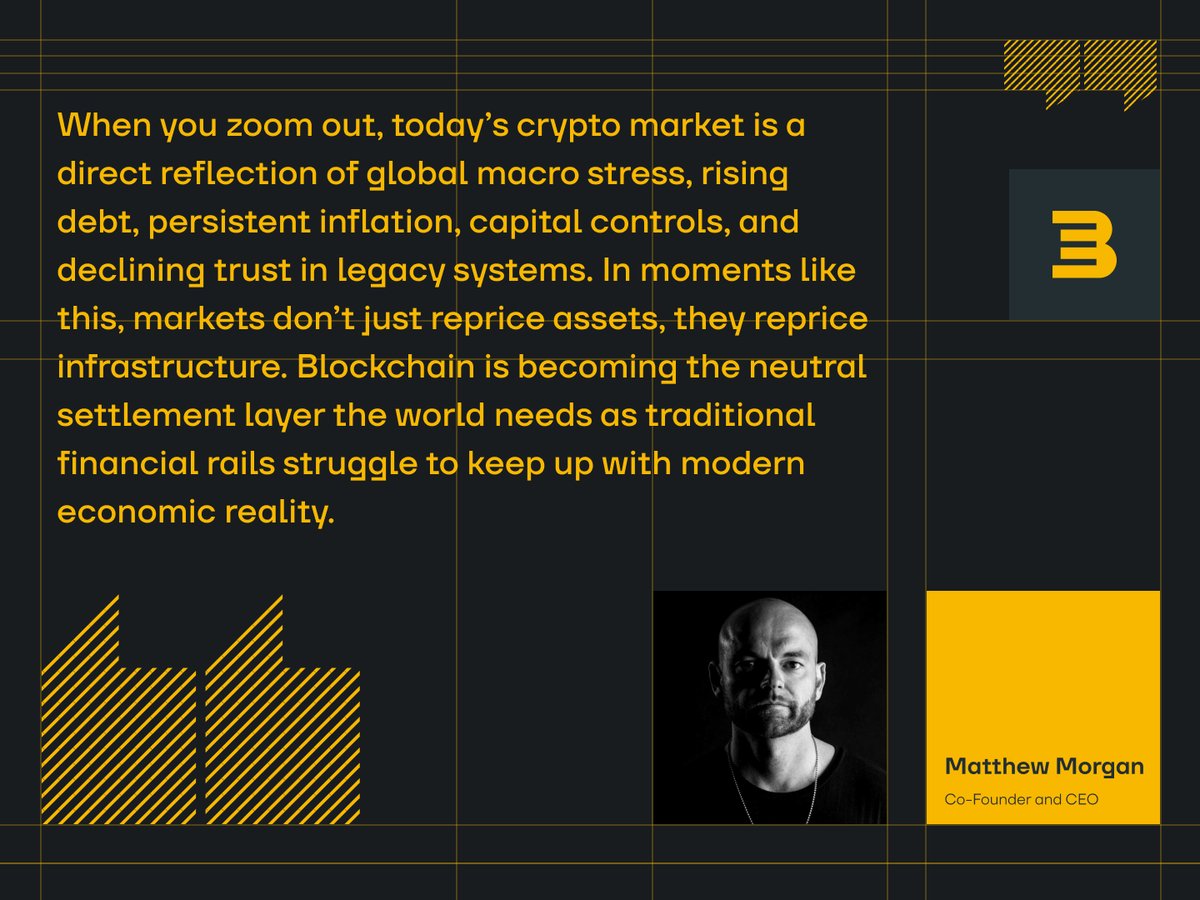
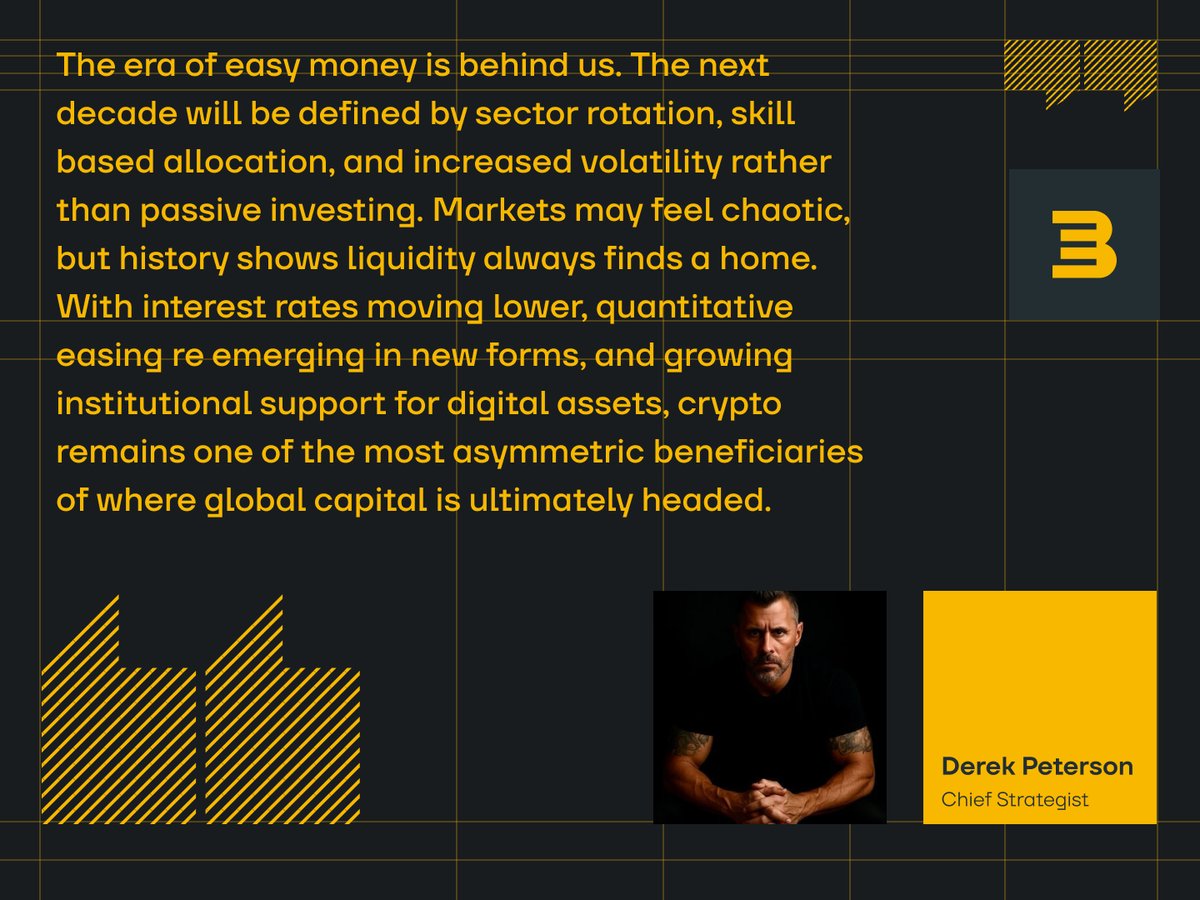
🟧 Strengthened leadership with Matt Morgan and Derek Peterson among others taking active roles across platform integration, commercialization, and institutional market positioning both repeat founders with multiple successful exits
🟧 Meticulously upgraded our current product suite towards a more regulated framework designed to support compliant tokenized offerings and on-chain capital formation
🟧 Advanced internal platform development focused on bridging traditional financial systems with digital asset infrastructure supported by AI and agentic systems
This is not a pivot. It’s a continuation with stronger alignment, deeper infrastructure, and a clearer path forward.
So, what's ahead now?
We’re focused on building the rails designed to support the next evolution of financial markets and how agents will interact and transact on chain.
Block by block. 🟧
22
35
88
6,835
Apr 25
The last month for Blockstreet has been one for the books. Our leadership team gathered in person and our company set itself up with a stronger foundation for the next chapter in 2026 and beyond.
And in this same time period, the CLARITY Act is gaining momentum, liquidity is flowing back into markets, and community sentiment is climbing. DeFi is here to stay and so is Blockstreet.
We're excited to share more next week as we finalize our roadmap and announce new partnerships for the future.
36
42
134
22,771
Mar 24
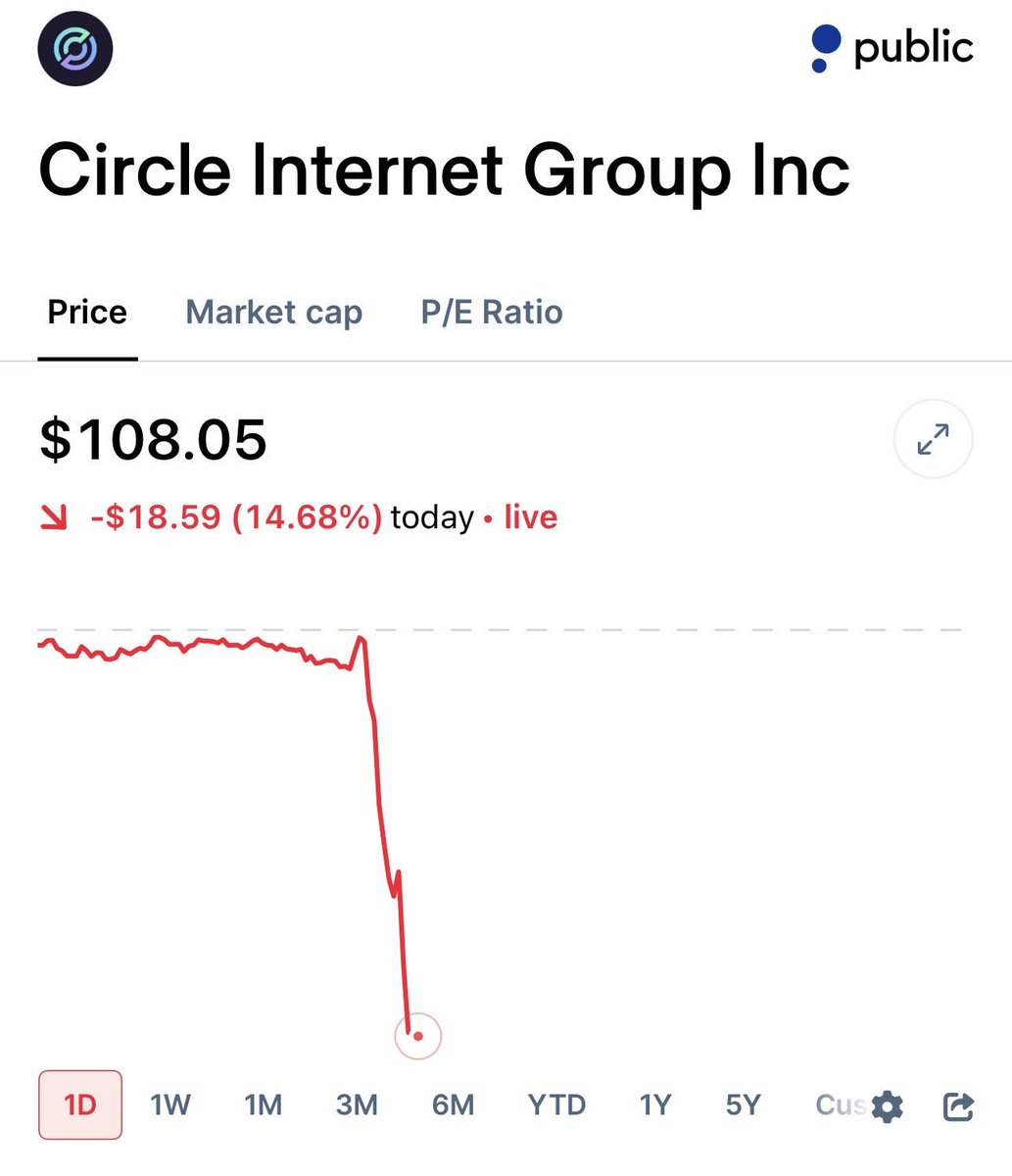
The market just reacted; but most are missing what this actually means.
Circle Internet Group Inc dropping ~15% on CLARITY Act implications isn’t just a stock move.
It’s a signal.
If stablecoins are pushed toward activity-based rewards instead of yield, we’re seeing a clear direction:
- Stablecoins increasingly positioned as infrastructure, not yield-bearing instruments
- Greater emphasis on payments, settlement, and utility
- Reduced reliance on passive yield narratives
This is where the real shift begins.
The next cycle isn’t about earning yield by holding.
It’s about access, allocation, and participation.
• Who gets into deals
• How capital flows into projects
• What structures are compliant enough for institutions
That’s the gap forming in real time.
And it’s exactly why the future of crypto won’t be built on passive balances, it will be built on structured access to opportunity.
Blockstreet exists for that shift.
Bridging capital to compliant rails, block by block. 🟧
Mar 24

$CRCL falls ~15% after the CLARITY Act deal signals no yield on stablecoin balances by allowing only activity-based rewards.
That weakens a key part of the bull case by making USDC harder to evolve from a payments utility into a real store-of-value product.
7
23
67
18,569
Mar 18
The market is starting to reprice what a “token” actually is.
Over the last cycle, tokens became a shortcut for fundraising, often detached from ownership, misaligned with long-term value, and structured without institutional standards in mind. What followed was predictable: fragmented cap tables across wallets, unclear investor rights, and increasing friction in diligence, acquisitions, and regulatory review.
We’re now hearing it directly from founders and operators; issuing a token, in many cases, created more problems than it solved.
This is the inflection point.
Tokens that fail to map to real value will fade. The ones that persist will be tied to something tangible: ownership, access, or real-world assets that can be underwritten, structured, and scaled.
This is exactly where the next evolution of launchpads is heading.
Not toward faster launches, but toward better ones. Structured offerings. Real alignment. Real assets.
The market is no longer rewarding abstraction. It’s demanding structure. 🟧
12
19
52
6,379
Mar 11
What we’re witnessing across the financial industry is the gradual convergence of two worlds.
Traditional financial infrastructure has spent decades building trusted systems for global payments, capital markets, and international commerce. At the same time, blockchain networks have introduced new models for programmability, transparency, and borderless value transfer.
The opportunity ahead lies in connecting these strengths; applying digital asset innovation to enhance existing financial rails and unlock new efficiencies across global markets.
Efforts that bring together financial institutions, payment providers, and crypto-native builders are helping accelerate that convergence. But innovation also requires structured pathways for emerging projects to move from concept to real-world adoption.
That’s where initiatives like accelerators, institutional partnerships, and compliant launch frameworks play a critical role, helping founders build solutions that can integrate with existing financial systems while meeting the expectations of global markets.
At Blockstreet, we believe the future of finance will be built by empowering the next generation of builders who are designing that bridge.
Where Wall Street meets Web3.
Block by block. 🟧
Mar 11

Digital assets are entering a new phase. What once ran in parallel to existing financial systems is increasingly being applied to solve practical, real-world needs — often behind the scenes – from cross-border remittances to B2B money transfers. This creates new opportunities to add value in how money moves globally.
Today, we introduced the Mastercard Crypto Partner Program — a global initiative that brings together more than 85 crypto-native companies, payments providers, and financial institutions. Together, we're creating a forum for meaningful dialogue and collaboration as this space continues to mature.
5
19
56
8,653
Mar 4
This is a milestone moment.
A digital asset bank receiving a Federal Reserve master account signals something bigger than a single company milestone.
It signals the gradual integration of crypto infrastructure into the core rails of global finance.
The walls between traditional markets and digital assets are slowly coming down.
Our motto has always been Bridging Wall Street to Web3 and Block by Block we’re watching that convergence happen in real time. 🟧

A historic moment for crypto.
Kraken Financial has been granted a Federal Reserve master account, making us the first digital asset bank with direct access to the U.S. payments system.
A major step toward connecting crypto infrastructure with the core rails of global finance.
blog.kraken.com/news/federal…
6
19
74
7,683
Feb 24
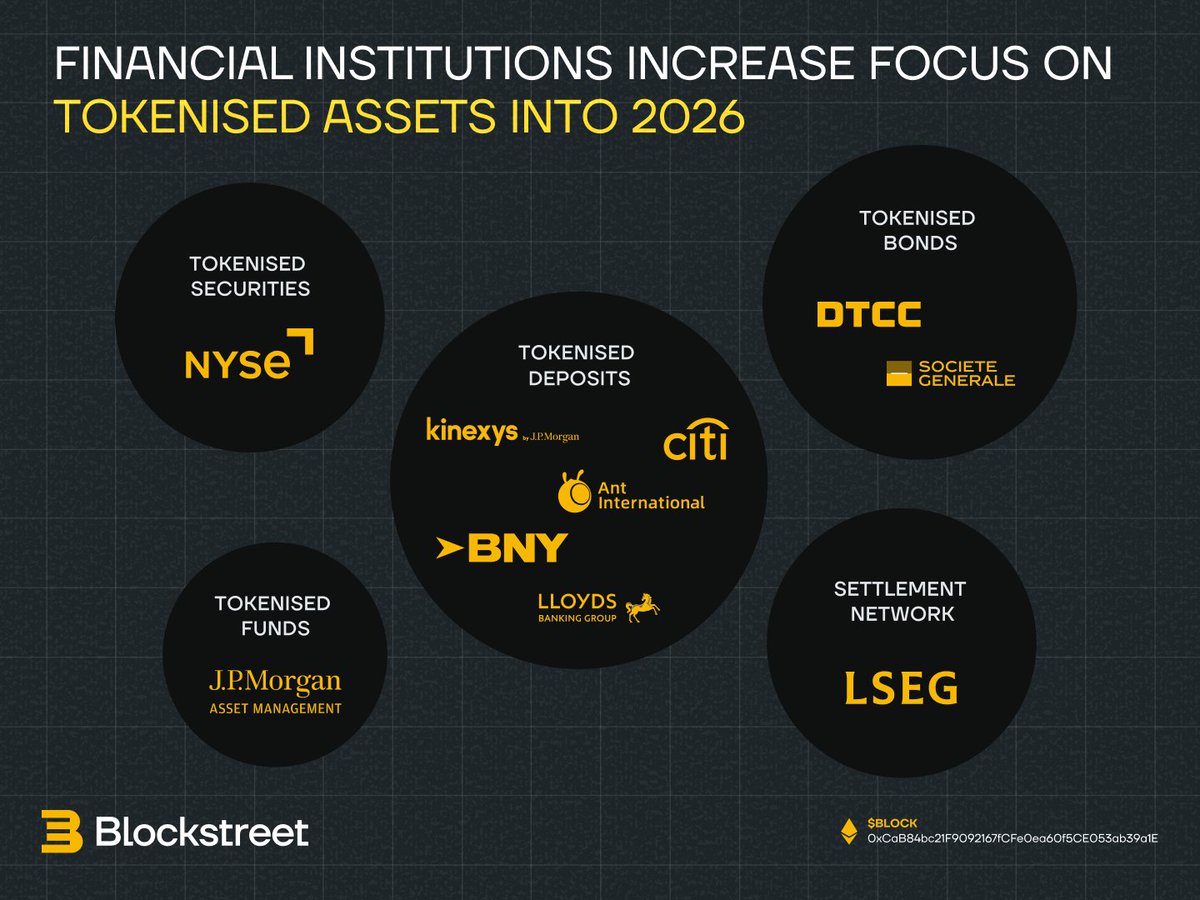
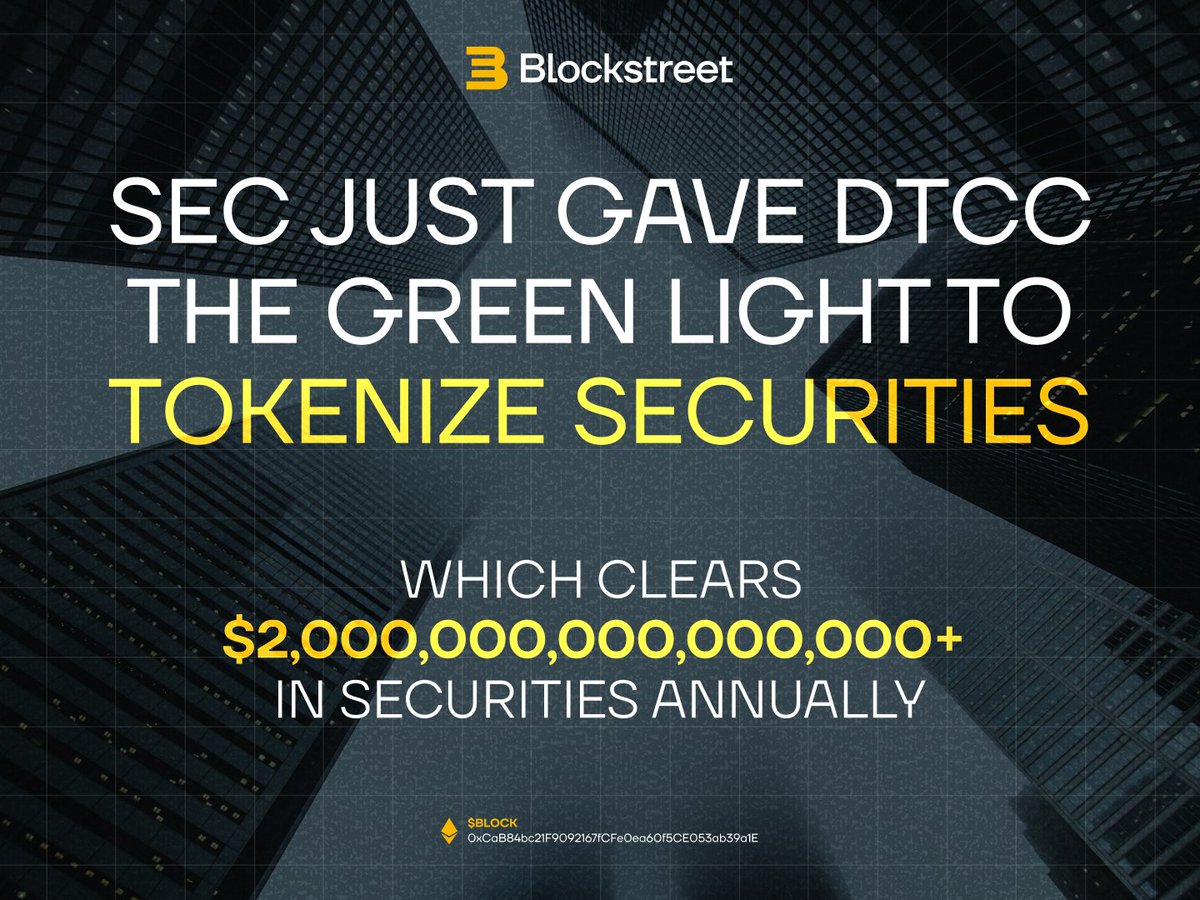
Financial institutions aren’t “experimenting” with tokenization anymore, they’re operationalizing it.
Across securities, funds, bonds, deposits, and settlement infrastructure, the world’s largest market operators are converging on a shared direction:
traditional financial products delivered on tokenized rails.
This shift aligns directly with Blockstreet’s mandate:
to provide compliant, transparent, and institution-grade market access for digital assets as they become part of mainstream capital markets.
The next market cycle won’t be defined by speculation, it’ll be defined by regulated issuers, tokenised products, and real institutional demand. 🟧
9
21
63
6,128
Feb 23
A meaningful step toward regulatory clarity in the U.S. financial system.
As federally regulated pathways expand, the separation between traditional finance and digital assets becomes more structured and more accessible for institutions.
This matters for investors because it signals where capital will increasingly be allowed, supervised, and encouraged to flow.
For Blockstreet, this environment is not a future state it’s the foundation we’ve been saying from day one:
🔸Compliant market access: A launchpad designed for issuers who must meet institutional-grade expectations, not avoid them.
🔸Transparent frameworks: Governance, disclosures, and process flows built to mirror the standards major capital allocators already operate within.
🔸Responsible on-ramps: A bridge for projects that want to engage U.S. markets without regulatory ambiguity, and for investors who want exposure with controls in place.
Regulatory progress at the federal level doesn’t just validate the direction of the industry it reinforces Blockstreet’s strategic positioning as the platform aligned with where compliant capital formation is heading. 🟧
Feb 23

🇺🇸 UPDATE: Cryptodotcom secures conditional OCC approval as it moves toward becoming a federally regulated US bank.


11
19
60
7,619
Feb 18
The conversation is no longer “Web3 versus Wall Street.”
It is about integration.
Technology is advancing rapidly. Capital rails are evolving to keep pace. Trading is becoming embedded. Settlement is compressing. Identity and compliance are becoming programmable.
The question is not whether innovation will continue.
It’s whether it will scale responsibly.
Blockstreet exists to bridge Wall Street discipline with Web3 infrastructure.
Not to dilute one with the other.
But to connect institutional rigor with digital-native execution, in a way that allows projects to grow with credibility, resilience, and long-term market trust.
Because sustainable capital formation does not happen by accident.
It happens by design. 🟧
10
21
61
4,532
Feb 17
Blockstreet approaches every project with the same core principle: infrastructure first.
Before velocity, there must be clarity. Before distribution, there must be structure. Before attention, there must be alignment.
That means understanding capital rails. That means operating with regulatory awareness. That means building with institutional discipline even in digital-native environments.
We believe credibility compounds.
Markets reward platforms that can withstand scrutiny.
And the future of digital capital formation will belong to those who treat structure not as friction, but as foundation. 🟧
14
20
60
4,032
Feb 16
There are platforms optimized for volume.
There are platforms optimized for narrative.
There are platforms optimized for speed.
We’re optimized for durability.
The difference is subtle at first and obvious over time.
Durable markets require more than distribution. They require alignment between technology, regulatory awareness, capital pathways, and institutional standards. They require frameworks that anticipate scrutiny, not avoid it.
Blockstreet operates with the assumption that digital markets are maturing and maturity demands structure.
We are not building for the loudest moment.
We are building for the longest one. 🟧
12
20
67
3,678
Feb 15
The last cycle taught the market something uncomfortable.
Access scaled. Structure didn’t.
Capital moved faster than the rails supporting it. Projects launched into attention without durable foundations. Liquidity appeared before accountability. Velocity outpaced discipline.
And when conditions tightened, the weakness wasn’t in innovation, it was in infrastructure.
The industry doesn’t lack creativity. It lacks structure that can withstand scale.
Blockstreet wasn’t built to chase the cycle.
It was built to solve the structural gap the cycle exposed. 🟧
9
17
70
3,957
Feb 14
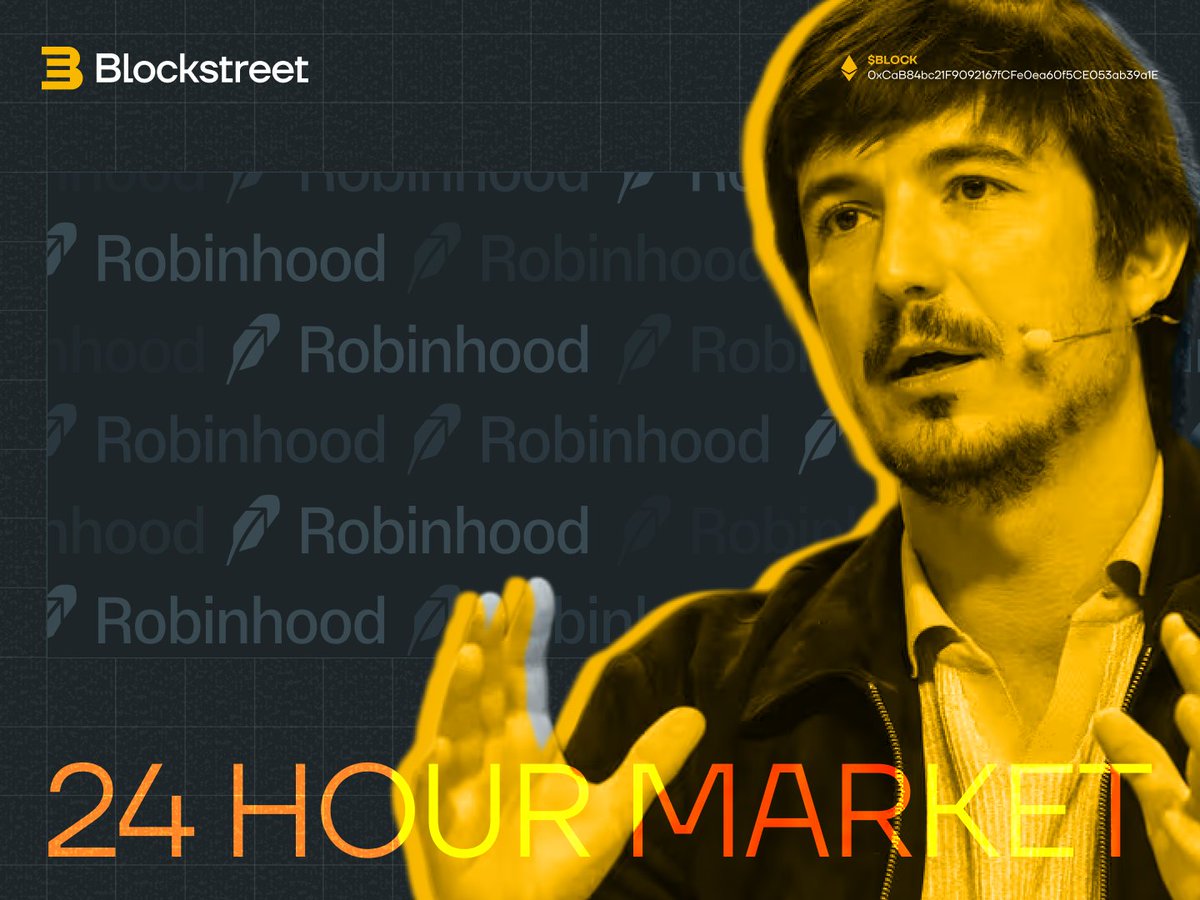
Trading crypto and equities directly inside a social timeline isn’t just a feature update.
It reflects how quickly financial technology is advancing, and how capital rails are evolving to keep pace.
Distribution is accelerating.
Market structure must evolve alongside it.
Blockstreet is focused on building infrastructure that helps projects navigate this shift responsibly, aligning technological innovation with institutional standards, regulatory awareness, and long-term market credibility.
Because sustainable capital formation requires more than access.
It requires a bridge between Wall Street discipline and Web3 innovation. 🟧
Feb 14

JUST IN: X to launch crypto and stock trading directly from the timeline within a "couple weeks."
15
16
53
4,745