
37 Photos and videos


Jun 4
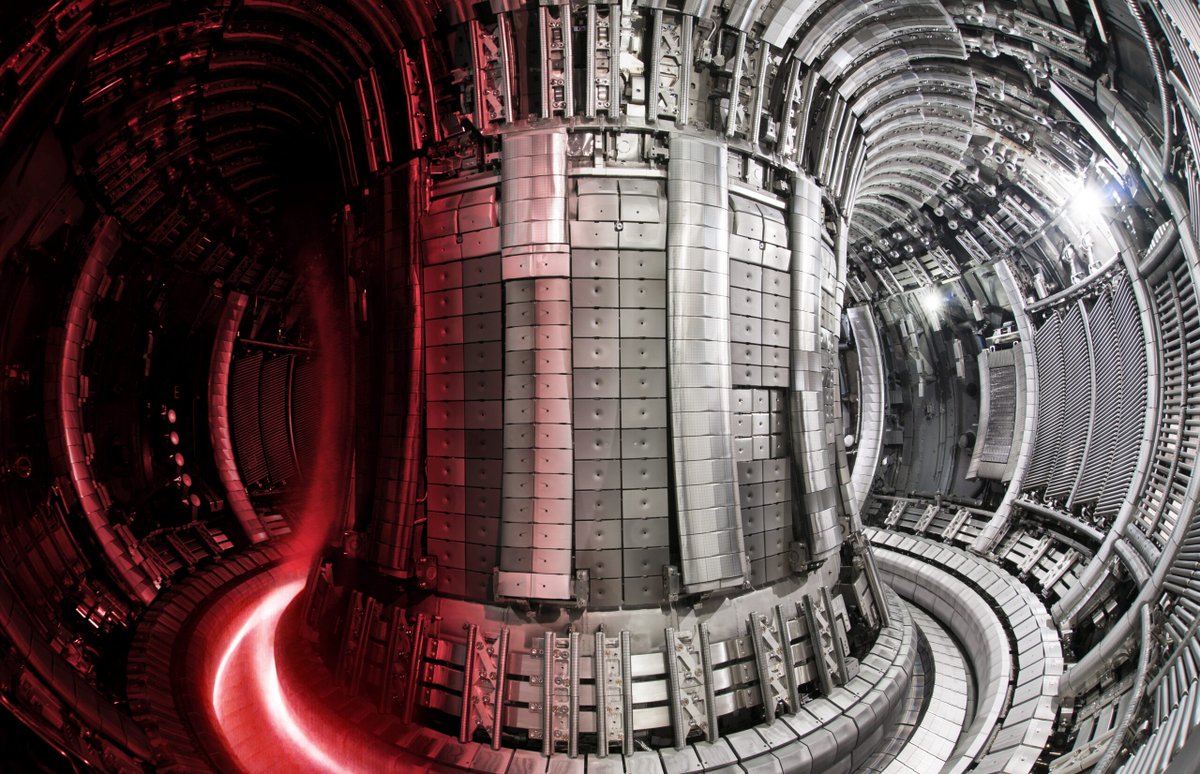
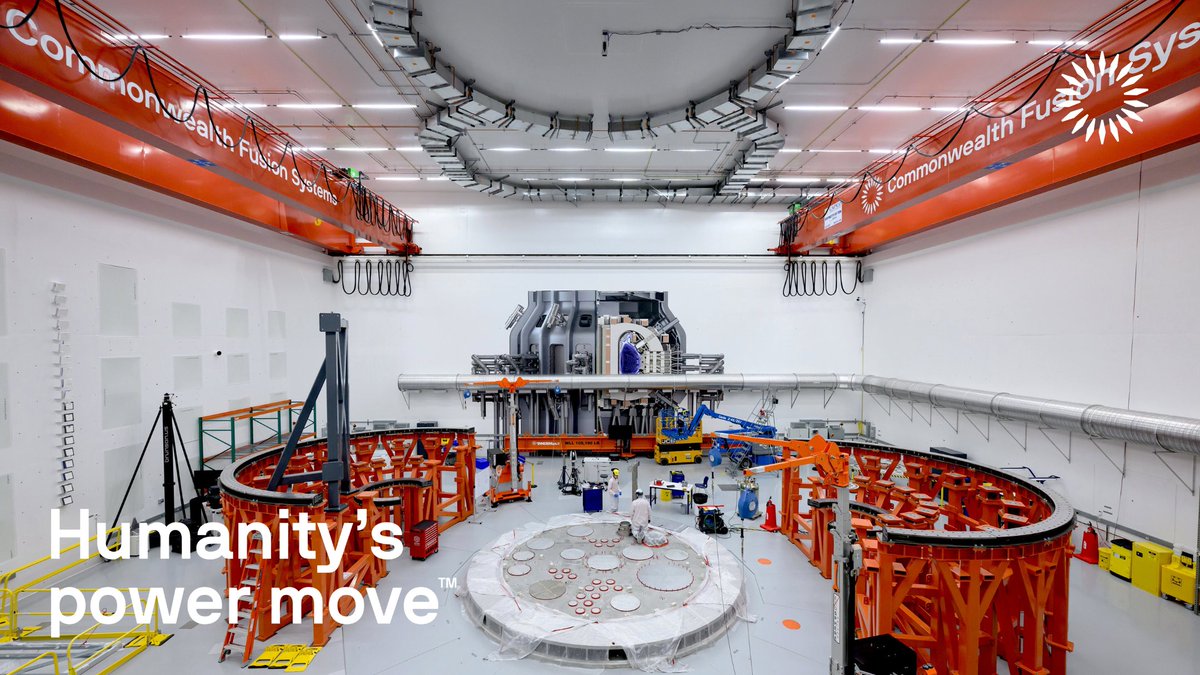
Fusion energy has plenty of challenges, but the first is always plasma physics. You have to control superhot fusion fuel in a way that’s agreeable to the laws of the universe. Today, in a set of five peer-reviewed papers, we’re documenting how we’re confident we’ll be able to do that with our ARC fusion power plant.
The papers, written by 58 experts from CFS and collaborating universities and research institutions, show the scientific foundation. That starts with calculations and simulations backing up our expectation that an ARC plant will produce 1.1 gigawatts of fusion power that we can convert into 400 megawatts of net electricity for the grid. And the papers address how we’ll tackle fusion challenges like heat exhaust, disruptions, and plasma stability.
The bottom line: The science is solid. There are no showstoppers. We begin with decades of tokamak knowledge, extend that with what we’ve learned already from our SPARC demonstration machine, and fine-tune it with what we’ll learn from operating SPARC. Our commercial success is contingent on this successful de-risking of the core science.
We published these papers in the Journal of Plasma Physics through the peer-review process. That brings the independent validation of our work that’s crucial to establishing trust in our results. There’s a reason why peer review is the gold standard in the scientific community: It’s the best way to distinguish ideas from reality. In fusion, where the science and engineering are tough, peer-reviewed research helps leaders, investors, customers, and citizens make informed and unbiased decisions about who to trust and where to invest their dollars.
Congratulations to all who contributed to these papers, and thank you to the Journal of Plasma Physics from @CambridgeUP for taking on their publication. Today the global fusion community can celebrate a new win in the advancement of the last energy source humanity will ever need.

Today, we laid the physics foundation for our ARC fusion power plant. ⚛️
With 5 deeply researched papers — validated by independent peer review and published in the Journal of Plasma Physics — we’ve shown we've nailed the scientific basics of producing copious amounts of fusion power.
The collective assessment from our 58 co-authors? This machine will work.
No scientific breakthroughs are required to bring this clean, secure, abundant source of energy to the grid. Here is how we're handling fusion's biggest challenges:
⚡ Powering the Grid: Using extremely strong magnets, ARC will confine the plasma long enough to generate 1.1 GW of fusion power. We'll convert that into 400 MW of continuous net electricity — enough to power ~280,000 average American homes.
🛡️ Handling Heat Exhaust: To control a superhot, unruly cloud of charged particles, we're utilizing proven methods to safely handle the heat exhaust that acts as a key practical constraint for tokamaks.
✅ Managing Disruptions: We aren't trying to build an operationally perfect machine. We are pragmatically designing ARC to safely handle disruptions and keep the plasma stable for top performance.
🏗️ Proving the Approach: We're building on decades of tokamak research and supercomputer simulations. And we're proving our approach right now with SPARC, the tokamak we are actively building in Massachusetts.
With our transparency, you don’t have to take our assertions on faith. We are really pushing fusion forward.
1
4
30
2,829
Jun 1
Happy to see this new $250 million fund from @gigascale Capital designed to let institutional investors become more deeply involved in the startups that’ll build the world’s future infrastructure and other physical technology. This is literally a constructive step forward.
Very few people have successfully scaled cutting-edge technology and delivered it to the world. Even fewer can go deep on the novel physics, the operational work, and the people at the same time. @schrep and his team do all of it, and their expertise shines through.
Jun 1

1/ Today we're announcing Gigascale Capital's $250M first institutional fund to back early-stage founders rebuilding the physical economy.
1
3
23
3,030
Bob Mumgaard retweeted
"[This is] the first time [we've had] energy technology that's gone all the way from Newton's laws on some of the biggest scientific compute all the way to a real-time control system and...digital representation of a plant."
On stage at CERAWeek 2026 discussing how to scale new technologies to meet AI demand, CFS CEO and Co-founder @BobMumgaard sat alongside Lucia Tian and Marc Spieler, two of our close working partners at Google and NVIDIA, to discuss how AI and fusion energy benefit each other.
The AI software that we use at CFS, powered in part by technology available through our partnerships with @nvidia, @Google and @Siemens, holds the potential to accelerate how we build, test, and operate the SPARC tokamak and its various support systems. And the fusion power plants we'll build will eventually power the very same AI systems that have supported their construction.
#FusionEnergy #AI
4
9
31
3,037
Mar 25
I’m grateful for the opportunity to serve on the President’s Council of Advisors on Science and Technology (PCAST). The United States has long been an innovation powerhouse, helping to tackle some of the world’s most pressing challenges. I look forward to working with other members of the PCAST to ensure the US remains at the forefront of innovation.
whitehouse.gov/articles/2026…
2
6
43
2,454
Mar 12
Pacific Fusion just called for commercial fusion energy companies to share their progress achieving specific milestones leading toward competitively priced power on the grid.
Their effort is closely related to an open letter I wrote in 2024 (cfs.energy/news-and-media/bu…) and has the same goals in mind. Specifically, companies should build trust in the fusion industry by demonstrating their progress, and they can ensure credibility through peer-reviewed research that lets investors, press, and policymakers independently assess that progress. Importantly, Pacific Fusion shows their approach, exactly what they’ll measure, and how they’ll report as they click off the milestones.
pacificfusion.com/updates/cl…
4
7
34
2,008
Mar 12
The six milestones I’ve detailed frame our long-term direction at @CFS_energy. Expanding on the original open letter, I’m detailing those milestones in a series of blog posts. You can check out the posts on our six milestones below.
1. Produce stable plasma, the superhot fuel for the fusion process:
blog.cfs.energy/first-step-o…
The techniques Pacific Fusion uses does this already at university and national labs.
2. Heat the plasma to 10,000,000° Celsius: blog.cfs.energy/fusion-energ…
Pacific Fusion’s technology does this at universities and national labs.
3. Show plasma performance through a high “triple product” measurement: blog.cfs.energy/fusion-energ…
A closely related technology has done this at @SandiaLabsUVM, but it’s not entirely clear if Pacific Fusion has.
4. Achieve net fusion energy, a threshold called Q>1: blog.cfs.energy/fourth-step-…
Pacific Fusion hasn’t built a machine to do this yet, but they lay out a plan to do so.
5. Operate a plant that produces net electricity: blog.cfs.energy/fifth-step-o…
This requires handling factors like inefficiencies in power generation. Nobody has done this yet.
6. The sixth and last milestone is supplying competitive power on the grid. Nobody has done this yet, either. It’ll be the subject of my final blog post in the series, though. Stay tuned.
1
13
446
Feb 13
In 2024, I introduced a six-milestone framework that the fusion energy industry can use to build trust in fusion energy. This week, we’ve published two blog posts detailing milestones 4 and 5. These are about making the leap from plasma physics into the larger world of fusion power plants.
Milestone 4 is a doozy: Q>1, also called net fusion energy. Put simply, it means more energy out of the heart of the machine than in — and so far only one system in the world has been able to do it. This monumental achievement demonstrates the basis of a power plant, so you’ll hear a lot more about Q>1 as the fusion industry matures. Even if you’ve heard of Q>1 before, this post is a chance to read about some of its subtleties.
Milestone 5 goes a step further by showing you can generate net electricity suitable for the power grid. That extends beyond the plasma physics skills needed for Q>1 into new domains like plant engineering and energy conversion. Of course you only need this if you have a fusion plasma that can make enough fusion power to overcome its own losses — hence the sequencing of the milestones.
I know fusion science and engineering can be confusing, but these milestones are designed to offer a relatively simple guide that investors, journalists, policymakers, and the general public can use to evaluate fusion companies. Ultimately, being able to separate the true progress from shallow marketing hype will build trust in our industry.
Check here for posts on milestone 4 and milestone 5 on the path to competitive fusion energy.
Milestone 4:
blog.cfs.energy/fourth-step-…
Milestone 5:
blog.cfs.energy/fifth-step-o…
#FusionEnergy
6
14
81
4,314
Jan 20
Hello from the World Economic Forum in @Davos, Switzerland. I’m here to be a part of all the discussions about energy, and I’m not alone — those conversations are really accelerating as people focus on how energy enables growth and especially technologies like AI. For @CFS_energy, we’ve got a bigger presence here at Davos this year for the role fusion energy plays in those conversations.
Fusion is at the intersection of technology and energy. Last year, that led to new partnerships and progress at CFS, and I’m excited to see how everyone will benefit from that connection in 2026.
#WEF26 #FusionEnergy #Davos26
3
4
18
1,859
Jan 15
Great to see the Milestone program at work with @TheaEnergy's fusion power plant work here. Getting eyes onto designs can validate that assumptions are realistic and that projections use the best tools. Plus it can help find hidden upsides! This can give investors and stakeholders confidence, sharpen the team's understanding, and identify areas where help would accelerate things. A good example of public-private partnerships at work.
Jan 13

.@ENERGY certified our “Helios” preconceptual design after a detailed review confirming its feasibility to put energy on the grid. Thea Energy is the first awardee in the Milestone-Based program to complete its design review for a #fusion pilot plant. PR: thea.energy/press-release/u-…
1
4
503
Jan 12
There are a lot of reasons to like fusion energy — it’s clean, safe, steady, and secure — but one of the big ones is that it can help meet soaring demand for energy around the world.
New AI infrastructure is accelerating that demand. But just like fusion can help AI with electricity, AI also can help fusion, advancing our work to design, operate, and commercialize this technology.
In this piece, @ericschmidt, chairman of Bolt Data & Energy and chair of the @scsp_ai, and I write about the implications of these big energy bets on the future of national competitiveness, energy security, and economic growth: weforum.org/stories/2026/01/…
AI may be transforming how we think, create, and compete, but energy is what determines how fast and far this transformation can go. I look forward to attending the World Economic Forum Annual Davos Meeting next week to discuss these themes.
#WEF26 #FusionEnergy
1
3
13
1,750

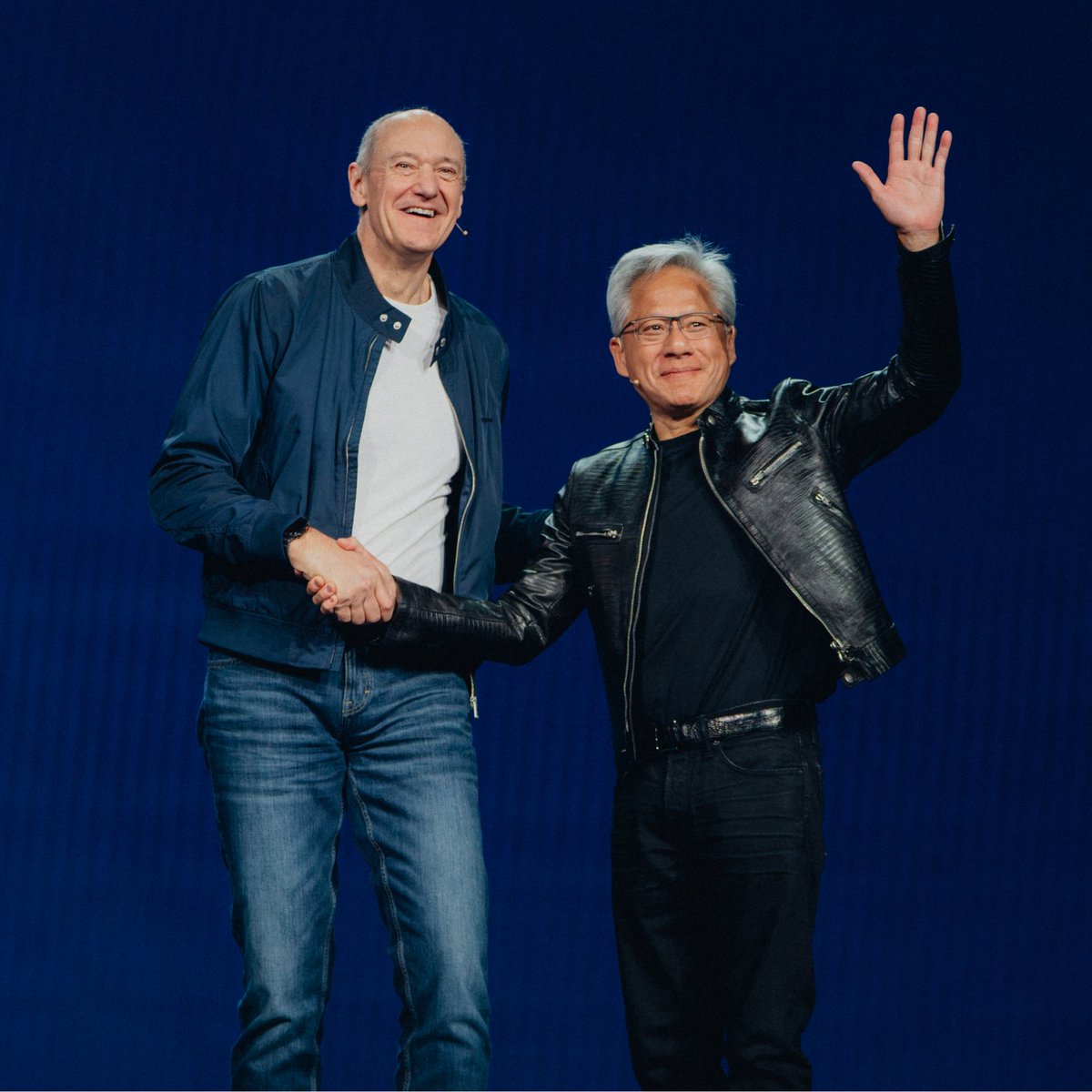
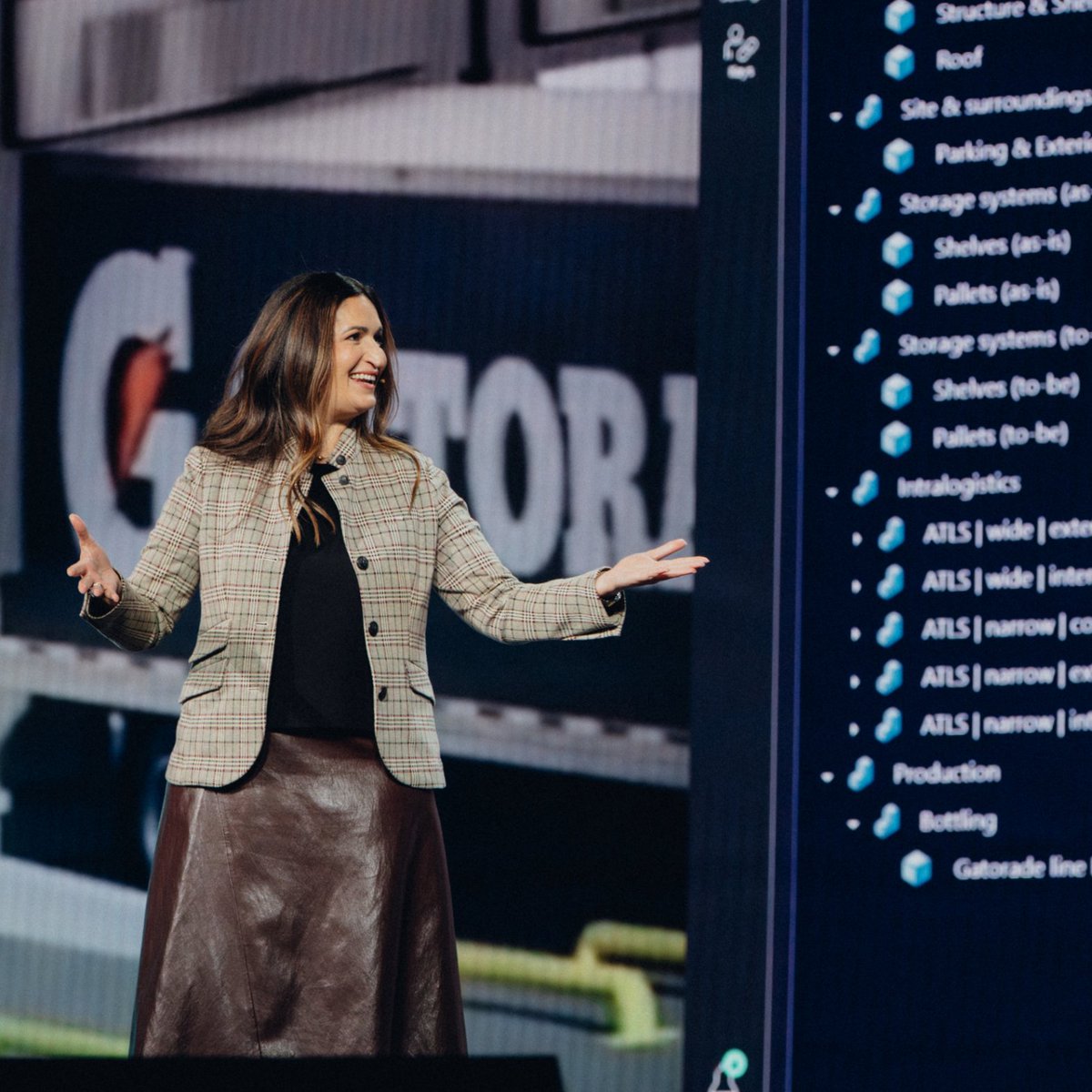
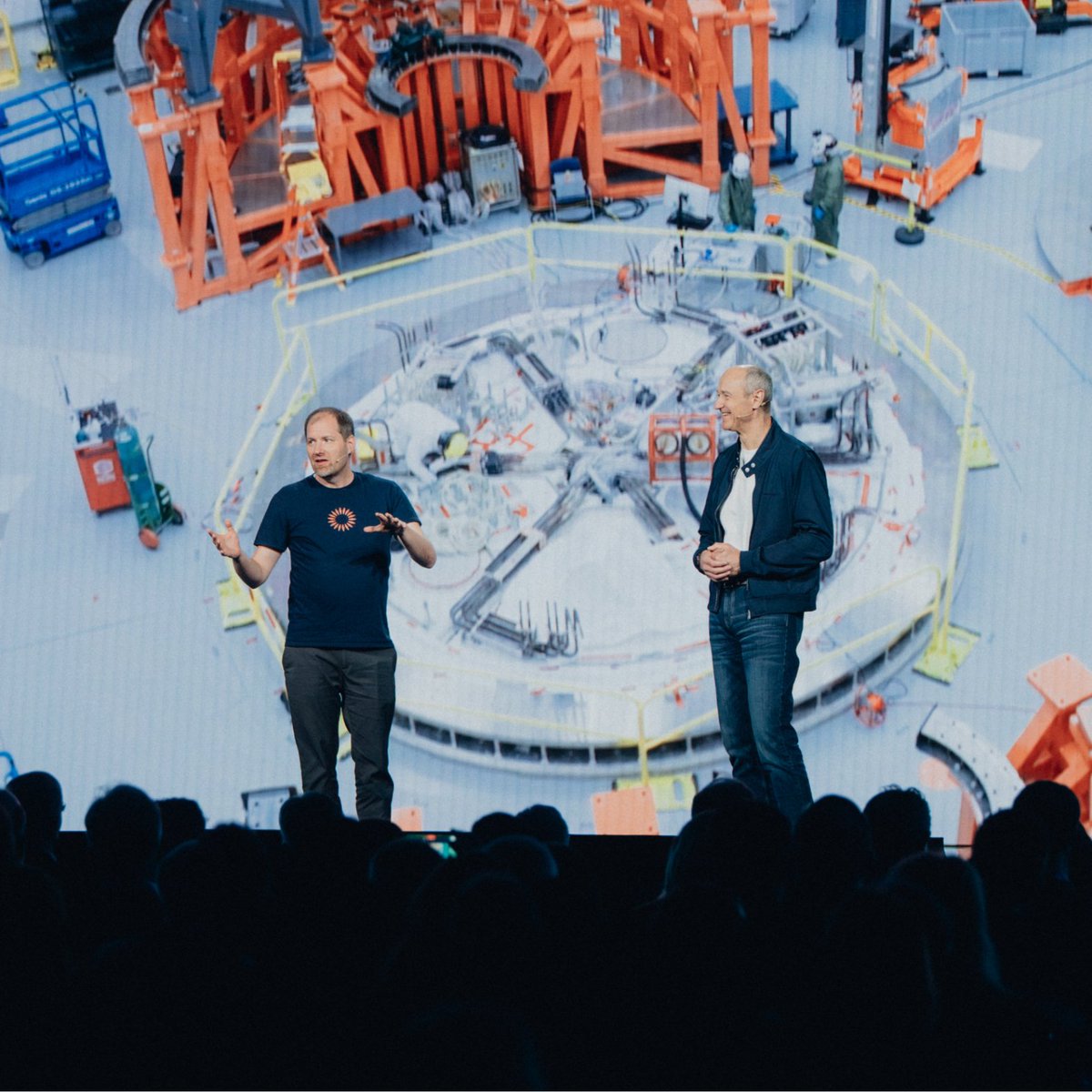
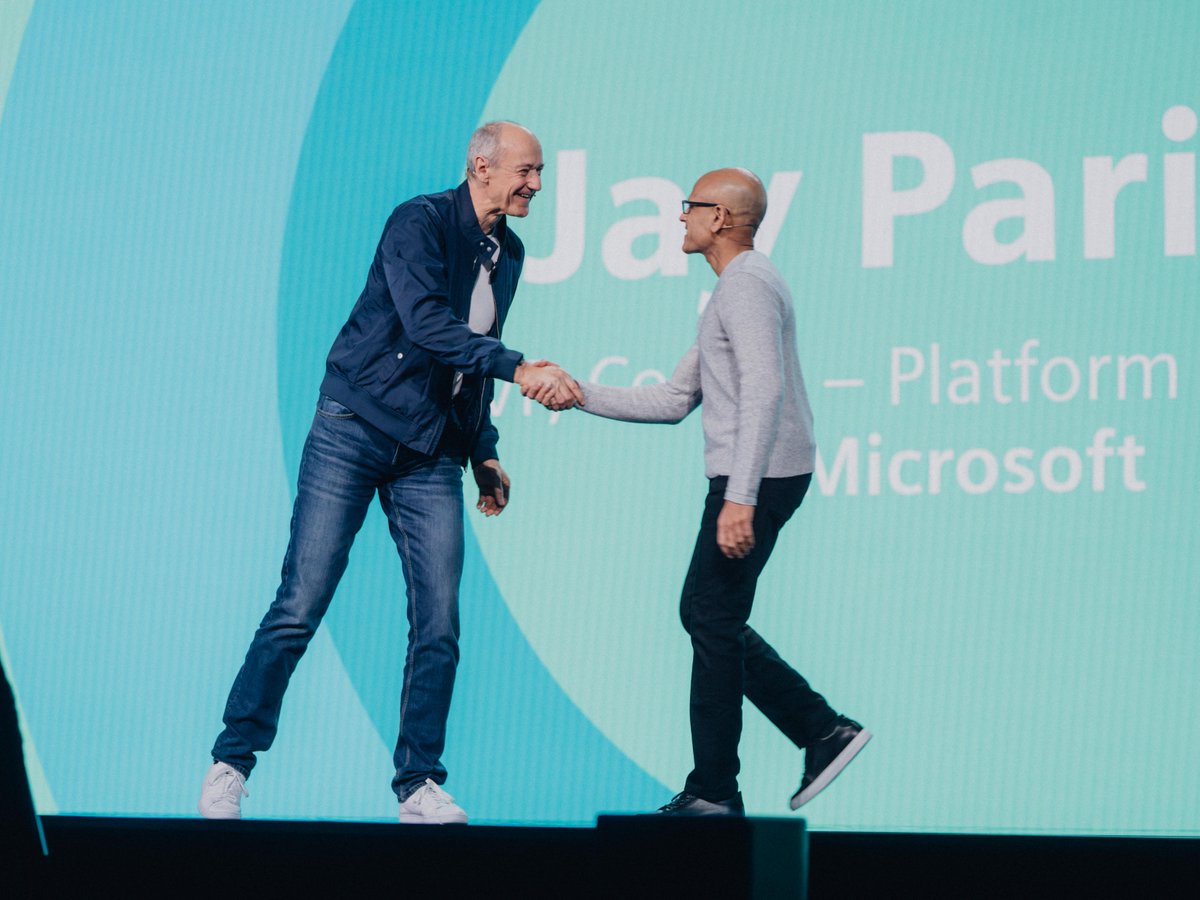
We’re powering the industrial AI revolution.
At #CES2026, CEO Roland Busch - joined onstage by @Microsoft, @nvidia, @PepsiCo & @CFS_energy - shared how we’re bringing AI into the real world at speed and at scale.
36
69
351
79,052
Bob Mumgaard retweeted

18 Dec 2025
“This deal brings deserved attention to fusion energy and its enormous potential to satisfy the world’s surging demand for electricity. The investor pool is widening as fusion grows beyond its early days. It’s the same phenomenon we saw with NVIDIA, Google, global banks, and sovereign wealth funds joining our most recent $863 million investment round to bring our total funding to nearly $3 billion so we can bring our power plant to the power grid by the early 2030s. Capital invested now can mean an enormous improvement for the world’s long-term energy supply. We’re looking forward to learning more details as the deal develops.”
–Commonwealth Fusion Systems CEO and Co-founder @BobMumgaard
#FusionEnergy
foxbusiness.com/politics/tru…
3
16
72
4,167
17 Dec 2025
It's an extremely sad day in fusion today with the death of MIT’s Nuno Loureiro. The big machines, extreme conditions, geostrategy, funding, or beautifying physics often take center stage. This is unfortunate because it is the PEOPLE who make progress happen. In fusion it's a small group of them, and any one of them makes a huge difference. We lost one of the best ones today.
Nuno was an insightful physicist, a far-seeing leader, a mentor, and most of all a great person to sit down with and talk about anything hard and nuanced and important and impactful. I and many others will miss this. My heart goes out to his family and colleagues across the many areas he made a difference.
news.mit.edu/2025/nuno-loure…
23
167
1,020
34,851
17 Nov 2025
It’s time to detail the third of the six milestones every company must reach on the way to commercial fusion energy. I laid these out last year in an open letter to help separate the progress from the puffery, a guide for outside observers to track how well fusion energy companies are truly doing (cfs.energy/news-and-media/bu…). Now I’m diving deeper into each one.
Milestone 3 means building a fusion machine that approaches conditions intense enough for fusion to take place in a situation somewhat representative of what you’ll see in a fusion power plant. It’s a lot harder to reach than the first two milestones — especially the need to insulate the plasma at the heart of the machine so it’s not just hot, but also stays hot on its own, like a well-insulated cup of coffee you don’t need to reheat all the time.
Measuring success means scoring high on a figure called the triple product that reflects your plasma’s density, temperature, and insulation. Many fusion machines have faltered trying to get there
For details check my blog post: blog.cfs.energy/fusion-energ…
#FusionEnergy
1
12
733
7 Nov 2025
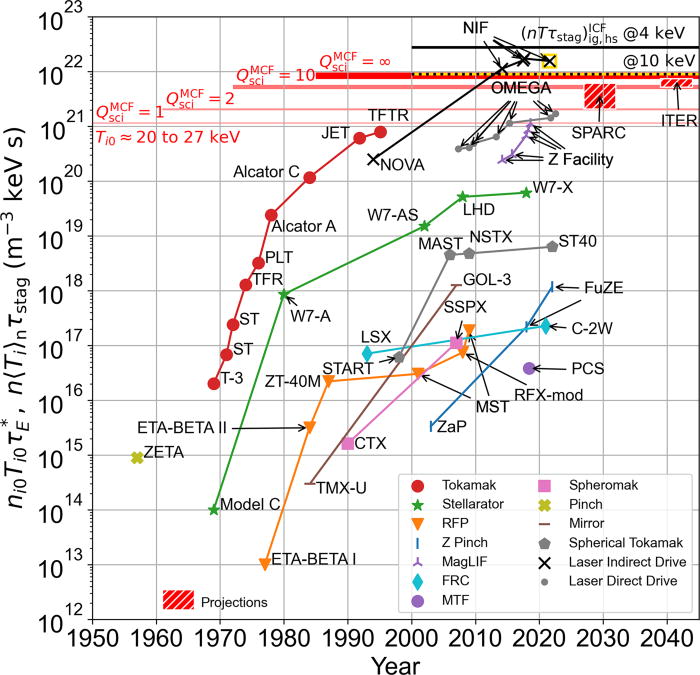
With their work to track fusion progress around the world, @swurzel and @ScottCHsu are playing a really helpful role in the effort to commercialize this new source of electricity. Their 2022 paper charting that fusion progress provides one of the best records of actual fusion performance among dozens of experiments by labs, universities, and companies. It truly is the scorecard for the plasma physics needed to make a fusion power plant.
And this week, they published a welcome update to that paper. On top of adding a lot of fresh data, it shows an encouraging level of agreement that transparency is important. I published an open letter last year calling on fusion companies to detail their progress on six milestones toward commercial fusion energy (cfs.energy/news-and-media/bu…), and this paper from Scott and Sam can be used to track the first four of those.
Tracking that progress is important to let observers — investors, policymakers, journalists, and the public — get a better handle on what’s real progress and what’s merely hype. Ultimately, that more grounded assessment builds a foundation of trust in the fusion industry. The tables in their work are the ground truth of what people have actually done: peer-reviewed data.
There’s some notable information in the update to the paper. For one thing, it now shows the successful results at the National Ignition Facility (NIF) starting in 2022 that showed net fusion energy, known as Q>1, which means more energy came out of the fusion reaction than went into it. That’s an important scientific achievement — the fourth of my six milestones — and NIF is the only facility to reach it. In fact, they’ve made it to Q>4. Congrats to the @Livermore_Lab for this achievement.
The paper also shows the progress at the Joint European Torus (JET) in the UK, a project that, like Commonwealth Fusion Systems, uses a fusion machine called a tokamak. JET is shut down now, but it produced record levels of fusion energy — 59 megajoules in 2021 and 69 MJ in 2023. You can now see those points just below Q>1, around Q~0.3.
You can also see some more data from some of the companies including @Energy_Zap, @TokamakEnergy, @TAE, and @GeneralFusion, showing how they're improving their performance. Kudos to them for showing their work.
Right now we’re building our own first tokamak, SPARC, and we expect it’ll be the first magnetic confinement machine to show Q>1. That’s because we have published predictions based on the existing science today. The update from Scott and Sam adds a new Fig. 4 that chronicles Q rising year by year, and we hope to see SPARC there in a future update.
You can read the new research here: pubs.aip.org/aip/pop/article…
#FusionEnergy
7
20
110
37,176
31 Oct 2025
This paper provides a good discussion of what goes into actually making a practical fusion power plant. It builds on the framework I put out last year, and importantly, the authors are people who have lived the experience.
I find that the majority of the fusion concepts out there have really low performance today and need to reach some plasma milestones on the low end — plasma discoveries have previously led to big disappointments, so proving progress is key.
After that, the plasmas are of course necessary, but not sufficient: once the plasma works, the rest of the engineering must also work.
For outsiders not familiar with fusion, this paper offers a good starting point to ask when evaluating early fusion concepts: "OK, if the plasma does what you want, will it still look good once you do the engineering?" And then for more mature concepts: "OK, how are you going to close all the remaining engineering gaps?"
Overall, it’s great to see the fusion energy milestones being elucidated and expanded. 1/2
#FusionEnergy
2
2
15
1,599
Bob Mumgaard retweeted
28 Oct 2025
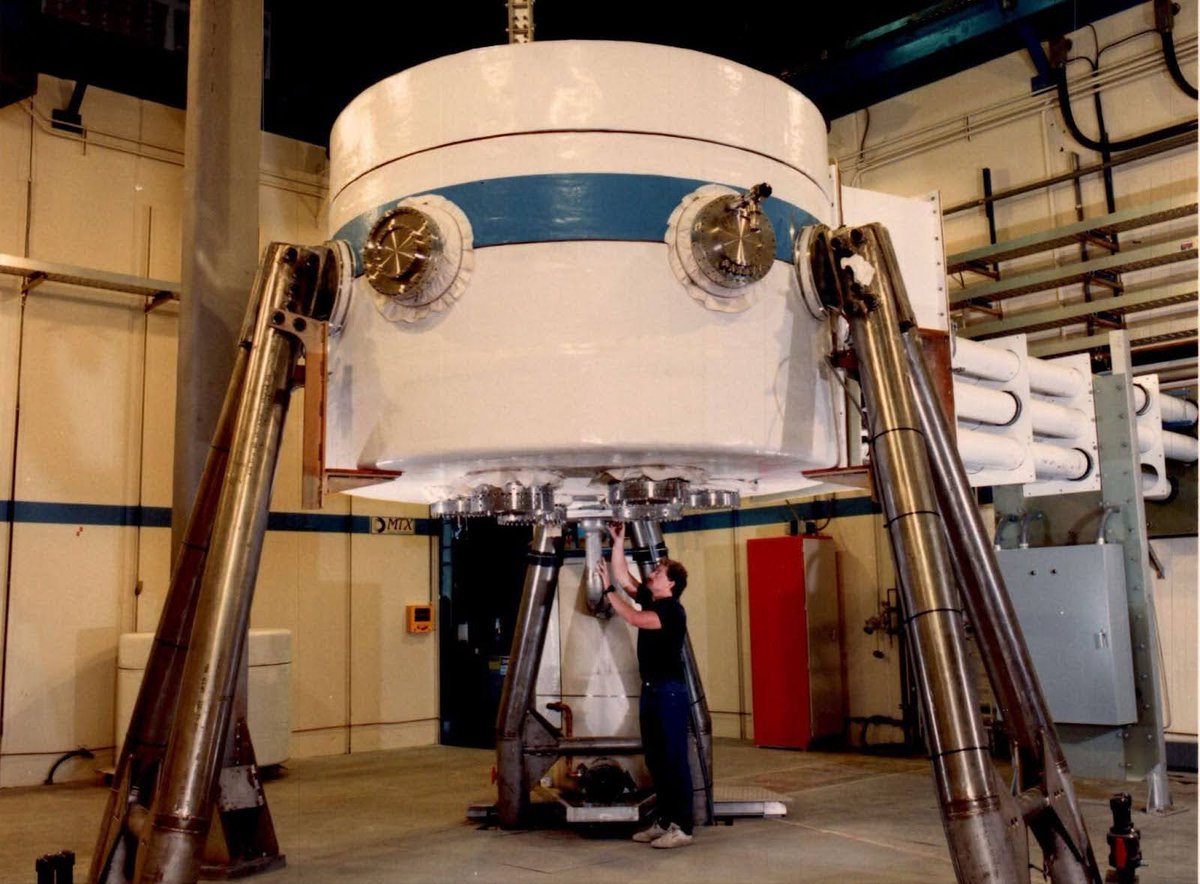
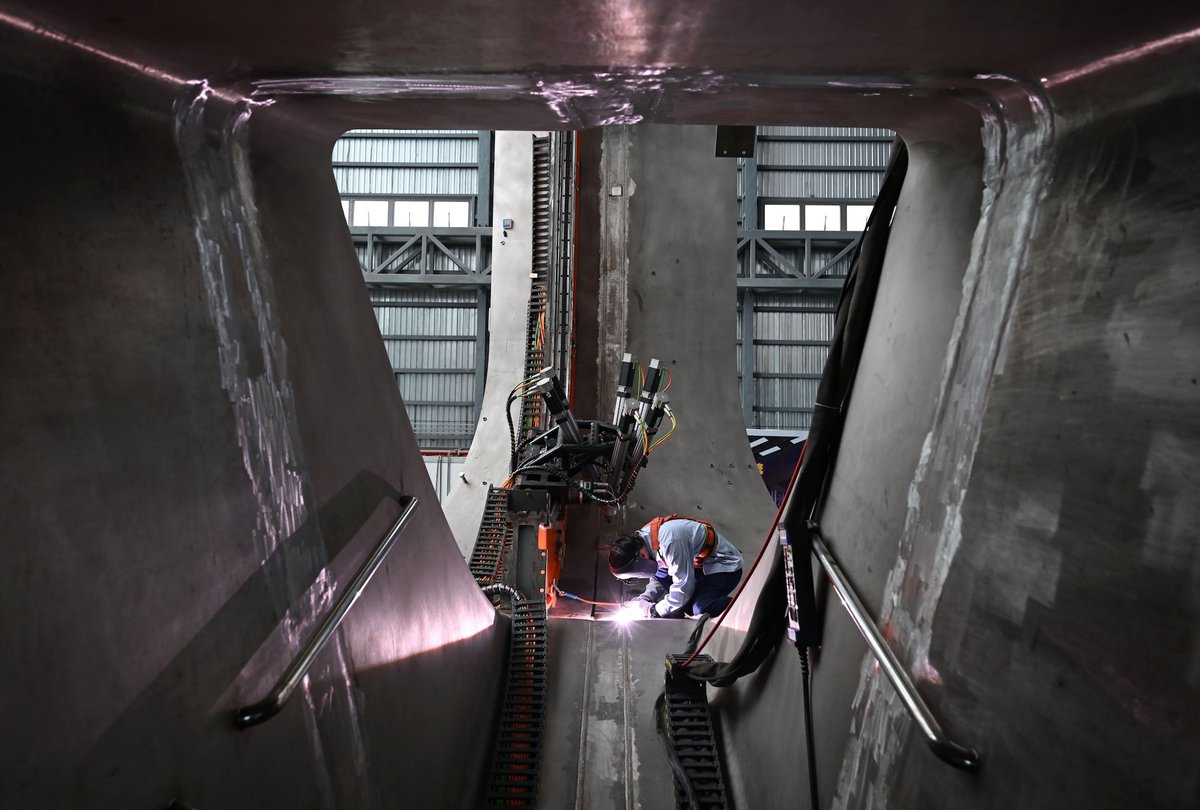
Big update: Half of our vacuum vessel, the very heart of our SPARC fusion machine, has landed in Devens, Massachusetts.
The vacuum vessel is the donut-shaped chamber inside SPARC that'll house our fusion fuel — a superhot cloud of charged particles called a plasma. The delivery of this key component means that our energy plans are literally starting to take shape. And it shows a big change inside tokamak hall as the once-quiet room begins to bustle with activity.
#PowerMoves #FusionEnergy
19
79
515
38,672
20 Oct 2025
This month, I and others on a bipartisan commission finished a report explaining how the US government can make commercial fusion energy a top priority and how the country would benefit. But over the year we spent developing that report, China has significantly expanded its effort to get there first.
In the report (link below), you can see how seriously the Chinese government is backing its fusion effort with new facilities, new funding, and new industrial focus in this report from the @scsp_ai's Commission on the Scaling of Fusion Energy. For example, the $2.1 billion for the new state-owned China Fusion Energy Co. brings Chinese funding for its fusion energy effort to at least $6.5 billion since 2023. 1/4
5
4
30
4,489
20 Oct 2025
3/4
▶️ Establish a National Fusion Goal to break ground on the first demonstration fusion pilot plants by 2028. That’ll speed fusion power’s path to power on the grid, including the ARC 400MW power plant Commonwealth Fusion Systems will build in Chesterfield County, Virginia. Having a goal, like a moonshot for fusion, focuses the energy of the government, National Labs, universities, and the private sector.
▶️ Accelerate commercial deployment by funding critical programs and facilities with a one-time $10 billion investment. Funding commercially relevant research through new infrastructure at National Labs and universities will close fusion technology gaps. China is building these facilities out, but in the US they’re only at the drawing board. And fully leverage public-private partnerships like the DOE's Milestone-based Fusion Demonstration Program — with CFS and seven other fusion companies already on board — to accelerate companies’ commercial deployment timelines while catalyzing new private investments.
▶️ Bring @ENERGY's fusion efforts into line to support the National Fusion Goal. That means tapping a National Fusion Lead who can organize DOE’s cross-functional commercial deployment efforts and work with industry to achieve the 2028 goal to break ground on a fusion power plant.
#FusionEnergy
1
4
381
20 Oct 2025
4/4 You can download the full report here: fusion.scsp.ai/posts/fusion-…
I’d also like to thank Commission Co-Chairs Senator Jim Risch (R-ID), Senator Maria Cantwell (D-WA), and SCSP President @Ylli_Bajraktari for leading this work, as well as my fellow commissioners — Manu Asthana, Kimberly Budil, Steve Cowley, @dkirtley, @michael_kuiken, Mark W. Menezes, Luke Murry, and @RachelSlaybaugh — and many organizations’ staff who were instrumental to the work. Now let’s make it real.
5
371