
Patriot (DM = Block) Not looking for a Pen Pal
Joined October 2023
- Tweets 2,286
- Following 5,028
- Followers 5,135
- Likes 4,416
229 Photos and videos
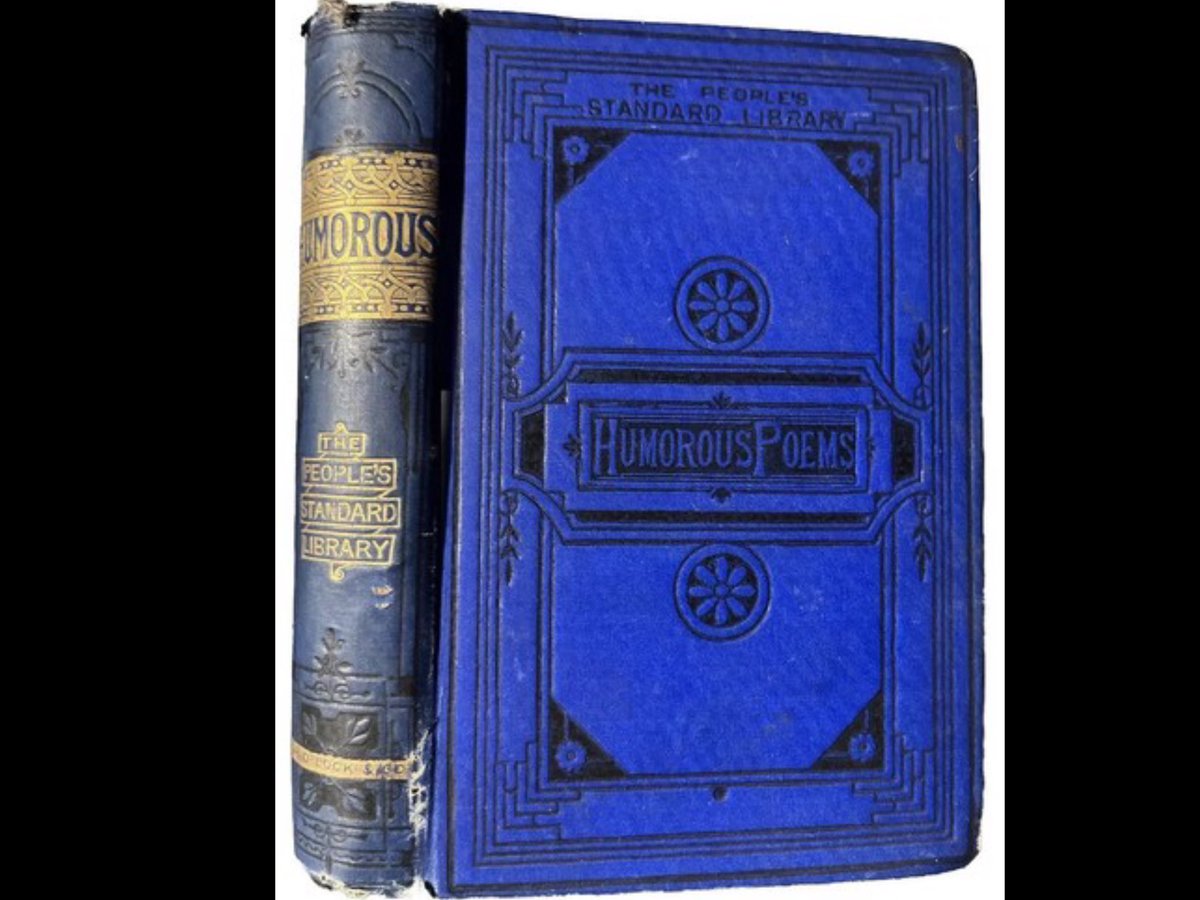

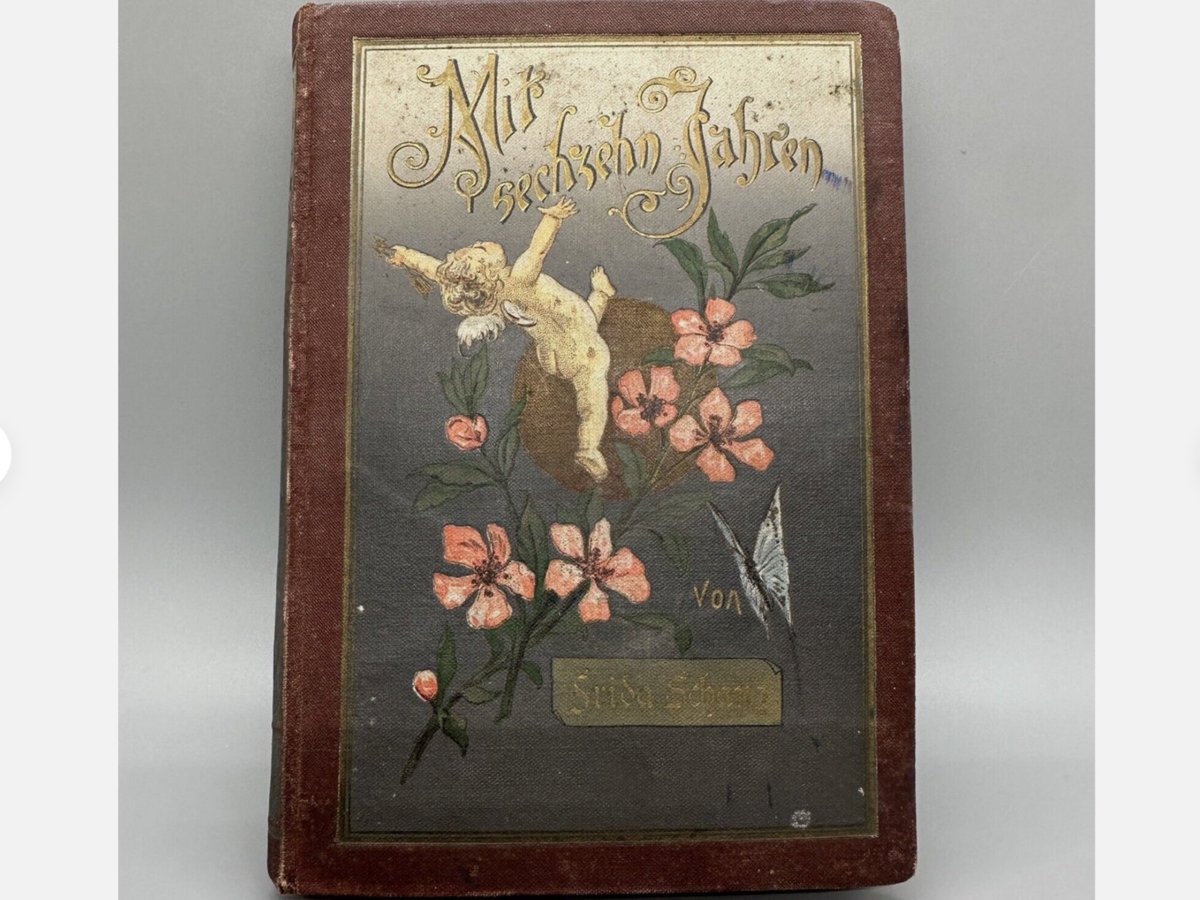

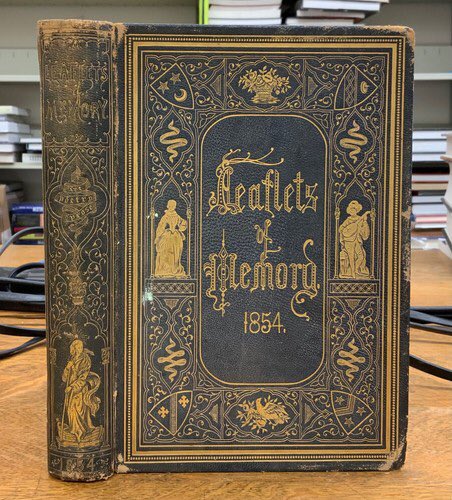
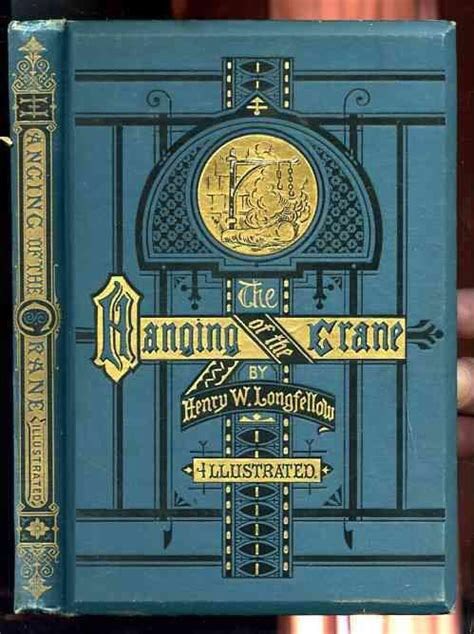





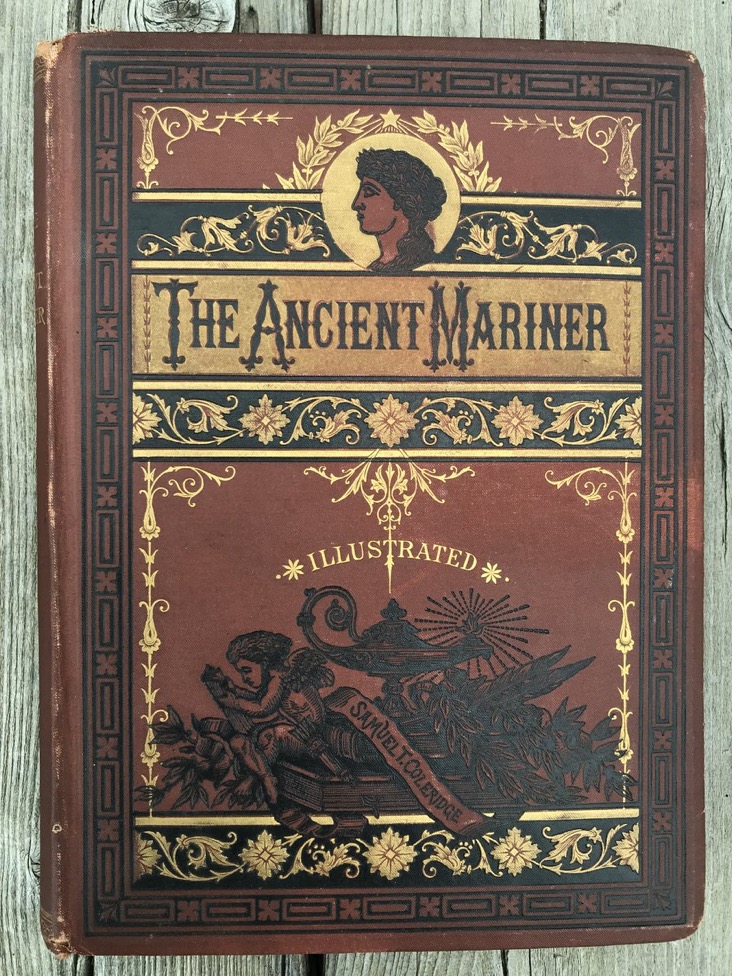
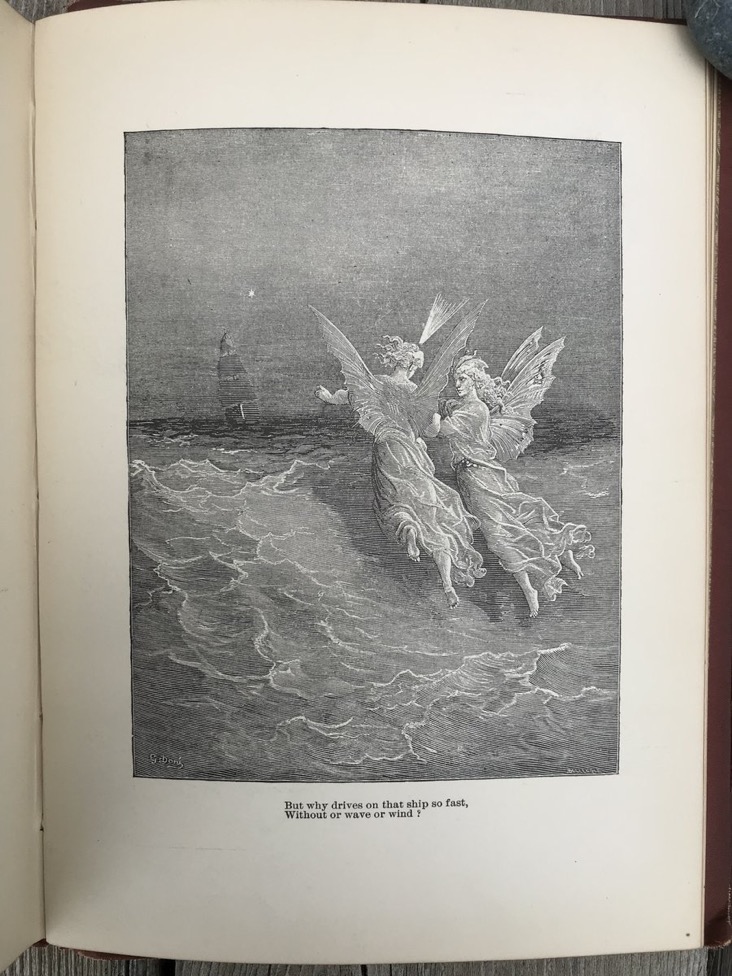
Mike retweeted
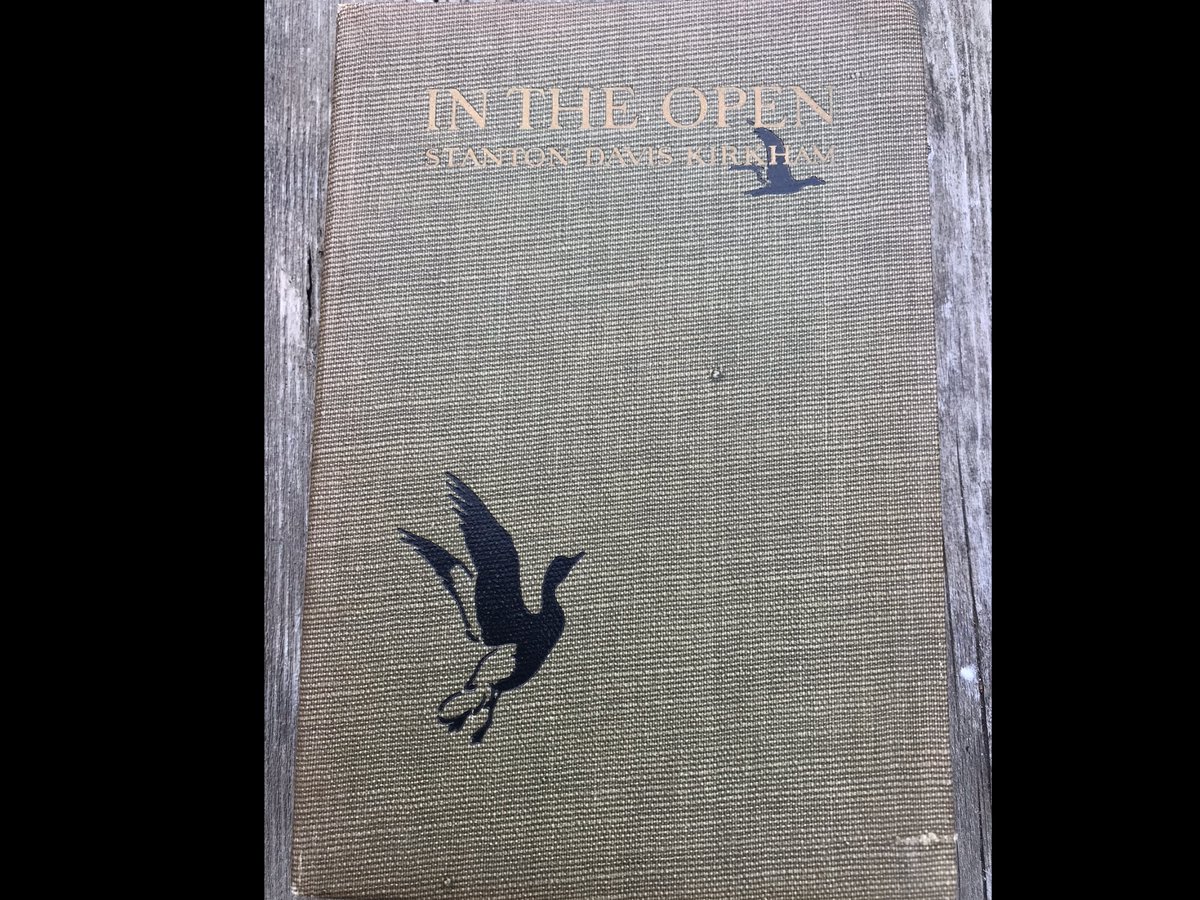
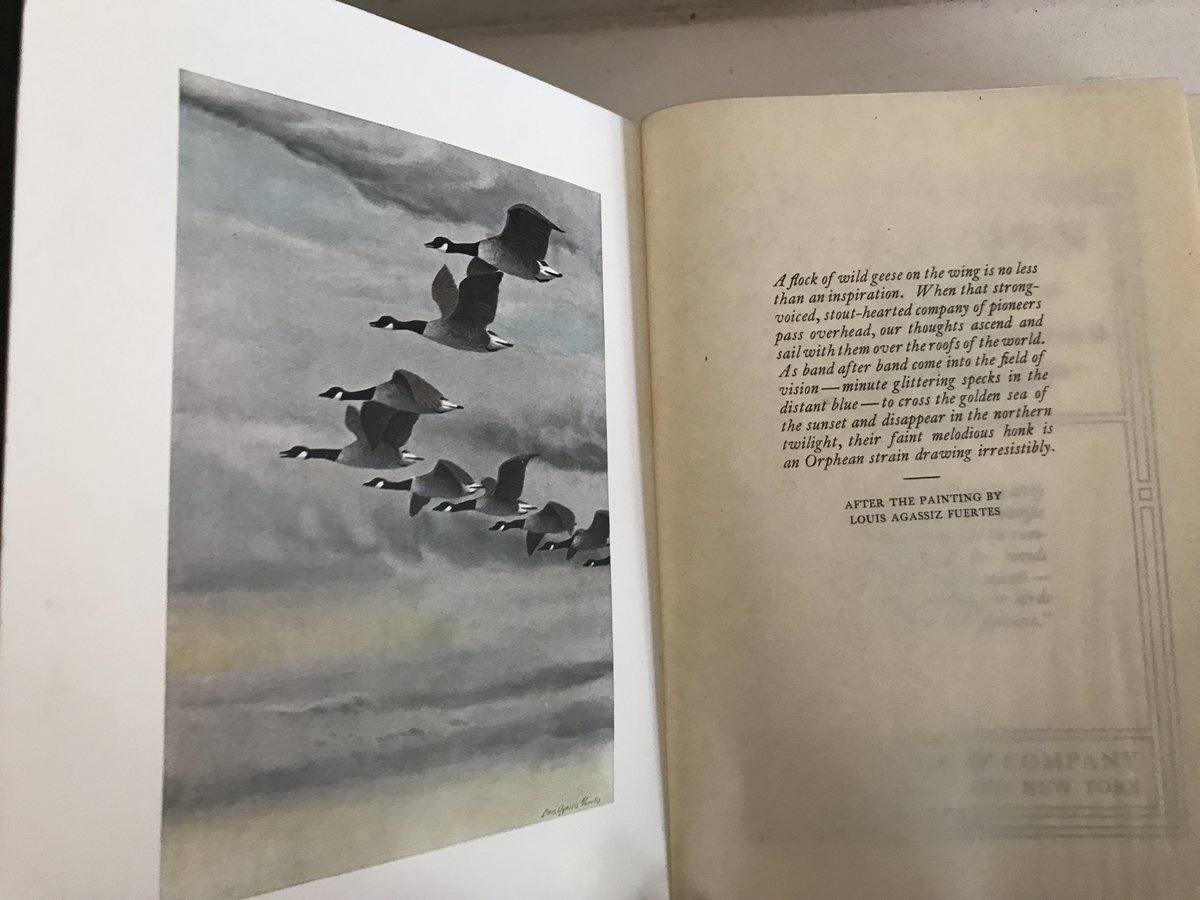
In The Open (1908): Stanton Kirkham
"It is worth while to be out-of-doors all of one day, now and then, and to really know what is morning and what evening; to observe the progress of the day as one might attend a spectacle, though this requires leisure and a free mind."
Yes, this is another Spring/nature read. Hey, it’s the time of year, I most enjoy reading natural history in the backyard. This one is a nice collection of intimate nature essays that allowed me to escape from city life into meadows, forests, mountains, and seas. The prose is … ahem “flowery.” He does have a keen sense of observation, and gives the reader what I’d call, “gentle philosophy.” It certainly is a celebration of bird song, wildflowers, seasonal changes, and the natural world.
"Walking through bare fields in the chill and birdless world some winter days, it is brought home to us what an essential feature of our surroundings the birds are, what a lack there is when they are absent! A certain poverty lies over the earth; the sky is no longer complete without a swift or a martin. Birds are part of the landscape; it is they which animate it."
2
6
467
Mike retweeted

15 June 1664
Up and by appointment with Captain Witham …
I home to look after things for dinner. And anon at noon comes Mr. Creed by chance, and by and by the three young ladies: and very merry we were with our pasty, very well baked; and a good dish of roasted chickens; pease, lobsters, strawberries. And after dinner to cards: and about five o’clock, by water down to Greenwich; and up to the top of the hill, and there played upon the ground at cards. And so to the Cherry Garden,* and then by water singing finely to the Bridge, and there landed; and so took boat again, and to Somersett House….
then into the towne, Creed and I, it being about twelve o’clock and past; and to several houses, inns, but could get no lodging, all being in bed. At the last house, at last, we found some people drinking and roaring; and there got in, and after drinking, got an ill bed.
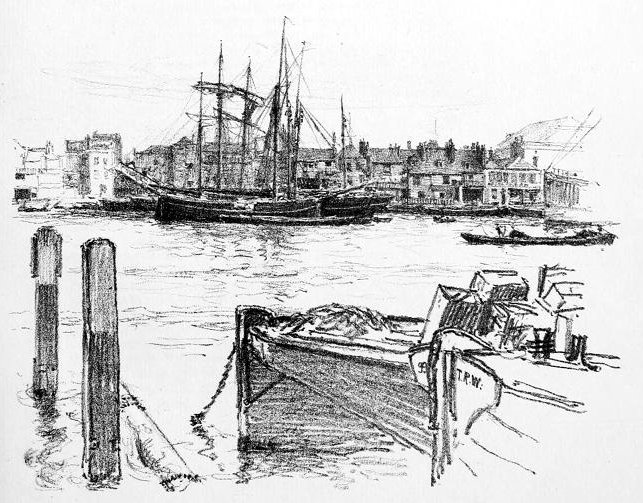
*This Cherry Garden was a popular 17th-century riverside pleasure garden in Rotherhithe (near Greenwich), celebrated for its extensive cherry orchards. Londoners visited for fresh seasonal fruit, walks, bowling greens (notably at adjacent Jamaica House), and riverside recreation. Part of semi-rural market gardens along the Thames, it offered affordable outdoor leisure until built over in the 19th century. The name survives in Cherry Garden Street, Stairs, and a modern riverside garden with replanted cherry trees.
“The “Cherry Garden” was a fevourite place of public entertainment in the reign of Charles II, and we know that that rural name was not misaapplied as we have the authority of Pepys for saying that cherries grew in the gardens, and that on June 13th, 1664, the Diarist picked some and carried them home.” The Victorian Web
The site of the gardens is marked by Cherry Garden stairs, a landing pier for Thames steamers and small boats. The Cherry Garden. T. R. Way. Signed and dated 1899.
1
18
80
17,824
Mike retweeted
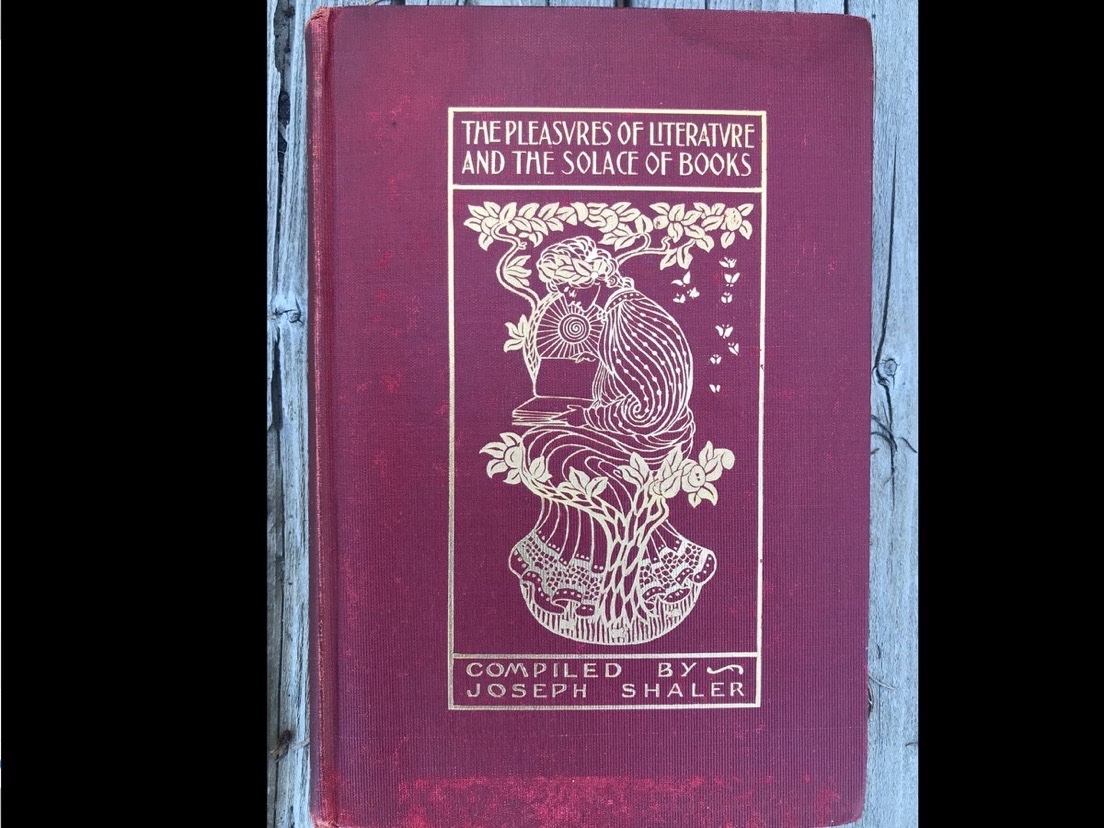
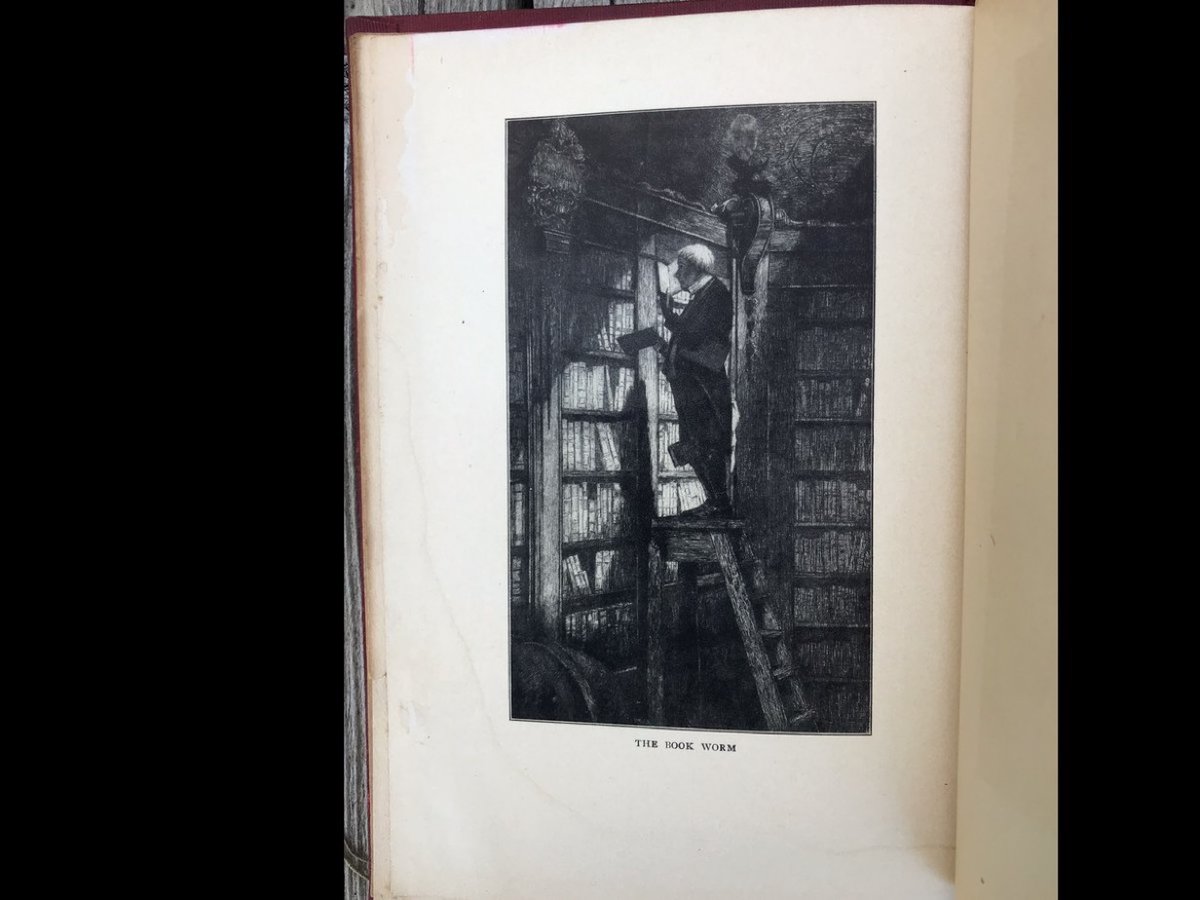
“It is good to read, mark, learn; but it is better to inwardly digest. It is good to read, better to think — better to think one hour than to read ten hours without thinking. Thinking is to reading what rain and sunshine are to the seed cast into the ground — the influence which maketh it bear and bring forth thirty, forty, or a hundred-fold.”
1
6
1,098
Mike retweeted
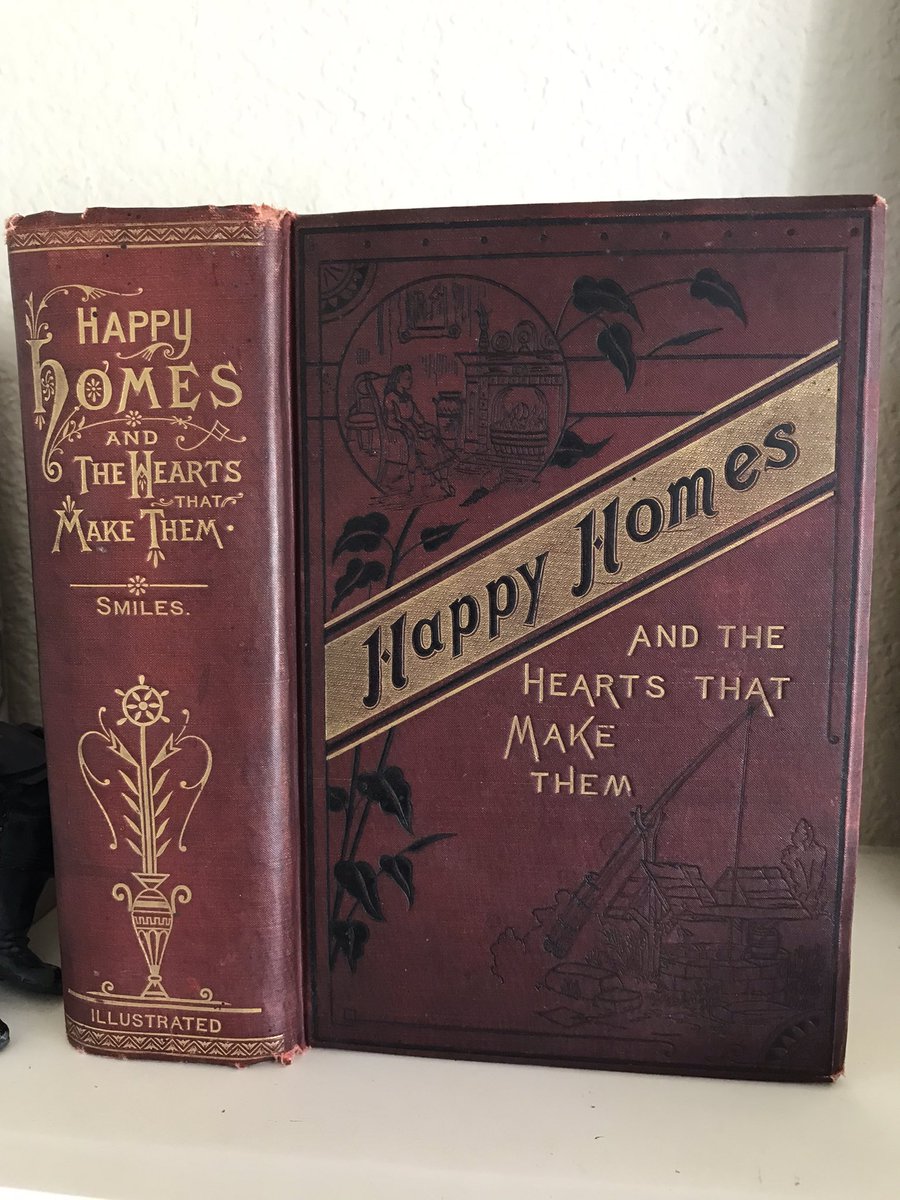
One more: "The most disagreeable of all people are those who ‘sit in the seat of the scorner.’ Persons of this sort often come to regard the success of others, even in a good work, as a kind of personal offense. They cannot bear to hear another praised, especially if he belong to their own art, or calling, or profession. They will pardon a man’s failures, but cannot forgive his doing a thing better than they can do. And where they have themselves failed, they are found to be the most merciless of detractors."
1
6
116
Mike retweeted
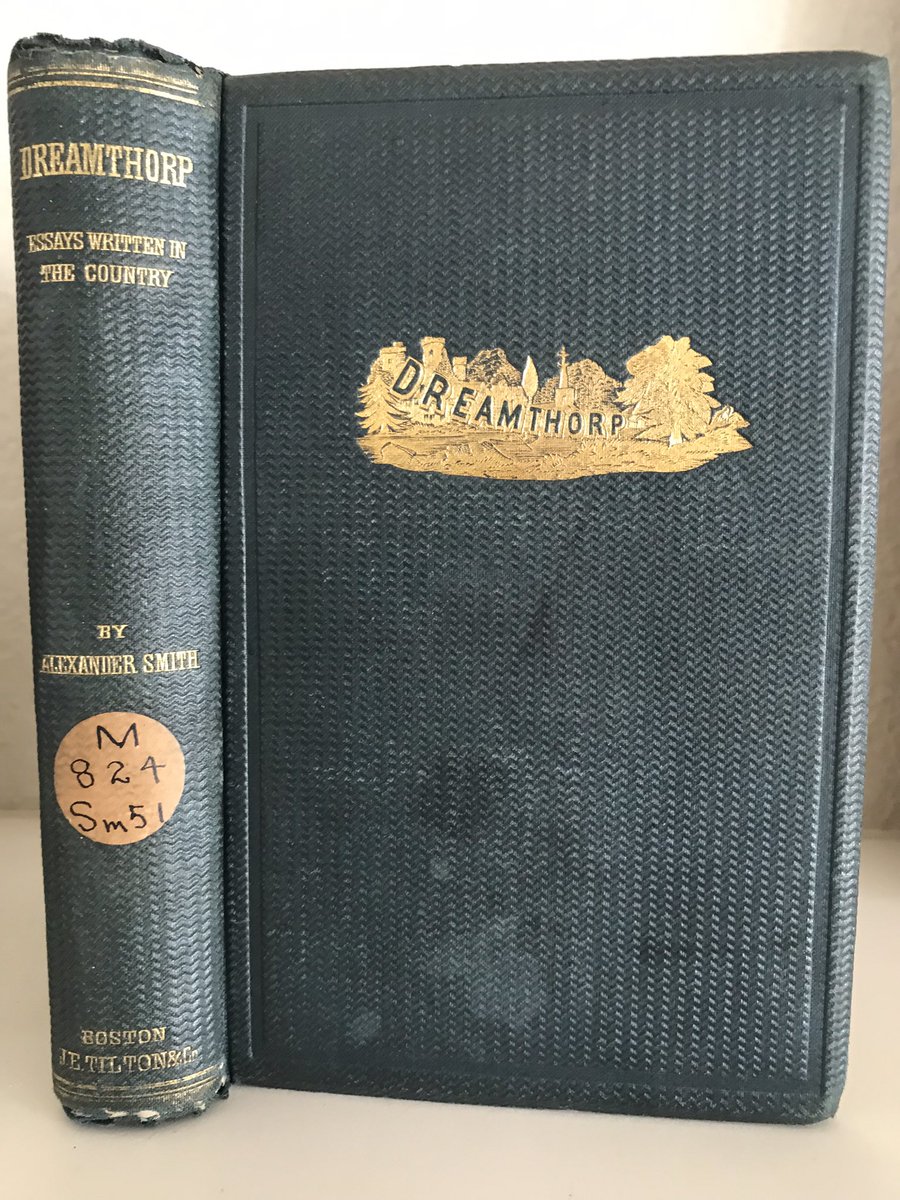
Came across this one as well. I’m on a roll, Ben. “And so, like a wise man, I am content with what I have, and make it richer by my fancy, which is as cheap as sunlight, and gilds objects quite as prettily. It is the coins in my own pocket, not the coins in the pockets of my neighbour that are of use to me. Discontent has never a doit in her purse, and envy is the most poverty-stricken of the passions.”
1
5
95
Mike retweeted
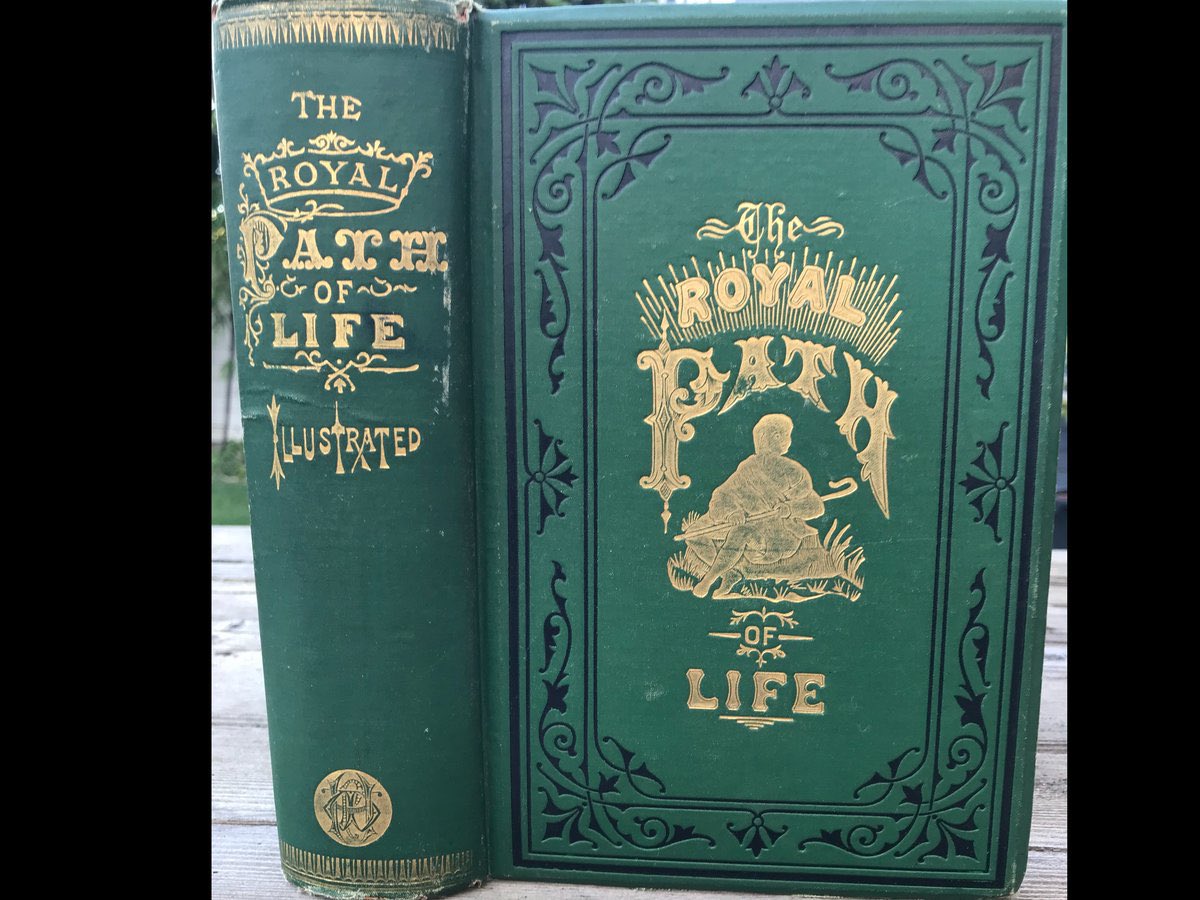
Good talk about Envy. One of my favorite quotes on the topic: “Envy's memory is nothing but a row of hooks to hang up grudges on.… And what produces envy? The excellence of another. Humiliating deduction! Envy is, then, only the expression of inferiority — the avowal of deficiency — the homage paid to excellence.”
1
3
89
Mike retweeted
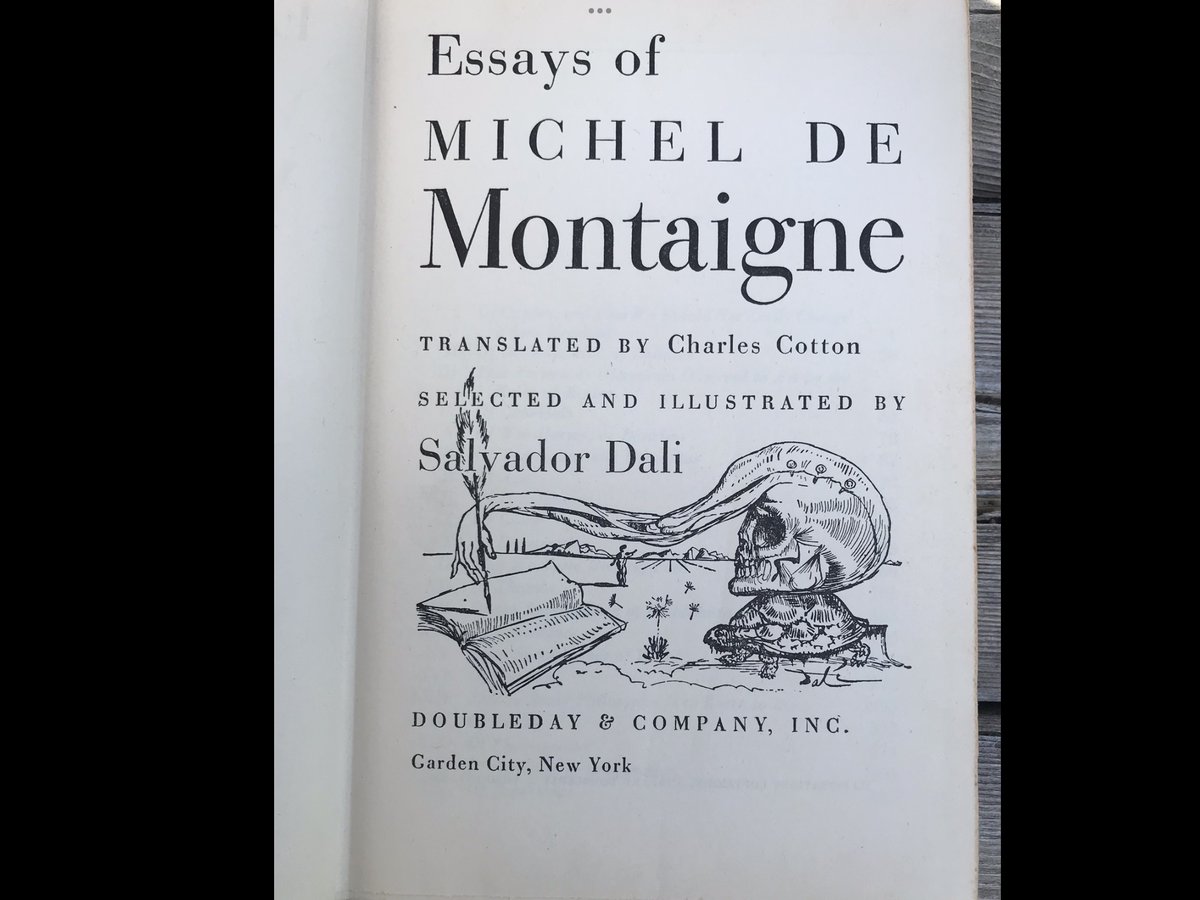
Essay's of Michel De Montaigne illustrated by Dali: 1947
"Preparing for death is preparing for freedom. Those who have learned to die have unlearned to live in servitude."
I've been working on this for some time. Some of the essays kept my attention, while others, not so much. This editions was quite interesting in that it's Salvador Dalí’s 1947 limited edition of Montaigne’s Essays that marries Renaissance humanism and surrealist vision. Dali selected key passages and illustrated them with a bunch of vibrant color folios and haunting etchings that deepen Montaigne’s reflections on mortality, vanity, imagination, and the self. Many of the illustrations escaped my understanding, but, hey, that's why we have Grok!
The standout final essay, “Of Experience,” is worth finding and reading. It’s a complication of what he learned through life: how to live fully.
"On the highest throne in the world, we still sit only on our own bottom."
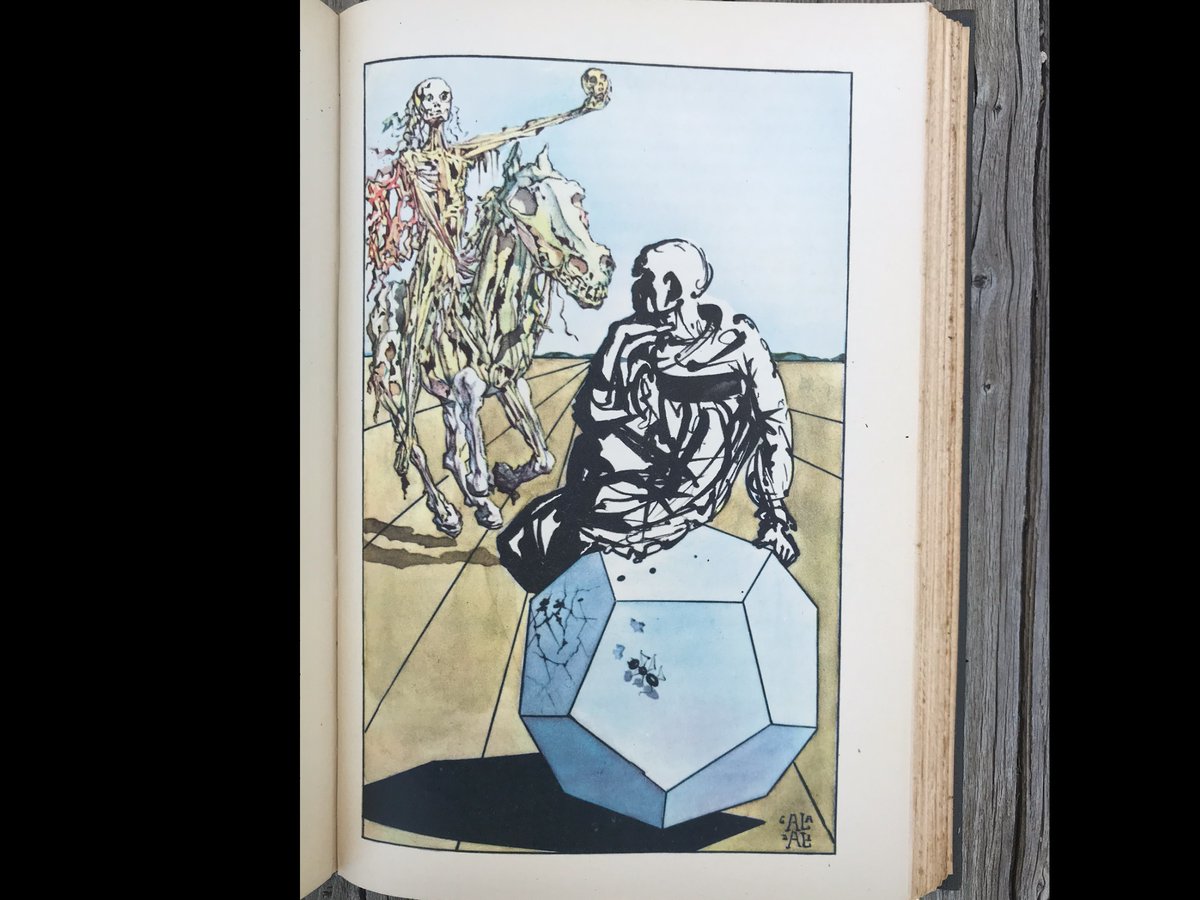
The lower Dali illustration depicts Montaigne’s “That to Study Philosophy Is to Learn to Die.”
A contemplative figure sits on a dodecahedron (symbol of rational order and eternity), while a ghostly horseman of Death rides nearby.
Message: Calmly confront mortality through philosophy and you will live freely.

2
8
4,555

Mike retweeted
Wish you the best in your quest, Chase! If you’re just getting started, this quote will be of use to you:
“For the present, buy — buy whatever has received the imprimatur of critical authority. Buy without any immediate reference to what you will read. Buy! Surround yourself with volumes, as handsome as you can afford.… The moment has now come to inform you plainly that a bookman is, amongst other things, a man who possesses many books. A man who does not possess many books is not a bookman.”

1
3
224
Mike retweeted
Saturday 6 June 1663
Lay in bed till 7 o’clock, yet rose with an opinion that it was not 5, and so continued though I heard the clock strike, till noon, and would not believe that it was so late as it truly was. I was hardly ever so mistaken in my life before.
Up and to Sir G. Carteret at his house, and spoke to him about business, but he being in a bad humour I had no mind to stay with him, but walked, drinking my morning draft of whay, by the way, to York House, where the Russia Embassador do lie; and there I saw his people go up and down louseing themselves: they are all in a great hurry, being to be gone the beginning of next week.
But that that pleased me best, was the remains of the noble soul of the late Duke of Buckingham appearing in his house, in every place, in the doorcases and the windows.*
By and by comes Sir John Hebden, the Russia Resident … Hebden, to-day in the coach, did tell me how he is vexed to see things at Court ordered as they are by nobody that attends to business, but every man himself or his pleasures. He cries up my Lord Ashley to be almost the only man that he sees to look after business; and with that ease and mastery, that he wonders at him. He cries out against the King’s dealing so much with goldsmiths, and suffering himself to have his purse kept and commanded by them.
Sir Anthony Ashley Cooper (Baron Ashley, Chancellor of the Exchequer)
*Sam meant that the assassinated Duke of Buckingham's flamboyant personality and taste still lived on visibly in York House. The grand carved doorcases and ornate windows featuring his coat of arms, crests, and personal motifs bore the unmistakable stamp of his extravagant refurbishments, decades after his 1628 death.
“His (Buckingham's) tenure as Lord High Admiral and de facto foreign minister was marked by a series of failed military campaigns, such as the ill-fated Cádiz expedition (1625), which damaged his reputation and public image. Buckingham's assassination in 1628 by John Felton, a disgruntled army officer, highlighted the extent of his unpopularity among the public.” Wikipedia
Portrait by Peter Paul Rubens, 1625

2
37
104
41,477
Mike retweeted
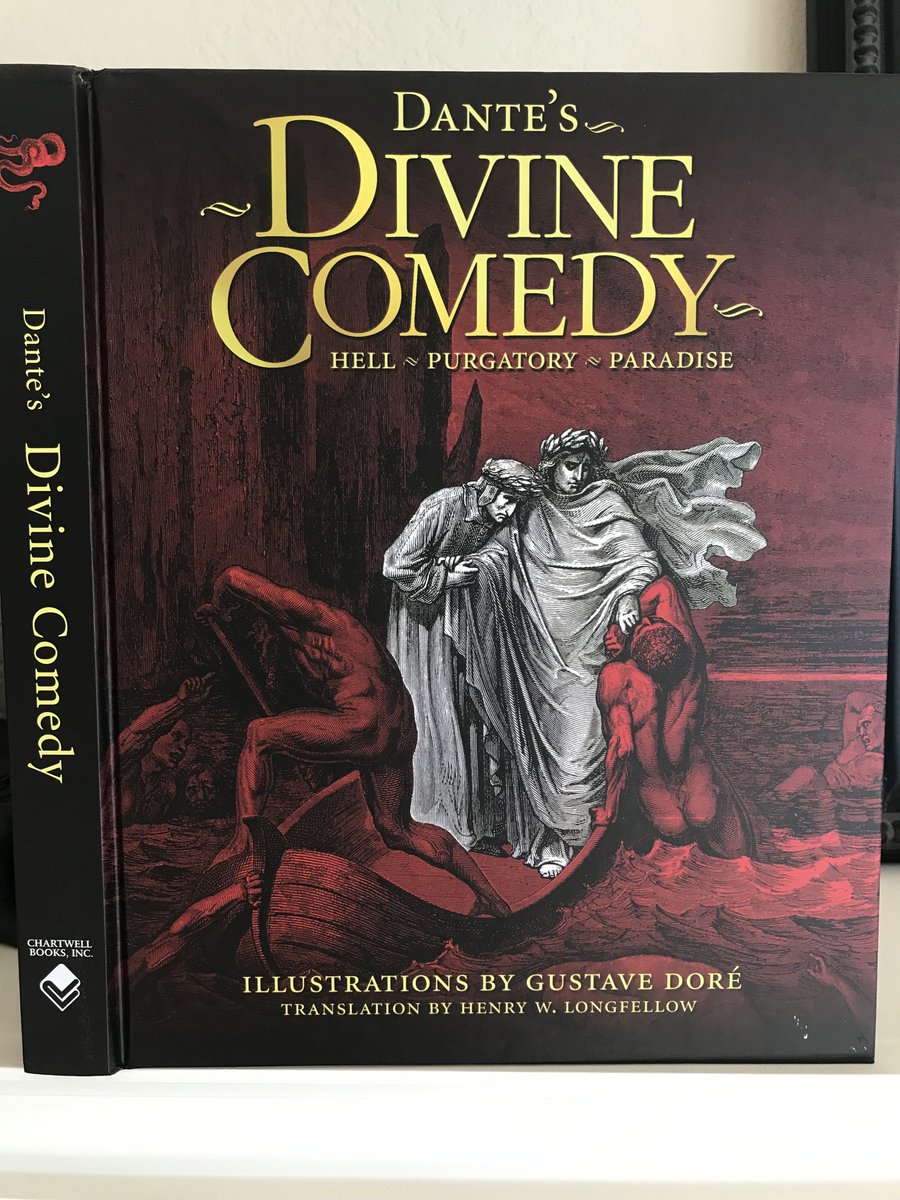
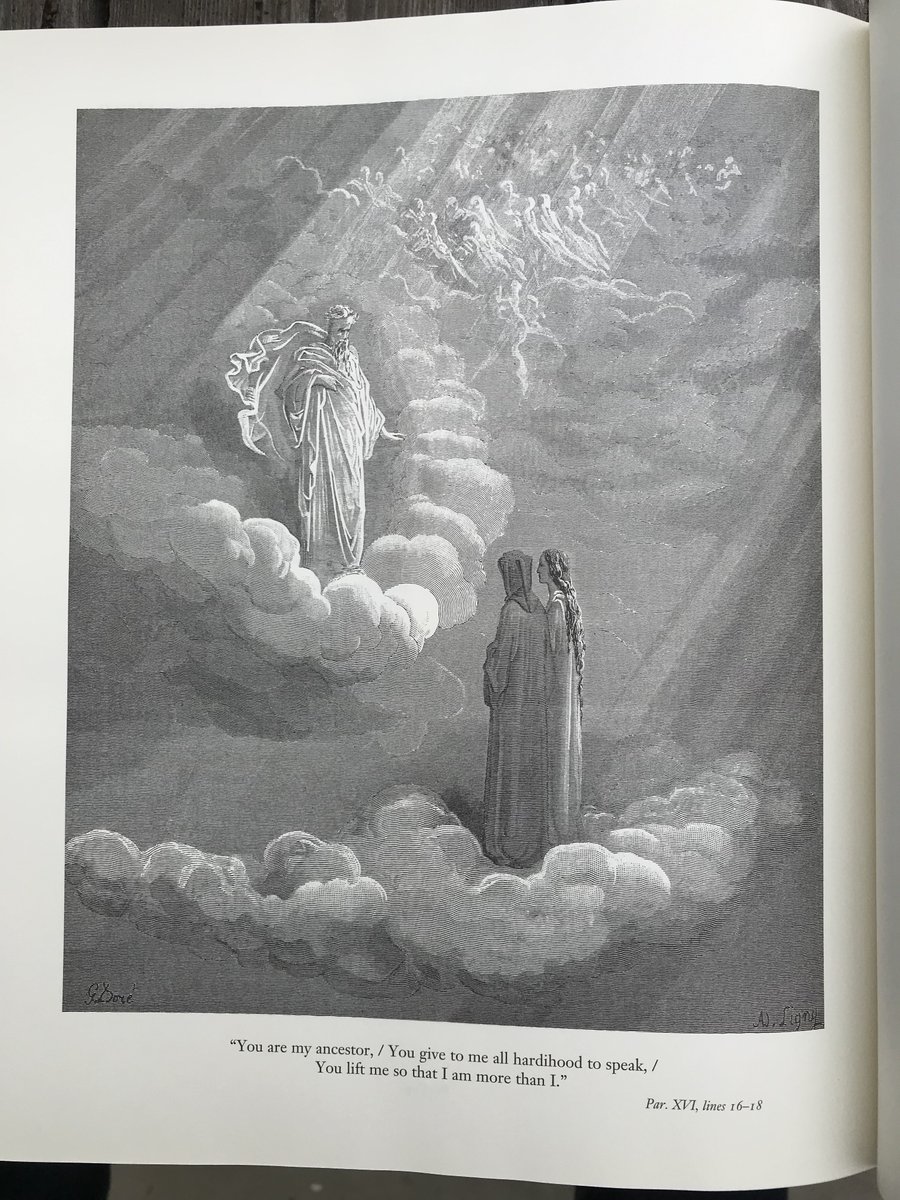
The Divine Comedy: Paradise (1321) by Dante
“All that is scattered in the universe is gathered in its own deep unity within that Light.”
Finito! Yes, it took me awhile, but I can now report that I've completed this work.
Paradiso is the last section of Dante’s Divine Comedy. After climbing Purgatory, the pilgrim Dante rises through the nine spheres of Heaven with Beatrice as his guide. Here saved souls shine in perfect joy, each in their proper place according to how much they reflect God’s love. The imagery turns dazzling: glowing lights, music of the spheres, and visions that grow more brilliant until words fail. You feel the same terza rima flow, political touches, and deep theology, but now everything is wonderous. Beatrice leads him higher until he glimpses the Trinity itself. This final part ranks among the greatest because it dares to describe the indescribable: a union with God. It blends philosophy, personal love, and ecstatic poetry to show that Heaven is complete understanding and joy.
As a bonus, the audiobook contained an hour's worth of history regarding Dante (Dante: A Life by Flynn). It was interesting and useful as many of his characters are patterned after contemporary figures.
3
7
3,692
Mike retweeted
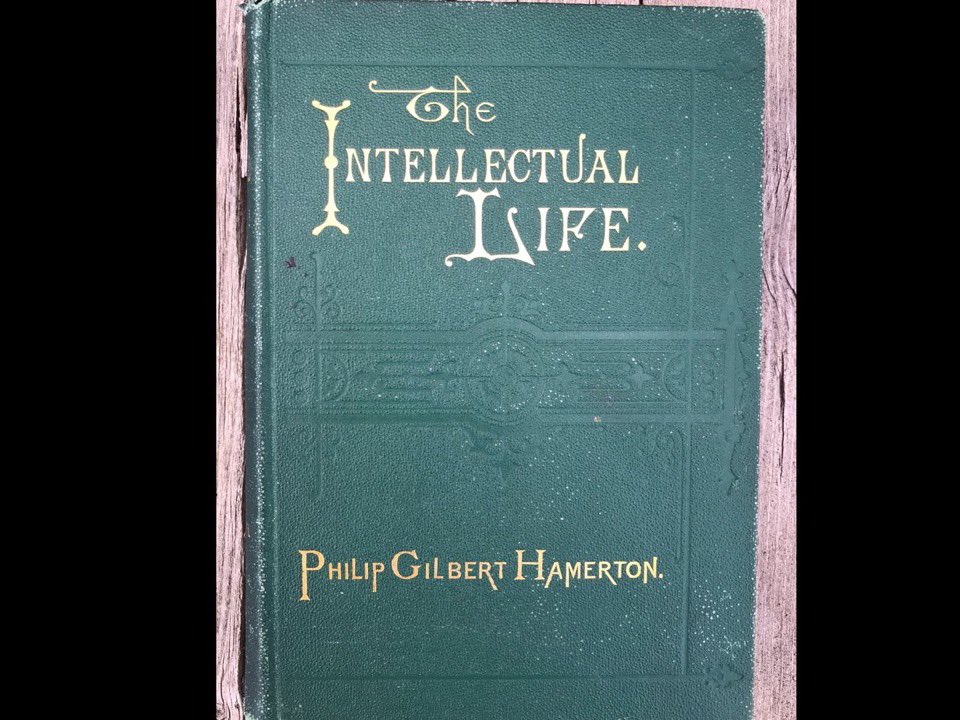
“People think that an interruption is merely the unhooking of an electric chain, and that the current will flow, when the chain is hooked on again, just as it did before. To the intellectual and imaginative student an interruption is not that; it is the destruction of a picture.”
"It is not erudition that makes the intellectual man, but a sort of virtue which delights in vigorous and beautiful thinking, just as moral virtue delights in vigorous and beautiful conduct."
"Reading is not merely an occupation to fill up time; it is the nourishment of the mind. But as with bodily food, we must choose what will strengthen us, not what merely pleases our taste. To read well is to digest wisely, to assimilate what is good and leave what is not."
1
3
155

Mike retweeted
This question seems to making the rounds. I’ll give you two:
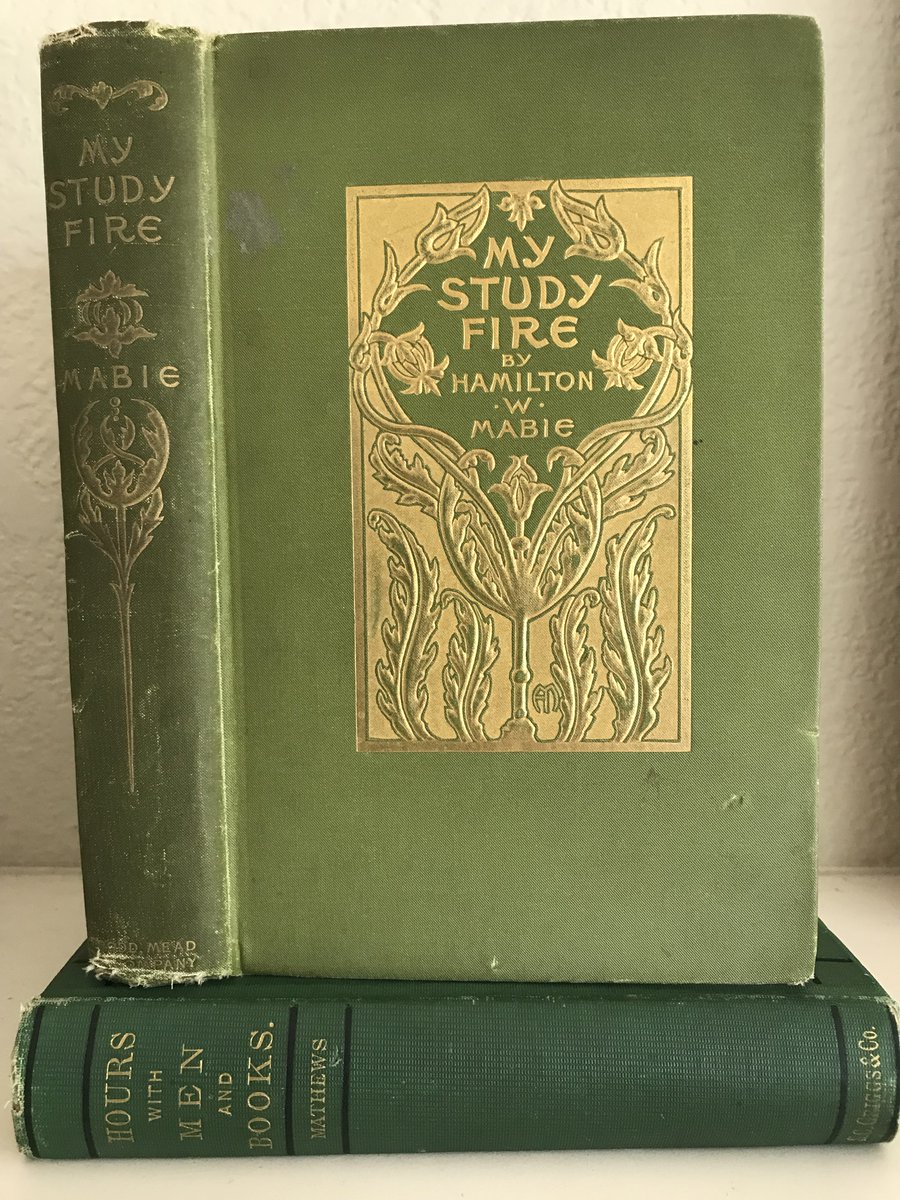
"There is one place, however, where no boundaries are fixed, no doors closed, no bolts shot: among his books a man laughs at his bonds and finds an open road out of every form of imprisonment."
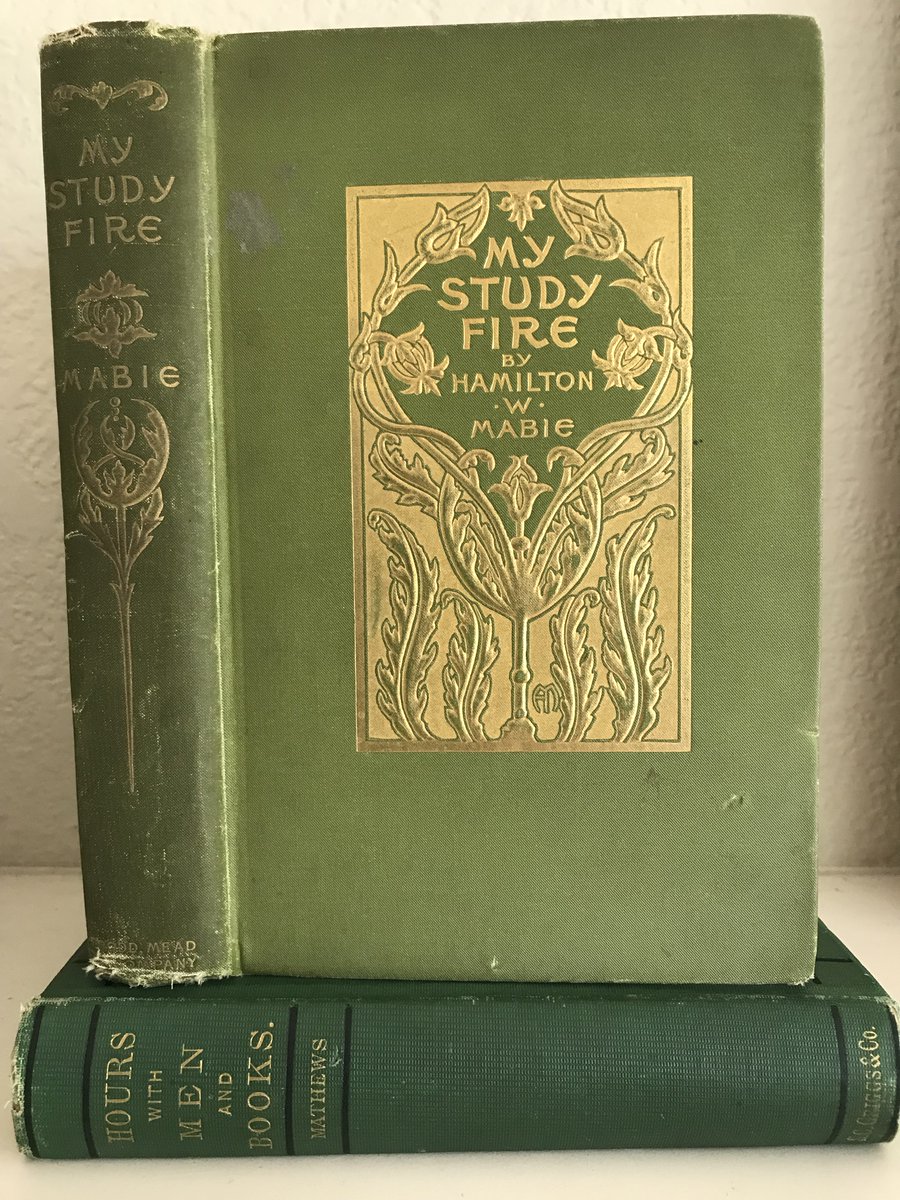
My Study Fire (1899) by Hamilton Wright Mabie
“The hobby of another is books—books old and new, in vellum and in calf, gilt-edged and marbled, with headbands and without— with which, perhaps, he packs his cases, loads his what-nots, stuffs his drawers, and piles his floors, till his whole house becomes a library, a wilderness of books!”
Hours with Men and Books (1877) by William Mathews
1
4
122
Mike retweeted
I’ll give you two:
"There is one place, however, where no boundaries are fixed, no doors closed, no bolts shot: among his books a man laughs at his bonds and finds an open road out of every form of imprisonment."
My Study Fire (1899) by Hamilton Wright Mabie
“The hobby of another is books—books old and new, in vellum and in calf, gilt-edged and marbled, with headbands and without— with which, perhaps, he packs his cases, loads his what-nots, stuffs his drawers, and piles his floors, till his whole house becomes a library, a wilderness of books!”
Hours with Men and Books (1877) by William Mathews
1
25
2,304
Mike retweeted
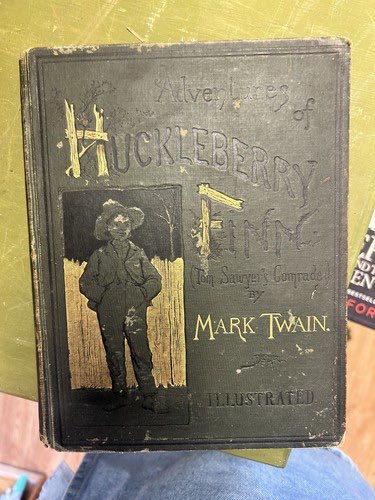
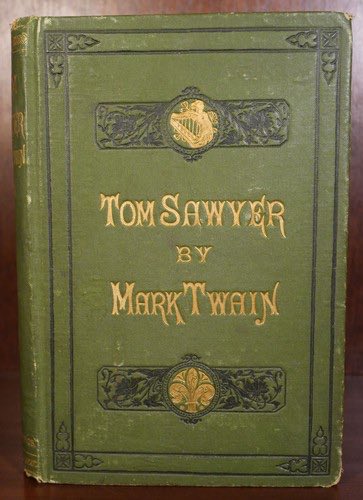
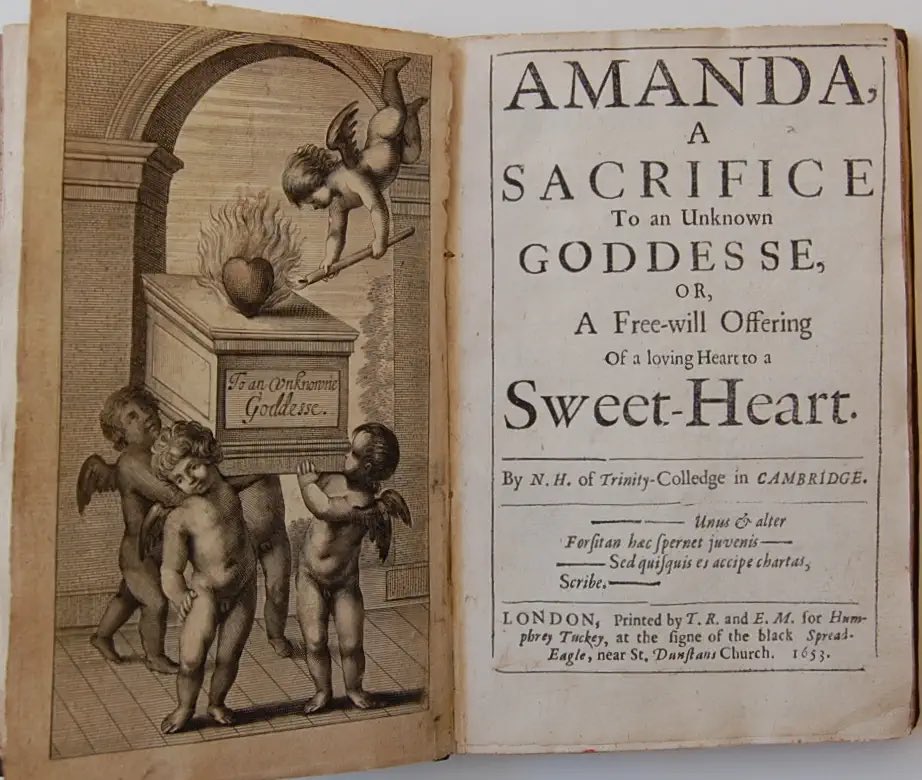
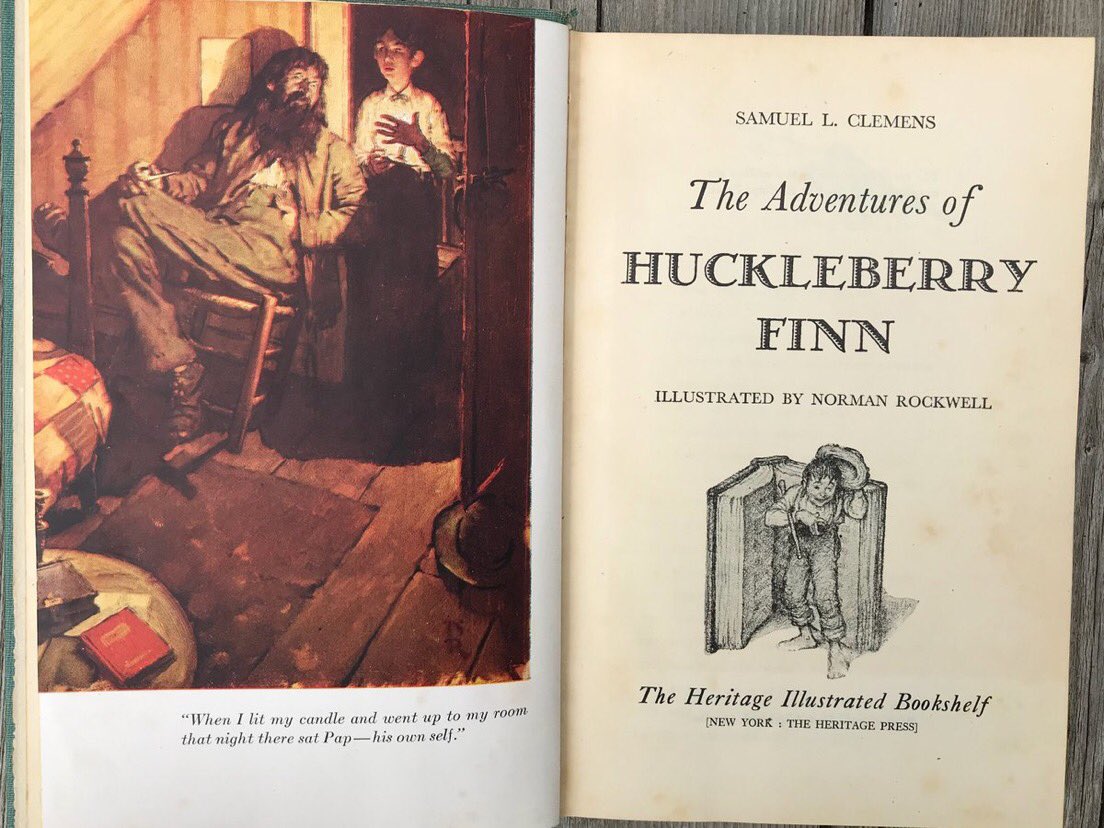
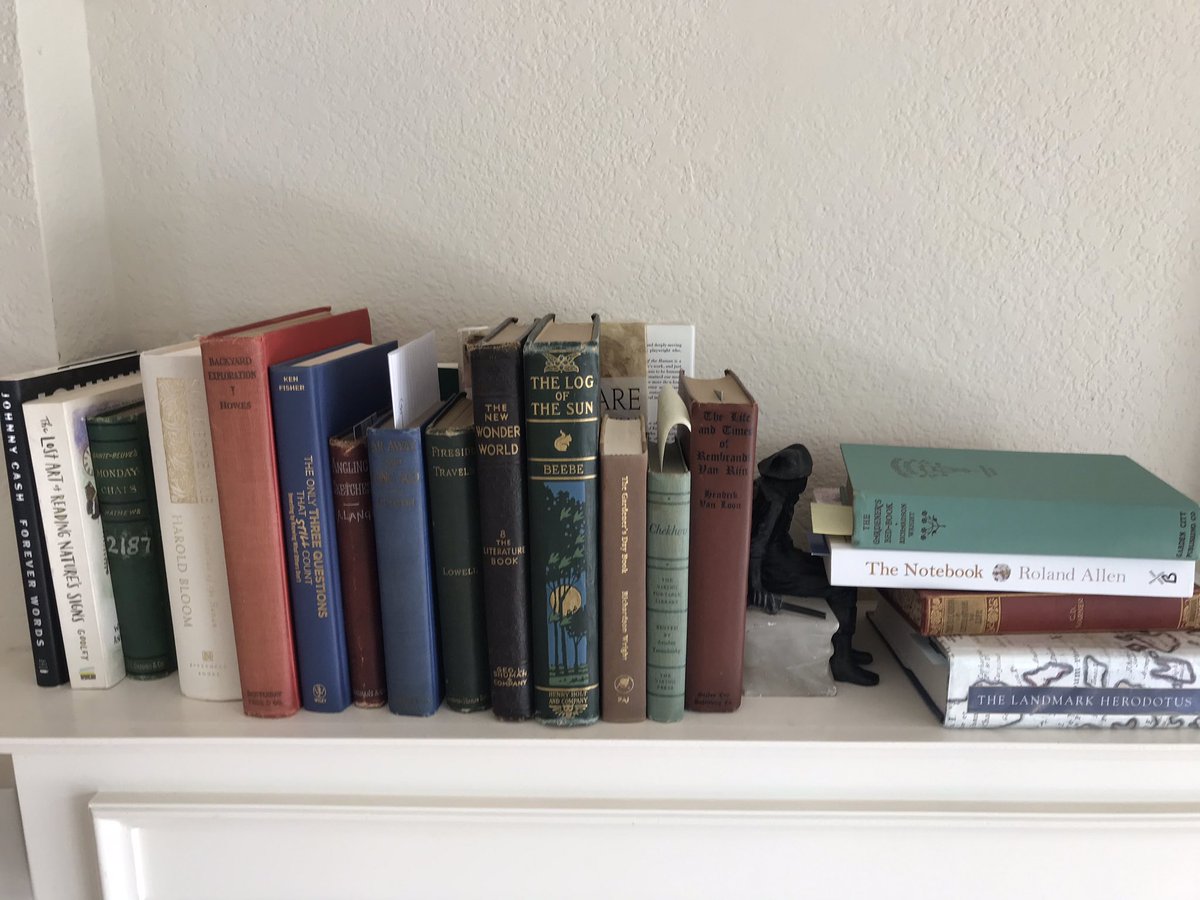
Absolutely! The ones I’m currently working on are shown here.
1
1
9
121
Mike retweeted
Monday 1 June 1663
Begun again to rise betimes by 4 o’clock, and made an end of “The Adventures of Five Houres,” and it is a most excellent play.
So to my office, where a while and then about several businesses …
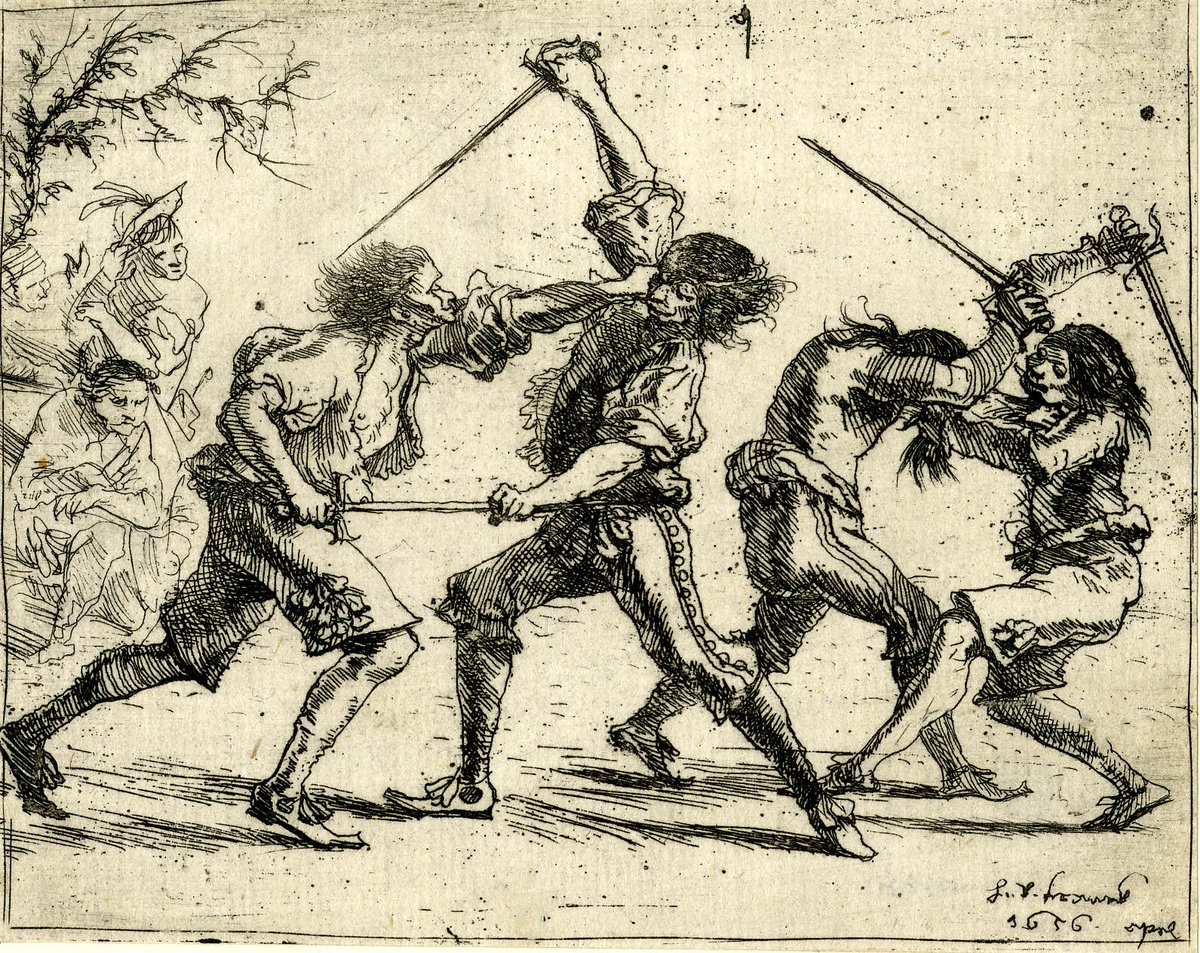
I with Sir J. Minnes to the Strand May-pole; and there ’light out of his coach, and walked to the New Theatre, which, since the King’s players are gone to the Royal one, is this day begun to be employed by the fencers to play prizes at. And here I came and saw the first prize I ever saw in my life: and it was between one Mathews, who did beat at all weapons, and one Westwicke, who was soundly cut several times both in the head and legs, that he was all over blood: and other deadly blows they did give and take in very good earnest, till Westwicke was in a most sad pickle. They fought at eight weapons, three bouts at each weapon. It was very well worth seeing, because I did till this day think that it has only been a cheat; but this being upon a private quarrel, they did it in good earnest; and I felt one of their swords, and found it to be very little, if at all blunter on the edge, than the common swords are. Strange to see what a deal of money is flung to them both upon the stage between every bout. But a woful rude rabble there was, and such noises, made my head ake all this evening. So, well pleased for once with this sight, I walked home.
The Adventures of Five Hours (Sir Samuel Tuke)
The Strand May-pole was a prominent landmark on the Strand, near the site of today’s St Mary-le-Strand church. Erected after the Restoration in 1660 to replace the Puritan-destroyed original, the tall decorated pole symbolised royalist revival and May Day festivities
After the King’s Company moved to Drury Lane, their former venue (Gibbon’s Tennis Court, Vere Street) began hosting fencing “prizes.” This one was eight weapons (three bouts each) with near-sharp swords. Westwicke was badly cut and bloodied. Fighters fought earnestly, especially on private quarrels; spectators flung money onto the stage to encourage the fighting.
What dueling might actually have looked like among soldiers or pirates. From the series “Scenes of War” by Hans Ulrich Franck, 1656. Courtesy of the British Museum.
2
24
72
13,909
Mike retweeted
Tuesday 2 June 1663
Up and by water to White Hall and so to St. James’s, to Mr. Coventry; where I had an hour’s private talk with him….
And lastly, he confesses that the more of the Cavaliers are put in, the less of discipline hath followed in the fleet; and that, whenever there comes occasion, it must be the old ones that must do any good, there being only but Captain Allen good for anything of them all.
To-night I took occasion with the vintner’s man, who came by my direction to taste again my tierce of claret, to go down to the cellar with him to consult about the drawing of it; and there, to my great vexation, I find that the cellar door hath long been kept unlocked, and above half the wine drunk. I was deadly mad at it, and examined my people round, but nobody would confess it; but I did examine the boy, and afterwards Will, and told him of his sitting up after we were in bed with the maids, but as to that business he denies it, which I can [not] remedy, but I shall endeavour to know how it went.
My wife did also this evening tell me a story of Ashwell stealing some new ribbon from her, a yard or two, which I am sorry to hear, and I fear my wife do take a displeasure against her, that they will hardly stay together, which I should be sorry for, because I know not where to pick such another out anywhere.
The tierce held ~36 imperial gallons (159 litres). Above half was drunk, so 18 gallons stolen. At a typical £8 per tierce, the loss was worth £4, about 1% of Pepys’ £350 annual salary. This explains his fury over the theft. Wine was a status symbol as you needed it when guests arrived.
Pepys’ maids earned £2 10s–£4 per year. The stolen wine £4 equalled or exceeded a full year’s wages for one. They effectively drank their salary in claret : )
Mary Ashwell joined the household in March 1663 as Elizabeth’s cultured companion. Daughter of Sam’s former Exchequer colleague, she had taught at a Chelsea girls’ school. The June 1663 ribbon theft sparked tensions; despite Sam valuing her refinement and skills, she was dismissed in 1664 amid domestic quarrels.
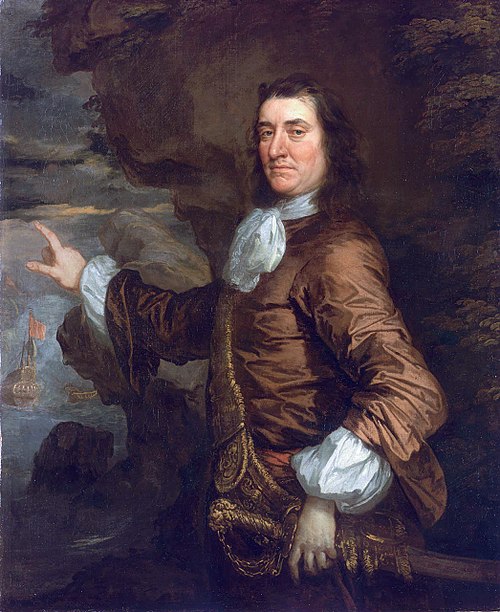
Captain Sir Thomas Allin (1612–1685) was a capable Royalist commander praised by Coventry and described the sole competent “new” officer amid declining naval discipline. An experienced fighter from Prince Rupert’s fleet, he later excelled in the Second Dutch War, became Admiral of the White, and served as Comptroller of the Navy.
Portrait by Sir Peter Lely, 1665
2
33
90
32,686