FACTS: about the Golden Age of Boxing c1900-1940. AUTHOR: Then The World Moved On: The Brutal Truth Behind the Baer-Campbell Fight - a.co/d/gq4Zad1
Joined July 2022
- Tweets 4,216
- Following 284
- Followers 782
- Likes 226,398
958 Photos and videos


Pinned Tweet

1 Oct 2024
Almost a century in the making, my book on the truth behind the Baer-Campbell fight, exposure of the many myths about Max Baer, and the tragic life of Frankie Campbell, is now available globally. Amazon, Barnes & Noble, Google Books, Apple Books, Kobo, etc., and you can order from your favorite local/online bookstore too.
"Then The World Moved On: The Brutal Truth Behind the Baer–Campbell Fight" by Catherine Johnson, knocks boxing history on its cauliflowered ear, with the most painstakingly researched and scrupulously detailed book ever written about the tragic end of Frankie Campbell, and Max Baer's shocking hand in his death.
Preceded with a Foreword by Ray Mancini, the book chronicles not only Campbell's life and career, it exhaustively examines his fight with Baer, the resultant fallout and appalling coverup of the truth, and the horrific details of Baer's lies and manipulation of the event and its aftermath.
A variety of original source materials, never accessed by previous historians, and going back a century, were thoroughly investigated and meticulously pieced together, among them newspapers, court transcripts, medical records, genealogical, archival, federal, state, and local records, along with psychological analysis and brain trauma study, as well as interviews with Campbell's family members, former pro fighters, and boxing historians.
Along with over 1400 cited sources, over 150 rare photos, illustrations, and fight advertisements, the book also discusses the legendary men who made California a boxing mecca in the early Twentieth Century, and the popular venues where fights were held. Woven artfully into the narrative, is how the context of the times, the Golden Age of American Sports, the Roaring Twenties, Prohibition, and the Great Depression, affected the sport, and the lives of the men who molded the game.
1
10
41
8,212
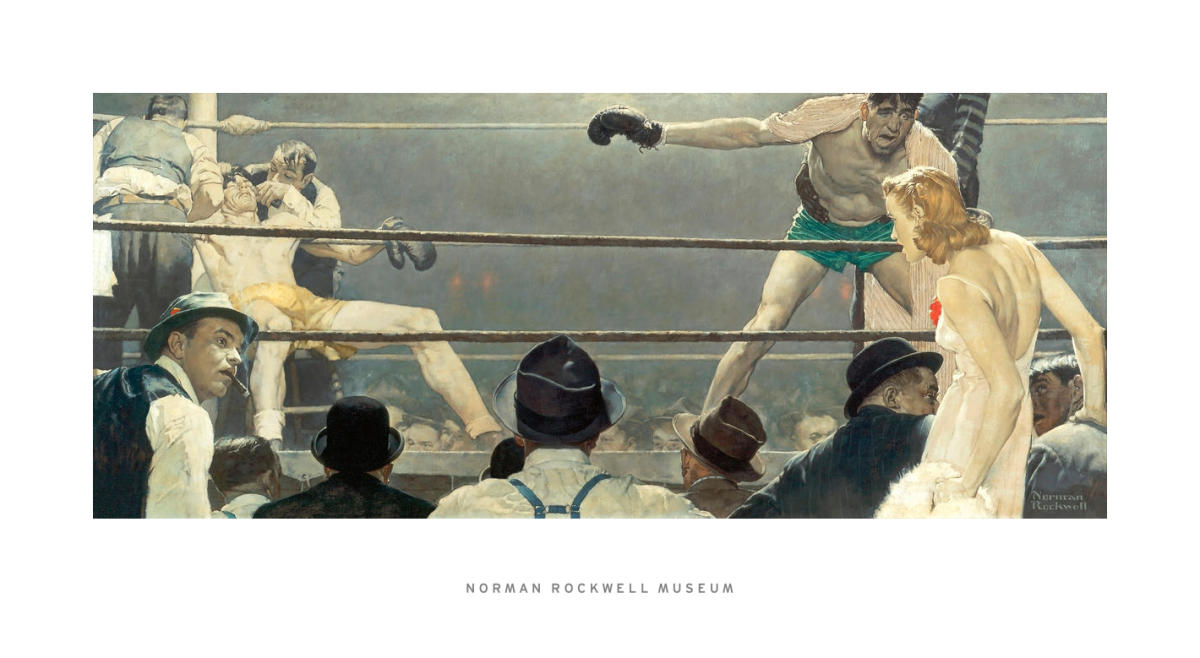
I wondered whether Norman Rockwell ever drew prizefighters. He sure did. This painting is for an "American Magazine" story illustration, June 1941.
Rockwell traveled to a boxing club at Columbus Circle in New York and studied the smoke-filled atmosphere and the types of people who frequented the club to get his project just right.
In the magazine's short story by D. D. Beauchamp, a gold-digging girl friend of a young boxer encourages him to fight a match against a seasoned fighter for the promise of big winnings. When he loses the fight, her true colors are revealed as she yells out her rejection of him.
source: nrm.org
3
3
20
333
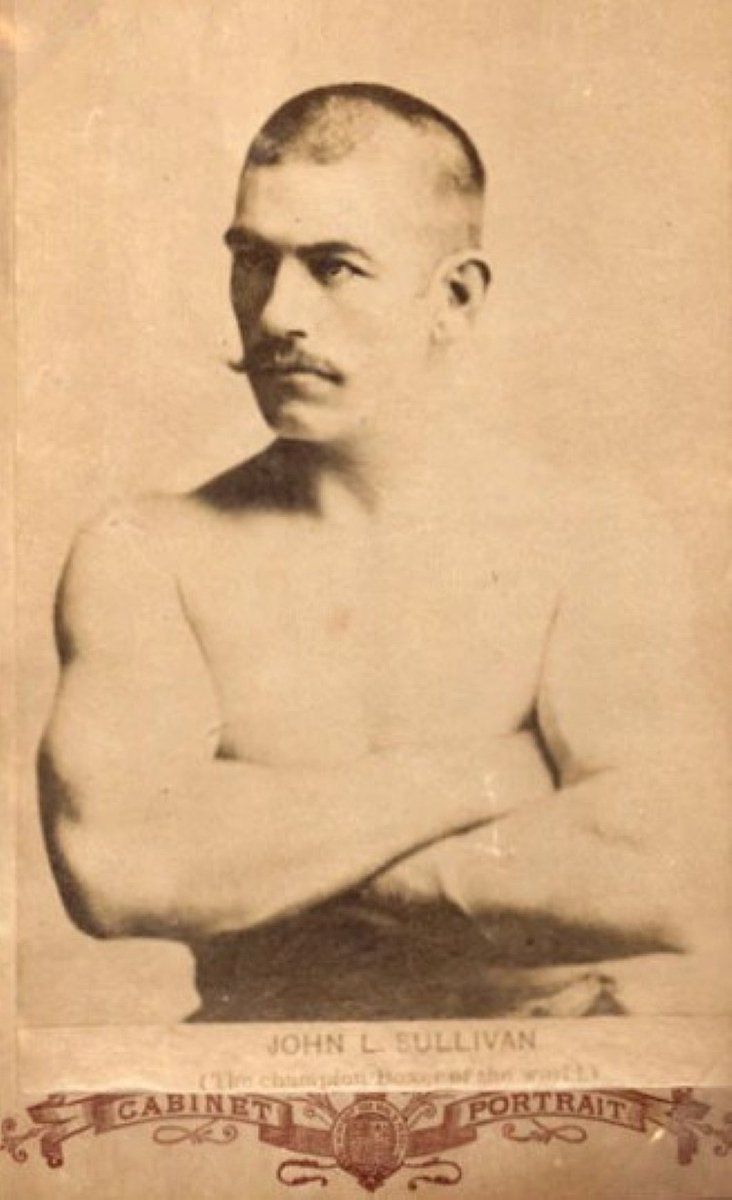
During his national barnstorming tours in the 1880s, John L. Sullivan popularly offered a fat purse to any man who could last a few rounds with him. During a stop in Galveston, Texas, his friend Col. Bill Sterett, a political reporter from the Dallas News and a lover of prizefights, brought a fellow to Sullivan's show he was sure would cause Sullivan some trouble.
Here, Col. Sterett tell the story himself, with a little help from Sullivan's opponent.
"His name was Marks-Al Marks-a cotton screwer in Galveston and one of the strongest and gamest fighters in Texas. Sullivan came down there on a tour and offered $500 to any man who would stand in front of the gloves three rounds. Marks accepted the challenge. After the contest I asked Marks for particulars, and this is the way he told his story:
"As I walked up to the stage people cheered me, and I felt pretty proud. I was going to put my hands up against the great Sullivan. I felt sure I could whip him, but when I got into the ring and John L. stood in front of me he appeared to be a heap bigger than he looked from my seat. I determined to astonish him right from the jump. So after we had shaken hands I let him have a good one right in the jaw. Sullivan looked at me in a surprised sort of way, and I saw that I had his heart broken.
"Said I to myself: "This man has his match at last and he knows it. He is afraid of me." So I gave him some more hard knocks. John L. looked at me almost appealingly. He tried to stop my blows, but he was slow and clumsy.
"Said I to myself: "Marks, you are a made man. You'll whip this fellow easy. He is so slow with his paws that you can batter him all to pieces." But I made up my mind I wouldn't knock him out till near the end of the third round. I didn't want to rob the people of their sport. At the end of the round I asked Sullivan how he was getting along, and he looked kind of scared and said: "Only tolerable."
"In the second round I gave him several more hard ones, and he continued to look scared. I said to myself it was ridiculous for this man to be posing as the champion of the world, and determined that in the next round I'd put an end to his absurd pretensions."
"About the middle of the third round, just as I was getting ready to do Sullivan up, I saw another sort of look come into his eyes. He looked like some wild animal. In the next second he caught me under the left jaw with his right and lifted me up from the floor till my toes barely touched. At this his terrible left caught me on the other side of my face and..."
"...I'll have to finish the story," said Sterett, "for Marks didn't know much about the subsequent proceedings. When he had raised his man clear off the floor, just as a football player lifts the ball preparatory to a kick, he hit poor Marks a crack which knocked him over the ropes and down into the orchestra, where two chairs and three violins were broken and where Marks was picked up unconscious. Sullivan thought he had killed the man and hid himself in the wings of the theater."
Source:
Chicago Tribune - Tue, Feb 01, 1910 ·Page 14
4
12
483
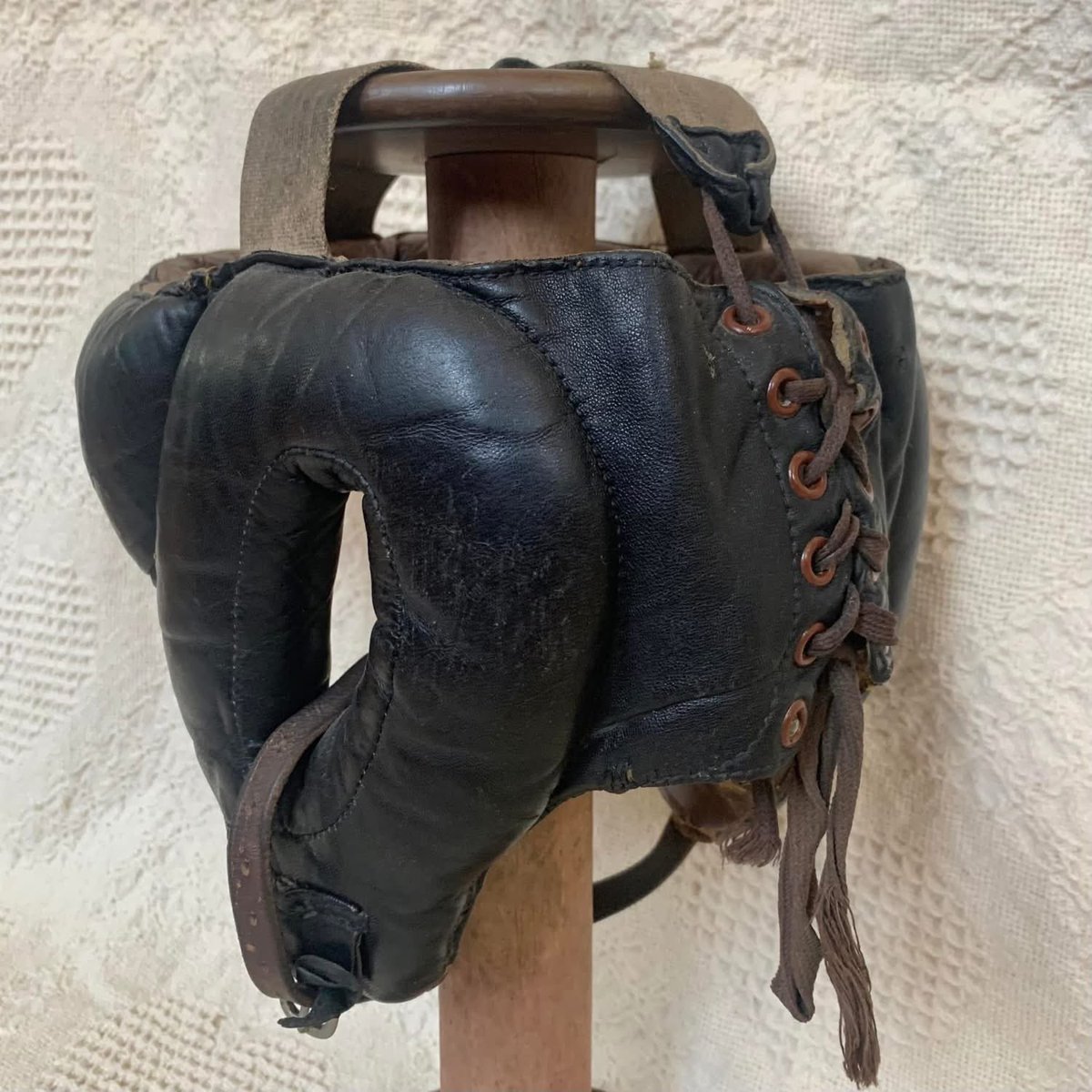
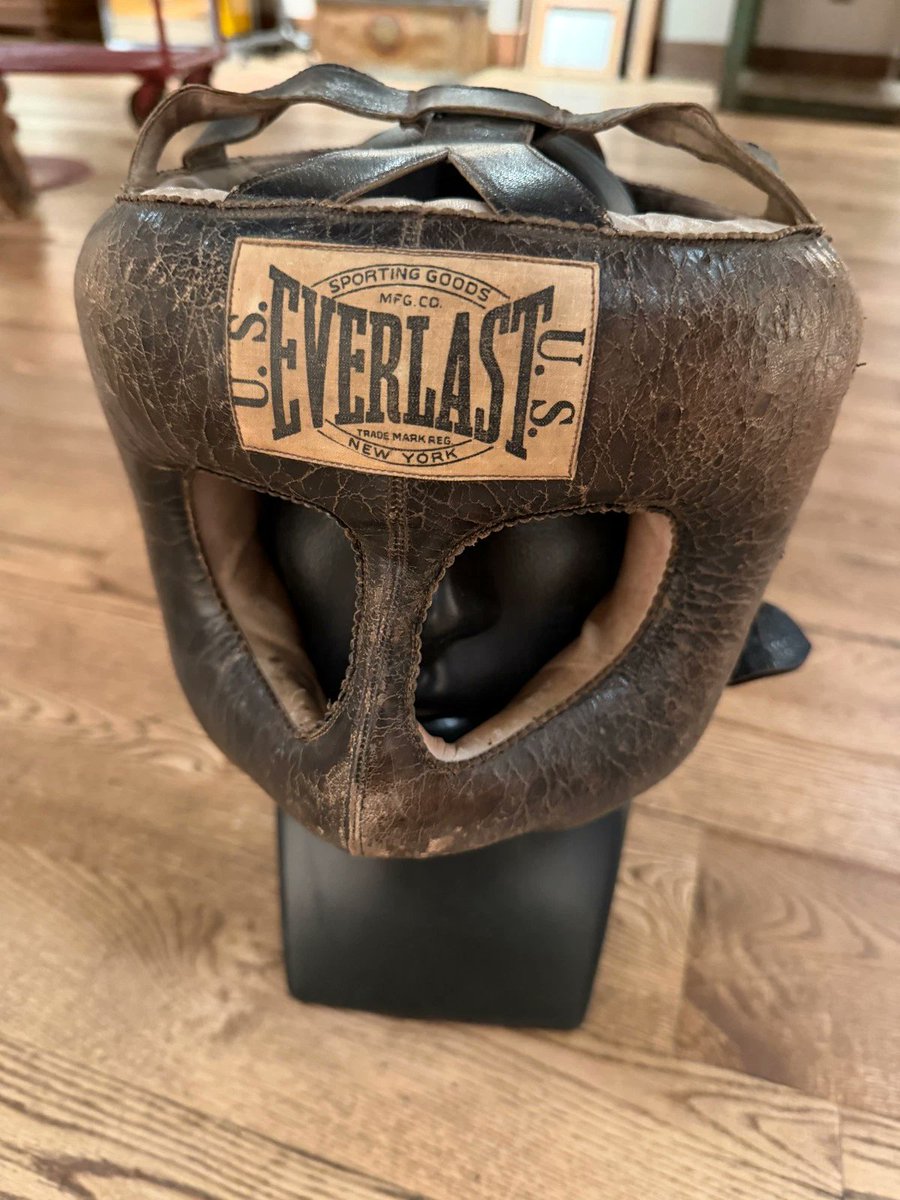
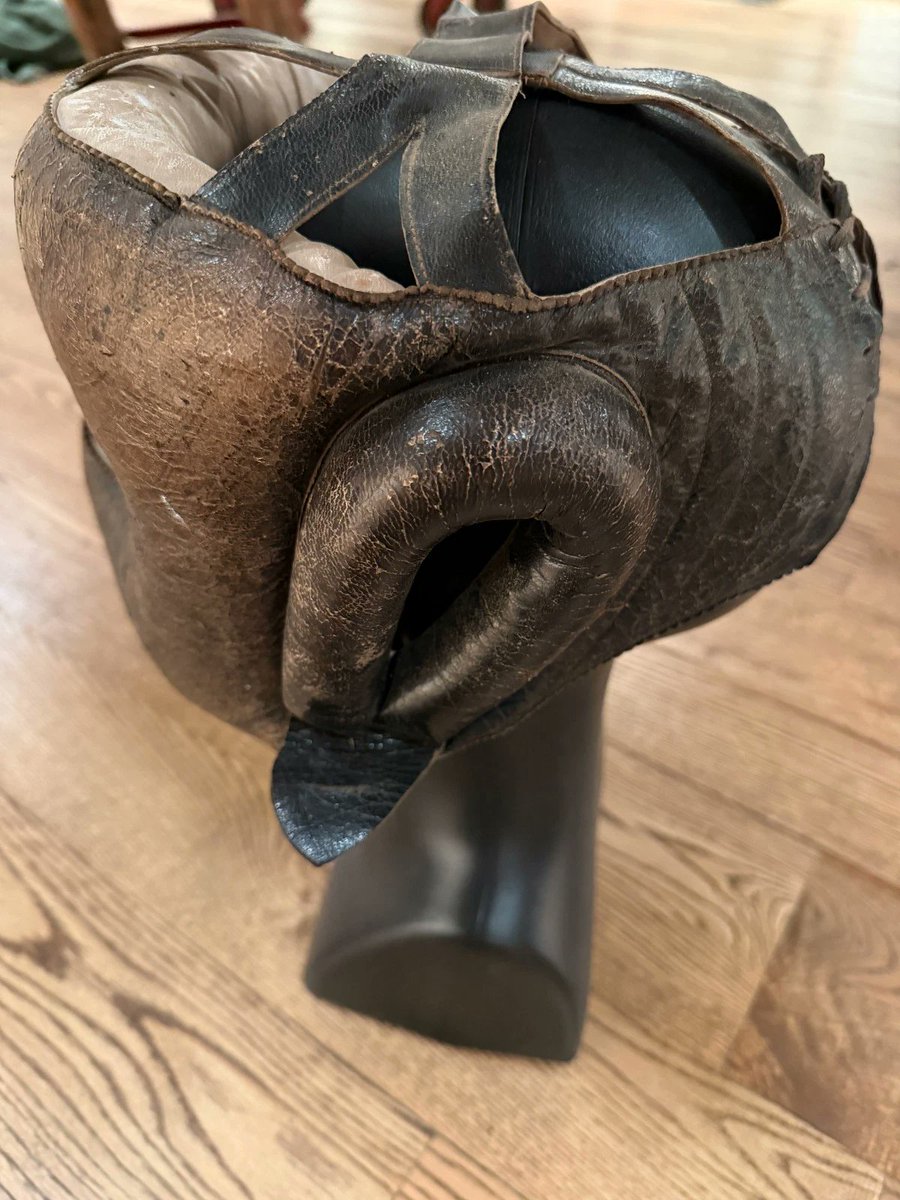
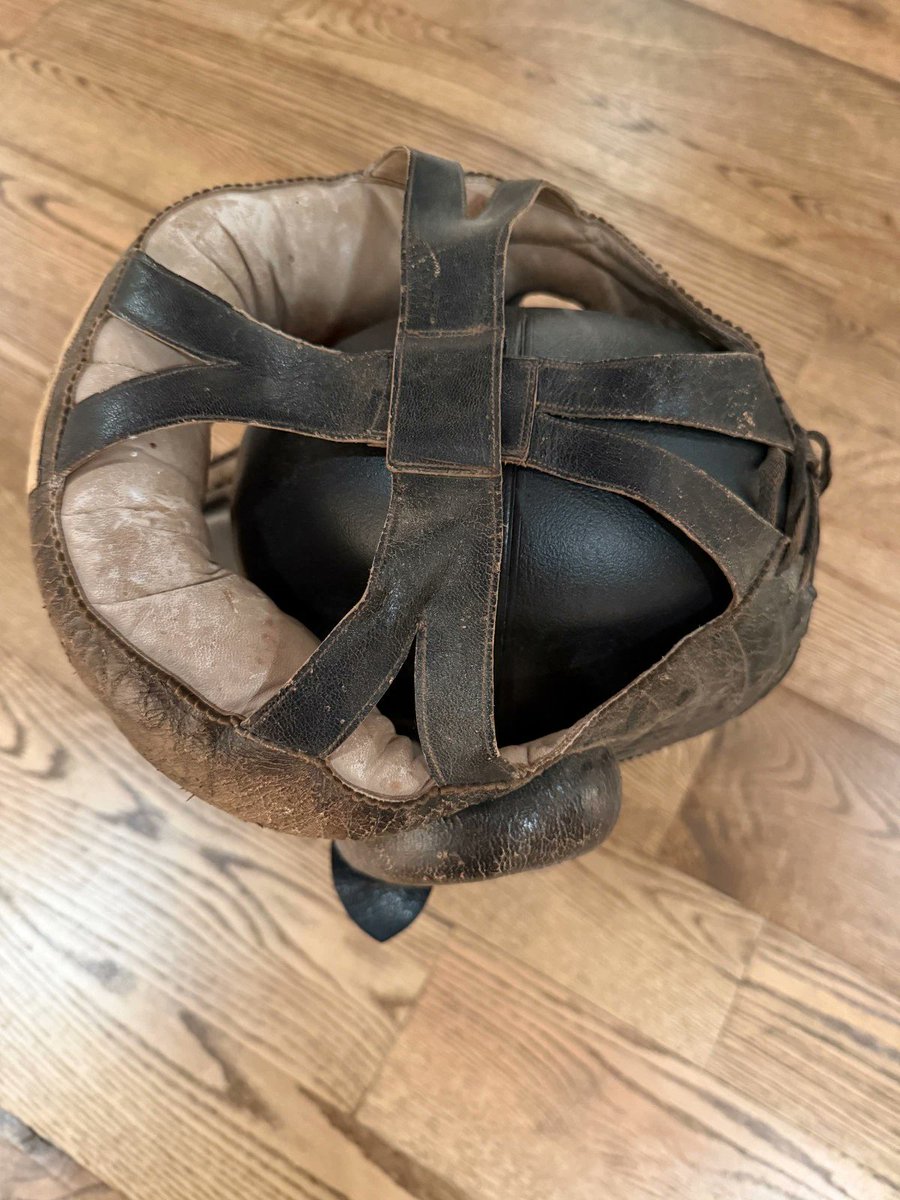
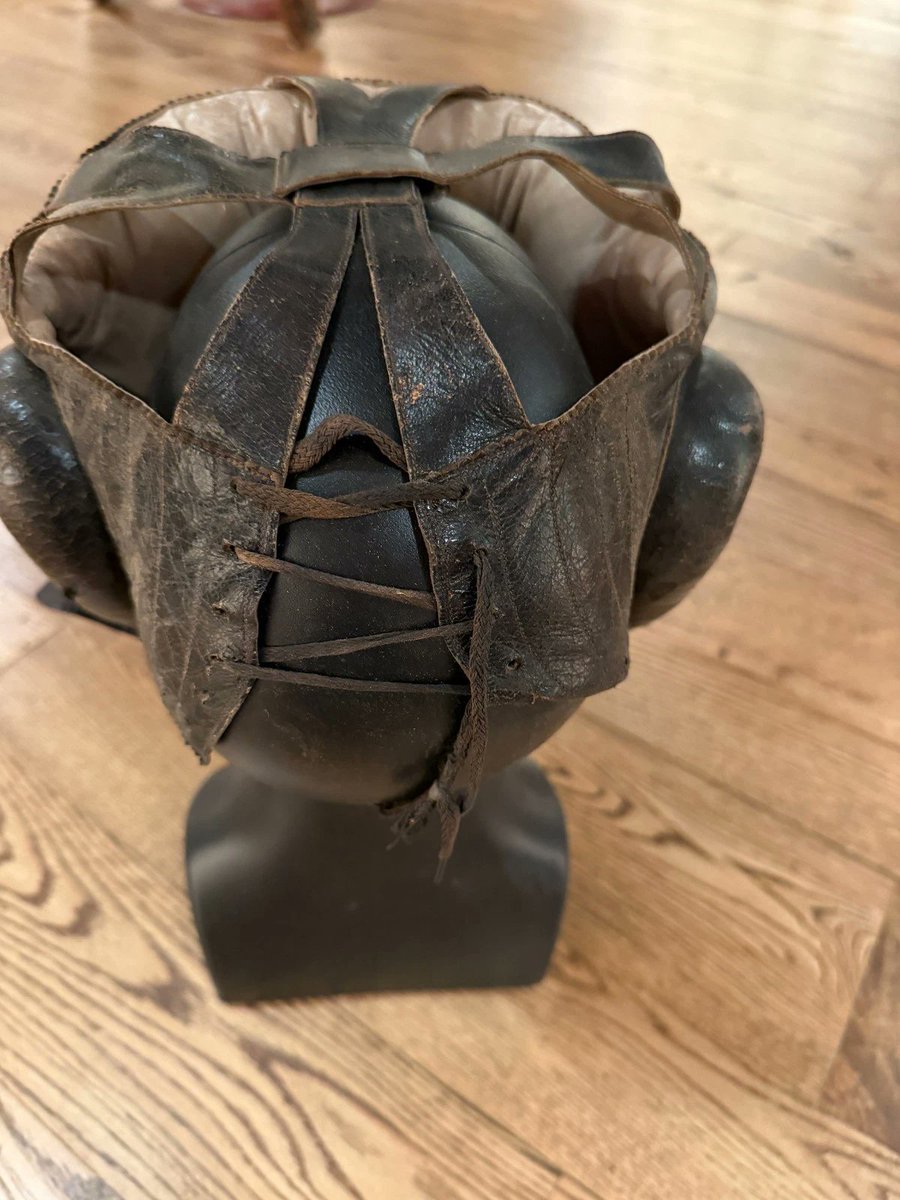
Here's something you rarely see outside of blurry newspaper photos and patent drawings. 1920s Everlast full face head gear. Fellow on eBay is asking a cool US$2500. In 1917, two years before winning the title, Jack Dempsey commissioned a local swimsuit innovator, Jacob Golomb (who later founded Everlast), to design protective headgear and gloves that could survive 15 rounds of intense sparring.
2
11
50
1,553
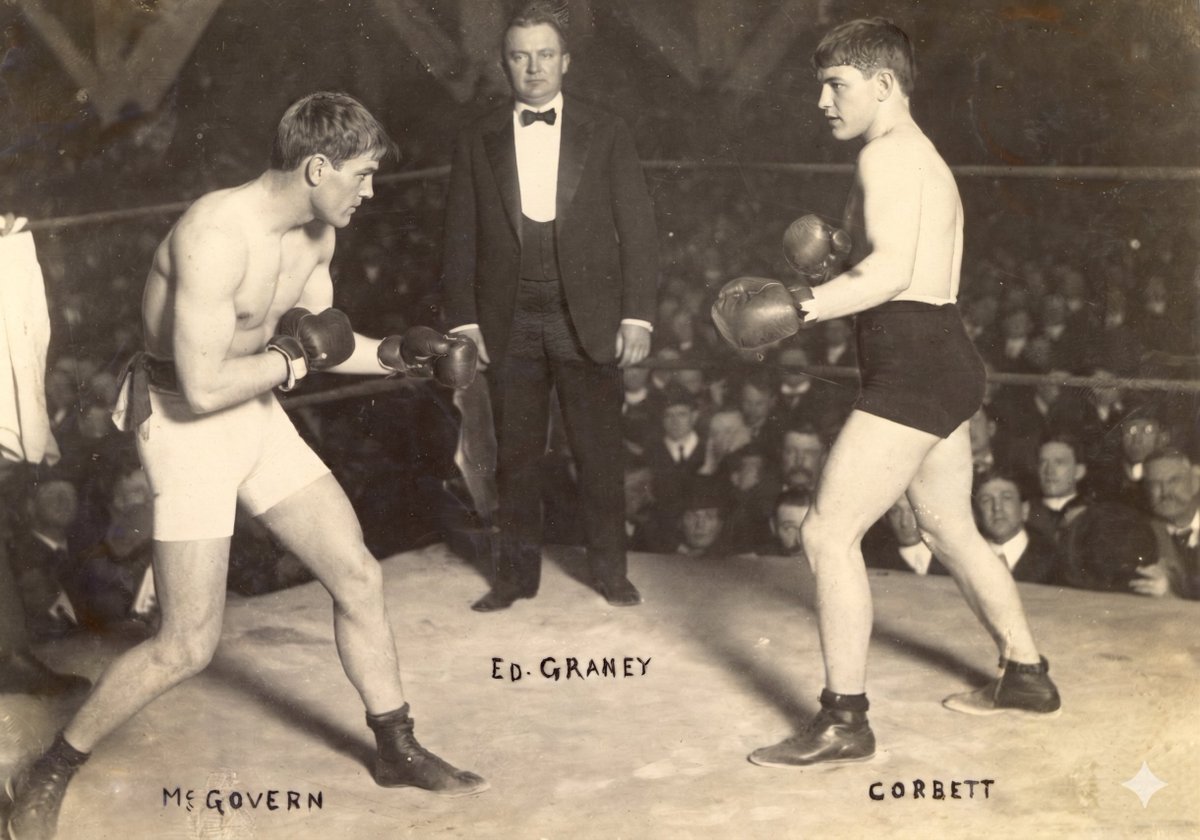
In 1920, famed referee Eddie Graney, who made wearing a tuxedo as third man popular when a referee wearing a boiled shirt was seen as a bit of reckless ostentation, and evening clothes was something worn behind the footlights in New York plays, was asked what was the oddest thing he'd ever experienced as a referee.
He immediately replied, without a doubt it was during the time of the second fight between Terry McGovern and Young Corbett II, which took place on March 31, 1903, at the Mechanic's Pavilion in San Francisco. McGovern was considered invincible until he lost to Young Corbett at their first fight in 1901 at Hartford, Connecticut. But Corbett had earned only a draw in a hard-fought 20 rounds against Eddie Hanlon a month before, so the winner of their rematch was anyone's guess.
"A few days before the fight I visited McGovern to talk over the rules," said Graney, "I asked Terry how he wanted to fight."
'Straight rules,' replied McGovern, 'protect yourself at all times.' That was McGovern's way."
"I visited Young Corbett at his quarters next day, and told him how McGovern wanted to fight."
'I don't care how we fight,' said Corbett. 'I don't care how McGovern fights. I'll tell you that fellow fights only one way, and the result will be the same. McGovern will rush me the moment the bell rings for the first round. He'll tear in and hook his left for my jaw. I'll beat him to the punch with a straight left and stop his rush. He'll go crazy and tear into me with a right swing. I'll step in to meet him and beat him to it with a straight right and put him down. That'll be the end of the fight, or it will start him on his way for a beating. Let him fight under any rules he likes.'
"In the fight everything came along just as Young Corbett said it would," Graney continued. "Terry rushed and hooked his left and Corbett beat him to the punch with a straight left inside to the jaw and stood him up on his heels. Terry went wild and tore in, swinging his right, and Corbett stepped to meet him and knocked him to his knees with a short right on the jaw. Then Young Corbett turned to me and said: 'What did I tell you? Had him right, didn't I?'"
"McGovern turned to watch the timekeeper and sat up on one knee, waiting. Corbett said to him: 'Why don't you quit, the way you did at Hartford?' He was trying to make Terry get up and lay himself open for the knockout. But Terry listened for the count and didn't get up until it reached nine. At the end of the first round he had Young Corbett plastered against the ropes and was whaling away with both hands, trying to knock him out.
"Corbett had it right, though. He practically beat McGovern with that first knockdown. McGovern was dazed from that time on, and Corbett beat him in 11 rounds by punching his body and wearing him down."
1
13
314
In 1929, Jack Johnson lists his ATG Heavyweights.
'No matter how young or how old you are in boxing, there is always that temptation to compare a present-day fighter with an old-time fighter in the same class. I guess that is part of human nature. Every time a great young ball player comes up they say that he is another Ty Cobb; if a tennis player develops, they compare him to Tilden, and the same holds true in the fighting game.
I guess it holds true in any sport in which there is no definite measure of comparison. Pole vaulting, measuring rods. In other sports, where there is no record or comparative time or distance, the temptation is great to call this fighter a second Ketchel or that fighter a second 'Kid' McCoy.
So it is but natural that I, a former heavyweight champion, should have compared the champions who have held the title. I saw nearly the complete Queensbury line of heavyweight champions. I didn't see John L Sullivan, but I have studied his record so carefully that I know him pretty well, too.
The greatest of the heavyweight champions undoubtedly was Robert Fitzsimmons, the great Cornishman who met every acid test of the ring in championship fashion. He met the acid test of weight, he met the double test of boxer and slugger and he passed all three with flying colors. They all looked alike to him. He gave weight away 40 and 50 pounds at a time, and won by knockouts. He beat boxers and he outslugged sluggers. And, to cap his marvelous record, he kept on boxing until he was nearly 52 years old.
There was never a heavyweight like Fitz. There never will be. So you will understand why I placed him at the top of this all-time list of heavyweight champions.
1. Bob Fitzsimmons
2. James J Jeffries
3. Peter Jackson
4. James J Corbett
5. Sam Langford
6. Sam McVey
7. Joe Jeanette
8. John L Sullivan
9. Philadelphia Jack O'Brien
10. Tom Sharkey
11. Gene Tunney
12. Jack Dempsey
You will notice that I have placed Tunney and Dempsey far down on the list. I did that for the very good reason that they don't belong with the old-timers at all. Tunney, hailed as the marvel of boxing skill by the youngsters of today, was only a very fair boxer. Joe Jeanette would have boxed rings around him. So would Philadelphia Jack O'Brien, despite Tunney's advantage in weight.
John L Sullivan is a tradition of the ring, but actually he was nothing more than a strong, tough, game big fellow who knew little or nothing of what we understand of boxing today. His losing fight with Corbett was the best illustration of his short-comings. He was bewildered by a feint, completely at the mercy of every boxing trick. It took a great boxing master to do it, of course, but nevertheless it was done.
Third place on my list I give to the gallant Australian black, the immortal Peter Jackson. Here was the first of the clever big fellows, and his caliber can be judged from the fact that when he had passed his prime he went 61 rounds to a draw with Jim Corbett.
I put Langford fifth and yet might have won against any of the four. All "Tham" needed was one clean shot to the whiskers to end any fight, but I don't think he would have gotten that clean poke at Fitz, Jeff, Jackson or Corbett. Jeffries would have held off Langford with that jig-boom left hand he held out when he crouched.
Where I fit in this ranking is not for me to say. It would have been great to have met any or all of them in my time. For instance, I always wished that I could have met Jim Corbett. He was faster on his feet, but I think I was faster with my hands, and I know I could have hit harder because of my weight. However, Li'l Artha had better stop right here or he'll be accused of blowing his own horn, and that would never do.'
- Jack Johnson
Source: Courier-Post (Camden, New Jersey, USA) - Thursday 25th April 1929
h/t @LoneliestSport
11
20
87
3,476
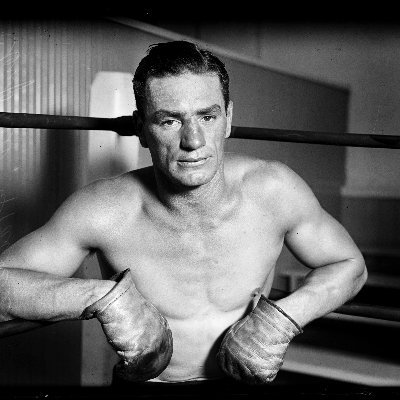
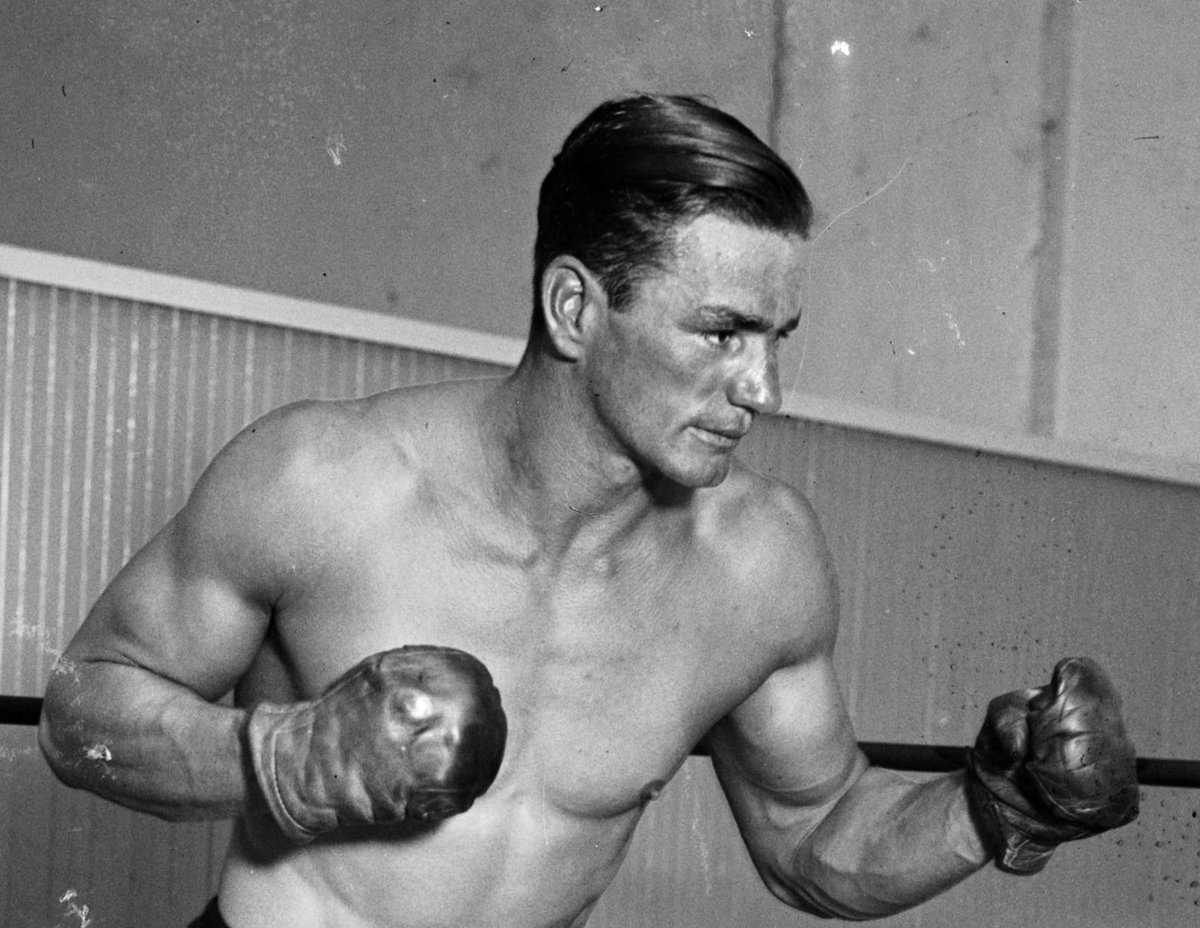
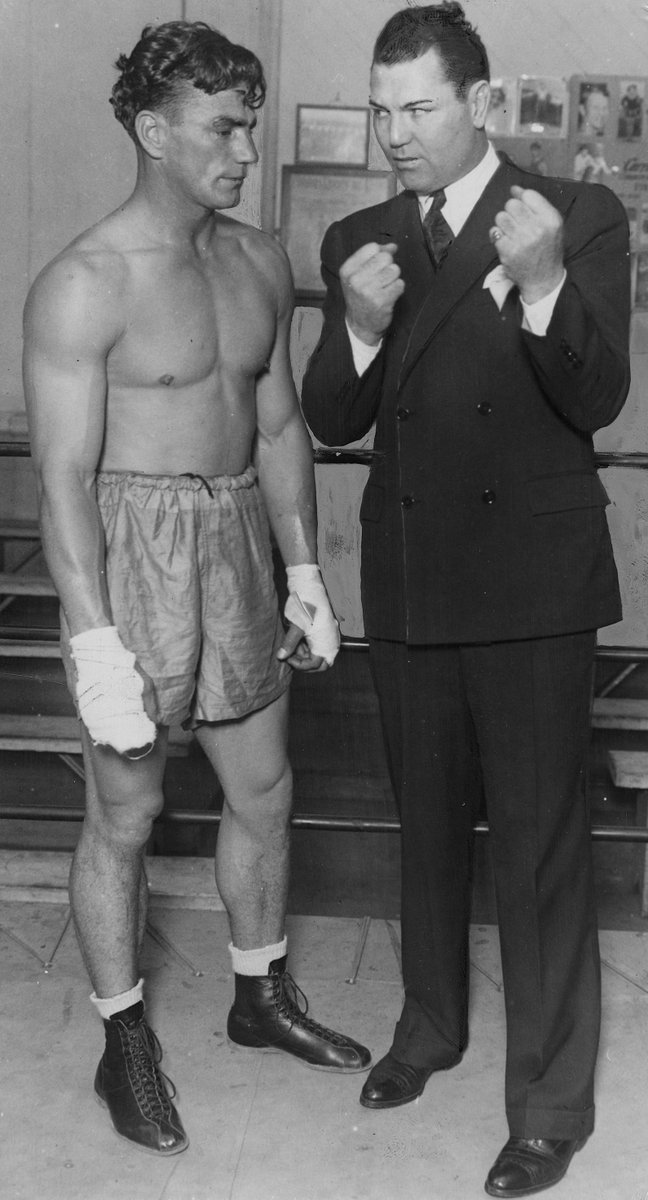
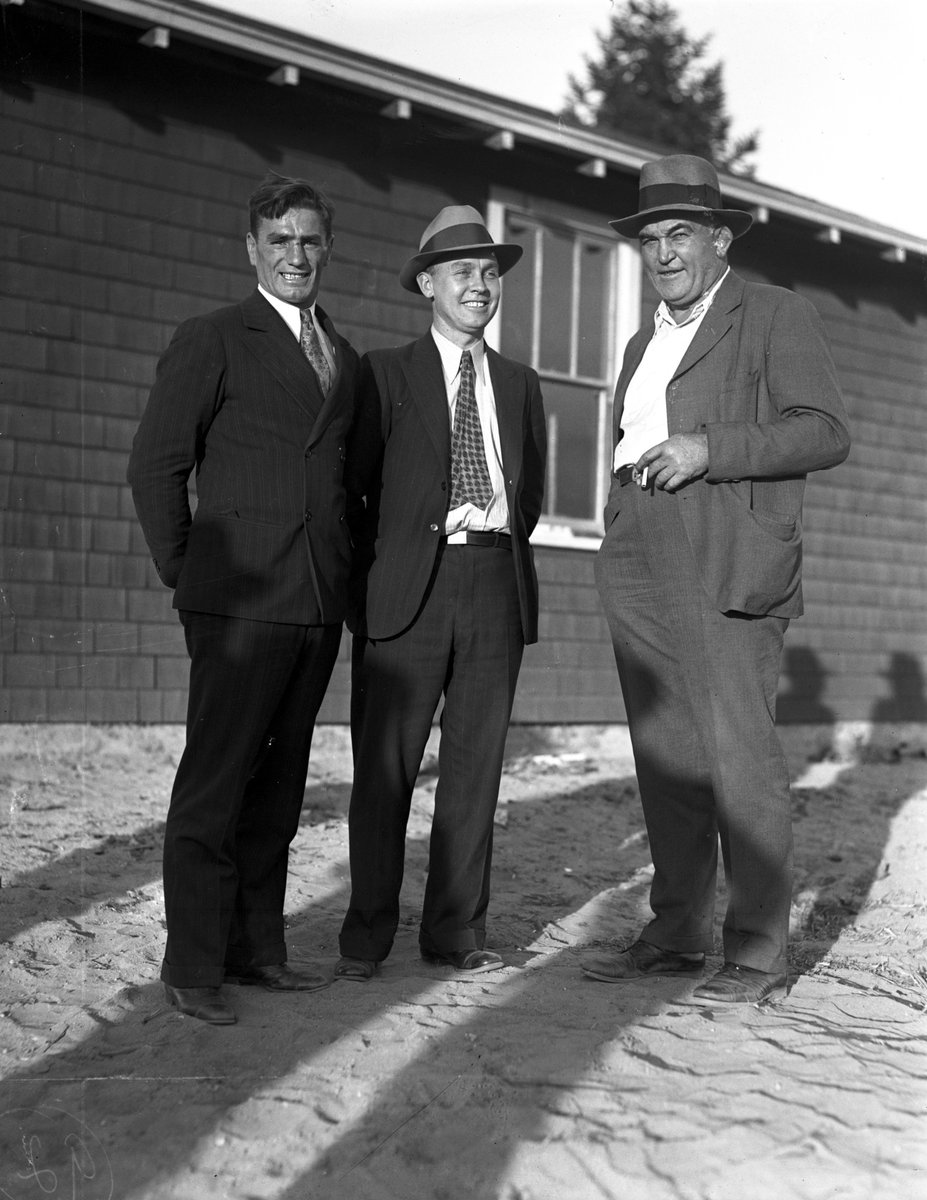
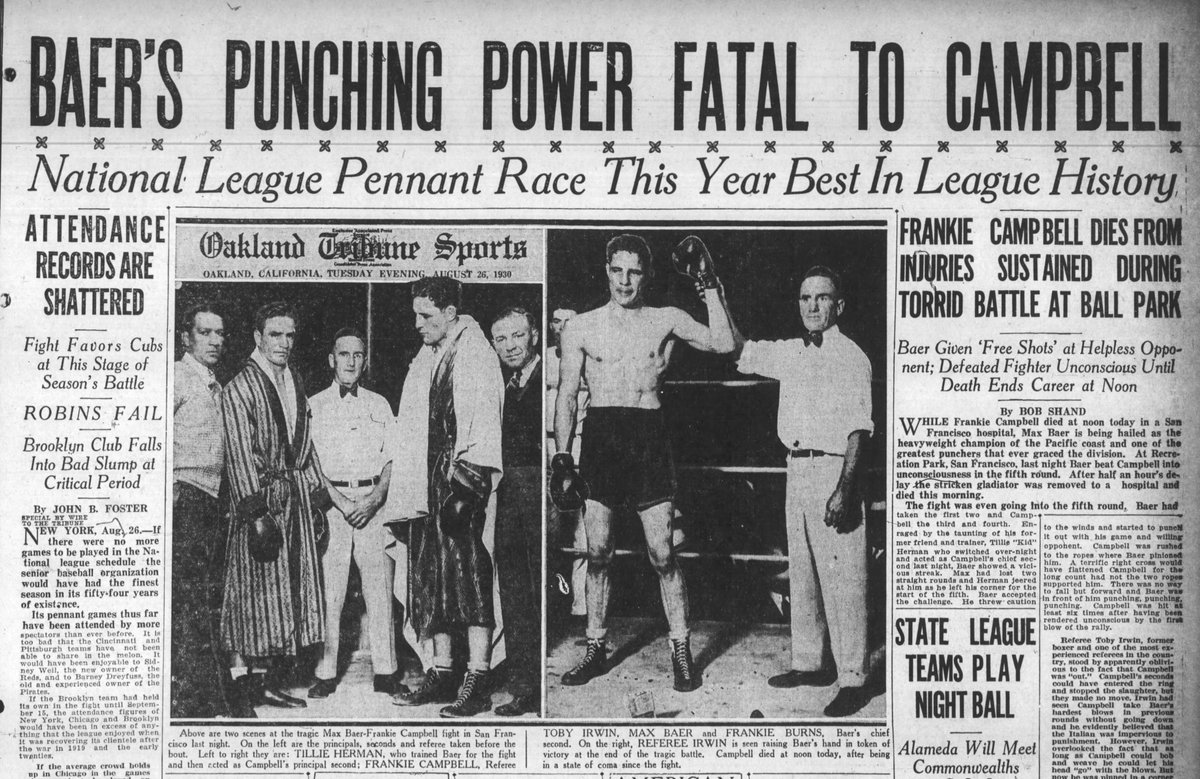
On this day in 1904, Francesco Camilli aka Frankie Campbell was born in Hibbing, Minnesota. He would boast a record of 30-4-3 over his 6 year career, before he was intentionally and purposefully beaten to death (no I didn't stutter there) by future Heavyweight Champ Max Baer on 25 August 1930. My biography with 1400 primary sources on the brutal truth behind the Baer-Campbell fight, exposure of the many myths about Max Baer, and the tragic life of Frankie Campbell, is available at: a.co/d/gq4Zad1
2
3
16
596
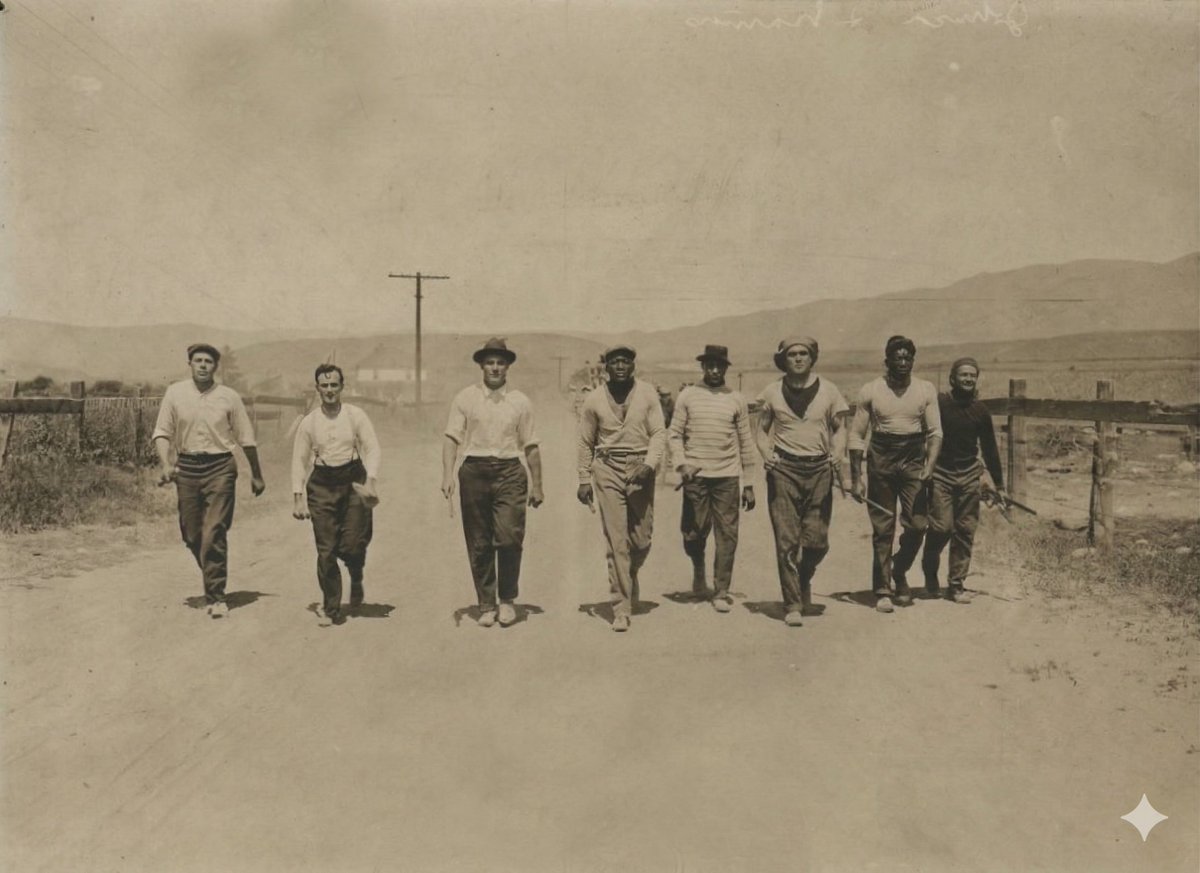
Looking like a scene from the Wild West, heavyweight champ, Jack Johnson, and his crew train on the back roads outside of Reno, Nevada, before his "Fight of the Century" on 4 July, 1910 against James Jeffries.
5
13
617
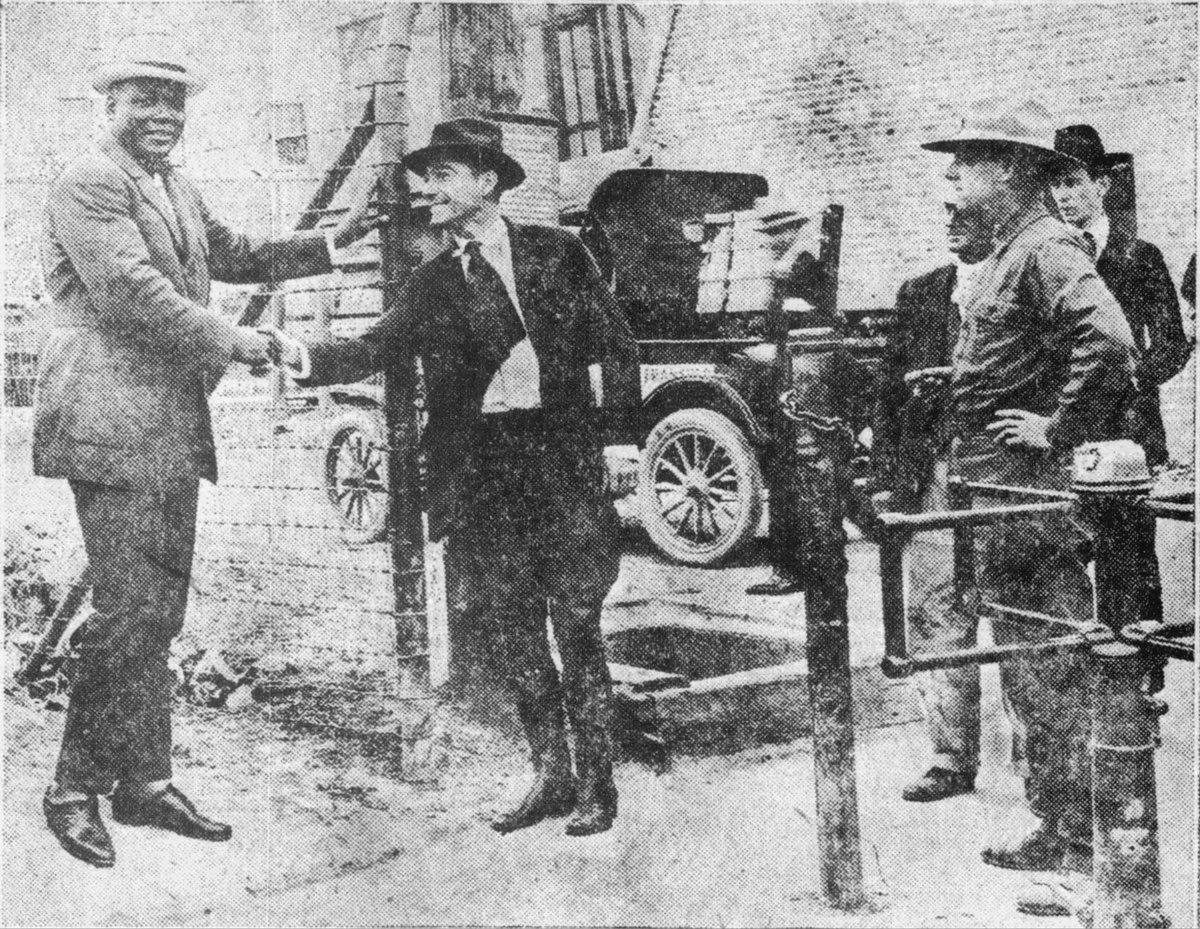
On 20 July, 1920, former Heavyweight champion, Jack Johnson, surrendered to Billy Silver, deputy sheriff of Imperial County, California, and former trainer of Stanley Ketchel, at the Mexican border in Tijuana. He had been convicted in 1913 for violating the Mann Act, which forbade transportation of women across state lines for "immoral purposes," a law largely used to target his interracial relationships, but had fled the country. After the loss of his title at a fight in Havana, Cuba, in 1915 to Jess Willard, Johnson spent years of exile in Europe and South America, before he moved to Mexico by 1919. Upon his surrender, Johnson was escorted to Leavenworth Federal Prison in Kansas to begin a one-year sentence.
5
9
414
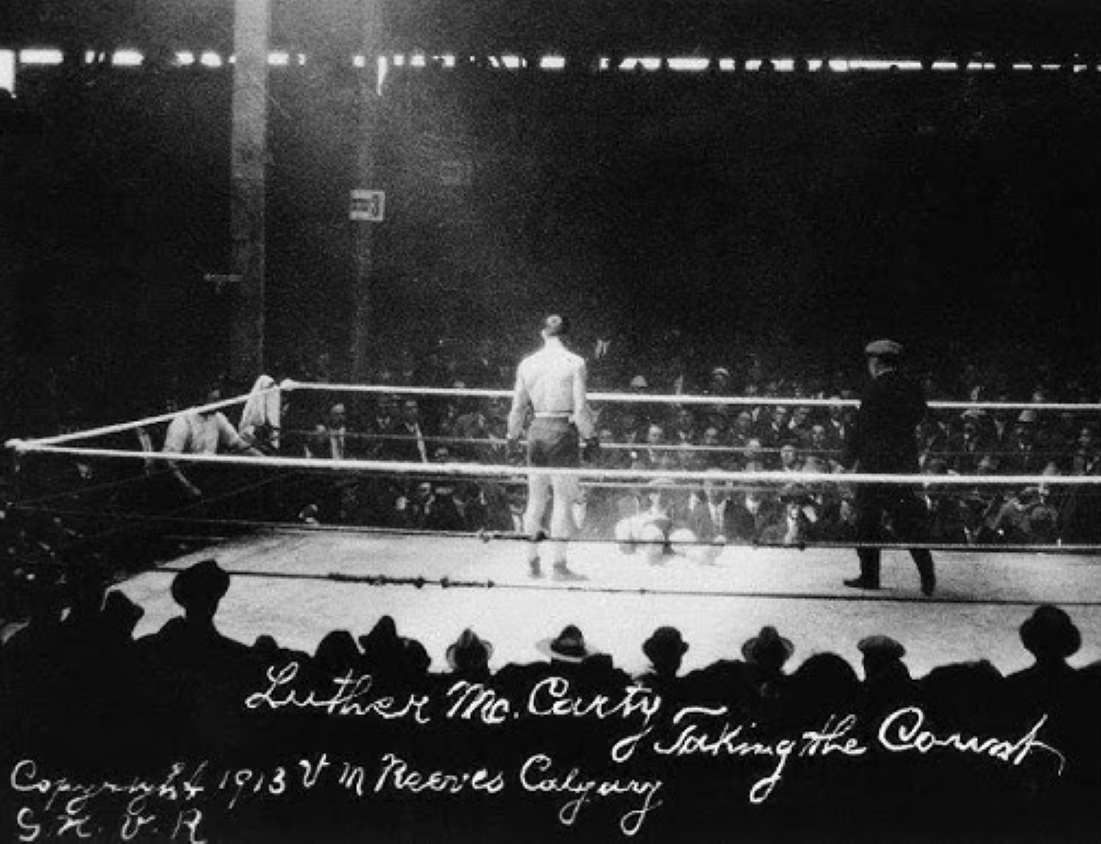
On 24 May, 1913, heavyweight phenom Luther McCarty kissed his wife and young daughter goodbye and headed from his home in Wild Horse Canyon, Nebraska to a boxing ring in Calgary, Alberta, Canada where the heavyweight hopeful would face his next opponent, Arthur Pelkey. The match would not proceed beyond the first round and history would forever ponder just how good Luther McCarty could have been.
At the sound of the gong, Pelkey quickly threw a hard left uppercut that connected solidly with McCarty’s chin, snapping his head back, followed by a solid right to his chest. McCarty stiffened, his knees buckled, and he collapsed to the floor.
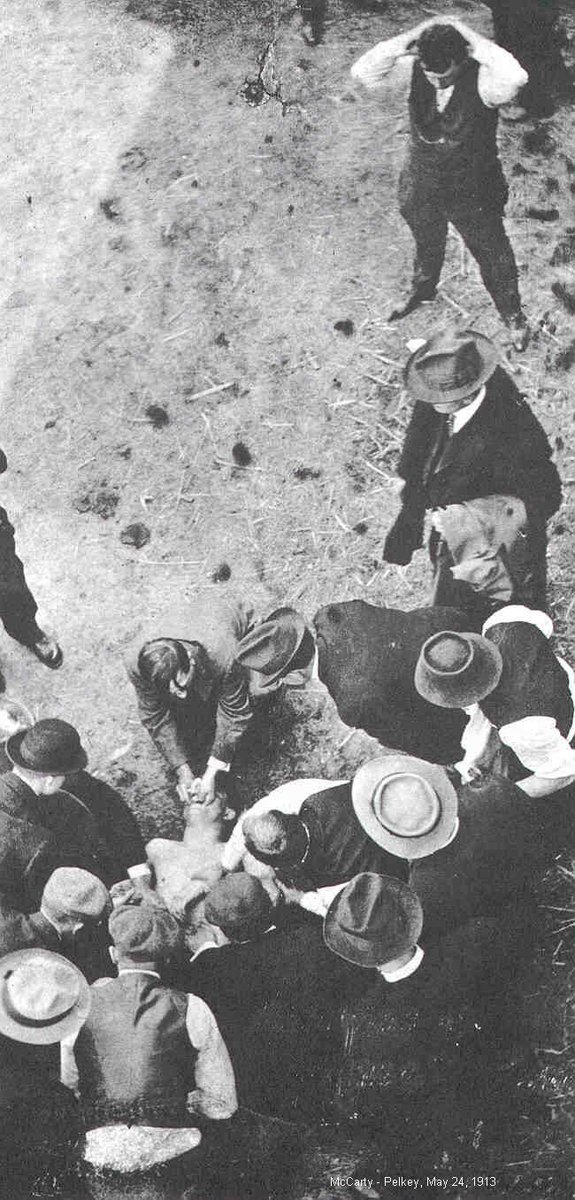
After restorative methods failed to revive him in the ring, McCarty was dragged outside where more officials unsuccessfully worked to save him. But they were effectively trying to revive a corpse.
It was later thought the punch to McCarty's chest had stopped his heart. However, an autopsy and subsequent investigation determined that McCarty's fall from a horse a few days earlier had fractured one of his vertebrae. Pelkey's punch to the jaw severed his spine and killed him instantly.
In later years, some noticed (in the first photo), the shaft of light that beamed down on McCarty as he lay on the canvas, and claimed it was his soul leaving his body. In what was believed by some to be justice delivered from an anti-boxing element, later that night the arena in which Luther McCarty had died by Arthur Pelkey's innocent hand, was burned to the ground.
2
4
13
296
Boxing fans who adored fight announcer Jimmy Lennon Sr. can thank Dan Tobey for taking on Lennon as his protégé. Tobey was a legend of the entire first half of the Twentieth-Century whose popularity is now largely forgotten. He began his career during a fight era before both radio and silent film. He also appeared in twenty-five movies over the years, and was immortalized in this Looney Tunes cartoon, “Bunny Hugged,” appropriately enough as a ring announcer. Dan cut his teeth at “Uncle Tom” McCarey’s Naud Junction and Vernon Arenas, when California was the boxing mecca of the nation.
1
3
12
290
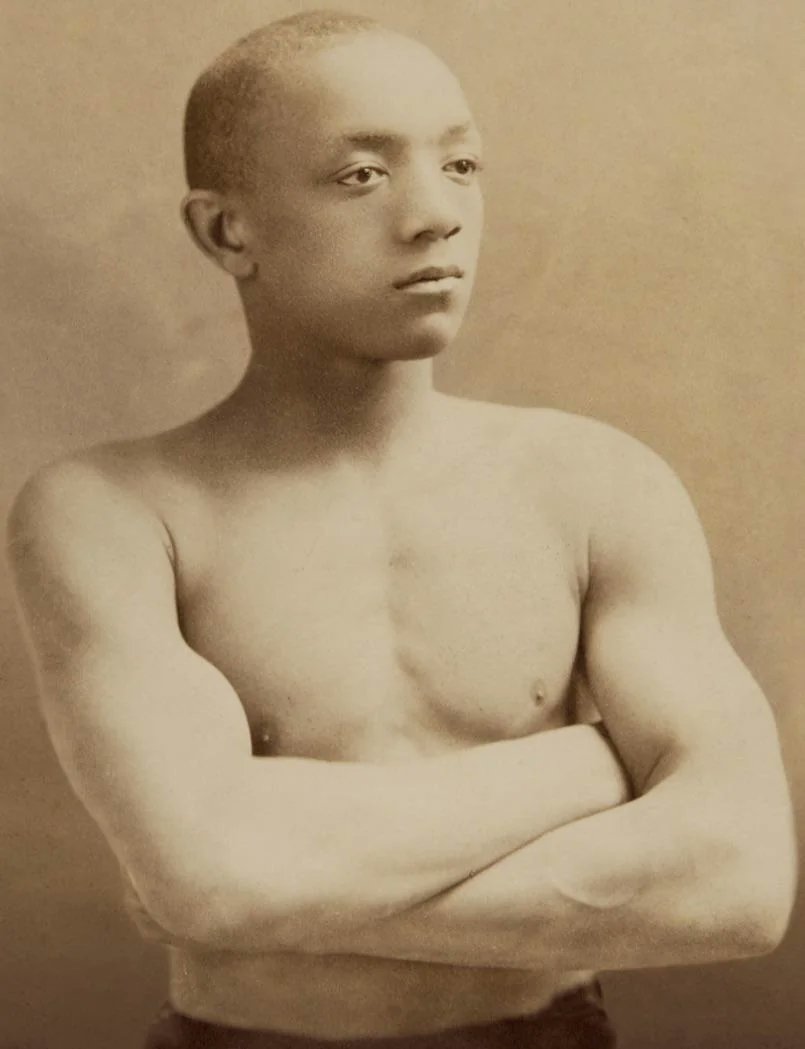
Considered by most to be the greatest bantamweight boxer ever, the first black athlete to win a world championship in any sport, the first boxer to lose and regain his world title, and credited with the introduction of shadowboxing, use of the heavy bag and dual speed bags, George Dixon was just a boy when he secured a job as a messenger for a photography studio in Boston, Massachusetts, where all the notable fighters came to have their pictures taken.
On the walls of the studio hung pictures of John L. Sullivan, Peter Jackson, Charley Mitchell, Jake Kilrain, Mike Donovan and Jack Dempsey. When nobody was around, young Dixon would gaze at the walls and imitate their fighting poses.
In trotting around the local newspaper offices and sporting clubs, Dixon came to know the editors and promoters of Boston. He lived in the fighting atmosphere. In 1886, during a visit home to his family in Halifax, Nova Scotia, Canada, he fought his first ring battle at age 16 against Young Johnson, whom he knocked out in three rounds for a purse of $1.90.
Often referred to as "the fighter without a flaw" due to his superb speed, stamina, and defense, for the next fourteen years, Dixon burnished his reputation, first in Boston and then across the world, reportedly earning upwards of $250,000 (approx. $10 million today), and taking the Bantamweight and Featherweight titles. Upon his loss of the Featherweight title in 1900 to "Terrible Terry" McGovern, Dixon continued to fight but never challenged for a title again. His last pro bout was in late 1906.
After retirement, Dixon ended up in abject poverty. He lived on the streets of New York City as he struggled with alcoholism. He was admitted to the alcohol ward of Bellevue Hospital, where he died on 06 Jan, 1908 at age 37.

1
12
36
1,409
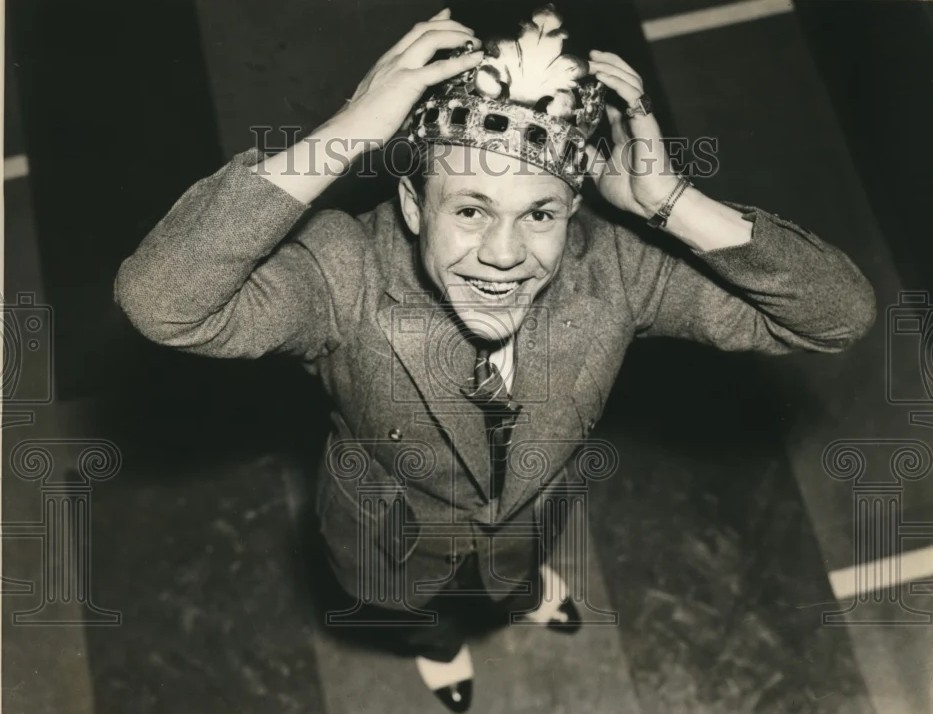
'Oh, Jesus, l Ioved to fight. l fought, l think it was, about forty fights in one year. But what you going to do? Good things aIways come to an end. l said l might as weII quit and have it over with. l had 238 fights aItogether with the bootIeg fights. l Iost 8. l guess l was Iucky. Them were the good oId days. lf you try and try hard enough, you'II aIways succeed. But if you don't try, how the deviI are you going to succeed?' - Lou Ambers
h/t @LoneliestSport
2
8
28
1,431
"Listen to this, buddy, for it comes from a guy whose palms are still wet, whose throat is still dry, and whose jaw is still agape from the utter shock of watching Joe Louis knock out Max Schmeling." Bob Considine in 1938 after the rematch.
6
29
983
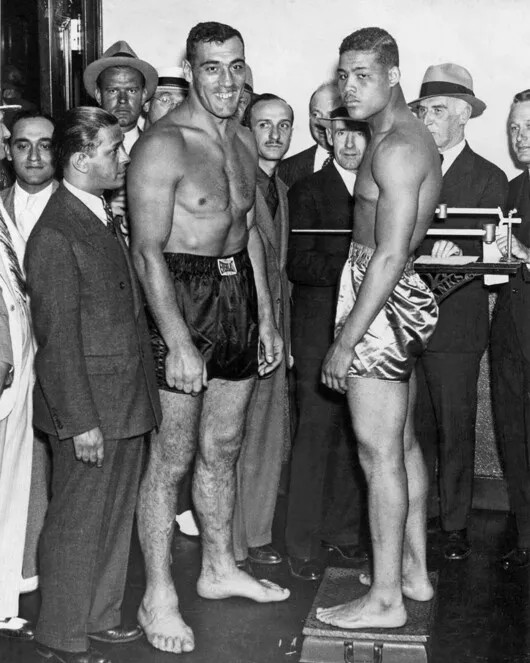
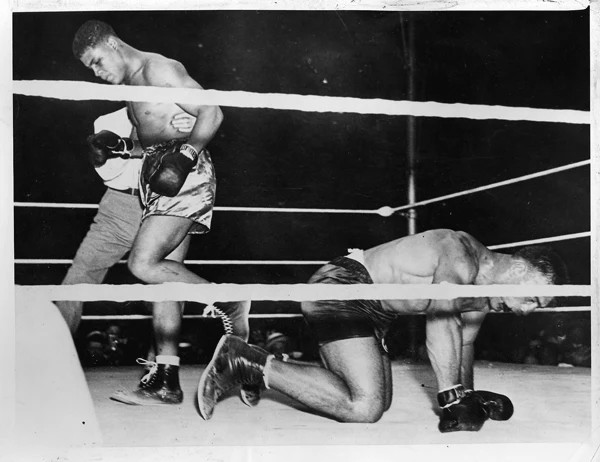
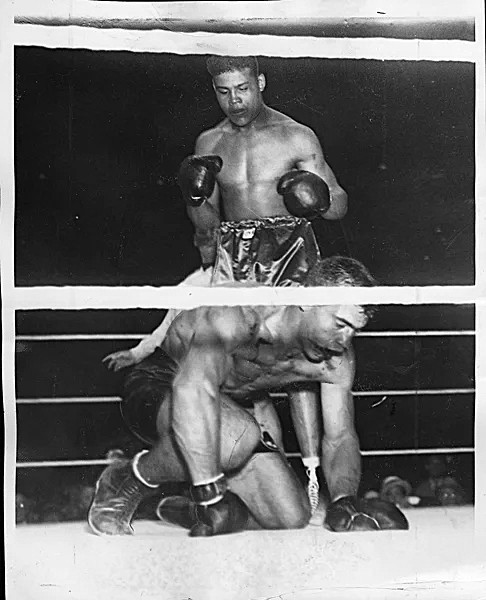
Nobody set the scene better than legendary sports columnist Grantland Rice.
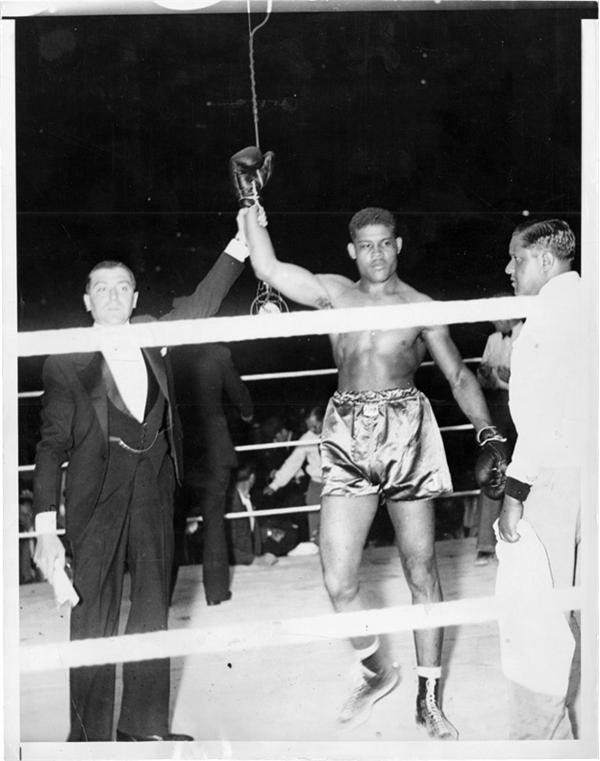
"A black blizzard blew out of Michigan, leaving in its devastating wake the slashed and battered remains of Primo Carnera, the man mountain of Italy. They led the Sequals steer to the vast slaughtering pen of the Yankee Stadium, where Joe Louis, the brown butcher of Michigan with a pair of cleavers known as the right and the left, was waiting for the big job.
In the sixth round, surrounded by 70,000 spectators, Joe Louis hammered Carnera to the dust of the floor with three terrific right-hand punches. Each one of these punches came with the lightning flash of a cobra's strike. As each punch landed, the 260-pound mammoth crashed to the floor his battered face smeared with blood.
As Carnera fell, he came up again, gamely and gallantly, but without the slightest sense of ring finesse. He rose from the dust and blood-smeared floor of the ring after the third punch, groggy and bleeding, reeling against the ropes, completely helpless and unable to lift a hand.
It was Joe Louis, known as the Brown Bomber, who dominated the fight from start to finish. Primo Carnera was so badly outclassed that he never had a chance. He was, from the first 20 seconds of the fight, the steer who was being led to the slaughter. He was out-boxed, outpunched and outclassed by a 21-year-old kid who is on his way to being the next champion of the world. There is nothing in the road to stop him now."
1
2
13
593
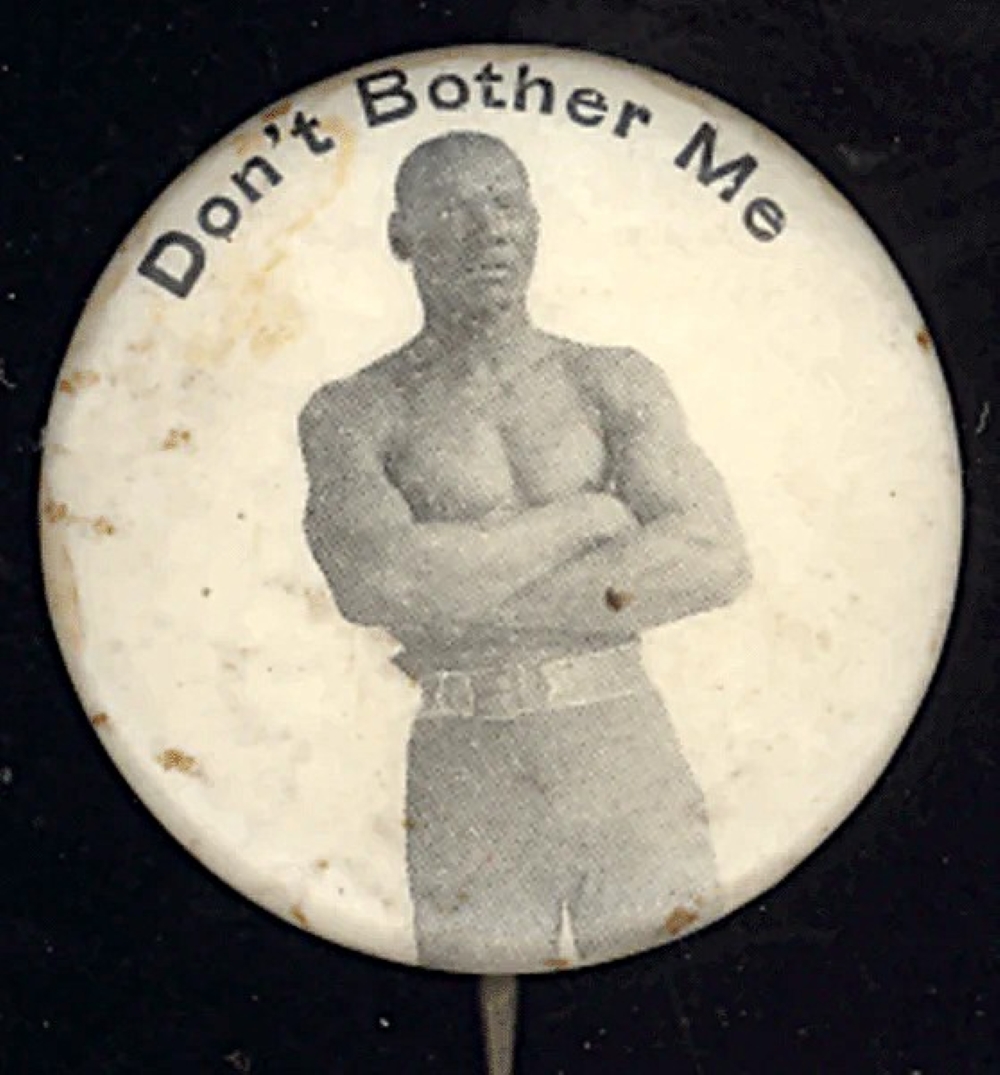
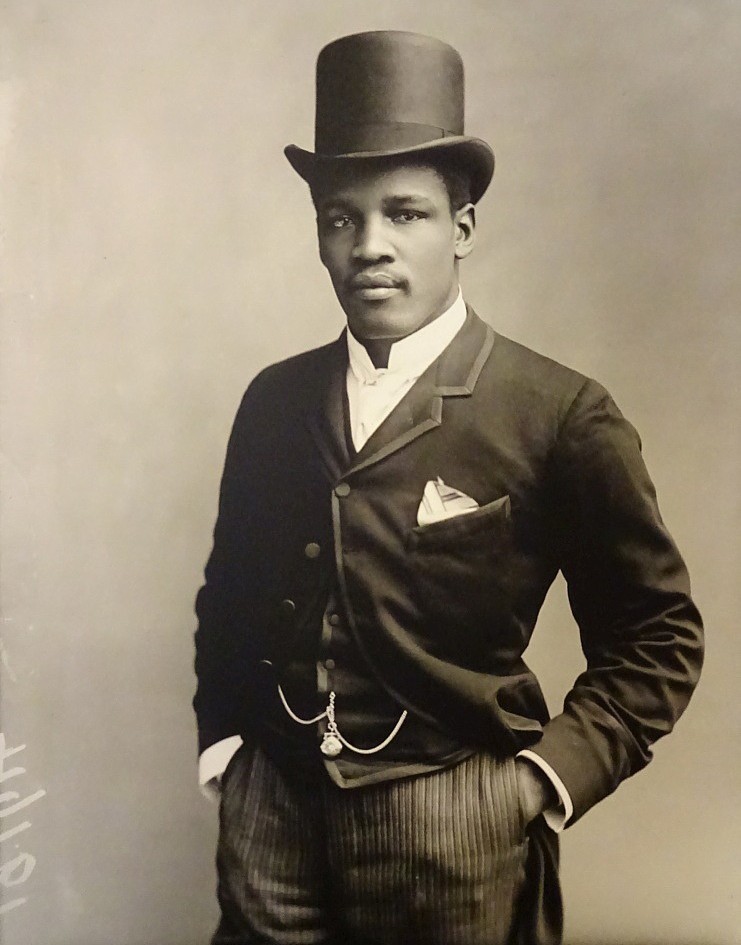
In late Autumn 1888, Australian Heavyweight Champ Peter Jackson agreed to a pool swimming contest with a $200 purse in San Francisco against Pacific Coast champion swimmer E. C. Pinkham.
Peter prided himself on his swimming skills, but knew he would have to train diligently to beat his opponent. With some local friends and his mate Middleweight Sam Fitzpatrick, the group arrived at one of the city's popular coastal bathing resorts, which boasted heated ocean water because the Pacific Ocean was notoriously chilly.
However, when he approached the Crystal Bathing Resort, the receptionist took one look at his ebony skin and blurted nervously, "You can't bathe here."
As the men neared the Palace Bathing Resort, Jackson slowed as he approached the ticket office somewhat timidly. Fitzpatrick bade him to hold back, and he approached the counter alone.
"I suppose I can go in to get a bath," Sam asked the thin little fellow in the ticket booth. "Certainly!" he replied, and made to lift the entry bar. "And my friends also?" he queried again. "Certainly, certainly!" the ticket taker enthused.
Sam leaned out toward the sidewalk and motioned Peter and their friends forward. When the ticket man caught sight of Peter's dark skin he hemmed and hawed, "Well gentlemen, I-you know I hate-but you see I can't-it will be impossible..." until Jackson and his friends retreated in disgust.
When a reporter relayed the story the next day to A. E. Ridley, manager of the Palace Baths, he replied with a sniff, "Colored people are not permitted into the baths ... it would drive the white bathers away." At the Crystal Baths, a similar response was made.
While Peter Jackson cancelled the swimming contest, less than a month later he took the Heavyweight Bareknuckle Championship of the Pacific Coast before a sold out crowd in a bout with white fighter, Joe McAuliffe. As white and black fans had anxiously awaited results outside, a well-known white lawyer eventually emerged from the San Francisco venue. "Boys," he said in dismay, "its no use." The white fans scattered dejectedly in all directions. The black fans gathered together to celebrate.
Peter Jackson had knocked his opponent out cold in the 24th round of a fight to the finish.

1
2
19
553
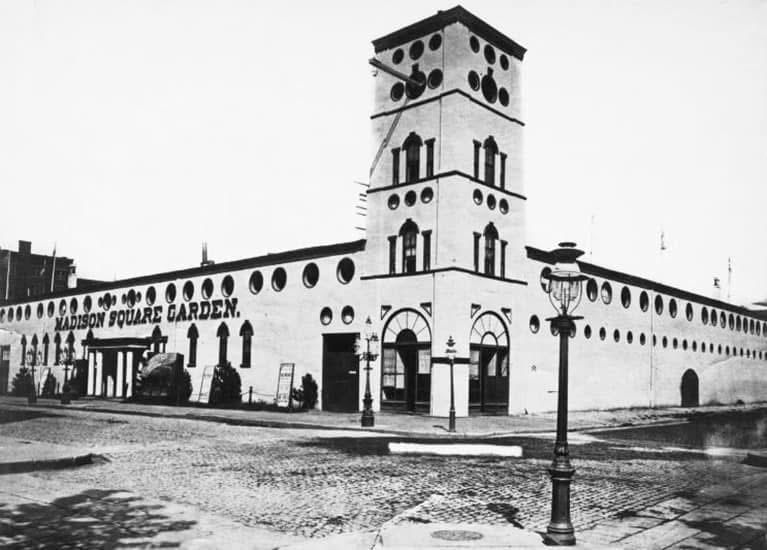
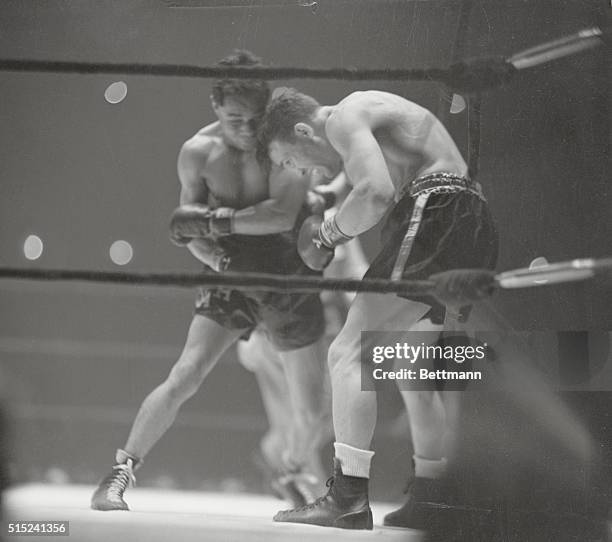
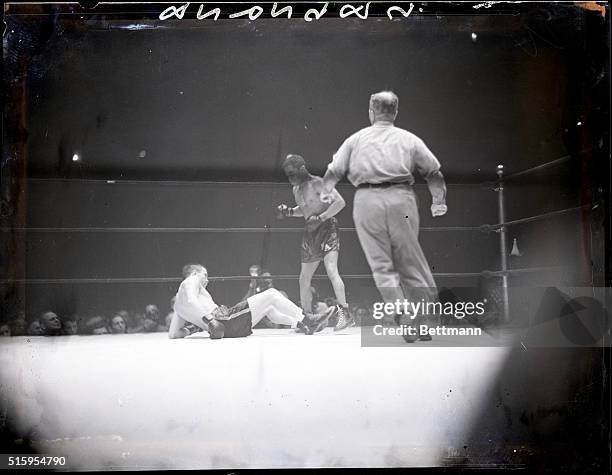
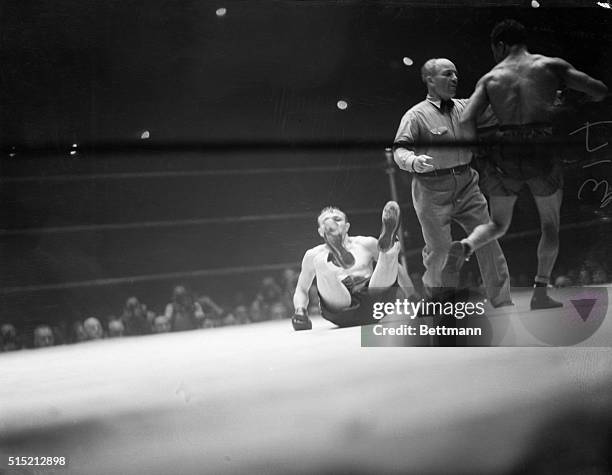
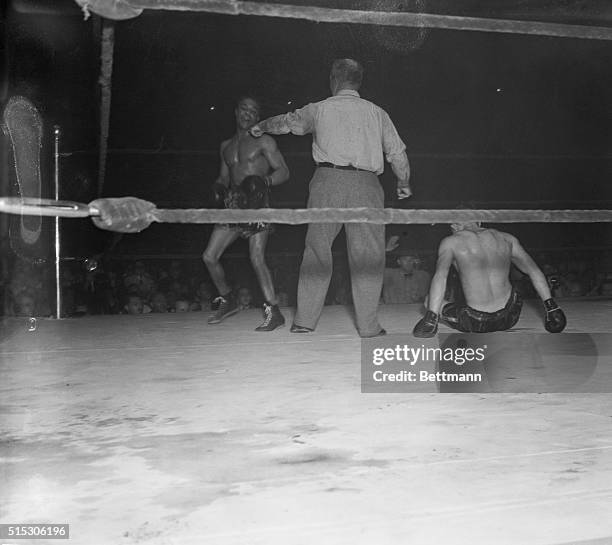
"Blood normally sells for $25 a pint. But that's the hospital price. In Madison Square Garden last night 18,000 persons paid $102,000 to watch two blood donors, Henry Armstrong and Lou Ambers, shed a quart or so in a dog-fight for the lightweight championship.
Many a bell has clanged, many a pound of resin been scuffled into the floor, many a count been tolled since two little men painted such a pugilistic canvas. They went at it with broad brushes and bold strokes, with savagery and courage for their basic colors. At the finish, which saw Armstrong's hand lifted in victory-and it had to be lifted, he was so tired-there was scarcely a shirt in the working press that wasn't stippled with blood and the floor of the ring resembled a gigantic butcher's apron.
For 15 rounds-45 full minutes-the Negro and the Italian fought as though not only the 135-pound title, but their very lives were at stake. From 10:15 to 11 o'clock they had at one another, head to head, chest to chest, toe to toe. First in this corner, then in that corner; sometimes in the middle of the ring, sometimes with the ropes cushioning their backs, but always at it, eternally laying down barrages of leather that raked one another's bodies from belly to eye-brows."
Sports columnist Henry McLemore on the 17 Aug 1938 night that "Homicide Hank" Armstrong took the Lightweight title from the "Herkimer Hurricane" Lou Ambers, thus becoming the first and only fighter in boxing history to ever hold world championships in three divisions (featherweight, lightweight and welterweight) simultaneously.
3
26
761
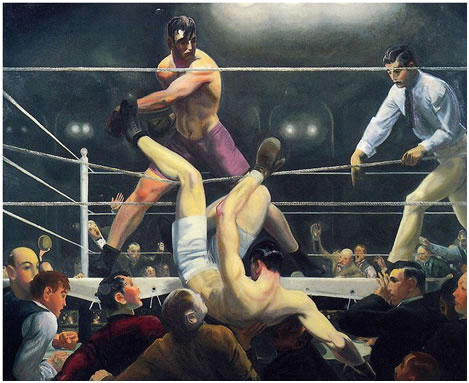
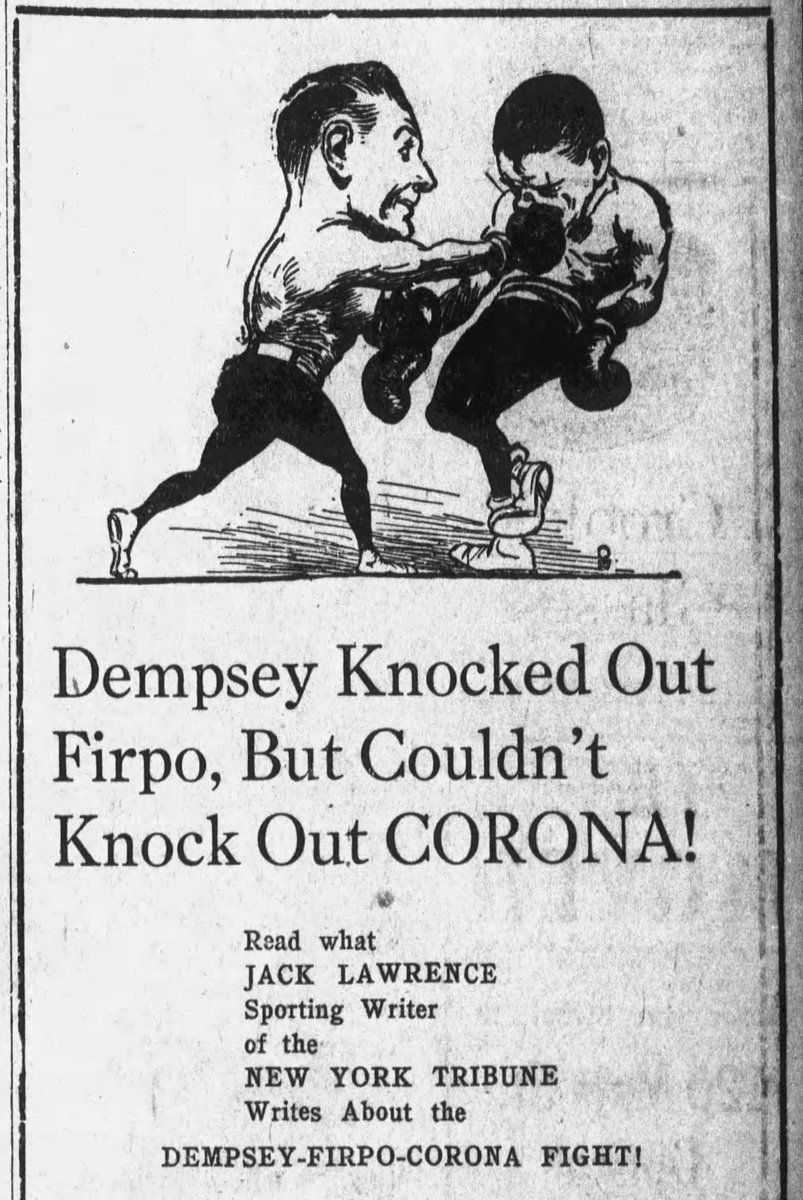
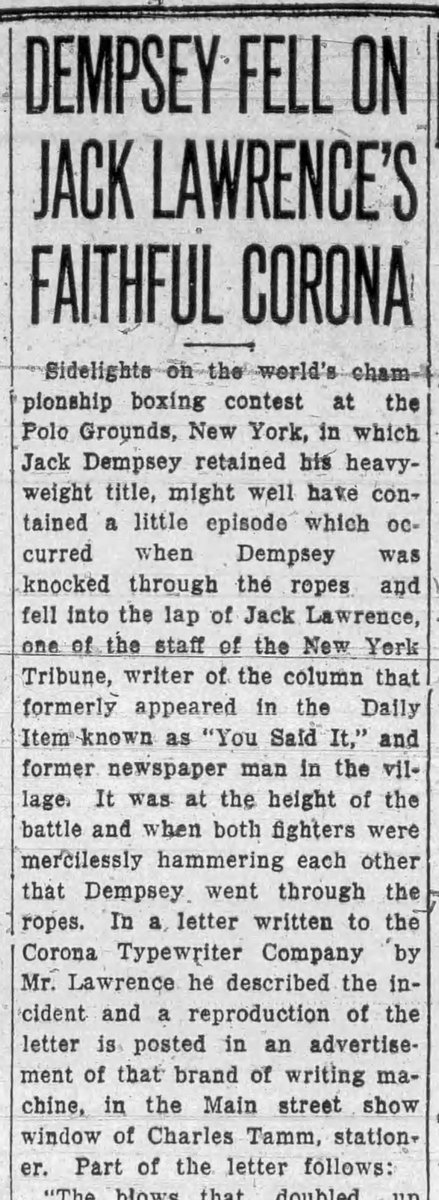
By 1943, no less than 21 sports reporters (including Grantland Rice and Hype Igoe) claimed that when Jack Dempsey flew through the ropes during the first round of his 14 Sep, 1923 fight with Luis Firpo, he landed on their typewriter. Nope. That glory goes to Jack Lawrence of The New York Herald Tribune. In an article dated 01 Oct 1923, the story behind the story was that during Firpo's onslaught at the end of the first round, the Argentinean caught the champ’s chin with a right and Dempsey went out of the ring through the ropes. He landed on his neck and shoulder on top of Lawrence’s Corona 3, cutting the back of his head. Lawrence and a Western Union telegram operator helped get Dempsey back through the ropes before the count of nine. Lawrence went on using his Corona to describe the action. When the Corona Typewriter Company heard about the incident, it launched an advertising campaign stating, “Dempsey knocked out Firpo, but couldn’t knock out the Corona 3.”
1
7
31
1,561
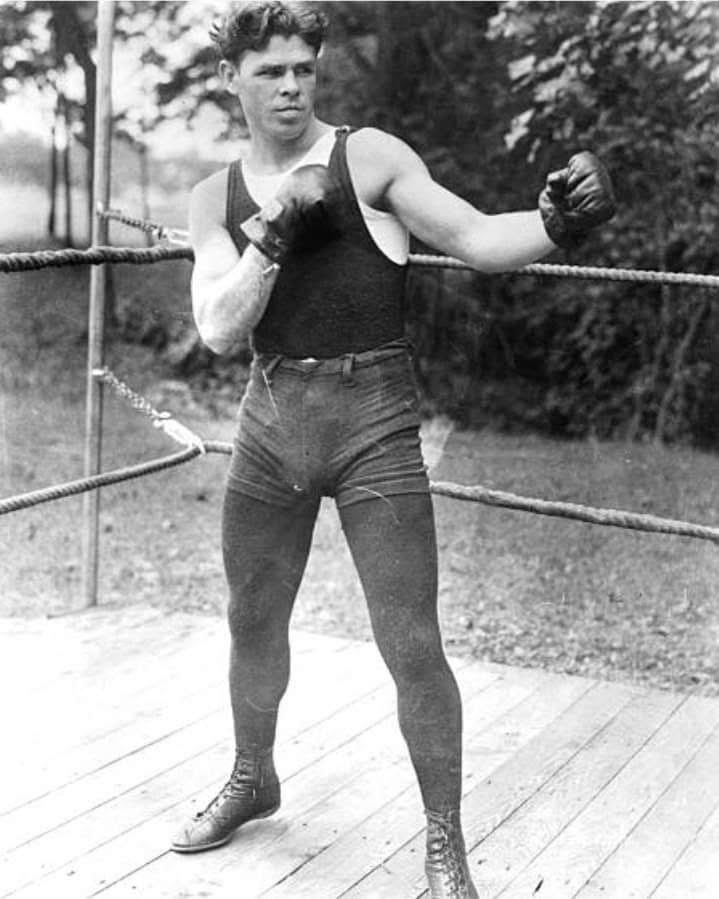
'I got on the train without being recognized by pulling my coat collar up and my cap down. I tried not to be conspicuous as I sat down in a corner seat, the cap over my eyes. Pretty soon, after the train pulled out of the station, I overheard a couple of fight fans talking about me. They were seated right in front of me. Their voices were loud and I couldn't help hearing them.
'Boy, that Walker! What a lucky bum!' One of them said. 'He won't hold the title long. Who did he beat? Britton's an old man. Anybody could have taken him.'
'I'll bet there's half a dozen kids in the neighborhood that could murder Mickey.' Said the other.
I was sensitive then, and I resented this talk. I was getting madder by the minute. As they kept taking me apart, I felt like getting up and knocking their heads together. But I was smart enough not to start a fuss on the train. I figured I'd wait until we got into the Elizabeth station. Then I'd fix both their wagons. As I was figuring out the best place to pop them, the train came to a halt. I made a beeline for them. They saw me coming and recognized me immediately. One of them grabbed my hand and shook it vigorously.
'Hey, fellers,' he shouted, 'look who's here. The champ himself. Hi, mick. You were great tonight. You murdered the bum. We knew you'd do it, Mickey, boy. You're the greatest fighter in the world.'
Gone was all my planning.
The others recognized me, too, and pretty soon I was being slapped silly. A couple of guys hoisted me on their shoulders and the crowd followed. I was carried down Broad Street all the way to Keighry Head, with the mob growing block by block. I'll never forget the impression it made on me. Here are a couple of guys calling me a bum one minute and carrying me on their shoulders - a hero - the next.' - Mickey Walker
h/t @LoneliestSport
4
6
37
881
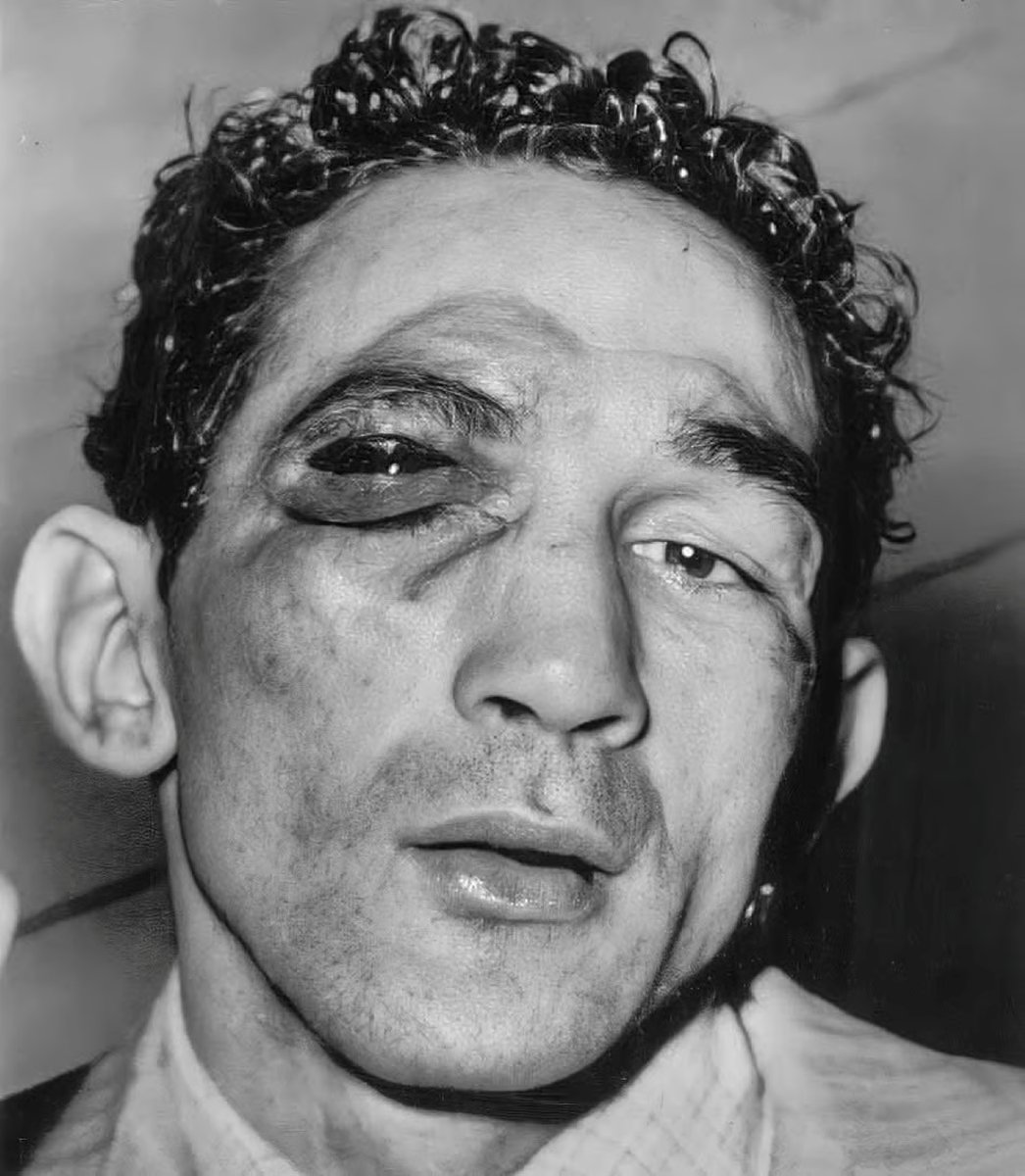
After their fourth and final fight on 26 September, 1951, the boxing licenses of both Willie Pep and Sandy Saddler were revoked by the New York State Athletic Commission for "roughhouse tactics" and unsportsmanlike conduct. Fought at the Polo Grounds, the bout was called one of the dirtiest in history; the two engaged in eye-gouging, tripping, "thumbing," heeling, and hitting on the break. Referee Ray Miller was wrestled to the canvas by the fighters during the seventh round as he tried to separate them. Pep quit on his stool before the tenth round due to this shocking cut over his right eye, which he attributed to Saddler sticking a thumb in it. At the time of the stoppage, Pep was ahead on several official scorecards. While Saddler received an indefinite suspension of about two months, Pep's was revoked for almost a year and a half.
6
21
81
4,817