
The Brazil Program is the only country-specific public policy institution in Washington dedicated to Brazil.
Joined August 2009
- Tweets 17,307
- Following 979
- Followers 10,577
- Likes 4,002
1,090 Photos and videos

The Brazil Program at the Dialogue retweeted

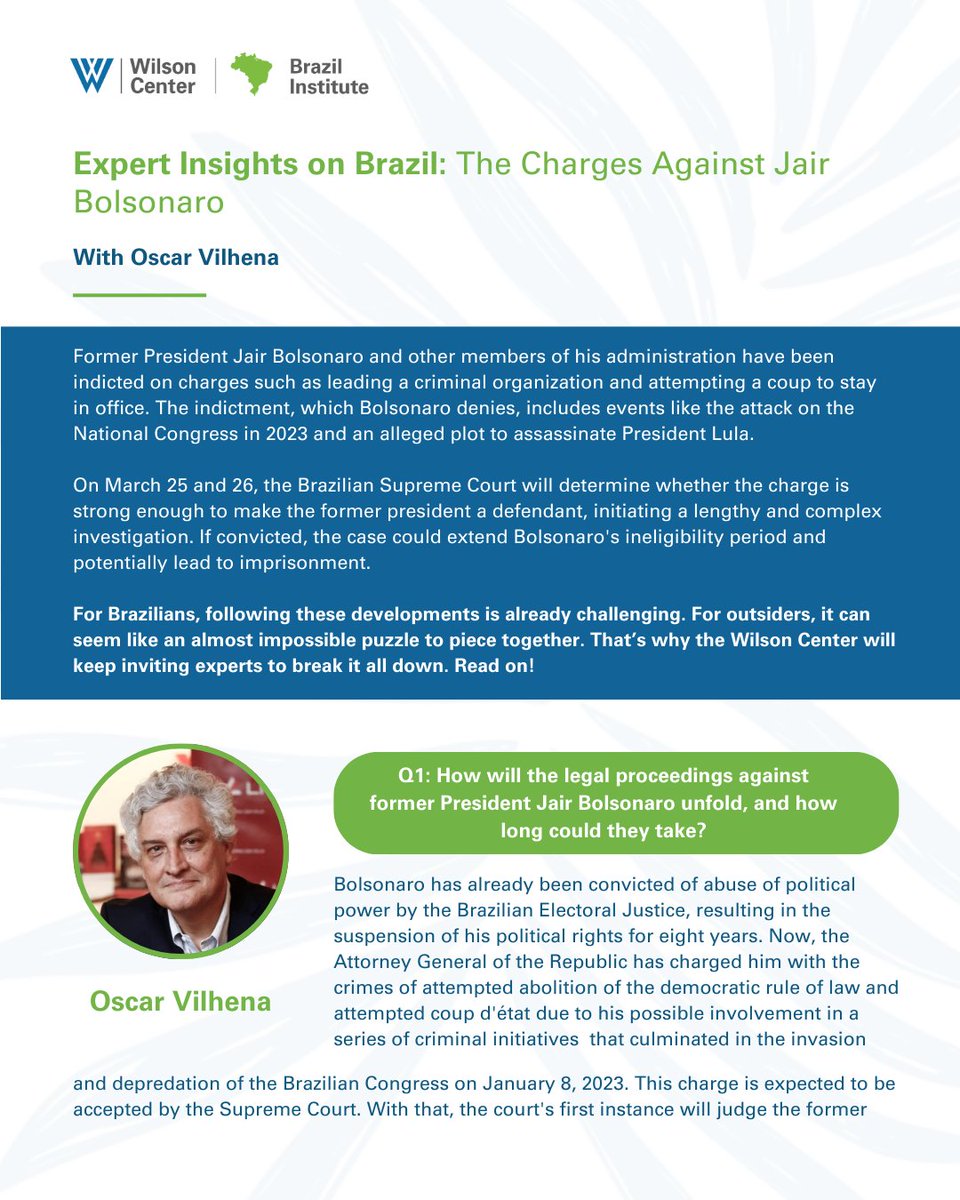
We’re #hiring! The @BrazilProgram is seeking a Program Associate.
Learn more and apply: thedialogue.org/blogs/2026/0…

1
3
234
The Brazil Program at the Dialogue retweeted

Minha coluna de hoje na CBN.
open.spotify.com/episode/54i…
1
4
99
The Brazil Program at the Dialogue retweeted
Contribuí para a @InSightCrime em uma análise sobre os efeitos da designação do PCC e do CV como organizações terroristas pelos EUA. US Terrorism Designations Will Hit the PCC’s Money—and Everyone Else’s insightcrime.org/news/us-ter…
1
3
342
The Brazil Program at the Dialogue retweeted
DAY 4 | São Paulo 🇧🇷🇺🇸
São Paulo is the operational center of the Brazil-US relationship. Day 4 of our congressional delegation brought that into focus, InvestSP, the SP Public Prosecutor’s Office, and private sector voices from mining, agriculture, and critical minerals.
1
2
287
The Brazil Program at the Dialogue retweeted
Day 3 with our U.S. congressional staff delegation in Brasília: civil society, Congress, the Supreme Court, Itamaraty, and Federal Police. The value of bringing U.S. congressional staff to Brazil is not just access. It is context.
1
4
378
The Brazil Program at the Dialogue retweeted
DAY 2 | Brasília 🇧🇷🇺🇸
From the US Embassy to the Presidency, Ministry of Mines and Energy, critical minerals conversations, and dinner on state capacity with Francisco Gaetani, Sergio Xavier and Guilherme Almeida, a full day on where the Brazil-U.S. agenda can get more concrete.
1
5
411
The Brazil Program at the Dialogue retweeted
DAY 1 | U.S. Congressional Staff Delegation to Brazil 🇺🇸🇧🇷
We began in Brasília with meetings at the Vice Presidency and MDIC on industrial policy, trade, supply chains and critical minerals, bringing Brazil’s priorities directly into Washington’s strategic conversations.
1
1
3
286
The Brazil Program at the Dialogue retweeted

May 19
BRAZIL | BNDES reactivates BNDESPar equity arm for junior miners, targeting $9.9B in critical minerals projects
(Valor Econômico)
2
6
1,053
The Brazil Program at the Dialogue retweeted
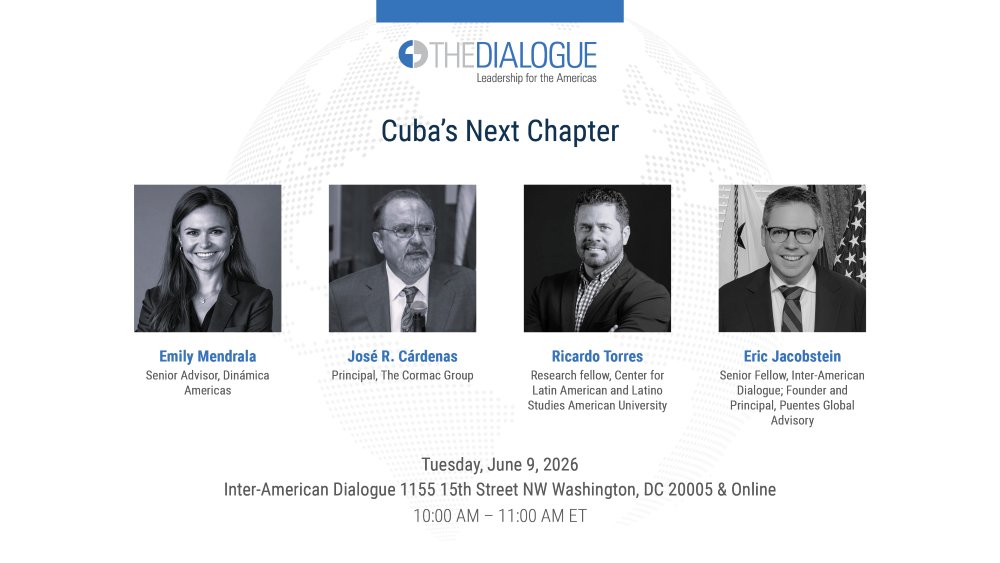
Join the Dialogue for a discussion on the rapidly evolving political and economic situation in #Cuba, the state of U.S.-Cuba relations, and what may lie ahead for the Cuban people and policymakers in #Washington.
🗓️Tuesday, June 9
🕙10-11 AM ET
🔗RSVP: thedialogue.org/event/cubas-…
1
3
6
818
The Brazil Program at the Dialogue retweeted
Lula’s core economic problem is household financial stress. Low unemployment and higher aggregate wages have not translated into a stronger sense of well-being because many Brazilians remain squeezed by debt, high interest costs, and the growing impact of online betting.
Apr 16

The largest prediction market in the world just flipped on Brazil.
Polymarket now prices Flávio Bolsonaro at 40% to win the October 4 presidential election. Lula at 39%. $50.2 million in total trading volume. First time a Bolsonaro has led the contract.
Datafolha confirmed the same shift April 11. Flávio 46% vs Lula 45% in a runoff simulation. A four-point swing in a single month.
The first round is six months away. The race is no longer Lula's to lose.
For US institutional capital, the October election determines fiscal trajectory, monetary policy independence, tax structure, agricultural regulation, critical minerals policy, and US-Brazil relations for four years.
Most foreign investors treat Brazilian elections as binary noise. That framing is wrong. Each candidate produces meaningfully different outcomes. The differences are knowable.
What Polymarket is pricing right now:
Advance to runoff: Flávio 86-88%. Lula 82%. The market is essentially certain about who reaches the second round.
First round outright winner: 14-15%. Near-certainty of a runoff.
Party vehicle: PL (Bolsonaro) 74-78%. PSD (Caiado) 14%. MDB 11%. PT is not even leading the party-level market.
Third place: Renan Santos (Mission/MBL) 34%. Caiado 32-41%. The consolidation question for the right.
The active field:
Lula (PT): 80 years old, fourth term bid, policy continuity, continued real rates above 10%, tension with Trump, BCB independence protected through December 2028.
Flávio Bolsonaro (PL): 44 years old, father endorsed December 25 from hospital while serving 27 years for the 2022 coup attempt. Market-liberal platform in theory, institutional friction with STF in practice. Endorsement announcement sent real down 3% and Bovespa down 4% in December.
Ronaldo Caiado (PSD): Governor of Goiás (re-elected 2022 with 51.81% first round). Goiás grew 6.1% vs 2.9% national in 2023. Physician, ruralista, establishment center-right. Hosts the Serra Verde rare earths project ($465M DFC commitment). Lowest political volatility of any right-wing scenario.
Romeu Zema (NOVO): Strongest market-liberal platform, lowest probability of reaching the runoff.
Renan Santos (Mission/MBL): Bitcoin reserve proposal, Bukele-inspired. Wild card if the anti-Lula vote consolidates outside the Bolsonaro family.
Tarcísio de Freitas: Not running. Chose São Paulo reelection.
The transmission channels for institutional capital:
Currency: Real at R$4.99, appreciated 26% from the December 2024 low. Every election since 2002 has produced 8-15% currency volatility in the final 60-90 days.
Equities: Ibovespa at 198,657 ( 23.29% YTD), 18 all-time records in 2026, 11 consecutive gains, 200,000 within striking distance. Foreign inflows R$67.4B YTD vs R$25.5B all of 2025.
Fixed income: Selic at 14.75%, real yields above 10%. Next Copom April 28-29, Polymarket pricing 95% rate cut probability. Focus survey 2026 IPCA at 4.71% (above the 4.50% ceiling for the first time this cycle).
The structural endowment doesn't change based on who sits in the Planalto.
Cerrado still produces nearly 50% of Brazilian grain. Brazil still holds 94% of global niobium and 12% of the world's freshwater. Pre-salt still ships through uncontested Atlantic routes. EMBRAPA still operates 46 research centers. The cooperative system still processes R$437 billion. EU-Mercosul still takes effect May 1.
What the election determines is the speed and direction of execution on top of that endowment.
The investors who position before the volatility window opens (April-September) will pay better entry prices than those who wait for the result.
Brazilian elections have followed a consistent pattern since 2002. Markets price political risk before the vote. Markets reprice fundamentals after the vote. The fundamentals win every time.
The candidates will change. The country won't.
Full analysis:
x.com/drewcrawford_/status/2…
4
21
2,098
The Brazil Program at the Dialogue retweeted
New report / Trade between the United States and Brazil has grown significantly over the past several years, with the US enjoying a trade surplus with Brazil. thedialogue.org/analysis/sta…
1
2
155
The Brazil Program at the Dialogue retweeted
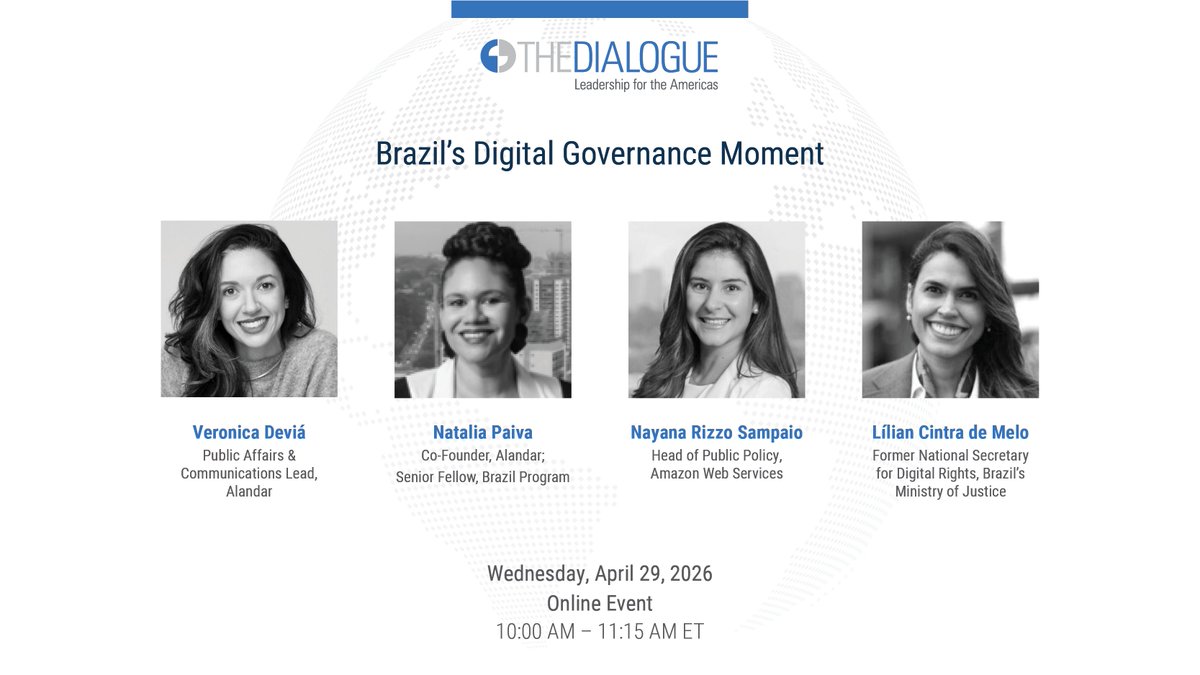
What will shape the next phase of digital governance in #Brazil and how will it influence regulation across #LatinAmerica and beyond?
Join @BrazilProgram and Alandar for a webinar
🗓️Wednesday, April 29, 2026
🕙10:00 AM ET
🔗RSVP: thedialogue.org/event/online…
4
6
664
The Brazil Program at the Dialogue retweeted

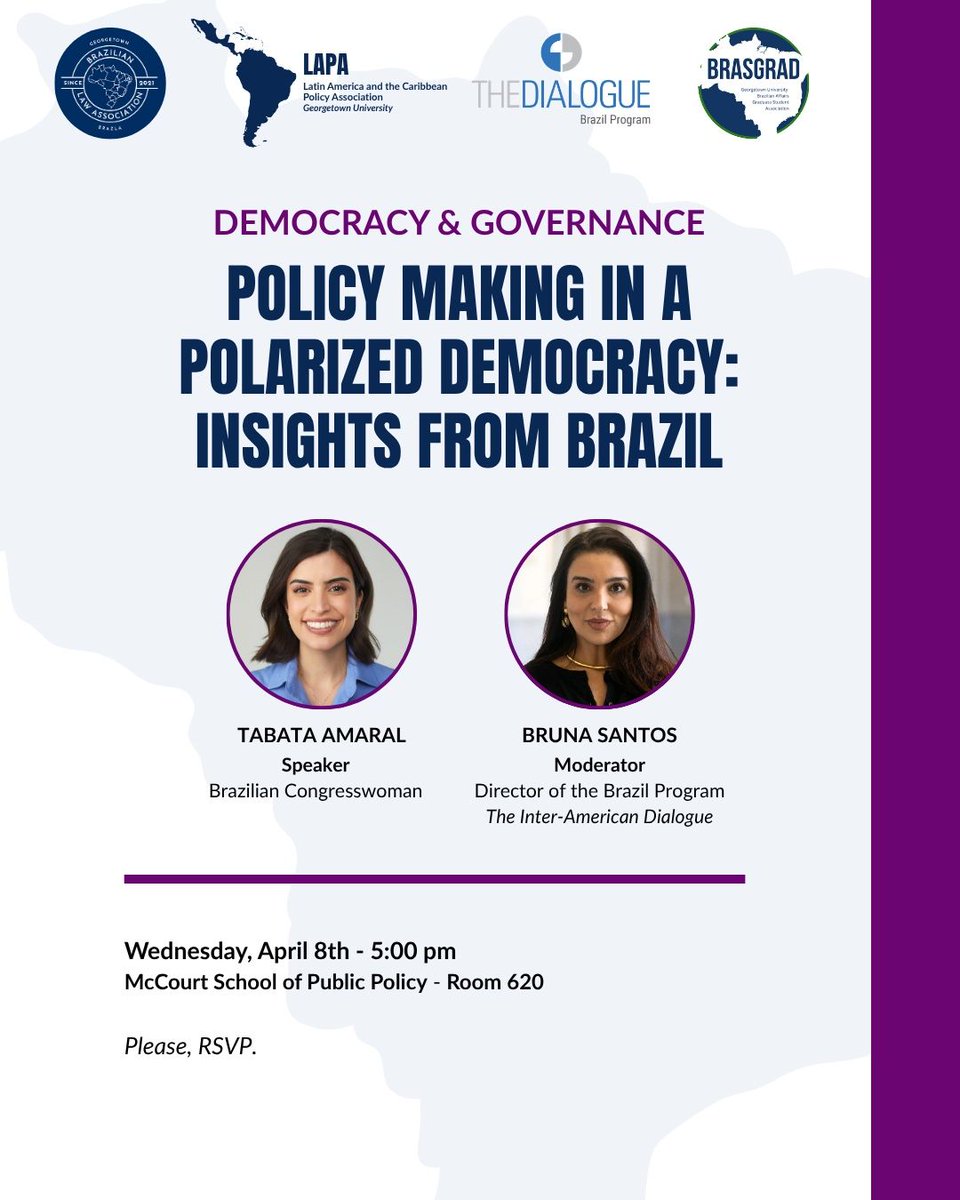
Last week, we had the pleasure of cohosting an event with Brazilian Congresswoman @tabataamaralsp at Georgetown University. The conversation explored the realities of legislating in Brazil today, including the relationship between Congress and other institutions.
3
7
500
The Brazil Program at the Dialogue retweeted
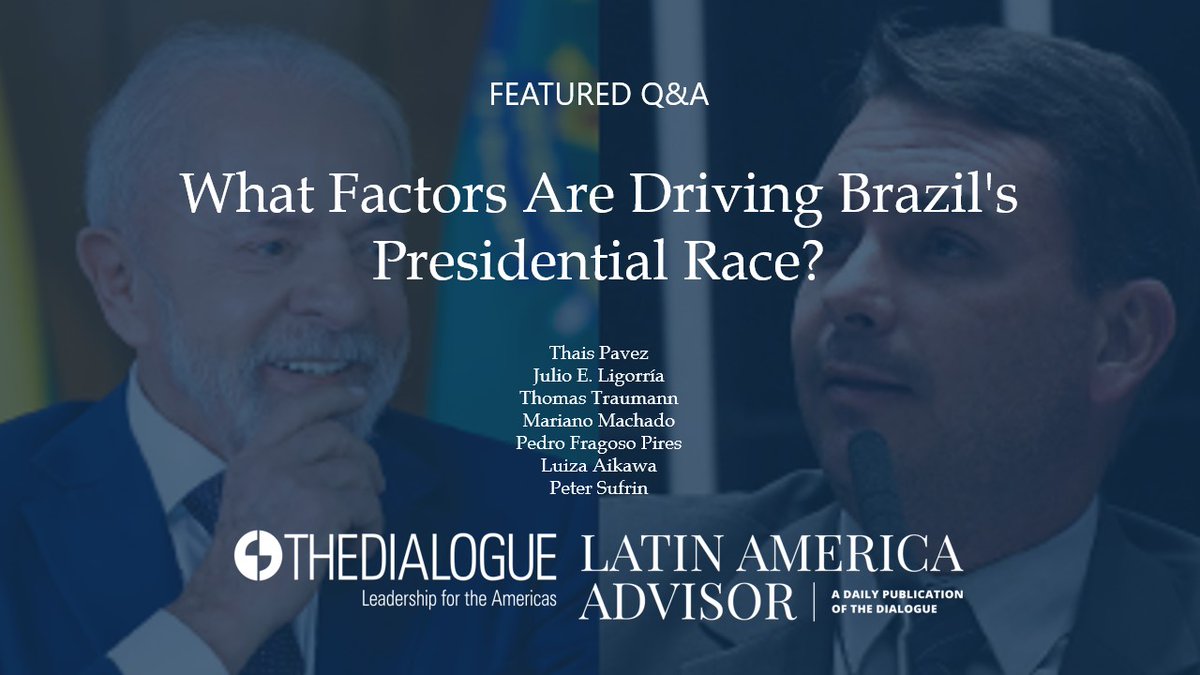
What Factors Are Driving #Brazil’s Presidential Race?
Ft. Thais Pavez, Julio E. Ligorría, @traumann, Mariano Machado, Pedro Fragoso Pires, Luiza Aikawa, and Peter Sufrin.
#LatAmAdvisor Featured Q&A: thedialogue.org/analysis/wha…
3
3
398
This Wednesday, April 15, our Director, Bruna Santos (@hourly_radio), will participate in the 2026 Brazil Summit, organized by the Brazilian-American Chamber of Commerce in NYC. brazilcham.com/events/brazil…
1
1
207
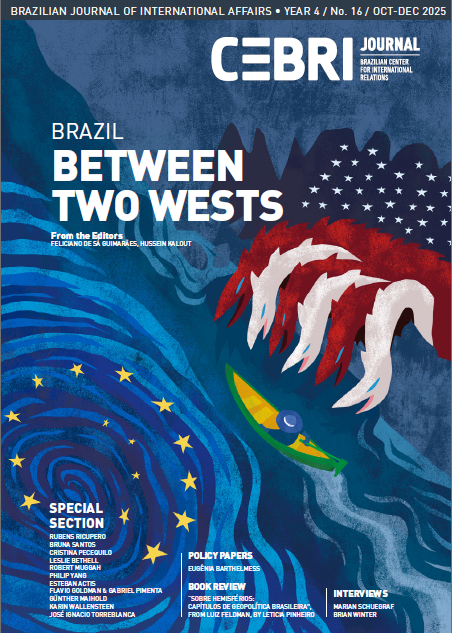
The Brazil Program Director, Bruna Santos, contributed to the publication "Brazil Between Two Wests", published by @CEBRIonline.
1
2
6
622
In her section, Democracies Under Pressure: Polarization, State Capacity, and the Brazil–US Relationship, Bruna analyzes how rising polarization and institutional constraints are shaping governance in both countries.
1
133
She also reflects on the implications for bilateral cooperation, highlighting how domestic political dynamics can influence the scope and effectiveness of the Brazil–US agenda. cebri.org/revista/en/artigo/…
66
The Brazil Program at the Dialogue retweeted
If you want to understand Brazil, you have to understand Congress. Looking forward to speaking with @tabataamaralsp about political renewal, the tensions shaping Brazilian politics, and the realities of leading as a woman in positions of power. docs.google.com/forms/d/e/1F…
1
4
268