
International & European News. |German Politics and International Relations| #СлаваУкраїні🇺🇦 @BNONews contributor
Joined December 2016
- Tweets 138,321
- Following 1,848
- Followers 4,418
- Likes 0
5,742 Photos and videos



Pinned Tweet

25 Mar 2022
#BREAKING: Massive fire at Aramco Facility in Saudi Arabia’s Jeddah following reported missile strike
1
480
904
IEN🇪🇺 retweeted

Opinion: Trump’s Iran deal is a national humiliation theglobeandmail.com/opinion/…
304
299
1,156
26,893

India's Telegram ban until June 22 over exam paper leak concerns is a terrible look for the country, sets a precedent, and could happen again if unchallenged (@nixxin)

A few additional thoughts on the Telegram ban in India:
1. Is this a permanent ban?
It's unusual for the Indian government to issue a press release about the telegram ban: the precedence that I remember is when Chinese apps were banned in India in June 2020 including tiktok. A Section 69A order to ban something doesn't necessitate a press release, in fact it is protected by a secrecy clause, which should be held unconstitutional.
So what prompted this press release? Is this a signal? Were they expecting a backlash and a PR puts a govt justification (as hollow as the Chinese app ban, which I supported) before the reaction. A BJP guy I spoke to the night of the Chinese app ban told me if they had their way, this would be permanent.
So, is this ban permanent? As in, after things die down, will the date be extended?
2. This looks terrible for India and will impact us:
It makes us look like a banana republic. Who in their right mind blocks an app used by hundreds of millions of users because of AN EXAM? How is this even legal, and is such a short-sighted-knee-jerk-uneducated-action-even-justifiable in a democracy?
We talk about ease of doing business but for us it's a slogan. Which global business will want to operate in an environment of such regulatory uncertainty? We've seen some exit: toyota, citibank.
This will play out across the world. It will definitely make it to late-night-comedy on US TV shows. We'll be a joke. Blocks telegram because of EXAMS?
These are important signals that investors look at, and investors like going where things are predictable from a regulatory standpoint (unless they're playing a high stakes game), and not operating on whims. Look at the Crypto ban that pushed Indian crypto companies overseas. Look at the advisory on AI regulation that made founders question about building AI in India, before it was hurriedly rolled back.
And this does look whimsical, unconstitutional and the idea of some guy with power who decided this is how things go. I mean, look at the US these days. Same thing.
Varun Grover's "kabootar ki barfi" commentary comes to mind.
At this point in time, as a nation, we need to project regulatory certainty and rule of law in a global economy where money doesn't know where to go. If the CEO of a company has to justify investing in India to her board, with the limited understanding that people have about India, the board is likely to push back because its their job to protect investor money.
We're failing at this spectacularly, and I'm not saying this just wrt the Telegram ban. We're doing the opposite of what we ought to do.
3. This is precedence-setting.
Once this goes through unchallenged, this will happen again and again and again. it happened with Internet shutdowns, and the Indian government got a lot of criticisms for years, for over 100 Internet shutdowns a year in the country. In some cases, especially Kashmir and Darjeeling, there were over 100 days of bans. Kashmir had bans regularly, for years. At that time we argued that this won't happen in a major city.
App bans are easier: you block one, and people switch to an alternative, because as Indians, we adjust to government diktats. It hurts less than an entire Internet ban.
IT Cell kicks in and says:
- "you can't sacrifice using a messaging app for your country?"
-"They didn't follow government orders, so this is right." - "there's lots of harmful content on telegram (pick anything from terror financing to port to copyright violation to app features)"
- "It has harmful features like message editing that can lead to people being mislead that an exam paper has leaked."
I'm surprised tech company founders haven't been given rewritten tweets on this issue btw. It's a thing and I'm surprised to see some friends of mine tweet a copypasted tweet recently, but I understand their compulsions: they're in a high risk business in a high risk country with little or no leverage.
4. Is this a smoke-test for Whatsapp?
I'm wondering about how the decision went, and who took the final call. We know that it probably wasn't MEITY: for things like such bans, MEITY bows to Home Affairs. It's a BIG decision to take, given the hundreds of millions of users impacted. Did it go up to the PM? Ofc heads won't roll, like in case of the education minister, and that was demonstrably a shit-show that deserved a public sacking. this is smaller.
This is kinda like the Indian Internet's demonetization moment, except there's no Paytm publishing ads in newspapers, and no payments industry celebrating a windfall, leeching growth off millions of people hanging off a cliff trying to get access to their own money. Media is already controlled and probably won't cover this well, and social media and YouTube is all there is, and it's tiny, and this is Telegram not Whatsapp. This makes me wonder if this is a smoke test as leverage against Whatsapp.
Remember that the streaming services did not challenge the IT Rules in 2021 after what happened in case of Tandav.
5. Legality of the ban:
legality of a ban is not a consideration anymore in India since the IT Rules challenges (they're largely unconstitutional) are stuck in courts, and in my opinion Indian courts are doing little about constitutional rights like freedom of expression, so that has given confidence to the government to create an infrastructure for censorship, and increasing censorship over the last five months. They're not responding to RTI's btw. We tried.
Make no bones about this:
- This act is disproportionate. There is legitimate speech that is being pre-censored with a ban on an app like this.
- there is no clear cause-and-effect impact in terms of public order here.
- The short term of the ban (so far) doesn't justify the scale of the impact, though that might be leverage in courts because by the time the hearing happens, the ban may be lifted so no one may actually consider challenging it.
I'm of the opinion that except in some cases, our courts, including our Supreme Court, haven't upheld constitutionality and individual rights of citizens that is core to the functioning of a democracy. But that's a global trend, and this too shall pass. I think that when courts act to protect our rights, its an exception rather than the rule. Most of the time, like the SC did in case of the Right to Privacy (700 days before a nine judge bench was founded), they just delay justice.
6. There are reports, and I don't understand this too well since I've not tracked network infrastructure for a while, that Internet landing station infra is being used to block Telegram. Ignore Durov's conspiracy theory claims of Whatsapp initiating this, because afaik this is a different Reliance (ADAG). Plus I don't think Whatsapp is that stupid or short sighted. But for those in networking, is the usage of landing stations to block an app unprecedented?
Anyway, these are just some things I was thinking about so dumping it here.
1
2
4
1,197
IEN🇪🇺 retweeted

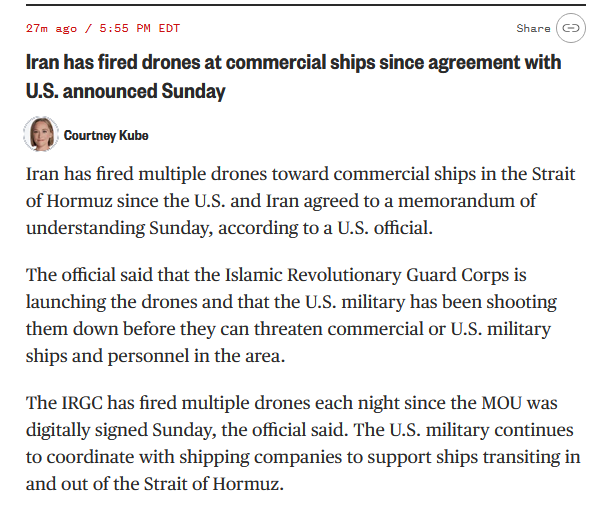
NBC News: "Iran has fired multiple drones toward commercial ships in the Strait of Hormuz since the U.S. and Iran agreed to a memorandum of understanding Sunday...The IRGC has fired multiple drones each night since the MOU was digitally signed Sunday, the official said."
nbcnews.com/politics/donald-…
93
370
877
128,454

IEN🇪🇺 retweeted

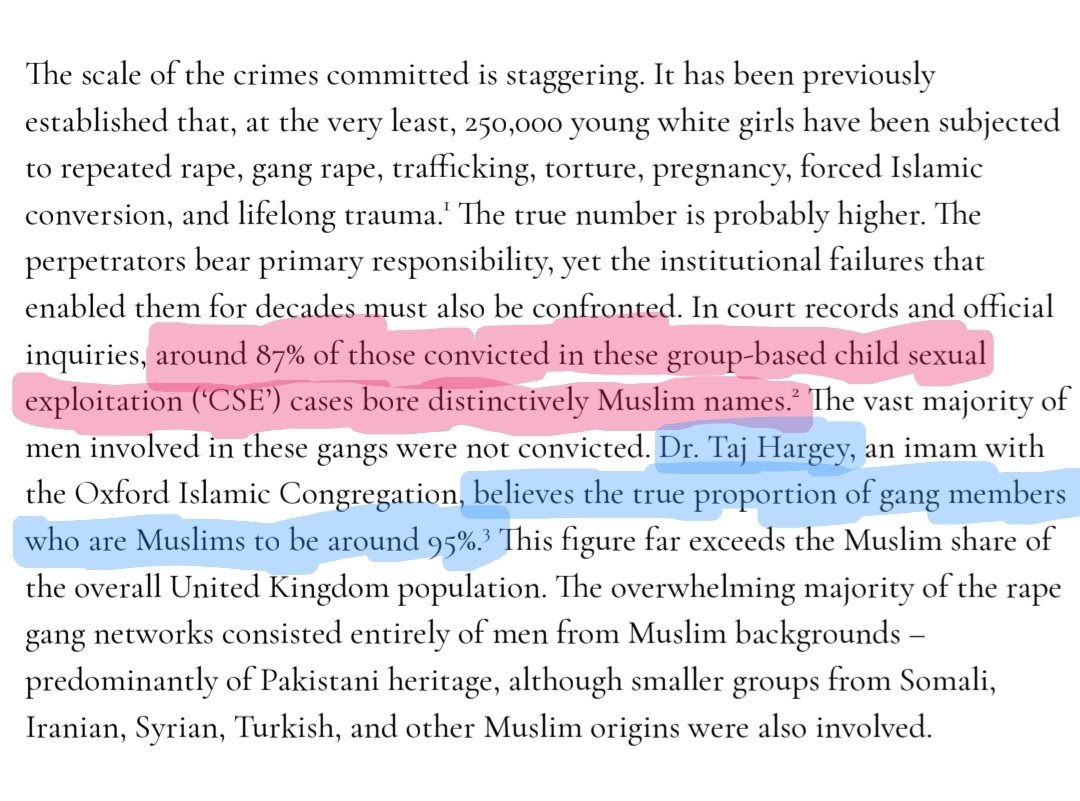
We finally have the number we've been waiting years to receive:
87 to 95% of the rape gang members were Muslims.

485
7,693
36,032
863,632
IEN🇪🇺 retweeted

17h
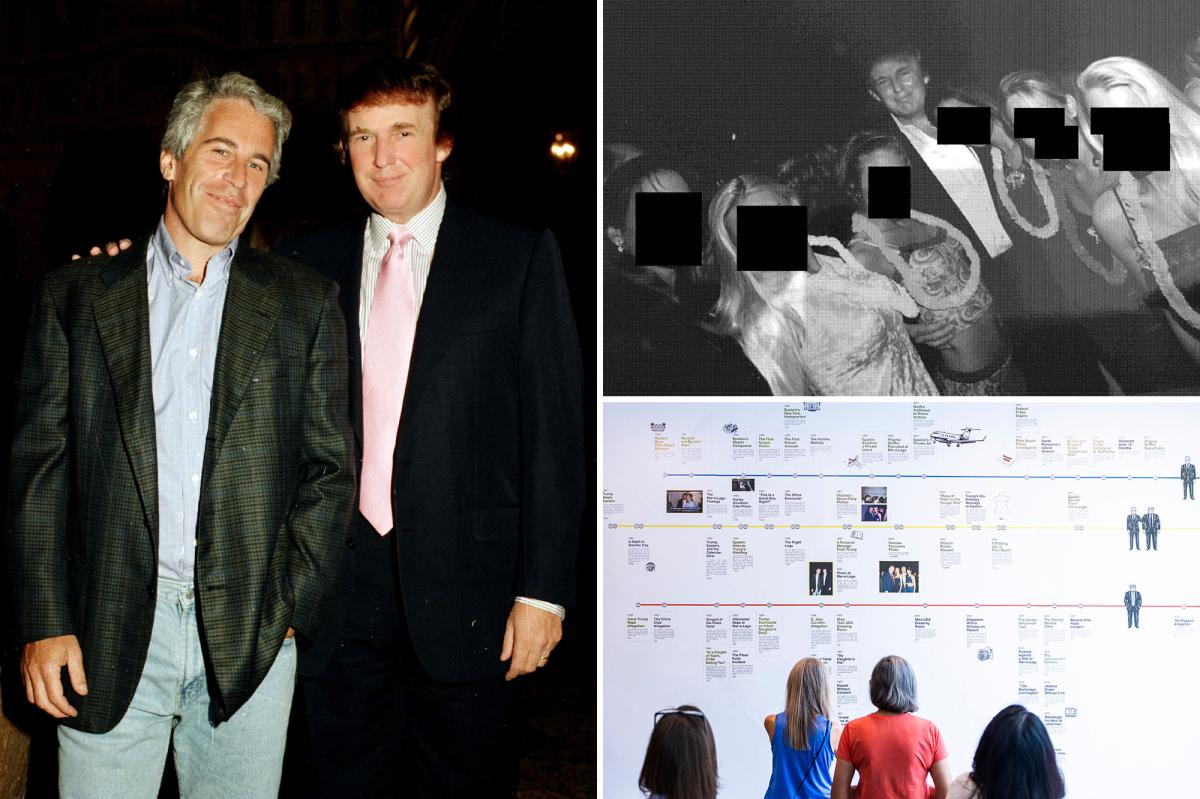
Jeffrey Epstein was obsessed with trying to take down Trump before suicide, report says trib.al/Njsa4Fp
633
1,957
12,379
1,771,890
IEN🇪🇺 retweeted

Putin trying to intimidate with activities in UK, former MI6 chief says bbc.in/4eLoQjG
864
379
1,402
117,559
IEN🇪🇺 retweeted

NEW: Photos of the two southern California men the Feds say were part of a plotted mass casualty drone & sniper attack at the UFC event at the White House. Bryan Roa is identified as the man on left. On the right, Michael Thomas.


617
2,306
5,922
389,596
IEN🇪🇺 retweeted

A call from Amazon's Andy Jassy to Bessent detailing potential security risks w/ Anthropic's most powerful model alarmed the Trump admin, w/ senior officials "scrambling to understand the seriousness" of the issues
via: @_perloj @news_jul @David_Ingram
nbcnews.com/tech/security/an…
17
17
13,112
IEN🇪🇺 retweeted

10h
All four versions of Mistral scored less than 40% in their effectiveness in recognizing sources identified as ‘malicious’ Russian propaganda, according to a recent analysis. ft.trib.al/20IRSbg
11
32
65
16,494
IEN🇪🇺 retweeted

Breaking News: The Justice Dept. is seeking to throw out a lawsuit against Elon Musk’s company, xAI, over the data center's air pollution, saying it has the right to run polluting gas-burning turbines in Mississippi despite not having permits for them. nyti.ms/4vf29dw
257
2,017
3,364
304,427
IEN🇪🇺 retweeted

19?
Did they use the wrong picture???

A 19-year-old Ohio man arrested for the alleged terror plot against UFC Freedom 250 has been identified ... and authorities say he called out his alleged co-conspirators during an interview with them.
Read more: tmz.me/4veBk9h

34
27
570
62,744

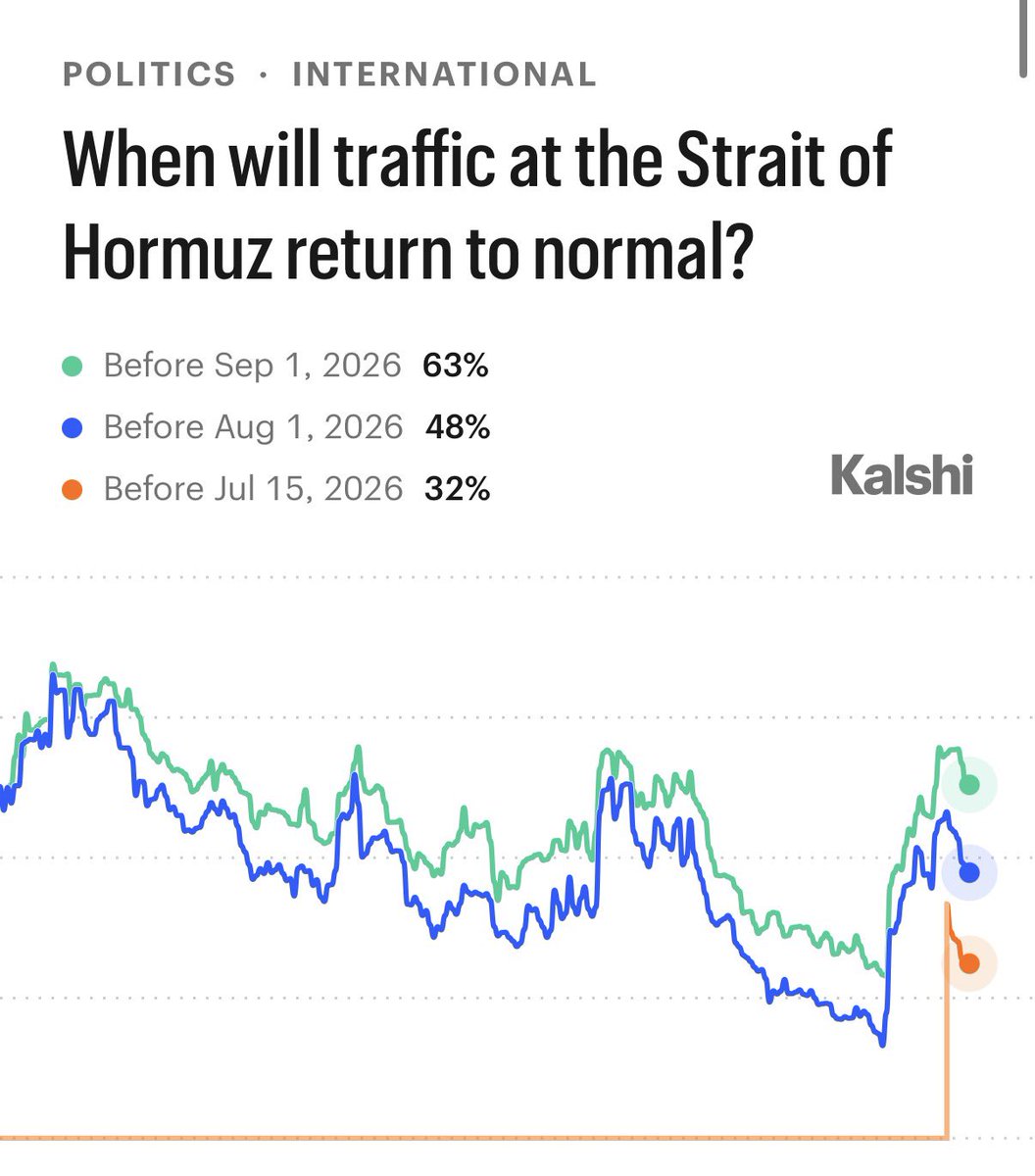
This is nuts

8,318
39,922
215,978
15,495,995

IEN🇪🇺 retweeted
12h
The White House’s capricious controls on Anthropic ft.trib.al/t7Uu676 | opinion
23
28
120
19,659
IEN🇪🇺 retweeted
13h
Chilling details of California terror ring's plot against Freedom 250 - as 'mastermind' is unmasked trib.al/GrGhMcI

113
605
2,367
291,421
IEN🇪🇺 retweeted

15h
🚨 OpenAI is planning to release GPT-Bidi-1 very soon
Their next-generation voice model for more natural conversations
[Final naming of the model might change]
h/t to @M1Astra from DevMode
46
57
1,119
163,761

The US government crackdown on Anthropic’s Claude Fable 5 and Mythos 5 hides a glaring truth: AI models with advanced hacking capabilities will soon be the norm. wired.com/story/dangerous-ai…
20
38
93
14,503
IEN🇪🇺 retweeted

Jun 15
Can't wait for DeepSeek Nemesis to outperform Claude Mythos by 3% and cost $0.17.
Jun 15

NEW: The White House reportedly has suspicions that China has accessed Claude Mythos.
65
591
16,671
1,100,461