
The Cinema of Extractions (@ColumbiaUP), Studios Before the System (@ColumbiaUP), In the Studio (@ucpress), Media Climates (@rep_journal), Professor @caltech
- Tweets 1,595
- Following 834
- Followers 1,586
- Likes 1,528



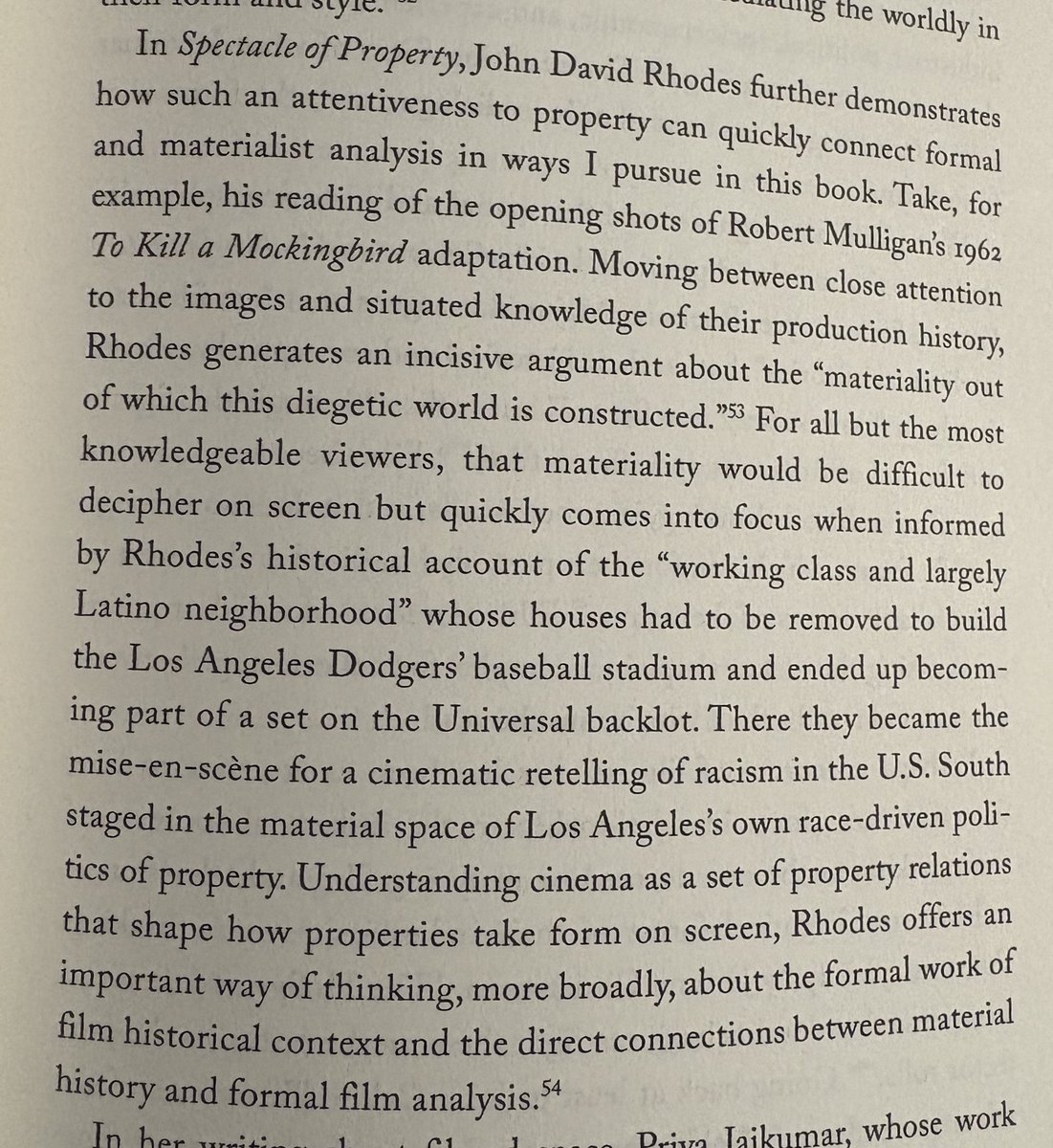
ALT In Spectacle of Property, John David Rhodes further demonstrates how such an attentiveness to property can quickly connect formal and materialist analysis in ways I pursue in this book. Take, for example, his reading of the opening shots of Robert Mulligan's 1962 To Kill a Mockingbird adaptation. Moving between close attention to the images and situated knowledge of their production history, Rhodes generates an incisive argument about the "materiality out of which this diegetic world is constructed."ss For all but the most knowledgeable viewers, that materiality would be difficult to decipher on screen but quickly comes into focus when informed by Rhodes's historical account of the "working class and largely Latino neighborhood" whose houses had to be removed to build the Los Angeles Dodgers' baseball stadium and ended up becoming part of a set on the Universal backlot. (alt text continued on next image)
ALT alt text contd: There they became the mise-en-scène for a cinematic retelling of racism in the U.S. South staged in the material space of Los Angeles's own race-driven politics of property. Understanding cinema as a set of property relations that shape how properties take form on screen, Rhodes offers an important way of thinking, more broadly, about the formal work of tilm historical context and the direct connections between material history and formal film analysis


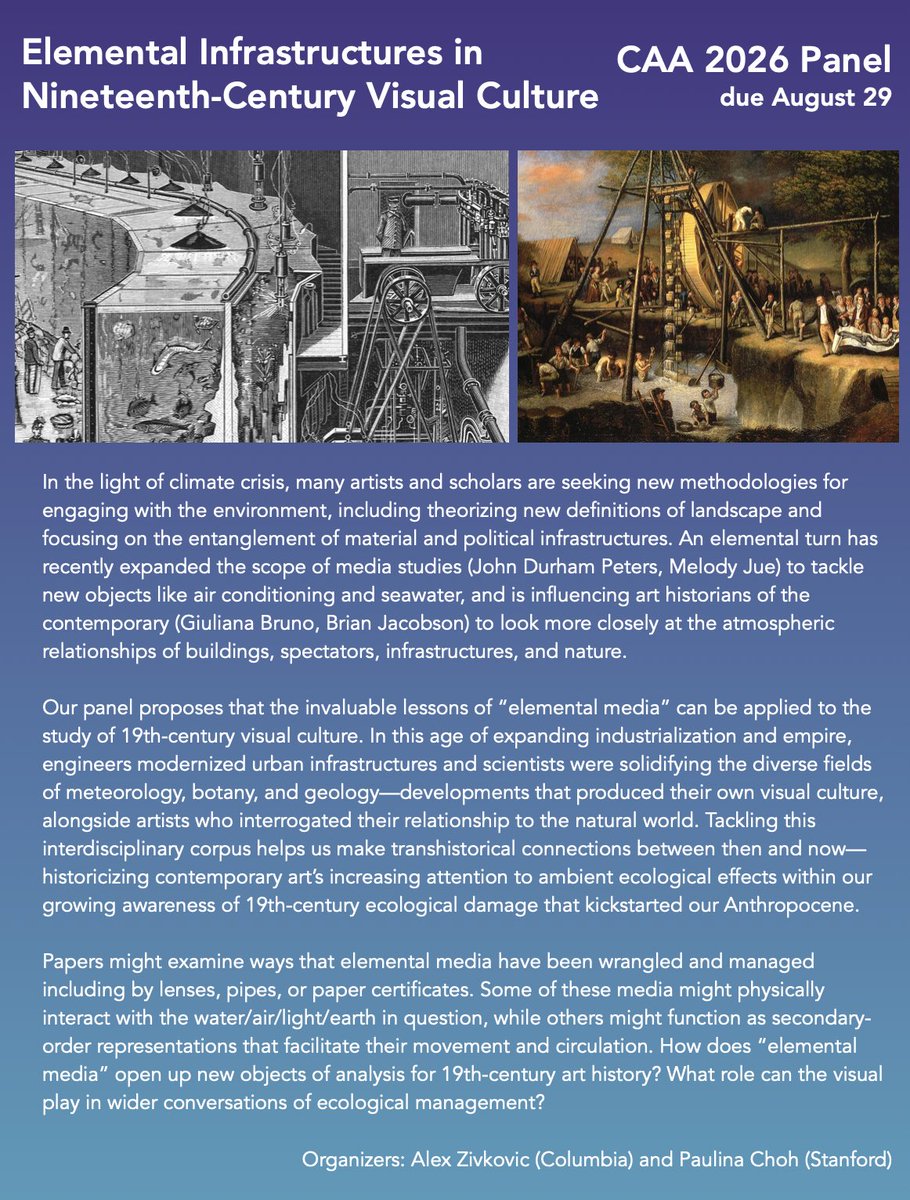
ALT Poster for a panel on Elemental Media in the 19th century, featuring a diagram of aquarium infrastructures and a painting of an excavation.


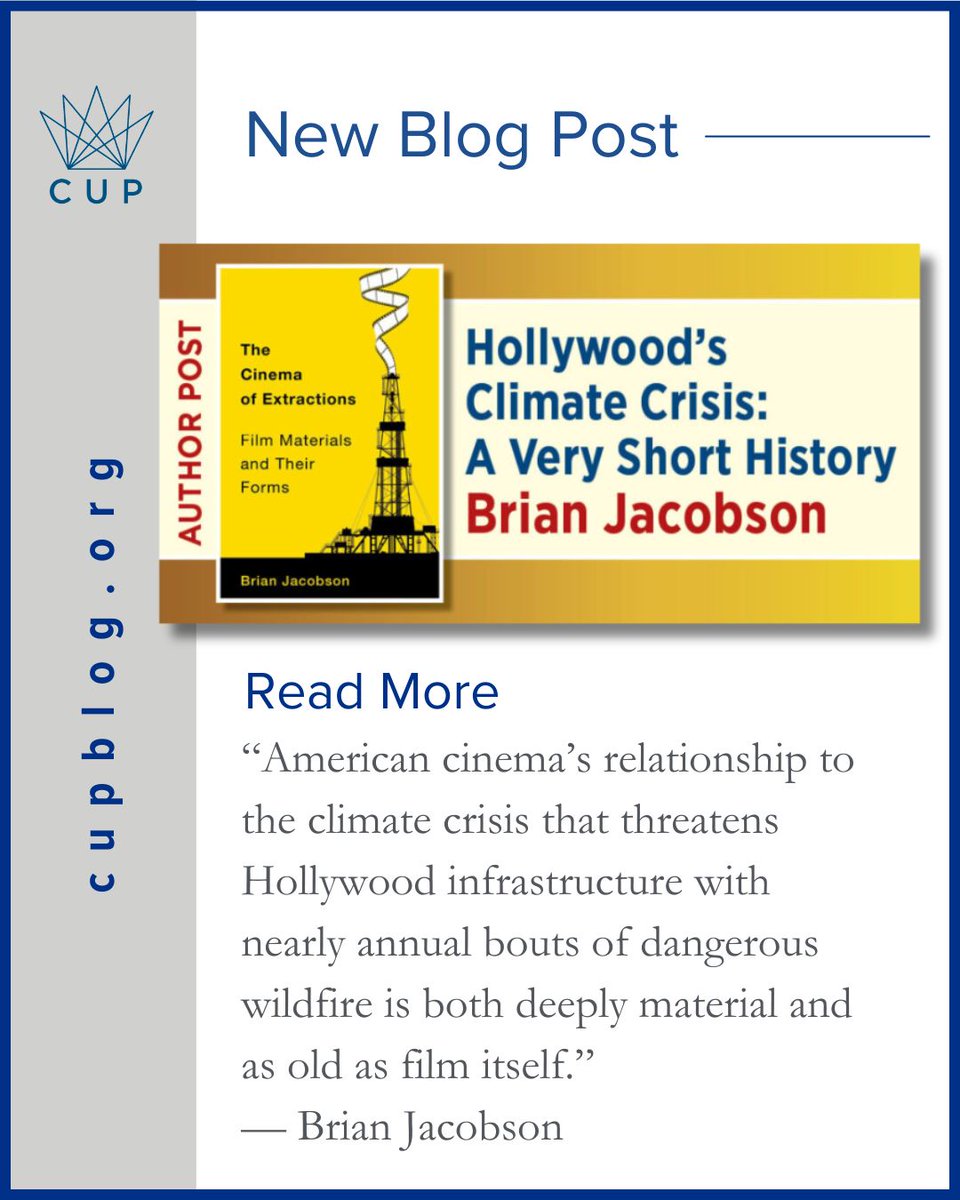
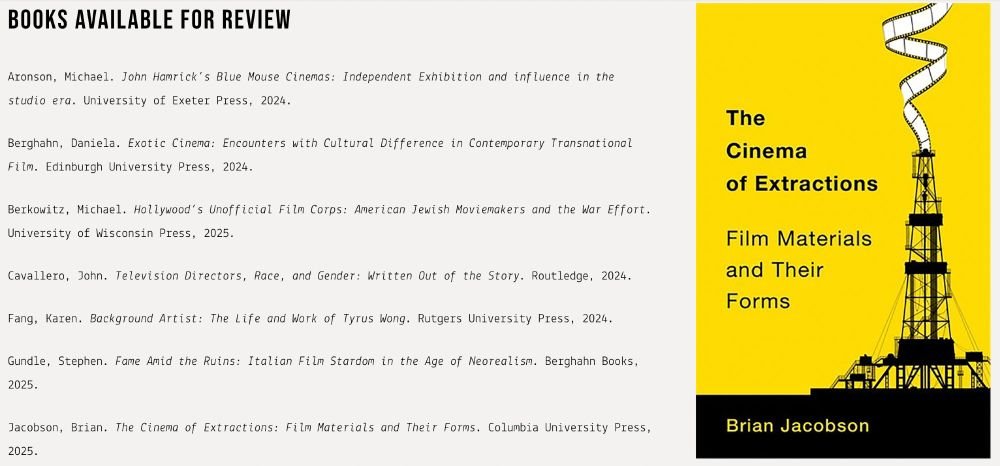
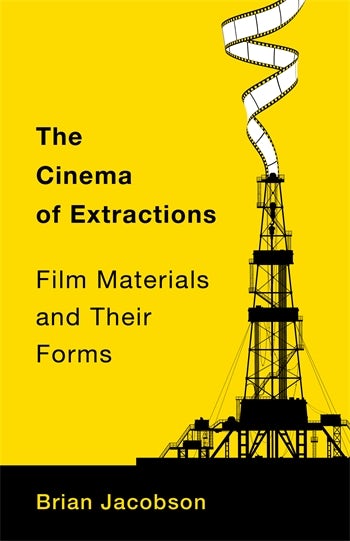
ALT Graphic promoting a new blog post about Brian Jacobson's The Cinema of Extractions. It features a yellow book cover with an oil rig wrapped in film tape and the title “Hollywood’s Climate Crisis: A Very Short History.” A quote discusses Hollywood’s relationship to climate crisis and wildfires. CUP logo and URL (cupblog.org) appear on the left.