
The Campaign for a Sovereign UK - to promote and support the UK’s continued independence outside the EU, our constitution and laws, and our culture and values.
Joined January 2026
- Tweets 1,251
- Following 189
- Followers 5,683
- Likes 559
177 Photos and videos
Britain Unbound retweeted

59% are against EU re set and giving powers away to the EU, with only 27% in favour in a recent poll. The public realises re set means paying the EU for a bad deal.
19
64
249
3,247
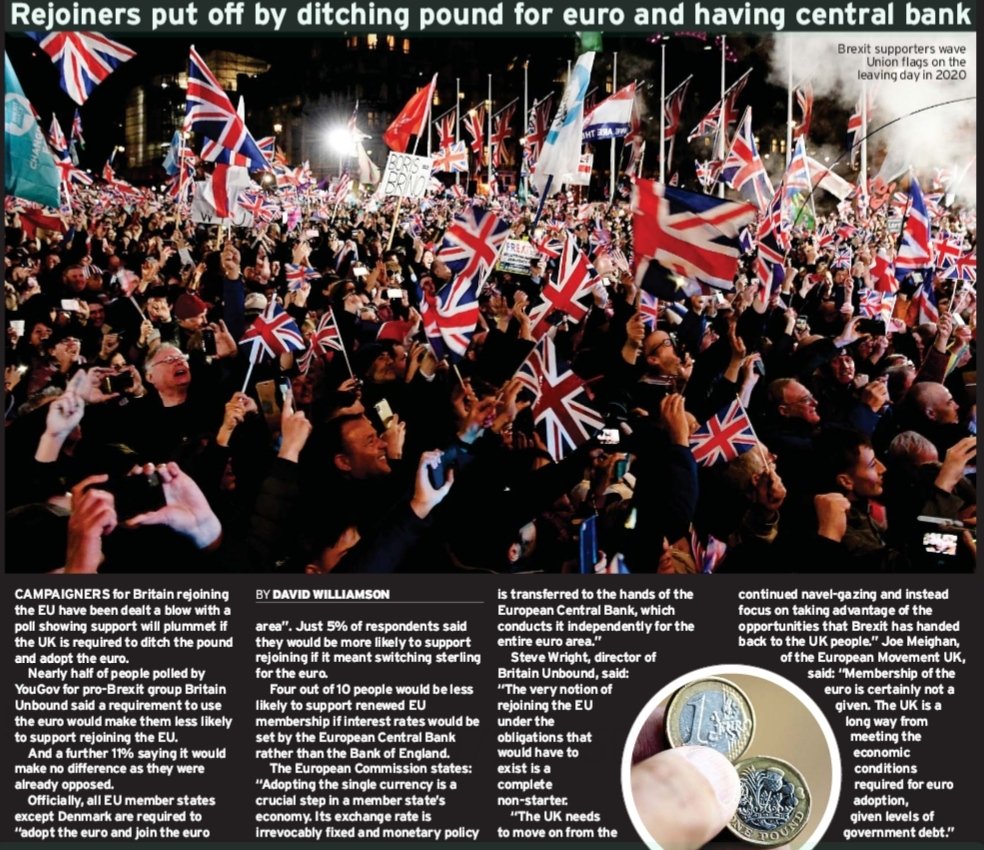
The Sunday Express this morning, covering our exclusive polling showing that 49% of people would be less likely to support rejoining the EU, due to the obligation to accept the Euro - including 40% of remain voters in 2016.
1
9
34
412
Britain Unbound retweeted

“Russia first seized Ukrainian territory in 2014, but only thought of full scale invasion after Brexit.”
This (I paraphrase) is now being advanced as a serious analysis of foreign affairs. Rejoiner myth.

David Cameron said the UK leaving the EU would make war in Europe more likely.
Oh how they mocked!
But Russia’s satisfaction at having helped achieve division & weakening of Europe through Brexit must have been a factor in its decision to invade Ukraine.
6
34
1,317
Britain Unbound retweeted

Once explained that they would have to ditch the pound and take the euro to rejoin the EU, even the worst remoaners back off 👇 express.co.uk/news/politics/…
2
5
15
457
The organiser of the Rejoin march *finally* admits that the Euro is an obligation of rejoining in the EU treaty.
An obligation he knows the British public will not support.
Checkmate. He may as well cancel his silly march now. As he knows it is a non-starter.

...therefore, at it says in the treaty, we would sign up to adopt the euro "when ready".
Hope that helps.
9
15
84
2,465
The Sunday Express has picked up our story on the exclusive polling conducted for Britain Unbound, showing 40% of remain voters in 2016 would be less likely to want to rejoin due to the obligation to adopt the Euro.
express.co.uk/news/politics/…
10
22
75
1,668
Britain Unbound retweeted

More evidence that 'Rejoin' is a mirage 👇:
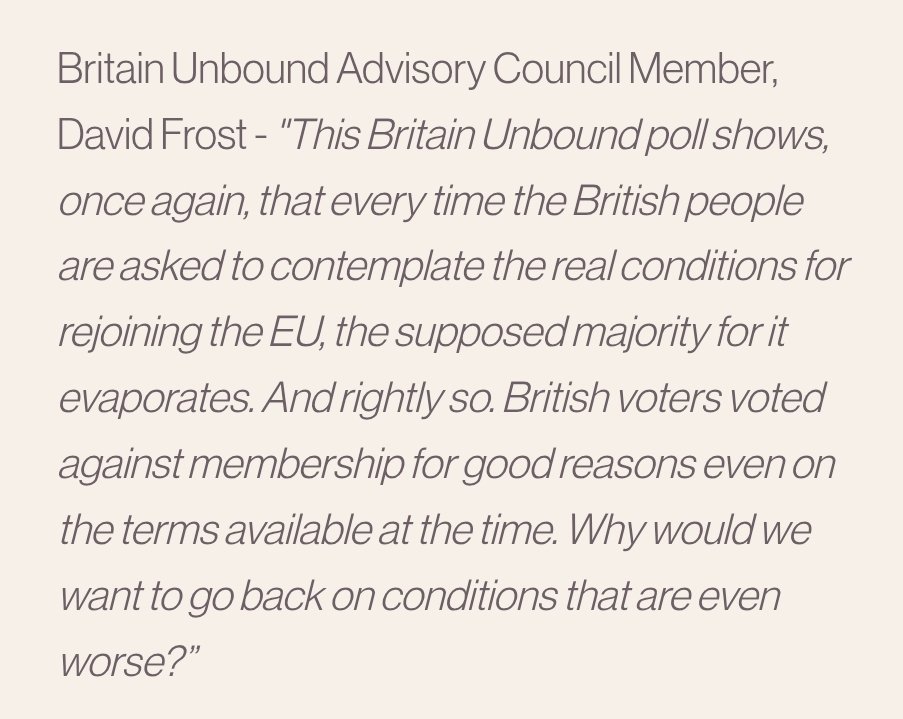

NEW: HALF OF BRITS LESS LIKELY TO SUPPORT REJOIN DUE TO EURO OBLIGATION
Exclusive polling for Britain Unbound shows that 49% of people would be less likely to support rejoining the EU, if it meant having to adopt the Euro - including 40% of remain voters
britain-unbound.org/articles…
17
46
180
16,136
NEW: HALF OF BRITS LESS LIKELY TO SUPPORT REJOIN DUE TO EURO OBLIGATION
Exclusive polling for Britain Unbound shows that 49% of people would be less likely to support rejoining the EU, if it meant having to adopt the Euro - including 40% of remain voters
britain-unbound.org/articles…
13
29
123
22,541
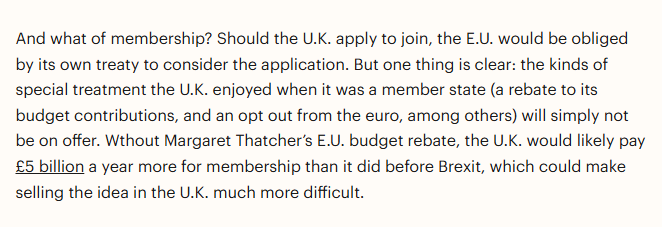
Important reminder here from @anandMenon1, that those selling rejoining the EU as if the terms would still be the same, are just selling a lie.
It is 2026, not 2016 - those terms are gone. If the British public didn't want the terms we had, then they certainly won't want these.
5
13
41
635
An interesting article in the FT today outlining a Brexit benefit of being in control of our own trade policy.
The EU currently has to translate every draft version of trade deal text, into 24 languages - adding literally years of effort. The UK doesn't.
archive.is/9KMyu
2
33
116
1,905
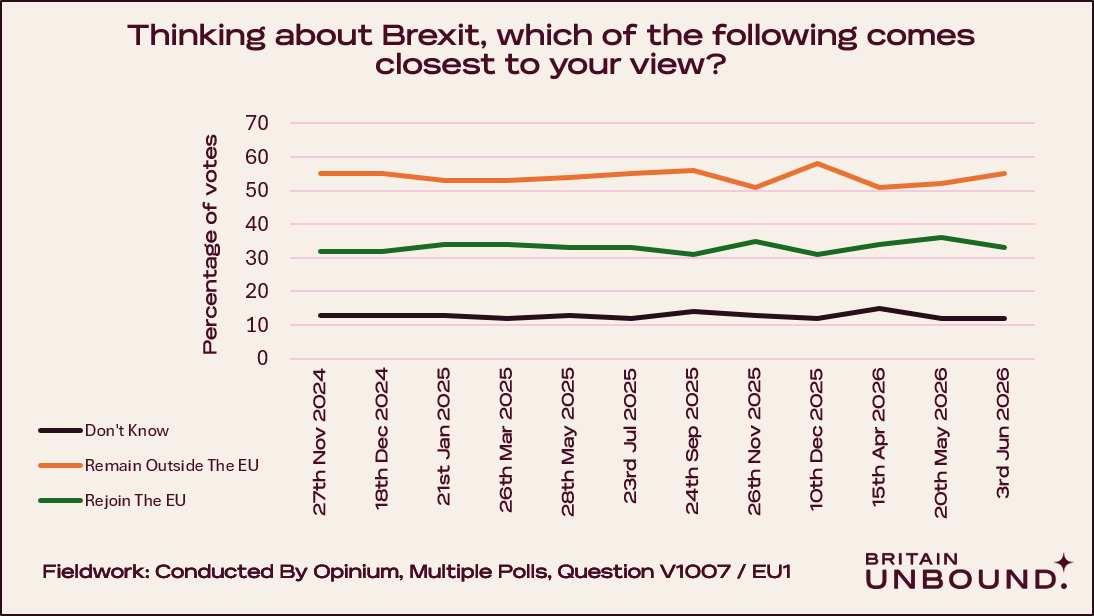
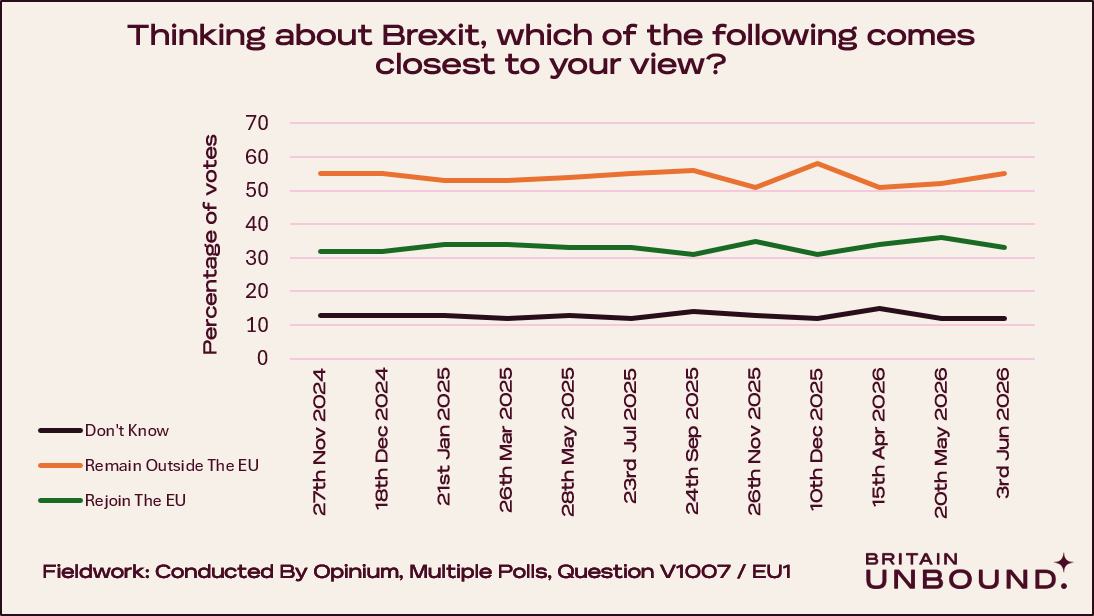
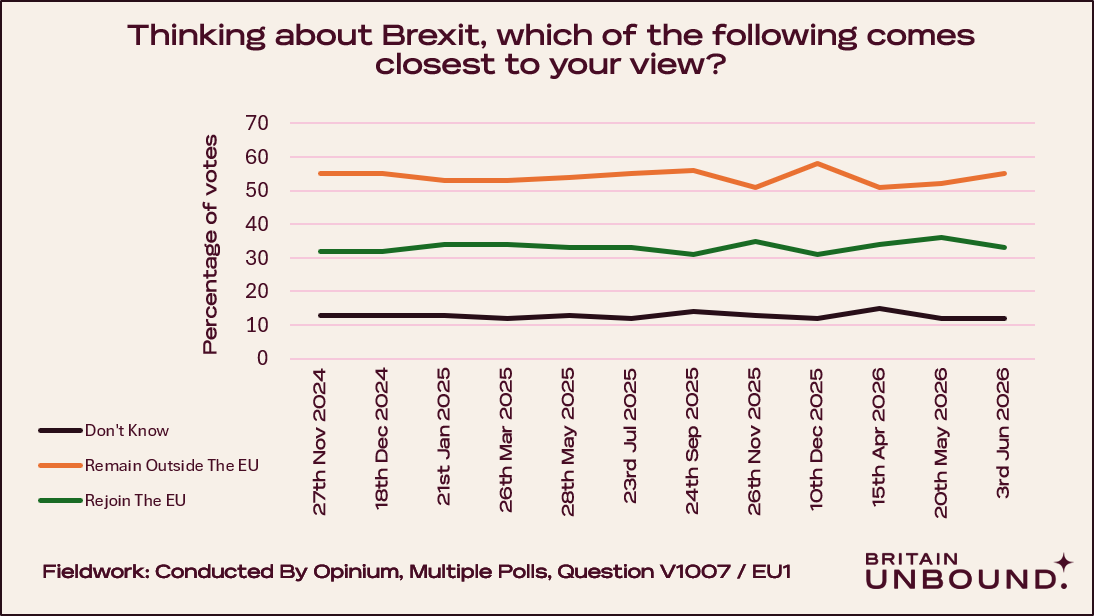
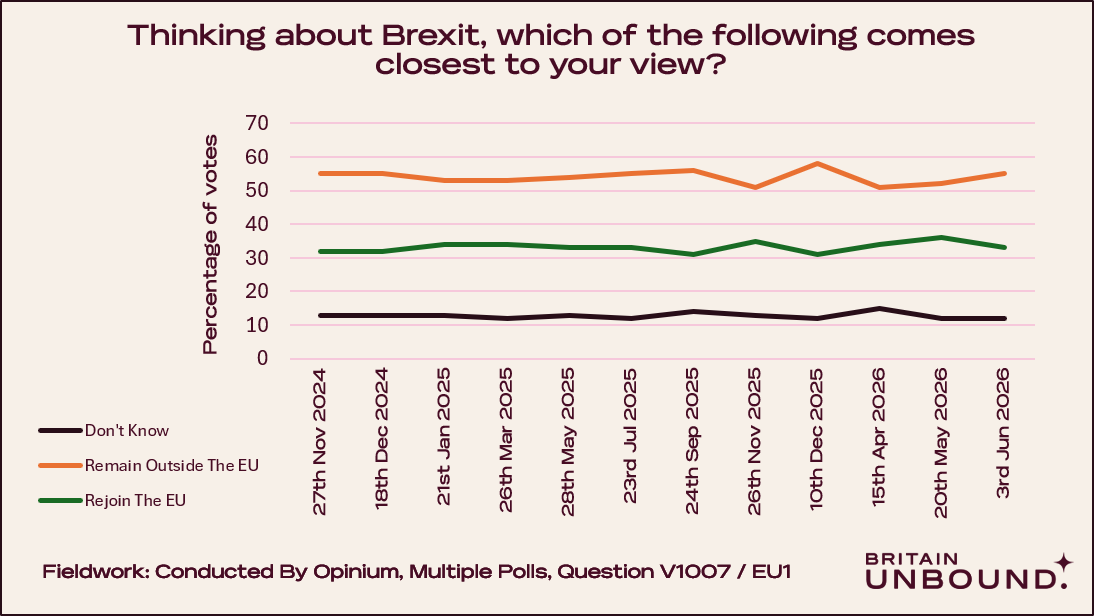
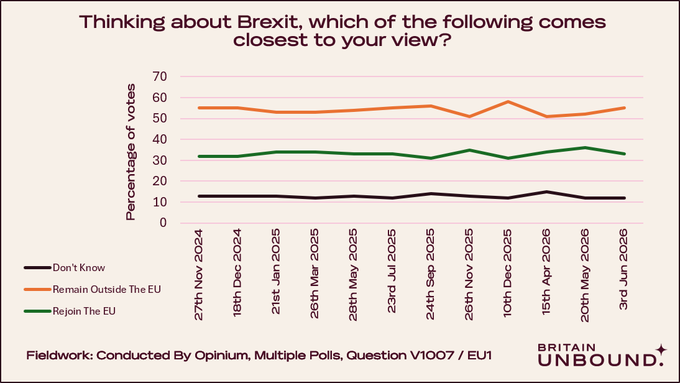
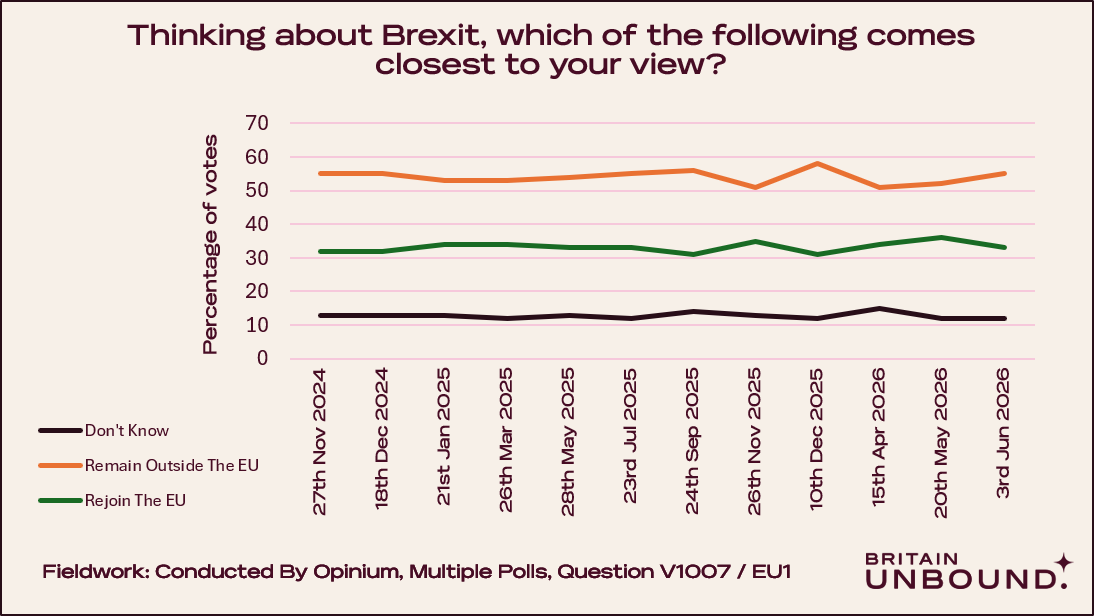
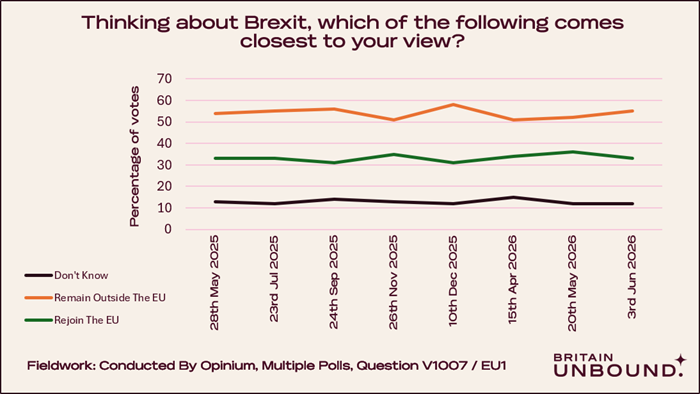
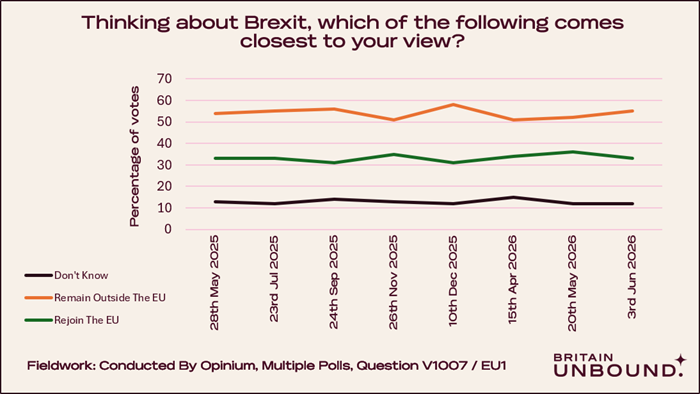
Our researchers have been trawling through the Opinium archives on the website, and have found an additional four occasions where they surveyed the British public, and they were told we wanted to stay out of the EU.
Updated chart now below. Tell them again.
7
40
110
2,189
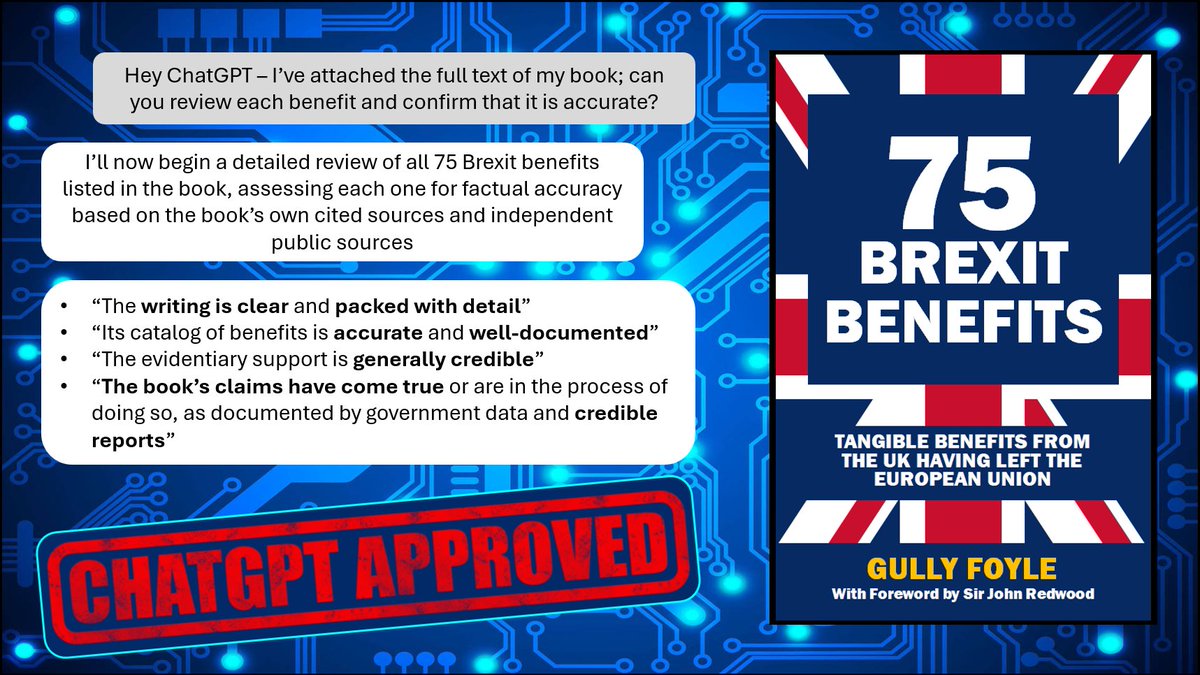
The pro-EU activists seem to be very upset with one of our minor contributors, Gully Foyle, and his book of 75 Brexit benefits - and have asked for evidence of the factual nature of his book, seemingly too lazy to buy the book and read for themselves.
So we asked Grok to do it.
Since it is his book, it is not our place to make public the contents of his book - but he has published the full text of one of his benefits on his X profile, so this is the response from Grok just now regarding the accuracy of the text.
The statements in the X post (and its thread) are largely accurate and well-supported by official records, court rulings, regulatory documents, scientific analyses, and reports from animal welfare organizations.
The post describes "BREXIT BENEFIT 15" as the UK resolving a legal contradiction on animal testing for cosmetics ingredients after leaving the EU. It highlights the UK's early leadership, the EU's conflicting rules (Cosmetics Regulation vs. REACH), initial post-Brexit alignment issues in the UK, a 2023 policy reversal to close the loophole, and the UK's stronger current position compared to ongoing EU issues.
Key Verified Claims
Here is a breakdown:
UK's early ban (1998) and influence on EU rules: Accurate. The UK effectively banned animal testing for cosmetics (finished products and ingredients) in 1998 by refusing to issue or renew Home Office licences for such testing. This was a policy decision rather than primary legislation initially, but it was effective. The UK was among the first (often cited as the first) to implement this, and it served as a model/forebear for later EU rules (testing bans phased in 2004/2009, full marketing ban effective 2013 under the Cosmetics Regulation).
EU contradiction between Cosmetics Regulation ban and REACH requirements: Accurate and well-documented. The EU Cosmetics Regulation prohibits animal testing of cosmetic products/ingredients (for cosmetics purposes) and the marketing of products tested on animals. However, REACH (Regulation 1907/2006) requires registrants to provide safety data on chemicals (for human health, workers, and environment), with animal testing as a last resort when no validated non-animal alternatives exist. This created conflicts for substances used exclusively in cosmetics.
2023 EU court ruling (Symrise AG v ECHA): Accurate. The EU General Court (22 November 2023, Case T-656/20 and related) upheld ECHA's requirement for animal testing under REACH on two cosmetic-only ingredients (e.g., homosalate and 2-ethylhexyl salicylate, used in sunscreens) for worker/environmental safety assessments, despite the Cosmetics Regulation ban. The court clarified that REACH obligations take precedence in this context; the cosmetics ban applies to testing for cosmetics purposes, not REACH-mandated chemical safety data. This has been widely reported as undermining the practical effect of the cosmetics ban.
UK post-Brexit replication of REACH and initial alignment: Accurate. The UK replicated EU REACH as "UK REACH" upon departure. Following ECHA Board of Appeal decisions (notably August 2020) that affirmed REACH testing requirements could apply to cosmetics-only substances, the UK Home Office initially aligned policy/guidance with the EU approach. This led to a small number of time-limited licences being issued (roughly 2019–2022 period referenced in statements), creating the same contradiction.
Public backlash and May 2023 UK policy reversal (Written Statement HCWS779 by then-Home Secretary Suella Braverman): Accurate and directly supported. Following discovery and campaigning (including by Cruelty Free International), the government faced significant backlash. On 17 May 2023, the Home Office issued a clear Written Statement confirming: the 1998 ban on animal testing for consumer safety of cosmetics/ingredients "remains in force"; some licences had been issued under the chemicals regime; and, crucially, "from today no new licences will be granted for animal testing of chemicals that are exclusively intended to be used as ingredients in cosmetics products." It explicitly noted the opportunity to depart from the EU regime due to Brexit and public concern.
UK's stronger position post-2023 (including references to May 2025): Substantially accurate. The 2023 policy explicitly closed the REACH loophole for exclusive cosmetics ingredients in the UK, reinforcing the outright ban and aiding enforcement of the marketing ban. This divergence from EU policy (where the conflict persists post-2023 court ruling) has been described in contemporary reporting as the UK taking a step away from EU rules to strengthen protections. Sources through 2025–2026 confirm no reintroduction of such testing in the UK via this route; recent overviews state that "recent legal changes have not reintroduced animal testing of cosmetics" in the UK. The "as of May 2025" phrasing in the post aligns with the policy being firmly established and operational by then (key change in 2023, with ongoing effect).
Ongoing EU issues (400 cosmetic-only chemicals, thousands of animals tested since 2013): Supported. A 2021 analysis of the REACH database found 3,206 dossiers listing cosmetics use, including 419 with cosmetics as the only reported use. Individual REACH requirements have involved thousands of animals in specific cases (e.g., one 2020-era decision requested testing on ~5,500 animals). Animal welfare groups (PETA, Cruelty Free International/Europe, Eurogroup for Animals) have documented continued testing for REACH purposes on cosmetics ingredients in the EU post-2013 ban, precisely because of the REACH override. The EU has launched broader roadmaps to phase out animal testing in chemical safety assessments (with updates into 2025–2026), but the specific cosmetics-REACH tension remains a point of advocacy and legal complexity.
Minor Notes/Caveats
The post's phrasing is advocacy-oriented (pro-Brexit framing and book promotion), but the underlying facts hold up. The "contradiction" and resolution via divergence are real.
The original Cruelty Free International link in the thread returned a 404, but the historical details it referenced are corroborated across multiple independent sources (Understanding Animal Research, Wikipedia summaries of legislation, academic/regulatory timelines, etc.).
The accompanying image in the main post is an illustrative cartoon contrasting UK "cruelty-free" alternatives (lab bench with UK-flagged bottle, petri dishes) against animal testing (chained rabbit, warning signs). It thematically fits but is not a factual document.
No evidence contradicts the core narrative. UK sources (parliamentary statements, CTPA industry body welcoming the clarity, animal groups noting the divergence) align with the post's timeline and outcomes.
Overall verdict: The post's historical, legal, and policy claims are factually reliable and cite verifiable sources (court judgments, parliamentary written statements, REACH database analyses, and contemporaneous reporting). Brexit provided the legal and political space for the UK to diverge and close the specific loophole in a way that strengthened the pre-existing 1998-era protections, while the EU's framework retains the documented tension between REACH and cosmetics rules.
If you'd like me to dive deeper into any specific link, quote, or related development (e.g., current EU roadmap status or exact licence numbers), provide more details!
4
18
87
3,229
Britain Unbound retweeted

Jun 10
Heat pump tumble dryers being made mandatory as U.K. adopts EU rules. I push a vote to protest the way these statutory instrument regulations are slipped through
395
2,663
10,846
246,139
Britain Unbound retweeted

FYI, I'll be on @TalkTV with @ThatAlexWoman shortly after 12.30pm today, to speculate about who will be the next Chancellor, and moan about anti-Brexit bias in the media... 😠
1
6
58
3,824
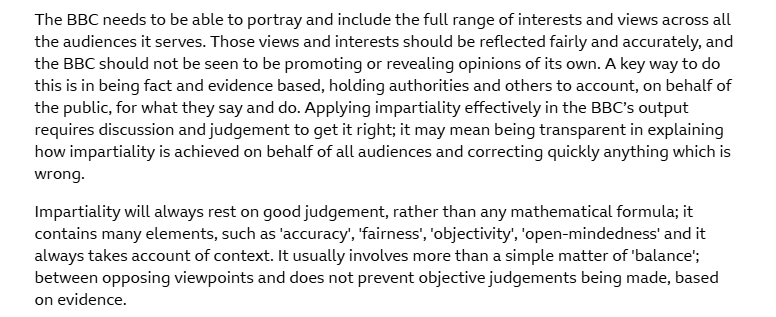
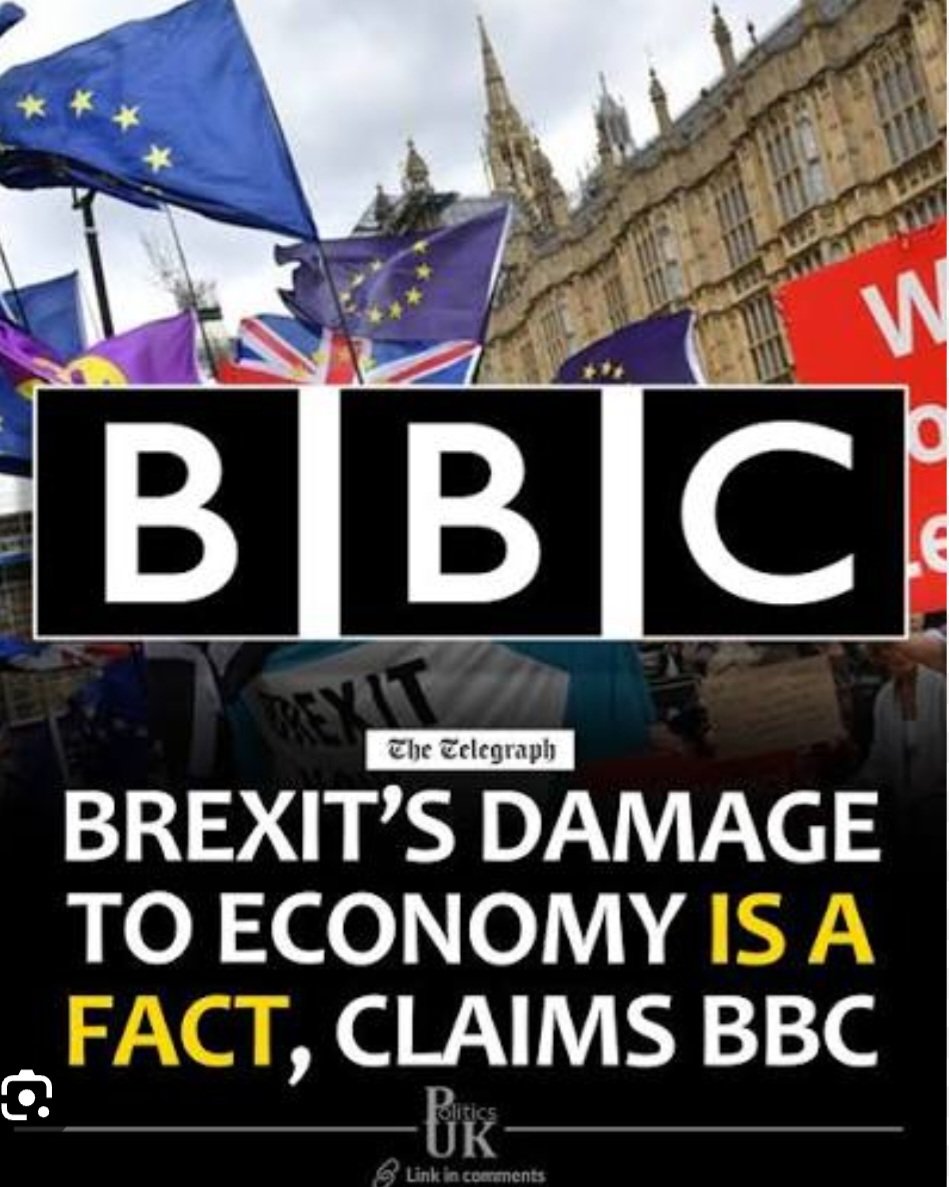
The BBC as our national broadcaster has an obligation within its charter to impartiality, and is in our view in breach of that obligation in this instance - the BBC does not get to decide what is and what is not the consensus view of economists.
Up with this we will not put.
Jun 12

The BBC Has Ruled. Brexit Damaged The Economy. No Further Debate Required.
The BBC's editorial complaints unit has decided that the negative economic impact of Brexit is now a settled fact. Not a contested judgement. Not one side of a live debate. A fact, in the same category as man-made climate change, requiring no balancing view.
The ruling followed a Radio 4 Today programme segment featuring Andrew Bailey, the Governor of the Bank of England, alongside Liam Byrne and Sir John Gieve, both long-standing advocates of closer EU alignment. All three agreed Brexit had damaged growth. The presenter, Katya Adler, did not challenge the premise or introduce a dissenting voice. A complaint followed.
The ECU's response is the revealing part. It acknowledged the segment failed to "acknowledge the alternative case" for pursuing opportunities outside the EU rather than realignment with it. That part of the complaint was upheld. But the central complaint, that three pro-EU voices agreeing with each other on air is not balance, was dismissed. The reasoning given was that this reflected "the consensus among economists" and there was no "significant body of economic opinion" on the other side.
This is worth pausing on. The BBC is not claiming it found balance. It is claiming balance was unnecessary because one side of the argument does not meaningfully exist. The institution that is legally required to be impartial has ruled itself the arbiter of which questions are still open and which are closed, and Brexit has just been moved into the closed file.
The economics itself does not support the certainty on display. The headline figure driving much of this narrative, an 8 per cent hit to GDP since 2016, comes from an NBER paper built on a "synthetic control" model that constructs a hypothetical non-Brexit Britain from a basket of comparator countries. The largest weighting in that basket, over 60 per cent, is the United States, a country currently riding an AI investment boom and a separate fiscal stimulus. The model also weights Estonia and Greece more heavily than France or Germany. On a straightforward per capita basis against France and Germany, the actual comparators, Britain's performance since 2016 sits roughly in line with both. An 8 per cent gap simply isn't visible. This is a model producing a number that then gets reported as "the consensus," which the BBC then cites as the reason no alternative view is required.
That loop, model produces number, number becomes consensus, consensus becomes fact, fact requires no balance, is the mechanism. It does not require a conspiracy. It requires an institution that has decided which conclusions are respectable and which are not, and which then treats its own prior decision as evidence.
The same posture has been on display all week. A government department can decide its diversity targets are lawful without seeking legal advice to check. A police force can decide a book about dismantling "inner white supremacy" is leadership training. A broadcaster can decide an economic question is closed and that deciding so does not breach its own impartiality rules. In each case, the institution marks its own homework, and the mark is always a pass.
None of this requires Brexit to have been a triumph. Britain's economy has genuine problems, most of them unrelated to single market membership. But a state broadcaster, funded by compulsory licence fee under threat of prosecution, has now formally placed one of the most consequential political decisions in modern British history beyond the reach of its own impartiality obligations. Reform's Lee Anderson called it being "blinkered by groupthink." The more precise description is an institution that has stopped being able to tell the difference between its own assumptions and the facts.
"The BBC is not claiming it found balance. It is claiming balance was unnecessary because one side of the argument does not meaningfully exist."
5
25
82
1,312
The Unbound Daily Briefing is up!
Today we are covering:
⚫️ The fallout from the delayed Defence Investment Plan (DIP)
⚫️ The likely delays to the UK-EU Summit in July
⚫️ The "Swiss Brexit" vote taking place tomorrow
britain-unbound.org/news/dai…
1
10
18
818

Jun 12
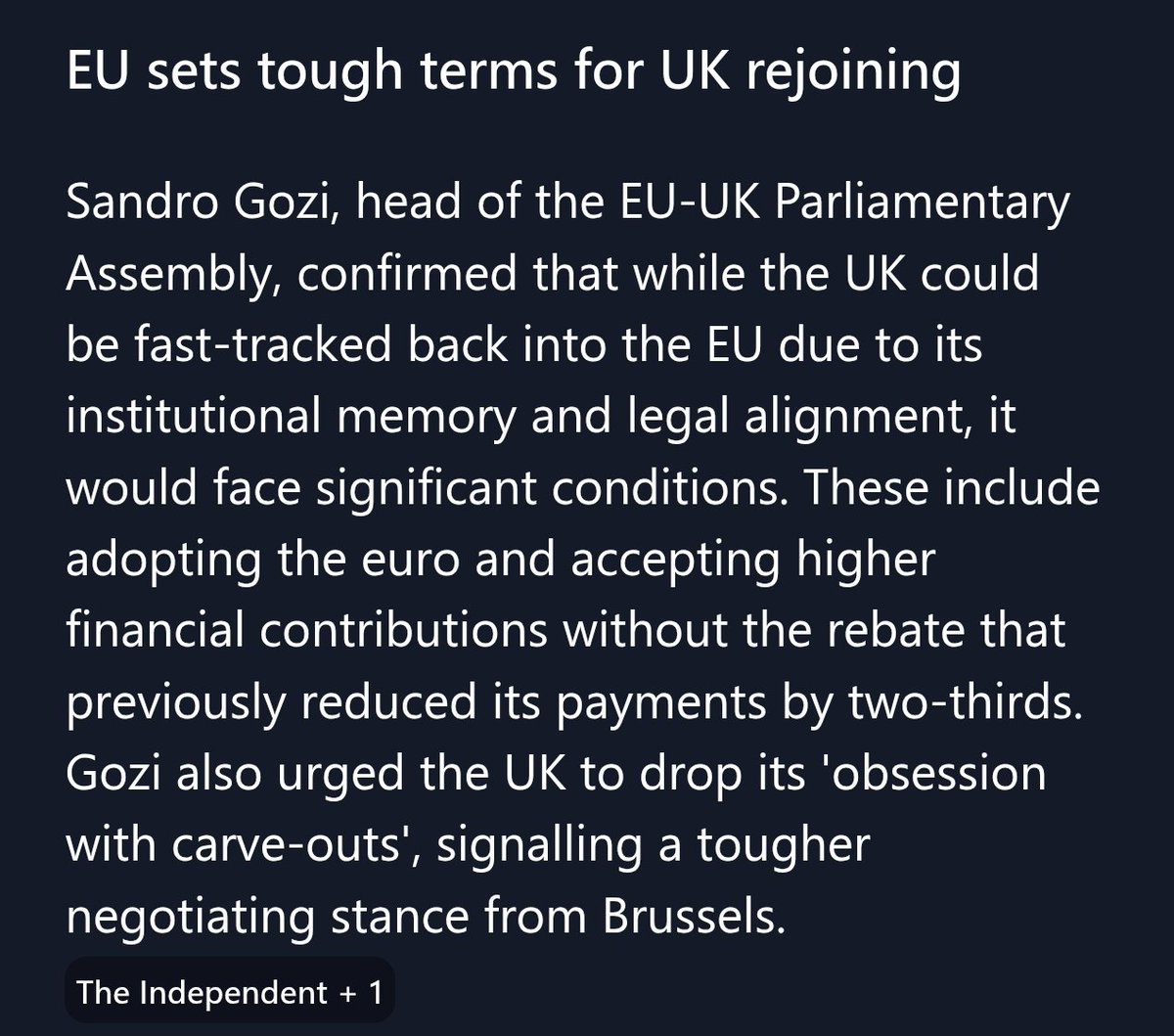
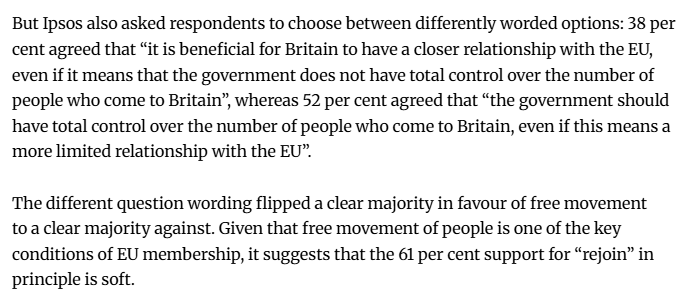
Exactly how many times do the rejoin activists need to be told?
This is an excerpt from The Independent. The instinct and indeed desire of the British people is to be outside of the control of the EU. That instinct is given loudly and clearly, every single time.
12
36
152
3,130
Jun 12
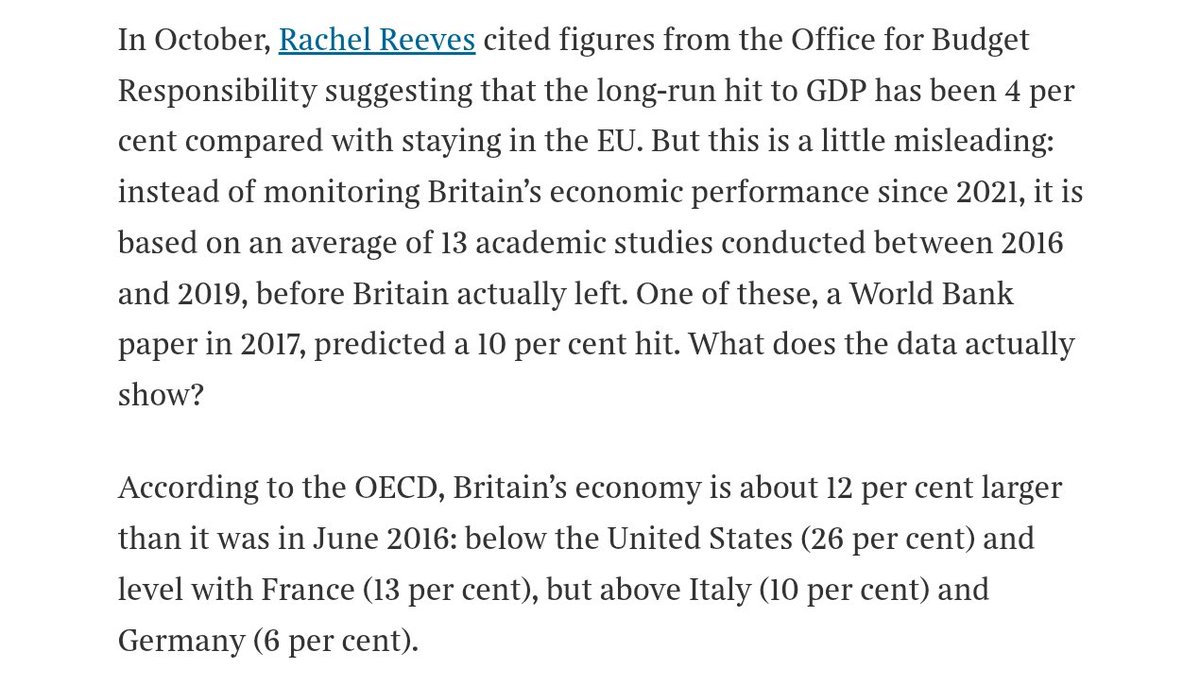
Following on from the article from Bloomberg yesterday, The Times is also saying that the OBR 4% GDP reduction forecast was "doom-mongering", and correctly outlines that it was a simple average of old forecasts skewed by a 10% outlier.
Facts and reality are seeing a comeback.
5
54
154
3,422
Jun 12
The EU Migration Solidarity Mechanism came into effect today, with 21,000 illegal migrants being relocated southern member states to other members further north.
If the UK was still a member today, it would be getting 15% of them - 3,150 - or paying £63 Million to avoid it.
8
44
139
6,071
Jun 12
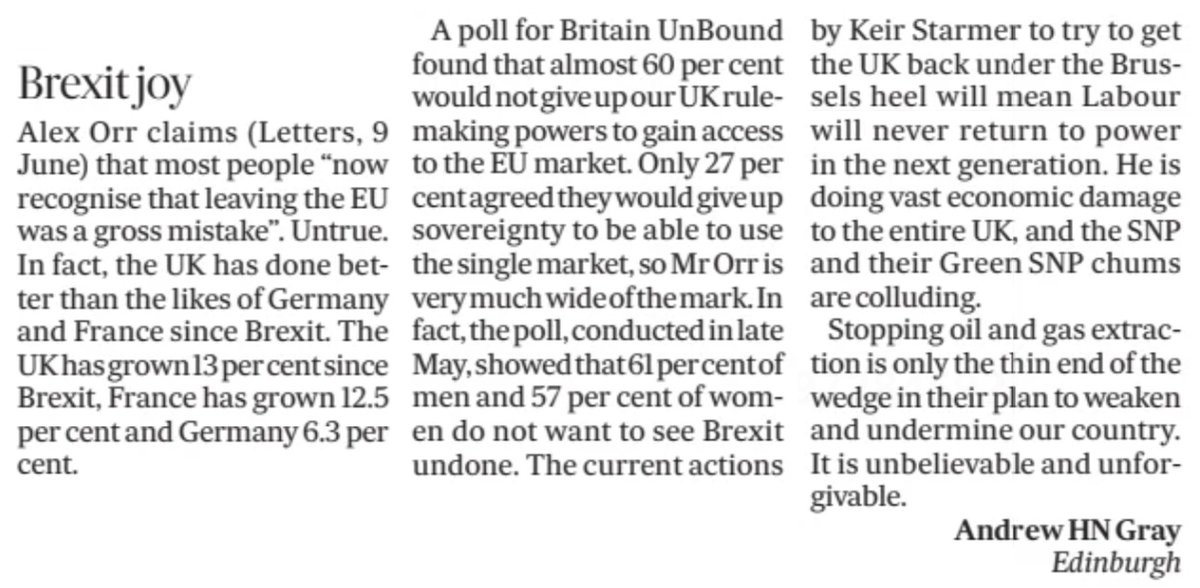
We've seen such amazing response to our recent polling, and we've much more to come.
Great to see that the word is getting out there, and that people are engaging with information in a positive way.
A comment published in The Scotsman, yesterday.
3
32
96
2,298