The most flexible national 3PL delivering you speed, control, and cost efficiency.
Joined January 2024
- Tweets 694
- Following 12
- Followers 23
- Likes 17
263 Photos and videos

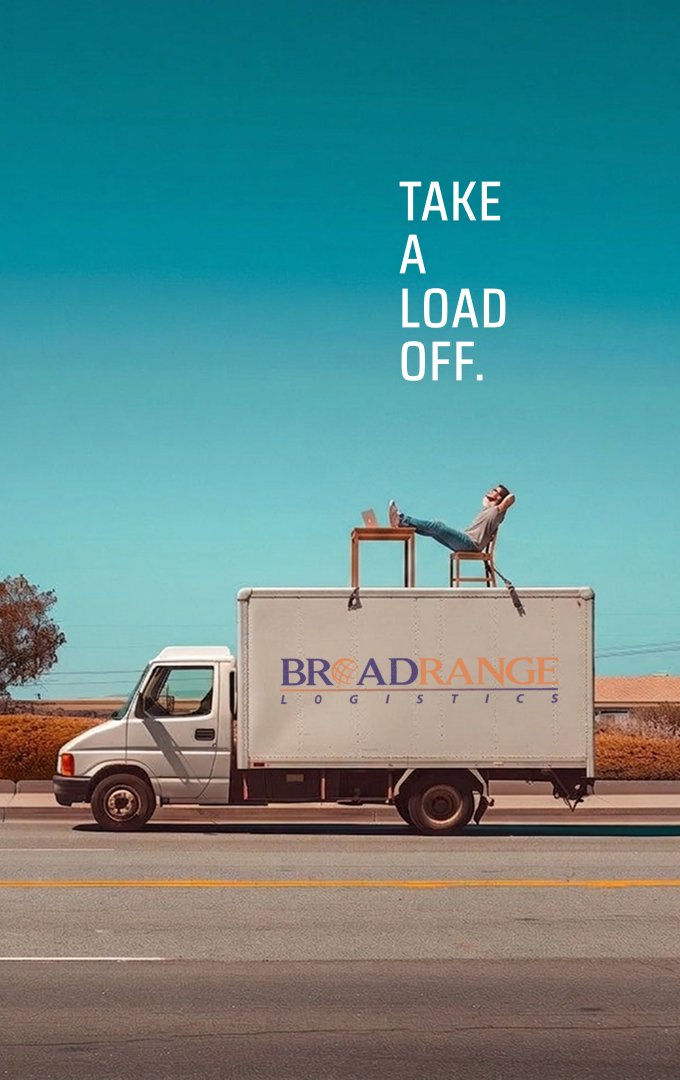





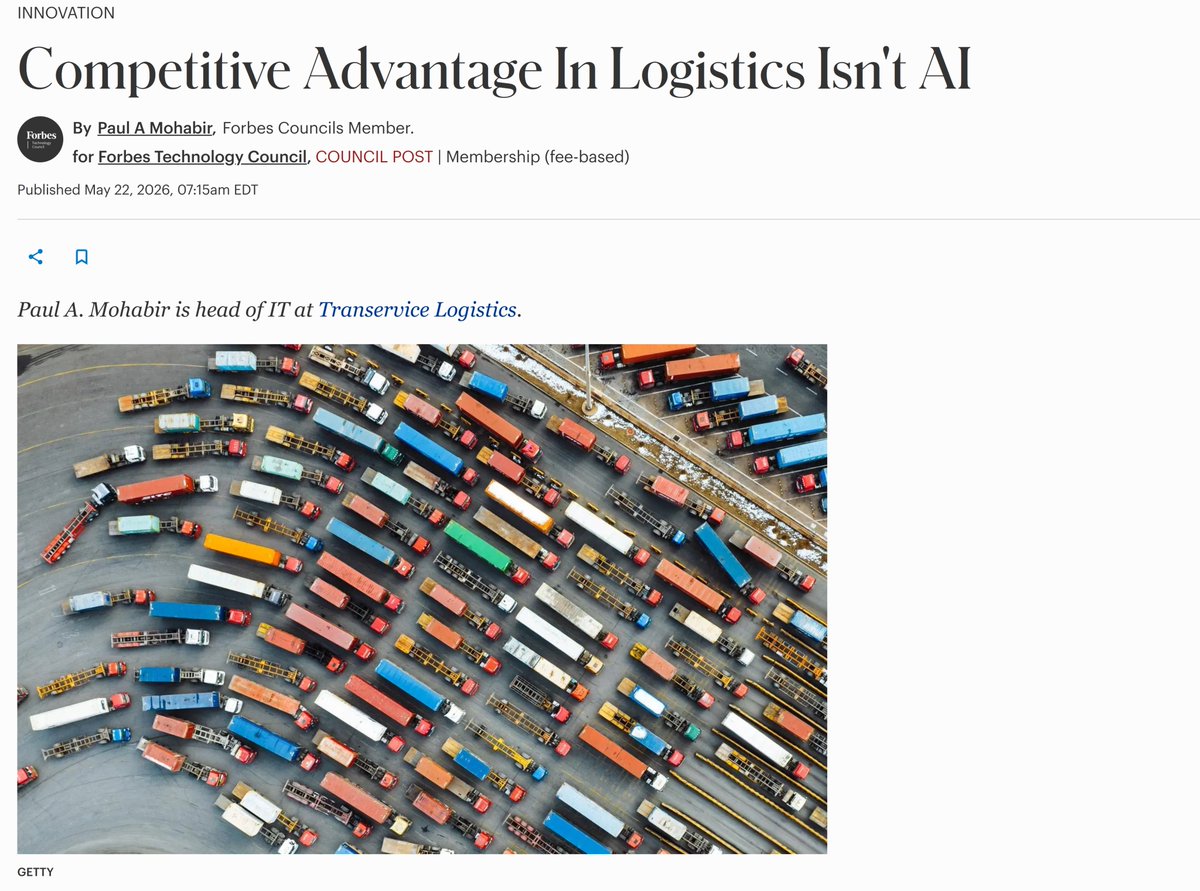


Your freight contract is a price, not a promise that your freight will actually move.
A carrier just rejected a load you're under contract for, and now the only way to move that freight is a record-high spot rate.
That contract was probably never going to hold.
7
3
A rate on a page breaks first. A rate with a relationship and backups behind it holds.
1
They built real options underneath: more than one carrier per lane, intermodal and LTL ready when truckload tightens, and a partner whose job is to find capacity instead of handing them back to the spot market.
2
So a signed rate tells you what you'll pay if the freight moves. It says nothing about whether it will.
This isn't a case against contracts.
A contract is only as strong as what sits behind it. The shippers who aren't scrambling this peak didn't sign cleverer deals.
2
Not in a soft market, when you don't need the protection. In a tight one, which is the exact market you signed the contract to protect against.
The coverage fails right when you need it most.
1
𝐂𝐚𝐫𝐫𝐢𝐞𝐫𝐬 𝐚𝐫𝐞 𝐫𝐞𝐣𝐞𝐜𝐭𝐢𝐧𝐠 𝐫𝐨𝐮𝐠𝐡𝐥𝐲 𝟏 𝐢𝐧 𝟔 𝐜𝐨𝐧𝐭𝐫𝐚𝐜𝐭𝐞𝐝 𝐥𝐨𝐚𝐝𝐬, tender rejections are near 17.5%, and May's Roadcheck blitz pulled even more trucks off the road right as demand spiked.
Look at when this happens.
4
Truckload spot just hit an all-time high near $3.83/mile, above what most shippers pay on contract. So the carrier grabs the spot load and leaves your tender sitting.
2
A carrier honors your contract rate only as long as honoring it costs them less than taking a spot load instead.
Right now that math has flipped.
1
I don't think anybody fires their 3PL over the price per pick.
They fire them when their customer's don't get what they paid for. When their inventory says one thing but the website says another, and customer service has to get involved and apologize.
3
10
Your pickers can be flawless and you can still be getting it wrong.
Around 60% of these run long and over budget, with integration being the most-named reason.
You have to start asking who owns the handoff, and how they map your data before go-live instead of after.
6
It's one line that becomes the only thing anyone talks about for two months.
What the demo doesn't show you is that the system doesn't create your data. It just receives what you already have, and when the handoff is late or wrong there's no failsafe.
26
I've sat in those rooms where the deal gets signed on rate cards and square footage.
The integration between your systems and your partner's gets one line at the bottom of the SOW. "Standard EDI/API onboarding."
5
"The 2,800-mile group stage" - For the first time ever teams are touring a continent.
Organizers are running a fleet of about 5,000 vehicles hauling more than a million pounds of team equipment between cities, backed by enough warehouse space to cover roughly 14 soccer fields

19
A box arrives without a scratch. The packaging looks fine. But the product inside is damaged.
9
9
The operations with the strongest track records on product integrity understand that you can't always just wrap products in more foam, you have to understand what the freight encounters between dock and door.
That's a harder capability to build but it's also harder to replace.
4
The broader point here for 3PLs is that damage prevention is increasingly a data problem, not just a handling problem.
4
In practice this has already helped Japanese fruit exporters more consistently preserve the quality of their product after they used transport data to redesign packaging after identifying the specific vibration pattern that was causing bruising during shipping.
6
Modern transport recorders are now able to measure vibration across three axes, temperature, humidity, and waveform patterns, meaning you can see when a shock occurred and how frequently a product was oscillating.
6
Labor shortages mean that any help from institutional knowledge about how to handle specific cargo is being lost.
But there is a solution: data.
4
Cross-docking operations are now adding more handling steps and making it harder to identify where something went wrong.
Climate volatility is increasing the unpredictability of what a shipment encounters in transit.
4
The environment cargo travels through has changed. Rerouting due to geopolitical factors means that freight is now moving through conditions it didn't have to before.
3