
I love #music and #cryptocurrency! To the moon🚀 Don't forget to follow me! Buy more $Dero 💎
Joined October 2018
- Tweets 280
- Following 209
- Followers 99
- Likes 268
27 Photos and videos



Pinned Tweet

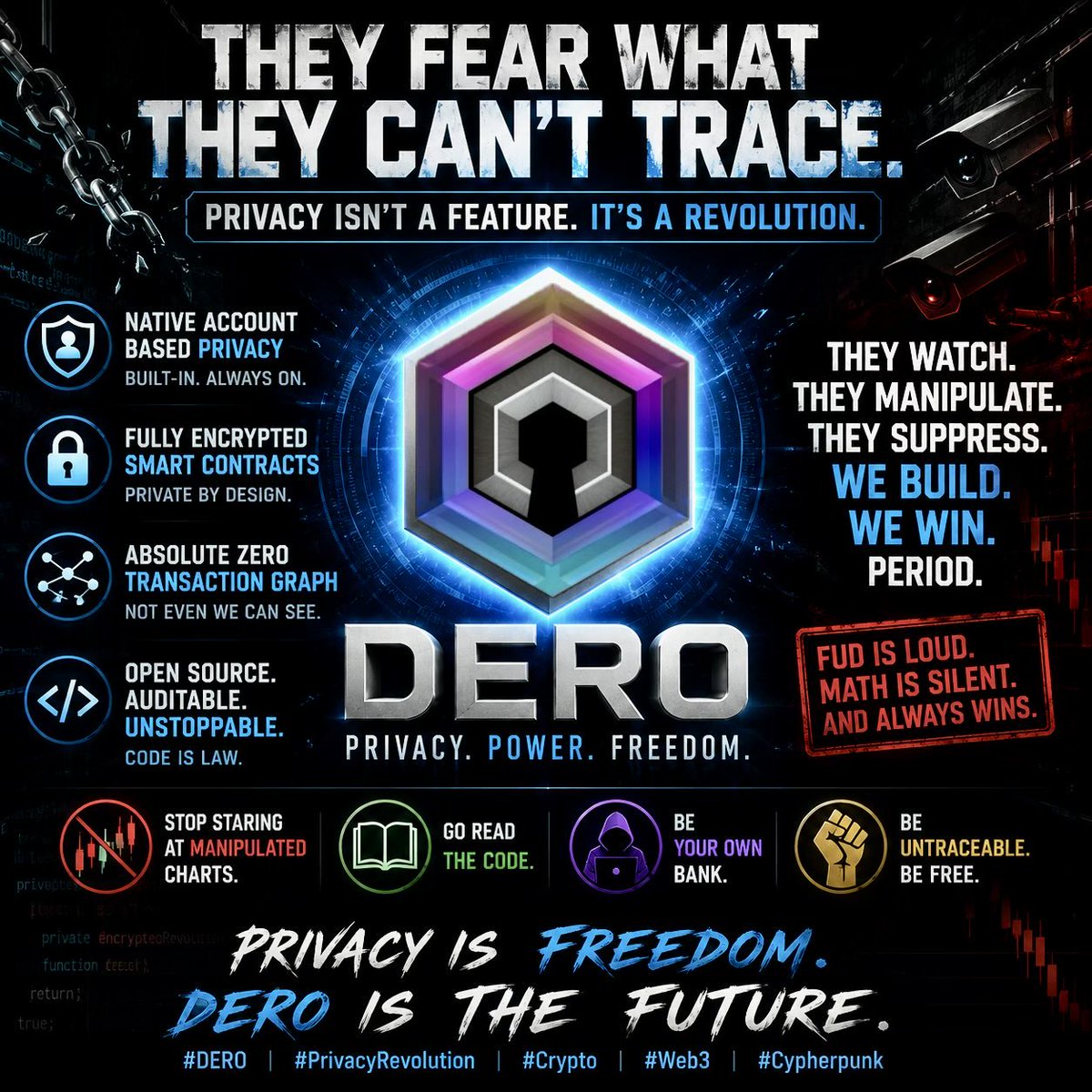
#DERO runs:
• Fully encrypted balances
• Private smart contracts
• ASIC-resistant mining
• Built-from-scratch code
21M supply. 4-year halvings. Cypherpunk design
#cryptocurrency #Web3
derod.org
4
234
“Don’t wait for the perfect moment.
The moment becomes perfect when you start taking action.”
Today you don’t need to be 100% ready. It’s enough to be honest with yourself and take at least one small step. Everything big starts exactly like that.
2
17
4. $Deadline for Final $GENIUS Act Rules (July 18): U.S. banking $regulators must publish final rules for payment stablecoins, establishing strict reserve and redemption requirements — which could lead to greater $centralization of the sector.
1
1
103
5. 21st EU Sanctions Package (July 15): New sanctions against $crypto firms helping Russia could test the resilience of less stable stablecoins and significantly impact $international crypto flows.
1
38
4
125
$Privacy & $Security
• Fully $anonymous transactions powered by CryptoNote Dero Rocket Bulletproofs. $DERO was one of the first projects to implement Bulletproofs on mainnet, making the $blockchain dramatically more efficient than $Monero.
1
5
109
• Fully TLS/SSL-encrypted P2P network — an extra layer of $protection.
• Protocol-level $privacy: transactions cannot be tracked, sender/receiver links are impossible, and coins cannot be tainted. No blacklisting possible.
3
52
★彡 β𝓻уA𝓝 𝐅i𝐧𝒸𝓱 彡★ retweeted

Jun 1

1
5
23
369
★彡 β𝓻уA𝓝 𝐅i𝐧𝒸𝓱 彡★ retweeted

Jun 14
Crypto is a wild place sometimes👍😀🕶️
Always nice to have some $Dero secured in an #Engram wallet👍😀🕶️
In my opinion, it's the safest and most secure decentralized & private #Wallet with the strongest/ best encryption out there👍😀🕶️
#Crypto #Privacy #Freedom
Jun 14

Try this wallet Engram
github.com/moralpriest/Engra…
1
2
11
348
★彡 β𝓻уA𝓝 𝐅i𝐧𝒸𝓱 彡★ retweeted
Jun 10
Anyone who thinks $DERO relies on just one person hasn’t checked the GitHub lately. 🛠️🌐
A solid team of developers like @marcelobarrero , @Alumn0 , @MoralPriest , @dero_bro DHEBP, and @Dank_FC have been consistently building, fixing, and merging code non-stop over the past year.
True decentralization means the ecosystem never sleeps. The development of derohe is as active as ever! 📈🔥
Wait the upcoming Release 🚀
#DERO #Privacy #Crypto #Build #Decentralized
4
14
36
962
★彡 β𝓻уA𝓝 𝐅i𝐧𝒸𝓱 彡★ retweeted
Jun 7
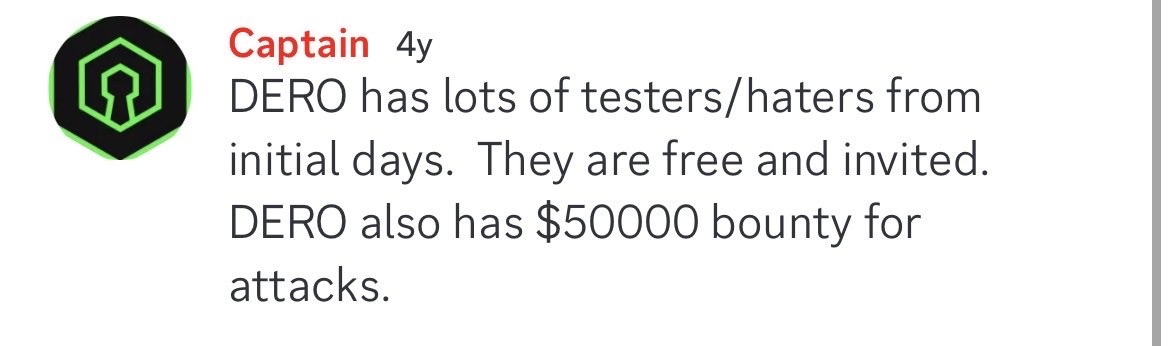
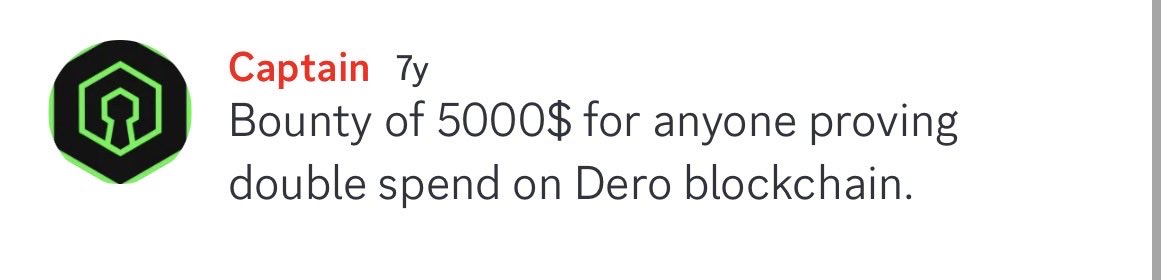
Hey @DefuseSec
Can you look for bugs in $DERO
there are 50000$ bounty
Good luck
Jun 5

To get ahead of scams, if you're interested in donating to me for finding the Zcash bug, my addresses are in this post or in my replies below (be careful to check the exact username for lookalike scammers). Nothing else has been approved by me.
Note: I intend to apply for a bounty through a Zcash coinholder grant, so donations are much appreciated but not necessary!
Zcash:
u1k6y9wpyc5m5ec3wz49ny9chewklyexn8rdj7928n3zswh0gwl0gh3zwwg37p76j7vrrv8s0dj8rhjfc49pg9yv9mjdea2sn86tnjh99a9424cdvw3aadyz8v40ddancr7e4kjzw07qhrcdez3d9sycx89f87vjw7eaxys2aktsm57tkp
t1eykDAemzff7oPAA2E43Z47iawATB4bZRy
Solana:
D6c34hRcmhkHMXaAhoPXgVw9JYrh84saeSfYnk7ZSjeW
ETH:
0x1b8203102aE3469a67E78FF9a78d8A5cC7E7e769
BTC:
bc1qtxqv8fzj2pnewj2y5l8nh4ur4rkrvm2kv6mlp9
3
13
478
★彡 β𝓻уA𝓝 𝐅i𝐧𝒸𝓱 彡★ retweeted

"Better to start learning more about privacy now. Because in coming times that knowledge will be required anyhow to survive & maintain edge with respect to others."
— Captain
$DERO #WEB3 #DVM #TELA #ENGRAM #HOLOGRAM #GNOMON #EPOCH #WEB3 #STARGATE #PRIVACYTOGETHER
May 31
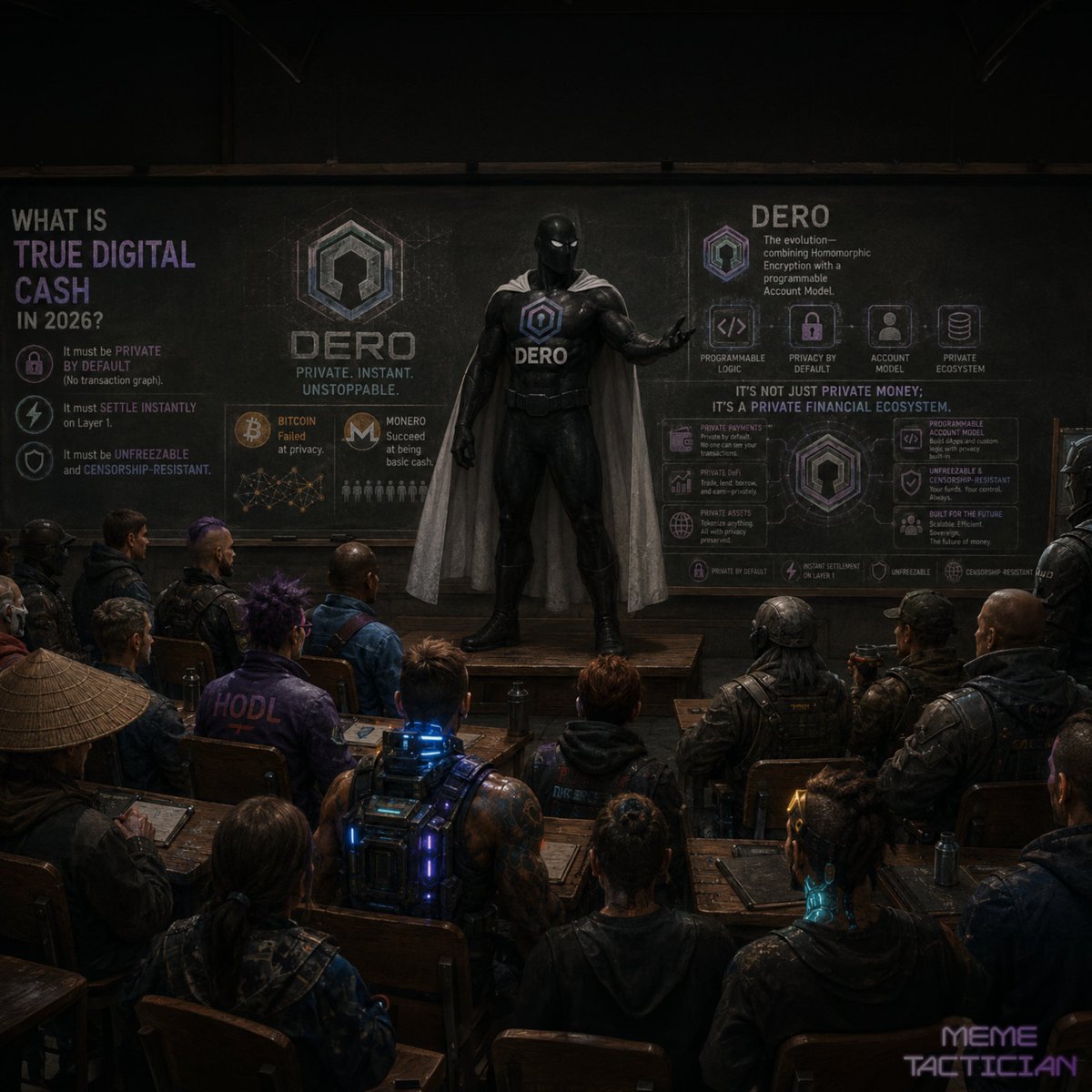
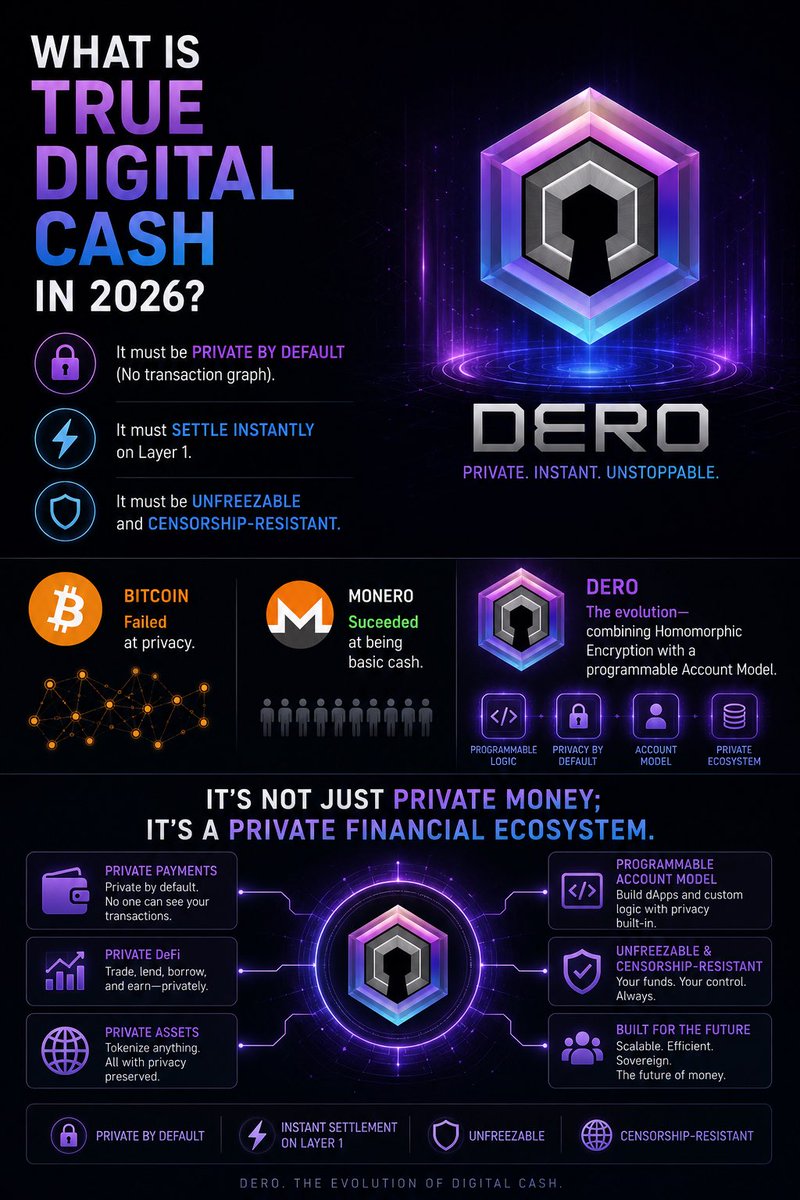
What is true digital cash in 2026?
It’s not just about hiding transaction amounts; it’s about moving past the limitations of transparent ledgers and rigid UTXO models entirely.
#Monero built the basic cash. $DERO is building the evolution—combining Homomorphic Encryption with a programmable Account Model natively on Layer 1.
Private money is good. A private, unfreezable financial ecosystem is unstoppable. 🚀
7
17
414
★彡 β𝓻уA𝓝 𝐅i𝐧𝒸𝓱 彡★ retweeted
Is your favorite crypto truly private?
DERO nodes run TLS-encrypted over UDP with homomorphic encryption. Blocks use erasure coding (fractured into chunks) making tracing harder, while traffic mimics normal web data.
Plus, solo mining from your daemon gives 10% rewards.
Real privacy🟪
More info here 👇
derod.org/basics/daemon
$DERO #WEB3 #DVM #TELA #ENGRAM #HOLOGRAM #GNOMON #EPOCH #STARGATE #PRIVACYTOGETHER

1
7
20
262
★彡 β𝓻уA𝓝 𝐅i𝐧𝒸𝓱 彡★ retweeted

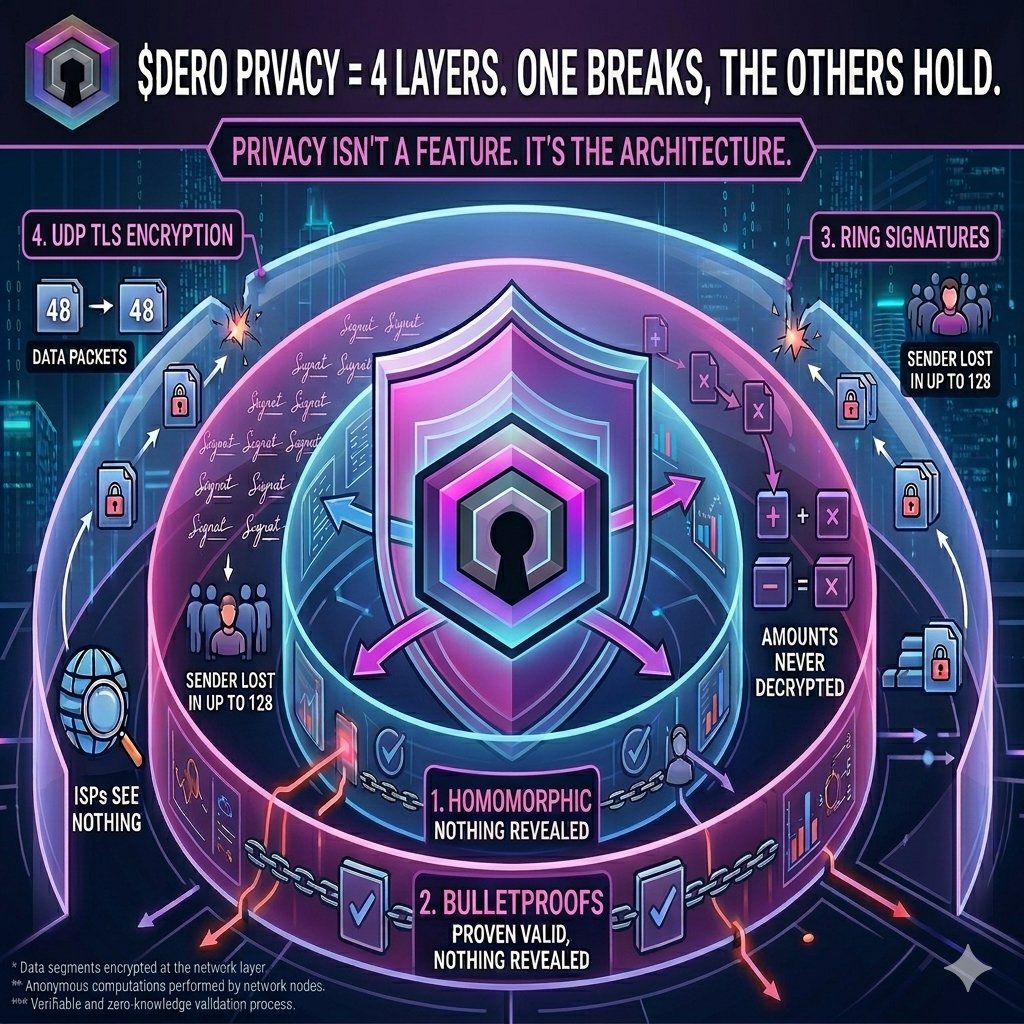
$DERO privacy architecture= 4 layers. One breaks, the others hold
UDP TLS data chunks→ ISP see nothing
Ring sigs → sender lost in up to 128
Homomorphic encryption → amounts never decrypted
Bulletproofs → proven valid, nothing revealed
derod.org/privacy
2
10
30
284
★彡 β𝓻уA𝓝 𝐅i𝐧𝒸𝓱 彡★ retweeted
May 31
The asymmetric information gap in the privacy sector is wider than ever. While retail is distracted by compliance FUD and superficial marketing, true architectural innovation is being mispriced.
Let's break down the reality of onchain privacy in 2026:
1/ The UTXO Illusion vs. The Account Model
Most privacy protocols are still stuck trying to patch the rigid limitations of the UTXO model. Monero succeeded at being basic peer-to-peer cash, but it stops there. True scalability into Web3 requires a programmable Account Model. However, doing this without exposing data has been the ultimate cryptographic bottleneck.
2/ Homomorphic Encryption is the Frontier
Many emerging projects try to mimic this narrative but miss the mathematical foundation. Implementing standard ElGamal or poorly modified Zether frameworks creates immense ciphertext expansion and registration annoyances.
$DERO solved this years ago by natively integrating Homomorphic Encryption (via ElGamal Ciphertexts on Ristretto255) directly into a Layer 1 Account Model. It's a structure so complex that competitors spend years trying to reverse-engineer it, often tripping over critical implementation bugs.
3/ The "ST" Tag Exchange Game
Exchanges use outdated compliance metrics or structural "Special Treatment" tags to create artificial friction. But smart money sees right through the suppression. When a network satisfies every single metric of active L1 development, continuous core patches, and deflationary tokenomics post-halving—an exchange tag is just a discount window for accumulation.
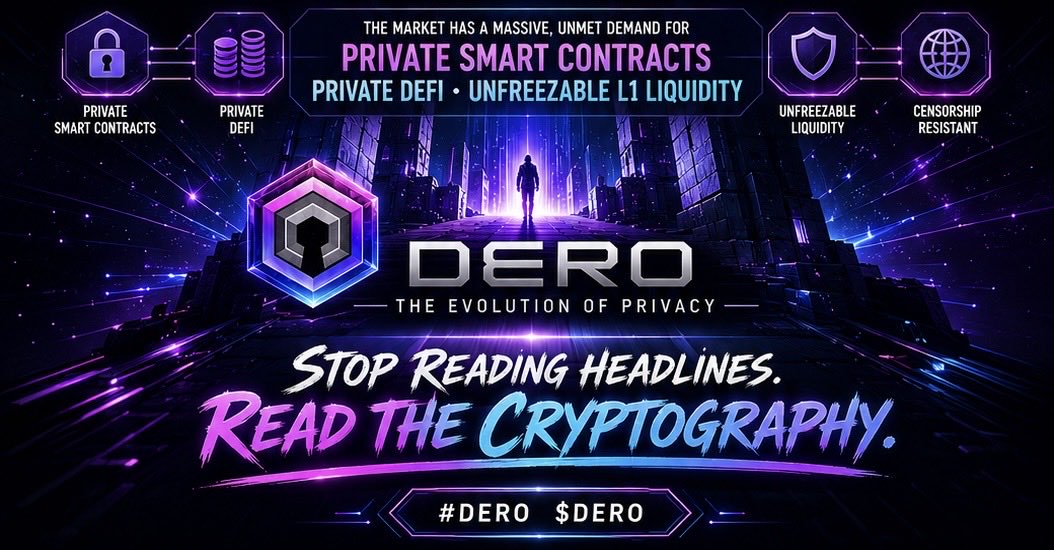
The market has a massive, unmet demand for private smart contracts, private DeFi, and completely unfreezable L1 liquidity.
We aren't just building a transactional privacy coin. We are witnessing the birth of an unstoppable, private financial ecosystem.
Stop reading headlines. Read the cryptography.
#DERO $DERO
derod.org/
derofoundation.org/
4
18
210