Joined June 2024
- Tweets 3,375
- Following 295
- Followers 687
- Likes 2,305
1,318 Photos and videos




Anthropic's two newest frontier models just got disabled globally -
3 days after launch.
Not a bug. Not a rollback. A US Commerce Department export control
directive, per Anthropic's own statement.
Here's what's actually affected:
→ Claude Fable 5 and Claude Mythos 5 - both offline for all users
→ Opus 4.8 and every other Claude model - unaffected, still running
→ Anthropic calls it "a misunderstanding" and says they're working
to restore access
For builders, the practical question isn't the geopolitics. It's this:
If you had production workflows pointed at Fable 5 or Mythos 5 -
via claude ai, the API, or Claude Code - those calls are failing
right now. The benchmark numbers we covered three days ago (80.3%
SWE-Bench Pro, 88% Terminal-Bench) are temporarily inaccessible
regardless of how good they were.
The immediate fallback: Opus 4.8 remains fully available and was
the previous SOTA before Fable 5 shipped. If your pipeline has a
model-version fallback built in, this is the test of whether that
actually works.
What's your fallback plan if a frontier model gets pulled with
zero warning - and how quickly could your stack switch?
anthropic.com/news/fable-myt…
4
104
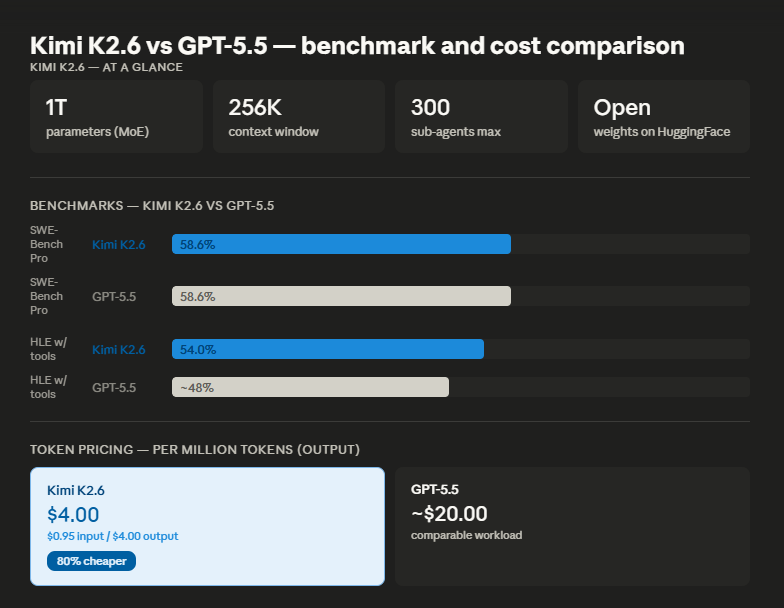
A Chinese startup just shipped a coding model that ties GPT-5.5
on SWE-Bench Pro and costs 80% less per million tokens.
Most people in Western tech haven't heard of it.
Kimi K2.6 from Moonshot AI:
- 1 trillion parameters, 32B activated per token (MoE)
- 256K context window
- Ties GPT-5.5 on SWE-Bench Pro at 58.6%
- Tops Humanity's Last Exam with tools at 54.0%
- 300 sub-agents, 4,000 coordinated steps
- Open weights on Hugging Face
- $0.95 / $4.00 per million tokens
The same workload via GPT-5.5 costs ~5x more.
The Kimi Code CLI dropped alongside it. One curl command,
drop into any terminal, and you're running the same model
that's running 12-hour autonomous coding sessions for
enterprise teams.
The inference cost curve is falling 10x every 18 months.
The open-weight model race is compressing frontier capability
into commodity pricing faster than any single lab can defend.
What happens to the API-first business models when
self-hostable models tie closed frontier models at 20% of the cost?
That question is no longer theoretical.
1
4
131
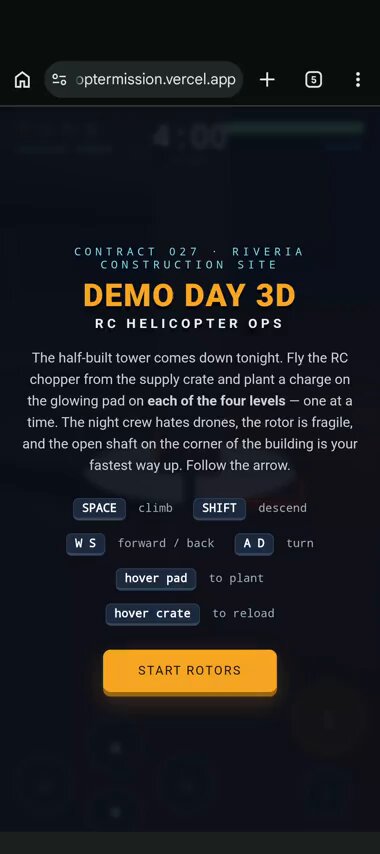
Claude Fable 5 just made the gta vice city helicopter mission in one prompt :
1
7
194
Microsoft didn't ban Claude Code because it failed.
They banned it because 100,000 engineers adopted it faster
than any internal tool in company history and the bill
became unmanageable.
Uber's version of this story is even more brutal:
5,000 engineers. Usage hit 95% in 4 months.
Per-engineer API cost: $500–$2,000/month.
They burned their entire $3.4B 2026 AI budget before summer.
The CTO said the annual budget was exhausted before the year
was half over.
This isn't a story about AI tools being bad.
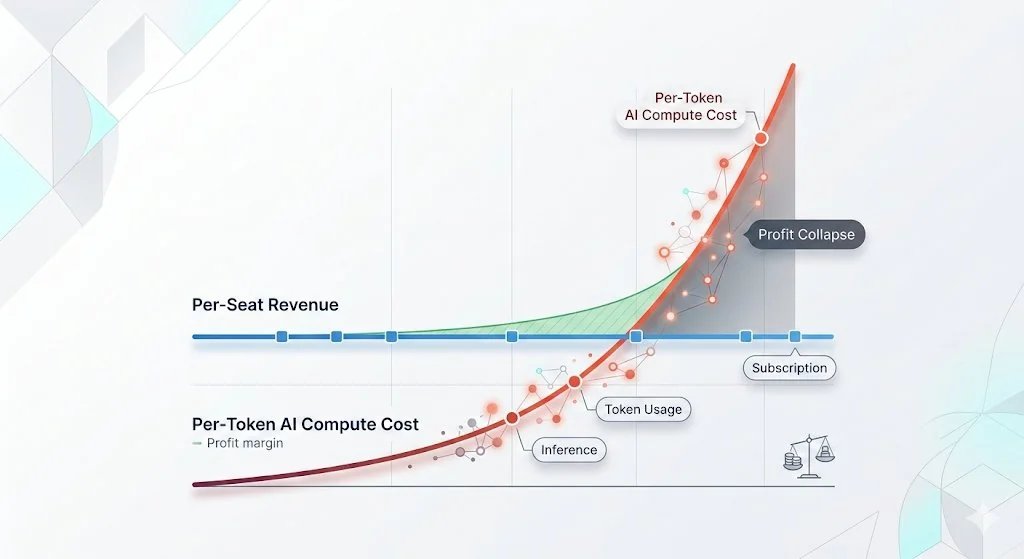
It's a story about the unit economics of intelligence
not being solved yet.
Here's what happens next:
1. Token cost is the new capex bottleneck. Companies are now
building AI ROI models the way they used to model data center
spend. It's a procurement problem, not a product problem.
2. The self-hosting threshold just moved. At 100M tokens/month,
self-hosting 70B open-weight models on H100s costs ~$950/month.
The same volume via API: $5,000–$10,000. The math is already
there. The operational complexity is the only thing holding
companies back.
3. The inference cost curve is falling 10x every 18 months.
A token that cost $0.06/1K in early 2025 costs $0.006 today.
The companies that get bridged to the bottom of that curve
without killing their margins will dominate the others that
couldn't afford the transition.
Microsoft isn't retreating from AI. They're doing what every
large enterprise does when a vendor outperforms their own product
AND destroys their quarterly margins in the same quarter.
They're internalizing.
Which of these three forces do you think resolves first-
cost curve, self-hosting maturity, or the API providers
repricing to keep the enterprise?
1
6
102
Claude Mythos/Fable 5 one shots COD Zombies Clone :
It burns through rate limits quickly, but its really good at making prototypes !
4
96
People keep saying AI can't build real games.
Claude Mythos/Fable 5 just built a fully playable Bomberman clone - grid, bombs, blast radius, collision, enemy AI, animations - in a single prompt .
No JavaScript frameworks. No game engines. Just HTML, CSS,
and the right prompts.
The bottleneck in AI-assisted development is no longer the AI.
It's people who don't know how to use it.
Prove me wrong.
5
185
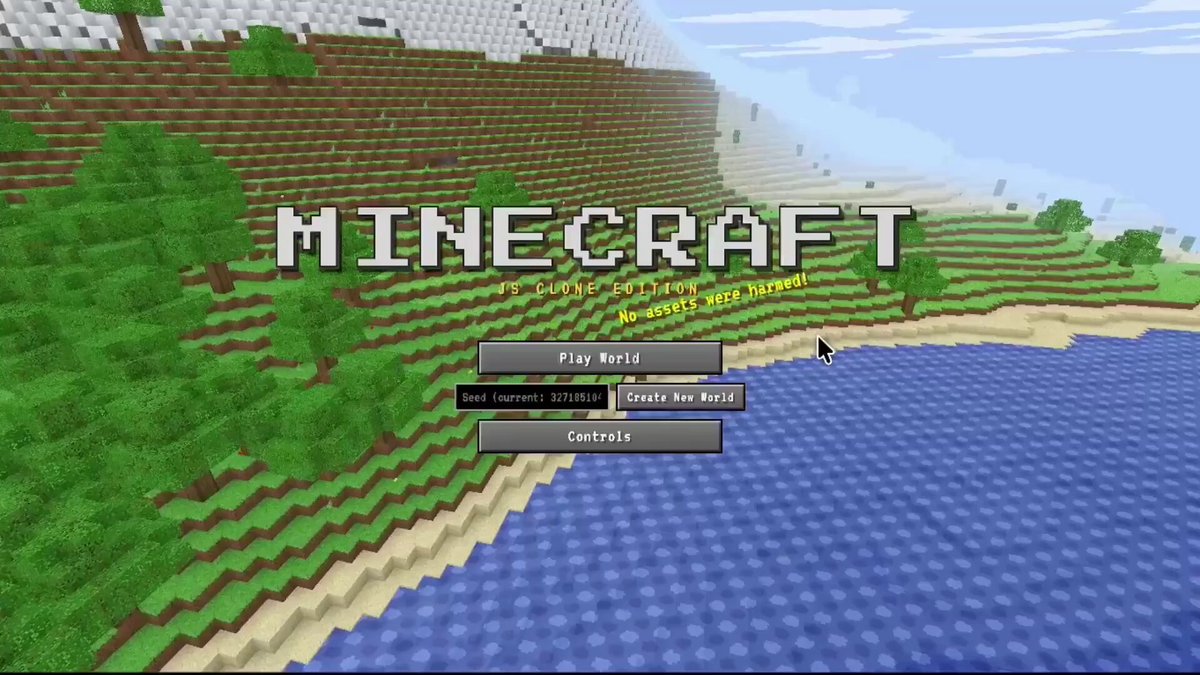
Claude Fable 5 Max. One prompt.
"Build Minecraft in HTML."
One file. Zero dependencies. Runs in the browser.
Procedural terrain. Block placement. First-person camera.
The whole thing.
Not "Minecraft-inspired."
Not "Minecraft-like."
Minecraft. In an HTML file.
What are we even doing with this model.
3
123
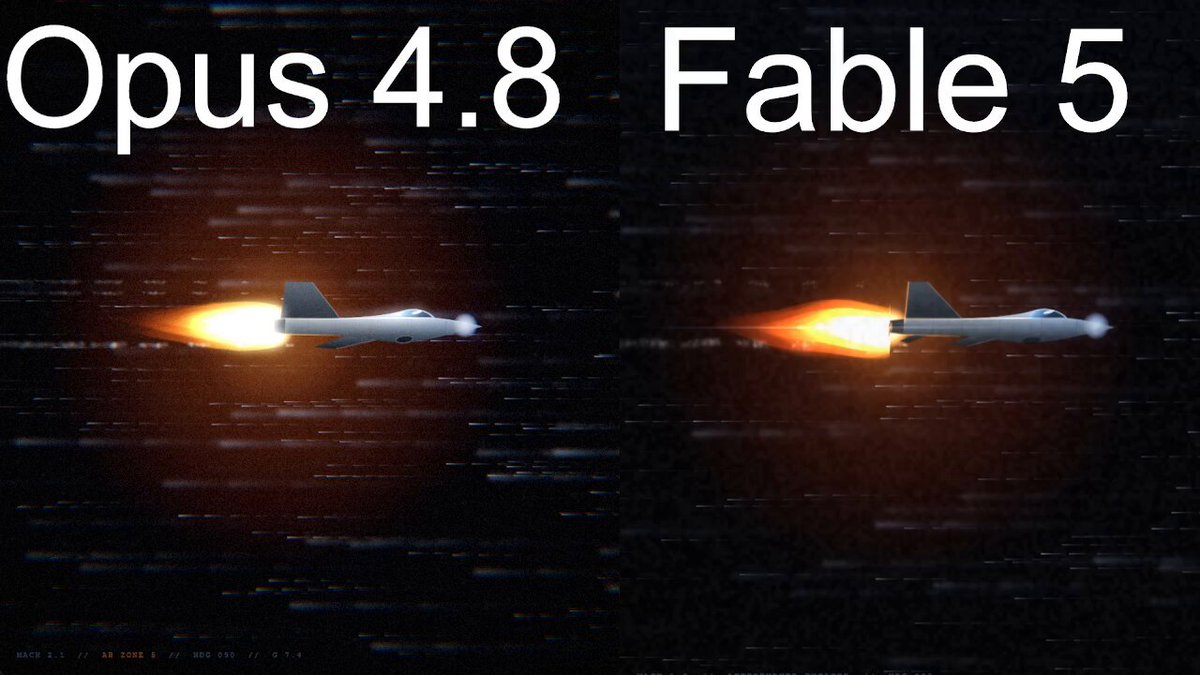
Same prompt. Fable 5 vs Opus 4.8.
One instruction that changes everything:
"Performance optimization is not a priority.
Maximize visual expressiveness."
Fighter jet. Deep space. Afterburner glow.
Heat distortion. Motion blur. Camera shake.
Zero dependencies. One HTML file each.
Both had similar outputs, Fable used WAY more tokens!
Side by side output below.
This is the benchmark that actually matters
not a leaderboard score.
What does it build when you let it go all in?
4
142
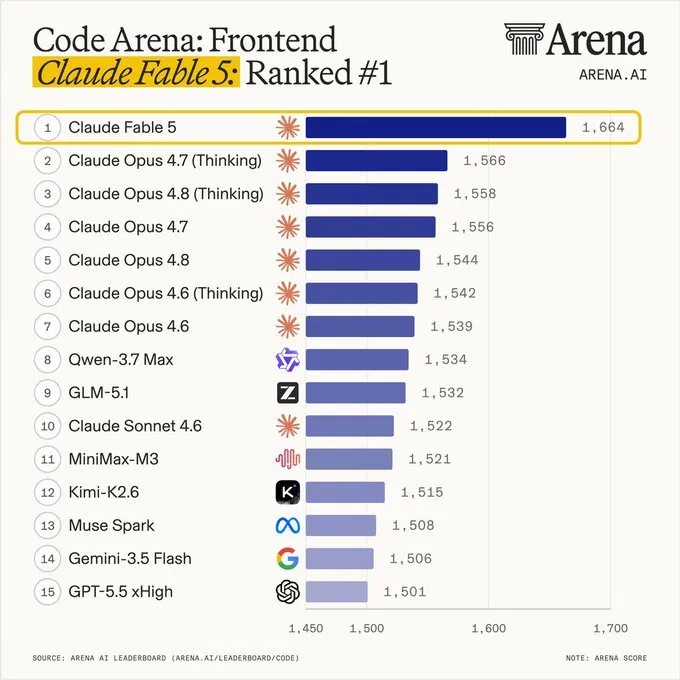
Claude Fable 5 just dropped - and it's already #1 on Code Arena Frontend.
Score: 1,664. The next 6 spots? All Claude models too.
Anthropic didn't just win the leaderboard. They own the top 7 rankings - above Qwen, GLM, Gemini, and GPT.
For frontend devs: if you're not using Claude for UI/component work, you're leaving performance on the table.
What's your go-to model for frontend code right now?
1
4
141
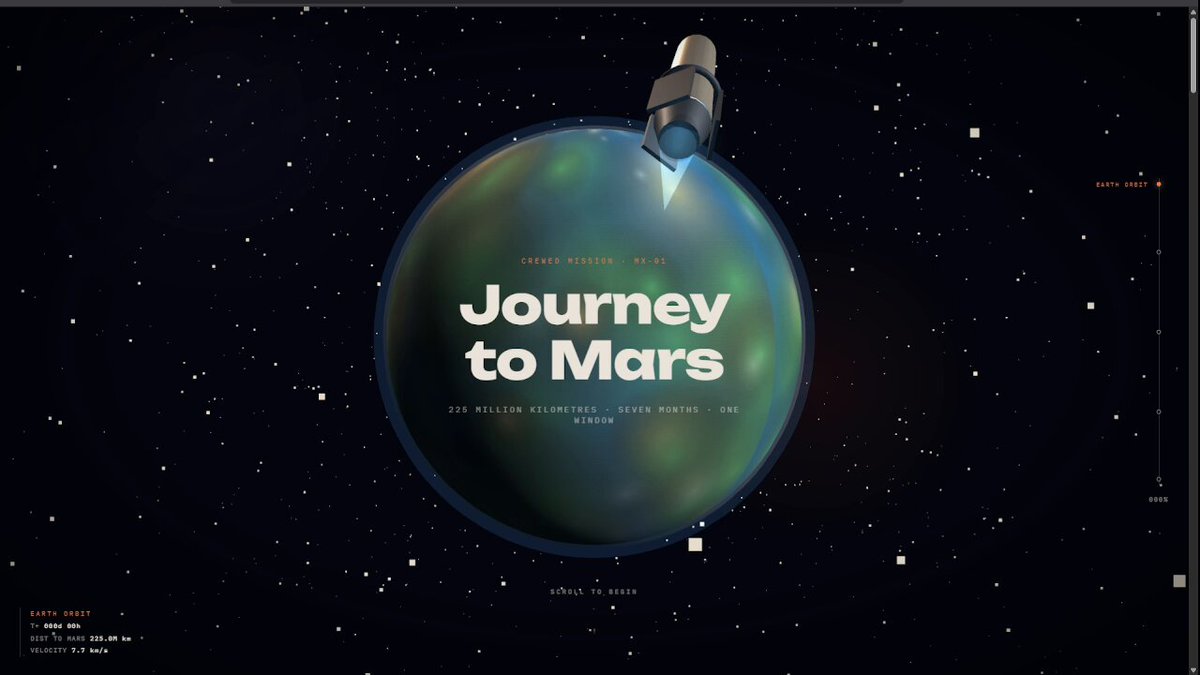
Claude Fable 5. One prompt.
A scroll-driven cinematic journey from Earth to Mars.
Six chapters. Full 3D planets. Deep space nebulae.
Procedural textures. Zero external assets.
One HTML file.
The last chapter title:
"The sky is not the limit. It's the road."
Fable 5 didn't just write the code.
It wrote the story first.
1
2
5
171
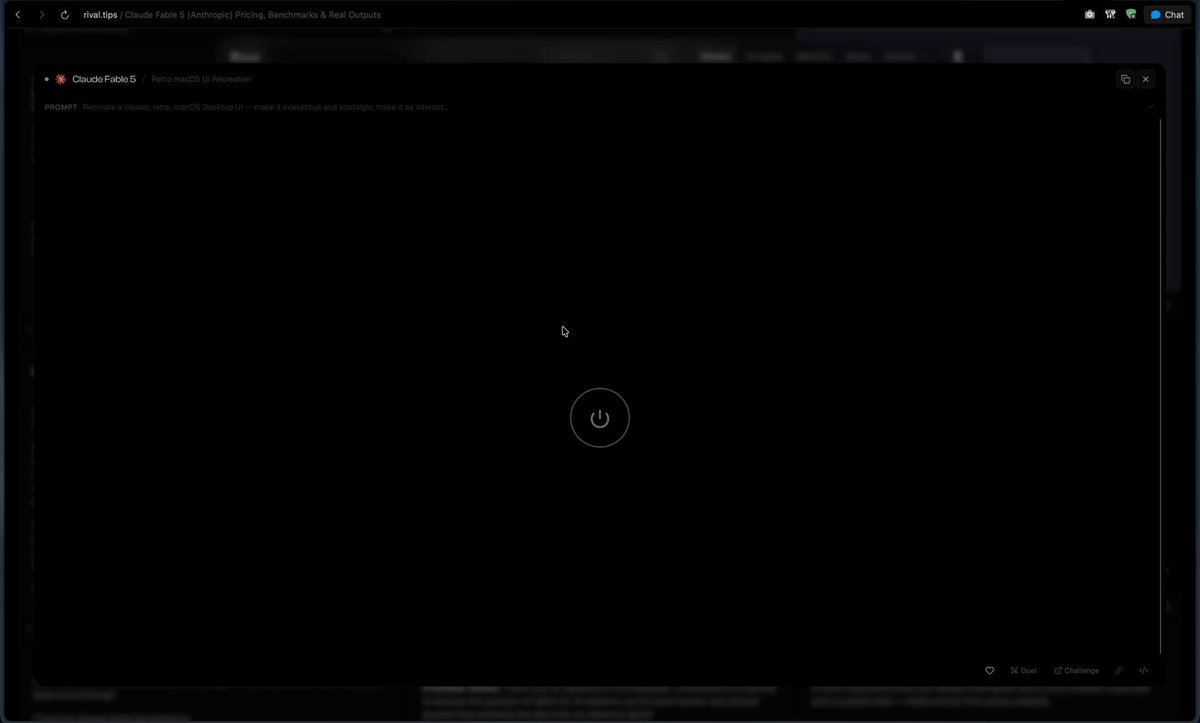
Claude Fable 5 one-shotted a retro macOS experience.
Fully polished. Period-accurate UI.
First try.
This is the third time I've seen Fable 5
produce something in one shot that would've taken
a developer hours to build manually.
3D floating worlds. Working OS interfaces.
Interactive experiences.
One prompt each.
The real benchmark isn't the leaderboard score.
It's what it builds on the first ask.

Introducing Claude Fable 5: a Mythos-class model that we’ve made safe for general use.
Its capabilities exceed those of any model we’ve ever made generally available.
3
195
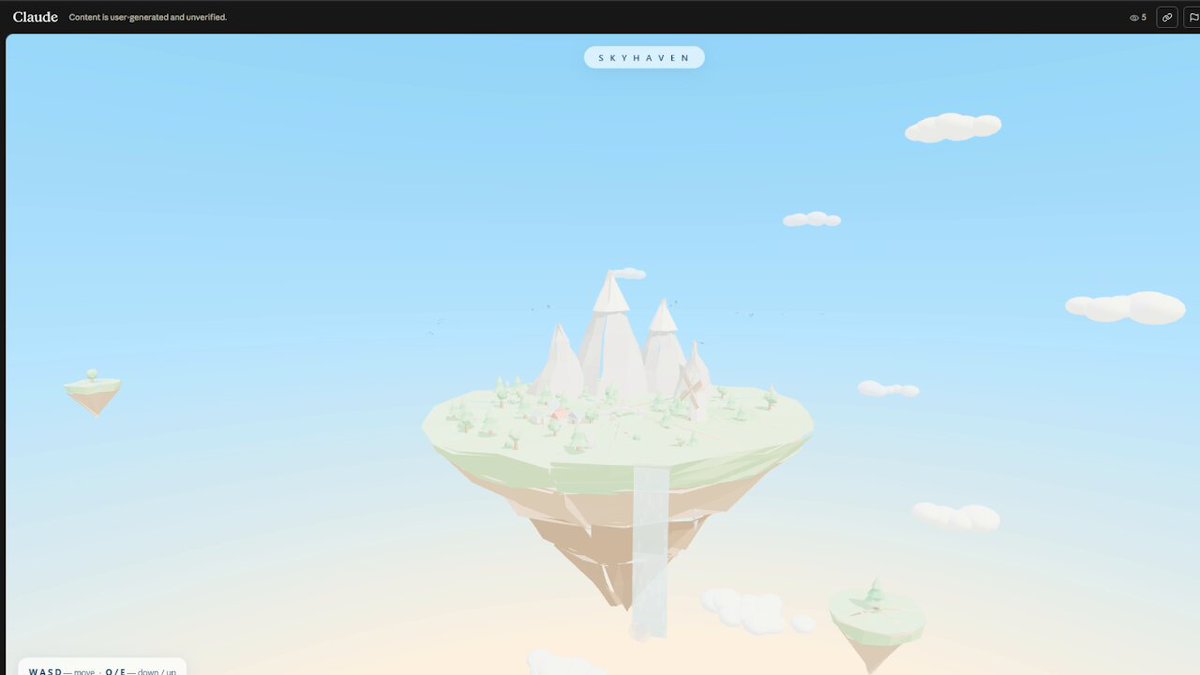
One prompt.
@claudeai Fable 5 built Skyhaven - a fully interactive
3D floating island world.
Drifting islands, dynamic lighting, explorable terrain.
Running live in your browser right now.
Not a screenshot. Not a demo video.
Open the link and walk around in it.
This is what "one prompt" means in 2026.
4
479
15-second dark fantasy battle.
Seedance 2.0. Zero post. Zero upscaling.
The spark and mud detail you're seeing?
Straight model output.
The unlock wasn't resolution.
It was prompt language.
Low sharpness practical effect aesthetic hides
AI telltales better than 4K ever could.
Film grain, handheld shake, grit -
all prompt-native.
My prompt ends at "monster crashes to the ground."
Seedance wrote the rest.
11
477
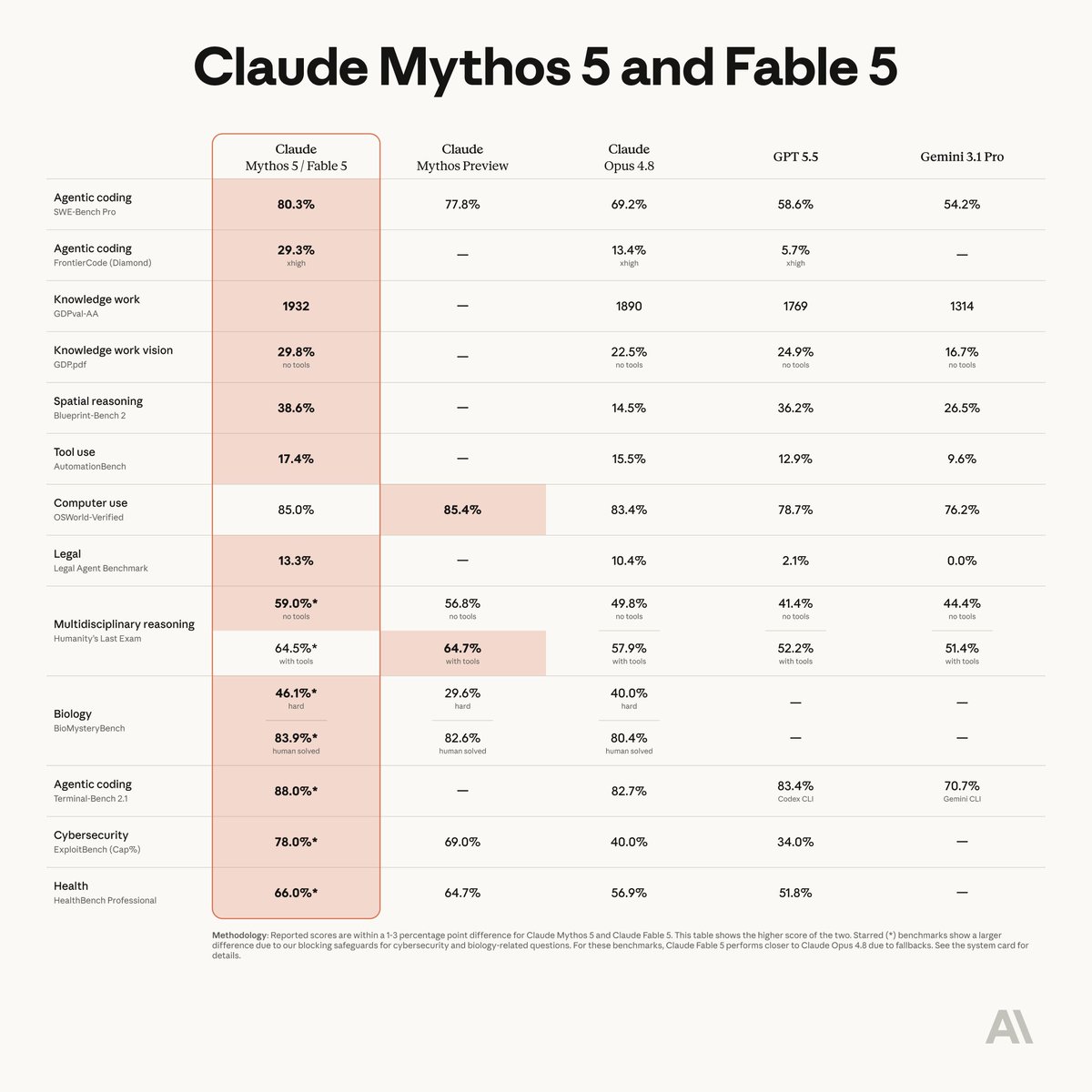
Anthropic just dropped Claude Fable 5.
80.3% on SWE-Bench Pro. 88.0% on Terminal-Bench 2.1.
85.0% on computer use. 78.0% on cybersecurity.
Every number in that benchmark table beats GPT-5.5 and Gemini 3.1 Pro.
By a lot. Not marginally.
Andrej Karpathy called it a "major-version-bump-deserving step change."
That's not hype — that's the person who built GPT-2's training infra.
The one thing the benchmarks don't show:
Fable 5 is the Mythos-class model made safe for general use.
Meaning the underlying capability was already built.
Anthropic spent the extra time on safeguards, not on scaling.
That's a different philosophy than every other lab shipping right now.
Free for Pro and Max users until June 22.
What's the first complex task you're running through it?
5
147