
Joined April 2024
- Tweets 981
- Following 114
- Followers 16,760
- Likes 670
415 Photos and videos









Pinned Tweet

May 20
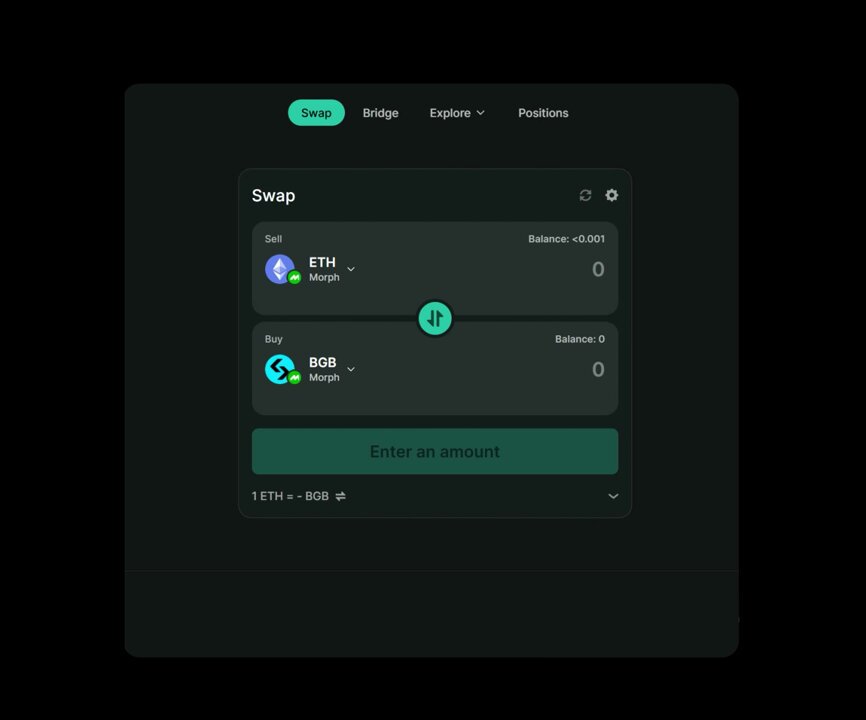
Want to swap solana:EPjFWdd5AufqSSqeM2qN1xzybapC8G4wEGGkZwyTDt1v into ethereum:0x54d2252757e1672eead234d27b1270728ff90581 on Morph?
A simple walkthrough for trading on Bulba.
1
6
957
29m
How to enter Bulba from Bitget Wallet @BitgetWallet :
: Open Bitget Wallet
: Go to the Search Bar
: Type bulbaswap.io
: Click Confirm to Sign in
: Find Launch app
: Start your Swap
See how easy to swap from other chains to Morph.
15
Jun 14
Before the numbers, read the metric.
TVL means total value locked.
For a DEX, it shows the value of assets provided into pools and protocols.
It is part of the liquidity base behind swaps.
3
128
Jun 13
Stablecoins are moving beyond crypto assets.
They are becoming payment and settlement infrastructure.
According to recent reports,
stablecoin transaction volume has surpassed $51T over the last 12 months,
surpassing the combined annual volumes of Visa and Mastercard.
1
2
288
Jun 13
But,
: Rails still need markets.
: Pairs to trade against.
: Liquidity to move size.
: Routes to convert between assets.
: Pricing users can actually read.
That is the side Bulba is building for on Morph.
203
Jun 12
Why do stablecoin pairs matter on a DEX?
Because they can act as base routes.
If two assets do not have strong direct liquidity,
a swap may route through a deeper $USDC or $USDT pair instead.
That helps liquidity become more useful across the ecosystem.
On Bulba, stablecoin pairs support more than trading stablecoins.
They support asset movement on Morph.
1
4
95
Jun 11
Getting into Morph @MorphNetwork should not be the end of the flow.
It should be the start of the trade.
: Bridge in.
: Check the route.
: Read the liquidity.
: Understand the output.
Then swap.
4
99
Jun 9
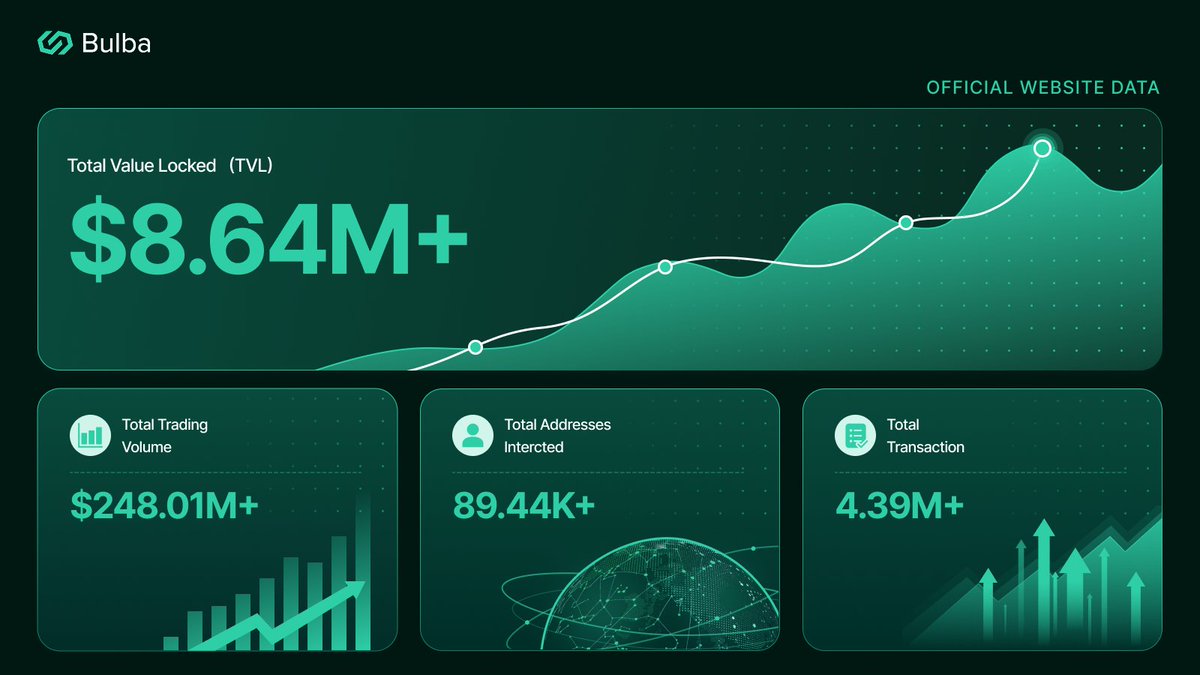
A quick look at Bulba:
[$8.64M ] total value locked
[$248M ] total trading volume
[89.44K] total addresses interacted
[4.39M ] total transactions
Each one shows a different part of the trading layer being built on Morph:
liquidity, users, routes, and execution.
2
118
Jun 8
1/ Best price can be misleading.
In DEX trading,
the displayed quote is only one part of the trade.
The final result also depends on routing,
liquidity depth, gas cost, and execution path.
1
2
166
Jun 8
2/ That is why execution quality matters.
A better swap is the trade that routes well,
uses liquidity well, and leaves you with a better final result.
101
Jun 5
A simple swap checklist on Bulba:
: Am I on the right network?
: Is this the right token pair?
: What route is this trade taking?
: What is the estimated output?
: What slippage am I accepting?
: Is liquidity deep enough for my size?
The trade starts before you click confirm.
1
1
4
330
Bulba retweeted

Jun 4
AI agents are moving from recommendations to transactions.
The next question is not whether agents can buy. It is what payment infrastructure they will use when they do, and what our predictions reveal about the next phase.
Introducing the Agentic Economy Report ↓
193
84
220
11,903
Jun 3
1/ What do LPs do?
They provide assets into liquidity pools.
Those pools are what traders swap against on a DEX.
: No LPs, no pool.
: No pool, no smooth trading.
1
2
127
Jun 3
2/ Where do LP fees come from?
When traders use a pool,
trading fees are generated from that activity and distributed based on the pool rules.
LPs support the trading experience, but they also take risk.
That is why liquidity matters on Bulba.
82
Jun 2
Getting assets into a chain is only step one.
The next question is :
Can you actually trade once you arrive?
Bulba is one of the trading paths for users entering Morph from other chains.
: Bridge in.
: Find a route.
: Swap into the assets you need.
Cross-chain access should lead straight into trading flow.
1
79
Jun 1
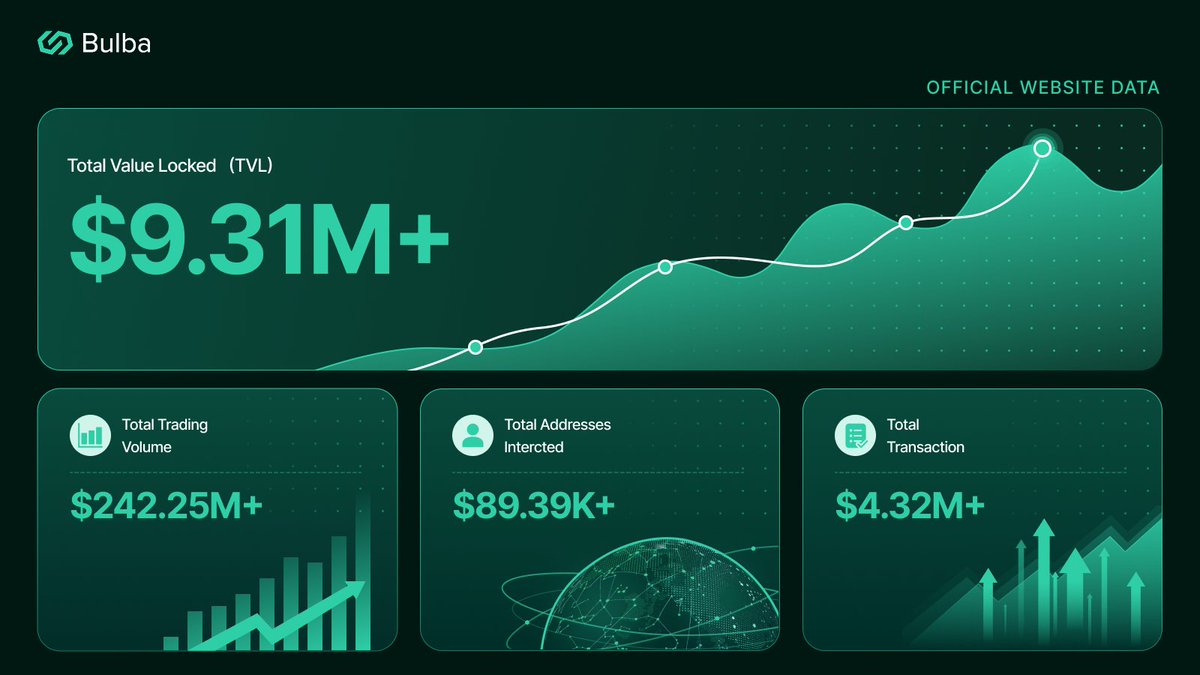
A quick look at Bulba:
[$9.31M ] total value locked
[$242.25M ] total trading volume
[89.39K] total addresses interacted
[4.32M ] total transactions
Each one shows a different part of the trading layer being built on Morph:
liquidity, users, routes, and execution.
1
82
May 29
Stablecoins are already a $300B market.
$USDT and $USDC still sit at the center of onchain liquidity.
But native stablecoins are only the first layer.
Once they arrive on a chain, they still need markets.
: Pairs.
: Liquidity.
: Routes.
: Execution.
On Morph, Bulba is building the trading layer that makes stablecoin liquidity usable.
3
72
May 28
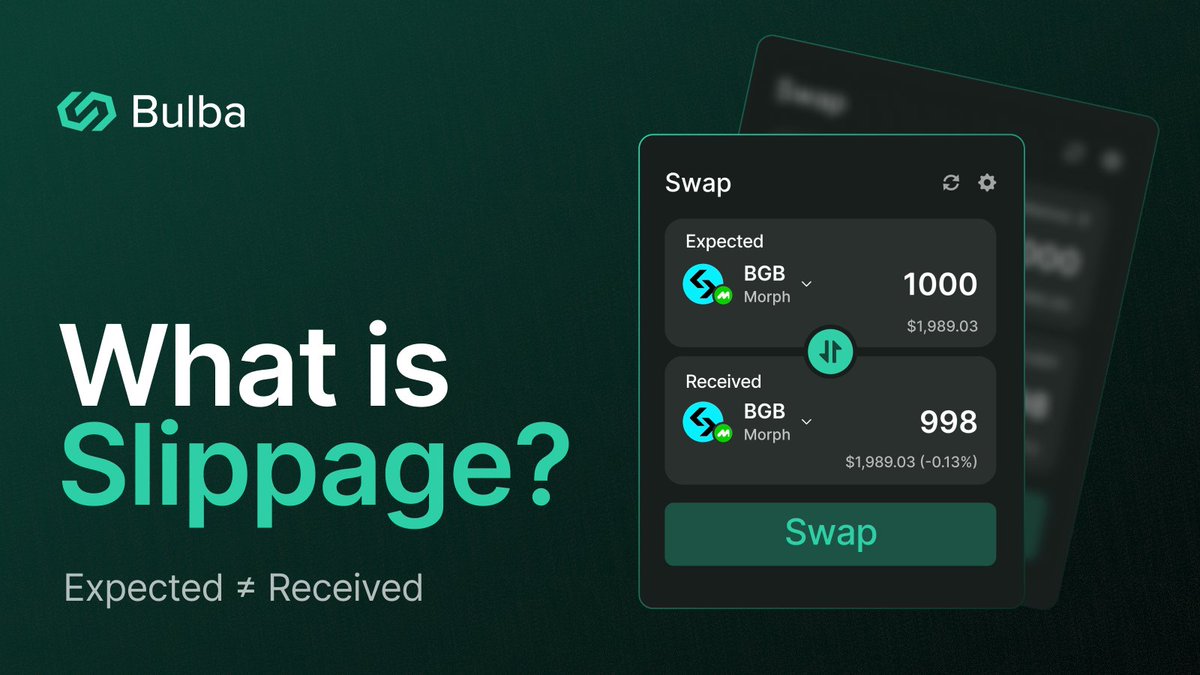
Slippage is the gap between what you expect to receive and what you actually receive.
It can happen when prices move before your swap confirms, or when liquidity is thin.
: A low slippage setting may fail your trade.
: A high slippage setting may accept a worse output.
Before swapping, check the final amount you are willing to receive.
2
83