Always wanted to dig into growth stocks and run it like a real process, between a full-time job and everything else, I never had the time. So I finally built it.
Out of ~3,000 stocks I screen, these score a perfect 15, my model's top score: fast growth, cheap for that growth, a fresh earnings beat. The model's sector-blind, so I don't own all of them.
$SEZL * $VRT$NXST$TSEM$CLFD$CVNA
* = I'm long. Not advice.
$RDDT deep dive. Credit to @JonahLupton for putting this on my radar. Then it popped up on my scanner at 14.5/15. Why I'm long: in a world that just went majority-bot, Reddit owns the best stash of real human conversation on the internet. Here's the breakdown.
Q2 prints in early August, and that's the real test of whether US users hold and growth stays above guide. The Google AI-data licensing deal is also up for renewal, which tells you what that data's really worth. And it's solidly GAAP-profitable now.
Where I stand: long $RDDT, my highest-conviction position right now. If Q2 shows US users rolling over or revenue misses guide, the thesis cracks and I'm out. High conviction, not blind faith. Not advice.
2 of my largest ($ZETA, $APP) are my lowest scores, on purpose. Both scored high at entry, then ran 35% and 12%. Winning makes a stock pricier, which drags the score down as the gain grows the weight. I let winners run - won't trim just 'cause it's big. Not advice.
Always wanted to dig into growth stocks and run it like a real process, between a full-time job and everything else, I never had the time. So I finally built it.
With some help from AI, I built a model that runs the whole market every day, ranks ~3,000 names, and surfaces the strongest growth setups. The work I never had the hours to do by hand.
Here's the deal: I'll post the top scorers, what I actually own, the charts behind the trades, and the misses, not just the winners. No gurus, no hype. Not advice, just me showing my work.
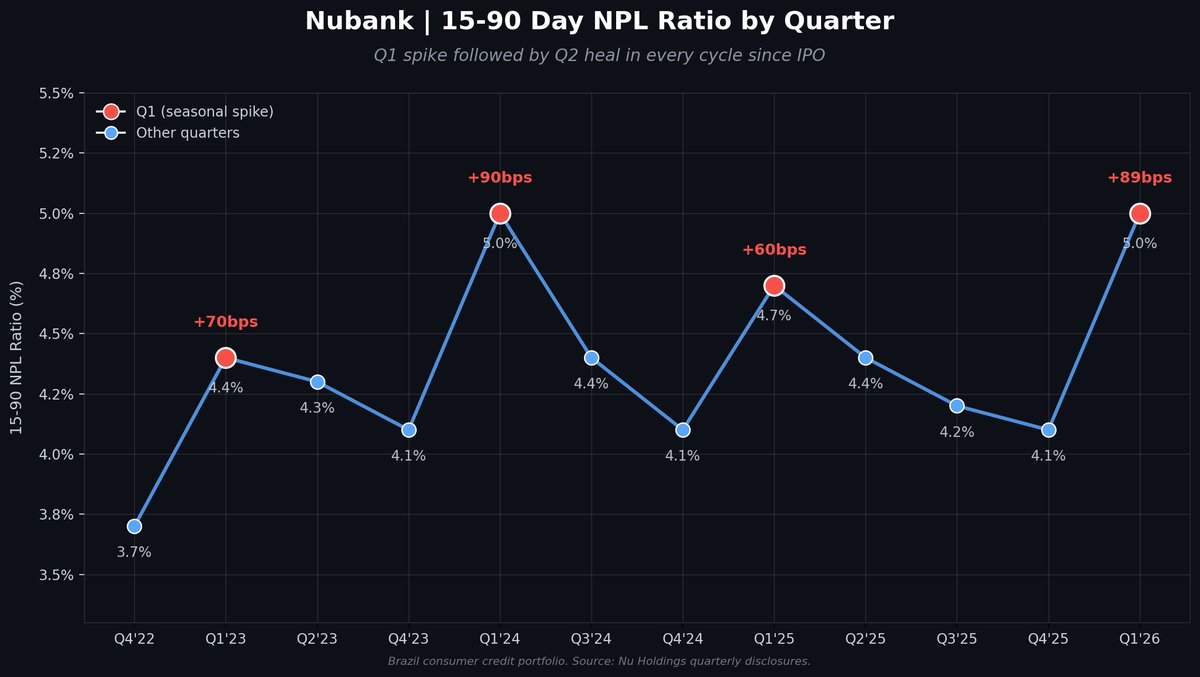
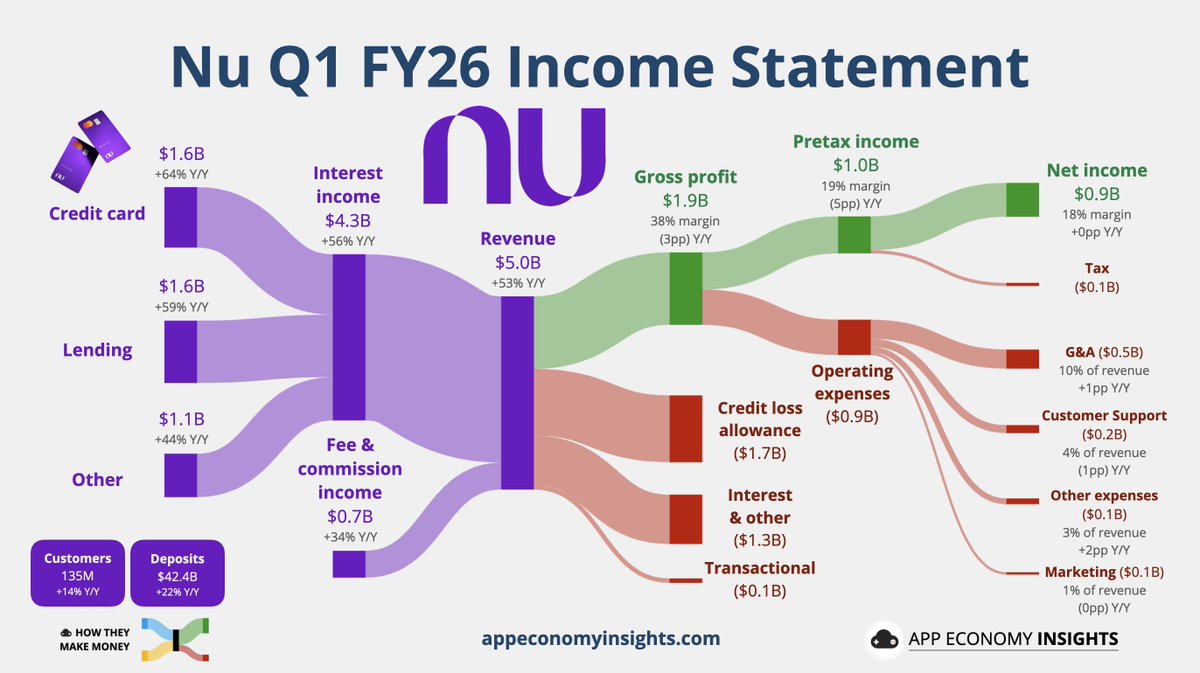
$NU sold off 9% after-hours on Q1 earnings.
The market saw an EPS miss. I saw a quarter where revenue, customers, ARPAC, efficiency, and Mexico all moved the right way — and provisions did the work on the downside.
Here's why the print was better than it looked. 🧵
Compounding framework. At 30% revenue growth for five years and 20% for five more, with a 30% net margin and 15x P/E, implied 2035 price is roughly $177. From $12.50, that is approximately 30% annualized.
This could be on the light side...
Real risks worth weighing:
Brazilian credit cycle untested in recession. FX translation drag. Regulatory pressure (fintech tax stepped from 40% to 45%). Multiple compression as growth normalizes.
The Q1 reaction priced provision noise. The underlying franchise is intact.