
Joined November 2014
- Tweets 68,088
- Following 1,828
- Followers 53,745
- Likes 37,211
11,631 Photos and videos













Byron Wan retweeted

20h
Two schoolgirls were caught trying to throw another girl off the roof in China…

370
1,863
12,966
1,039,744
Byron Wan retweeted
Jun 13
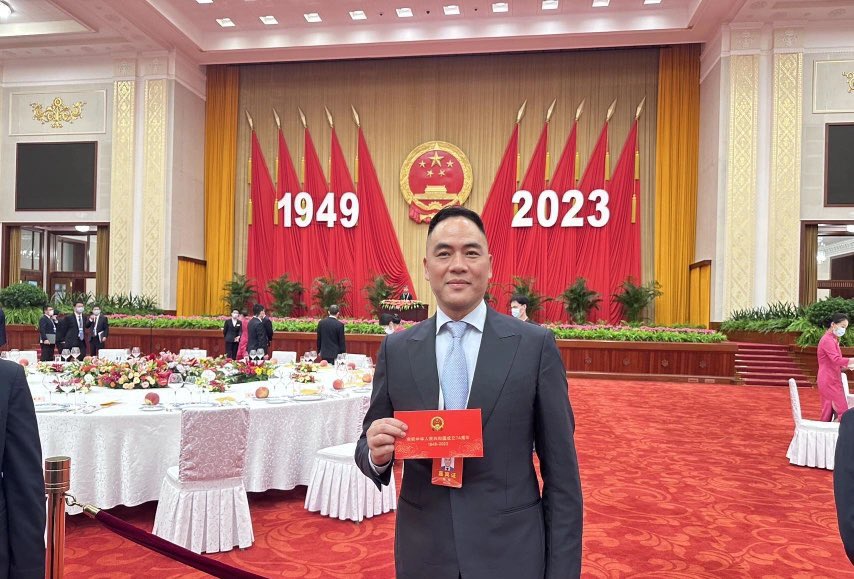
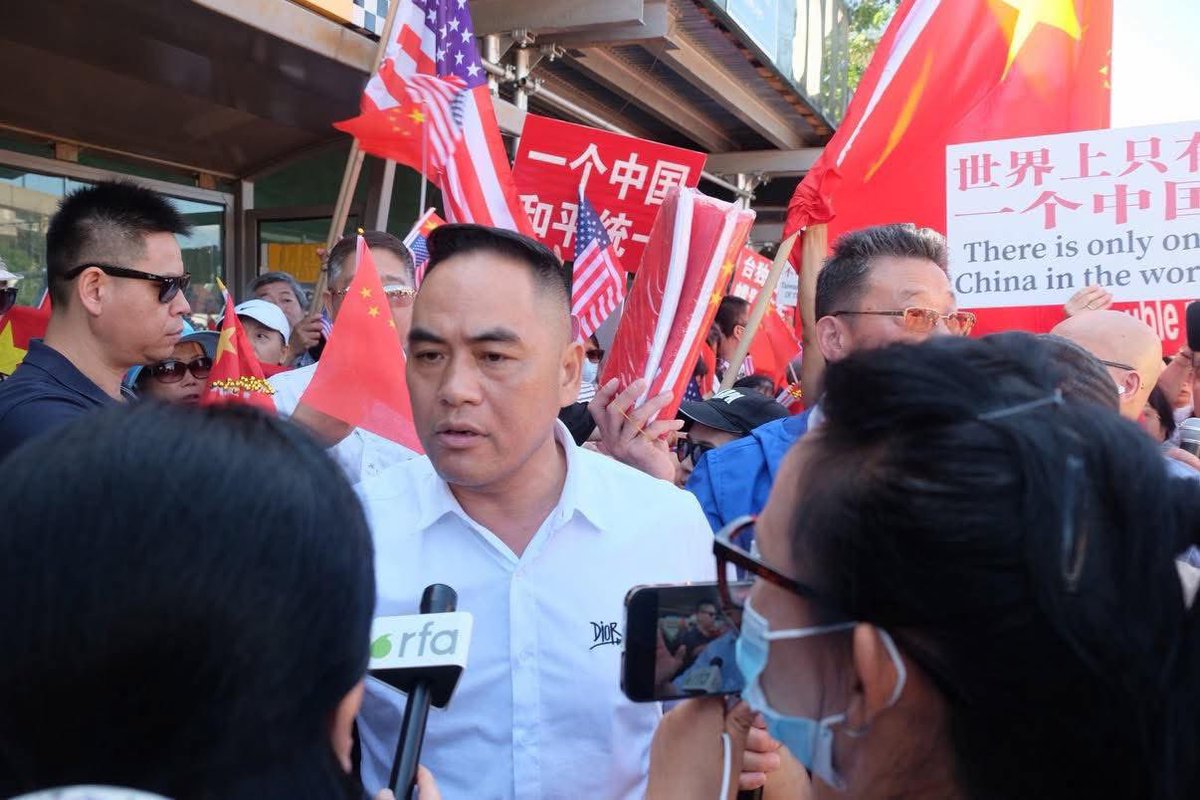
Pro-CCP KMT chair Cheng Li-wun met with heavyweight pro-CCP overseas Chinese leader Chen Heng (陈恒), chairman of Fukien American Association, in New York during her trip in America.
You can always see Chen Heng, together with John Chan (陈善庄) — another pro-CCP heavyweight in New York, actively participating in events and activities hosted by, or linked to, 🇨🇳 Consulate General in New York and, in general, China.
9
38
95
11,722
Byron Wan retweeted
Jun 13
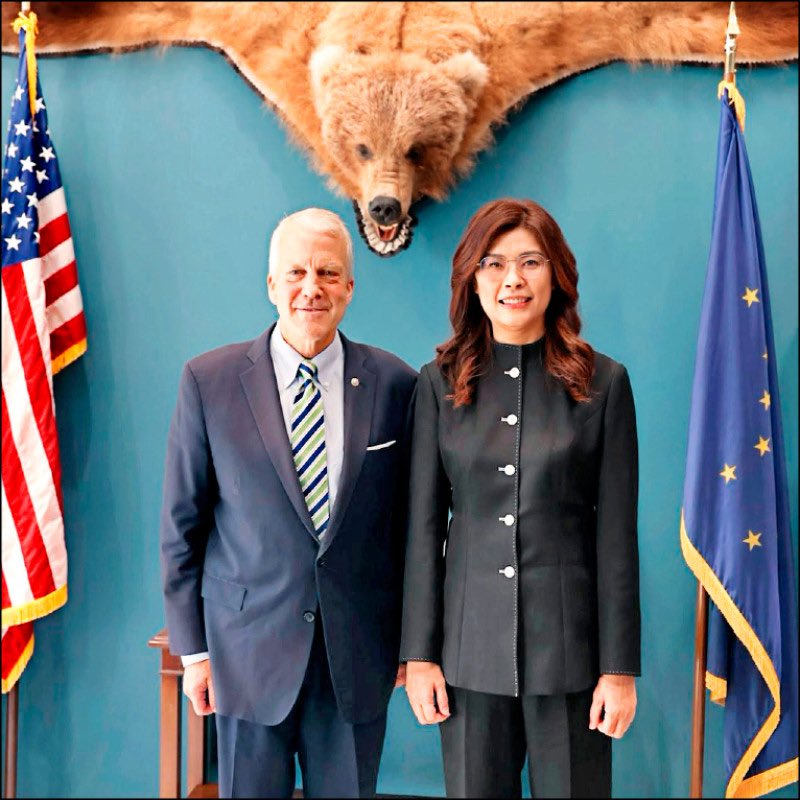
“… we need KMT to join with the DPP to finish the defense budget and support the Alaska LNG project.”
Jun 12

I had a good discussion with KMT Chair Cheng Li-wun today. I’m a strong advocate for the US-Taiwan relationship, regardless of politics in Taiwan. But, as I told her, we need KMT to join with the DPP to finish the defense budget and support the Alaska LNG project.
2
2
30
4,972
Byron Wan retweeted
Jun 12
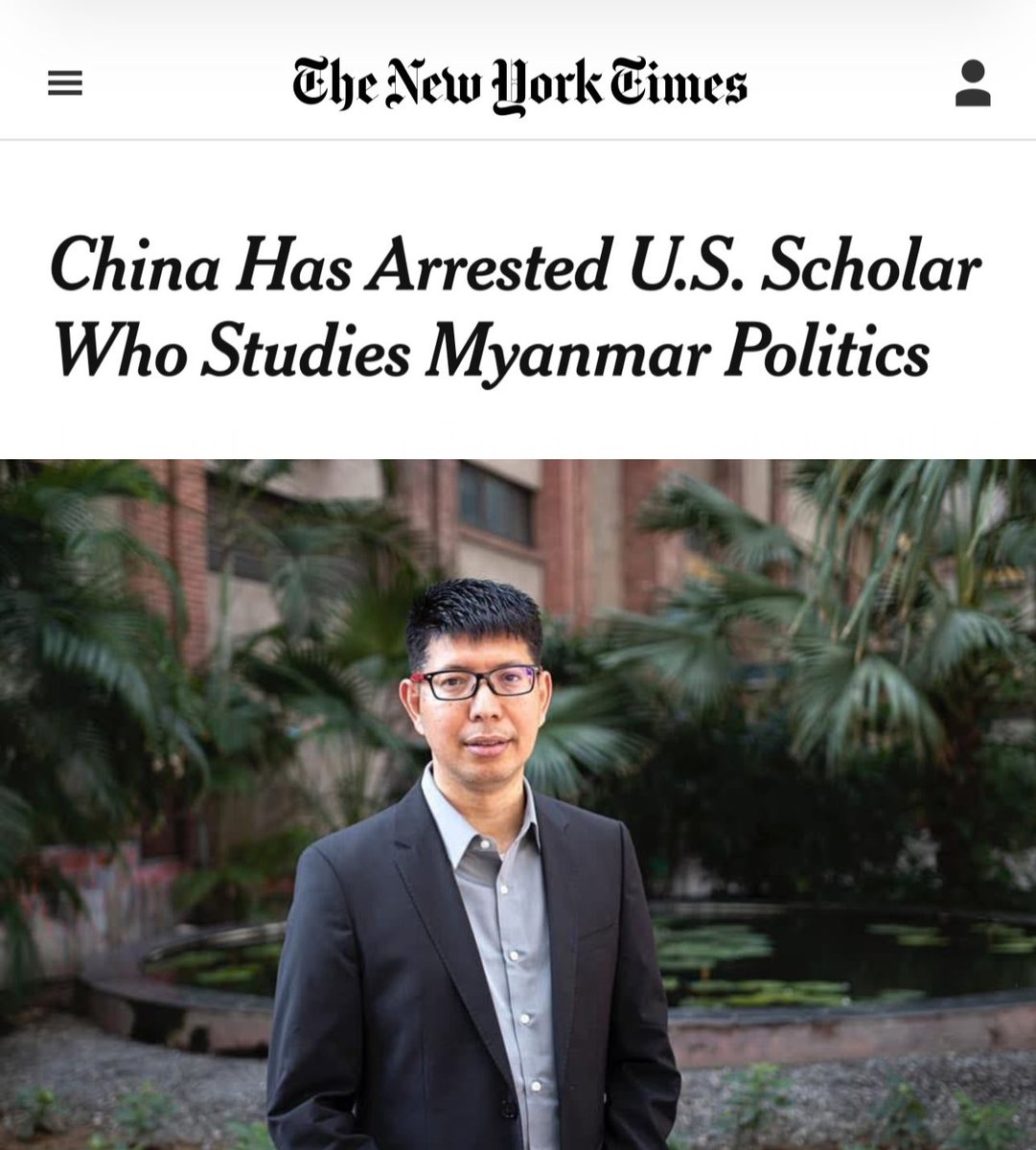
🚨 update: 🇺🇸 citizen Min Zin was arrested on suspicion of “engaging in espionage activities that endanger China’s national security.”
Jun 12

Chinese security officers have arrested Min Zin, a US citizen who studies politics in Myanmar, and accused him of endangering national security.
Min Zin was arrested in early June. He disappeared on June 3 while in Kunming, the capital of Yunnan Province, which borders Myanmar. American diplomats are aware of the arrest.
It is rare for China to arrest a US citizen on charges of a national security crime, and the action against Min Zin takes place as President Trump and Xi Jinping, China’s leader, are trying to establish a type of partnership between the two nations.
Min Zin is a political scientist and executive director of a policy research group originally based in Yangon, the former capital of Myanmar. The group has worked from different locations since a 2021 military coup in Myanmar. Over the years, he has spent time in both the US and his home country of Myanmar, once known as Burma, and he now lives in Thailand.
He has written essays on Myanmar politics for the opinion section of The New York Times, Foreign Policy and other news organizations.
The arrest took place less than three weeks after President Trump attended a summit and state banquet in Beijing hosted by Xi.
China’s arrest of another US citizen and its use of a national security charge complicates that rapprochement.
China keeps about 200 American citizens under some form of detention. Some Americans are imprisoned on drug charges, while others are prevented from leaving the country on “exit bans,” often because of commercial or financial disputes.
It is unclear why Chinese security officers in Yunnan Province arrested Min Zin. There was once a sizable presence of people from Myanmar in Yunnan, but that has dwindled since the pandemic. China has at times provided aid to some armed groups from Myanmar that operate on both sides of the border. But it is unclear whether Min Zin was involved in research or activities involving those people.
The Chinese government has a close relationship with the military-linked government that rules Myanmar. Min Zin wrote extensively on China’s role in Myanmar.
A Nepali research group said in an online post in May that Min Zin was scheduled to be a speaker at a policy and geopolitics forum in Nepal later this month. The speaker biography says his research group founded in Yangon, the Institute for Strategy and Policy Myanmar, is “dedicated to promoting democratic leadership and strengthening civic participation in Myanmar.”
The biography also says he is a PhD candidate in political science at the University of California at Berkeley, and his research interests include civil-military relations, democratization and ethnic conflicts. His LinkedIn page says he has a master’s degree in political science from Berkeley, which he attended from 2010 to 2016.
The handful of opinion pieces he has written for The New York Times have focused on those topics. Several were published soon after the Tatmadaw, the military of Myanmar, overthrew the elected government in early 2021.
In an essay in June 2021, he said that the military and the opposition appeared to be locked in an “intolerable stalemate,” and that the Tatmadaw “appears to believe it can force its way to and through a next election by way of brutal crackdowns, by dissolving the once-ruling National League for Democracy and by threatening to imprison Daw Aung San Suu Kyi, the country’s former de facto leader, for the rest of her life.”
At the same time, he wrote, the anti-coup movement, which included Gen Z protesters and civil servants, “has been shifting tactics away from predominantly peaceful demonstrations to more violent kinds of resistance.”
What Min Zin observed and predicted then has unfolded with force, and Myanmar is now engulfed in a civil war. The Myanmar military carries out airstrikes on civilian areas using Chinese and Russian-made weapons.
nytimes.com/2026/06/11/us/po…
8
14
3,185
Byron Wan retweeted
Jun 11
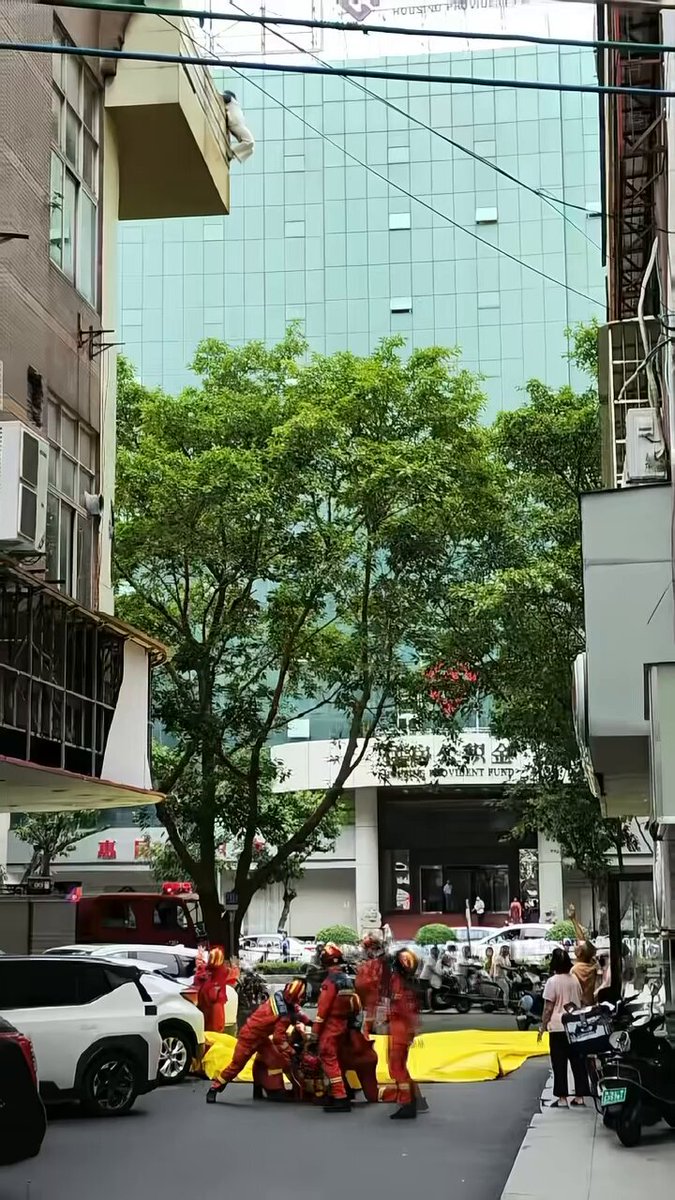
A chopper crash in Changzhou, Jiangsu province…
🚁
24
62
318
29,133
Byron Wan retweeted
Jun 12
Imagine a day when robots can’t pay their electricity bills and need to compete with human panhandlers…
🤔
3
6
46
4,532
Byron Wan retweeted
Jun 12
Chinese security officers have arrested Min Zin, a US citizen who studies politics in Myanmar, and accused him of endangering national security.
Min Zin was arrested in early June. He disappeared on June 3 while in Kunming, the capital of Yunnan Province, which borders Myanmar. American diplomats are aware of the arrest.
It is rare for China to arrest a US citizen on charges of a national security crime, and the action against Min Zin takes place as President Trump and Xi Jinping, China’s leader, are trying to establish a type of partnership between the two nations.
Min Zin is a political scientist and executive director of a policy research group originally based in Yangon, the former capital of Myanmar. The group has worked from different locations since a 2021 military coup in Myanmar. Over the years, he has spent time in both the US and his home country of Myanmar, once known as Burma, and he now lives in Thailand.
He has written essays on Myanmar politics for the opinion section of The New York Times, Foreign Policy and other news organizations.
The arrest took place less than three weeks after President Trump attended a summit and state banquet in Beijing hosted by Xi.
China’s arrest of another US citizen and its use of a national security charge complicates that rapprochement.
China keeps about 200 American citizens under some form of detention. Some Americans are imprisoned on drug charges, while others are prevented from leaving the country on “exit bans,” often because of commercial or financial disputes.
It is unclear why Chinese security officers in Yunnan Province arrested Min Zin. There was once a sizable presence of people from Myanmar in Yunnan, but that has dwindled since the pandemic. China has at times provided aid to some armed groups from Myanmar that operate on both sides of the border. But it is unclear whether Min Zin was involved in research or activities involving those people.
The Chinese government has a close relationship with the military-linked government that rules Myanmar. Min Zin wrote extensively on China’s role in Myanmar.
A Nepali research group said in an online post in May that Min Zin was scheduled to be a speaker at a policy and geopolitics forum in Nepal later this month. The speaker biography says his research group founded in Yangon, the Institute for Strategy and Policy Myanmar, is “dedicated to promoting democratic leadership and strengthening civic participation in Myanmar.”
The biography also says he is a PhD candidate in political science at the University of California at Berkeley, and his research interests include civil-military relations, democratization and ethnic conflicts. His LinkedIn page says he has a master’s degree in political science from Berkeley, which he attended from 2010 to 2016.
The handful of opinion pieces he has written for The New York Times have focused on those topics. Several were published soon after the Tatmadaw, the military of Myanmar, overthrew the elected government in early 2021.
In an essay in June 2021, he said that the military and the opposition appeared to be locked in an “intolerable stalemate,” and that the Tatmadaw “appears to believe it can force its way to and through a next election by way of brutal crackdowns, by dissolving the once-ruling National League for Democracy and by threatening to imprison Daw Aung San Suu Kyi, the country’s former de facto leader, for the rest of her life.”
At the same time, he wrote, the anti-coup movement, which included Gen Z protesters and civil servants, “has been shifting tactics away from predominantly peaceful demonstrations to more violent kinds of resistance.”
What Min Zin observed and predicted then has unfolded with force, and Myanmar is now engulfed in a civil war. The Myanmar military carries out airstrikes on civilian areas using Chinese and Russian-made weapons.
nytimes.com/2026/06/11/us/po…
14
84
162
36,862
Jun 11
RT @Byron_Wan: June 8: a man and his pregnant wife were stabbed to death by his mistress in Nayong County, Bijie, Guizhou province. The mis…
19
Byron Wan retweeted
Jun 11
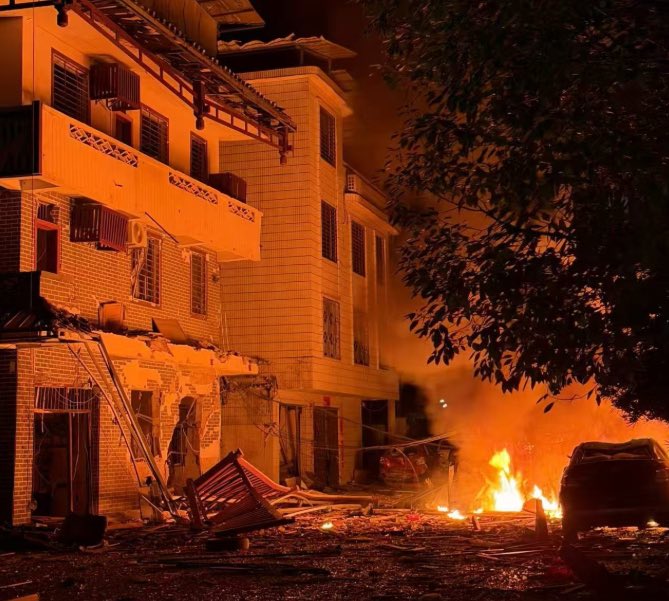
June 11: an explosion killed 7 people and injured another 17 in Xing’an County, Guilin, Guangxi, a bit after 1:40am…
According to state media, gas explosion has been ruled out.
💥
9
39
5,124