Americans need relief from rising costs NOW 📈
CAP has a plan 💡
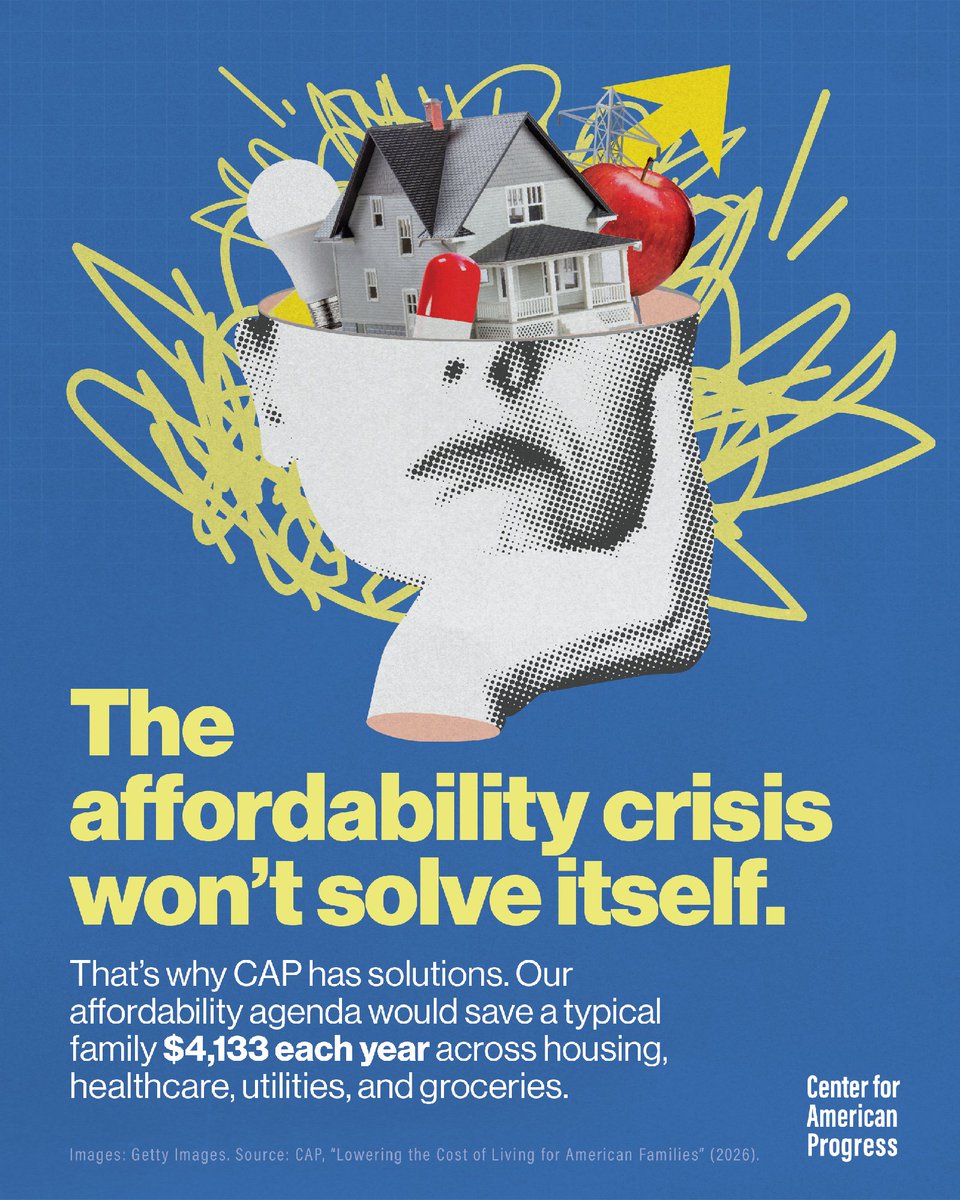
Our affordability agenda will save a typical family $4,133 each year across housing, healthcare, utilities, and groceries. ampr.gs/4nAlTFw
ALT Graphic by Center for American Progress. Text: "The affordability crisis won’t solve itself. That’s why CAP has solutions. Our affordability agenda would save a typical family $4,133 each year across housing, healthcare, utilities, and groceries."
Federal attacks on diversity, equity, and inclusion policies have dismantled America's public health infrastructure and threaten national health security. ampr.gs/3PW89IS
Epidemic preparedness relies on more than clinical labs—it requires deep-rooted local trust and multi-sector mobilization, argues @Amprog’s Daniele Nyirandutiye for @SemaforAfrica: tinyurl.com/36rdjcay
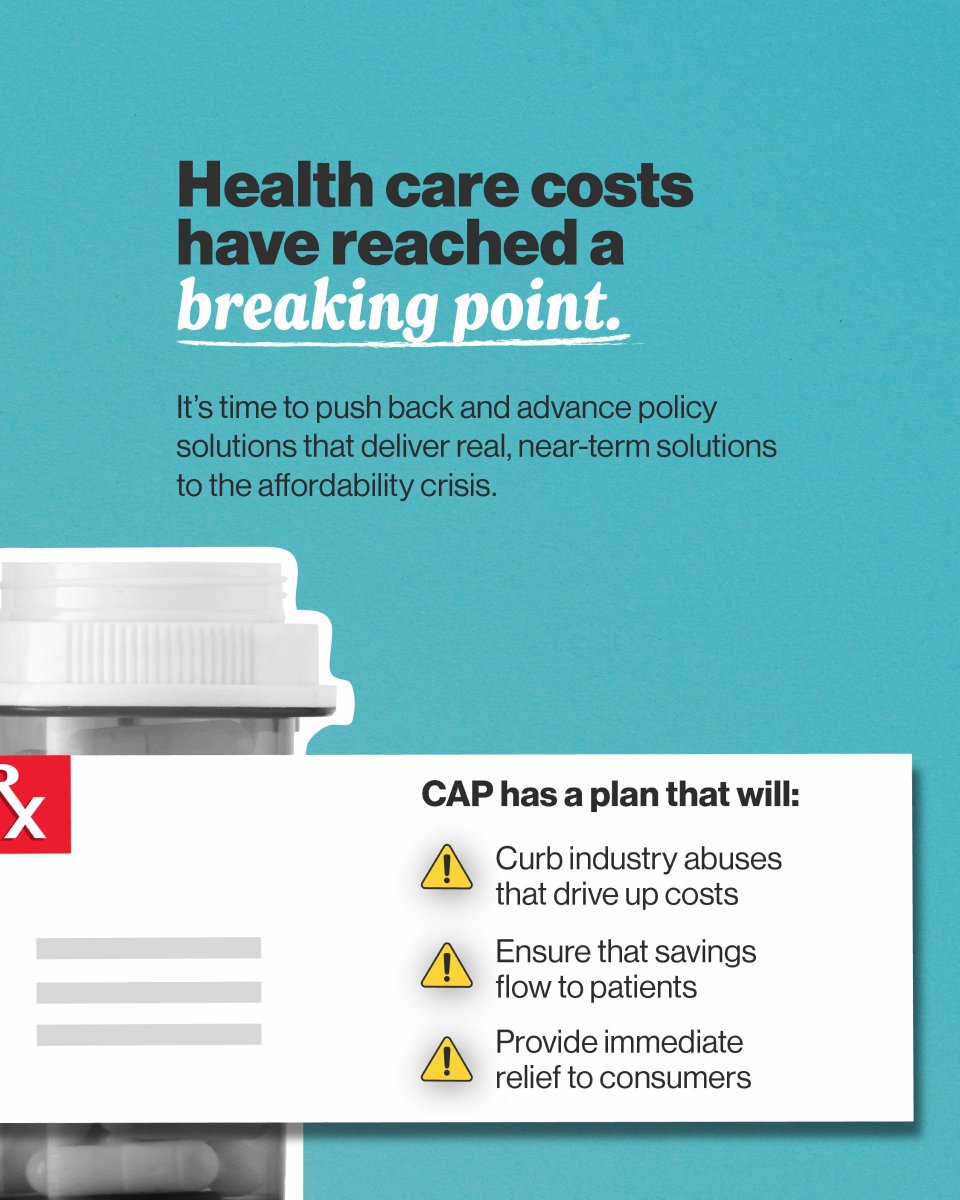
Health care costs are at a breaking point, and Americans deserve real, near-term solutions to this affordability crisis. CAP has a plan to help: americanprogress.org/article…
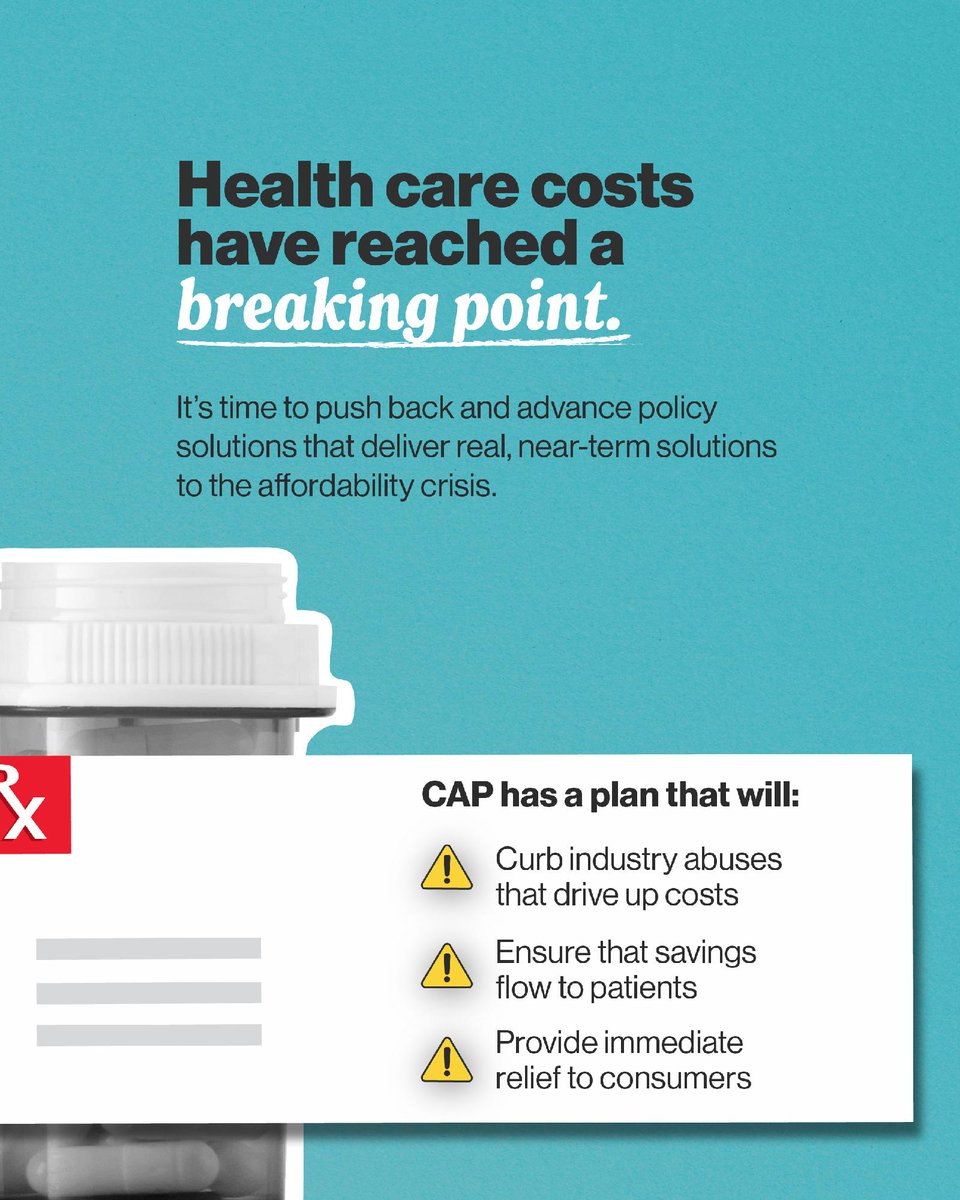
ALT Infographic stating: "Health care costs have reached a breaking point." It calls for policy solutions to the affordability crisis. It lists CAP’s plan to: Curb industry abuses that drive up costs; Ensure savings flow to patients; Provide immediate relief to consumers.
Health care should be affordable, accessible, and work for the people—not just insurance companies or hospital systems. CAP's new proposal for a patients' bill of rights has solutions to immediately lower costs and strengthen patient protections.
Rising health care costs are pushing Americans to a breaking point.
CAP's new proposal for a patients' bill of rights would provide immediate relief on premiums, deductibles, and insurance denials: americanprogress.org/article…
Interested in health care reform and looking for a career change? @amprog is seeking an Associate Director for Health Policy. Apply here: americanprogress.org/job/ass…
It's time to end prior authorization by insurance company bureaucrats. To better manage care, we need:
* targeted, independent review by clinicians for the most costly services
* guided by evidence-based guidelines - not arbitrary
* strict 48-hour deadline
* exempt routine, emergency care
americanprogress.org/article…
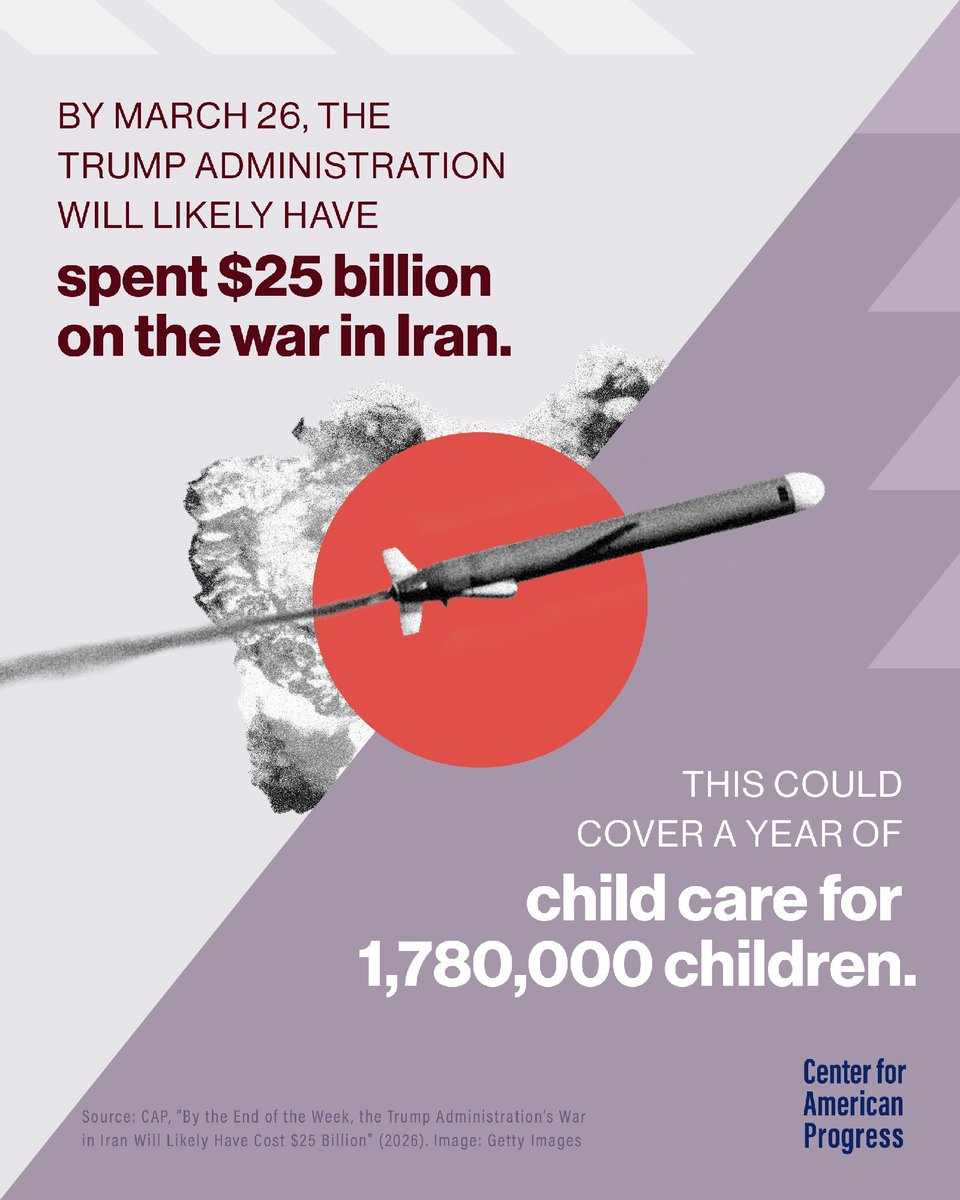
We've already spent over $25 billion on Trump's war in Iran. That money could have provided child care to 1.8 million children for a year.
ALT An infographic from the Center for American Progress uses a diagonal split-screen design to compare military and social spending, featuring a stylized black-and-white map of Iran and a missile in flight against a light gray background on the top-left, and a solid muted purple section on the bottom-right. Bold text on the left states that by March 26, 2026, the Trump administration will likely have spent $25 billion on the war in Iran, while the right side counters that this same amount could cover a year of child care for 1,780,000 children. The organization's logo appears in the bottom corner, citing a 2026 CAP report as the primary source.
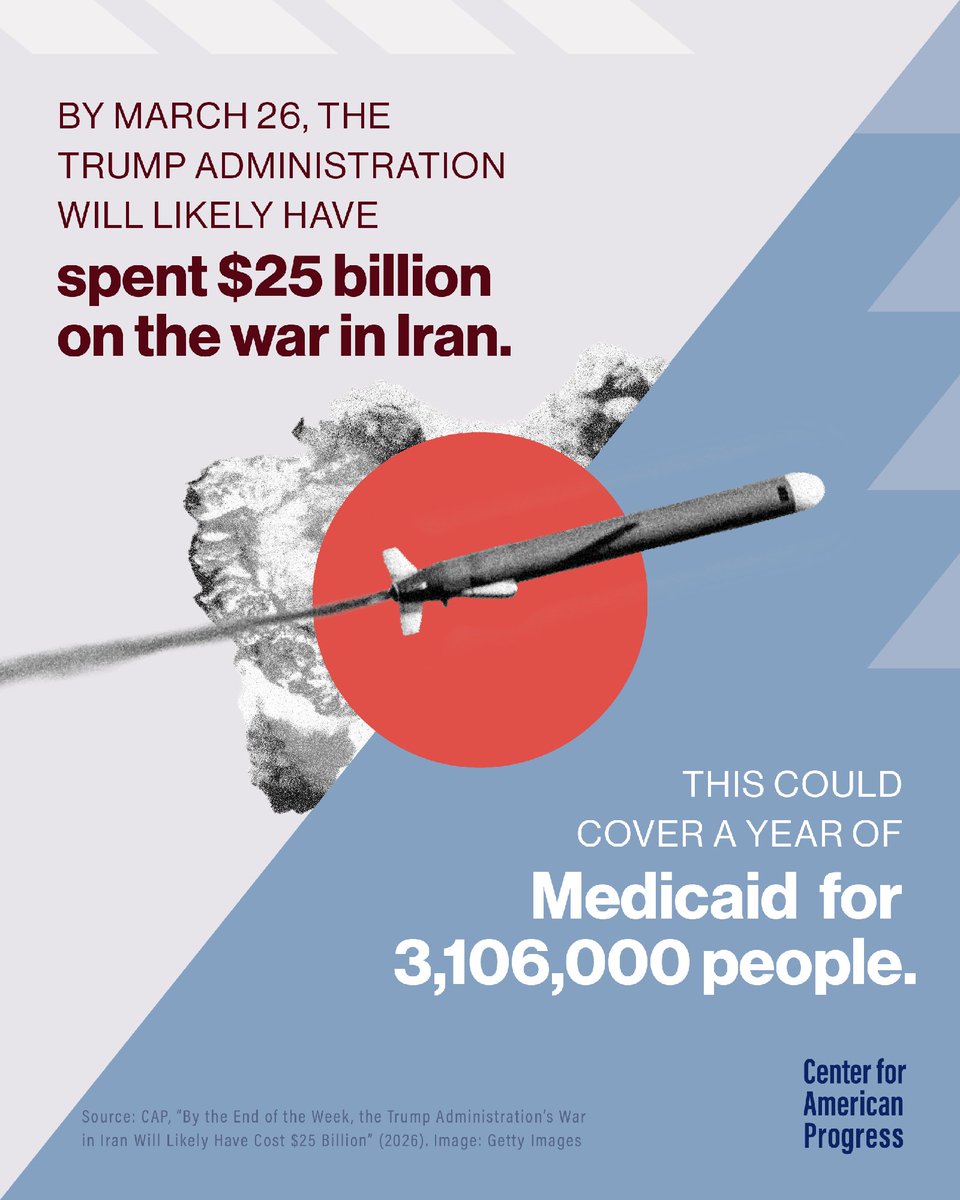
While the Trump administration has cut $1 trillion in taxes for the rich and has reportedly just requested an additional $200 billion for its immoral war in Iran, it continues to cut programs like Medicare that assist disabled people. ampr.gs/4dcdll4
Trump's war of choice in Iran will likely cost the American taxpayer over $25 BILLION by the end of this week, and the president is now reportedly requesting an additional $200 billion to continue funding the war—an unjustifiable request.
Learn how the $25B could be spent to help Americans at home: ampr.gs/4lKFtxS
ALT Infographic by Center for American Progress stating that by March 26, 2026, the Trump administration will have spent $25 billion on the war in Iran. This amount could cover a year of Medicaid for 3,106,000 people. Features a graphic of a missile over a red circle and map of Iran.
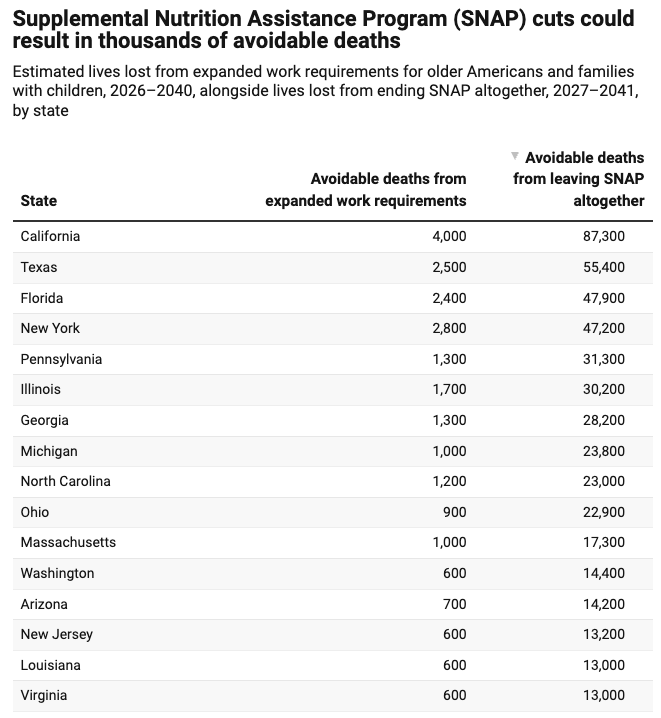
Trump's Big Beautiful Bill produced the largest cuts in SNAP history—leading to deadly consequences. americanprogress.org/article…
ALT This image is a data table titled "Supplemental Nutrition Assistance Program (SNAP) cuts could result in thousands of avoidable deaths."
It lists estimated lives lost by state due to two scenarios: expanded work requirements (2026–2040) and ending SNAP altogether (2027–2041).
The table includes data for 16 states, with California, Texas, Florida, and New York showing the highest projected impact. For example:
California: 4,000 deaths from work requirements; 87,300 deaths from ending SNAP.
Texas: 2,500 deaths from work requirements; 55,400 deaths from ending SNAP.
Florida: 2,400 deaths from work requirements; 47,900 deaths from ending SNAP.
New York: 2,800 deaths from work requirements; 47,200 deaths from ending SNAP.
The numbers generally decrease down the list, ending with states like Louisiana and Virginia, each projected to have 600 deaths from work requirements and 13,000 deaths from ending SNAP altogether.
The largest cuts to SNAP in history will likely lead to worse health outcomes for low-income families and preventable deaths across the country, and the law’s rushed implementation timeline will only worsen these effects. ampr.gs/4lAwfEi
BIG NEWS: Virginia is one signature away from becoming the 14th state (plus D.C.) to guarantee the right to paid family and medical leave. CAP senior fellow @Molly_MWW explains:
Communities of color are 3x more likely to live in nature-deprived areas than white communities—and it's not by accident.
Learn more about the nature gap: americanprogress.org/article…
As health care costs continue to rise, TrumpRx offers little relief. Of 54 drugs listed, only one features a new lower price. Americans need real reform and comprehensive solutions. americanprogress.org/article…
I reviewed every drug on TrumpRx.
Out of 54 drugs, just one—a fertility drug, Cetrotide—is cheaper than preexisting options.
The rest look less like savings for patients and more like deals for pharmaceutical companies.
Full @CAP_Health analysis ⬇️
americanprogress.org/article…