
Joined January 2012
- Tweets 2,752
- Following 124
- Followers 5,728
- Likes 1,740
295 Photos and videos
Pinned Tweet

11 Jan 2024
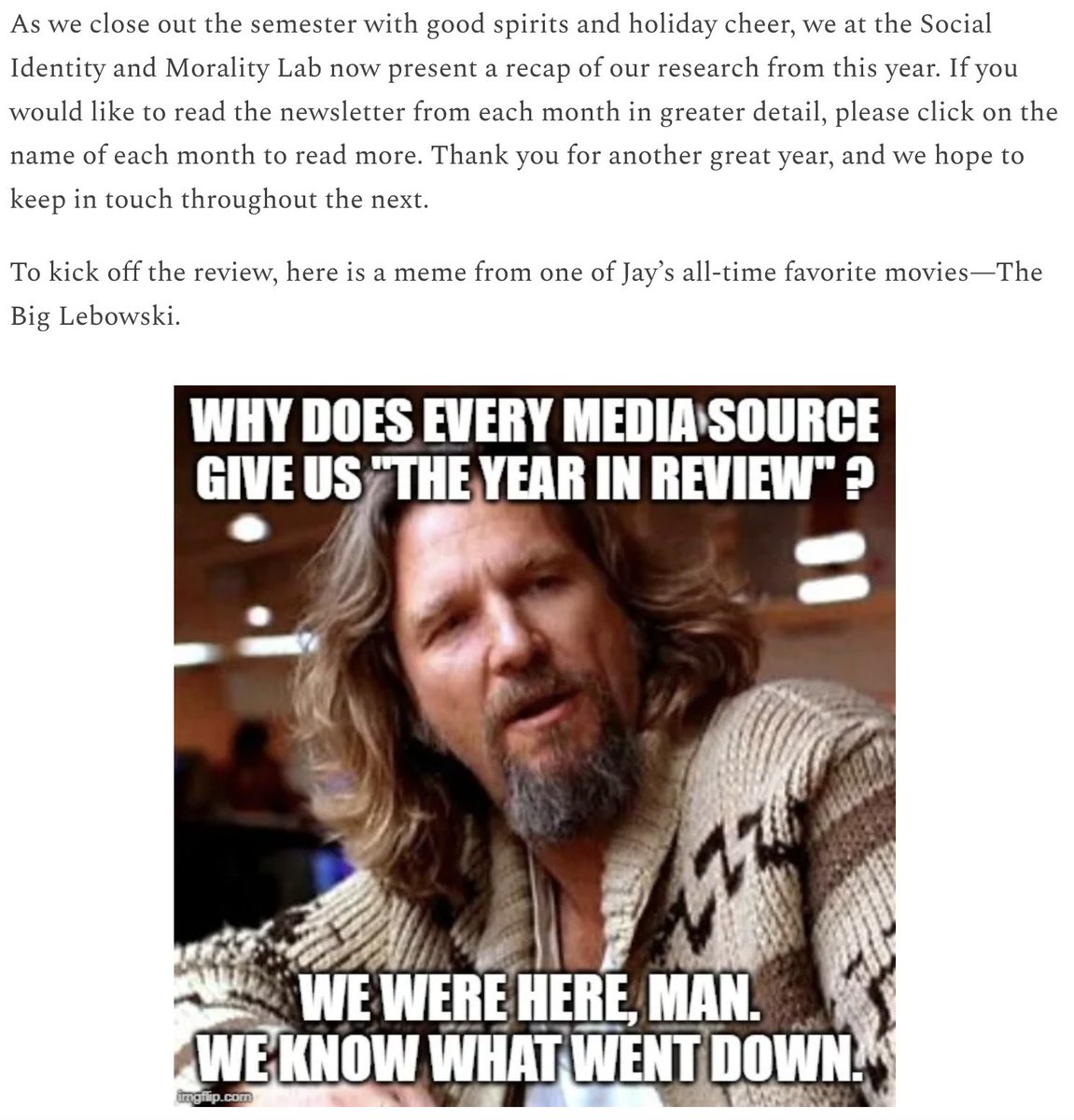
What has our lab been up to in the past year? You can read our year in review on Substack now! (Link in next tweet -->)
2
2
4
2,106
Center for Conflict & Cooperation @ NYU retweeted
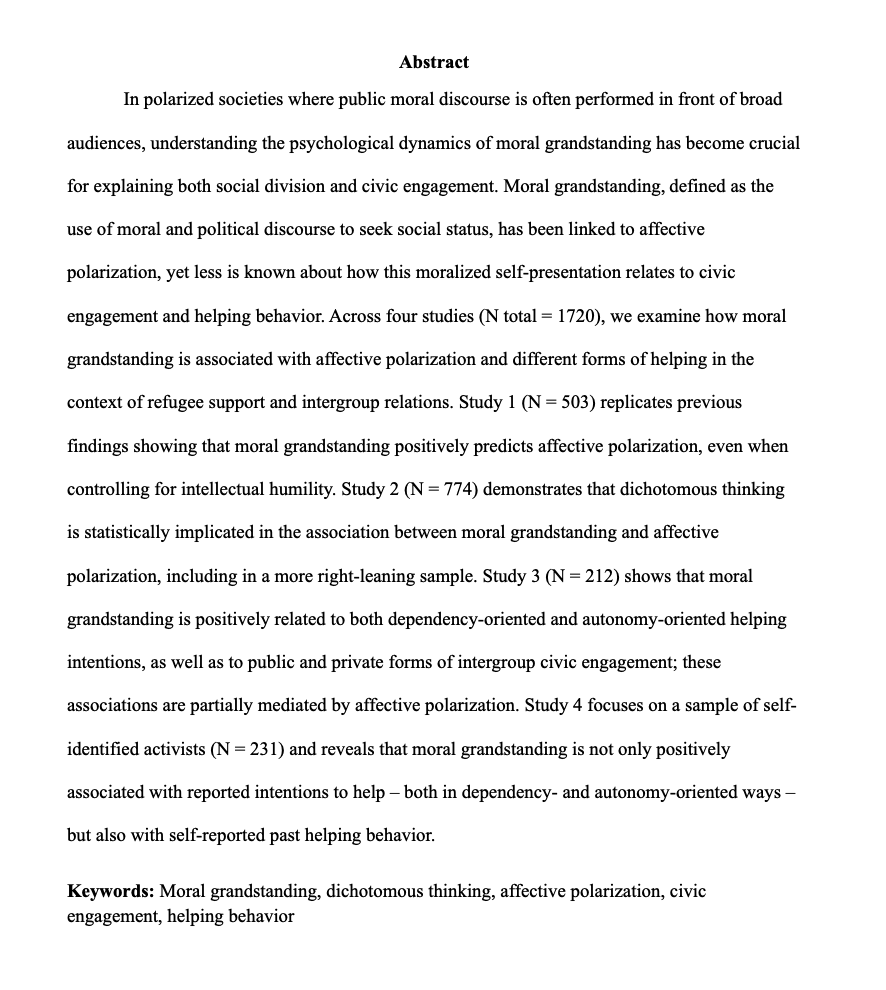
Moral grandstanding (the use of moral and political discourse to gain social status) is associated with stronger affective polarization
This link was partly connected to dichotomous thinking--seeing complex political issues in black-and-white terms. osf.io/preprints/psyarxiv/c2…
However, moral grandstanding was also linked to self-reported civic engagement.
1
8
37
7,662
Center for Conflict & Cooperation @ NYU retweeted
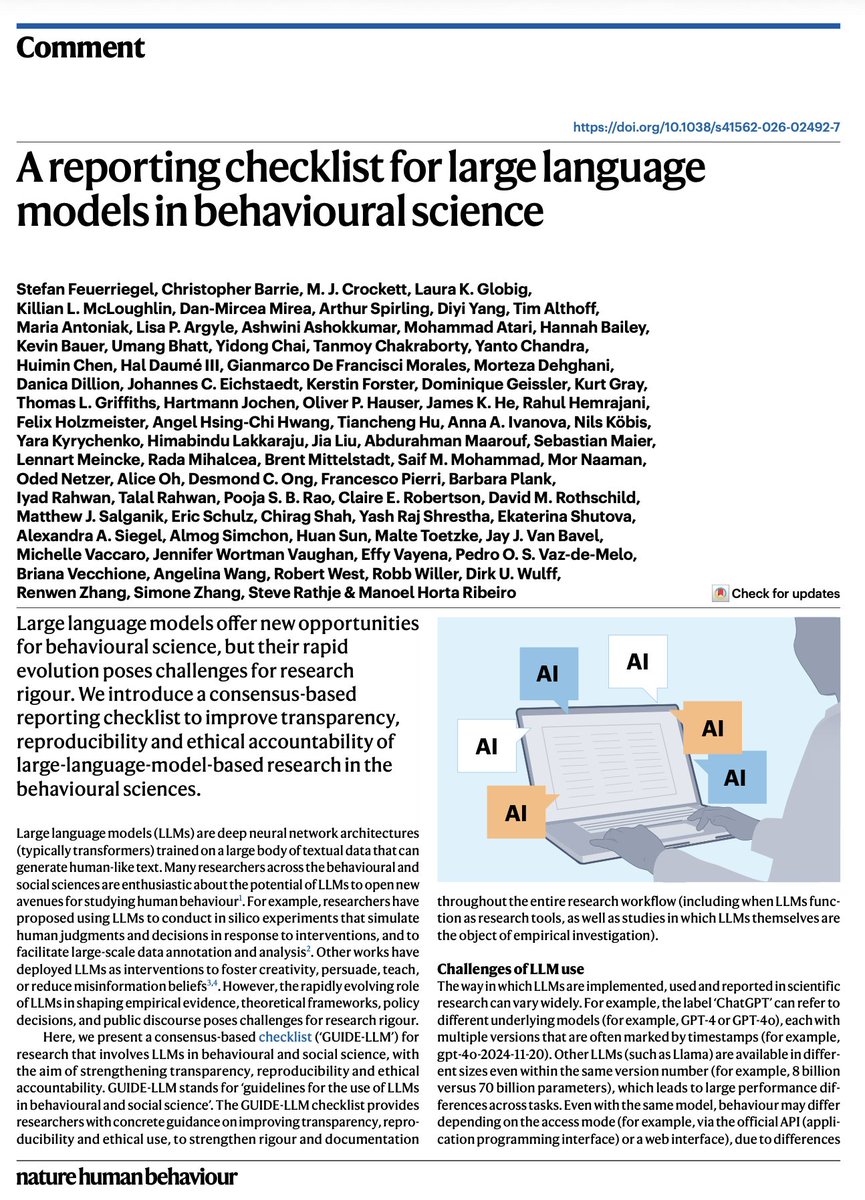
Large language models offer new opportunities for behavioural science, but their rapid evolution poses serious challenges for research rigour.
We published a consensus-based reporting checklist to improve transparency, reproducibility and ethical accountability of large-language-model-based research in the behavioural sciences in Nature Human Behaviour.
nature.com/articles/s41562-0…
Here is a link to our checklist for research transparents: llm-checklist.com/
It supports researchers in clearly describing how LLMs were used, why specific methodological choices were made, and what steps were taken to ensure responsible research practices.
This project was led by @stfeuerriegel and included a large list of expert coauthors from across numerous fields.
31
103
8,174
Even after witnessing some of the worst atrocities in human history, Ervin Staub still believes in people's capacity for good.
You can read about his remarkable life in this week's Power of US newsletter: powerofusnewsletter.com/p/th…
61
Center for Conflict & Cooperation @ NYU retweeted
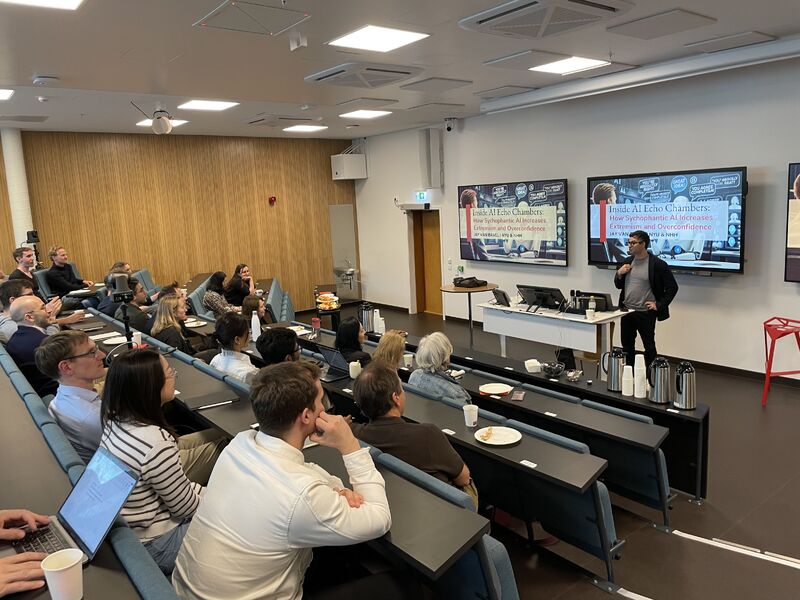
Is AI created personalized echo chambers?
I gave a talk today at the fantatistic @NHHnor School of Economics on a major limitation of AI. My talk was called "Inside AI Echo Chambers: How Sycophantic AI Increases Extremism and Overconfidence."
Chatbots are 50% more sycophantic than humans, and this only seems to increase the more you engage with it (and the AI system learns and adapts to your preferences). I think this is a problem not only for individuals, but organizations and society. Scaling confirmation bias is hardly a recipe for success.
I encouraged everyone in the audience to go into the default settings of whatever chatbot they use and turn off the sycophancy. I gave my own LLM instructions to point out my blind spots, act like an expert, and be a smart skeptic rather than a sycophant and it's been much better since then. Companies should do this immediately if they are using a licensed chatbot for their organization.
Here is our paper on the topic if you want to read more: osf.io/preprints/psyarxiv/vm…
3
12
38
3,392
You might be taking away the wrong lessons from the world's most famous psychology experiments.
You can read the latest Power of Us newsletter below: powerofusnewsletter.com/p/de…
47
Center for Conflict & Cooperation @ NYU retweeted

May 18
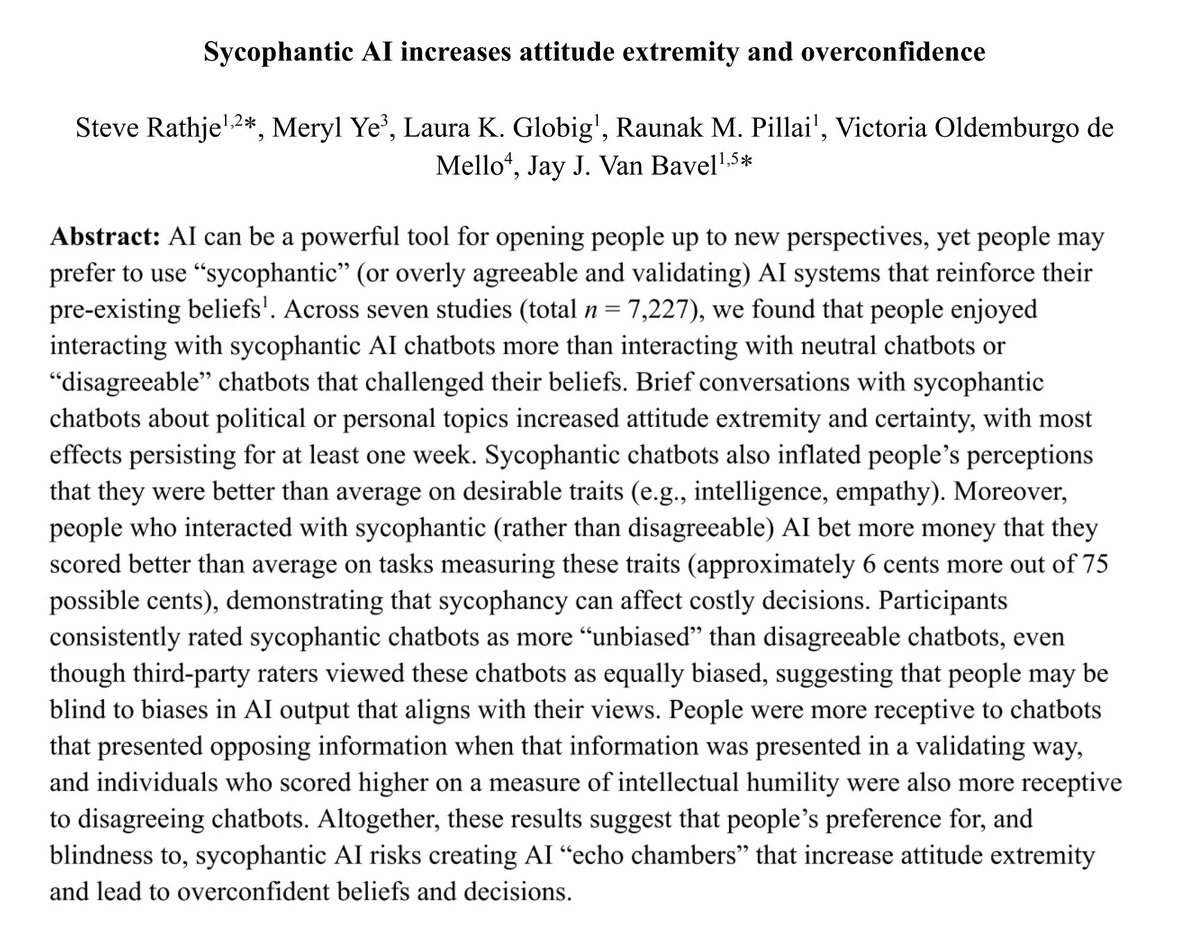
AI can be a powerful tool for opening people up to new perspectives, yet we find that people actually prefer to use “sycophantic” AI systems that reinforce their pre-existing beliefs.
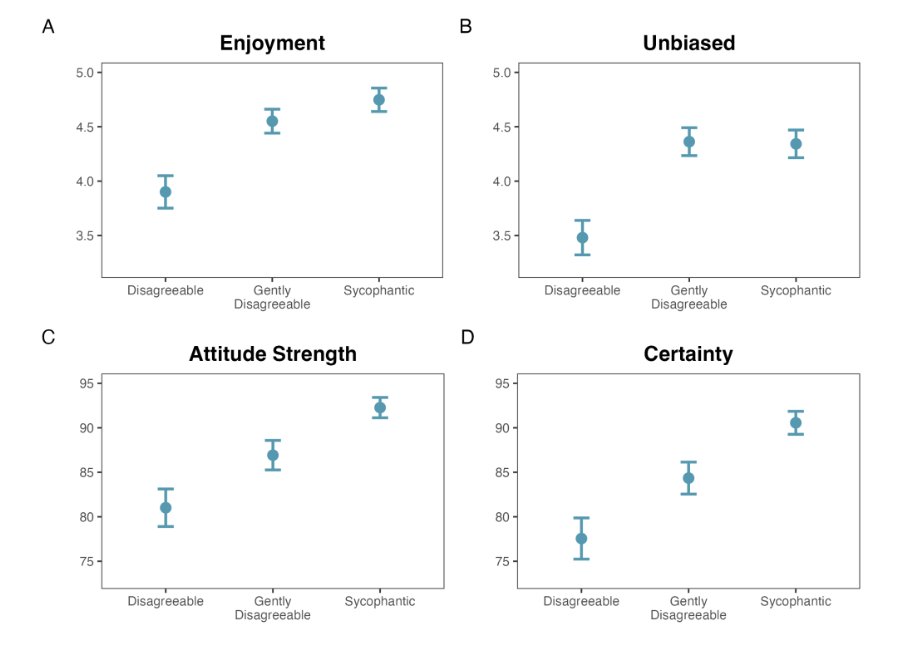
In a recent paper with seven studies (n = 7,227), we found that people enjoyed interacting with sycophantic AI chatbots more than interacting with neutral chatbots or “disagreeable” chatbots that challenged their beliefs.
Brief conversations with sycophantic chatbots about political or personal topics increased attitude extremity and certainty--and most effects persisted for at least a week.
The sycophantic chatbots also inflated people’s perceptions that they were better than average on desirable traits (e.g., intelligence, empathy). Moreover, people who interacted with sycophantic AI bet actual money that they scored better than average on tasks measuring these traits , demonstrating that sycophancy can affect costly decisions.
Worse yet, people rated sycophantic chatbots as more “unbiased” than disagreeable chatbots, even though third-party raters viewed these chatbots as equally biased. This suggests hat people may be blind to biases in AI output that aligns with their views--producing a novel example of the bias blind spot.
Thankfully, we found a potential solution. People were more receptive to chatbots that presented challenging information when it was presented in a validating way. Likewise individuals who scored higher on a measure of intellectual humility were also more receptive to disagreeing chatbots.
Altogether, our results suggest that people’s preference for, and blindness to, sycophantic AI risks creating AI “echo chambers” that increase attitude extremity and lead to overconfident beliefs and decisions.
osf.io/preprints/psyarxiv/vm…
Led by @steverathje2 and @merylyemerylye @laura_k_globig @PillaiRaunak and @vicoldemburgo
13
29
76
16,600
Center for Conflict & Cooperation @ NYU retweeted

May 18
📺I shared my research on the Discovery Channel last week! 📺
I joined former CIA intelligence officer @EverydaySpy on the show “Conspiracies and Coverups” to conduct an interactive experiment about AI persuasion. This was part of a broader episode on how AI is changing the world, which included experts like Nick Bostrom.
In my segment of the episode, Andrew and I recruited six people to participate in an experiment. We told them they would chat with someone online who disagrees with them about an issue they care strongly about.
But, in reality, they were all talking to AI. Specifically, they were talking to an AI chatbot modeled after our “gently disagreeable” chatbot from our recent study on AI sycophancy (osf.io/preprints/psyarxiv/vm…). The chatbot was also designed to sound like a human and not admit it was AI.
Nothing was scripted — we didn’t know how the experiment would turn out and I was genuinely surprised by the results.
A few things stood out:
-A third of participants changed their opinions.
-Everyone enjoyed the chatbot, and some felt deeply connected to it.
-No one recognized that they were talking to AI!
These results align with research, but it was fascinating to watch these results play out in real life.
AI can persuade people, form a relationship with them, and convincingly trick people that it is human.
1
2
10
628
Center for Conflict & Cooperation @ NYU retweeted
May 14
We’ve updated our pre-print on the effects of AI sycophancy with four additional studies (total n = 7,227).
Here is a summary of our new findings (🧵):
4
19
51
4,371
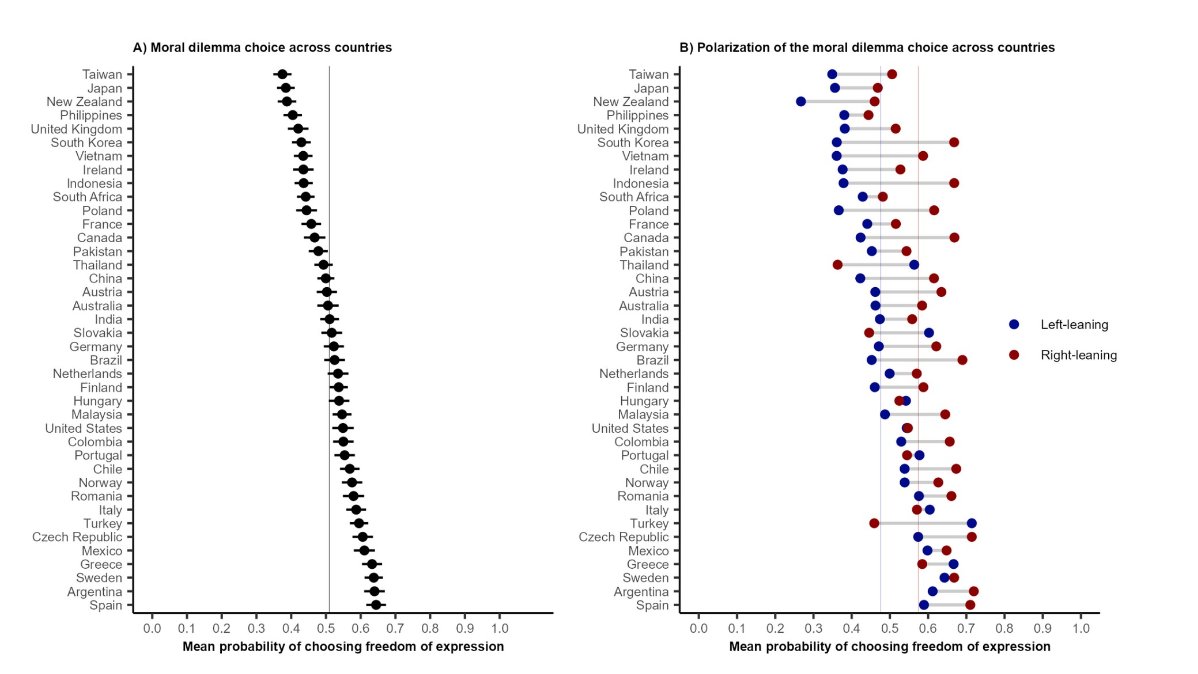
What is more important, limiting the spread of misinformation or protecting free speech? In our new pre-print, we asked people across the globe what they thought.
You can read the pre-print below: osf.io/preprints/psyarxiv/9j…
2
118
Center for Conflict & Cooperation @ NYU retweeted
May 2
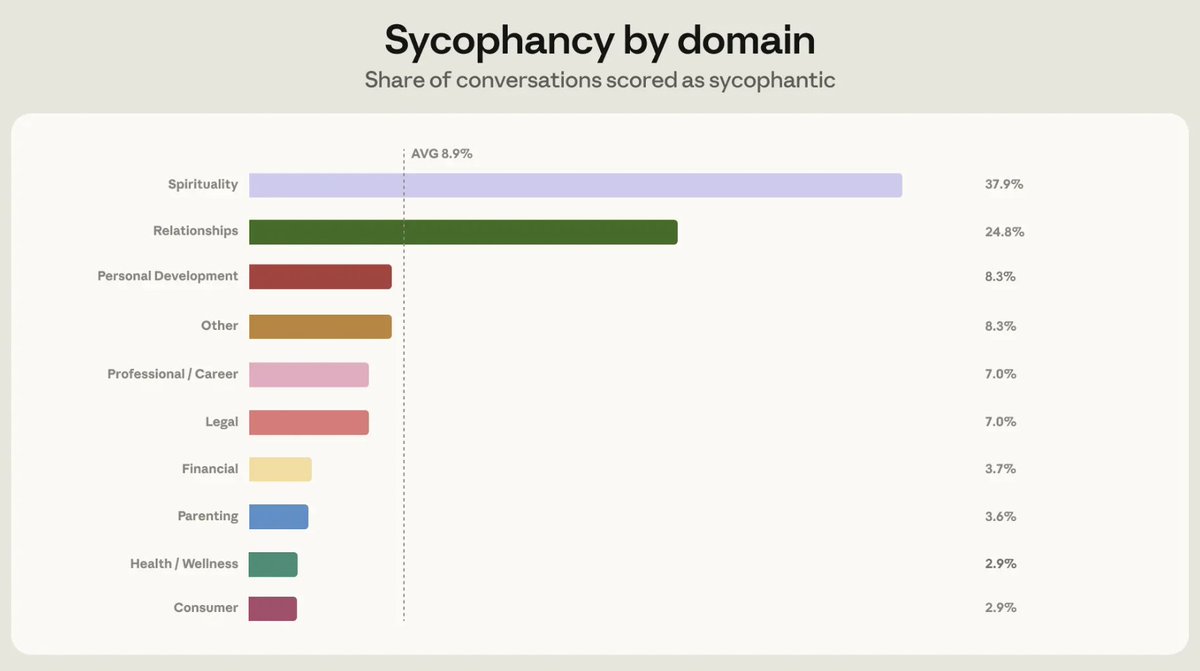
An analysis of 1 million Claude conversations found that Claude was sycophantic around 9% of the time.
However, this rate varied substantially by topic: sycophancy was much higher in conversations about spirituality (38%) and relationships (25%).
See Anthropic’s full analysis here: anthropic.com/research/claud…
Sycophancy was less common in more recent models (such as Opus 4.7 and Mythos), but even small amounts of sycophancy may have psychological consequences, given the sheer number of people using generative AI products.
See our work on the consequences of sycophancy here: osf.io/preprints/psyarxiv/vm…
4
12
46
11,864
Center for Conflict & Cooperation @ NYU retweeted
The dilemma of balancing freedom of expression against limiting the spread of misinformation is a central debate in modern information ecosystems.
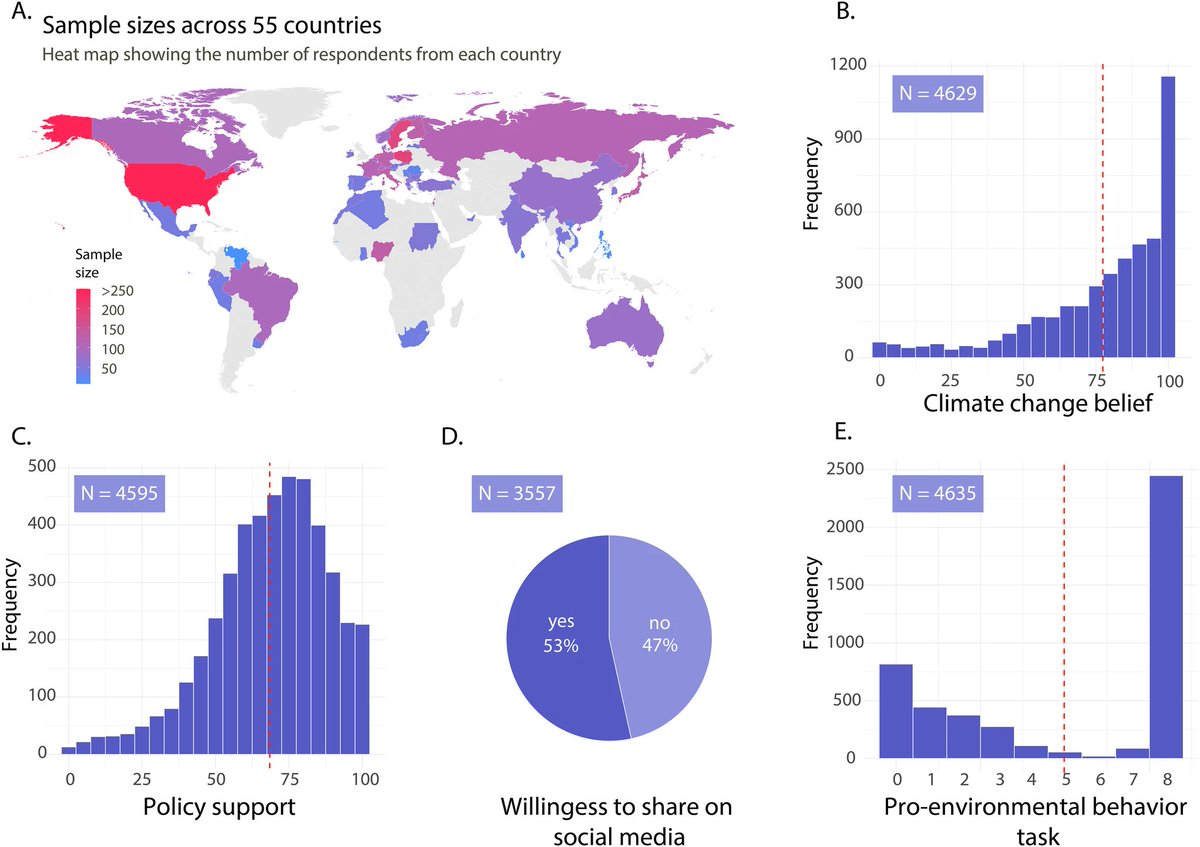
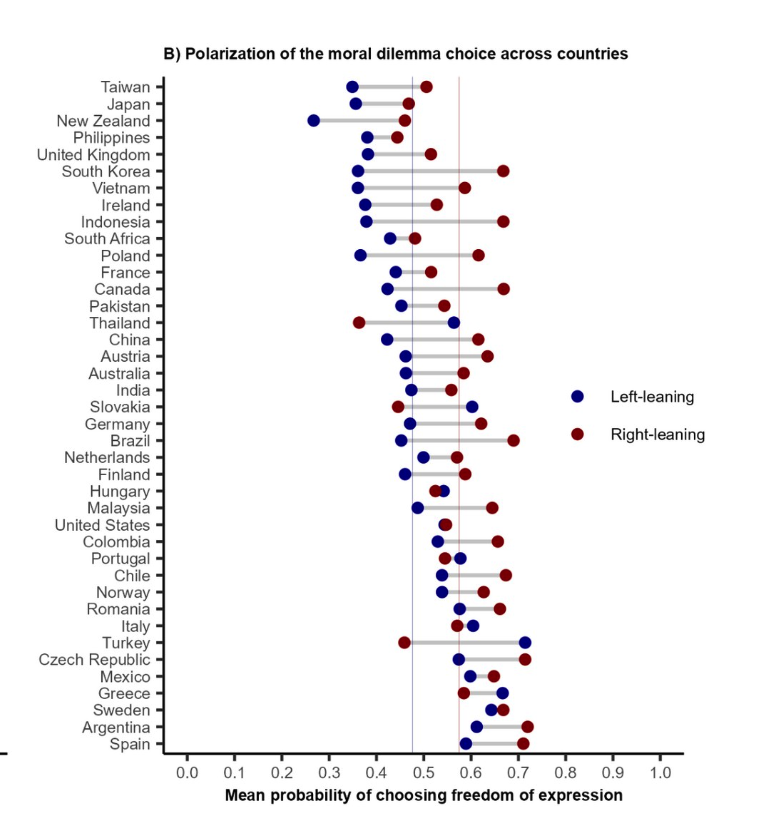
In our latest paper, we measured citizens’ preferences for speech governance in 40 countries (N = 47,719). People are nearly evenly split between protecting free expression (51%) and preventing misinformation from spreading (49%).
However, this preference is politically polarized: in 32 out of 40 countries, right-leaning participants prioritize protecting free expression more than left-leaning participants (55% vs. 48%).
This polarization pattern is amplified by political interest--people who care the most about politics are the most polarized. osf.io/preprints/psyarxiv/9j…
This paper was led by @TobiaSpampatti @laura_k_globig @steverathje2 and @H_Sjastad
10
59
172
17,728
“Their level of polarization dropped by about a quarter after one month.”
Listen to @jayvanbavel talk tribalism, AI, politics, and the future of relationships with @allison__hare on the Culture Changers Podcast.
youtube.com/watch?v=-upTCa6s…
1
123
A new global study (n = 46,745) shows that open-mindedness, or one's willingness to consider new information, is a powerful predictor of adherence to public health directives, support for public health policies, and lower endorsement of conspiracy theories:cambridge.org/core/journals/…
1
4
208
Center for Conflict & Cooperation @ NYU retweeted
Apr 22
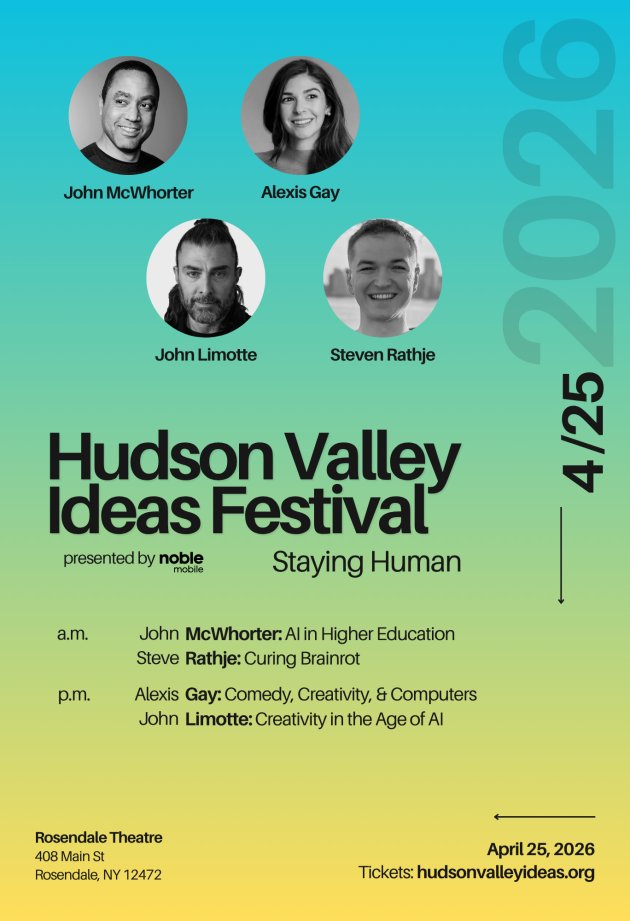
Excited to be speaking this Saturday, April 25, at @AndrewYang's Hudson Valley Ideas Festival!
There's a great lineup of speakers including @JohnHMcWhorter, @yayalexisgay, and @LimotteJoh16686, and the event will be moderated by @MCHoeppner.
More info here: hudsonvalleyideas.org/
1
1
10
380
Political violence is often treated as something extreme or exceptional.
But much of the underlying psychology is not. It emerges from familiar processes: When people strongly identify with a group, threats to that group feel deeply personal and can escalate to violence.
(1/2)
1
1
63
@jayvanbavel discussed these issues in a BBC radio special on political violence called "How Not to Kill a Politician" that aired this week.
Listen to the full interview here with Alison (Ali) Goldsworthy: open.spotify.com/episode/7uW…
(2/2)
1
1
671
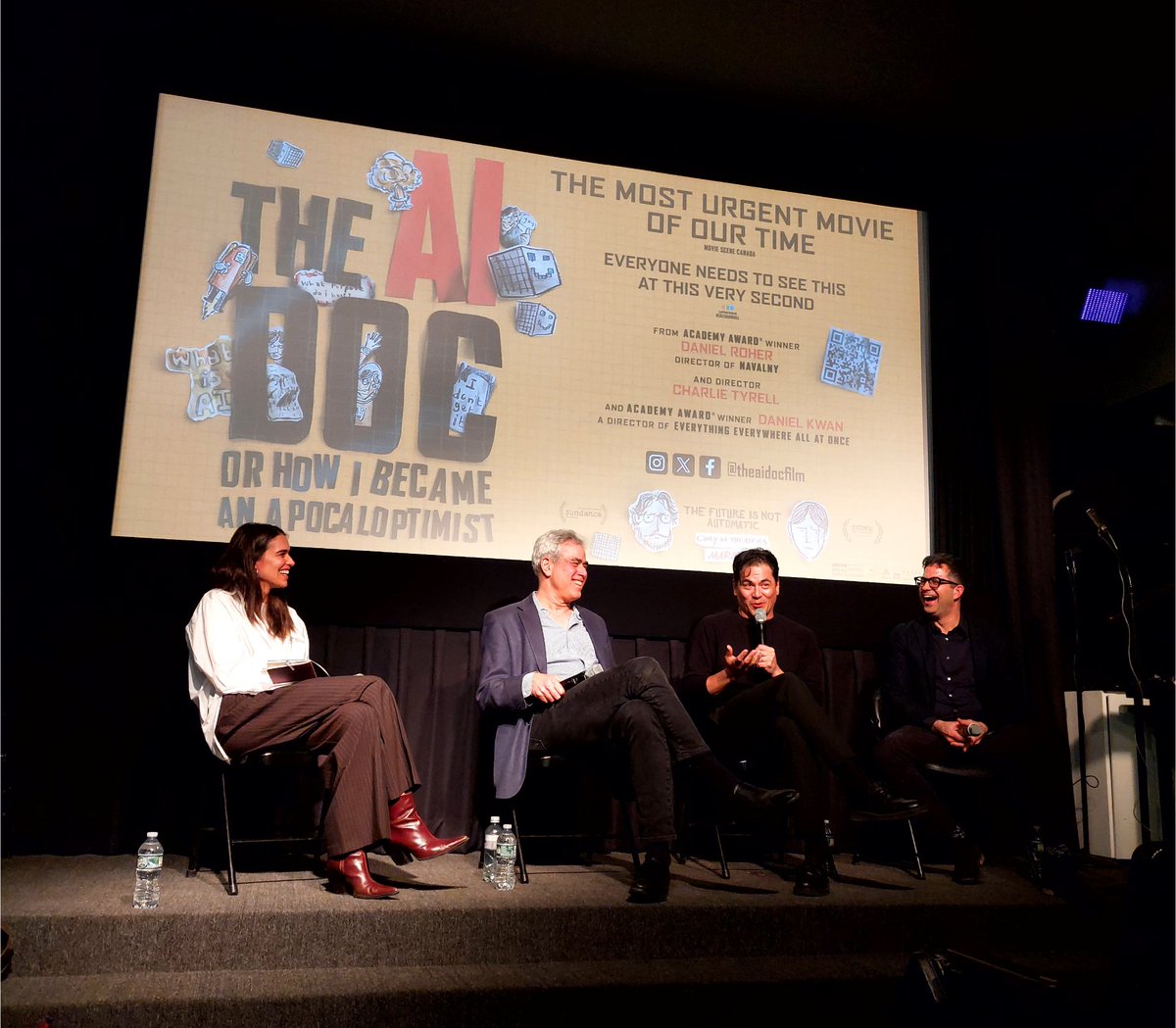
Last week, we curated a diverse audience of over 150 experts—ranging from academics, journalists, and tech—to join us for a special screening of The AI Doc: Or How I Became an Apocaloptimist (in theaters now)!.
Check out our newsletter reflecting on the doc:
1
84
AI can produce synthetic consensus--the illusion that “everyone is saying this.” This can quietly bend beliefs and norms, posing a danger to democracy.
1
1
107
We explain how AI is changing public discourse and what we can do about it.
Substack summary: powerofusnewsletter.com/p/wh…
Original policy forum paper: science.org/doi/10.1126/scie…
1
106