
This account is no longer active, and our content has moved to x.com/CDCgov. Follow us there for more.
- Tweets 22,351
- Following 100
- Followers 132,108
- Likes 775
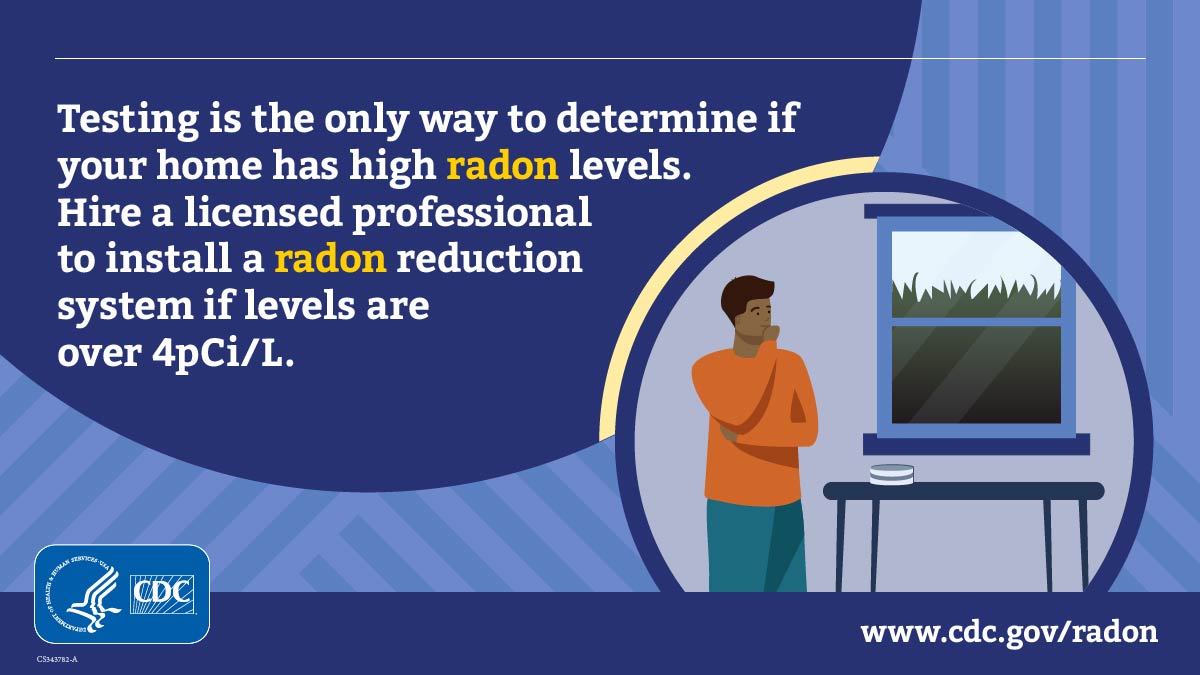






ALT An illustration of a person standing near a window. Text reads "Testing is the only way to determine if your home has high radon levels. Hire a licensed professional to install a radon reduction system if levels are over 4 pCi/L." cdc.gov/radon is in lower right corner.
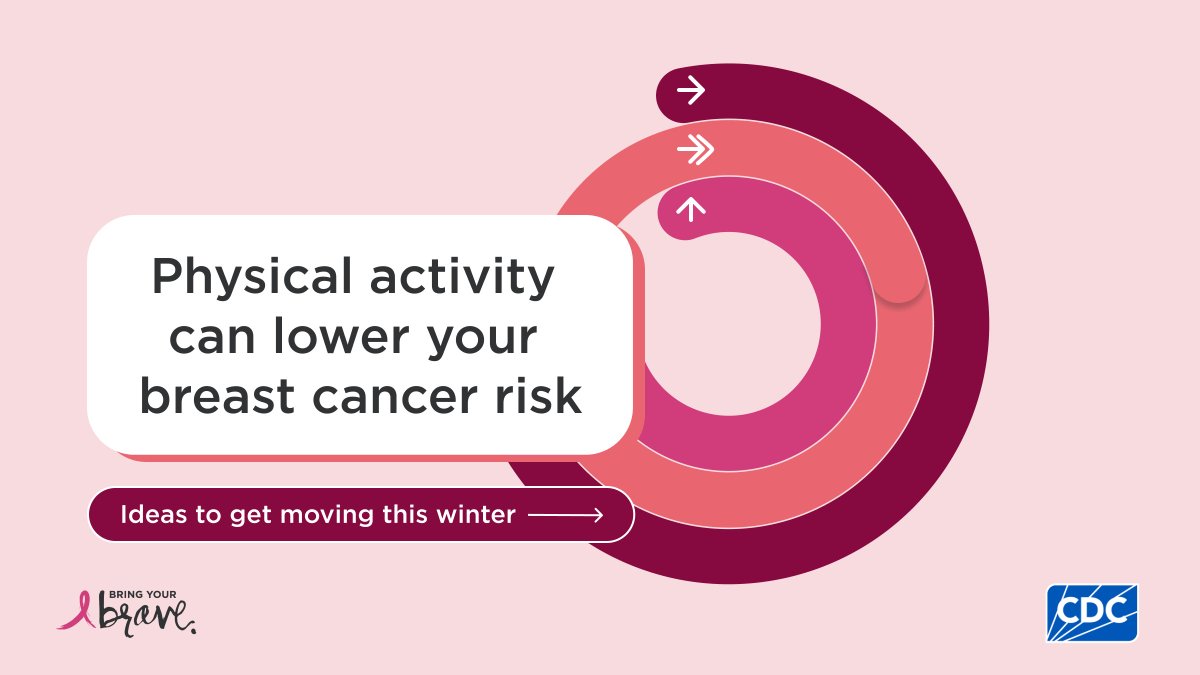
ALT Three pink movement rings with white arrows with a box reading “Physical activity can lower your breast cancer risk.” Highlighted text below it says “Ideas to get moving this winter” with an arrow pointing right.

ALT A white box on the right says, “Some activity is better than none!” Pictures with labels of “muscle strengthening activities, basketball, hike or walk, and indoor pickleball.”
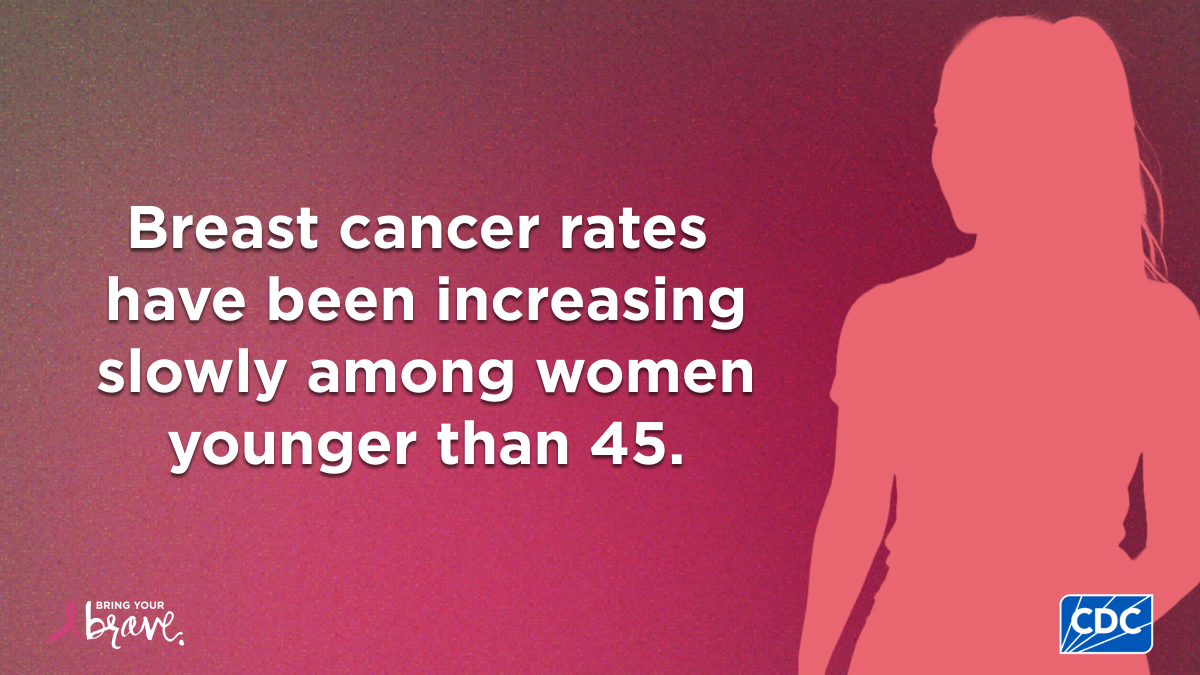
ALT Pink silhouette of a woman and white text that reads: “Breast cancer rates have been increasing slowly among women younger than 45.”
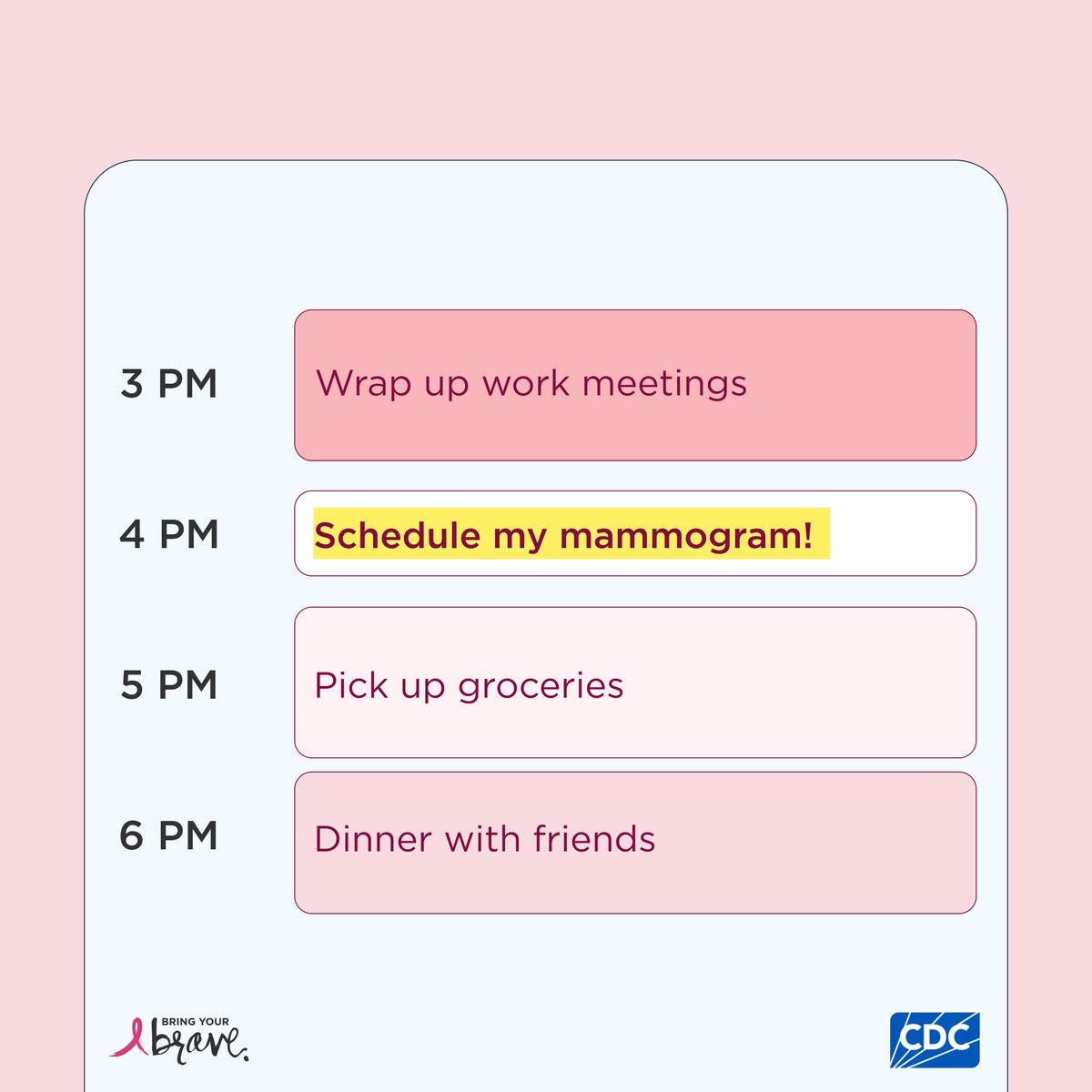
ALT A daily schedule displaying activities. “3 PM: Wrap up work meetings; 4 PM: Schedule my annual mammogram! (is highlighted in yellow with bold text) 5 PM: Pick up groceries; 6 PM: Dinner with friends.”
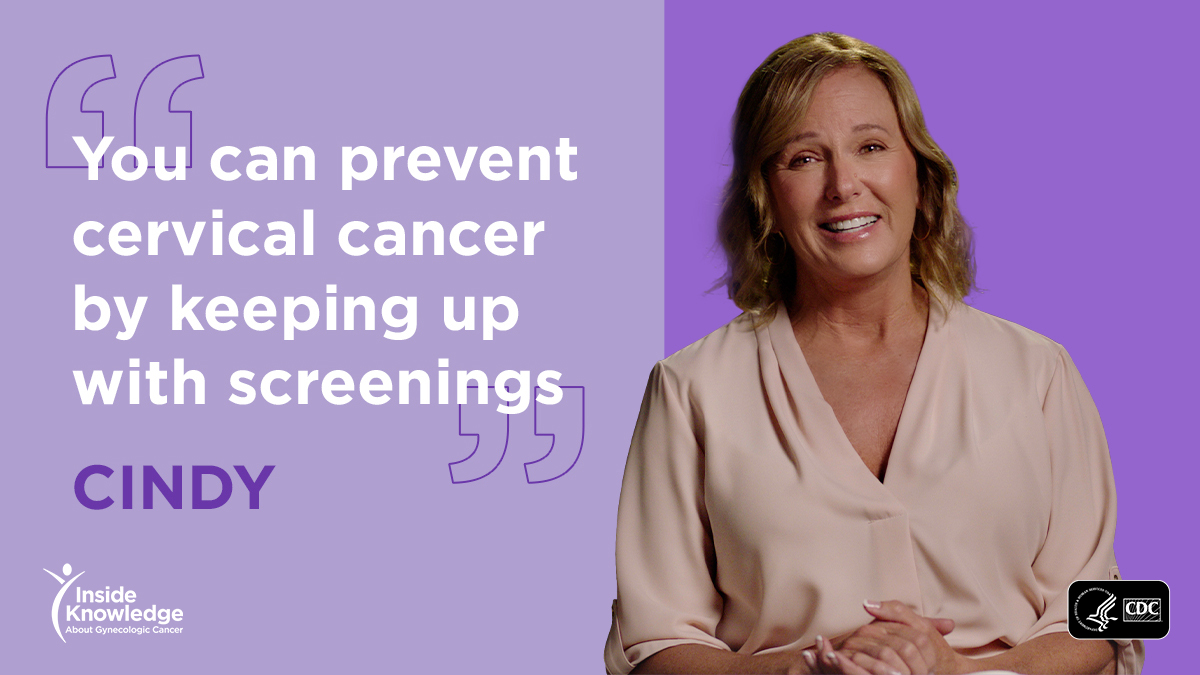
ALT Photo of Cindy. Quote reads, “You can prevent cervical cancer by keeping up with screenings,” said Cindy.
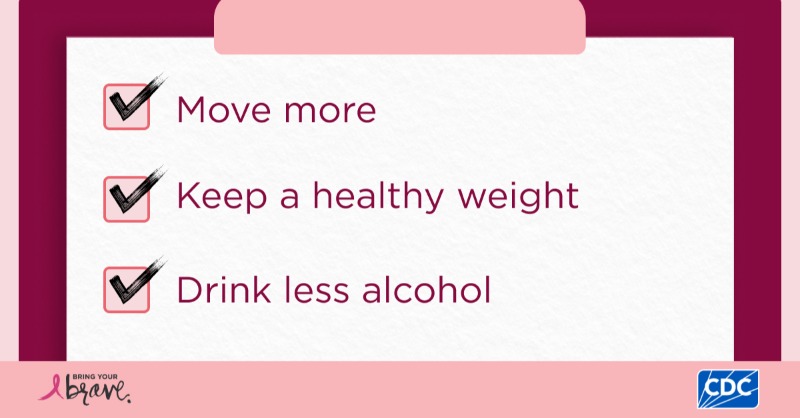
ALT Pink graphic showing a checklist on a clipboard: “Move more. Keep a healthy weight. Drink less alcohol.” All options have checkmarks in the boxes next to them.
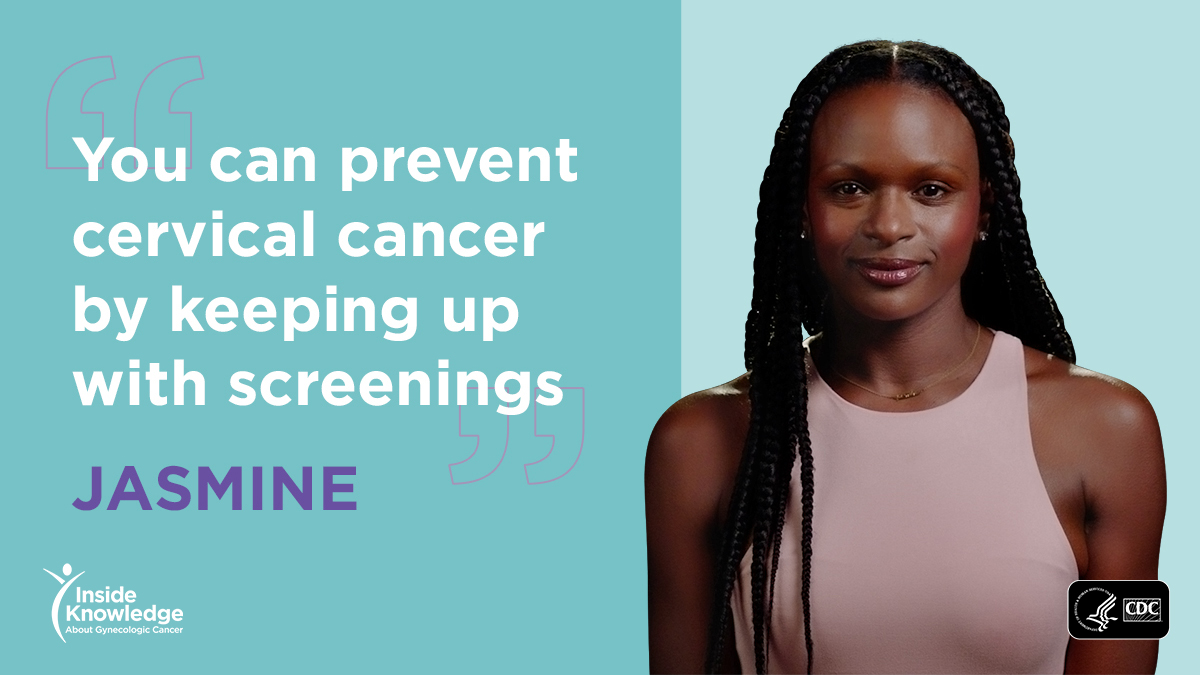
ALT Photo of Jasmine. Quote reads, “You can prevent cervical cancer by keeping up with screenings,” said Jasmine.
ALT Success Stories. After-Hours Care Increases Cervical Cancer Screening in Louisiana. From November 2020 to March 2023, the number of women who received cervical cancer screenings from CrescentCare tripled from 533 to 1,693.
ALT Two women looking at a cell phone together. Image next to them shows the phone’s screen of the My Family Health Portrait App. Text reads "Your Family Your History. Download CDC’s My Family Health Portrait: Cancer app to document your family’s history of cancer and manage your cancer risk.”
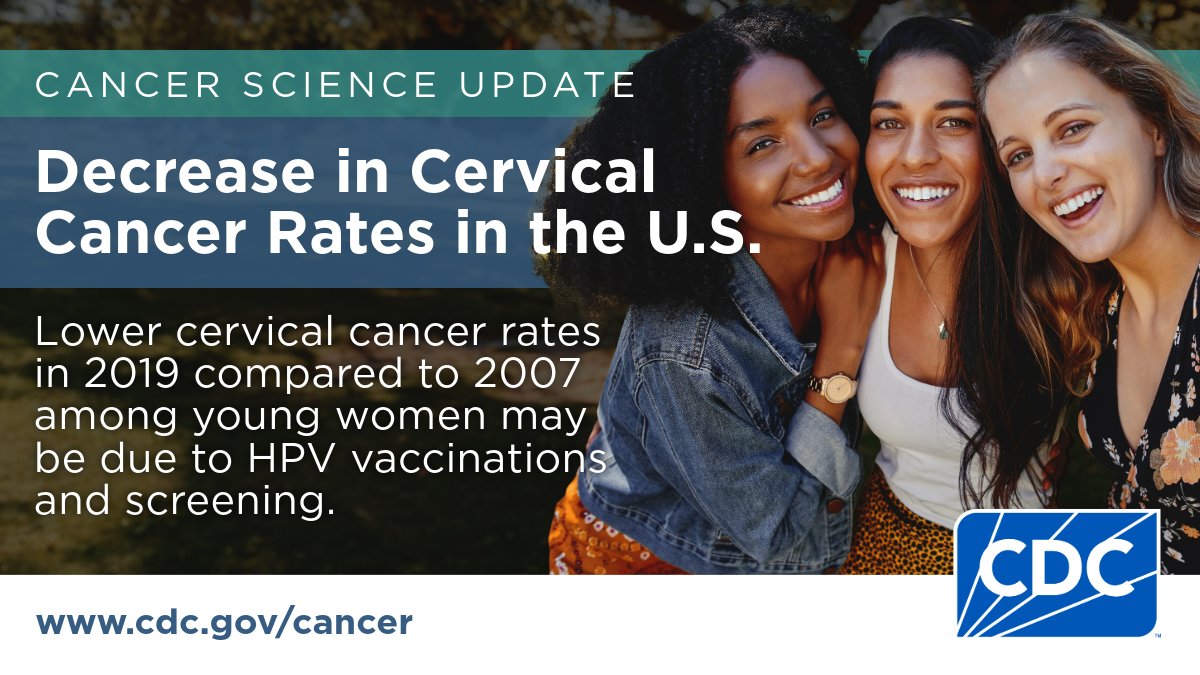
ALT Cancer Science Update. Decrease in Cervical Cancer Rates in the U.S. Lower cervical cancer rates in 2019 compared to 2007 among young women may be due to HPV vaccinations and screening.
ALT Woman typing on her cell phone. Image next to her shows the phone’s screen of the My Family Health Portrait App. Text reads “Your History, Your Health. Does cancer run in your family? Download CDC’s My Family Portrait: Cancer app to learn your risk of getting hereditary cancer.”
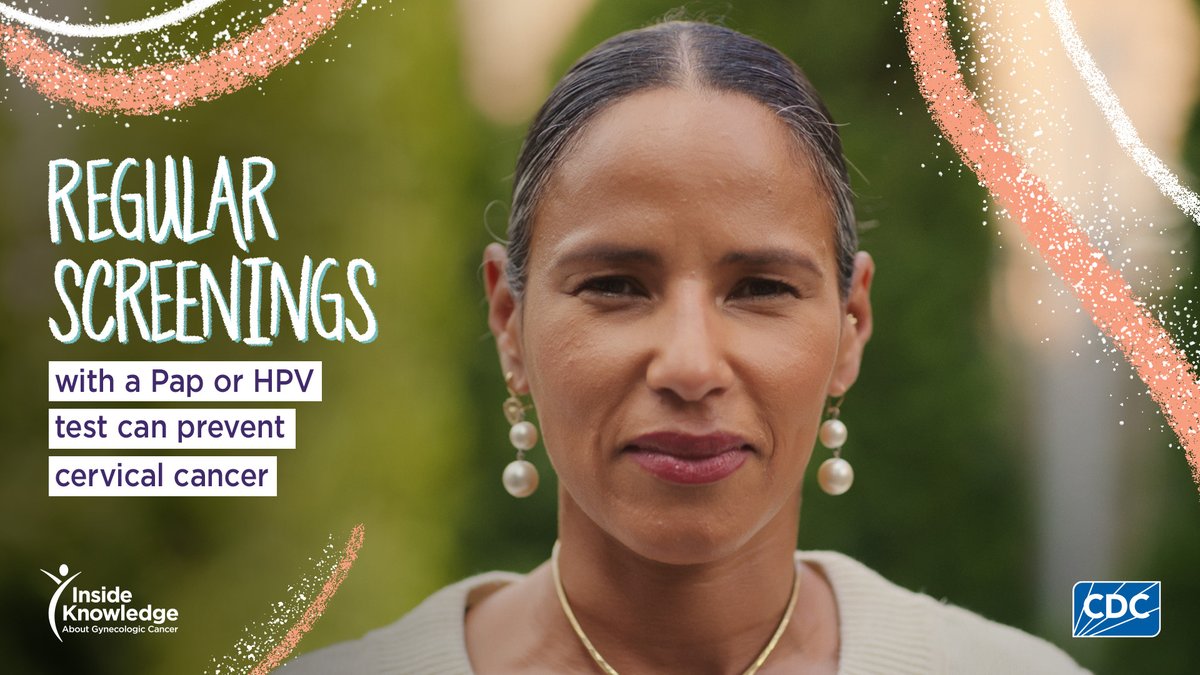
ALT A photo of a woman smiling and text that reads “Regular screenings with a Pap or HPV test can prevent cervical cancer.”
ALT Profile of a woman with blurred image of a reservation in the background. Text reads “Cancer Science Update. Higher Rates of New Cervical Cancer Cases. American Indian and Alaska Native women have a higher rate of new cervical cancers compared to women of other races and ethnicities.
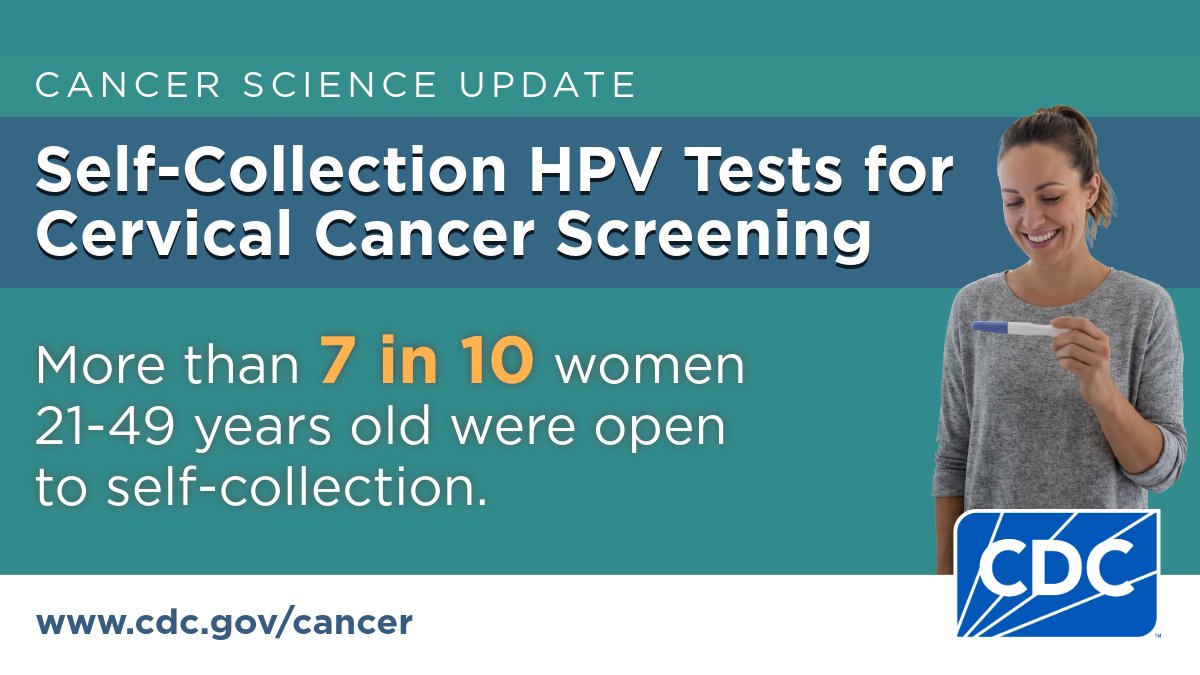
ALT Woman looking at a home test. Text reads, “Cancer Science Update. Self-Collection HPV Tests for Cervical Cancer Screening. More than 7 in 10 women 21-49 years old were open to self-collection.”
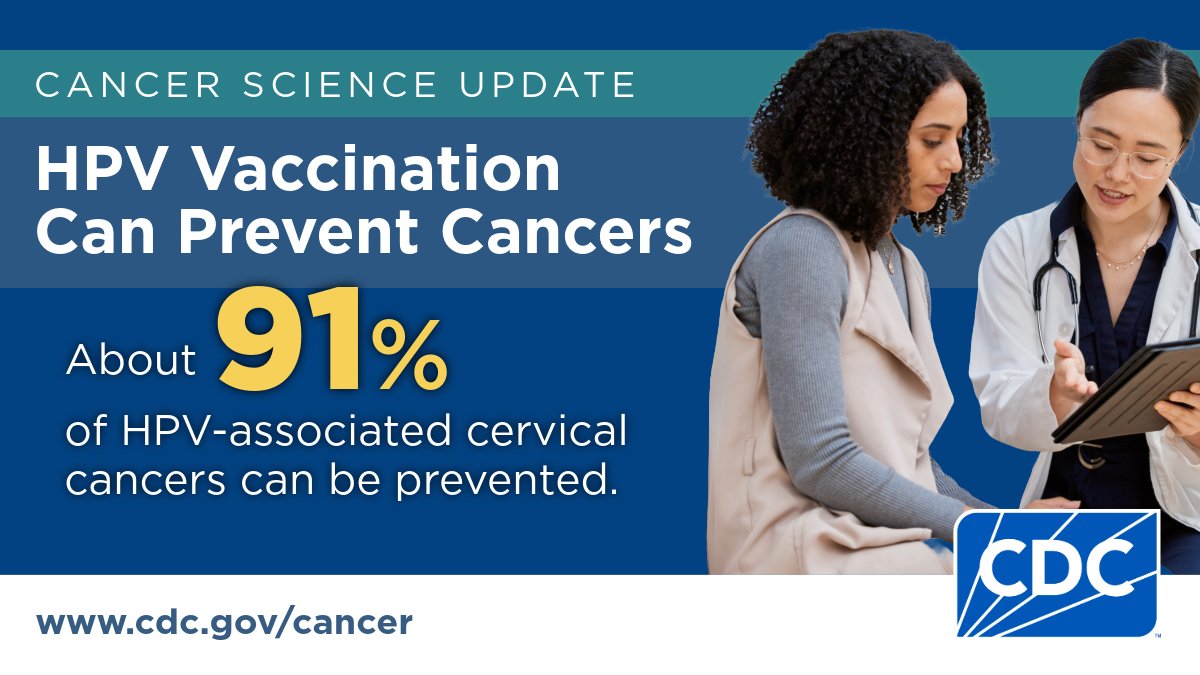
ALT Doctor talking to patient while holding an electronic device. Text reads “Cancer Science Update. HPV vaccination can prevent cancers. About 91% of HPV-associated cervical cancers can be prevented.”