
Sharing news, Human Interest, retail, birding, archeology, medical research, health, things I find interesting, @NorthwesternU alum 🇺🇸 THE CONSTITUTION 🇺🇸
Joined October 2015
- Tweets 207,189
- Following 6,848
- Followers 5,855
- Likes 104,444
3,773 Photos and videos




15h
Experimental treatment kills prostate tumor cells while reawakening antitumor immunity | Cornell Chronicle news.cornell.edu/stories/202…
4
17h
New infant botulism outbreak linked to imported organic powdered formula | Food Safety News foodsafetynews.com/2026/06/n…
3
Jun 15
CPW kills uncollared wolf believed to be responsible for ten depredation events - Denver Gazette denvergazette.com/2026/06/13…
19


CHSeaton retweeted

pmc.ncbi.nlm.nih.gov/article…
PPI Proton Pump Inhibitors Cause Dementia:
2
22
51
3,005
CHSeaton retweeted

Jun 14
This is so true, it takes a Foreigner like @FreddyLA7 to appreciate everything we take for granted everyday.
Everyone should just stop and think about that, and be proud to be called an American.
Jun 13

The World Cup has turned into the greatest marketing for America’s 250th imaginable.
People from all over the world raving about hole-in-wall BBQ spots, Waffle Houses, and well-manicured suburbs.
The stuff the intelligentsia turns their noses up at is actually special.

7
78
576
13,600

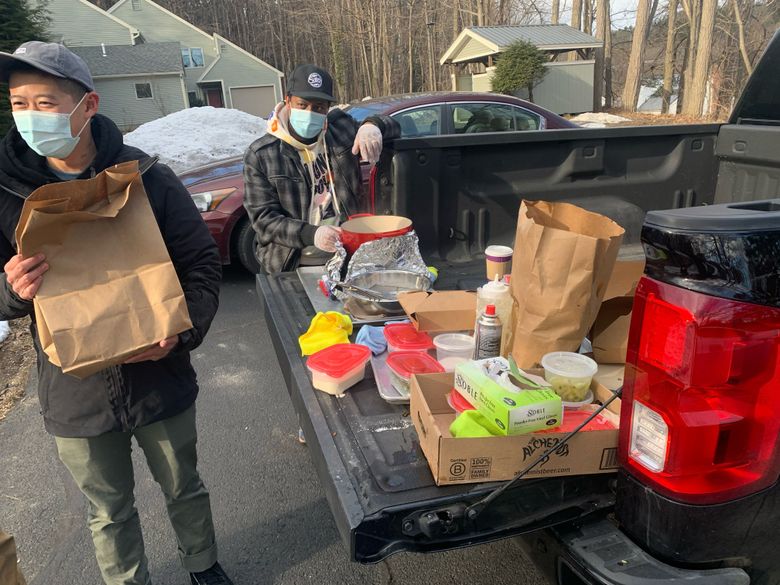
When a family in Vermont reached out to Baltimore restaurant owner Steve Chu asking for the recipe of a favorite dish enjoyed by their terminally ill loved one, they expected instructions.
Instead, they received something far more meaningful.
Steve Chu, co-owner of Ekiben, loaded his truck with ingredients and drove nearly six hours from Baltimore to Vermont.
Along with his team, he set up a makeshift kitchen outside the woman's home and prepared her beloved meal fresh on-site.
They refused payment and simply wanted to bring comfort and happiness during a difficult time.
What began as a request for a recipe became an unforgettable act of compassion, proving that kindness often travels much farther than anyone expects.
178
2,098
9,346
70,554
CHSeaton retweeted

We know of 93 calves born in the wild to our ex-orphans. How? Because they chose to bring their newborns home.
Some make the pilgrimage from the wild within hours of giving birth. They walk back to the Reintegration Unit they grew up at, find the Keepers who raised them, and introduce the baby. Others might return a few weeks or months after. Each time, our Keepers are like proud grandparents, over the moon with happiness.
Yatta has done it four times. Melia twice. This is the moment Tumaren came back with her newest baby.
Meet our wildborn family, all alive today because we chose to rescue their orphan mothers: sheldrickwildlifetrust.org/o…
65
888
5,143
34,858
CHSeaton retweeted

Jun 13
Wonderful rendition of our National Anthem (with Tom Cruise singing along!).
666
3,717
22,507
307,545
CHSeaton retweeted

Jun 12
This is what a high trust society looks like. This is what we need more of.
Jun 12

EXCLUSIVE: The kids whose lemonade stand was robbed at gunpoint in Boston opened another stand today
Check out this crowd who came to support them!!
🇺🇸🇺🇸🇺🇸


29
414
3,292
35,071
CHSeaton retweeted
Jun 13
Not sure what’s worse, the fact that this is a common occurrence in the UK or the fact that if it weren’t for platforms like X we wouldn’t have even heard of this story.
Jun 12

The video of the migrant stabbing the 17yo has been released.
Not sure why a trial is necessary. Save everyone time and get it over with quickly.
84
460
2,249
49,141
CHSeaton retweeted
Feb 3
I feel like now is a good time to bring this back
1 Oct 2024

I didn’t get “blacklisted” from Hollywood, I left because they’re all pedos.
4,363
27,720
193,829
5,059,395
CHSeaton retweeted

Jun 12
Saving LA - Phase III
11,381
29,948
166,302
9,722,356
Jun 13
Costa Rica knows how to protect what they have
Jun 12

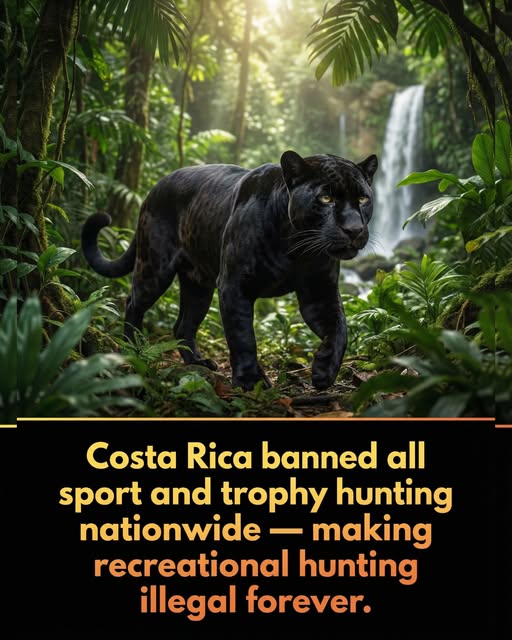
Costa Rica has outlawed recreational hunting, solidifying its role as a worldwide leader in animal protection and a safe haven for the remarkable 5% of global biodiversity it hosts.
Home to an astonishing proportion of Earth's plant and animal species, Costa Rica stands as one of the planet's most vital biodiversity hotspots. Yet this extraordinary natural heritage faces ongoing threats from human activities—including unsustainable wildlife tourism, illegal wildlife trade, domestic animal neglect, and organized animal fighting.
As encounters between people and wildlife grow more frequent, the country's fragile ecosystems require proactive safeguards to protect their most vulnerable residents.
Costa Rica has responded with groundbreaking animal welfare laws that reflect a deep national commitment to conservation. Building on its landmark 2012 nationwide ban on sport and trophy hunting, the country introduced stringent anti-trafficking measures in 2017 to combat poaching and biodiversity loss. By imposing mandatory prison sentences for animal cruelty and creating a national registry of offenders, Costa Rica demonstrates that effective conservation demands strong legal enforcement alongside widespread societal resolve to safeguard all living beings within its borders.
3
CHSeaton retweeted

Jun 12
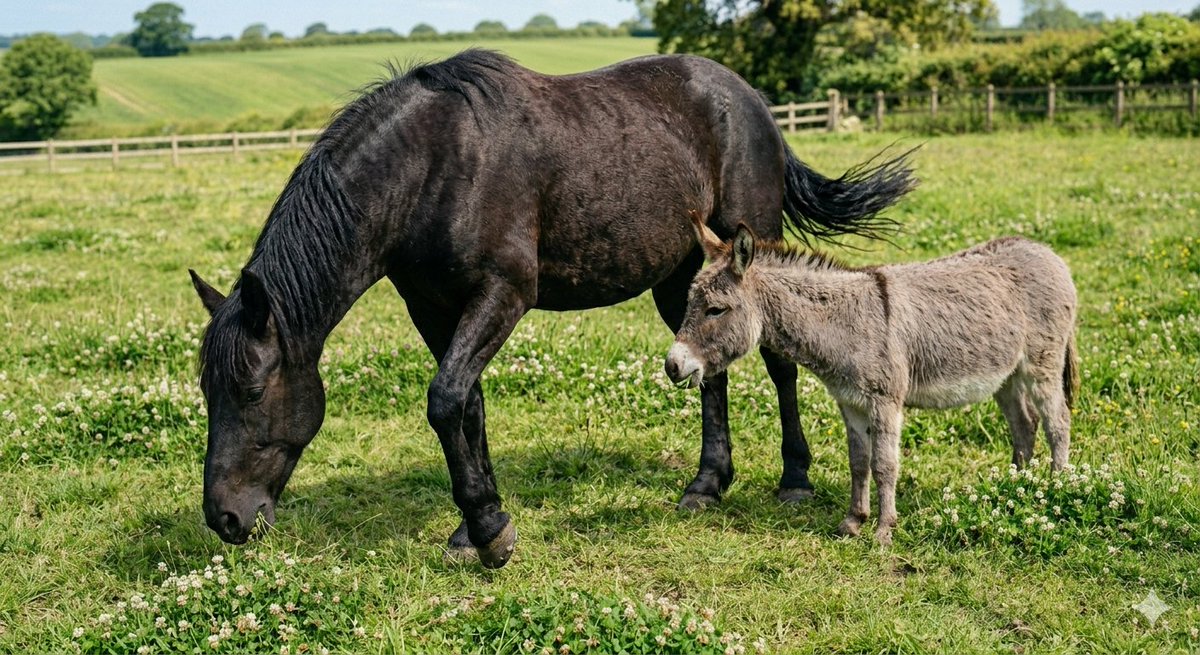
There is a new field in this universe, and standing in it, at last at ease, is an old soldier. His name is Hector.
He is a Cavalry Black, a big Irish-bred gelding the better part of seventeen hands, and for seventeen years he served with the Household Cavalry in London, on State and Ceremonial duty, which is a polite phrase for the hardest thing you can ask of a horse.
Understand what that means. A horse is a flight animal. Every instinct in it, refined across millions of years of being prey, says one word in the face of sudden noise and pressing crowds: run. Hector was trained, over years, to do the opposite. To stand. To carry a rider in a steel breastplate down the Mall through a wall of sound, past the bands and the cheering and the saluting guns of the King's Troop, and not move a muscle. To hold himself still on a state occasion while every nerve in his body screamed at him to bolt, and to do it again, and again, faultlessly, because the man on his back and the crowd at his shoulder were trusting half a tonne of flight animal to master its own nature on command.
He walked behind a gun carriage at a state funeral once, at the slow march, the drum beating the step, a nation watching through its tears, and he never put a hoof wrong.
He is retired now. The shoes are off. The clipped parade coat has been let go woolly and unmilitary, the first sign the people who tend old service horses look for that one is finally letting down. He shares a green field with a small unbothered donkey called Nelson, because a horse should never be alone, and the black charger who stood behind kings and the donkey who has never had a worry in his life are now inseparable. When his old groom visits, Hector lifts his head and nickers across the field before the man has said a word.
And here is the part that undoes everyone who knows what they are seeing. One afternoon they found Hector lying flat out on his side in the grass, dead still, and a heart stopped, the way every horseman's does at that sight, because a horse down and flat looks like the worst news there is. Then an ear flicked at a fly, and the breath went out of them in relief. He was simply, deeply asleep. A horse only sleeps like that when it feels entirely safe, because flat on the ground is the one place a prey animal cannot flee from, and most never dare it. For seventeen years Hector stood, awake to every danger, holding everyone else's nerve so they could rely on him. Now, in a quiet field, he has decided it is finally safe to lie down and close his eyes.
He gave his courage to the rest of us for seventeen years. He has earned the grass. He is taking it lying down, in the sun, with the donkey keeping watch.
168
932
5,081
42,696
CHSeaton retweeted
Jun 12
The year is 1949.
The Nobel Prize in Medicine has just gone to the man who invented the lobotomy. Your doctor suggests one for your sister, who has not been herself since the baby came. It is the most celebrated advance in psychiatry of the age, and he is simply current. By the time the prize curdles into an embarrassment, close to twenty thousand Americans have had the operation, and proportionally more here in Britain.
The year is 1956.
Lay the baby down on his front, the doctor says. So does the most trusted childcare book ever written, the one on every new mother's shelf. On his back he might choke, the reasoning goes. Millions obey. The advice holds for nearly thirty years, long after the evidence has quietly turned, and a generation of cot deaths is counted before anyone thinks to roll the babies over.
The year is 1966.
A bestselling book informs your wife that menopause is a disease, that she is, in the author's word, a castrate, and that a small daily pill will keep her youthful and tolerable to live with. Her doctor agrees. The drug becomes one of the most prescribed in the country. Nobody mentions that the author sat on the payroll of the company that made it. That detail surfaces decades later, in the same year the landmark trial is halted early for raising rates of breast cancer, stroke and clots.
The year is 1979.
Your ulcer is caused by stress and sharp food, the doctor explains. Calm down, drink milk, take the antacid that happens to be the best-selling medicine on earth. Two Australians are about to prove that most ulcers are caused by a bacterium and cured by a fortnight of antibiotics. The profession laughs. One of them eventually drinks a beaker of the stuff to settle the matter. The establishment takes the better part of twenty years to stop laughing. The Nobel lands in 2005.
The year is 1985.
Butter is dangerous, the doctor says. Switch to margarine, it is modern, it is heart-healthy, the experts are united. The spread he nudges you toward is loaded with trans fats, which the next decade will identify as the genuinely dangerous one, and which will eventually be banned outright. The butter goes quietly back in the fridge. No correction is ever printed at the volume of the original warning.
The year is 1992.
There is a pyramid on the surgery wall, and the very same one in your grandchild's classroom. Bread, cereal, rice and pasta form the broad virtuous base, up to eleven servings a day. Fat is exiled to the tiny tip. The chart was reportedly held back a year while the relevant industries had their say. It is wrong at the bottom and wrong at the top.
Now it is today.
Your doctor has new guidelines, new studies, a fresh consensus, delivered with precisely the steady confidence of every guideline above. He believes it, and he has good reason to. So did every doctor in this thread. None of them were villains. Each was sincere, most were kind, and all were certain, reading from a map that somebody else had drawn and handed them. That is the part worth sitting with.
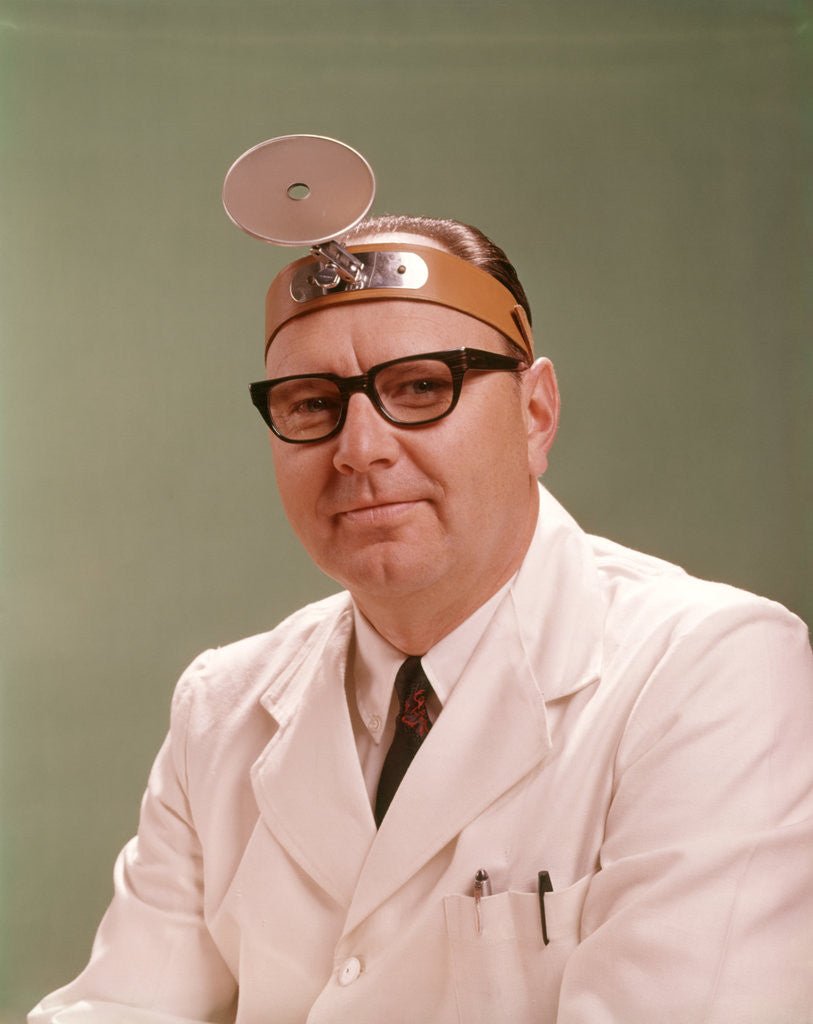
So when the man in the white coat tells you what to eat, what to fear, and what to swallow every morning for the rest of your life, you are allowed to ask. Who paid for the study. What the evidence says beneath the headline. What he was just as certain about thirty years ago, and where that advice sits now.
Then make up your own mind. Call it scepticism, or call it whatever your grandmother called it when she ignored the advert, kept the butter where it was, and lived to ninety-one.
It has outlasted every consensus on this list. It will outlast this one too.
483
5,122
14,899
313,041