The Trustee Chair in Chinese Business and Economics provides thought leadership for the policy community about China's economy. Retweet ≠ endorsement
Joined October 2019
- Tweets 5,266
- Following 863
- Followers 3,896
- Likes 683
1,270 Photos and videos


Pinned Tweet

What does the future hold for U.S.-China technological competition? In a major new CSIS report, our experts argue that the key is technological dexterity—the ability to build strengths across different technology types, where advantages in one domain compound advantages in others.
Explore our comparative analyses of technology and innovation ecosystems of the United States, China, and U.S. allies in 'TechEdge'.
Read the full report here: csis.org/analysis/tech-edge-…
1
4
1,098
Assessing and mitigating risks around investment from China has become one of the primary raison d'être for the Committee on Foreign Investment in the United States (CFIUS). CFIUS' impact on allied country firms is less discussed.
Learn more about the government's new "Known Investor Program" in a critical questions from our Economic Security and Technology Department colleague, Andrea Palazzi: csis.org/analysis/foreign-in…
31
Chinese automaker Geely says it will assess its overcapacity across its production facilities.
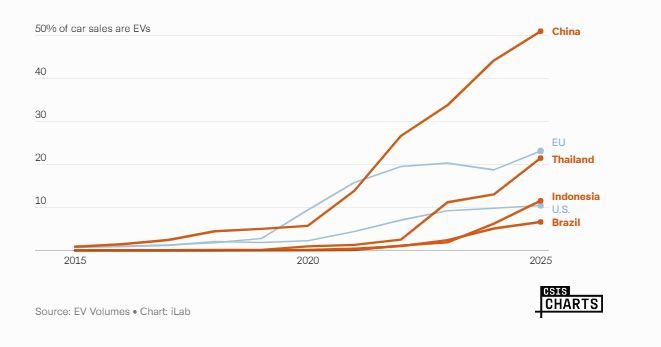
Excess capacity has led Chinese automakers like Geely to increasingly turn to foreign markets. Learn more here: csis.org/analysis/global-ev-…
21
Chinese EV exports doubled in the first quarter of this year, with many sales in the global south, where price competitiveness is a major advantage for Chinese's brands.
Ilaria Mazzocco called Chinese companies' presence in these markets "'transformational' as the Chinese companies are 'providing solutions that cater to the demands of the middle class [where] the Western automakers are perceived as not being able to provide those solutions.'" cbc.ca/news/business/chinese…
35
China's latest credit data shows a marked decrease in loans to household as domestic demand remains weak.
Revisit our event to learn more about the challenges facing China's economy: csis.org/analysis/chinas-eco…
1
35
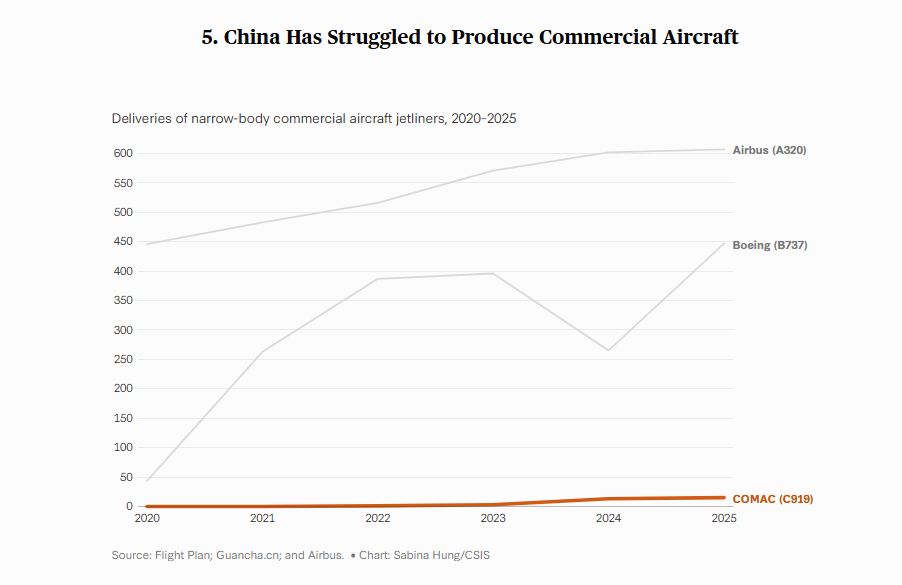
COMAC's C919 jets are facing their first major C-checks this week. China's commercial aircraft manufacturer has encountered significant challenges in its effort to become a market player: from over-dependence on foreign-made parts, to experience and cost barriers. Read more in Scott Kennedy's report The Power of Innovation: csis.org/analysis/power-inno…
47
CSIS Chinese Business & Economics retweeted

Jun 15
Has China Learned to Live with CBAM? ESCC Associate Fellow Ray Cai and @CSISCBE Deputy Director @mazzocco_ilaria examine how #China is building the architecture for a comprehensive carbon management system, driven by the economic incentives and pressure of EU regulations. ⬇️
csis.org/analysis/new-carbon…
2
4
380
The European Union’s Carbon Border Adjustment Mechanism (CBAM) has emerged as a particularly influential factor shaping China’s evolving approach to carbon governance. @Mazzocco_Ilaria and Ray Cai break down how China is adapting in a new report.
Read the report here: csis.org/analysis/new-carbon…
1
108
A peace deal with Iran has been announced, but the war has already disrupted international relations, including between the U.S. and China. Listen to Scott Kennedy, Will Todman and Brian Hart discussed the Iran war's impact on U.S.-China relations. csis.org/podcasts/state-play…
47
The 2026 FIFA World Cup is upon us, and did you China has possibly the highest number of soccer fans in the world. Despite a large following, China's soccer league has not had smooth sailing.
Learn more in this discussion with Dr. Scott Kennedy, Dr. Victor Cha and John Duerden: csis.org/podcasts/cogitasia/…
107
"Many Western drug makers see little incentive to move away from Chinese suppliers, said Scott Kennedy...That feeling is mutual.
China’s pharmaceutical industry also remains highly dependent on partnerships with global companies, he added: “That indispensability creates interdependence that should lead both sides to be extremely careful about weaponizing their respective advantages.” foreignpolicy.com/2026/06/08…
56
Chinese automobiles, especially NEVs are making headway in European markets despite trade barriers as lower costs and fuel shocks make Chinese models attractive to consumers. Learn more about Chinese exports to Europe and Canada in Ilaria Mazzocco's podcast.
csis.org/podcasts/audio-brie…
51
BYD's Executive Vice President Stella li to CBNC that the company expects China's EV market penetration to very quickly reach 80%.
Learn about how Chinese automakers like BYD are reshaping not just China but the global auto industry here: csis.org/analysis/global-ev-…
66
"In addition, both economic superpowers are increasingly stretching global trade architecture, added Scott Kennedy. Not only are US Section 301 probes predetermined, Kennedy said, but 'Chinese industrial policy spending and regulatory support in favour of domestic industry are highly discriminatory and distorting'"
Read here: scmp.com/news/china/diplomac…
52
China is increasingly at the center of the renegotiation of the USCMA, particularly the role of Chinese content in North American value chains.
Learn more about what else is on the U.S. trade agenda this summer in a new commentary from EST colleague William Reinsch: csis.org/analysis/summer-tra…
154
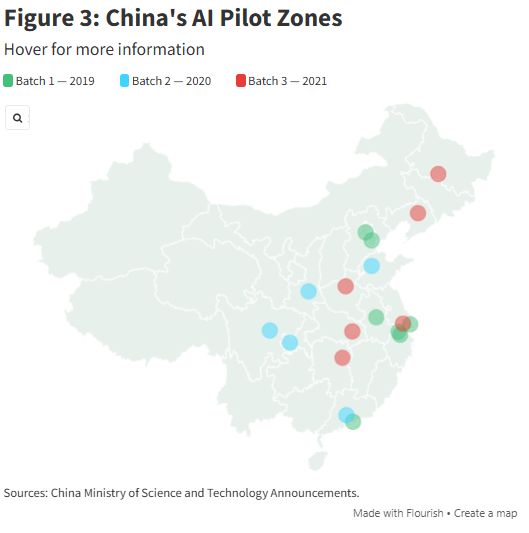
Place-based policy has long been a mainstay of China's industrial policy toolkit. This includes several AI pilot zones established by the government.
Read more here: csis.org/blogs/location-ever…
1
2,211
In a new Trustee China Hand blog post, @RyanFeath looks at the state of development zones in China, the relative performance of China's urban clusters globally, and early efforts to promote similar efforts for AI.
Read here: csis.org/blogs/location-ever…
53
Chinese auto company SAIC announced recently that it has chosen Spain as the site of its first European factory.
Learn more about how Europe is thinking about how to maximize the benefits of these investments while being cognizant of the risks from @Mazzocco_Ilaria's Driving Diplomacy brief.
Read here: csis.org/analysis/driving-di…
96
Chinese auto company SAIC announced it had selected Spain for its first European car factory. Learn more about how Spain is balancing attracting investment from China with the EU's pursuit of strategic economy by revisiting our Trustee China Hand blog post on the topic.
Read here: csis.org/blogs/trustee-china…
79
China’s accession to the WTO over two decades ago was once accompanied by global enthusiasm. Now, global debates over whether China has upheld its commitments and the need for reform persist.
Revisit Scott Kennedy's discussion with Tu Xinquan, a leading Chinese expert on the WTO, here: csis.org/podcasts/china-fiel…
1
1
1
518