@CSIS Korea Chair is an independent platform from which to advance major policy issues of common importance to the Korean & American people.
Joined March 2010
- Tweets 59,870
- Following 1,808
- Followers 19,173
- Likes 3,063
11,817 Photos and videos
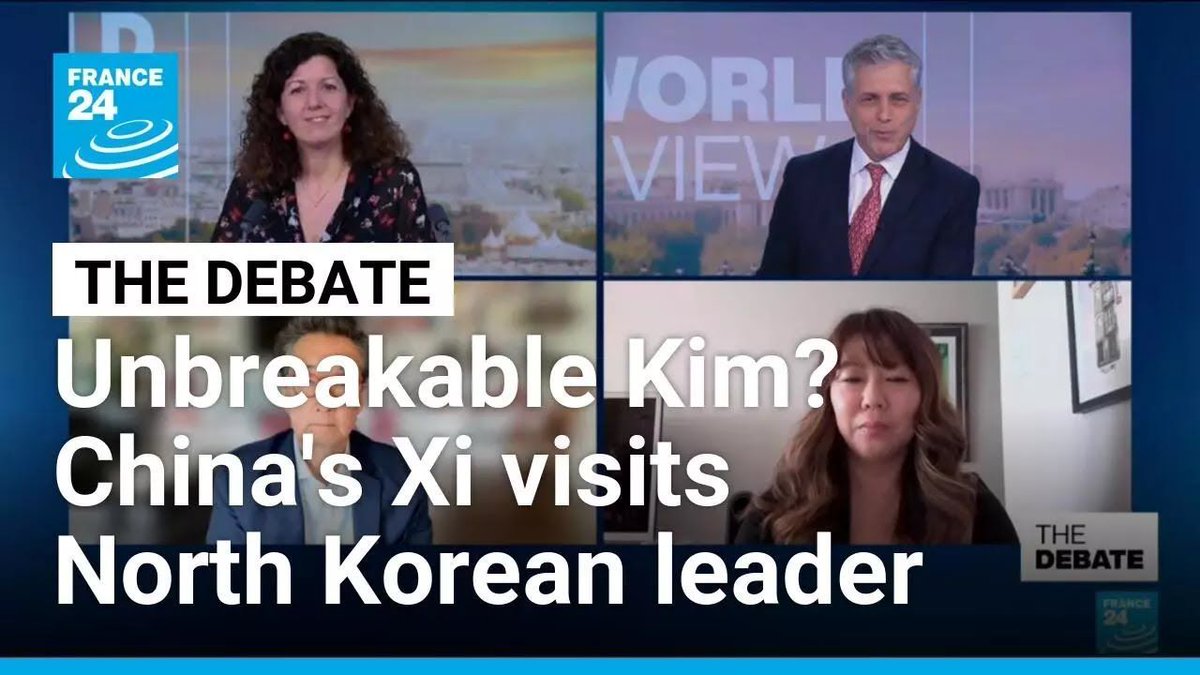


📺 Unbreakable Kim? China’s Xi Visits Russia-Backed North Korean Leader
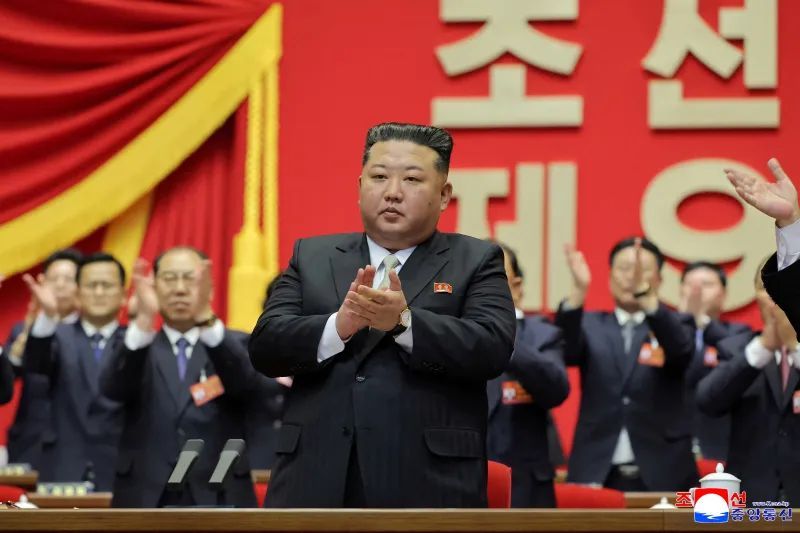
@VictorDCha of @CSIS joined @FRANCE24’s The Debate, moderated by @FrancoisF24, with @j3nnyt0wn, @castaritaHK, and @PhLeCorre to discuss North Korea’s relations with China and Russia after Xi Jinping’s visit to Pyongyang.
Cha said Beijing is trying to “claw back” influence over Pyongyang after Russia’s gains through the war in Ukraine. He also pointed to “the lack of any mention of nuclear weapons or denuclearization” as the summit’s most striking outcome.
🔗 Watch Here: youtu.be/Ry3TrSBxko4
1
2
147
Previewing Xi Jinping’s Visit to North Korea | State of Play
@sydseiler of @CSIS breaks down this week's meeting between presidents Xi Jinping and Kim Jong-un.
"At a macro level, President Xi is likely hoping to demonstrate a dynamic leading role on the international stage—particularly within the China, Russia, Iran, North Korea (CRINK) grouping of revisionist autocracies—while portraying U.S. influence globally as in decline."
Read more from @CSISGeopolitics: csis.org/analysis/previewing…
2
2
206
📢 The 2026 World Cup: Sports and Conflict
With the World Cup in play, @CSIS @VictorDCha and @AndySauLim write that while the event is bound to captivate a global audience, create memorable moments, and produce some goodwill, it is unlikely to pave a path to peace absent additional factors.
csis.org/analysis/2026-world…
2
117
Strategic Clarity: Reassessing the Value of China to Korea
@CSIS @VictorDCha and @yesun_k argue that as Chinese President Xi Jinping met the North Korean leader Kim Jong-un at this week’s summit in Pyongyang, South Korea should fundamentally reassess its strategic equities with China.
Over the past three decades, China-South Korea relations have undergone a fundamental transformation from complementary to competitive interests across economic and geopolitical dimensions. The sooner Seoul moves away from traditional strategic ambiguity with Beijing to a posture of strategic clarity, the better.
Read more @CSISGeopolitics: csis.org/analysis/strategic-…
1
4
2
181
Applications NOW OPEN!
2026–2027 @CSIS U.S.-Korea NextGen Scholars Program with @VictorDCha.
A two-year, non-resident program for mid-career American Korea specialists, NextGen Scholars connects scholars to policymakers, provides training in media and op-ed engagement, as well as supporting new policy-oriented research on the U.S.-Korea relationship.
Don't miss the opportunity to come to DC and Seoul!
Apply here: csis.org/programs/korea-chai…
1
160
Who Are G7’s Top Performers?
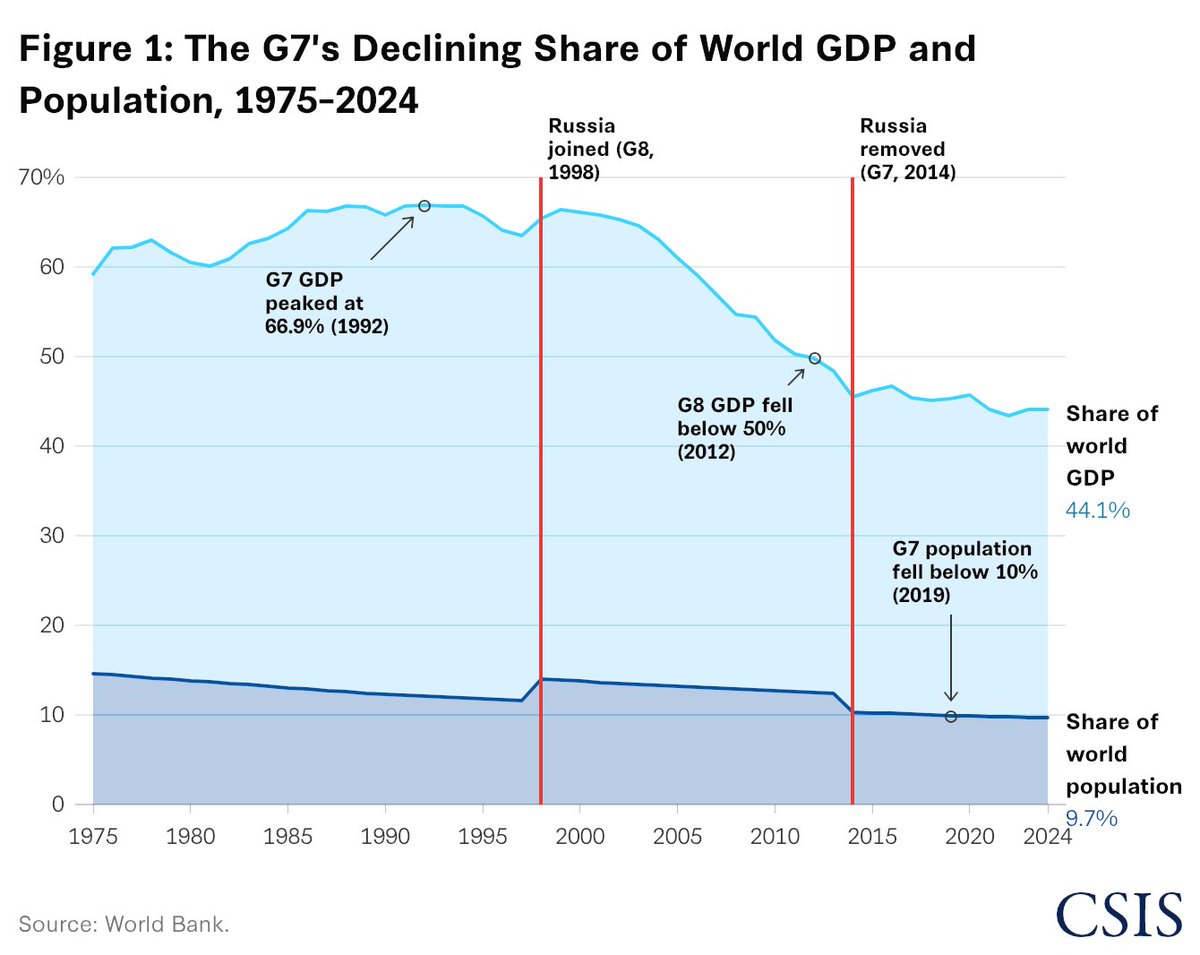
@VictorDCha of @CSIS writes that as the G7’s agenda has globalized, its share of the world economy and population has shrunk. This raises questions about whether the group is still fit for purpose.
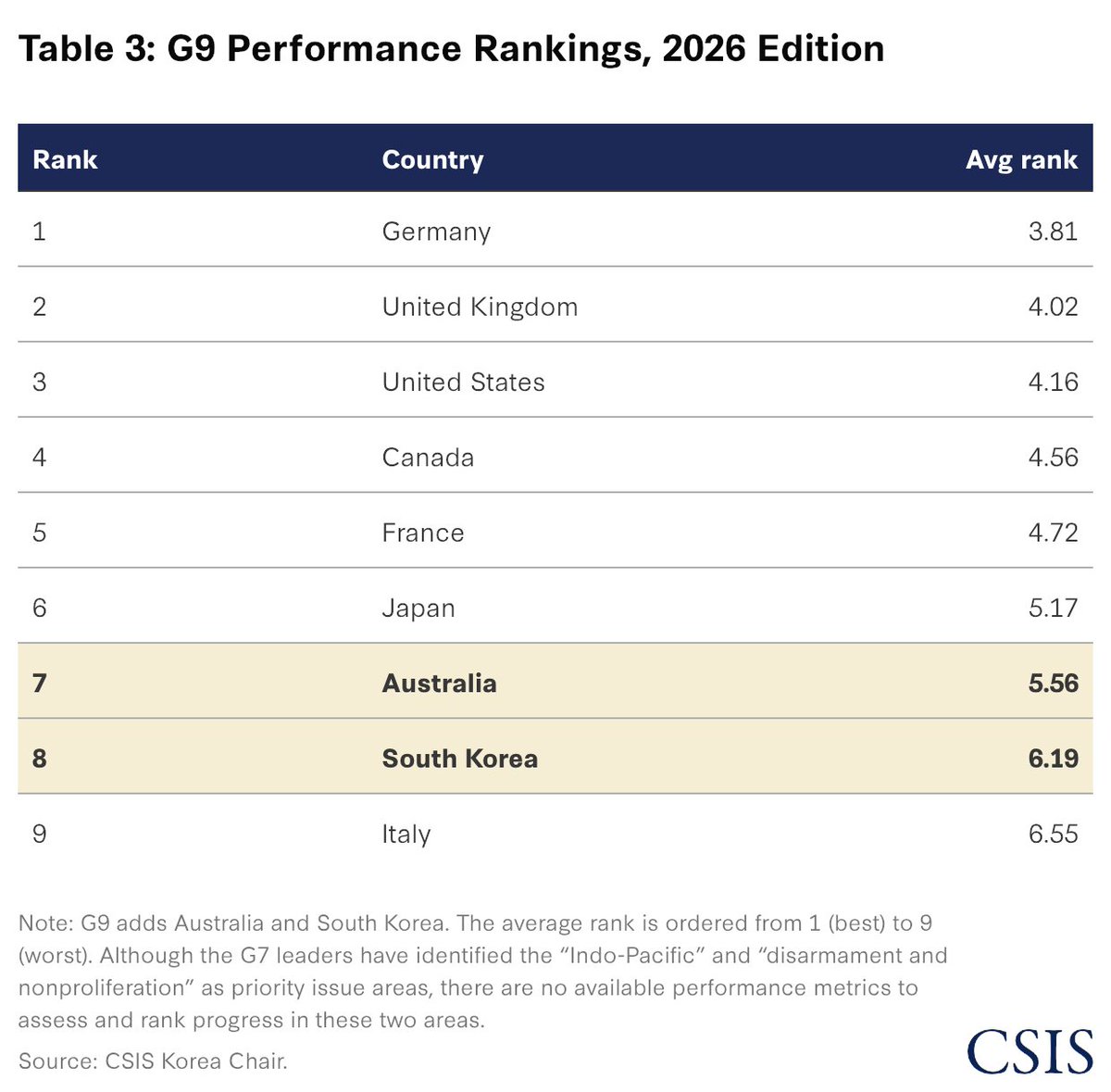
The analysis finds that Australia and South Korea compare favorably with G7 members on key priorities, making the case for an expanded “G9.”
Read more: csis.org/analysis/who-are-g7…
2
131
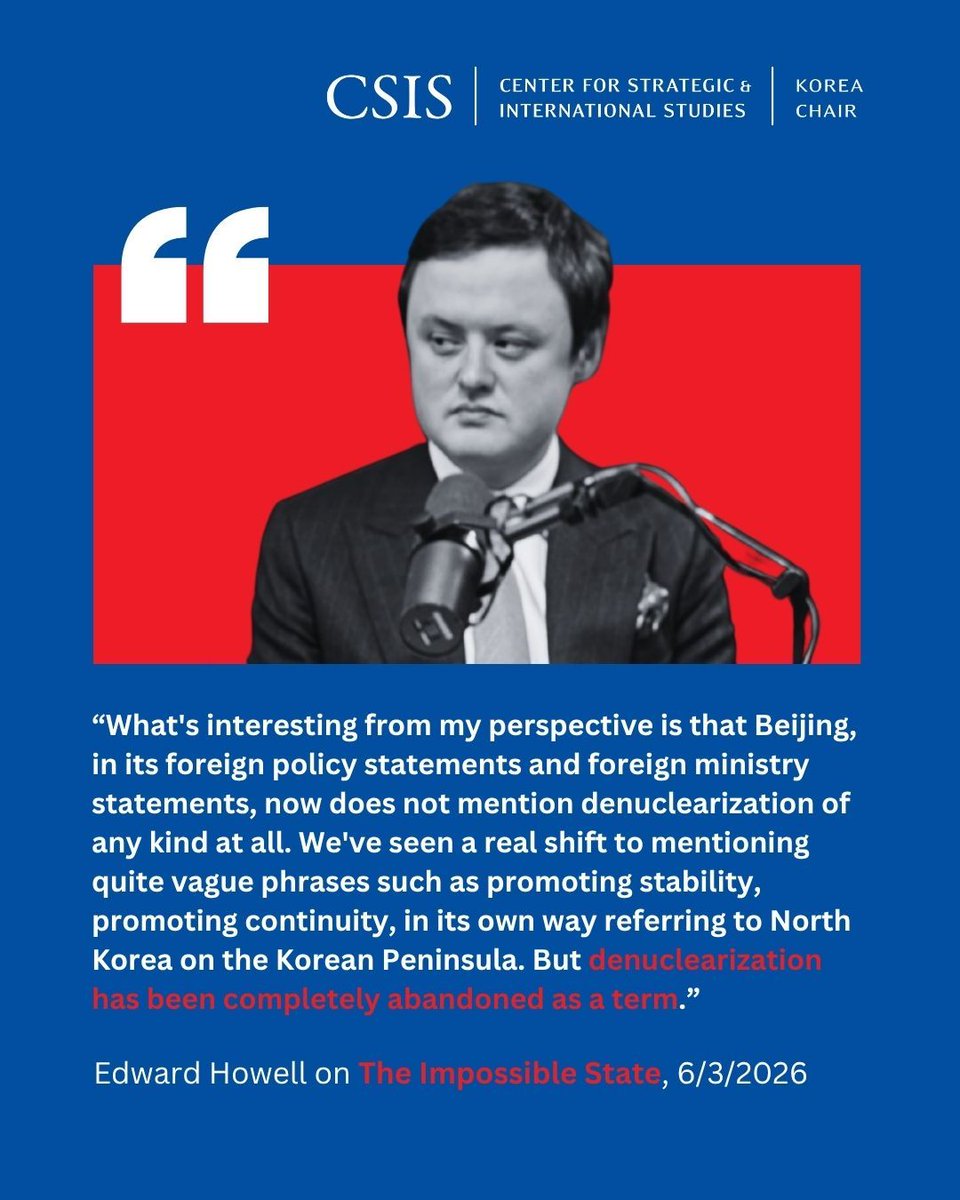
The Impossible State Podcast: The CRINK Challenge: Implications for North Korea and Global Security.
In case you missed it, the latest episode of The Impossible State is now available. Join @VictorDCha, @CSIS Sydney Seiler and @UniofOxford @TheEdwardHowell as they unpack North Korea's relationships with the CRINK countries and examine Beijing’s priorities heading into an imminent Xi-Kim summit.
🎙️Listen here: shorturl.at/5rHlh
1
3
209
Strategic Clarity: Reassessing the Value of China to Korea
@CSIS @VictorDCha and @yesun_k argue that as Chinese President Xi Jinping met the North Korean leader Kim Jong-un at this week’s summit in Pyongyang, South Korea should fundamentally reassess its strategic equities with China.
Over the past three decades, China-South Korea relations have undergone a fundamental transformation from complementary to competitive interests across economic and geopolitical dimensions. The sooner Seoul moves away from traditional strategic ambiguity with Beijing to a posture of strategic clarity, the better.
Read more @CSISGeopolitics: csis.org/analysis/strategic-…
3
197
After three decades of the same denuclearization framework, North Korea's arsenal has only grown. @CSIS @VictorDCha argues it's time to stop pretending the old framework can work and instead build a "cold peace."
Read here: foreignaffairs.com/north-kor…
5
6
417

Jun 12
Previewing Xi Jinping’s Visit to North Korea | State of Play
@sydseiler of @CSIS breaks down this week's meeting between presidents Xi Jinping and Kim Jong-un.
"At a macro level, President Xi is likely hoping to demonstrate a dynamic leading role on the international stage—particularly within the China, Russia, Iran, North Korea (CRINK) grouping of revisionist autocracies—while portraying U.S. influence globally as in decline."
Read more from @CSISGeopolitics: csis.org/analysis/previewing…
1
189
Jun 12
Looking for weekend reads and watches?
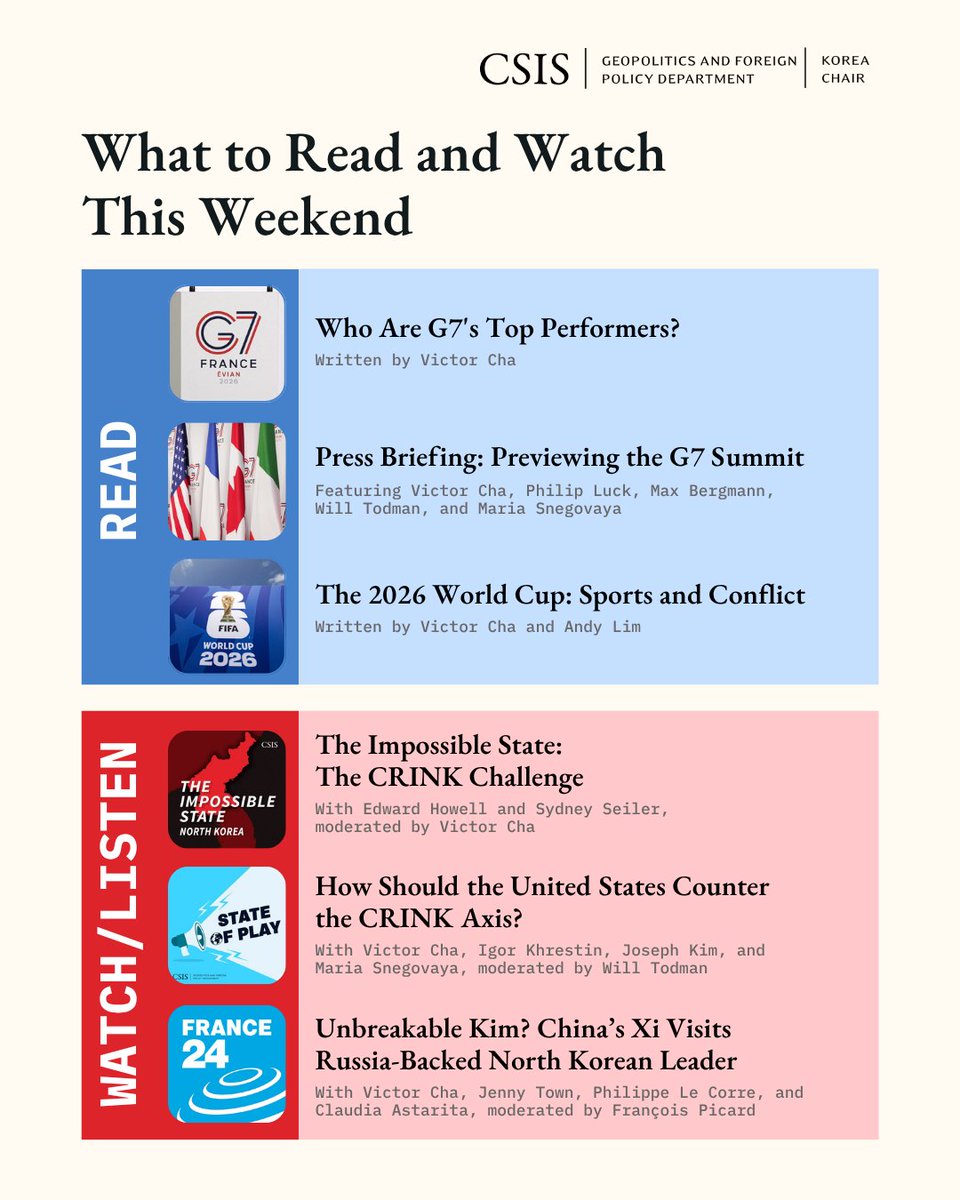
The @csis Korea Chair has pulled together a list of recent articles, briefings, podcasts, and media appearances on the G7 summit, 2026 World Cup, the CRINK axis, and Xi’s visit to North Korea.
Expert insights include @VictorDCha, @sydseiler, Philip Luck, @maxbergmann, @WillTodman, @MSnegovaya, @AndySauLim, @TheEdwardHowell, Igor Khrestin, @JosephKimNK, @j3nnyt0wn, @PhLeCorre, @castaritaHK and @FrancoisF24.
📄 Read:
- Who Are G7’s Top Performers?: csis.org/analysis/who-are-g7…
- Press Briefing: Previewing the G7 Summit Press Briefing: csis.org/analysis/press-brie…
- The 2026 World Cup: Sports and Conflict: csis.org/analysis/2026-world…
🎧 Watch/listen:
- The CRINK Challenge: Implications for North Korea and Global Security: csis.org/podcasts/impossible…
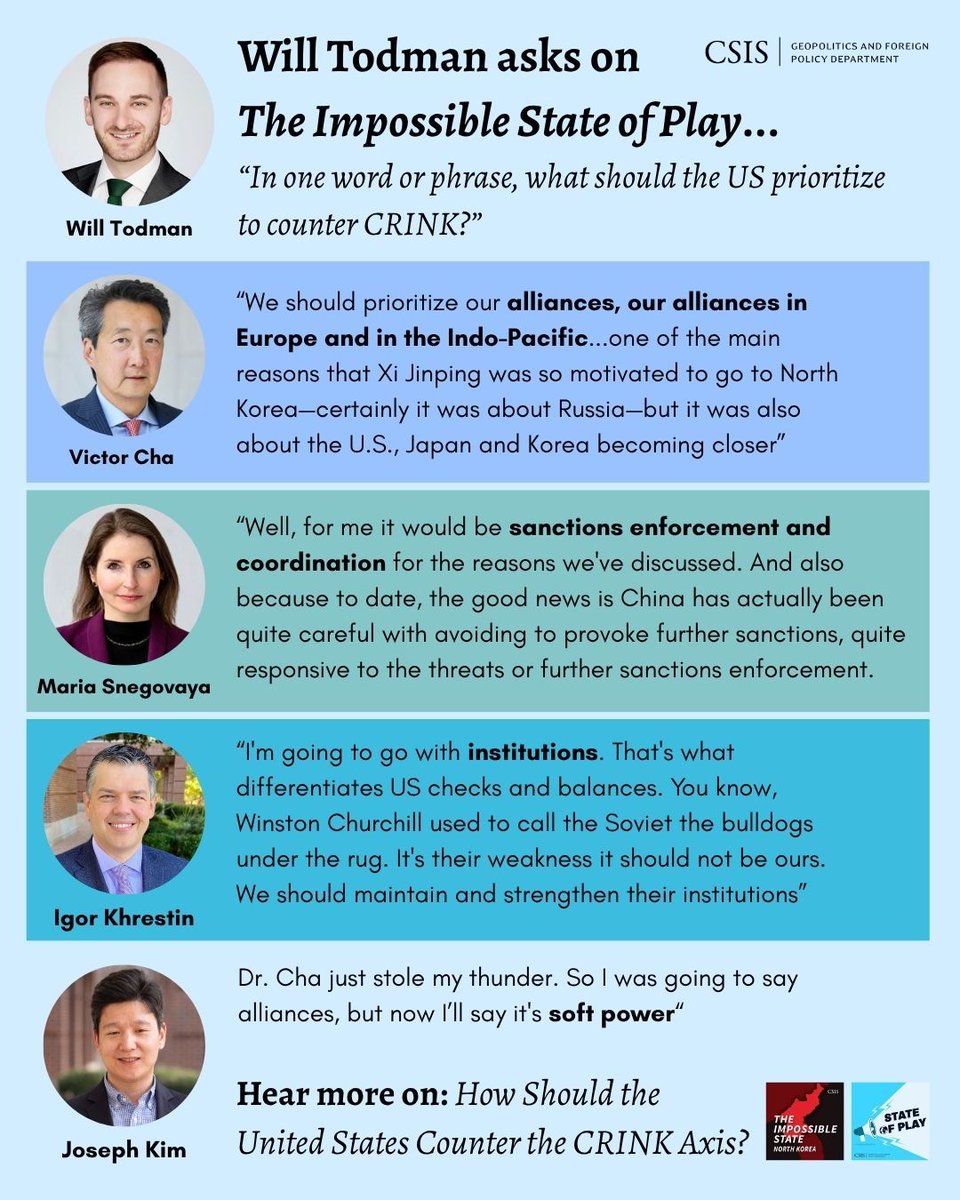
- How Should the United States Counter the CRINK Axis?: csis.org/events/how-should-u…
- Unbreakable Kim? China’s Xi Visits Russia-Backed North Korean Leader: youtu.be/Ry3TrSBxko4
2
3
451
CSIS Korea Chair retweeted

Jun 12
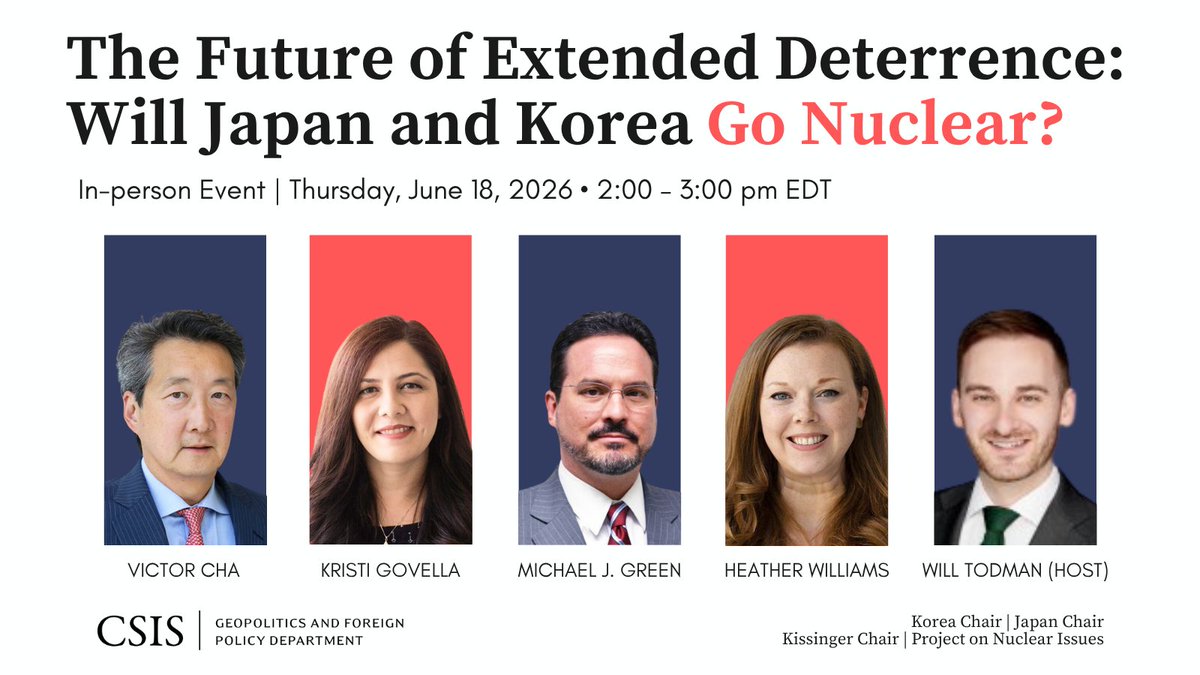
Will Japan and Korea go nuclear? Join us on 6/18 for the release of new survey findings and analysis by @VictorDCha (@CSISKoreaChair), @KristiGovella, Michael Green, @heatherwilly (@csisponi), and @WillTodman (@CSISGeopolitics). 🔗 bit.ly/4gf6QPQ
5
11
1,444
Jun 12
Strategic Clarity: Reassessing the Value of China to Korea
@CSIS @VictorDCha and @yesun_k argue that as Chinese President Xi Jinping met the North Korean leader Kim Jong-un at this week’s summit in Pyongyang, South Korea should fundamentally reassess its strategic equities with China.
Over the past three decades, China-South Korea relations have undergone a fundamental transformation from complementary to competitive interests across economic and geopolitical dimensions. The sooner Seoul moves away from traditional strategic ambiguity with Beijing to a posture of strategic clarity, the better.
Read more @CSISGeopolitics: csis.org/analysis/strategic-…
2
214
Jun 12
🚨 READ NOW | Who Are G7's Top Performers?
As @CSIS @VictorDCha writes, even as the G7's agenda has globalized, its share of the world economy and population has shrunk—raising the question of whether the group is still fit for purpose. CSIS performance data show that two non-members, Australia and South Korea, keep pace with G7 countries on the issues the group prioritizes, making the case that future hosts should weigh an expanded "G9."
See thread below 🧵 ⬇️ (1/9)
csis.org/analysis/who-are-g7…
8
2
3
642
Jun 12
(9/9) The bottom line: G7 countries represent an ever-decreasing fraction of the global population and economy compared with the group's 1970s formation, casting doubt on whether this exclusive club can address the broad range of problems it has identified.
While expanded membership is not on the agenda at Évian-les-Bains, future G7 hosts should seriously consider an expanded “G9” formula to increase the effectiveness of the group on the issues it cares about.
Read the full analysis from @VictorDCha at @CSIS: csis.org/analysis/who-are-g7…
2
134
Jun 12
(8/9) This builds on earlier @CSIS work on the G7's future.
Our 2024 analysis by John J. Hamre, @VictorDCha, Emily Benson, @maxbergmann, @erinasiafp, and @welshce examined how the group could reform its structure and membership to stay effective as its global weight declines—useful context for the G9 case laid out above:
csis.org/analysis/bending-ar…
1
2
104
Jun 12
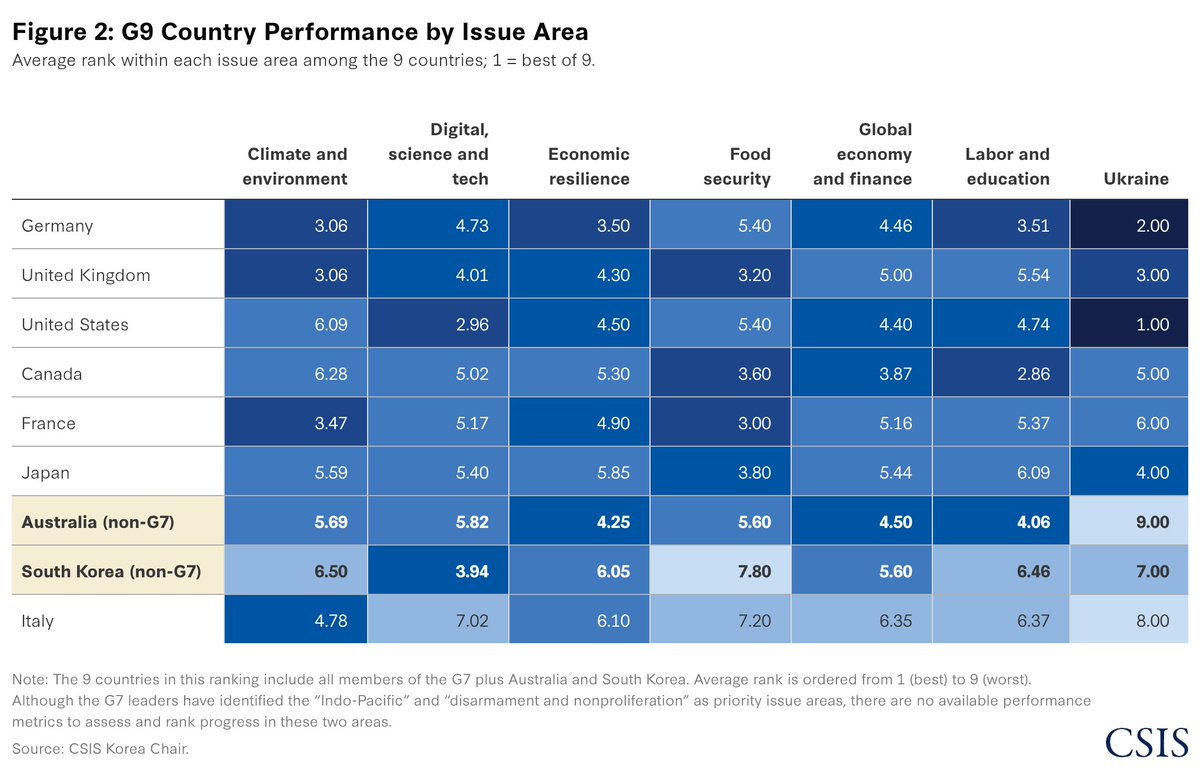
(7/9) South Korea recently hosted a massive AI summit, positioning itself as a central global hub of AI innovation and infrastructure. Australia has been an active leader on climate action, development transparency, and digital safety norms.
It is also noteworthy that other notable geopolitical actors, while important liaison partners of the G7 club, measure up less well in terms of performance. India and Brazil, for example, do not compare favorably to G7 members on the list of high-priority issues. #G7 #G7Summit
1
52
Jun 12
(6/9) Across all global governance issues identified as priorities by the G7 leaders' statements, the overall performance of Australia and South Korea compare favorably to that of G7 members. South Korea also outperforms Italy across all global governance issues. On digital science and technology, South Korea ranks second only to the United States.
Read more: csis.org/analysis/who-are-g7…
1
229
Jun 12
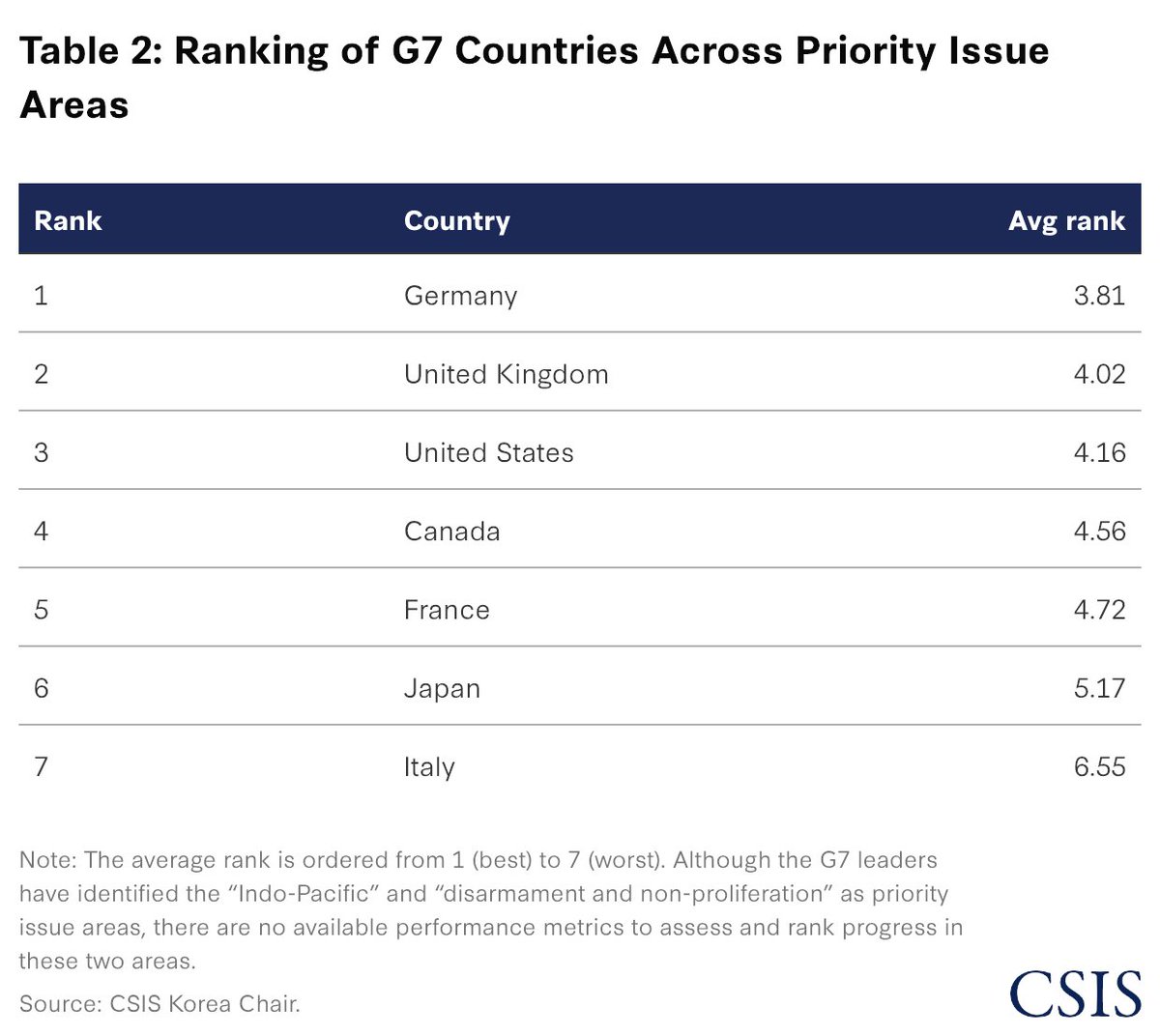
(5/9) The United States ranks strongly on Ukraine and digital science and technology. Germany is one of the highest performers on climate and economic resilience. France and Japan rank highest among G7 members on food security. Meanwhile, the United Kingdom and Canada top the list on education and labor issues. #G7 #G7Summit
Read more: csis.org/analysis/who-are-g7…
2
72
Jun 12
(4/9) We used a database of 347 performance metrics across the seven priority issue areas to create an aggregate weighted ranking. Among the group's seven members, the top three performers overall are Germany, the United Kingdom, and the United States.
Read more: csis.org/analysis/who-are-g7…
2
57
Jun 12
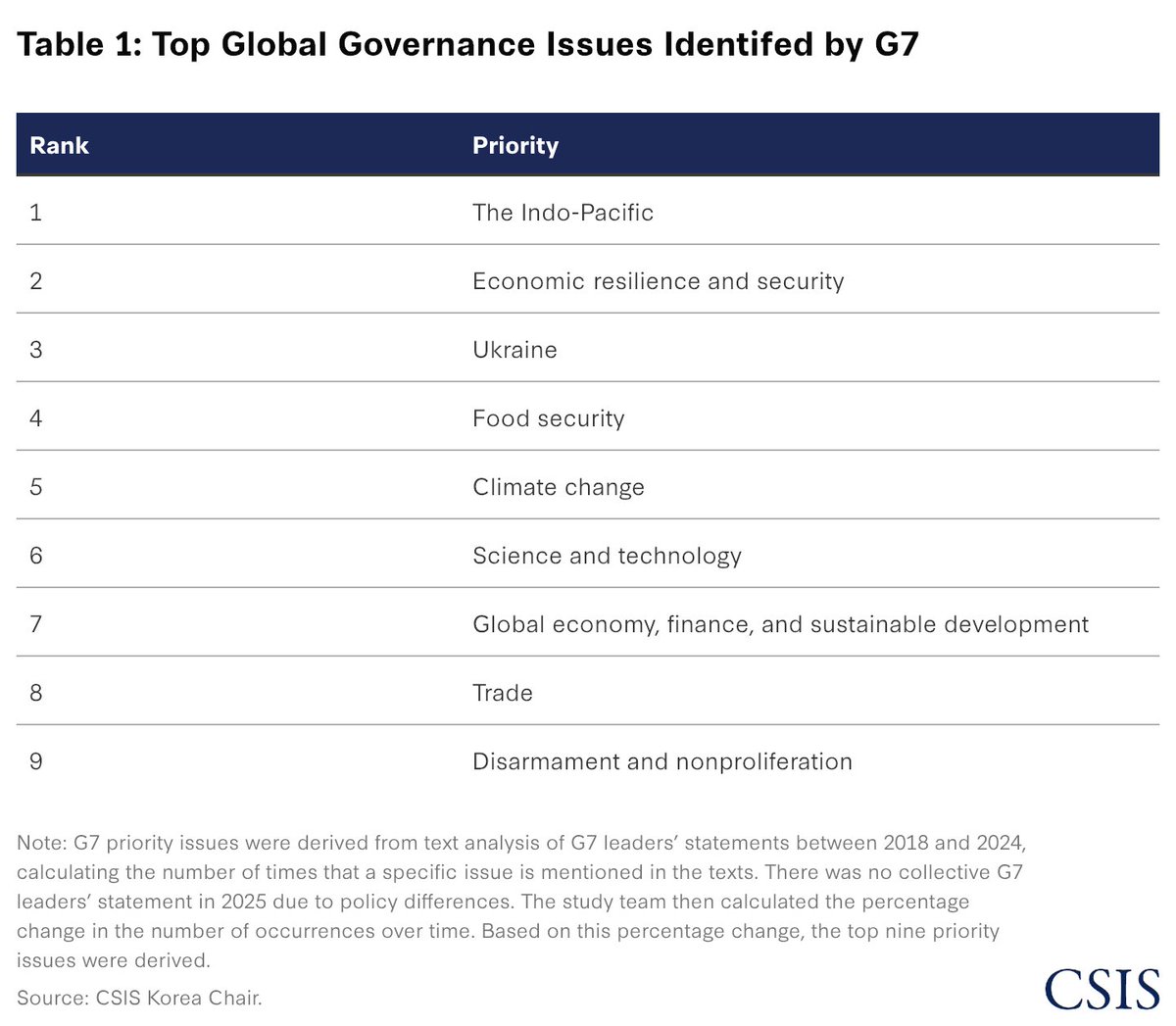
(3/9) CSIS scraped G7 leaders' statements from 2018 to 2024 to determine the priority list of global issues, weighted for the frequency of specific terms (there was no collective G7 leaders' statement in 2025 due to policy differences). Table 1 shows the top nine priorities ranked by growth in frequency of use.
Read more: csis.org/analysis/who-are-g7…
1
73