
CTech; Savunma ve Havacılık alanlarında uydu ve görüş hattı haberleşme teknolojileri sunan, TUSAŞ iştiraki bir firmadır.
Joined October 2011
- Tweets 2,154
- Following 7
- Followers 7,576
- Likes 675
1,496 Photos and videos
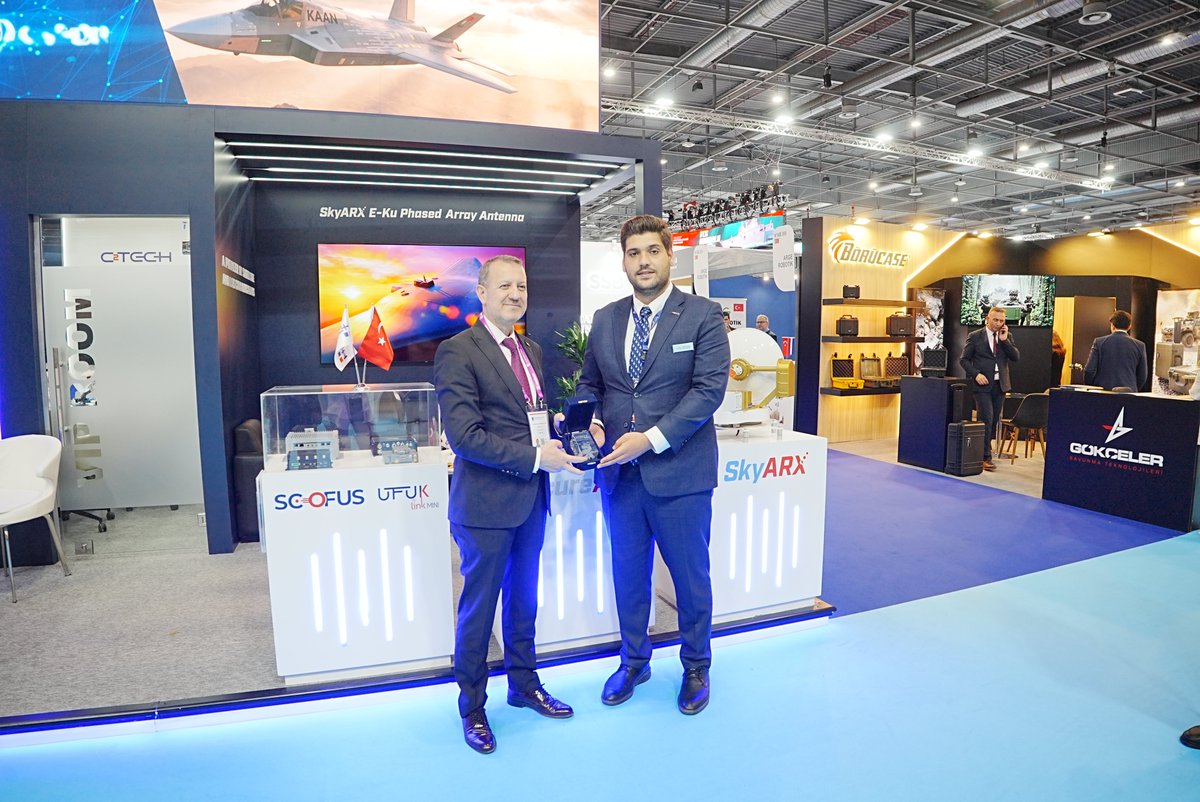
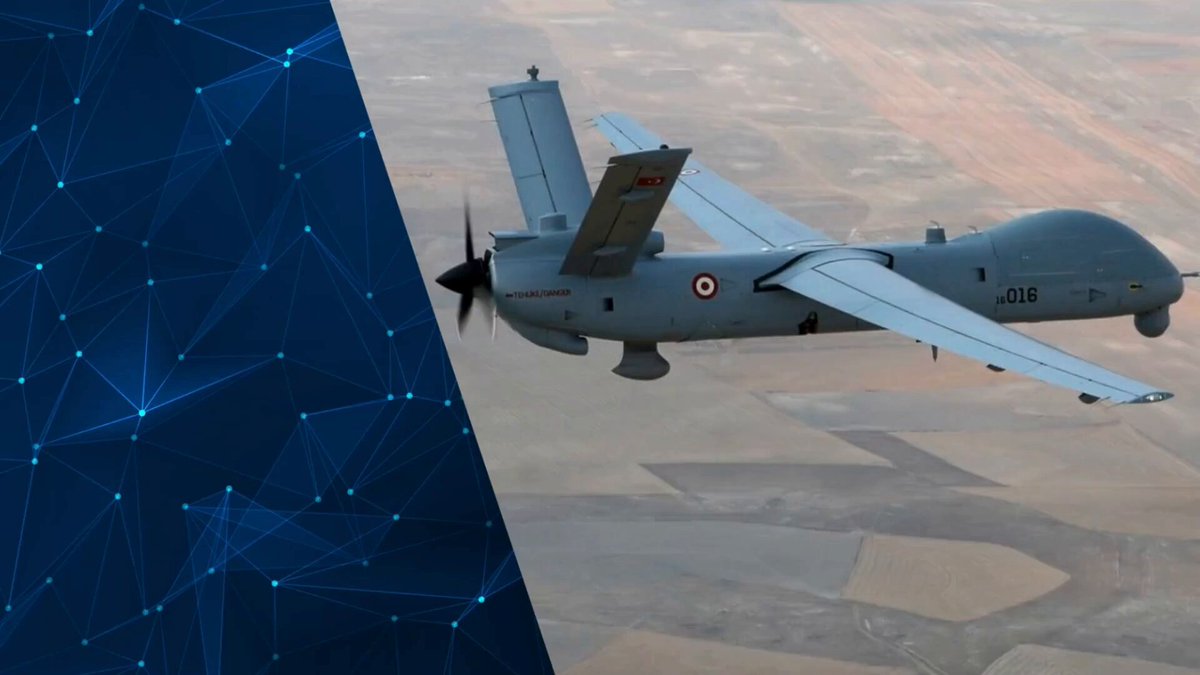


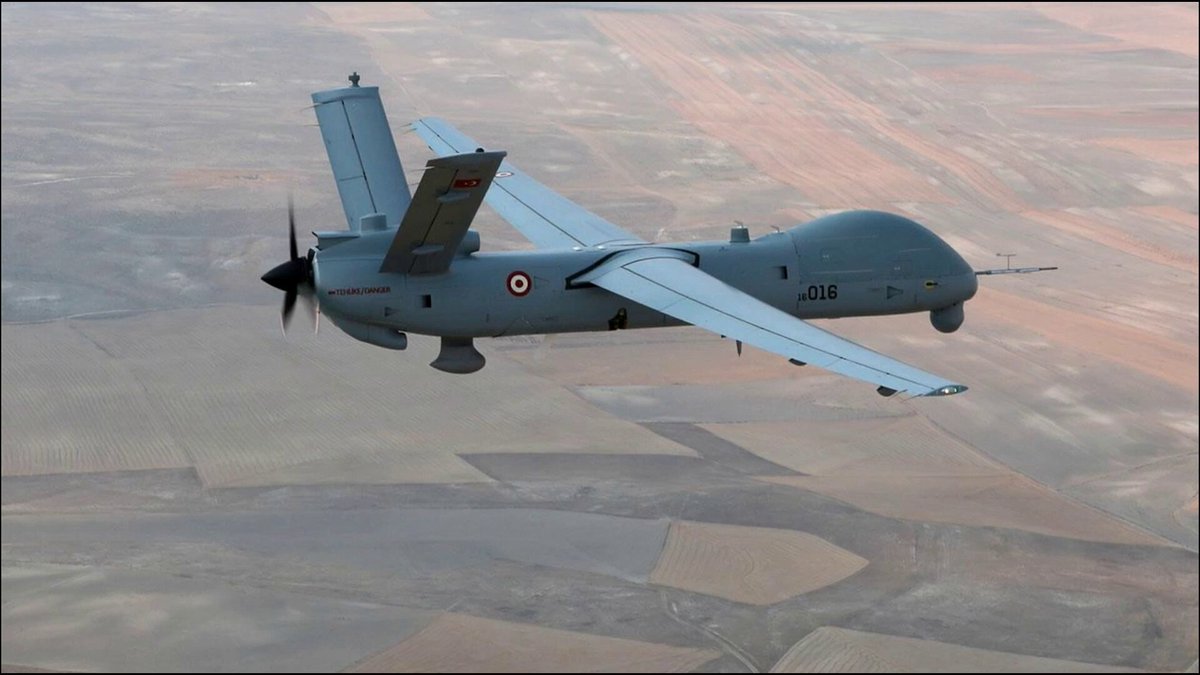

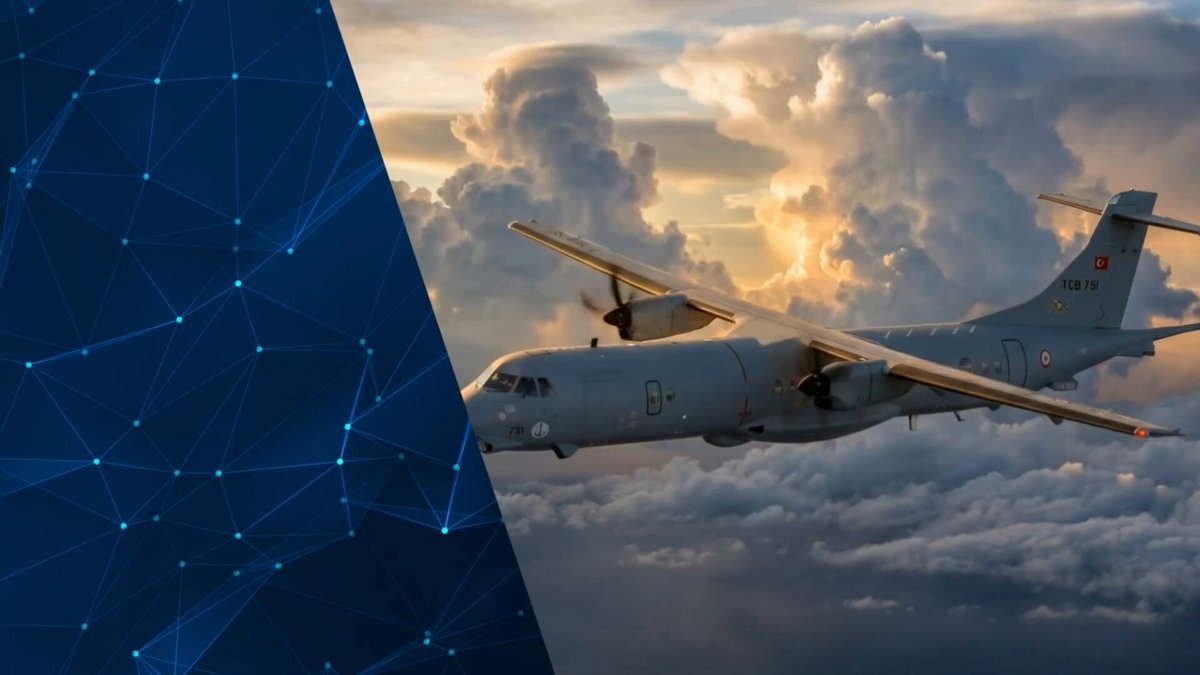
Eurosatory 2026 kapsamında standımızı ziyaret eden Savunma Sanayii Başkanlığı Havacılık Sistemleri Başkan Yardımcısı ve Türk Havacılık ve Uzay Sanayii Yönetim Kurulu Üyesi Sayın Gökhan Uçar’a nazik ziyaretleri için teşekkürlerimizi sunarız.
62
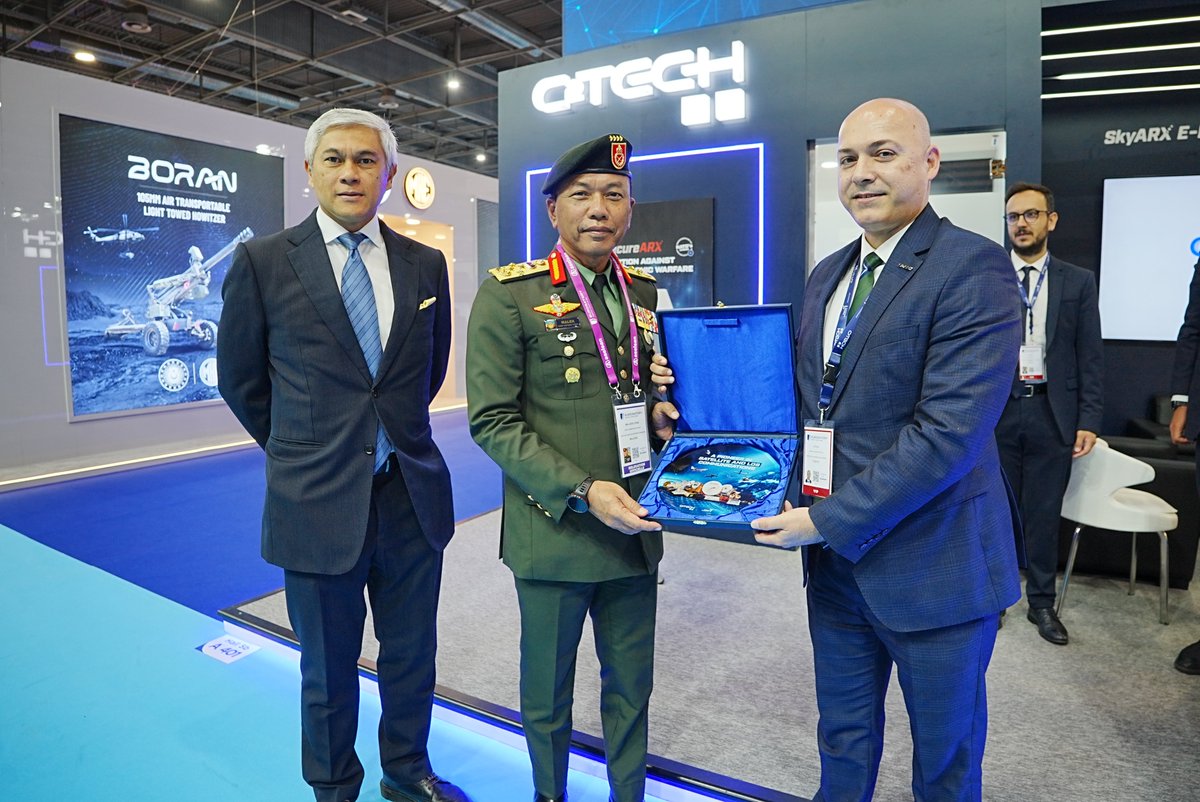
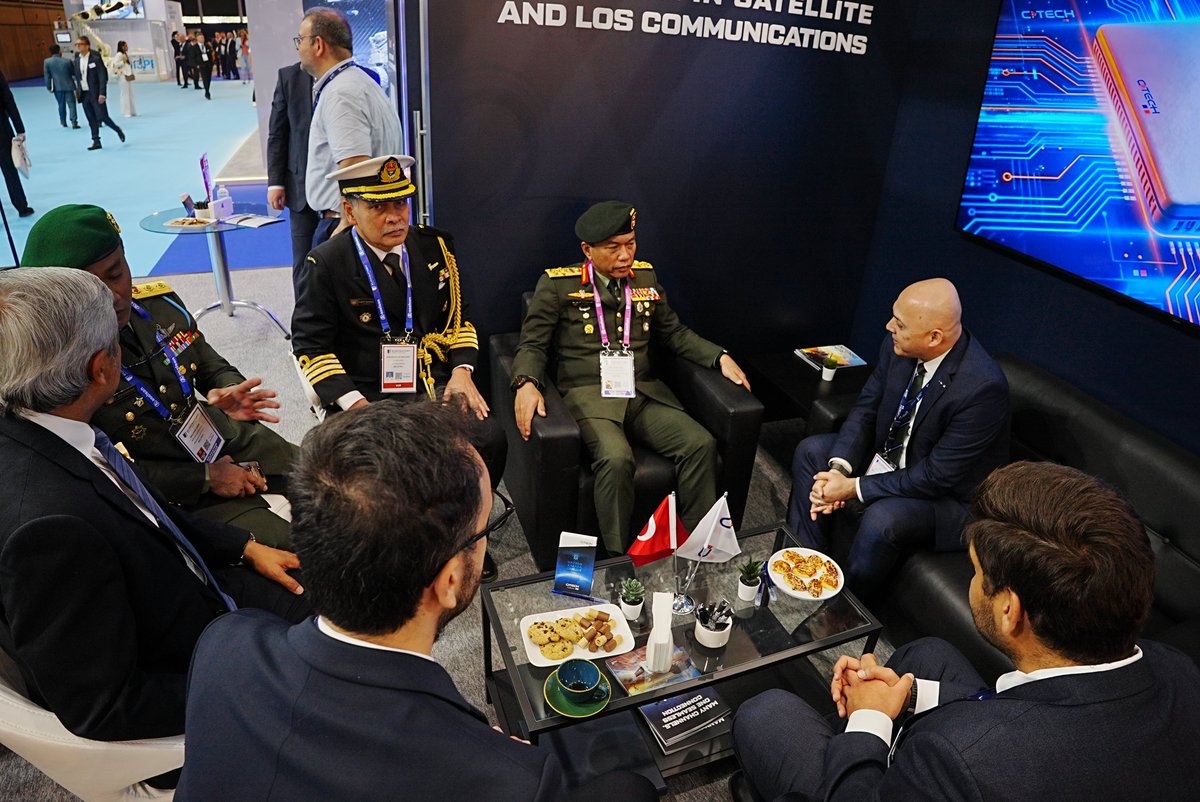
The Chief of Defence Force of Malaysia, Gen Tan Sri Malek Razak Sulaiman, and his delegation visited our stand at Eurosatory 2026.
We sincerely appreciate their visit and the interest they showed in our communication technologies.
2
72
Eurosatory 2026 has started!
On the first day of the exhibition, we invite you to visit our stand and discover our satellite and line-of-sight communication solutions up close.
📍 Paris Nord Villepinte Exhibition Centre
📅 15–19 June 2026
🏛️ Hall 5B | Stand A401
Eurosatory 2026 başladı!
Fuarın ilk gününde, uydu ve görüş hattı haberleşme çözümlerimizi yakından keşfetmek için sizleri standımıza bekliyoruz!
📍 Paris Nord Villepinte Fuar Merkezi
📅 15–19 Haziran 2026
🏛️ Salon 5B | Stand A401
6
219

Jun 15
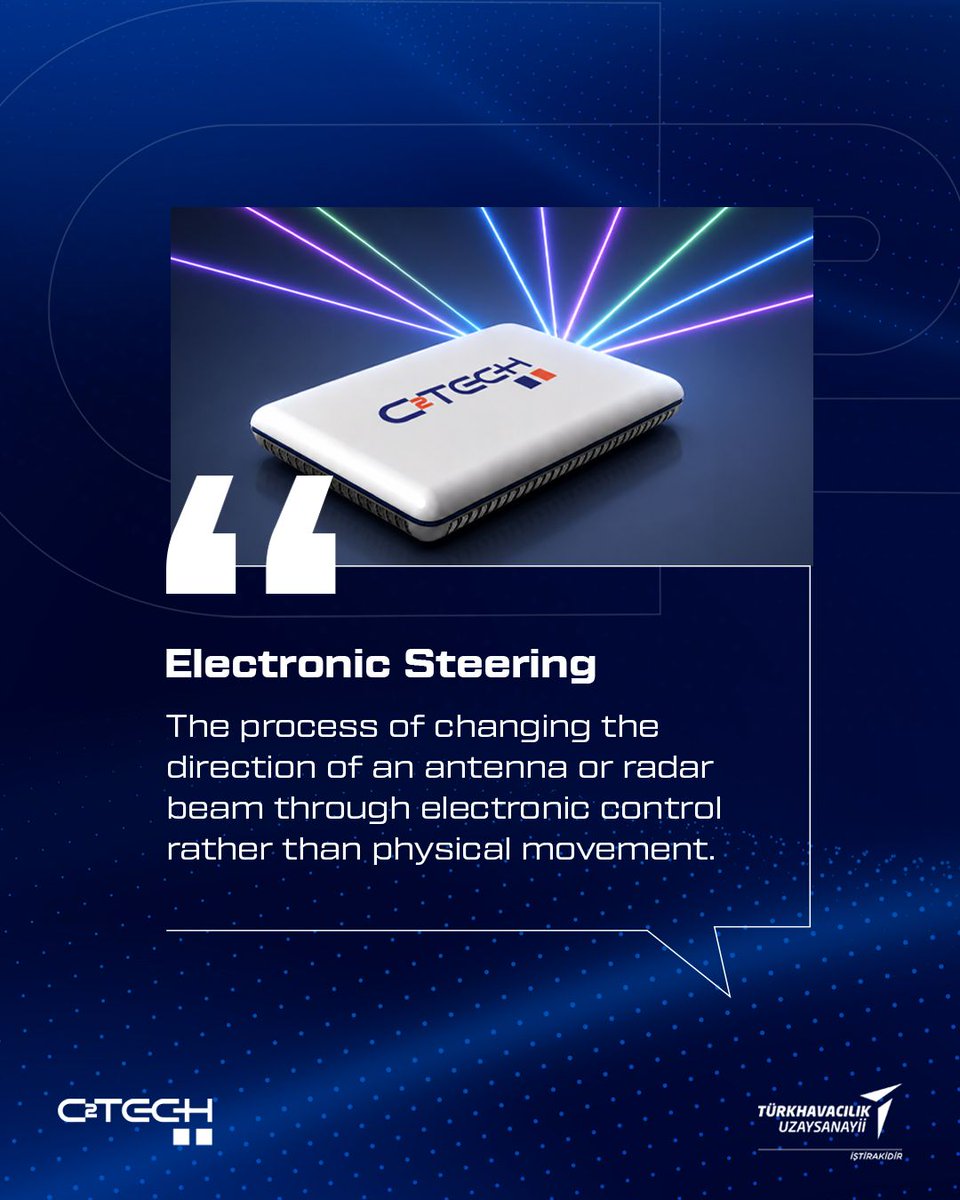
To help make complex communication technologies in defence and aerospace more accessible, we continue exploring some of the key concepts behind them. This week, we take a closer look at electronic steering.
Electronic steering is a technology that enables the direction of a transmitted or received signal to be changed electronically, without requiring an antenna or radar to physically move. In conventional systems, the antenna must be mechanically repositioned to point toward a different target. With electronic steering, however, the beam can be directed toward the desired location by controlling the phase and amplitude of multiple antenna elements. This allows for much faster and more precise beam steering.
For example, in satellite communication systems, mechanically steered antennas must physically move to track a satellite. Electronically steered antennas, on the other hand, can direct the beam toward the satellite and maintain tracking without any mechanical movement.
This technology provides several advantages:
• Much faster beam steering and target tracking.
• Reduced need for moving parts.
• Lower maintenance requirements.
• Higher reliability.
• The potential to communicate with multiple targets or satellites simultaneously.
• More stable communication performance on high-speed airborne platforms.
In the CTech SkyARX E-Ku electronically steered satellite communication antenna, satellite tracking is performed electronically using a phased array antenna architecture. This enables uninterrupted satellite communications on high-speed platforms with critical aerodynamic requirements, without the need for antenna movement.
In the defence and aerospace sectors, electronic steering technology is widely used in many critical applications, particularly in radar systems, satellite communication terminals, electronic warfare systems and next-generation communication solutions.
1
9
145
Jun 15
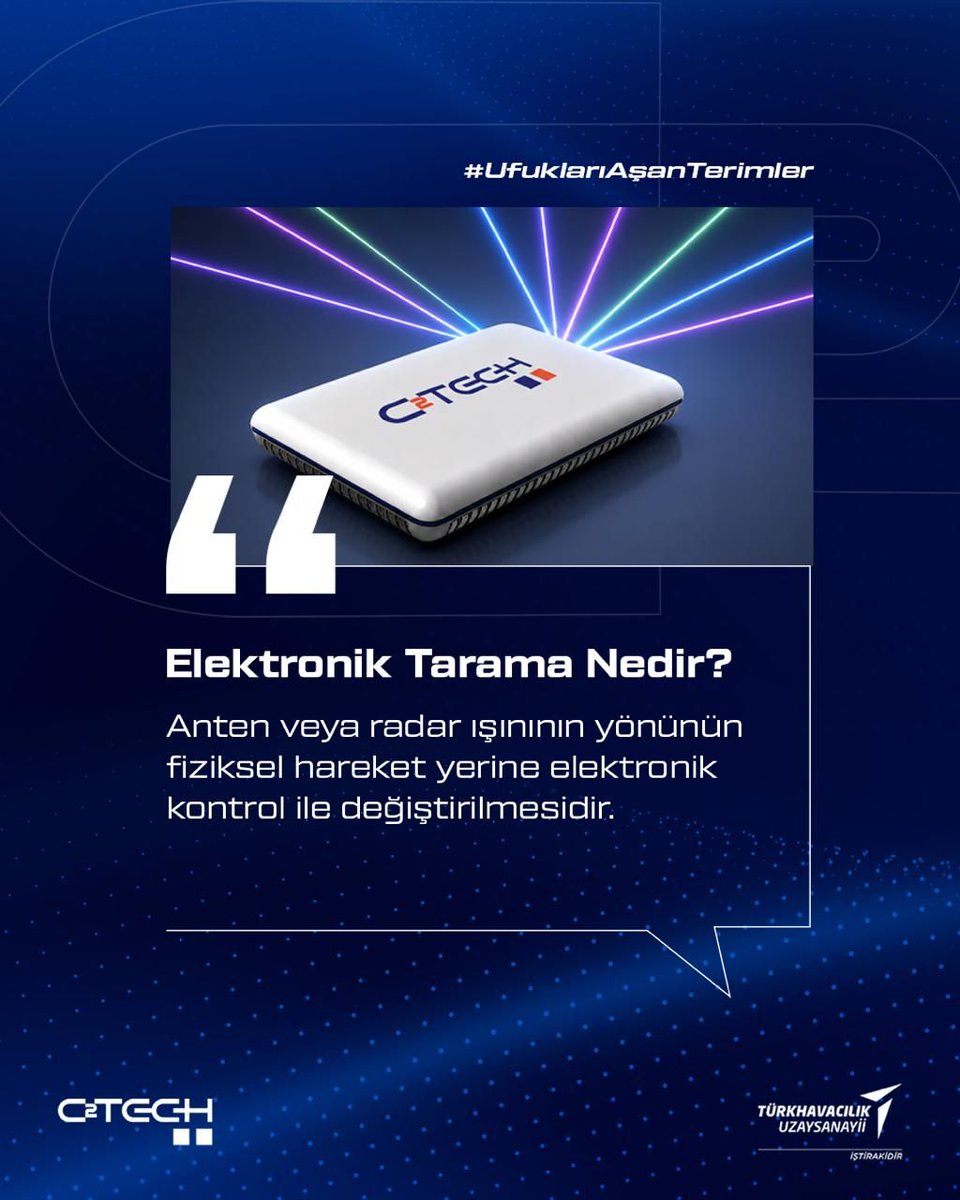
#UfuklarıAşanTerimler serimizde bu hafta “Elektronik Tarama” (Electronic Steering) teknolojisini ele alıyoruz.
Elektronik tarama, anten veya radarın fiziksel olarak hareket etmesine gerek kalmadan, gönderilen ya da alınan sinyalin yönünün elektronik yöntemlerle değiştirilmesini sağlayan bir teknolojidir. Geleneksel sistemlerde antenin farklı bir noktaya yönelmesi için mekanik olarak hareket etmesi gerekirken, elektronik taramada anten üzerindeki çok sayıdaki elemanın fazı ve genliği kontrol edilerek sinyal ışını (beam) istenilen yöne yönlendirilebilir. Bu sayede çok daha hızlı ve hassas yönlendirme yapılabilir.
Örneğin, uydu haberleşme sistemlerinde mekanik taramalı antenler uyduyu takip edebilmek için fiziksel olarak hareket eder. Elektronik taramalı antenlerde ise sinyal ışını, anten hareket etmeden elektronik olarak uyduya yönlendirilir ve takip işlemi gerçekleştirilir.
Bu teknoloji sayesinde:
• Çok daha hızlı yönlendirme ve hedef takibi yapılabilir.
• Hareketli parça ihtiyacı azalır.
• Bakım gereksinimi düşer.
• Daha yüksek güvenilirlik sağlanır.
• Aynı anda birden fazla hedef veya uyduyla çalışabilme imkânı sunabilir.
• Yüksek hızlı hava platformlarında daha kararlı haberleşme performansı elde edilebilir.
CTech tarafından geliştirilen SkyARX E-Ku elektronik taramalı uydu haberleşme anteninde, faz dizili anten mimarisi kullanılarak uydu takibi elektronik olarak gerçekleştirilmektedir. Bu sayede yüksek hızda uçan ve aerodinamik yapısı kritik öneme sahip platformlarda, antenin hareket etmesine gerek kalmadan kesintisiz uydu haberleşmesi sağlanabilmektedir.
Savunma ve havacılık alanında elektronik tarama teknolojisi; radarlar, uydu haberleşme terminalleri, elektronik harp sistemleri ve yeni nesil haberleşme çözümleri başta olmak üzere birçok kritik uygulamada yaygın olarak kullanılmaktadır.
7
138
Jun 14
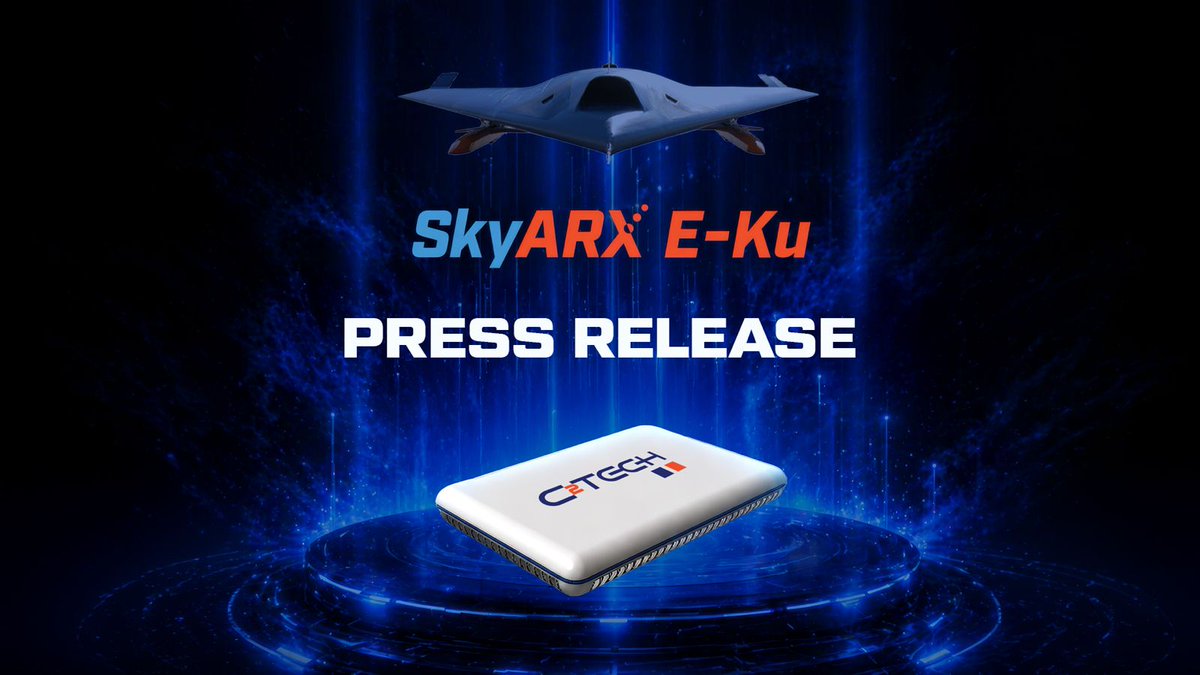
Developed for next-generation airborne platforms, SkyARX E-Ku represents a significant technological achievement with its electronically steered flat-panel architecture, enabling uninterrupted satellite communications without mechanical movement.
You can find the details in our press release:
ctech.com.tr/en/next-generat…
1
10
319
Jun 14
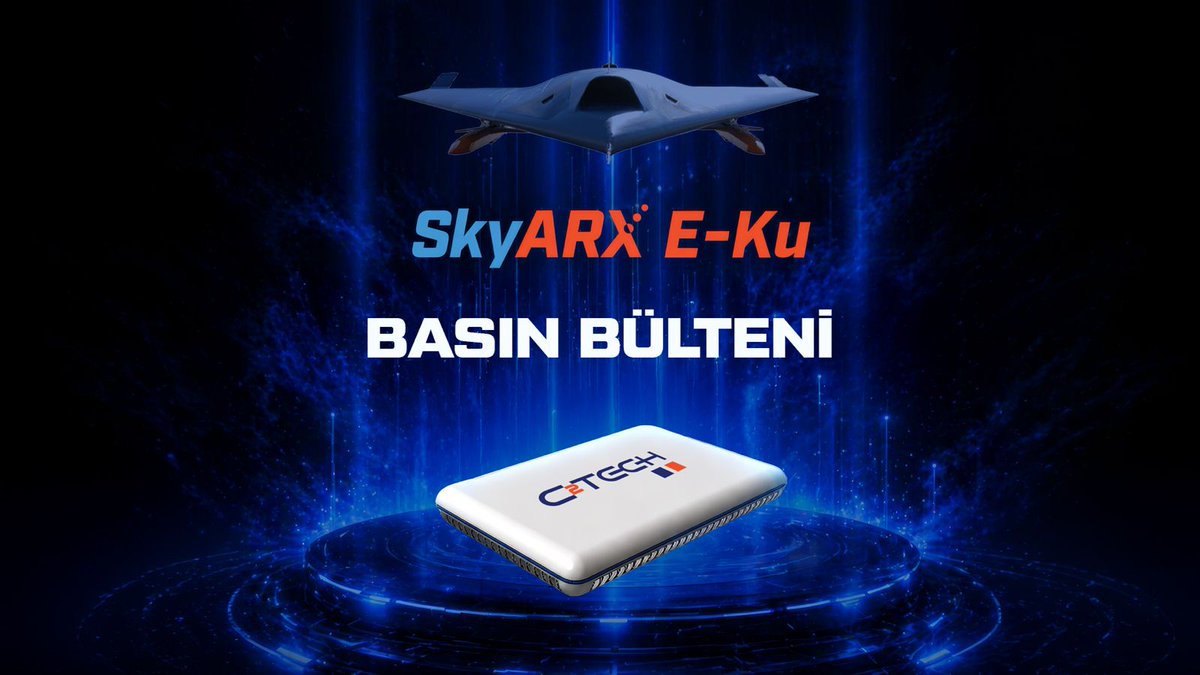
Yeni nesil hava platformları için geliştirilen SkyARX E-Ku, elektronik tarama kabiliyeti ve düz panel mimarisi sayesinde mekanik harekete ihtiyaç duymadan kesintisiz uydu haberleşmesi sağlarken, platformun aerodinamik yapısının korunmasına katkı sunuyor.
Detayları basın bültenimizde bulabilirsiniz:
ctech.com.tr/ctechten-yeni-n…
8
233
Jun 14
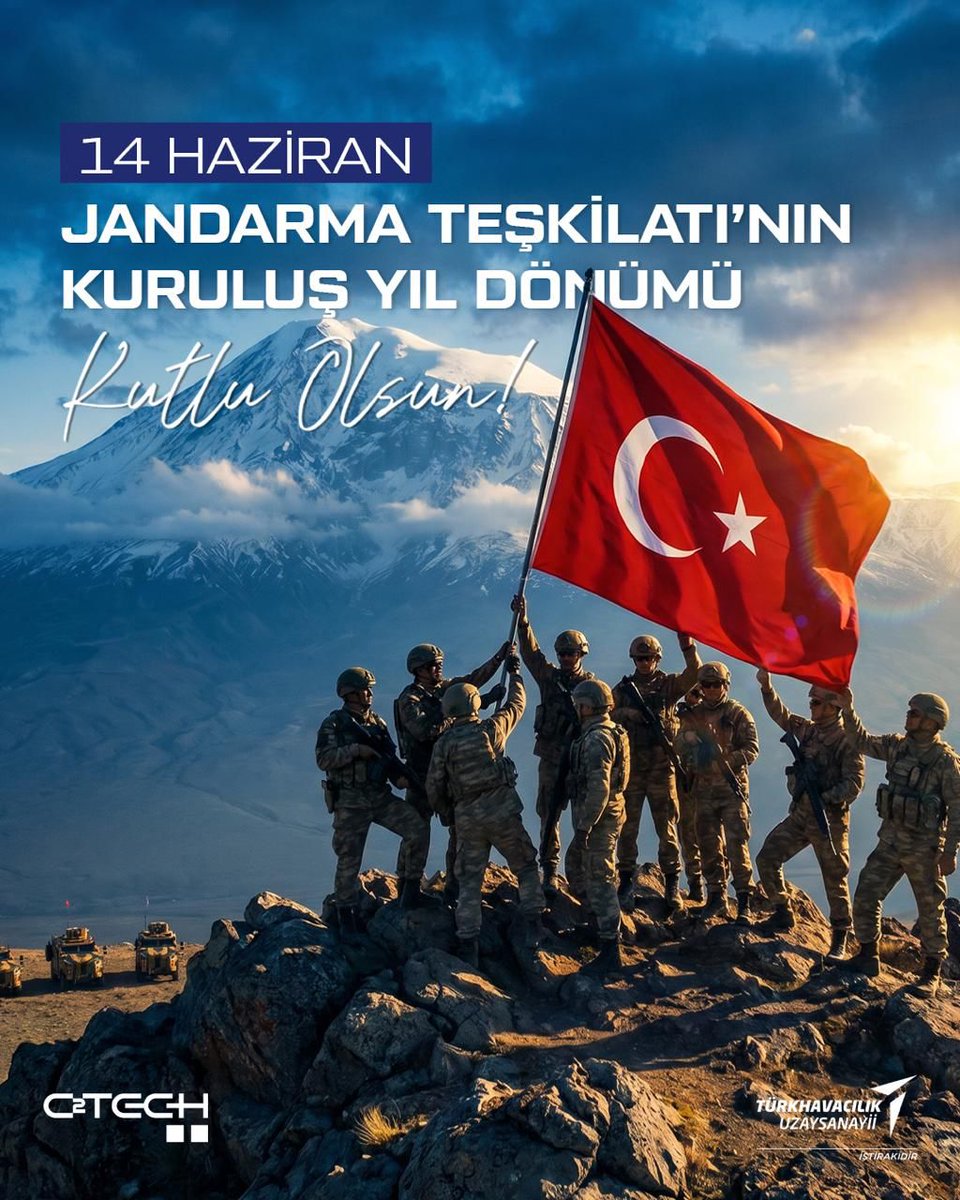
Milletimizin huzuru, güvenliği ve kamu düzeninin sağlanması için fedakârca görev yapan kahraman Jandarma Teşkilatımızın 187. kuruluş yıl dönümünü kutluyoruz.
4
125
Jun 14
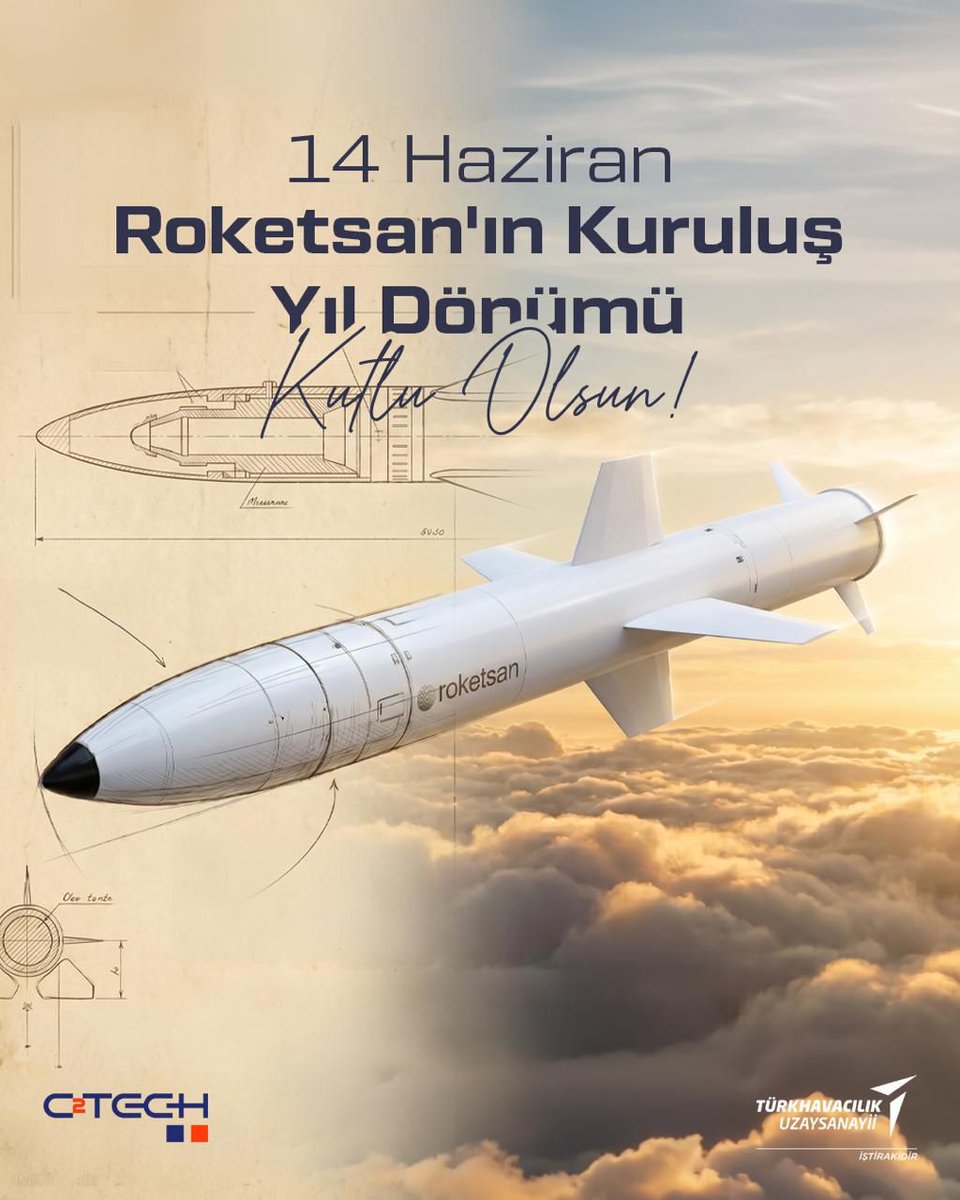
Savunma sanayimizin öncü kuruluşlarından ROKETSAN’ın 38. kuruluş yıl dönümünü kutluyoruz.
Başarılarla dolu nice yıllara!
1
14
200
Jun 14
🌍 SkyARX at Eurosatory 2026!
Visit our booth to discover how the SkyARX Satellite Communication Terminal, proven with over 400,000 flight hours on ANKA and AKSUNGUR UAVs, delivers secure and uninterrupted satellite communications for airborne platforms in demanding operational environments.
📍 Paris Nord Villepinte Exhibition Centre
📅 15–19 June 2026
🏛️ Hall 5B | Stand A401
🇹🇷 SkyARX Eurosatory 2026’da!
ANKA ve AKSUNGUR platformlarında 400.000 saatin üzerinde uçuş tecrübesiyle sahada kendini kanıtlayan SkyARX Uydu Haberleşme Terminali’nin, hava platformları için zorlu operasyonel koşullarda nasıl kesintisiz ve güvenli uydu haberleşmesi sağladığını keşfetmek üzere standımıza bekliyoruz.
2
16
467
Jun 13
Ay-yıldızlı formayla sahaya çıkacak A Millî Futbol Takımımıza Dünya Kupası yolculuğunda başarılar diliyoruz.
🇹🇷 Yolunuz açık, başarılarınız daim olsun.
8
127
Jun 13
SkyARX E-Ku at Eurosatory 2026!
Visit our booth to explore our new product SkyARX E-Ku phased array SATCOM antenna, developed for next-generation airborne platforms, delivering high-speed, low-profile and uninterrupted satellite communications.
📍 Paris Nord Villepinte Exhibition Centre
📅 15–19 June 2026
🏛️ Hall 5B | Stand A401
SkyARX E-Ku Eurosatory 2026’da!
Yeni nesil hava platformları için geliştirilen yeni ürünümüz SkyARX E-Ku Faz Dizili Uydu Haberleşme Antenimizin; yüksek hızlı, düşük görünürlüklü ve kesintisiz uydu haberleşme kabiliyetlerini yakından incelemek üzere standımıza bekliyoruz.
1
10
258
Jun 12
🌍 Meet SkyARX E-Ku, our next-generation phased array satellite communication antenna.
With SkyARX E-Ku, developed for next-generation airborne platforms, we are taking our pioneering position in satellite communication technologies one step further.
🇹🇷 Yeni nesil faz dizili uydu haberleşme antenimiz SkyARX E-Ku ile tanışın.
Yeni nesil hava platformları için geliştirilen SkyARX E-Ku ile uydu haberleşme teknolojilerindeki yetkinliğimizi ve öncü konumumuzu bir adım ileri taşıyoruz.
1
4
20
396
Jun 12
🌍 UfukLink Mini at Eurosatory 2026!
Visit our booth to discover how UfukLink Mini delivers high-performance line-of-sight (LOS) communications for tactical operations, enabling reliable and uninterrupted connectivity in mission-critical environments.
📍 Paris Nord Villepinte Exhibition Centre
📅 15–19 June 2026
🏛️ Hall 5B | Stand A401
🇹🇷 UfukLink Mini Eurosatory 2026’da!
Taktik operasyonlar için yüksek performanslı görüş hattı (LOS) haberleşmesi sağlayan UfukLink Mini’nin, görev kritik ortamlarda nasıl güvenilir ve kesintisiz bağlantı sunduğunu keşfetmek üzere standımıza bekliyoruz.
1
5
229
Jun 11
🌍 QuARX at Eurosatory 2026!
Visit our booth to discover how the QuARX Airborne SATCOM Modem provides reliable communication up to 40,000 feet and ensures secure, uninterrupted transmission of telemetry and telecommand data via satellite for airborne platforms.
📍 Paris Nord Villepinte Exhibition Centre
📅 15–19 June 2026
🏛️ Hall 5B | Stand A401
🇹🇷 QuARX Eurosatory 2026’da!
Hava platformları için 40.000 feet yüksekliğe kadar güvenilir haberleşme sağlayan QuARX Uydu Haberleşme Modeminin; telemetri ve telekomut verilerini uydu üzerinden güvenli ve kesintisiz şekilde nasıl ilettiğini keşfetmek üzere standımıza bekliyoruz.
1
8
277
Jun 10
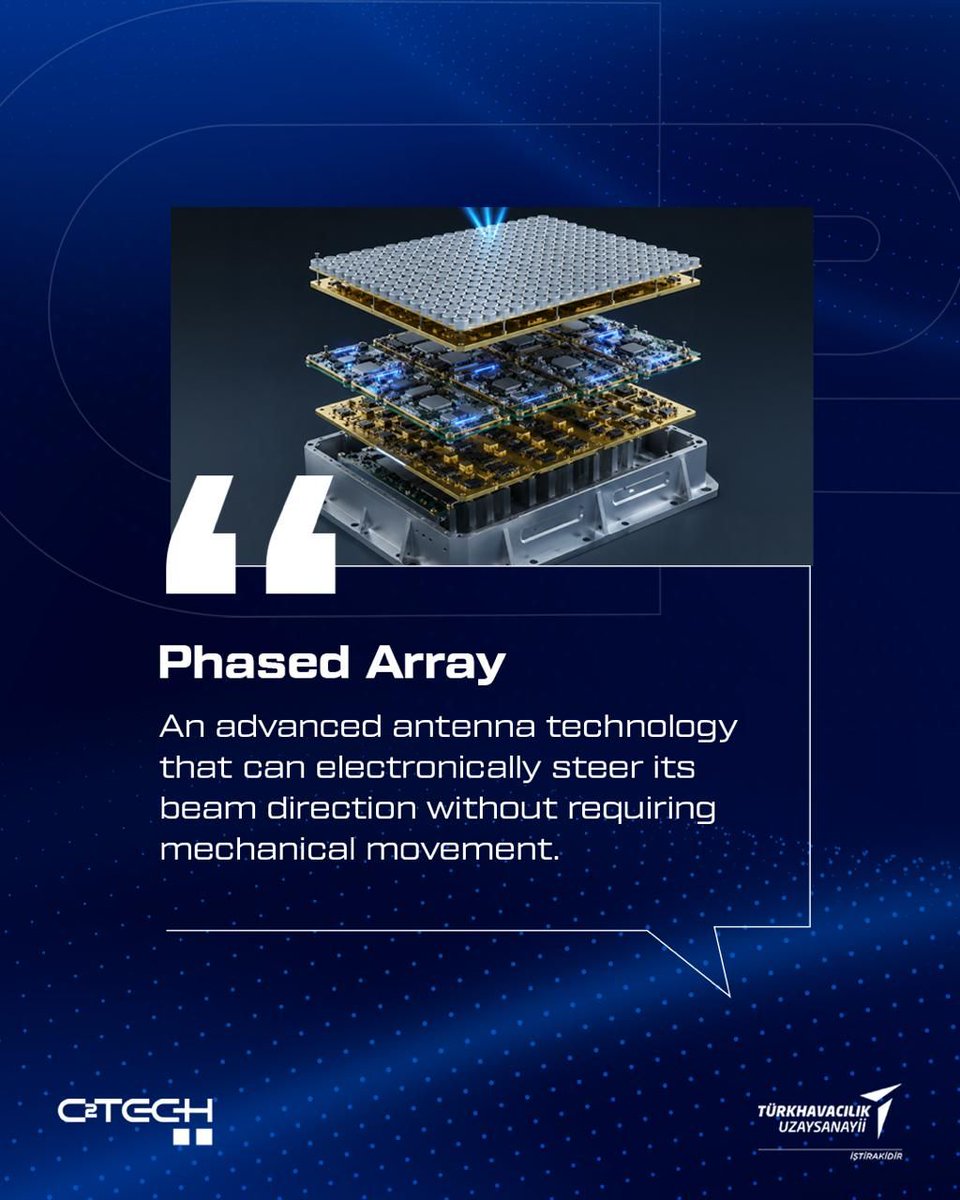
To help make complex communication technologies in defence and aerospace more accessible, we will be taking a closer look at some of the key concepts behind them. Today, we start with the phased array antenna.
A phased array antenna is an advanced antenna technology in which multiple antenna elements operate together and the phase of the signal transmitted or received by each element is electronically controlled. While conventional antennas must be physically moved to point toward a target, phased array antennas can electronically steer the signal without any mechanical movement. This enables much faster target tracking and communication.
For example, the CTech SkyARX E-Ku electronically steered antenna contains a large number of small antenna elements. By precisely adjusting the phase of these elements, the antenna’s energy can be focused in a specific direction.
This technology provides several advantages:
• Reduced need for moving parts.
• Lower maintenance requirements.
• Faster satellite tracking.
• More reliable communications on high-speed airborne platforms.
• Reduced visibility and aerodynamic impact on the platform.
In the defence and aerospace sectors, phased array antenna technology is widely used in many critical applications, particularly in radar systems, satellite communication terminals and electronic warfare systems.
1
6
154
Jun 10
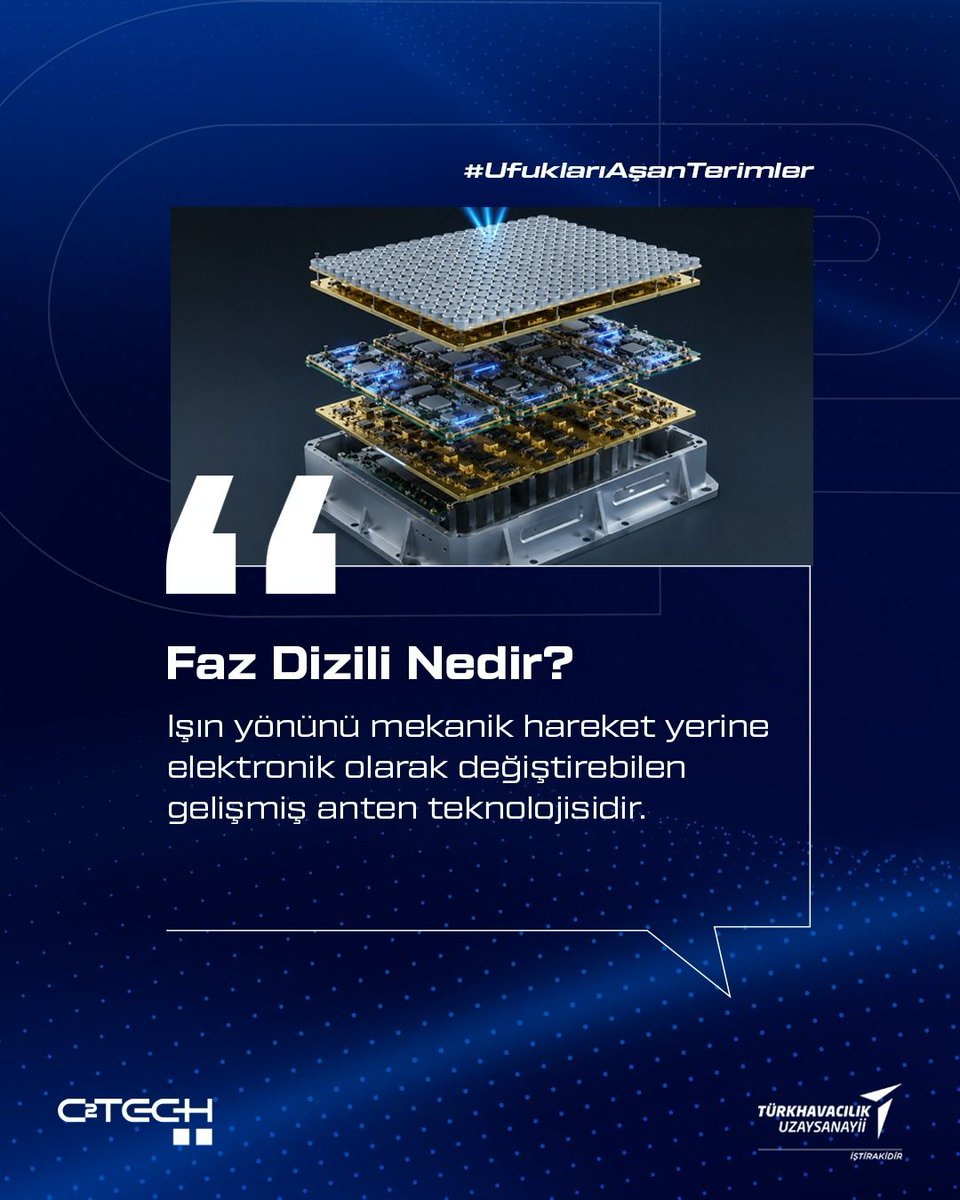
#UfuklarıAşanTerimler serimizde bu hafta “Faz Dizili” (Phased Array) teknolojisini ele alıyoruz.
Faz dizili anten, birden fazla anten elemanının birlikte çalıştığı ve her bir elemanın gönderdiği veya aldığı sinyalin fazının elektronik olarak kontrol edildiği gelişmiş bir anten teknolojisidir. Geleneksel antenlerde hedefe yönelmek için anten fiziksel olarak hareket ettirilirken, faz dizili antenlerde sinyalin yönü anten hareket etmeden elektronik olarak değiştirilir. Bu sayede çok daha hızlı hedef takibi ve haberleşme imkânı sağlanır.
Örneğin, CTech SkyARX E-Ku elektronik taramalı antende çok sayıda küçük anten elemanı bulunur. Bu elemanların fazları hassas şekilde ayarlanarak anten enerjisinin belirli bir yöne odaklanması sağlanır.
Bu teknoloji sayesinde:
• Hareketli parça ihtiyacı azalır.
• Bakım gereksinimi düşer.
• Daha hızlı uydu takibi yapılabilir.
• Yüksek hızlı hava platformlarında daha güvenilir haberleşme sağlanır.
• Antenin platform üzerindeki görünürlüğü ve aerodinamik etkisi azaltılabilir.
Savunma ve havacılık alanında faz dizili anten teknolojisi; radarlar, uydu haberleşme terminalleri ve elektronik harp sistemleri başta olmak üzere birçok kritik uygulamada yaygın olarak kullanılmaktadır.
3
10
241
Jun 10
🌍 SecureARX at Eurosatory 2026!
Visit our booth to discover how SecureARX, jamming resistant SATCOM modem also selected by NATO, delivers resilient, reliable and uninterrupted satellite communications for mission-critical operations, while providing strong protection against jamming and interception.
📍 Paris Nord Villepinte Exhibition Centre
📅 15–19 June 2026
🏛️ Hall 5B | Stand A401
🇹🇷 SecureARX Eurosatory 2026’da!
NATO'nun da tercih ettiği SecureARX karıştırmaya dayanıklı SATCOM modeminin; karıştırma ve dinlemeye karşı sağladığı güçlü koruma ile kritik görevler için nasıl dayanıklı, güvenilir ve kesintisiz uydu haberleşmesi sunduğunu keşfetmek üzere standımıza bekliyoruz.
1
7
288
Jun 9
🌍 HeliARX at Eurosatory 2026!
Visit our booth to discover how the HeliARX Satellite Communication Terminal, developed to overcome the blade shadowing effect caused by helicopter rotors, delivers secure and uninterrupted satellite communications for helicopter platforms in demanding operational environments.
📍 Paris Nord Villepinte Exhibition Centre
📅 15–19 June 2026
🏛️ Hall 5B | Stand A401
🇹🇷 HeliARX Eurosatory 2026’da!
Helikopter rotorlarının sinyal kesici etkisine karşı geliştirilen, Türkiye’nin ilk helikopter uydu haberleşme terminali HeliARX’ın, zorlu operasyonel koşullarda nasıl kesintisiz ve güvenli uydu haberleşmesi sağladığını keşfetmek üzere standımıza bekliyoruz.
2
14
604