
CYL Lab - Investigating hypervalent iodine chemistry and organometallic catalysis to develop new synthetic methodologies with lower environmental impact.
Joined June 2018
- Tweets 188
- Following 402
- Followers 810
- Likes 352
21 Photos and videos



1 Aug 2024
1
1,091
20 Jun 2024
The latest work from our group, congrats @apj_life! doi.org/10.3762/bjoc.20.111
3
2
12
2,616
29 Oct 2023
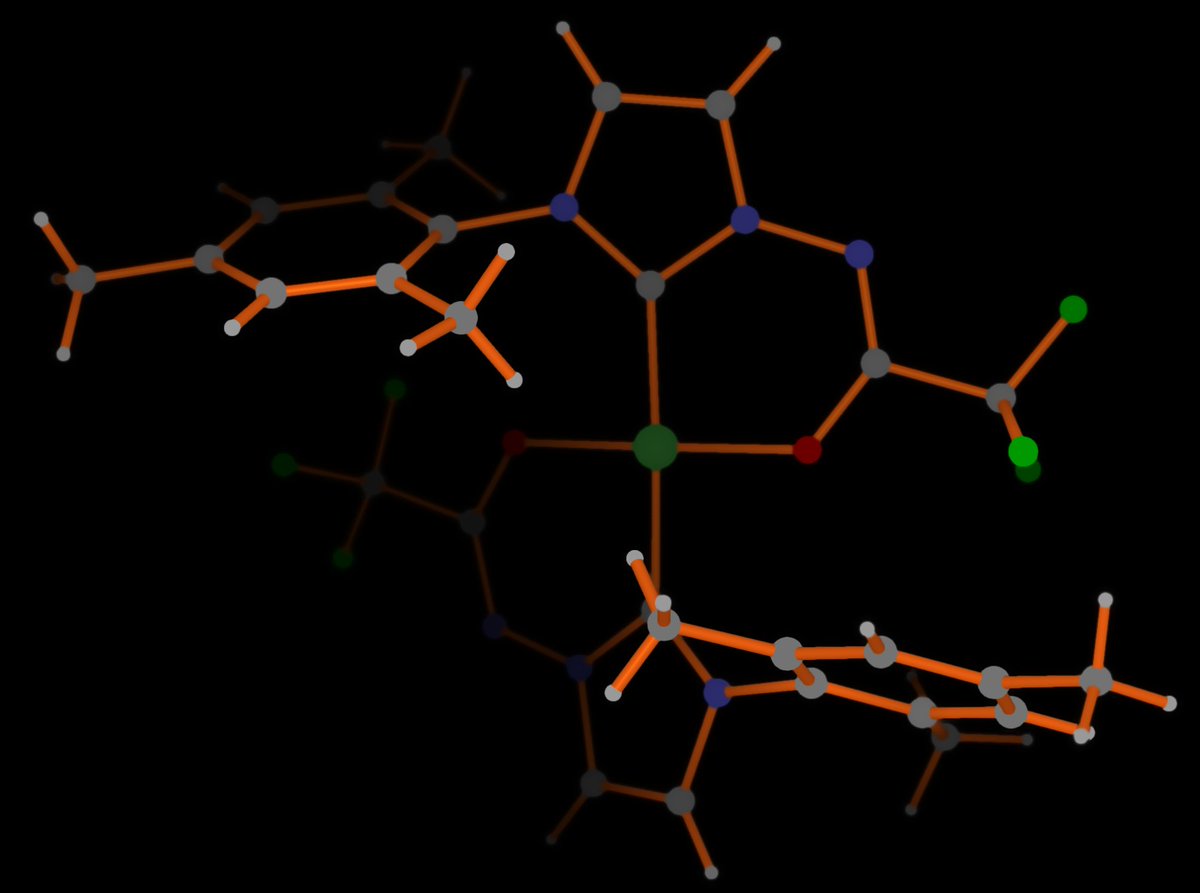
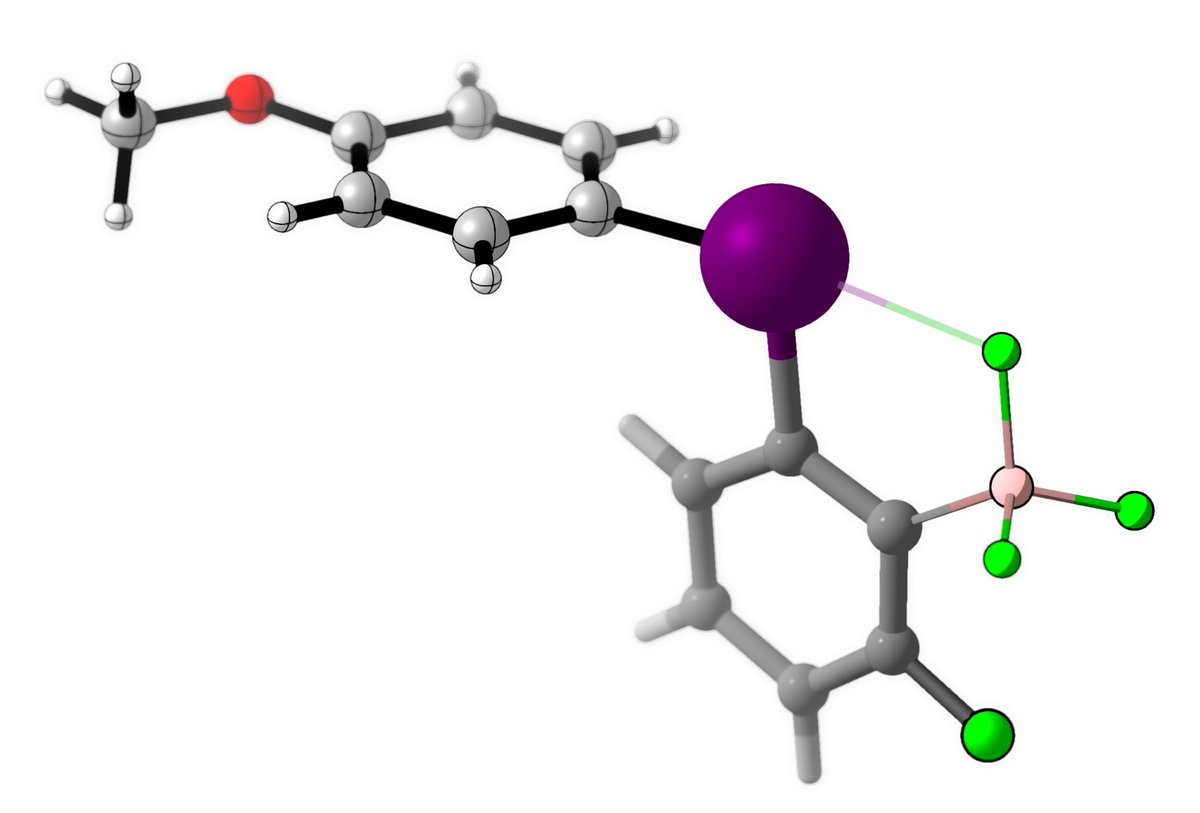
I was thrilled to be involved in this very interesting collaboration with @BizetVincent, @Blanchard_Lab, and @CahardD!
27 Oct 2023

Glad to share our last contribution to SF5 chemistry. A collaborative project between @CahardD, @CYL_Lab, @Blanchard_Lab and @BizetVincent. Funded by @AgenceRecherche. @LIMA_UMR7042 @UHA68 @unistra @CNRSchimie @univrouen UMR6014COBRA @gis_fluor
11
2,810
7 Oct 2023
The latest work of our group on indoles synthesis using diazirines as an electrophilic amination reagent is now out in @JOC_OL ! Congrats to Yoann and @apj_life for this! doi.org/10.1021/acs.joc.3c01… @USherbrooke
2
5
45
6,489
Claude Legault retweeted

Gold(I)-Mediated Isomerization of Spring-loaded 1,7-Enynes seen through the Lens of Density Functional Theory (Claude Y. Legault and co-workers) @cyl_lab, @Raphael_Robidas onlinelibrary.wiley.com/doi/…
2
7
2,110
14 Jul 2023
Our latest contribution in computational chemistry, in honour of Ken Houk, is out in @ChemEurJ, great work of @Raphael_Robidas! doi.org/10.1002/chem.2023015… #compchem @USherbrooke
1
9
1,048
3 May 2023
An exciting collaboration with @P_B_Beauregard lab is now out in @NatureComms! Congrats to @VCLamoureux for this fantastic work, and thank you so much for the opportunity to contribute to this impressive story! UdS FTW! @USherbrooke @sciencesUdeS
3 May 2023

Our latest article is out in Nature Communications! @VCLamoureux built up that project from a simple observation, and with the help of many chemists collaborators, this great story about the dual role of pulcherrimin was written.
nature.com/articles/s41467-0…
1
13
8,606
15 Apr 2023
Happy to report this latest contribution from our group. Congrats @TommyLussier93 for your hard work!
15 Apr 2023

Iodine(III)-Mediated Enantioselective Oxidative Contraction of Dihydropyranones. cutt.ly/R7XASa9
2
11
2,572
28 Mar 2023
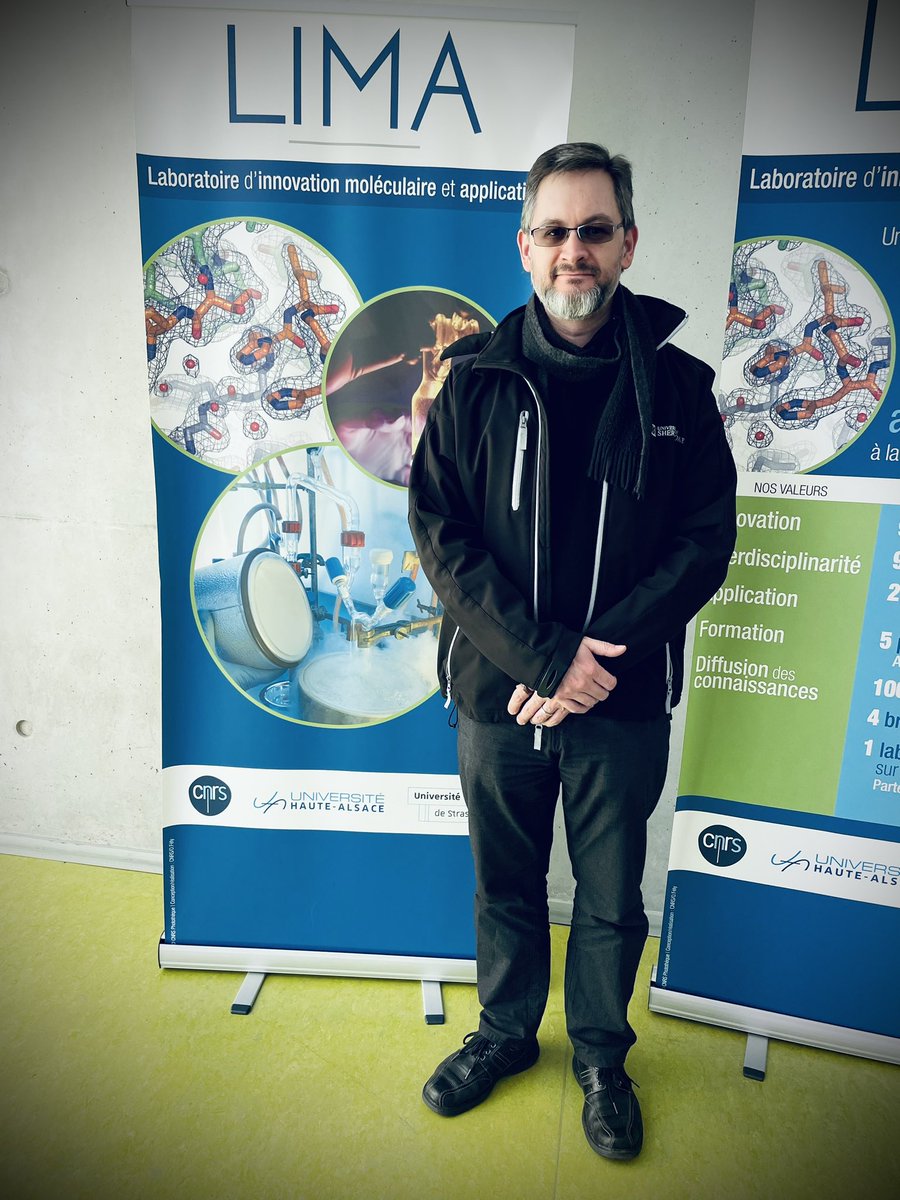
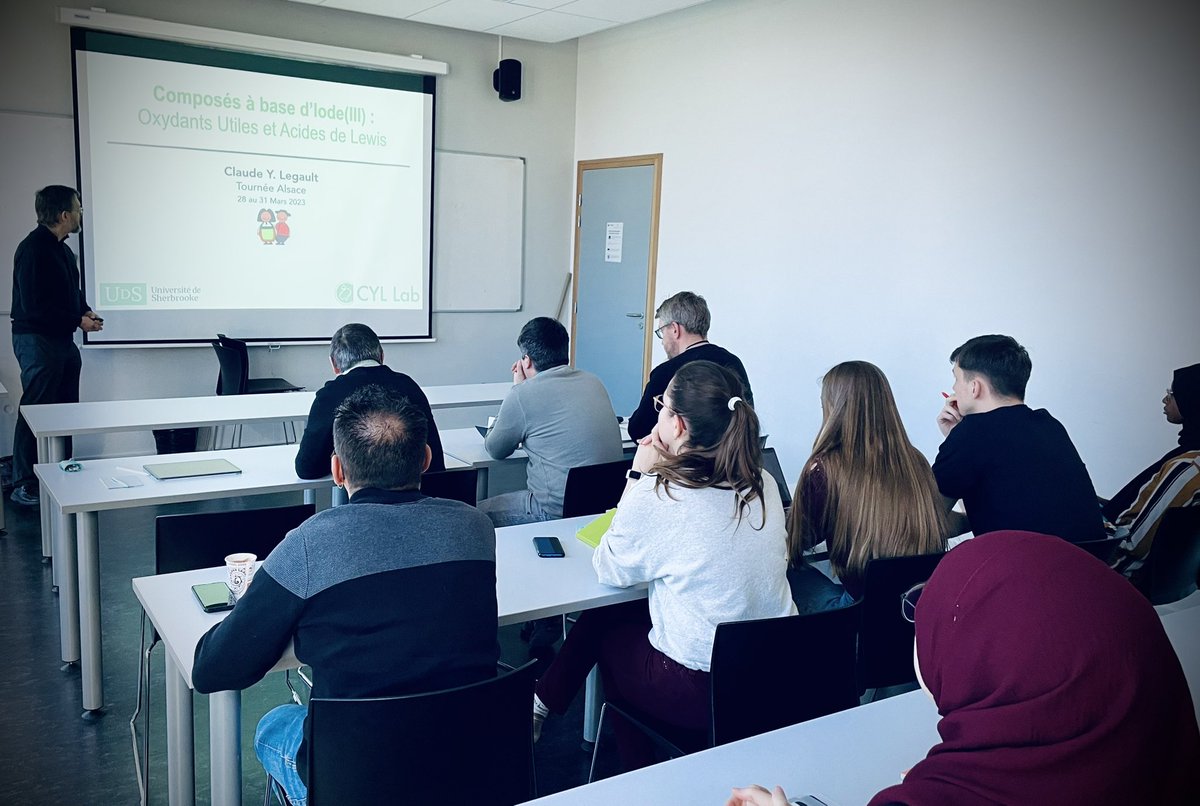
Having a great time in Alsace! Thank you @XavierBugaut @BizetVincent @LIMA_UMR7042 for this invitation!
28 Mar 2023

1st lecture of the Alsatian Tour of @CYL_Lab @USherbrooke in @UHA68 today. Great talk with exciting mechanistic investigations ! thanks to @BizetVincent as the local host. @HyperIodine @LIMA_UMR7042
1
14
2,039
Claude Legault retweeted

7 Mar 2023
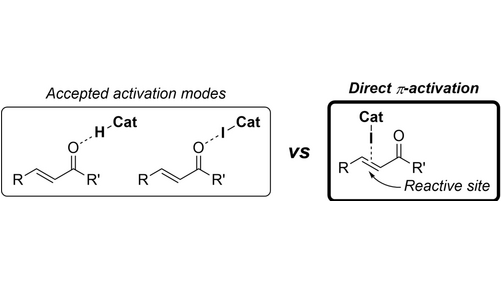
Direct pi-Activation vs. O-Activation in Halogen-Bonding Catalysis (Legault) @CYL_Lab @Raphael_Robidas #AngewandteVIP #openaccess onlinelibrary.wiley.com/doi/…
6
56
6,268
15 Feb 2023
Wow, little known fact: Starting January 2023, there is an agreement between @CRKN_RCDR and @Wiley, which enable Canadian researchers working in eligible institutions to have their publications open access with no additional fee! This is a great initiative! #OpenAccess
1
3
4
1,136
14 Feb 2023
Direct pi-activation?! We are happy to share this work on the activation modes in halogen-bonding catalysis! Congrats to @Raphael_Robidas for this contribution! We hope it will initiate exciting discussions! @Chimie_UdeS @sciencesUdeS doi.org/10.1002/anie.2023011…
3
17
2,331
6 Dec 2022
Earlier this year, we released #CalcUS, an open-source web interface to perform QM calculations (doi.org/10.1021/acs.jcim.1c0…). Want to give it a spin without installing it? @Raphael_Robidas just made a cloud version accessible from anywhere! Try it for free! calcus.cloud
1
1
6
2 Dec 2022
If you are fluent in French, the Faculty of Sciences of @USherbrooke just posted a very nice article about @Raphael_Robidas, a talented PhD student in my group, and new Vanier Scholar! Have a look! @NSERC_CRSNG @Chimie_UdeS @sciencesUdeS usherbrooke.ca/sciences/actu…
6
28 Nov 2022
It is my great pleasure to announce that @Raphael_Robidas, a very talented PhD student in my group, received a #Vanier scholarship! I strongly encourage you to follow him to keep up-to-date on his numerous great projects in the near future!
28 Nov 2022

A #VanierCanada Graduate Scholarship has been awarded to me earlier this year and I can finally announce it publicly! I created this Twitter account in order to share how I got to this point and what I have learned along the way. 1/7
3
Claude Legault retweeted

28 Nov 2022
A #VanierCanada Graduate Scholarship has been awarded to me earlier this year and I can finally announce it publicly! I created this Twitter account in order to share how I got to this point and what I have learned along the way. 1/7
4
1
12
30 Oct 2022
Thank you #ProjektDEAL for making our collaborative work accessible to all! #OpenAccess
30 Oct 2022

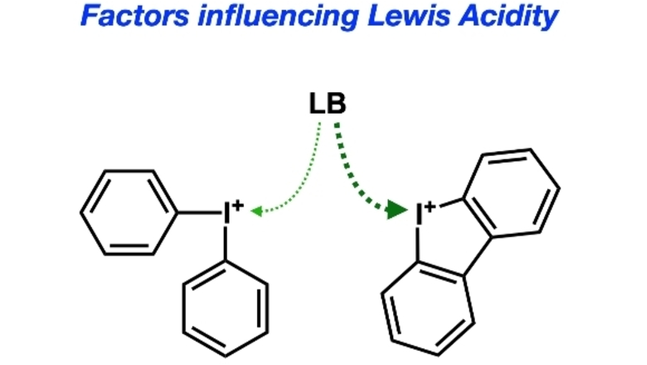
A Quantum-chemical Analysis on the Lewis Acidity of Diarylhalonium Ions @CYL_Lab @SHuberLab #OpenAccess thanks to #ProjektDEAL onlinelibrary.wiley.com/doi/…
1
1
11
4 Oct 2022
A very interesting collaboration with Xavier Salom-Roig from Montpellier is out, this time in @EurJOC! I just love pericyclic reactions! chemistry-europe.onlinelibra…
6
1 Sep 2022
Very proud of this collaborative work with @SHuberLab, we finally have insights on why iodolium salts are more Lewis acidic than their corresponding diaryliodonium salts! It might be a small study (according to one reviewer), but size does not matter! bit.ly/3wKuADX
8
17 Jun 2022
3