
High School Principal. Advocate for vulnerable young people. Sharing insights on literacy, leadership and education.
Joined August 2013
- Tweets 509
- Following 710
- Followers 840
- Likes 4,659
16 Photos and videos








18 Nov 2025
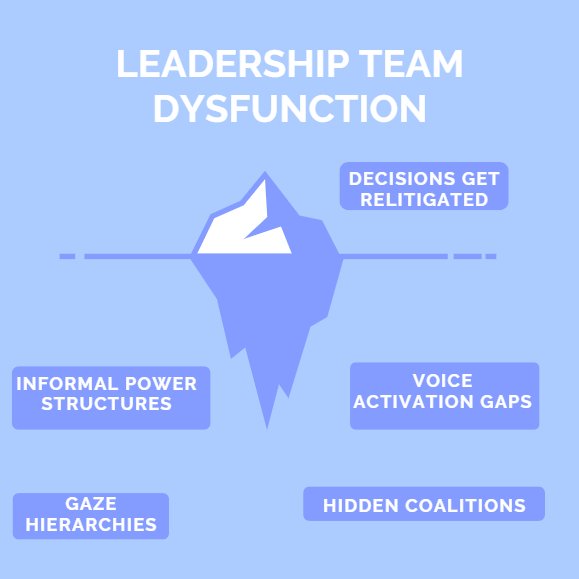
Seeing this more and more in my work: Often, team dysfunction is not a relationship problem. It's a structural problem. Rational people respond rationally to invisible structural incentives. Change the structure, the behavior changes, too.
2
5
209
7 Nov 2025
Thinking about this recently: You can't decide your way out of a structural problem. Most leaders see: "Our team keeps relitigating decisions."
They try: More processes. Better logs. Clearer protocols. Nothing sticks.
Why? Because you're fixing what's visible while ignoring what's invisible.
The real problems are below the waterline:
- Informal power structures
- Gaze hierarchies
- Voice activation gaps
- Hidden coalitions
You need to diagnose what's underneath.
5
202
31 Oct 2025
Been meditating on this all year: “Common sense is like oxygen: the higher you go, the thinner it gets.” —John Gaddis
I see it everywhere—leaders who know what’s right but can’t act on it. Gut instincts buried under performance.
Simple decisions made impossibly complex.
Does this resonate with you?
1
4
100
6 Oct 2025
This has been on my mind lately: The year before a new strategic plan isn’t neutral time. It reveals whether a district can build the habits and coherence a future plan will depend on. Strategy only works if the system is already learning how to change.
1
4
143
28 Sep 2025
Thinking: Many district/school teams think they have an execution problem when they actually have a coherence problem. All the implementation in the world won’t work if initiatives are pulling you in ten different directions.
5
162
24 Sep 2025
HQIM doesn't guarantee strong instruction. The gap between design and delivery disproportionately harms vulnerable students.
1
8
364
31 Jul 2025
We call principals “instructional leaders” but often give them no real system to lead. They’re told to improve teaching schoolwide without the tools, models, or infrastructure to do it. Spotting good instruction isn’t the same as causing it. That gap is killing coherence.
1
1
9
221
24 Jul 2025
All fair. But let me add ones I’ve been sitting with recently-All fair. Let me add one more—Regularly examine evidence of whether your decisions and expectations are improving student outcomes, and be willing to change course when they're not.
23 Jul 2025

Leadership Nuggets:
1. Communicate decisions clearly and early
2. Address performance issues promptly- don’t delay difficult conversations
3. Foster professionalism- support staff through changes but set clear expectations from day one
1
2
6
454
23 Jul 2025
Teachers and leaders have to make hundreds of micro-decisions daily that compound into the culture they want to build in their classroom/building. Grand gestures and inspiring speeches don't create culture. Consistent small choices do.
1
6
220
23 Jul 2025
The hardest conversations in education leadership aren't about money or policy. They're about admitting that the program you're proud of isn't actually working for the kids it was supposed to help.
2
12
239
22 Jul 2025
The loneliest part of education leadership isn't the hours or decisions. It's having to be "on" all the time while carrying real doubts about whether you're actually making the difference you promised to make. Most leaders never get space to process this honestly because showing any uncertainty gets seen as weakness.
casel.org/blog/leadership-in…
2
8
298
22 Jul 2025
Thinking about this recently: School leaders spend huge amounts of energy managing up to central office, managing down to staff and students, but almost no time managing the space between what they say matters and what their daily decisions actually show. The most effective leaders I know have learned to spot their own gaps before anyone else has to point them out.
1
6
157
21 Jul 2025
Starting a reflection group for school leaders who are tired of pretending they have all the answers.
Biweekly. 60 minutes. Max 8 people. Free pilot.
Not coaching. Not PD.
Just honest conversation about the parts of leadership we usually hide.
First session week of August 19.
DM if you want in—filling fast.
2
120
20 Jul 2025
A mentor once told me something I initially dismissed as too simple: 'What would we do differently if we truly believed every child in this building could excel?' I thought it was basic until I realized most of our hardest decisions become crystal clear once you answer that question honestly.
3
163
17 Jul 2025
The most valuable family voice isn't what parents say about our programs, it's what they're quietly doing at home to fill the gaps. When families are buying workbooks, hiring tutors, or spending weekends reteaching fractions, that's feedback more honest than any survey we could ever send home
1
5
2,452
17 Jul 2025
Some of the better school leaders I've met don't just manage curriculum and staff, they architect the cognitive conditions for learning throughout the building. They understand how to systematically create environments where information moves from working memory into long-term storage.
2
203
17 Jul 2025
Excellence scales through systems, not inspiration. The best schools don't just happen to have amazing teachers - they've built systems that help good teachers become great and ensure breakthrough practices spread to every classroom. You can't culture your way out of structural problems
1
3
291
16 Jul 2025
The more I think, the more I realize the distance between what we know works and what we actually do in classrooms is the space where kids lose years of learning. Implementation is everything.
2
10
459
Calvin Johnson retweeted

17 Jun 2025
Such a powerful reminder — clarity and focus are game-changers in school leadership.
1
2
138
10 Jun 2025
I really love worked examples but the devil’s in the selection.
Novices follow the noise, not the signal, so irrelevant surface features derail learning.
Start with the structural core: teach the logic before the decoration. Then layer back in context deliberately to show when the structure holds, when it bends, and why it matters.
Most curricula skip both ends: they either dump too much too soon or never get past the abstract.
4
217