
Joined August 2019
- Tweets 139
- Following 397
- Followers 50
- Likes 1,017
9 Photos and videos


18 Mar 2025
If you’ve ever thought about carrying, and can be disciplined about continually training to maintain proficiency you should do it, it makes a difference.
crimeresearch.org/2025/02/a-…
1
74
31 Dec 2024
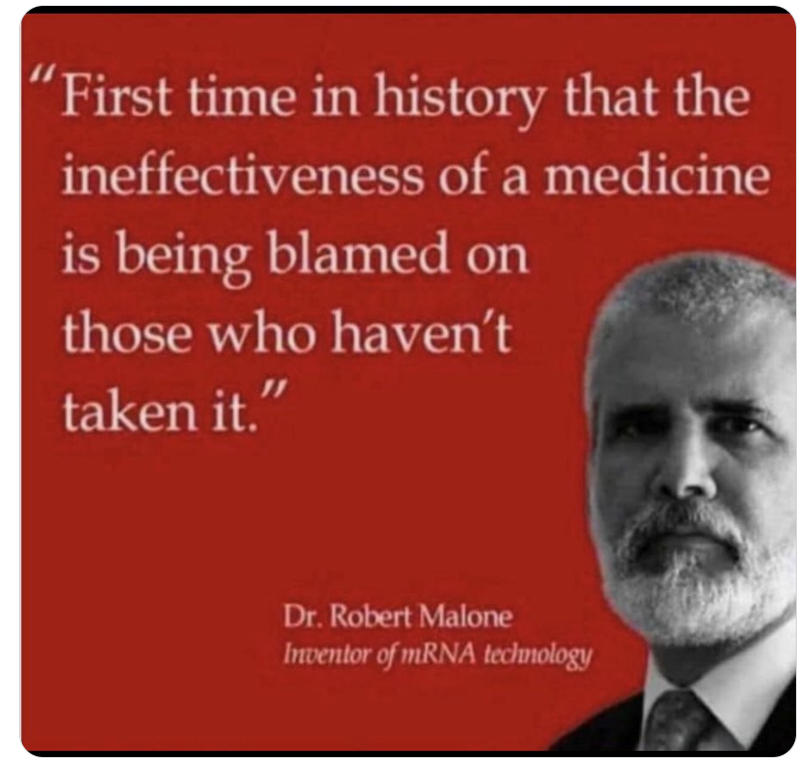
Hold the line. Do not comply.
31 Dec 2024

I am expert in influenza and have consulted with the WHO over the past two decades on the topic of flu vaccines. This is one subject matter I am extremely knowledgeable about.
What is happening now with "bird flu" is another psyops campaign being conducted by the administrative/deep state against the American people. They know and we know that the "vaccines" being produced will be ineffective, as all flu "vaccines" are.
The government is chasing a rapidly evolving RNA virus with a syringe. Just like they did with HIV and C-19.
All the while they are getting prepared to roll out masks, lock-downs, quarantines, etc.
All the while getting ready to roll out mRNA vaccines for poultry and livestock, as well as for all of us.
The more they test, the more bird flu they will find.
This "pandemic" is nothing more than an artifact of their newly developed protocols to test cattle, poultry, pets, people, and wildlife on a massive scale for avian influenza. In years past, this was not even considered.
Of course, these facilities producing the tests have been repurposed from the COVID-19 testing facilities. More regulatory capture.
The questions are:
Will we all comply?
Will we be forced to comply?
Will President Trump go along with the PsyWar / psyops campaign again?
We will know soon enough.
133
30 Oct 2024
THIS!! WORDS MATTER PEOPLE!! PAY ATTENTION TO WHAT THEY SAY!!
30 Oct 2024

Wrong. I’m not “misleading” anybody by saying we’re not a democracy. We’re not. We are a constitutional federal republic of 50 states. What’s misleading, and frankly disingenuous by design, is calling America “our democracy”. Because of this repetition, along with the failed federal education system, voters assume the electoral college is a bug, not a feature, and they want to abolish it.
When Benjamin Franklin came out of the constitutional convention on September 17, 1787, he was asked by Elizabeth Willing Powel, “Well, Doctor, what have we have, a republic or a monarchy?”. Franklin responded, “A republic, if you can keep it”. He did not say “we are a democracy”. That would imply majority rule, which the founding fathers had an aversion to, so no we don’t have that. Benjamin Franklin misled nobody, just as I mislead nobody.
Let’s look at the electoral vote versus the popular vote. It doesn’t matter how many people vote for a certain party. The popular vote is meaningless here— but it’s Democratic. “One person one vote”, right? What matters is which state they live in, and how many electors each state has. 50% of the country lives in 5% of it, If we had a direct democracy, the fate of our entire country would fall to a handful of coastal cities.
The goal of the media and the government incessantly repeating “our democracy”, is to propagandize low ordered thinkers, and eventually wind up as a democracy without a Republic— like in the UK— parts of which we already divorced.
How’s that one party state working out in the UK? Do we like mass surveillance, warrantless searches, no free speech and gun bans? Would we like every state’s justice system to be captured like theirs? Thank God the electoral college and the 10th amendment are preventing us from collapsing into the ills of
🌈democracy🦄.
However, we’re well on our way to being just like that again with the invasion of our country. Why do you think they are flying criminal aliens into blue state strongholds the swing states? The census is how they determine electors. The goal of circumventing the electoral college by jamming it full of people brought here for the bloated government, and entitlements, who do not share our values, is to wind up with a one-party state. This is what Benjamin Franklin meant by “We are Republic *if we can keep it*”. There are bad actors and a multibillion dollar human trafficking machine hell-bent on seeing that we don’t.
And just because your country votes, it does not mean you are a democracy. That is not a trump card. North Korea has mandatory voting and a 100% turnout rate. Would you call them a democracy?
92
27 Oct 2024
This is an excellent summation of the general core values of the Republican Party… let the individual control their own destiny, free of government interference, intrusion and intimidation.
x.com/DefiyantlyFree/status/…
53
21 Aug 2024
Nonfarm payroll growth revised down by 818,000, Labor Department says @CNBC. Looks like Grandpa Joe didn’t create the jobs he’s claiming. Were these numbers nefariously inflated to help his campaign? I think this needs a good look. cnbc.com/2024/08/21/nonfarm-…
2
71
19 Aug 2024
This is an important read… one of the many stops on the road to communism
17 Aug 2024

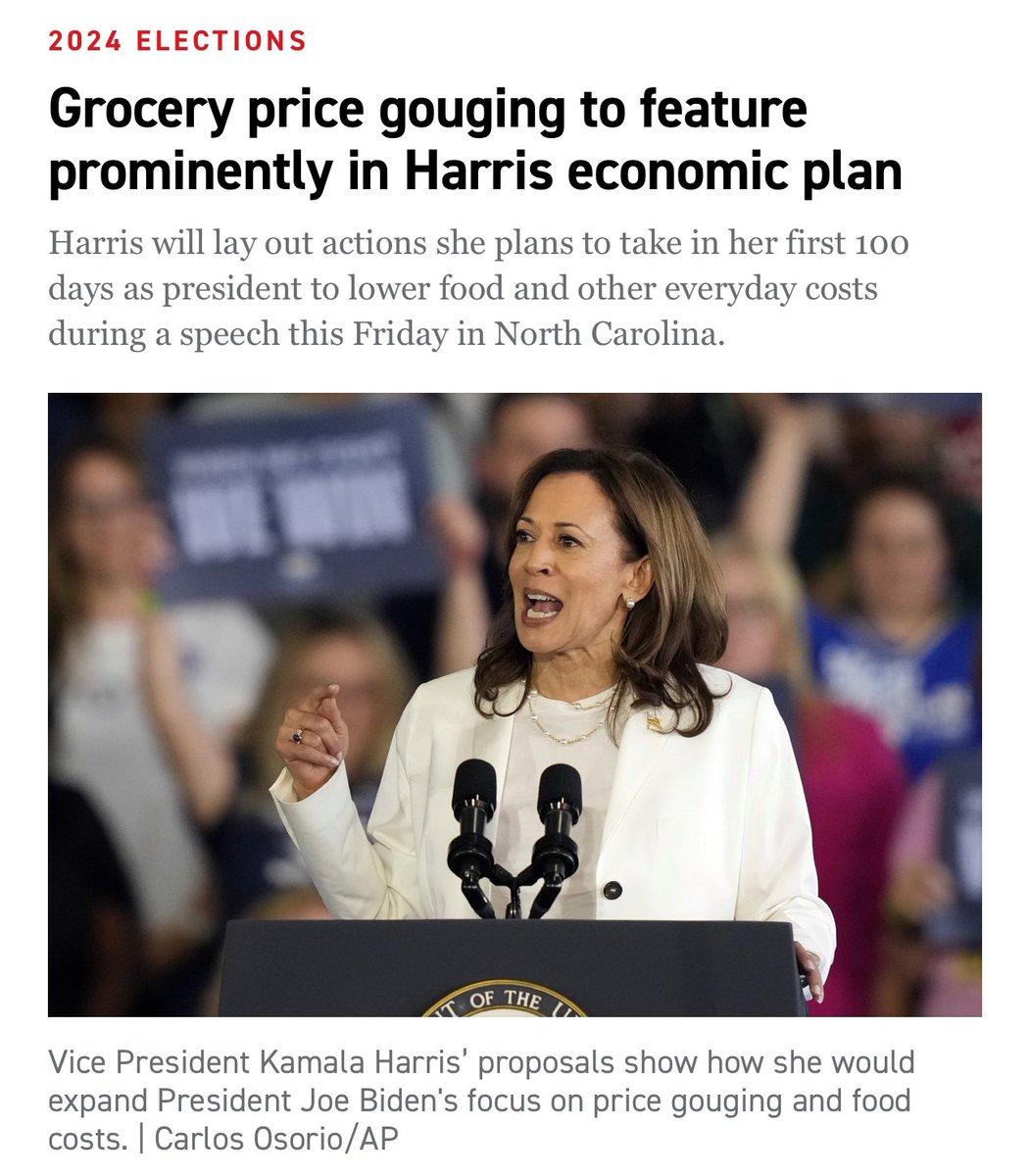
People need to stop overreacting about Kamala’s plan to reduce food inflation, as if it would lead to communism, mass starvation, and the end of America.
I worked in M&A in the food industry. Here’s a step-by-step summary of what would actually happen:
1. The government announces that grocery retailers aren’t allowed to raise prices.
2. Grocery stores, which operate on 1-2% net margins, can’t survive if their suppliers raise prices. So the government announces that food producers (Kraft Heinz, ConAgra, Tyson, Hormel, et. al.) also aren’t allowed to raise prices.
3. Not all grocery stores are created equal. Stores in lower-income areas make less money than those in higher-income areas, as the former disproportionately sell lower-margin prepackaged foods (“center of the store”) instead of higher-margin fresh products like meat (“perimeter of the store”). Because stores in lower-income areas aren’t able to cover overhead (remember, even if their wholesale costs are fixed, their labor, utilities, insurance, and other operating expenses aren’t fixed… yet), grocery chains start to shut them down. Food deserts in rural areas and in low-income urban areas alike become worse.
4. Meanwhile, margins for food producers are also quickly eroding. Their primary costs (ingredients, energy, and labor) aren’t fixed, and their shrinking gross profits leave less cash flow available to cover overhead, maintain facilities, and reinvest in additional production capacity.
5. Grocery chains, which have finite shelf space, start to repurpose their stores (those they didn’t have to shut down, I should say) to sell more non-price-controlled items—everything from nutrition supplements to kitchenware to apparel—and less price-controlled food products. Your local Kroger or Safeway starts to look and feel more like a Walmart.
6. Food producers stop making products with lower margins. Grocery chain start competing with each other to secure inventory. Since they can’t compete by offering stronger prices (remember, producers aren’t allowed to raise prices here, and, even if they could, grocery chains no longer have the gross profit to bear price increases), they compete on things like payment terms.
7. Small grocery chains start to shut down entirely, or get sold to larger chains like Kroger. In addition to not being able to cover fixed costs, a major reason for this is because they can no longer reliably secure delivery of products, due to producers prioritizing sales to larger customers, which are able to leverage their stronger balance sheets to offer superior payment terms.
8. Smaller food producers—which typically sell via distributors, rather than directly to grocery chains—start to go out of business. Because these producers have an additional step their value chains, and because they have lower volumes over which to spread their fixed costs, their cost structure is inherently disadvantaged compared to major food producers. When grocery stores aren’t able to raise prices, cutting product costs becomes all the more important, and deprioritizing purchases from smaller producers is an easy way to do so.
9. As supply chains break down, lines start to form outside grocery stores every morning. Cities assign police officers to patrol store parking lots, and food producers draft contingency plans to assign armed escorts to delivery trucks.
10. The federal government announces a program to issue block grants for states to purchase and operate shuttered grocery stores. The USDA also seizes closed-down production facilities.
11. The government announces that prices for all key food costs—corn, wheat, cattle, energy, etc.—are also now fixed, to stop “profiteers” from gouging the now-government-operated food industry.
12. Shockingly, the government struggles to operate one of the most complex industries on the planet. The entire food supply chain starts imploding.
13. Communism, mass starvation, and the end of America quickly ensue.
Hey wait a second
1
96
25 Jul 2024
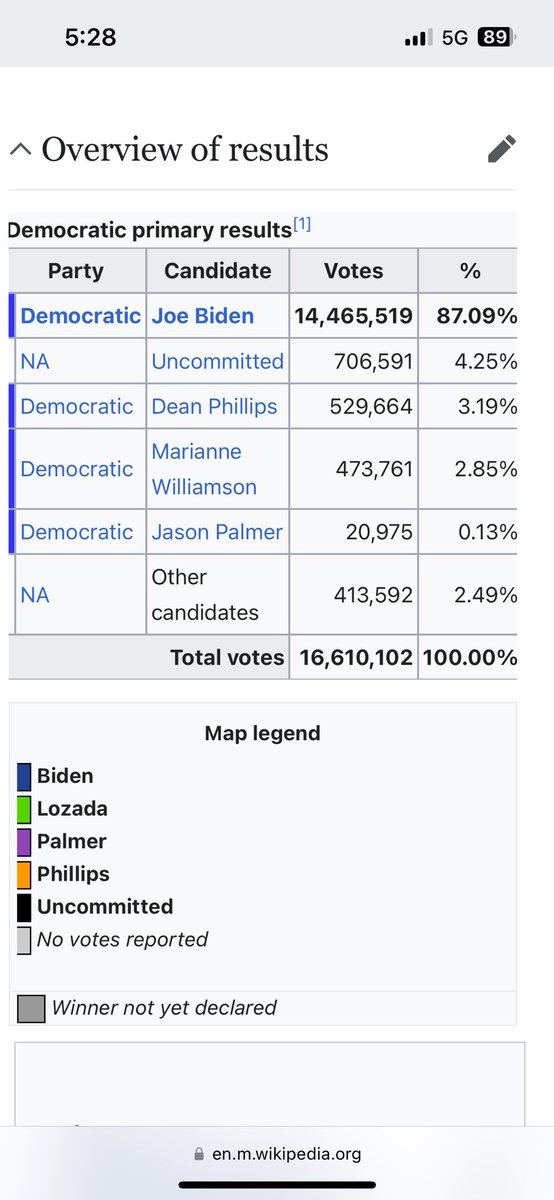
I don’t see Kamala Harris anywhere on this list. No matter your party affiliation, her securing “enough delegates to be the nominee”, as reported by the MSM should outrage everyone. This is voter disenfranchisement.
40
20 Jan 2024
Biden Takes Swipe at Gun Rights Advocates, Says ‘Need an F-16’ Not AR-15 to Take on Government
link.theepochtimes.com/mkt_a…
1
92
20 Jan 2024
This is the kind of tyrannical rhetoric that exemplifies exactly why we have a 2nd Amendment and Mr. Biden is the kind of tyrant the Founding Fathers were thinking of when it was written.
45
Darrell Taylor retweeted

1 Dec 2023
Good catch, @TDRColorado.
It sounds like this so-called “gun buyback” is illegal based on the legislation passed by @coloradodems.
They are executing a private transfer, which requires a BGC and a 3 Day Wait.
cc: @KDVR, @9NEWS, @KRDO_13, @CBSNewsColorado, @AndyKnny

1 Dec 2023

You better run a background check on every single person and wait three days before transferring or you are in violation of HB23-1219.
I think I might have my attorneys show up and make sure this happens.
Remember, police are NOT exempt from this law.
leg.colorado.gov/sites/defau…
12
46
164
7,163
2 Nov 2023
Judge Overturns Primary Election, Calling Evidence of Fraud ‘Shocking’
link.theepochtimes.com/mkt_a…
1
39
Darrell Taylor retweeted

13 Oct 2023
Today is a good day to remind those who are taking part in the Jihad Friday 'Day of Rage' in support of Hamas, that Americans have the constitutional right to defend themselves, their families, their neighbors, and their communities, x.com/WhiteJoshuaL/status/17… Per the 2nd Amendment. I'll reiterate this here
12 Sep 2023

In the 18th-century lingo, "well-regulated" meant something that was in good working order or well-maintained. It didn't imply government oversight or restrictions. George Mason, a key figure in crafting the Bill of Rights, explicitly stated that the militia is "the whole people."
Think of it like this: A "well-regulated clock" in the 1700s wasn't one that the government controlled; it was one that kept time accurately. Similarly, a "well-regulated militia" isn't a government-controlled army; it's a citizenry that's capable and ready to defend their rights and liberties.
Historically, George Washington even offered to pay recruits who used their own arms in battle. The framers knew what they were doing. They weren't just throwing words around; they were laying down principles meant to stand the test of time.
So, when you hear "well-regulated" in the Second Amendment, don't think red tape and bureaucracy; think "capable and prepared," just as the framers intended.
The "A well-regulated militia, being necessary to the security of a free state" is indeed a prefatory clause. It merely provides a context for the subject matter - "the right of the people to keep and bear arms" as an inalienable right. A prefatory clause is not a prerequisite for the operative clause to exist or function; rather, it serves to clarify. Furthermore, the Second Amendment neither imposes conditions nor exceptions on the type of weaponry citizens can employ for self-defense against tyranny and despotism. As such, the argument that the Founding Fathers could not foresee modern armaments is moot. Citizens should have access to the very weaponry that could be used against them.
Additionally, "well regulated" was a colloquialism of the time, meaning in good working order, established, maintained, and functioning correctly. It did not imply government control. This is supported by the Second Amendment's inclusion in the Bill of Rights, which explicitly delineates the limits of a government authority. It would be illogical to assume the Founders intended for the government to regulate the very amendment meant to counteract government overreach.
Analogies with historical context:
1. A well-regulated clock, being necessary for accurate timekeeping, the right of the people to make and use timepieces, shall not be infringed.
- "The American Academy of Arts and Sciences, being desirous of promoting a general acquaintance with the means of rendering our Rivers and Harbours more secure, by the introduction of the best methods of constructing Light-houses, Beacons, and Buoys, and of forming a well-regulated system of Marine Signals, request the favour of your correspondence on this subject."
- Letter from the American Academy of Arts and Sciences to Benjamin Franklin, The Massachusetts Magazine (1791)
2. A well-regulated farm, being necessary for a bountiful harvest, the right of the people to cultivate and produce crops, shall not be infringed.
- "If a well-regulated stage-coach, with able horses, should be set up to run from this town to Lancaster in a day, it would be a great benefit to the public."
- The Pennsylvania Gazette (April 17, 1755)
3. A well-regulated market, being necessary for a thriving economy, the right of the people to engage in commerce, shall not be infringed.
- "I have long been of opinion that a well-regulated hospital would be a very beneficial and necessary institution in this city, but to establish one upon a proper footing requires the countenance and support of men of the first rank and influence among us."
- Benjamin Rush, Letter to John Dickinson (June 3, 1784)
4. A well-regulated education, being necessary for an enlightened society, the right of the people to pursue knowledge, shall not be infringed.
- "There are few subjects more nearly connected with the general interests of society than the establishment of well-regulated schools in the several towns and districts of the Commonwealth."
- Report of the Committee on Education, Massachusetts House of Representatives (January 20, 1827)
5. A well-regulated ship, being necessary for safe navigation, the right of the people to build and sail vessels, shall not be infringed.
6. A well-regulated postal system, being necessary for efficient communication, the right of the people to send and receive mail, shall not be infringed.
- "It is essential to the interest and happiness of the people, that the intercourse between the distant parts of this extensive country should be facilitated by well-regulated roads and inland navigation."
- Address of the President to the Congress, The Independent Chronicle (December 25, 1794)
7. A well-regulated library, being necessary for the preservation of knowledge, the right of the people to access and borrow books, shall not be infringed.
- "A well-regulated library, supported by an ample fund, will undoubtedly contribute to the general diffusion of useful knowledge among the citizens."
- The North-Carolina Magazine (November 1793)
8. A well-regulated family, being necessary for a harmonious society, the right of the people to raise and care for their children, shall not be infringed.
- "A well-regulated family is the best security for good order in society, and ought therefore to be encouraged by every friend to the happiness of mankind."
- The Massachusetts Spy (June 30, 1796)
9. A well-regulated printing press, being necessary for the free exchange of ideas, the right of the people to publish and read newspapers, shall not be infringed.
- "The well-regulated liberty of the press is the palladium of our liberties."
- The Virginia Gazette (March 20, 1778)
10. A well-regulated theater, being necessary for cultural enrichment, the right of the people to perform and attend plays, shall not be infringed.
- "The advantages which arise to a people from a well-regulated stage are too numerous and important to be passed over in silence."
- The Pennsylvania Packet (May 23, 1787)
11. A well-regulated market, being necessary for a stable food supply, the right of the people to buy and sell produce, shall not be infringed.
- "The establishment of well-regulated markets in the city of New York... will no doubt have a tendency to render provisions much more plenty and cheap."
- The New-York Gazette (February 6, 1786)
12. A well-regulated apprenticeship, being necessary for skilled craftsmanship, the right of the people to learn and practice trades, shall not be infringed.
- "It is to be hoped that a well-regulated system of apprenticeship will be established in this country, by which our youth may be brought up to useful trades and employments."
- The Pennsylvania Mercury (March 25, 1788)
13. A well-regulated fire department, being necessary for public safety, the right of the people to establish and support firefighting organizations, shall not be infringed.
- "A well-regulated fire society is a very useful and necessary institution in every populous town, and ought to be encouraged by every lover of his country."
- The Independent Gazetteer (February 19, 1785)
These examples underscore the diverse applications of "well regulated" during the colonial era and early republic. They demonstrate that the term was used to describe a wide range of well-functioning, organized, and maintained systems or organizations, rather than implying strict government control or oversight.
Our Founders were also well aware of advancing technologies. Contrary to popular belief, the Second Amendment wasn't hastily included in case the deer population became tyrannical. The Second Amendment went through no fewer than eight revisions, and each revision is well-documented, along with the arguments for those revisions. The major point being that a citizen cannot be compelled nor coerced into a militia or federal service in order to exercise any right afforded to them.
1. **Puckle Gun**: Invented in 1718 by James Puckle, this was essentially an early version of a machine gun. It could fire multiple rounds in quick succession.
2. **Rifling**: The concept of rifling, which involves grooves inside a barrel, was known in the 15th century but became more common in the 18th century. Rifling improved accuracy, and the Founders were aware of this.
3. **Paper Cartridges**: These were in use during the Revolutionary War and were a step towards self-contained rounds. They made reloading faster and were a significant advancement over the separate powder, wad, and ball.
4. **Ferguson Rifle**: Patented in 1776 by Major Patrick Ferguson, this breech-loading flintlock rifle was one of the most advanced firearms of its time. It could fire up to seven rounds per minute, three times faster than the muzzle-loading muskets of the day.
5. **Girardoni Air Rifle**: Lewis and Clark carried this .46 caliber air rifle on their expedition. It had a 22-round magazine and was a repeating rifle, capable of firing multiple shots before needing to be reloaded.
6. **Belton Flintlock**: Joseph Belton offered a new flintlock design to the Continental Congress that could fire up to eight shots in rapid succession. Though the design was never adopted due to cost, it shows that multi-shot firearms were being considered.
7. **Innovative Materials**: The Founders lived in an age of rapid industrial and material advancements. They knew that guns would not always be made of wood and metal as better materials would be discovered.
8. **Scientific Curiosity**: Men like Benjamin Franklin and Thomas Jefferson were inventors and scientists. They were well aware that technology, including weaponry, would advance over time.
9. **Global Awareness**: The Founders were aware of technological advancements in Europe and elsewhere. They knew that innovations in firearms would continue to develop.
10. **Naval Technology**: The Founders were also aware of advancements in naval artillery, which often paralleled advancements in smaller firearms.
11. **The Spirit of Innovation**: Above all, the Founders were men of the Enlightenment. They believed in human progress and innovation. It would be absurd to think they believed technology would freeze in 1787.
So, when someone claims the Founders couldn't have envisioned modern firearms, remind them that these men fully understood that technology evolves. They wrote the Second Amendment not as a relic of their time, but as a timeless safeguard against tyranny and absolute despotism.
5
14
36
4,912
17 Sep 2023
Words matter, and for years I’ve been saying that the MSM has been attempting to reprogram the last few generations with their version of how our republic is defined. The debate in the comments is a perfect example. Great post @WhiteJoshuaL
17 Sep 2023
Happy Constitution Day. Here's a refresher:
We are a Constitutional Republic, and that's not just semantics; it's foundational to our system of governance. We are not a democracy, nor a democratic form of government.
But let's be clear: democracy is not a form of a republic. They are distinct forms of government with key differences.
A Republic is a government in which the country is considered a "public matter" and the head of state is an elected or appointed official. A Democracy, on the other hand, is ruled by the omnipotent majority. The United States is a Constitutional Republic with a republican form of government per Article IV Section IV. It is not a democracy, nor a democratic form of government. This distinction is not a mere semantic quibble. It's fundamental to our system of government and the protections it affords us. Also just to be clear neither the republican form of government nor the democratic form of government are to be confused with either party.
James Madison warned us about the dangers of democracies in Federalist No. 10. He said, "Democracies have ever been spectacles of turbulence and contention; have ever been found incompatible with personal security or the rights of property; and have in general been as short in their lives as they have been violent in their deaths."
Our founders were scholars of history. They studied every system of government throughout history. It wasn't something they hastily chose without research as Democrats would love us to believe. The Ancient Republic of Rome existed simultaneously and completely independent from Athenian Greek democracy. Both had voting as did many other forms of government before them. Our government was designed to be slow and deliberative for a reason. Changes to fundamental laws and policies should not be made lightly or impulsively. They should be the result of careful consideration and broad agreement respecting the consent of the governed. And contrary to popular belief, "We the People" does not mean "We the Majority". The 9th and 10th Amendments further affirm the federal government is to adhere to the consent of the governed, not control them.
In summary, the word "democracy" isn't even found in our founding documents, nor is a democratic form of government. "We the People" does not mean "We the Majority." Our nation was founded as a Constitutional Republic to protect the rights of the individual from the whims of the majority and we are guaranteed a republican form of government not a democratic form per Article IV Section IV of the United States Constitution. The confusion you're boasting about in the change of language is actually Orwellian Newspeak, and it was deliberately changed to democracy so that eventually people would forget we were ever a Constitutional Republic to begin with.
1
1
3
551

Darrell Taylor retweeted

16 Jun 2023
Sound of Freedom opens in theaters the week of July 4.
Help us get 2 million people into theaters opening week to represent the 2 million children who are trafficked each year.
Get tickets at angel.com/freedom
#2MillionFor2Million #AmplifyLight
99
873
1,528
376,887