Nature photographer. Veteran. Chaser of bugs, birds & light. Prints, eBooks & workshops. Real shots, zero BS. 📸🐝🌌
Joined April 2018
- Tweets 4,489
- Following 2,052
- Followers 1,382
- Likes 1,619
314 Photos and videos


Pinned Tweet

Feb 12
Road to 100K Starts Now.
1,259 here.
Rookie numbers.
Not for ego.
For leverage.
Photography.
Discipline.
Standards.
If you’re here early, you’re part of the foundation.
Let’s build this properly.
1
13
605
Earlier this year, I made a prediction, and before anyone starts getting excited, no, it wasn't because I'm psychic, it wasn't because I have contacts hidden away in some intelligence agency, and it certainly wasn't because I possess a crystal ball. It was simply the result of spending a lifetime studying violence, terrorism, criminal behavior, threat management, and the sort of people who believe that murdering complete strangers is somehow a reasonable way to advance a cause.
I looked at a calendar and saw America's 250th Birthday coming up, along with other significant dates such as the 25th Anniversary of the September 11th attacks. For most Americans, those dates mean celebrations, commemorations, parades, fireworks, sporting events, concerts, massive crowds, national pride on display, and television coverage reaching every corner of the globe.
For the bad guys, however, they see exactly the same thing through a very different lens.
And I remember thinking to myself, "If I were planning a terrorist attack, these are precisely the sorts of dates and events that would be circled in red ink."
Not because they are easy targets, but because they are symbolic targets.
The objective isn't simply to kill people. If it were, there are easier ways of doing that. The objective is to create fear, generate headlines, dominate news cycles, and attack the values, beliefs, and institutions represented by the people gathered there.
So I said at the time that if there was ever a year to pay attention to your surroundings, this was it.
Now here we are, and authorities have disrupted a terrorist plot targeting the President's Birthday celebration.
Thankfully, the people responsible for protecting the public did exactly what we pay them to do. The plot was uncovered, the suspects were arrested, and a lot of innocent people got to go home to their families.
Good.
That is exactly how the story is supposed to end.
Unfortunately, that doesn't mean the story is over.
The Fourth of July is still approaching. The 25th Anniversary of 9/11 is still approaching. There are still countless public gatherings, celebrations, sporting events, festivals, and commemorative events planned throughout the remainder of the year, and if one group was willing to contemplate something like this, I would consider it naïve to assume nobody else is thinking along similar lines.
Now before somebody accuses me of fearmongering, let me stop you right there.
I am not telling anybody to stay home.
I am not telling anybody to hide in a bunker.
I am not telling anybody to live in fear.
Quite the opposite, in fact.
Go to the celebrations.
Take your family.
Attend the ball game.
Go to the concert.
Watch the fireworks.
Wave the flag.
Enjoy your freedom.
Live your life.
The people who came before us sacrificed too much to preserve those freedoms for us to voluntarily surrender them because a handful of extremists want us to be afraid.
What I am saying is that there is a vast difference between being afraid and being aware.
Pay attention to your surroundings.
Know where the exits are.
Trust your instincts.
If something feels wrong, don't ignore it because you're worried about appearing rude, paranoid, or politically incorrect.
Over the years I've learned that your subconscious notices things long before your conscious mind catches up. If that little voice in the back of your head starts whispering that something isn't right, listen to it.
The overwhelming majority of people you will encounter are decent, hardworking, law-abiding human beings who simply want to enjoy their day in peace.
Unfortunately, history repeatedly demonstrates that it only takes one determined lunatic to change a lot of lives forever.
After a lifetime spent around violence, conflict, and human stupidity, I've learned that the goal of terrorism has never been merely to kill people. The real objective is to make everybody else afraid.
Don't help them achieve that objective.
Live your life.
Enjoy your freedom.
Celebrate your country.
Just do so with your eyes open.
Because the sheepdog doesn't spend his life terrified of wolves.
He simply understands that wolves exist.
Stay safe.
Stay vigilant.
And for God's sake, pay attention.
— Mig
38
Jun 11
Well... bollocks.
Today my boss sent me home.
To be clear, I'm not angry with her. In fact, she did exactly what she should have done.
As many of you know, I've survived three strokes. One of the little gifts that keeps on giving is a condition called Stroke Recrudescence, where old stroke symptoms can temporarily reappear when triggered by things like stress, exhaustion, dehydration, illness, or, in my particular case, repeatedly attempting to cram 36 hours worth of activity into a 24 hour day.
Unfortunately, I've been dealing with a bout of it over the last few days.
Because my current job involves driving, concerns were raised about safety, liability, and whether I should be operating company vehicles while experiencing symptoms. As a result, I was sent home and HR is now going to become involved in the discussion.
I don't blame my employer one bit. If the roles were reversed, I'd probably make the same decision myself.
That said, I'd be lying if I said I wasn't concerned.
At 56 years old, after surviving three strokes, 44 broken bones, multiple TBIs, enough illnesses to keep a small team of doctors gainfully employed, and a lifetime of generally refusing to stay down when life kicks me in the teeth, the possibility of losing employment because my brain occasionally decides to throw a tantrum is not exactly a pleasant prospect.
The timing is particularly spectacular.
As many of you know, I've been rebuilding Captured Wilderness Photography after losing two years worth of work, rebuilding websites, launching Great Lakes Fieldcraft, building workshops, writing guides, creating content, growing businesses, and generally trying to stay one step ahead of the financial Grim Reaper.
Apparently the universe looked at all of that and said:
"That's nice. Have another obstacle."
Cheers for that.
So here I sit.
A little frustrated.
A little worried.
A little annoyed.
And more than a little tired of discovering new and inventive ways for life to kick me squarely in the happy sacks.
But defeated?
Not a chance.
I've survived worse.
Much worse.
The reality is that every second that passes is one less second any of us have on this spinning ball of shite. None of us know when the fickle finger of fate is going to tap us on the shoulder and say:
"Congratulations. You've been selected... for extinction."
Until that day arrives, I've got work to do.
Photographs to take.
Courses to build.
Stories to tell.
Lessons to teach.
...and dreams to chase.
So if this chapter closes, another one will open.
It always has.
For those who have supported my work over the years, thank you. Every print purchased, every workshop attended, every book, guide, download, share, comment, recommendation, and word of encouragement has helped more than you probably realize.
Whatever happens next, I'll figure it out.
I always do.
After all, when you've survived everything I've survived, unemployment seems like a rather pathetic choice for a final boss.
Onward.
4
134
Jun 10
Someone recently asked me:
"Are you afraid to die?"
No.
Would I appreciate a bit of advance warning? Absolutely.
I'd like enough time to put my affairs in order, tell the people I love that I love them, raise a glass with a few old friends, and perhaps enjoy one last decent whisky while watching the sun go down.
But afraid?
No.
You see, death is the one appointment none of us gets to cancel, postpone, negotiate, or simply ignore. Every single one of us, from the moment we arrive on this spinning ball of chaos, is heading toward exactly the same destination. The only question is when we get there.
One day, whether you're ready or not, the fickle finger of fate will tap you on the shoulder and say:
"Congratulations. You've been selected... for extinction."
At that point, the discussion is largely over.
No amount of money will save you.
No amount of status will impress it.
No amount of influence will persuade it.
No amount of wishing will change it.
The final score is always the same.
Over the years I've survived three strokes, multiple serious injuries, more illnesses than I care to remember, and enough close calls to know better than to believe that tomorrow is guaranteed. I've watched friends and loved ones leave this world. Just this week I learned that one of my oldest friends, a man I've known since before I enlisted in the RAF, has passed on.
That sort of news has a way of reminding you that the clock is always ticking, whether we pay attention to it or not.
And perhaps that's why death itself doesn't concern me very much.
What concerns me is wasting the time before it arrives.
Wasting opportunities.
Wasting experiences.
Wasting chances to tell people what they mean to you.
Wasting days waiting for "someday."
Because someday is a mythical place that many people spend their entire lives trying to reach.
The truth is that none of us know how many pages remain in our story.
So until fate decides to hand me that final notice, I've got things to do.
Places to go.
Photographs to take.
Things to build.
Lessons to teach.
Stories to tell.
Tomatoes to grow.
Whisky to drink.
Friends to laugh with.
And memories to make.
When my number finally comes up and I hear those immortal words:
"Congratulations. You've been selected... for extinction."
I hope to be able to look back on my life and say:
"Fair enough.
It wasn't always easy.
It wasn't always pretty.
But by God, it was one hell of a ride."
Now get out there and live while you've still got the chance.
The clock is ticking for all of us.
3
102
Jun 10
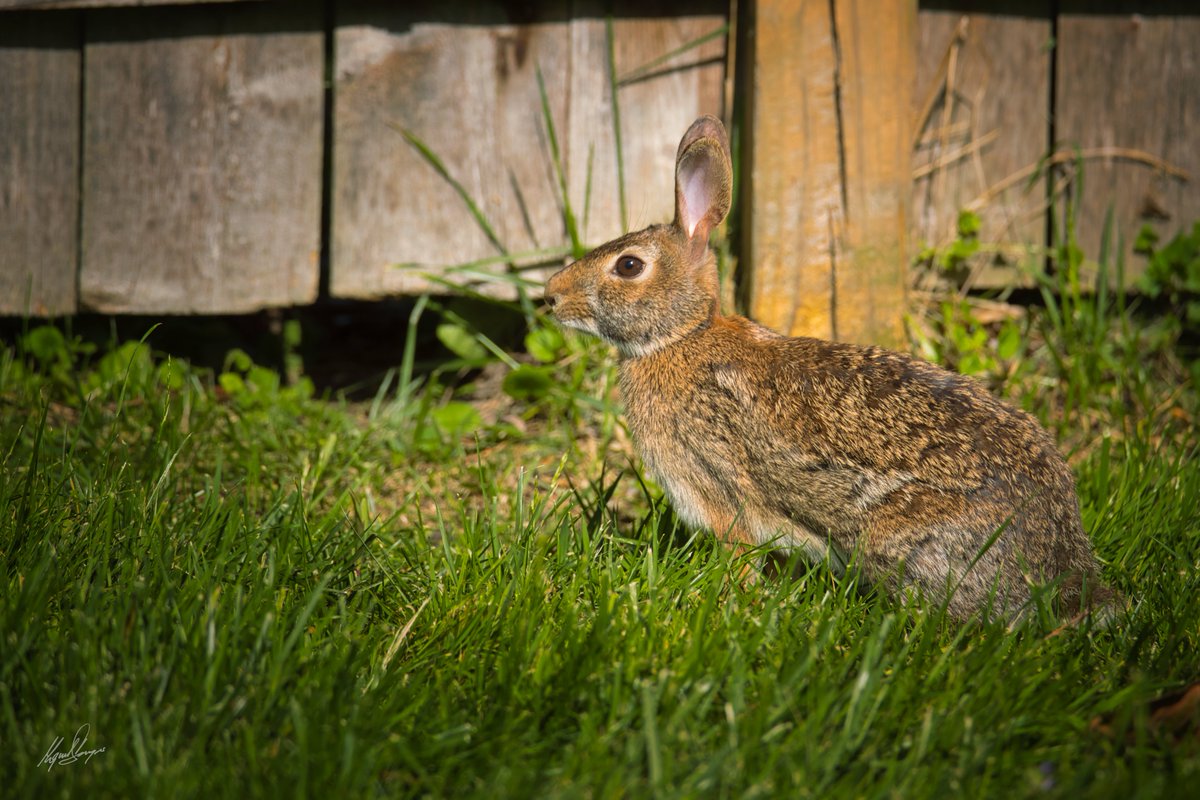
Most folks will look at this photograph and say, "What a cute rabbit."
Except... it isn't a rabbit.
What you're looking at is a Snowshoe Hare (Lepus americanus), a close cousin of the rabbit, but a very different animal.
One of the easiest ways to tell them apart is their size, longer legs, and those enormous ears that look like they could pick up satellite television. Unlike rabbits, hares are born fully furred, with their eyes open, and ready to move shortly after birth. Rabbits, on the other hand, arrive looking like tiny pink potatoes with ears.
Snowshoe Hares are famous for their seasonal camouflage. In northern regions they transform from brown in summer to brilliant white in winter, allowing them to blend into snowy landscapes and avoid becoming lunch for every predator in the neighborhood.
Interestingly, if you've ever watched Monty Python and the Holy Grail, you'll remember the infamous Killer Rabbit of Caerbannog; the vicious white rabbit with "sharp pointy teeth" that required the Holy Hand Grenade of Antioch to defeat. While the film never specifically identifies the species, the joke was almost certainly inspired by the white winter coat of hares such as the Snowshoe Hare.
And in one of those strange twists where comedy and reality intersect, Snowshoe Hares aren't always the strict vegetarians people assume they are. While their diet consists primarily of grasses, leaves, bark, and other vegetation, they have been observed scavenging carrion and occasionally consuming meat. No, they're not hunting knights and launching themselves at people's throats, but perhaps Monty Python was onto something after all.
This particular individual was busy conducting official hare business when I interrupted its schedule with a camera. Fortunately, it was kind enough to pause long enough for a portrait before deciding that maintaining a safe distance from humans was still a splendid idea.
Of course, as a former survival instructor, I am contractually obligated to point out that while wildlife photographers see a magnificent and fascinating creature...
Fieldcraft instructors tend to see several days' worth of stew.
Fortunately for this hare, I was carrying a camera rather than a cooking pot.
For today at least.
📷 Captured Wilderness Photography
🐇 Snowshoe Hare (Lepus americanus)
📍 Michigan
4
72
Jun 9
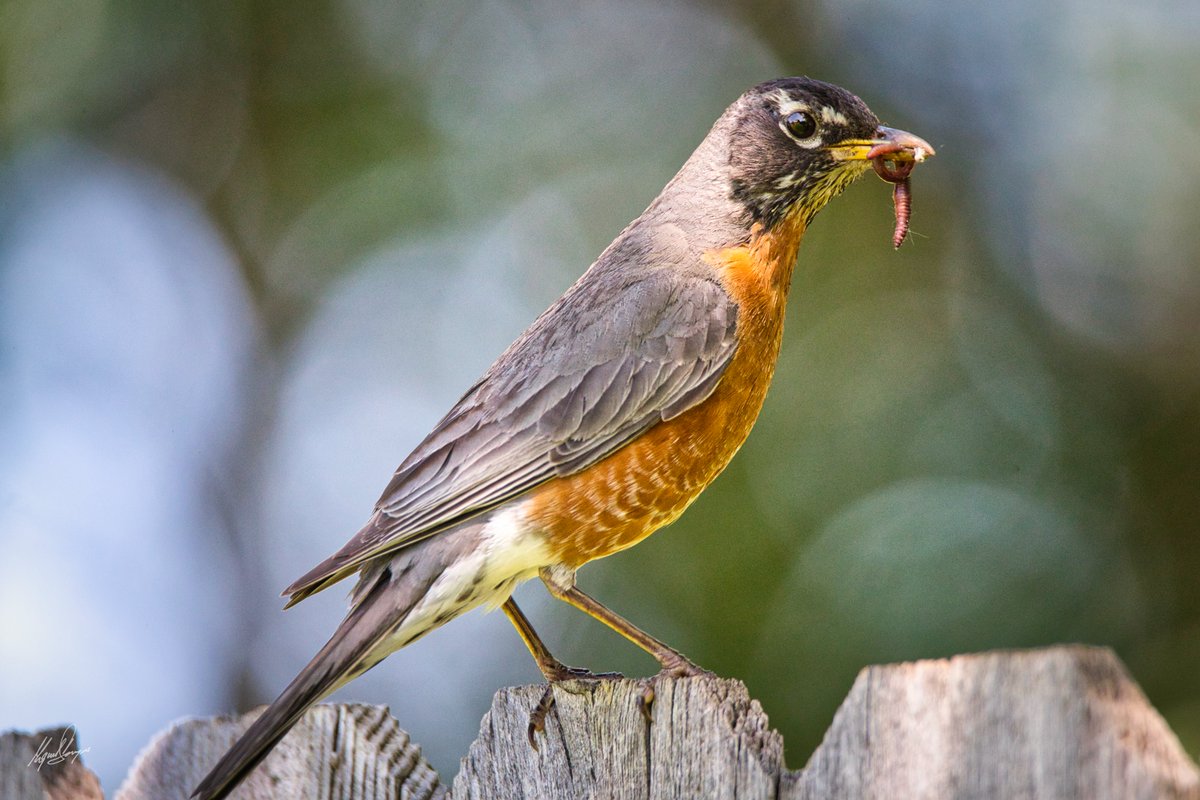
American Robin (Turdus migratorius) eating a worm... this is just another one of my backyard wildlife series of photos - taken in the last 10 days or so... let me know what you think...
3
35
Jun 9
Most people know what a stroke is.
Far fewer people know what happens AFTER a stroke.
Even fewer know that sometimes the effects of an old stroke can come back years later, temporarily, just to remind you that life is a vindictive little bastard with a sense of humor.
One of the things I occasionally deal with is a condition called Stroke Recrudescence.
Sounds like the sort of thing you'd catch from a questionable life decision involving tequila, poor judgment, and a Romanian hooker behind a truck stop somewhere, but it's actually a neurological condition that affects some stroke survivors.
For those who don't know, I've survived three strokes.
Not one.
Not two.
Three.
I've also accumulated enough other damage over the years to qualify as a mobile medical training aid. Multiple traumatic brain injuries. Forty-four broken bones. Torn knees. A torn Achilles. Polyneuropathy. Osteoarthritis. Sleep apnea. PTSD. Sepsis. MRSA. Shingles. Pneumonia. Salmonella. COVID. Hypothermia. A lightning strike that threw me across a yard.
At this point, if something goes wrong with the human body, there's a reasonable chance I've either had it, broken it, torn it, infected it, or otherwise found a creative way to piss it off.
Yet somehow I'm still here.
Unfortunately, surviving something and fully escaping it are not always the same thing.
When you have a stroke, part of the brain is injured. Over time, the brain adapts. It builds new pathways, creates workarounds, and learns how to route around the damaged areas.
Think of it like a city after an earthquake.
Roads are destroyed.
Bridges collapse.
Entire sections of infrastructure are damaged.
Over time, repairs are made. Detours are established. Traffic begins flowing again.
Eventually people driving through town may not even realize there was ever a disaster.
That's pretty much what my brain has spent years doing.
Most days everything works well enough that nobody notices anything unusual.
I work.
I drive.
I teach.
I photograph wildlife.
I build things.
I write.
I run businesses.
I annoy people on social media.
Life goes on.
Then one day the stars align, the planets get drunk, the universe decides it hasn't screwed with me recently enough, and something pushes the system beyond its comfort zone.
Too much stress.
Too little sleep.
Too much physical exertion.
Dehydration.
Illness.
Mental exhaustion.
Heat.
Or sometimes a delightful combination of all of them at once because apparently moderation is for other people.
Then suddenly the old stroke symptoms can start making an appearance again.
Words become harder to find.
Thoughts don't organize themselves properly.
Memory gets sketchy.
Balance becomes questionable.
Concentration wanders off into the woods and refuses to answer its radio.
Fatigue arrives carrying a folding chair, a sleeping bag, and a long-term lease agreement.
Imagine trying to run Windows 11 on a 1998 desktop computer while seventeen browser tabs are open, three are playing videos, one is mining cryptocurrency, and somebody keeps unplugging the power cord every few minutes.
That's about what it feels like.
From the outside, people may wonder why I seem slower than usual, more forgetful than usual, or less energetic than usual.
The answer is simple.
My brain is essentially running emergency backup systems while the main crew is conducting repairs.
The important thing to understand is that this is usually not a new stroke.
It's old damage temporarily making itself known because the brain is under stress.
It's the neurological equivalent of an old knee injury that aches before a storm.
Except instead of your knee hurting, your entire operating system starts sending error messages.
Unfortunately, there is no magic pill.
No miracle cure.
No special injection.
No wizard.
No healing crystal.
No essential oil distilled from free-range Himalayan unicorn farts.
The treatment is spectacularly boring.
Rest.
Hydrate.
Sleep.
Reduce stress.
Take it easy.
Wait.
That's it.
The problem, of course, is that "take it easy" and I have never enjoyed a healthy working relationship.
I spent most of my adult life in the military, security work, investigations, executive protection, survival instruction, firearms instruction, and a long list of other occupations where quitting was rarely considered a viable option.
My default setting has always been:
"Keep moving."
"Keep working."
"Figure it out."
"Push through."
Unfortunately, stroke recrudescence doesn't negotiate.
It doesn't care about schedules.
It doesn't care about deadlines.
It doesn't care about projects.
It doesn't care that there are photographs to edit, websites to build, gardens to maintain, videos to produce, classes to teach, or bills to pay.
When it decides it's time for maintenance, maintenance happens.
Period.
So if you ever notice me being a little slower, a little foggier, a little quieter, or disappearing from social media for a few days, chances are I'm not dead.
Despite rumors, speculation, and what some of my enemies may be hoping for, I haven't shuffled off this mortal coil just yet.
More likely, my brain has simply hung out a temporary "Out of Order" sign and is demanding a few days of rest before returning to regularly scheduled programming.
The good news is that it almost always improves.
The bad news is that while it's happening, there isn't much I can do except listen to my body, drink some water, get some sleep, and accept the fact that even stubborn old Welsh bastards occasionally need maintenance.
The machine still runs.
It's just got a few dents in the bodywork, some warning lights permanently illuminated on the dashboard, and every now and then it needs to spend a couple of days in the garage before heading back out on the road.
2
206
Jun 8
I've noticed that AI seems to occupy an awful lot of people's thought space these days.
"AI is going to take all the jobs."
"AI is creating fake news."
"AI is destroying creativity."
Maybe. Maybe not. I suspect the truth, as it usually does, lies somewhere in the middle.
As for me, yes, I use AI. Quite a bit, actually.
I use it to help me write. I can throw a handful of rough ideas at it and have it help organize those thoughts into a coherent article, blog post, or social media update in seconds instead of spending hours staring at a blinking cursor wondering why the words won't cooperate.
I use it for research. AI can gather information from multiple sources far faster than I can find those sources myself. That doesn't mean I blindly trust everything it tells me. Anyone who has spent more than five minutes using AI knows that it occasionally says things that would make a village idiot stop and ask for clarification. It simply gives me a place to start.
I use it to generate ideas. Cocktail recipes. Photography expedition planning. Places I may want to visit. Topics I may want to write about. Business ideas. Marketing ideas. Sometimes the suggestions are brilliant. Sometimes they're complete bollocks. Just like asking a room full of people.
What I do NOT use AI for is creating my photographs.
Every image I produce started with me deciding to get off my backside and go somewhere. Sometimes that's a short drive. Sometimes it's a thousand-mile round trip. Sometimes it involves standing in the freezing cold, getting soaked to the skin, being eaten alive by mosquitoes, or questioning my life choices while waiting for wildlife that apparently didn't get the memo that they were supposed to show up.
The planning is mine.
The field work is mine.
The experience is mine.
The successes are mine.
The failures are mine.
The hundreds or thousands of miles driven are mine.
The early mornings, late nights, sore knees, aching back, cold fingers, and occasional poor decisions are mine.
And while many modern editing programs now include AI-powered tools, I don't use them. The editing process, for me, has always been about accurately representing what I saw and experienced in that moment. I'm not interested in what a computer thinks I should have seen. I'm interested in showing you what was actually there.
To me, AI is no different than a calculator, a GPS, a spell checker, or a search engine.
It's a tool.
A very powerful tool, but still just a tool.
A chainsaw doesn't make someone a lumberjack.
A camera doesn't make someone a photographer.
A keyboard doesn't make someone a writer.
And AI doesn't magically make someone knowledgeable, talented, or experienced.
The value doesn't come from the tool.
The value comes from the person using it.
The knowledge still has to come from somewhere.
The experience still has to come from somewhere.
And somebody still has to do the work.
Used properly, AI can save an enormous amount of time. It can help organize ideas, accelerate research, and make certain tasks more efficient.
What it cannot do is replace experience.
At least not yet.
And until the day it can drive 1,000 miles, stand knee-deep in a swamp at sunrise, get rained on, swarmed by mosquitoes, and spend three hours waiting for a bird that refuses to cooperate, I think my job is probably safe.
At least that's how I choose to use it.
11
10
1,317
Jun 6
A random thought for the evening...
One day, many years from now, I'll finally manage to do what lightning strikes, MRSA, sepsis, garage doors, three strokes, and 44 broken bones have so far failed to accomplish...
I'll shuffle off this mortal coil.
Now here's the question.
I've been kicking around the idea of creating something I'm currently calling "Digital Mig."
Not some weird attempt at immortality, but more of a living archive containing my stories, photographs, lessons learned, military tales, survival knowledge, successes, failures, spectacular mistakes, questionable life choices, and a lifetime of sarcastic observations about this spinning ball of shite we call Earth.
If such a thing existed after I'm gone, would you ever actually look at it?
Not because you miss me.
Not because you feel obligated.
But because at some point you thought:
"Remember that guy who got struck by lightning, walked 180 miles to prove a point, spent years wandering around the wilderness with a camera, argued that rugby is superior to football, and somehow survived long enough to become a grumpy old bastard?"
Would you ever go back and revisit the stories?
Would you be interested in the lessons learned?
Would you want to laugh at the moments where I looked spectacularly stupid?
Or would you simply scroll past and carry on with your day?
No wrong answers. I'm genuinely curious.
Would you ever look back?
1
1
61
Jun 5
Anyone else ever feel like they're trying to push a Sisyphus-sized boulder uphill with a bloody teaspoon?
Because I swear that's where I'm at right now.
For my day job today, I delivered a vehicle to Cheboygan, Michigan.
About four and a half hours there.
About four and a half hours back.
Nine hours.
Nine bloody hours.
By the time I got home, I'd spent so much time staring through a windshield that I was starting to develop a personal relationship with the centerline.
But, being the eternal optimist that I am... and by "optimist" I mean stubborn old bastard incapable of leaving well enough alone... I still had plans.
Finish another planter.
Transplant tomatoes.
Get some work done on the website.
Move a couple of businesses forward.
Cross a few things off the to-do list.
You know... all those things that seem perfectly reasonable when you're making plans and haven't yet been punched squarely in the face by reality.
Instead, I got home, looked at the list, looked at the clock, looked at my energy levels, and came to the scientific conclusion that I had precisely bugger-all left in the tank.
The planter isn't finished.
The tomatoes are still waiting.
The website is still sitting there patiently wondering when I'm going to stop screwing around and pay attention to it.
And the to-do list has somehow reproduced itself like a colony of drunken rabbits.
Before anyone starts feeling sorry for me, don't bother.
I know exactly where sympathy is located.
It's in the dictionary somewhere between "shit" and "syphilis", and I've never found much practical use for any of the three.
The funny thing is that social media only shows the shiny bits.
People see the photographs.
The projects.
The accomplishments.
The businesses.
The finished products.
What they don't see is the bloke behind the curtain standing there wondering how in the hell he's managed to work all day and still somehow be losing ground.
They don't see the unfinished jobs.
The chronic pain.
The exhaustion.
The days where executive dysfunction shows up like an uninvited relative at Christmas and refuses to leave.
They don't see the moments where you stand in the backyard staring at a project and wondering which idiot thought it was a good idea to start it in the first place.
Spoiler alert.
The idiot was me.
Now don't get me wrong. I've dealt with worse.
I'm 56 years old.
I've broken 44 bones.
Survived 3 strokes.
Collected enough injuries, illnesses, surgeries, and mechanical failures over the years that my medical history reads like the maintenance log for a Soviet tractor.
I've been cold, wet, hungry, injured, threatened, and generally kicked around by life more times than I can count.
And yet some days the hardest thing isn't surviving the big stuff.
Sometimes it's finding the motivation to start the next bloody task when you're already running on fumes.
But here's the thing...
The boulder only wins if you stop pushing.
And I'm far too stubborn to give the bastard the satisfaction.
So tomorrow I'll get up, go to work, come home, and shove the damned thing uphill a little farther.
Maybe an inch.
Maybe a foot.
Maybe I'll just stand there and swear at it for a while.
Either way, the fight continues.
Now if you'll excuse me, I'm off to conduct a detailed inspection of the inside of my eyelids for light leaks before the alarm clock starts making unreasonable demands again.
What boulder are YOU currently trying to shove uphill?
2
138
Jun 3
***UPDATE***
Well... the last 48 hours have been a spectacular reminder that when life decides to kick you in the bollocks, it rarely settles for just one swing.
For reasons known only to the universe, the Bad Luck Faeries have been flying overhead in formation, shitting on me like a swarm of vengeful dumpster ducks.
It all started when my garage door decided it no longer wished to participate in reality.
Not the opener.
Not the torsion spring.
Not the cables.
The actual 18-foot-wide insulated garage door literally delaminated while in the upright OPEN position.
For those unfamiliar with the term, that means the layers of the door separated from each other while hanging in the tracks. The damned thing effectively came apart at the seams, twisted itself into a giant aluminum and insulation pretzel, and jammed solid in the rails.
It is so thoroughly buggered that it can't simply be taken down.
The bloody thing now has to be CUT OUT OF THE TRACKS before it can be removed.
Because apparently "garage door replacement" wasn't quite enough suffering for one week.
The final verdict?
$4,700 for a new door.
4-7 week lead time.
A security-sized hole in the side of my garage.
And enough frustration to power a small city.
Now, some people would have thrown a tarp over the opening and hoped for the best.
I chose violence.
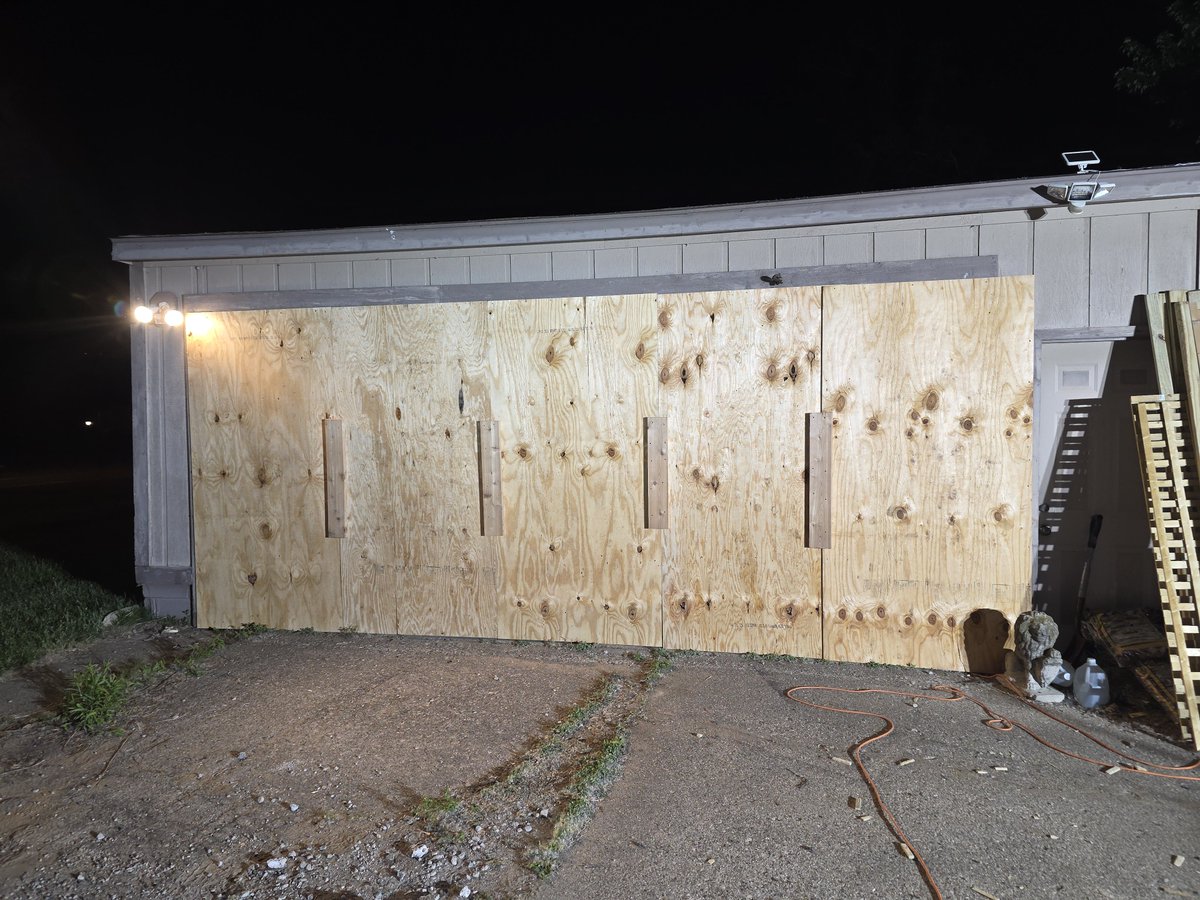
Specifically, five sheets of 1/2-inch construction plywood, horizontal reinforcement boards, a framing nailer loaded with 3-inch nails, and several hours of sweat-fueled engineering powered almost entirely by spite.
The result is what you see here.
Fort Mig.
Behind those plywood sheets are reinforcement boards substantial enough that any local sticky-fingered snot goblin looking for an easy score is going to take one look at this and decide that burglary sounds suspiciously like hard work.
Not today, Satan.
The good news is that the plywood wasn't wasted money. Once the new door finally arrives, every sheet can be repurposed into future projects around the homestead.
Unlike OSB, which in my experience has roughly the same long-term usefulness as wet tissue paper attempting to support a sack of marbles.
The silver lining in all this?
The website rebuild is finally moving forward.
The plugins have stopped behaving like little digital assholes.
The server demons appear to have been exorcised.
The tomatoes are behaving themselves.
And despite the best efforts of the Bad Luck Faeries and their airborne squadron of dumpster ducks, I'm still standing.
The score currently stands at:
Mig: 1
Bad Luck Faeries: 937
But the fight continues.
Fort Mig is operational.
The sticky-fingered snot goblins have been denied entry.
Carry on.
1
3
161
Jun 2
An Ode to a Fucked-Up Garage Door
Well...
If it isn't one thing, it's another.
Tonight's contestant in the ongoing game of "What Fresh Hell Is This?" is my garage door.
After years of faithful service, it has apparently decided that its work here is done and has shuffled off this mortal coil.
Now, had it died in the closed position, safely securing all my worldly possessions from the sticky-fingered goblins of society, I might have been mildly inconvenienced.
But no.
That would have been too easy.
Instead, it chose to expire in the fully open position, proudly displaying the contents of my garage to anyone passing by.
"Look at me!" it seems to say.
"I am open, unsupervised, and completely incapable of performing the one job for which I was specifically designed."
Marvelous.
Absolutely bloody marvelous.
So there I stood, staring at this monument to mechanical failure while mentally adding yet another item to the ever-growing list of Things That Need Fixing.
The website is acting like a drunken squirrel.
The server is possessed by demons.
The plugins are throwing tantrums.
The yard still needs work.
The tomatoes are plotting their inevitable uprising.
And now the garage door has decided to join the rebellion.
Still...
Tomorrow is another day.
The garage door can be repaired.
The website will eventually behave.
The plugins will stop being little bitches.
And the tomatoes will be reminded who pays the water bill.
Until then, I'll simply add this latest catastrophe to the pile and carry on.
Because sometimes that's all you can do.
* Mig
2
29
May 20
Well, SHIT... it would appear that somehow, someone completely wiped my Captured Wilderness website from the server... it's gone! I don't have a recent backup... I'm about to go out of town for a couple of days to deliver vehicles for my employer, so I don't have time to rebuild it at present... 14 years worth of work - GONE...
48
May 13
Right ladies and gents... I need some honest opinions from people who actually know me, know my background, and know the difference between legitimate field experience and internet guru nonsense.
As some of you already know, I am seriously considering launching a real-world outdoor training organization focused on practical wilderness survival, preparedness, navigation, campcraft, field skills, emergency medicine basics, and reality-based outdoor competence.
NOT online "survival instructor" certificate mill bollocks.
Actual hands-on training.
Cold, wet, tired, uncomfortable, reality-based learning.
The current front runner for the name is:
"Great Lakes Fieldcraft"
Before I go any further with domains, LLC registration, branding, logos, websites and all the rest of the associated headaches, I want honest feedback from people whose opinions I actually value.
Does the name work?
Does it sound credible?
Does it fit my background and teaching style?
Does it sound like a legitimate field training organization, or does it sound like I should be selling artisan beard oil from a canvas tent while explaining the spiritual meaning of spoons carved from ethically sourced driftwood?
No sugar coating.
No politeness filter.
Give me the honest assessment.
@ZenfinityDesign @NautilusZen - brothers, please disseminate among the group so that I can ask their opinions too... Thank you.
2
46
May 13
Right... story time...
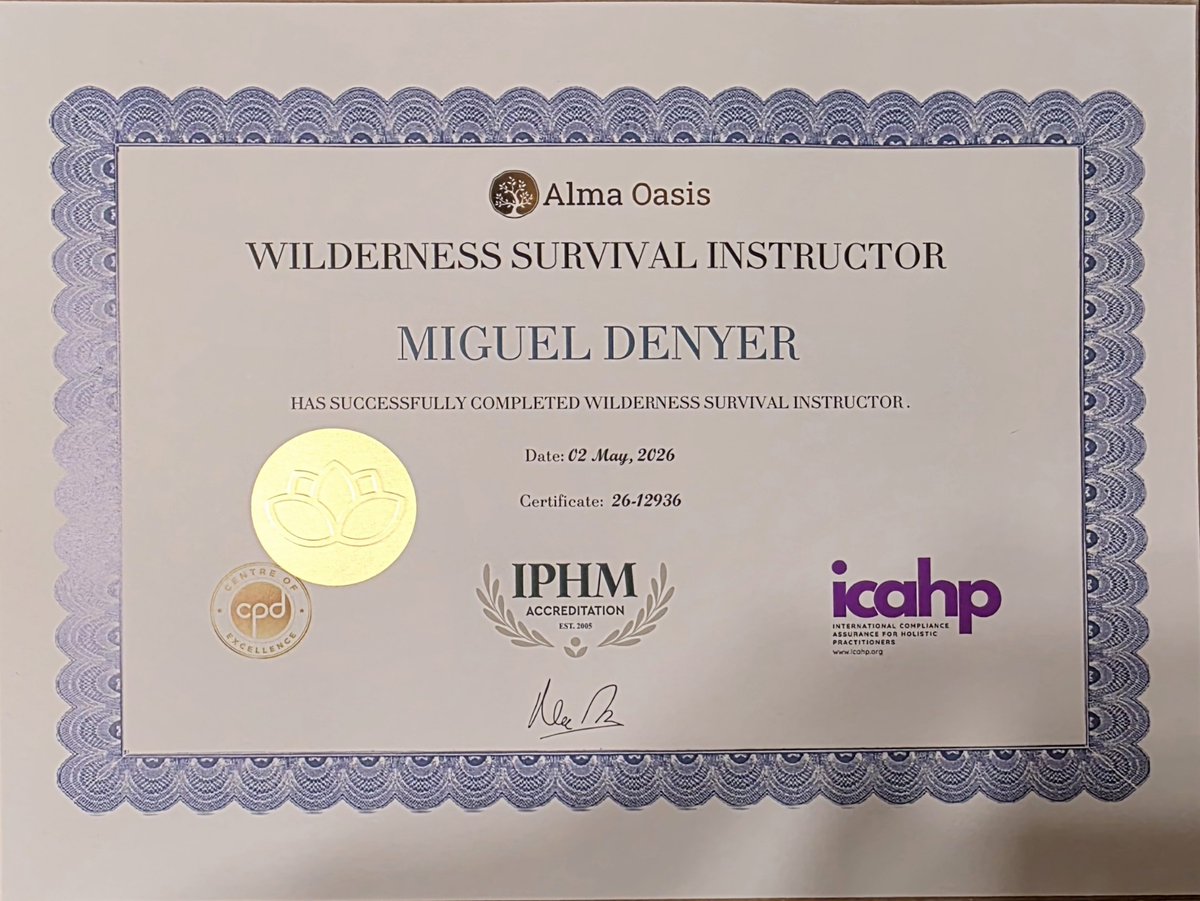
A few days ago, I completed an online "Wilderness Survival Instructor" course. Sounds impressive doesn't it? Fancy looking certificate, official sounding titles, shiny seals on the paper, all the right buzzwords to make people think they're dealing with some hardened mountain man who can survive the apocalypse with a shoelace and a pocket knife.
The problem?
The course itself was total bollocks.
And I don't say that lightly.
Now before anyone starts clutching their crystals and humming Kumbaya around a scented candle, understand something... I am not posting this to brag about my own background. I am posting it because there are people out there paying money for this nonsense believing they are learning legitimate survival skills.
They're not.
They're being sold a fantasy.
I've attended actual survival courses. Military and civilian. I've taught survival related subjects in both the UK and the United States. Real survival training is not about "connecting with nature" while sniffing lilies and talking about your feelings beside an imaginary campfire.
Real survival training is ugly, uncomfortable, exhausting and sometimes dangerous.
It is about learning how not to die when things go catastrophically wrong.
How to build a shelter that actually keeps you alive when the temperature drops.
How to light a fire in bad weather... and more importantly how to KEEP it lit.
How to source water without giving yourself a one way ticket to explosive diarrhoea and dehydration.
How to purify that water.
How to navigate when your phone battery dies and GPS becomes an expensive paperweight.
How to improvise tools.
How to signal for help.
How to administer emergency first aid in the field.
How to think clearly when cold, wet, hungry and exhausted.
THAT is survival training.
This course?
Absolute clown shoes.
A cheap certificate mill targeting people who don't know any better.
Now to be fair, I won't judge people for signing up for these things. Most folks genuinely want to learn and trust that the people offering the training actually know what they're talking about.
But I WILL heavily judge anyone who takes this kind of nonsense seriously enough to start teaching it to others as though they are now a qualified survival instructor.
Because here's the harsh reality...
Bad survival information can get people hurt.
Or killed.
The wilderness does not care about your positive affirmations, your spiritual alignment, your social media followers or your overpriced online certificate.
Mother Nature is the most unforgiving instructor on earth. She does not hand out participation trophies.
If you want to learn wilderness survival, find instructors with actual field experience (as it happens, I know a guy). Military survival instructors. Experienced outdoorsmen. Search and rescue personnel. Long term hunters, mountaineers, bushcrafters, wilderness medics... people who have actually lived this stuff outside of a Zoom call and a PDF workbook.
Because when things go wrong out there, reality takes over very quickly.
And reality doesn't give a damn about your laminated certificate.
45
May 1
Every now and then, I feel the need to say something that people don’t really want to hear… but probably should.
This is one of those times.
I’ve spent a fair chunk of my life in the military and private security world, dealing with the kind of people most folks only ever hear about on the news. Terrorists don’t think the way normal people do, and that’s part of the problem. They’re not just trying to hurt people, they’re trying to make a statement. They want attention, they want impact, and they want what’s known in that world as a “spectacular”… something that causes as much damage, disruption, and shock as possible.
And here’s the uncomfortable truth…
They pay attention to timing, and they pay attention to symbolism.
We’ve already seen it before. The attacks on September 11 attacks weren’t random, even if they don’t tie neatly to a specific date most people would recognize. The choice of 9-11 carried its own kind of symbolism, not least of which is the fact that “911” is the emergency number in the United States, which adds a layer of psychological impact all by itself.
The 2012 Benghazi attack was very clearly timed to fall on the anniversary of that event, which tells you everything you need to know about how much these people value messaging.
Now look at this year for a second.
It’s the 25th anniversary of 9-11.
It’s the 250th anniversary of the United States.
It’s the 200th year of Freemasonry in Michigan.
It’s the 100th anniversary of the Detroit Masonic Temple, the largest Masonic building anywhere in the world.
That’s a lot of symbolism stacked into one year.
Now layer this on top…
We’re in a period right now where funding fights and political gridlock are impacting parts of our national security apparatus, including areas tied to the United States Department of Homeland Security. I’m not interested in getting into who’s right or who’s wrong, but the reality is this… when systems are strained, delayed, or not operating at full capacity, that creates gaps.
And gaps are exactly the kind of thing bad actors look for.
Now let me be absolutely clear so nobody runs off the rails with this… I am not saying something is going to happen. What I am saying is that if you understand how these people think, this is the kind of environment that gets their attention.
So this isn’t fearmongering. It’s awareness.
Because here’s the reality most people don’t like to admit… in the moment something goes wrong, nobody is standing right there ready to save you. Police, fire, EMS… they’re coming, but they’re not there yet. That gap between something happening and help arriving is on you.
You are your own first line of defense.
So let’s keep this simple and practical.
If you see something that doesn’t look right, trust that instinct. Most people talk themselves out of it because they don’t want to feel silly or be wrong. A suspicious object isn’t always going to look like something out of a movie with wires hanging out of it. Most of the time it looks like something that just doesn’t belong where it is… a bag left in the middle of a walkway, a backpack tucked somewhere odd, a box or package sitting where it makes no sense.
All you really need to ask yourself is one question… does this belong here? If the answer is no, then treat it like it matters.
Don’t touch it, don’t move it, and don’t try to be the hero.
And remember this… if you can see it, it can see you. Distance is your friend, so put some space between you and whatever it is.
Now let’s talk about people for a minute, because behavior tells you far more than appearance ever will. Someone pacing around with no clear purpose, someone sweating when the situation doesn’t justify it, someone paying more attention to entrances and exits than whatever event is going on, or someone who looks like they’re waiting for something to happen instead of actually being there to enjoy it… those are the kinds of things that should get your attention.
That’s not profiling, that’s observation.
If something feels off, report it. Call 911 and let them figure it out. That’s literally what they’re there for. Don’t assume someone else already made the call, because most of the time they didn’t, and don’t let the fear of looking stupid stop you from doing the right thing. I can tell you from experience, I would rather respond to ten false alarms than miss the one that actually mattered.
Every single time.
Now here’s the part people don’t like hearing…
Crowds are targets, and they always have been. Big public events, celebrations, government buildings, places with symbolic value… they check all the boxes for someone looking to make a statement.
That doesn’t mean you stop living your life or lock yourself in your house.
It just means you go in with your eyes open.
Know where your exits are, have a rough idea of how you’d get out if things went sideways, don’t let yourself get boxed in, and for the love of God keep your head up instead of buried in your phone. None of this is complicated, but it can make a very real difference if things go bad.
At the end of the day, this really comes down to one simple thing… pay attention. I’m not talking about being paranoid or walking around like the sky is about to fall, just being aware of what’s going on around you. Most people drift through life on autopilot, head down and completely oblivious to the world they’re standing in, and that works right up until the moment it doesn’t.
Because if something does happen, the people who notice it early are usually the ones who get themselves out of trouble first. The ones who ignore it, brush it off, or assume it’s nothing don’t always get that same opportunity.
Stay sharp.
1
4
137
Apr 26
Back in 1984, a former KGB defector, Yuri Alexandrovich Bezmenov, warned that the U.S. wouldn’t be taken down by war… but from within.
Not with bullets… with ideas.
He called it "The Great Brainwashing" and it is a four-stage process:
1. Demoralization (15–20 years)
Teach a generation what to think, not how to think… until they reject facts that don’t fit their beliefs.
2. Destabilization (2–5 years)
Undermine the economy, leadership, and trust in institutions.
3. Crisis (weeks/months) - Think COVID19
Chaos hits. People get scared. They stop asking questions and just want stability.
4. Normalization
A new “normal” is accepted… not because it’s right, but because people are worn down.
Now look around.
There is division everywhere...
People arguing feelings over facts...
Media shaping narratives instead of reporting them...
This isn’t about left vs right.
It’s about whether you’re thinking for yourself… or just repeating what you’ve been told.
Because if you’re not questioning what you hear…
You’re not informed.
You’re being programmed.
1
3
182
Apr 23
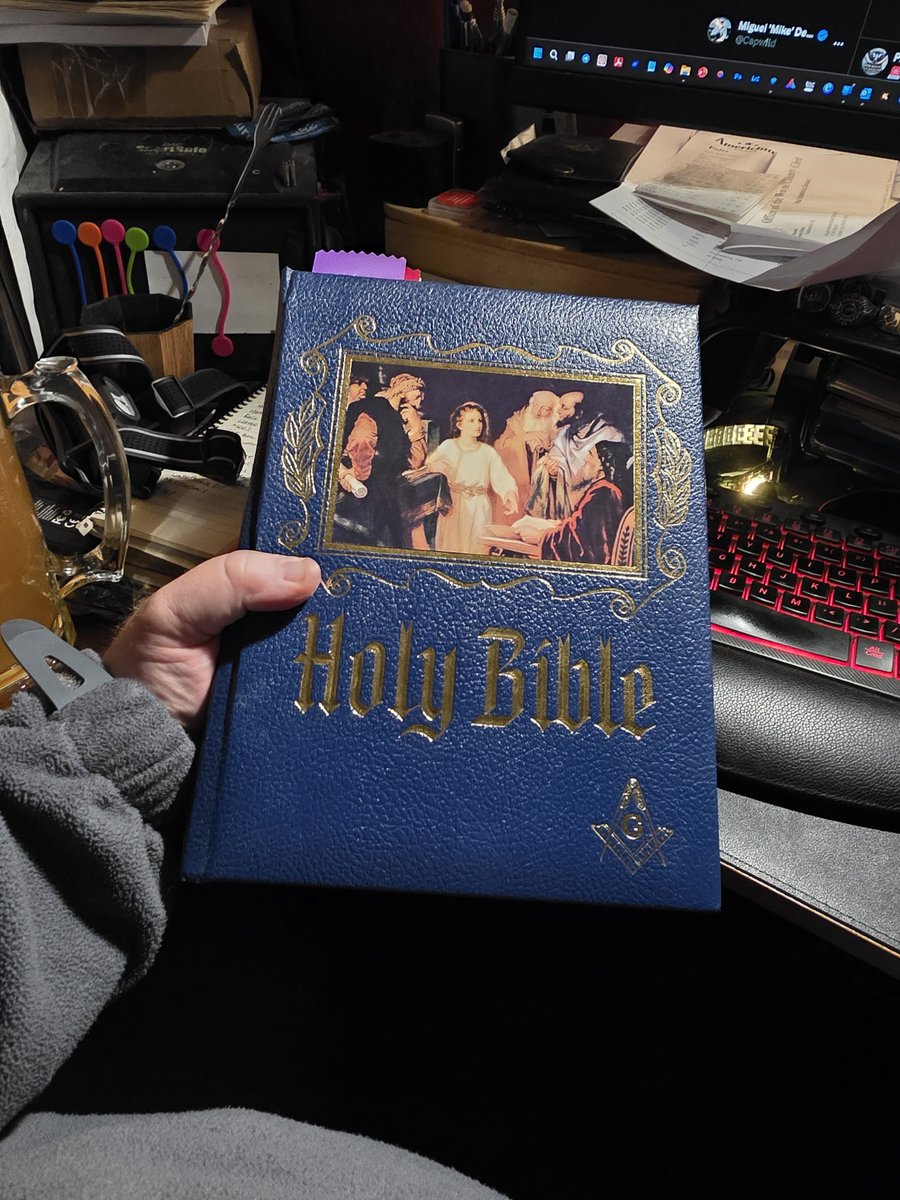
There’s a lot of nonsense floating around about Freemasonry.
So I wrote a book to cut through it.
Square Truths: Freemasonry without the Myths — no conspiracies, no theatrics… just straight answers.
Amazon: $24.99
Signed copy direct from me: $20 shipping
Details below.
amazon.com/dp/B0FLVQ42FC
1
3
67
Apr 23
To purchase a signed copy directly through me, simply send me a DM and we'll go from there.
45