
Sardinian. Assistant prof at @illc_amsterdam. Language & cognition w/ models & experiments. Roughly Bayesian. Past: Tübingen, @UoE_CLE (He/Him)
Joined October 2016
- Tweets 3,851
- Following 490
- Followers 902
- Likes 6,720
377 Photos and videos





Pinned Tweet

24 Jan 2025
Moving to where the sky is blue as faustocarcassi! Bye bye "X"
2
270
Fausto Carcassi retweeted

6 Jan 2025
It's time that linguistics seriously discusses formal training. We are a field that widely uses formal/mathematical tools (formal language theory, logic, probability theory, statistics), yet we do not provide strong systematic training of these tools to our students. why is that?
12
29
295
15,092
Fausto Carcassi retweeted

3 Jan 2025
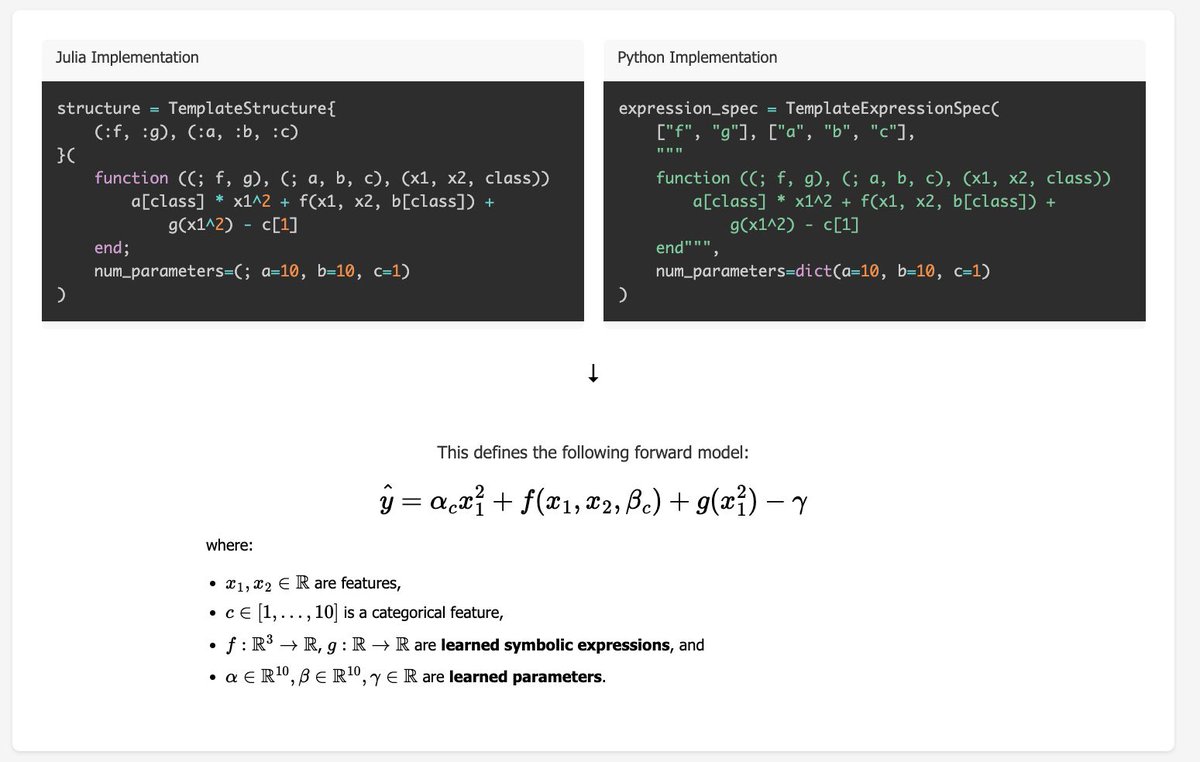
Exploring a new "Template Expression" API design for symbolic regression that allows joint optimization of symbolic expressions with parameter vectors. Can be used for optimizing a neural network simultaneously with a symbolic model, finding parametric expressions, learning constants in fixed forms, and much more.
Would love feedback on the design!
github.com/MilesCranmer/Symb…
2
5
47
5,031
Fausto Carcassi retweeted

We aren't the only primates who appreciate a good joke. New piece on the origins of humor by DISI Director Erica Cartmill!
scientificamerican.com/artic…
8
24
1,055
Fausto Carcassi retweeted

3 Dec 2024
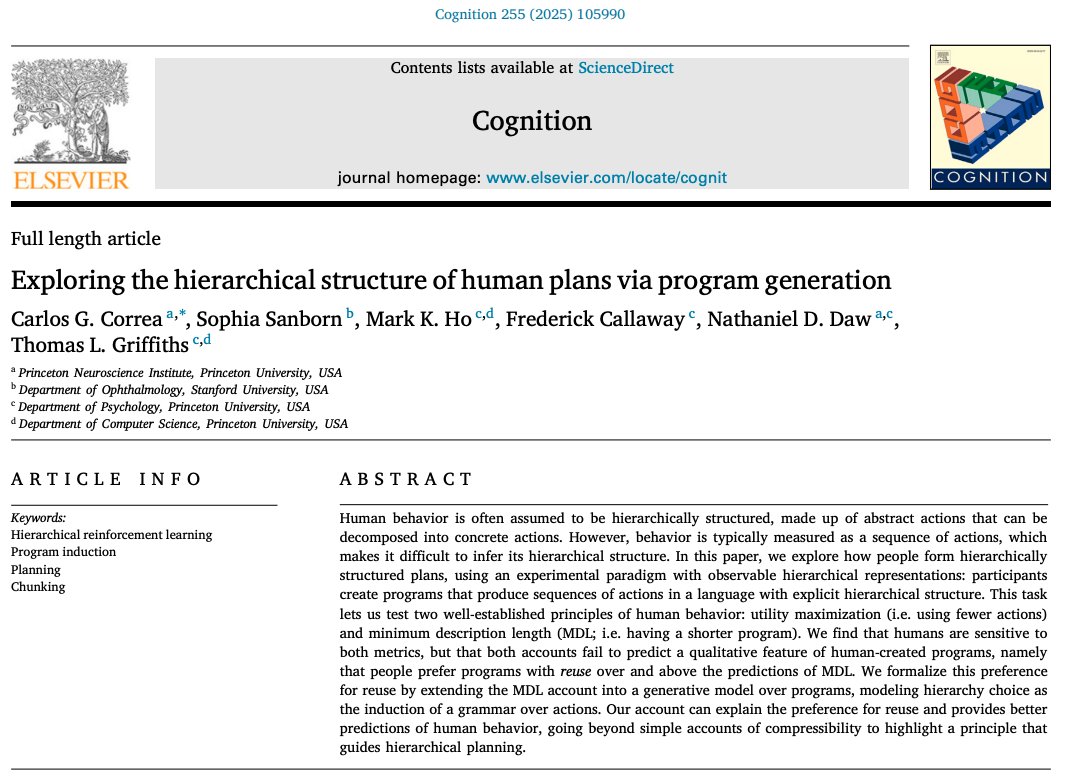
My paper on hierarchical plans is out in Cognition!🎉
tldr: We ask participants to generate hierarchical plans in a programming game. People prefer to reuse beyond what standard accounts predict, which we formalize as induction of a grammar over actions.
authors.elsevier.com/a/1kBQr…
1
29
150
15,671
Fausto Carcassi retweeted

22 Nov 2024
👩🎓👨🎓Fully funded PhD position available to come work with me at @UniOslo using iterative learning experiments to understand the evolution of sound symbolism.
🔴Deadline is 12. Jan '24
⏲️Desired starting date is Mar/April '24
jobbnorge.no/en/available-jo…
30
35
6,203
Fausto Carcassi retweeted
18 Nov 2024
SymbolicRegression.jl → 1.0 🎉
After several years of work, I'm thrilled to announce some major new features! Let me show you what's possible now:
5
41
216
26,999
Fausto Carcassi retweeted

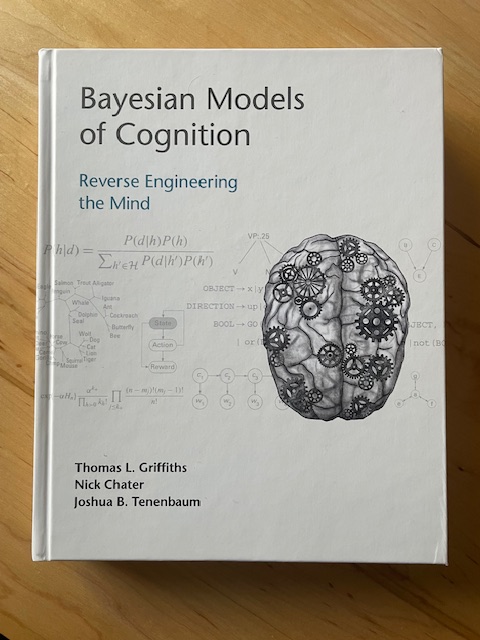
(1/5) Very excited to announce the publication of Bayesian Models of Cognition: Reverse Engineering the Mind. More than a decade in the making, it's a big (600 pages) beautiful book covering both the basics and recent work: mitpress.mit.edu/97802620494…
20
444
2,320
176,305
Fausto Carcassi retweeted

14 Nov 2024
Updated @ESLRSociety jobs board! Highlights: 2 tenure-track psych jobs at @JohnsHopkins, postdoc on collective behavior w/@norijacoby at @Cornell, and multiple PhD positions at @MPI_animalbehav 🧠🕸️🐦 bit.ly/ESLR-Jobs
5
12
7,719
Fausto Carcassi retweeted

8 Nov 2024
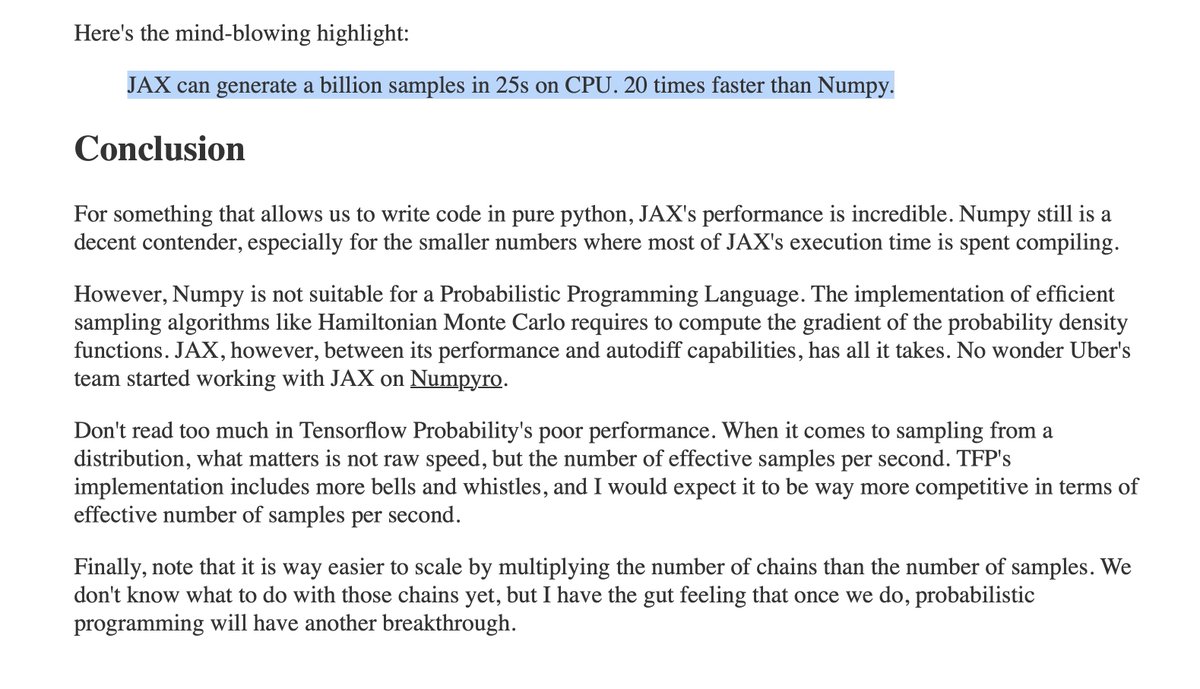
"we don't know what to do with those chains yet, but I have the gut feeling that once we do, probabilistic programming will have another breakthrough" - @remilouf on parallelizing 100s of MCMC chains with JAX
3
10
93
11,735
Fausto Carcassi retweeted

6 Nov 2024
Particle filters are genetic algorithms with guarantees 😛
6 Nov 2024

Similarly, there are several research directions today seen as long-abandoned failures, that are only waiting for the right amount of attention and the right level of compute scale to shine. Genetic algorithms are one of them.
4
3
37
4,488
Fausto Carcassi retweeted

6 Nov 2024
New pre-print (tx @ChrisMMCox!): The social context of turn-taking osf.io/preprints/psyarxiv/zw… Comments welcome!
TL;DR: Response latency in conversation depends on a multidimensional interplay of individual differences, turn-by turn information flow & contextual affordances.
8
17
1,861
Fausto Carcassi retweeted

31 Oct 2024
'A Drive to Survive' is available for pre-order!
mitpress.mit.edu/97802625513…
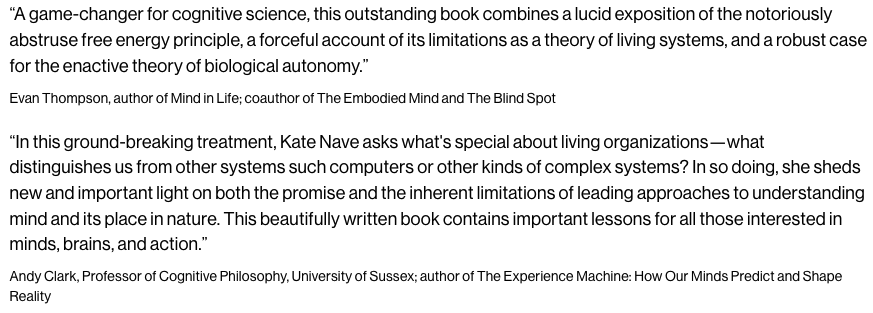
And while it doesn't yet have a cover it does have some embarrassingly nice blurbs from @evantthompson and @CogsAndy, two of the philosophers who most inspired its content.
2
11
34
4,130
Fausto Carcassi retweeted

29 Oct 2024
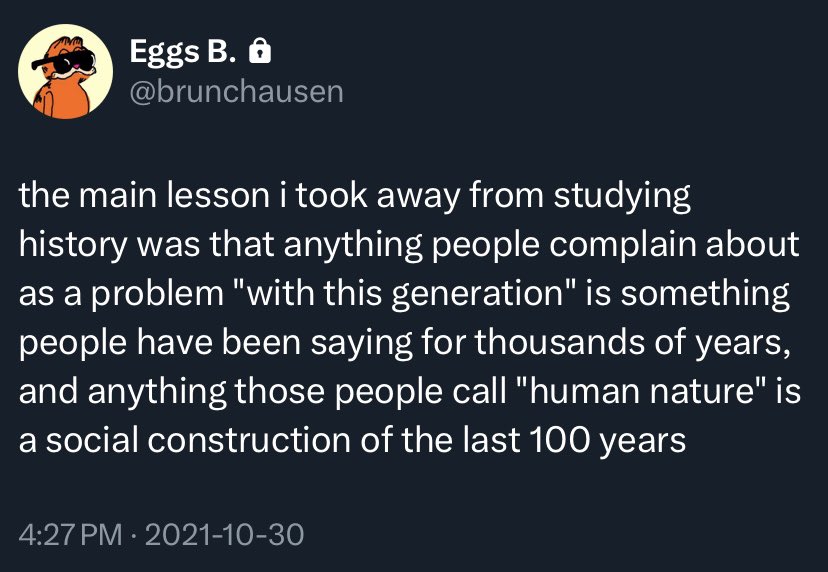
i'm often saying this!!
28 Oct 2024

every “traditional” social norm was invented by advertisers in 1957 and every “newfangled social phenomenon” has been around for 3000 years
91
15,365
101,668
2,439,221
Fausto Carcassi retweeted

30 Oct 2024
Preprint from myself and Daphne Demekas. We propose a mechanism for synthetic data generation within active inference and present simulations to explore its implications for understanding states of 'pure consciousness'
osf.io/preprints/psyarxiv/w6…
1
4
13
1,331
27 Oct 2024
The traditional theoretical question of whether maths is discovered or invented has a counterpart in the ambiguity of the *experience* of reasoning, which can feel like perception (of an already present structure) or action (building up the structure).
2
1
135
27 Oct 2024
(Who knows what Derrida really wants to say, but) to me this sounds like the former - though he calls it an "apparatus, or machine" rather than structure: youtu.be/BSsDRf2wnOk?si=AEO9…
1
61
27 Oct 2024
And he describes this sense of it happening *to* him. Sometimes reasoning feels more like following a pattern with your eyes, with a large component of attentional direction, and sometimes more like smelling or hearing, happening spontaneously and even intrusively.
62
23 Oct 2024
Deeply fascinating topic!
22 Oct 2024

@UniOslo_RITMO is recruiting a PhD student to study musical microrhythm, supervised by @annedanielsen and Rainer Polack. This is the best imaginable situation for a budding rhythm nerd. If you have any star undergrads in your lab open to a move to Norway...jobbnorge.no/en/available-jo…
132
21 Oct 2024
We're delegating too much of probability to computers. When's the last time you even picked a colored ball from an actual urn?
4
269