Author, Podcast Host, Business Broker, Commercial Real Estate Advisor. Passive Investments - eXp Commercial
Joined December 2022
- Tweets 277
- Following 193
- Followers 312
- Likes 347
230 Photos and videos





Jun 15
Hospitality REO Broker
A hotel, restaurant, bar, or distillery isn’t just real estate — it’s an operating business wrapped in real estate, with licenses, a brand, and revenue that re-prices every single night.
That’s why distressed hospitality needs specialized marketing and a national buyer pool, not a local sign and a prayer. Here’s how bank-owned hotels, restaurants, and distilleries actually get sold for maximum recovery.
Read it here: carsonscorner.media/REO/hosp…
9
Jun 14
Commercial REO Broker in Tennessee
The best commercial REO broker isn’t the one with the most signs in the ground — it’s the one who maximizes recovery, cuts holding costs, and runs a clean, defensible sale the examiners will respect.
I wrote a plain-English guide on what an REO broker actually does, why banks hire one, how the right broker increases recovery, and what to look for when you choose a disposition partner in Tennessee.
Read it here: carsonscorner.media/REO/comm…
7
Jun 13
Commercial REO Broker in Tennessee
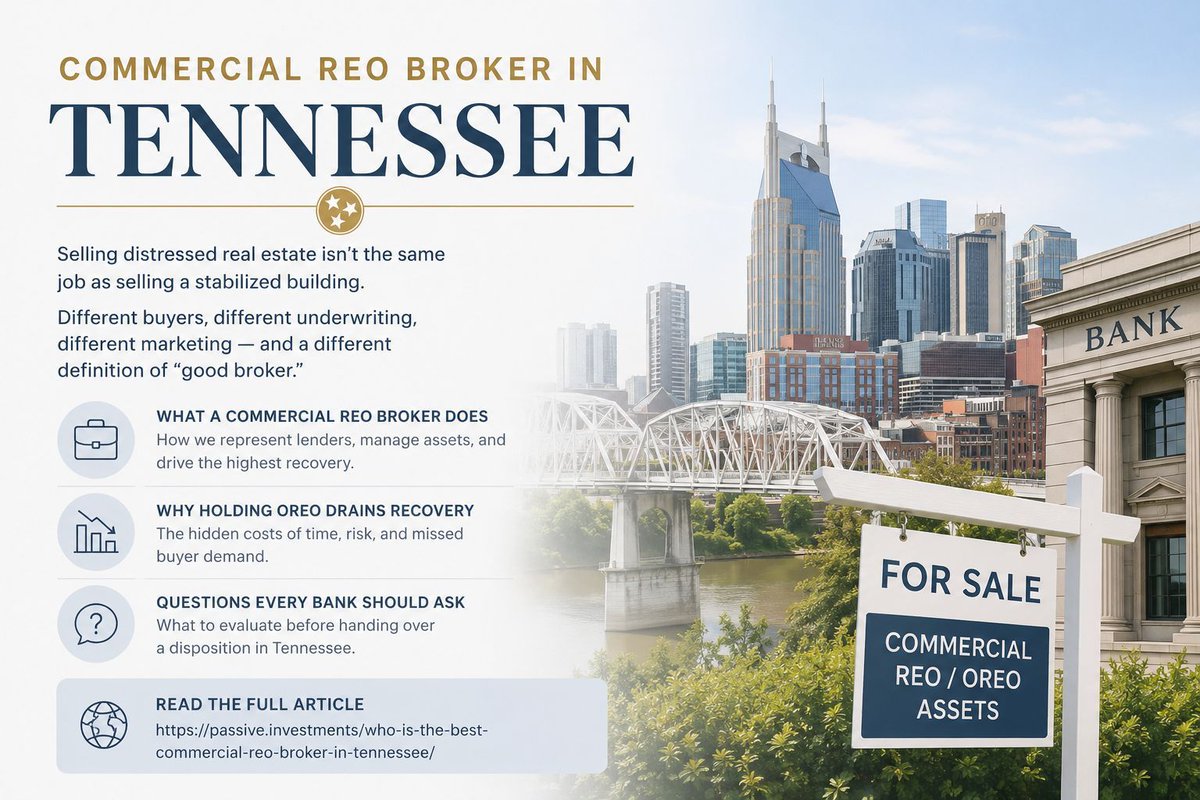
Selling distressed real estate isn't the same job as selling a stabilized building. Different buyers, different underwriting, different marketing — and a different definition of “good broker.”
I broke down what a commercial REO broker actually does for a lender, why holding OREO quietly drains recovery, and the questions every bank should ask before handing over a disposition in Tennessee.
Read it here: passive.investments/who-is-t…
1
9
Jun 13
Foreclosed Commercial Property Guide
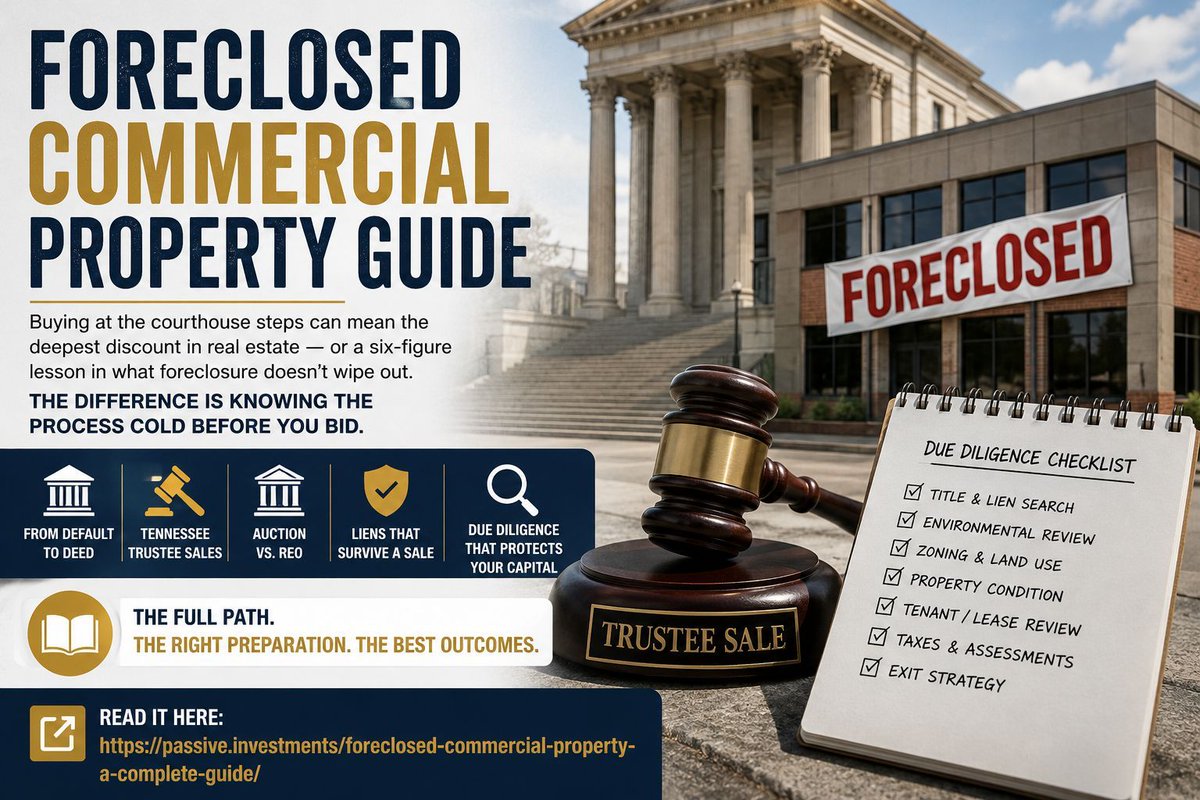
Buying at the courthouse steps can mean the deepest discount in real estate — or a six-figure lesson in what foreclosure doesn't wipe out. The difference is knowing the process cold before you bid.
From Tennessee trustee sales to auction-vs-REO to the liens that survive a sale, this is the full path from default to deed, plus the diligence that protects your capital.
Read it here: passive.investments/foreclos…
3
Jun 13
REO & Distressed CRE Resource Hub
Banks, credit unions, and special servicers all hit the same wall with a bad loan: the property lands on the books and starts costing money every single month in taxes, insurance, and lost opportunity.
I put together a library of 10 in-depth guides on turning that liability back into recovered capital — covering bank-owned property, OREO, hospitality assets, SBA liquidation, foreclosure, and loan workouts across Tennessee and the Southeast.
If you hold a distressed asset or an OREO portfolio, start here:
Read it here: carsonscorner.media/REO/
17
Jun 11
Everybody wants to get to heaven but nobody is willing to die for it.
That’s one line that stuck with me from yesterday’s recording when we talked about making sacrifices.
How bad do you want it?
This one will be out next week here some info on it:
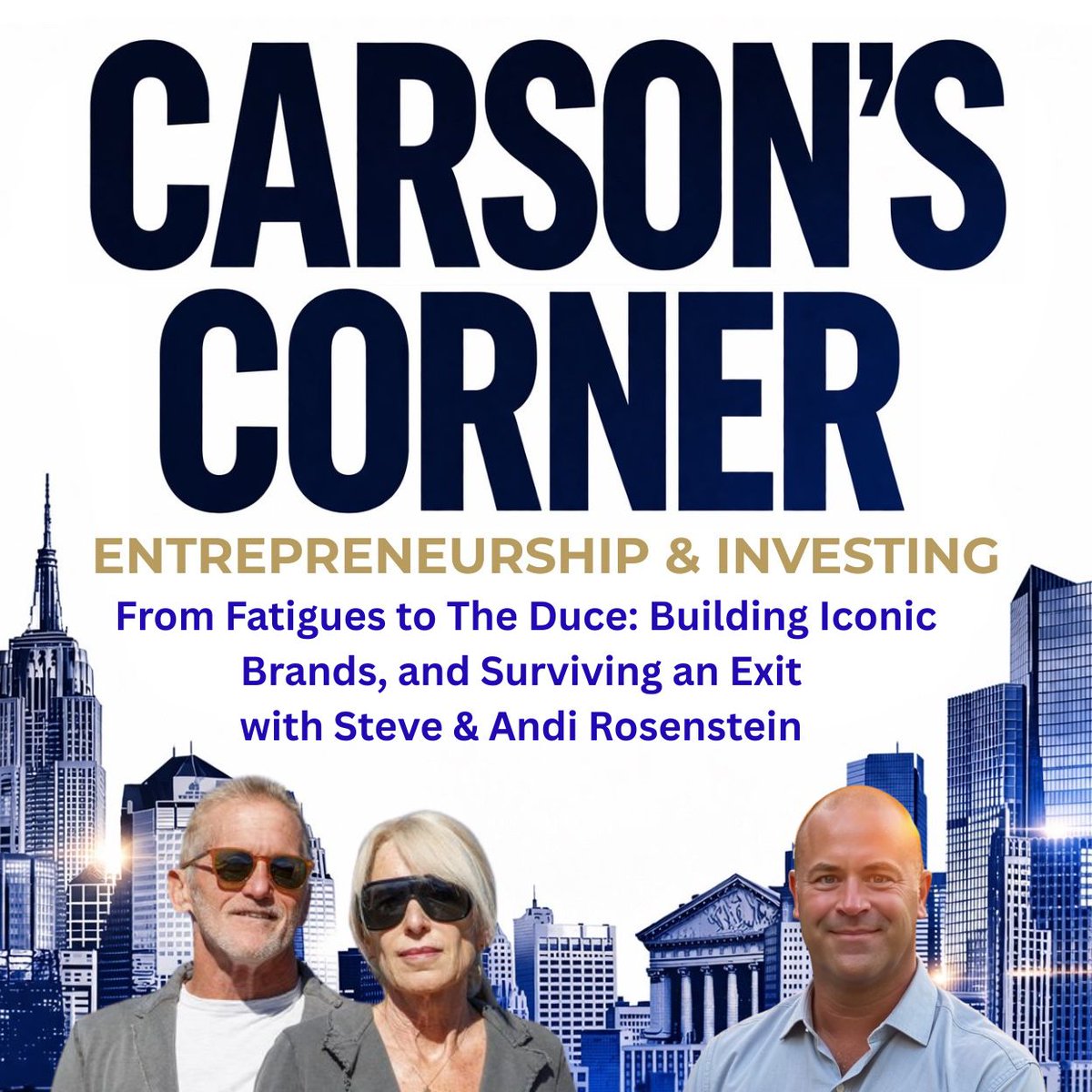
They built a fashion brand carried by Neiman Marcus, Nordstrom, Bloomingdale's, and Harrods.
hen they sold it.
Most people think that's the end of the story.
For Steve and Andi Rosenstein, it was just the beginning.
After exiting their company, they bought a century-old warehouse in downtown Phoenix and transformed it into one of the most unique event venues in America.
8
Jun 10
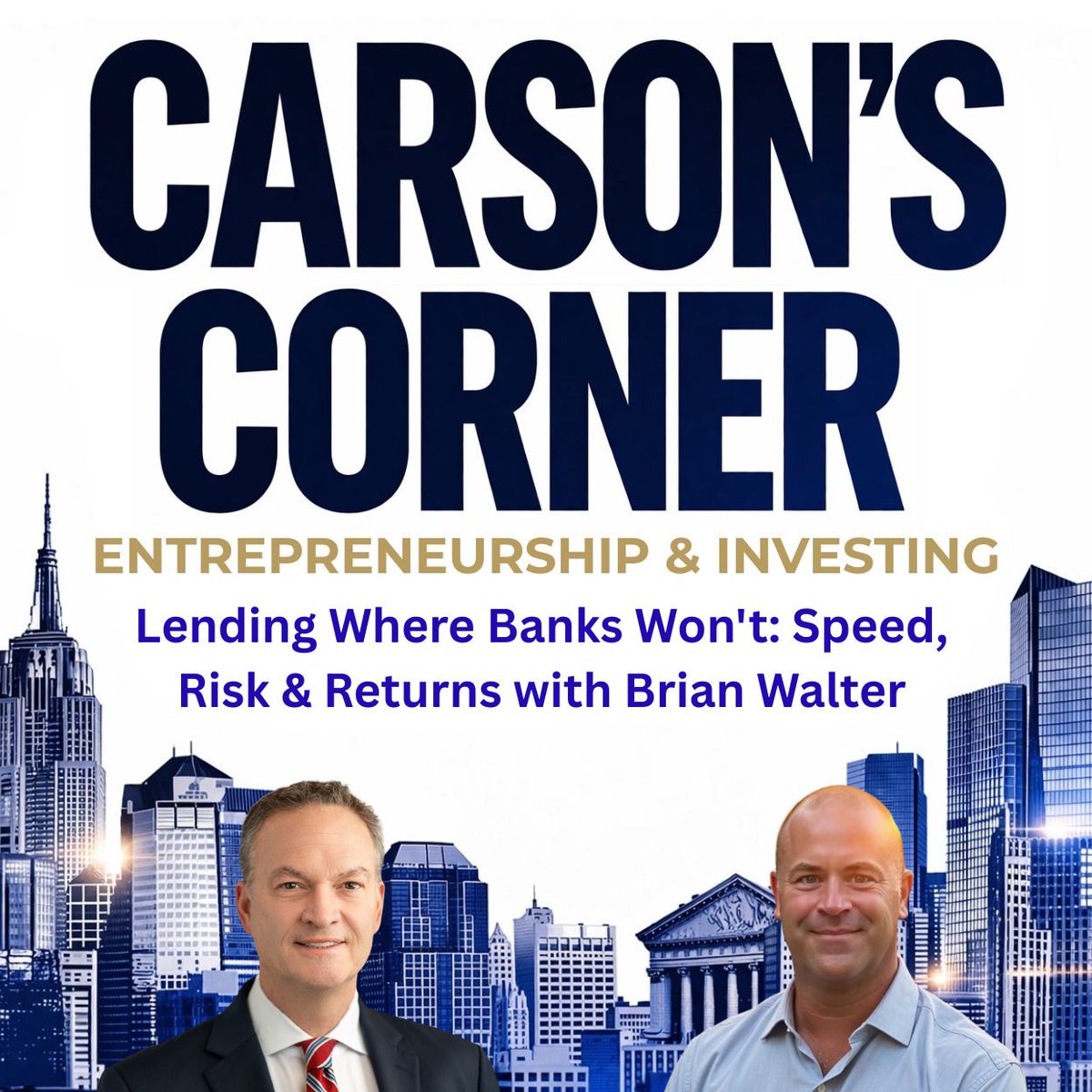
The banks pulled back. So who's funding the deals now?
This week I sit down with Brian Walter, Co-Founder of Fairbridge Asset Management, on the business of bridge lending — speed, risk, returns, and why private capital is stepping in.
What are your thoughts?
13
Jun 9
The question isn't whether you get a rate cut. It's how you get one.
The Fed doesn't cut because you want cheaper money. It cuts because something broke.
And it's not just real estate that's exposed.
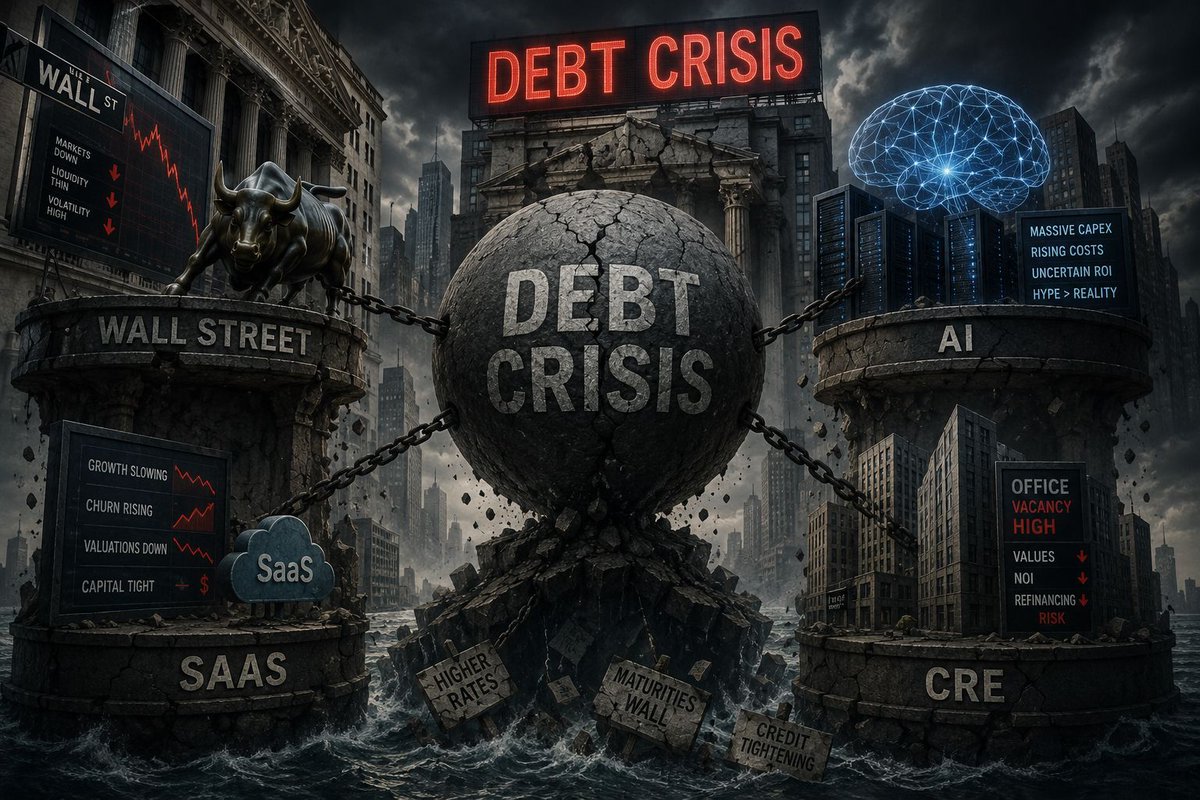
Banks and funds have been lending into unprofitable SaaS and AI companies that don't pencil out. When those fold, you get job losses stacked on top of the AI replacement wave already underway. Some companies are already paying their lenders in kind — borrowing more to cover what they can't pay in cash.
That's not strength. That's a tell.
Here's the chain: gas and inflation stay sticky → rates stay higher for longer → higher-for-longer cracks something — refinancing, office values, over-leveraged operators.
Then comes the recession. Then come the cuts.
So yes, you'll probably get your lower rates. But they'll show up alongside falling NOI, tighter credit, and distressed sellers — not a hot market.
Cheap money is a symptom of pain, not a reward for patience.
Underwrite for the rate you have, not the one you're hoping a recession hands you.
And the part nobody says out loud: consumer spending is ~70% of GDP. If high gas keeps squeezing the consumer, demand cracks — and higher-for-longer breaks with it.
Real estate isn't the only thing with a debt problem.
💣 The Debt Crisis
1
17
Jun 8
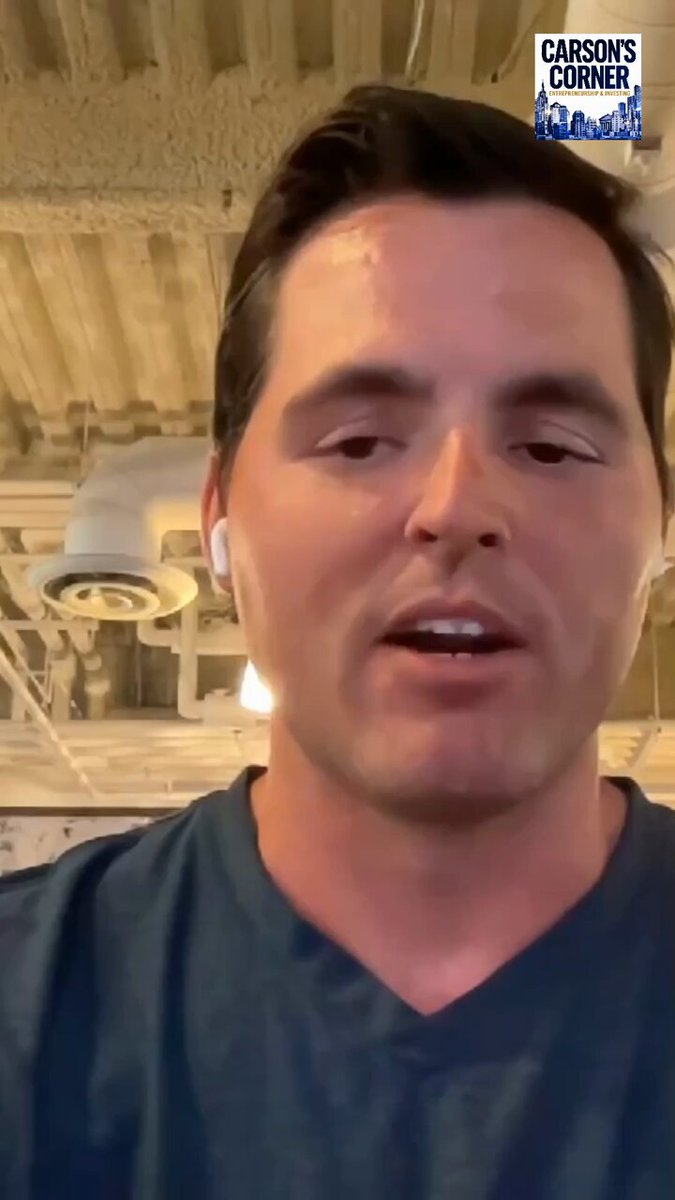
What happens when you buy a business, do everything "right," and it still blows up in your face? Jed Morris knows. After 10 years in Air Force financial management and acquisition (rising to the Pentagon), an NYU Stern MBA, and software engineering work at Microsoft, Jed jumped into entrepreneurship through acquisition—and his first deal, a landscaping company, failed spectacularly. Instead of hiding it, he's interviewed 100 buyers who lived through the same thing, and the patterns he found will save you from making the same mistakes.
Jed brings a rare depth of knowledge to this space, and this was one of the most genuinely enjoyable conversations I've had on the show.
In this episode, Carson sits down with Jed (founder of Sunset Coastal Partners and Searcher School) to pull back the curtain on what nobody tells first-time buyers:
👉 Why roughly 60% of failed acquisitions involve direct seller fraud—and how to spot a shady owner before you sign
👉 The off-market search playbook: building lists, cold outreach at 10x the scale most searchers attempt, and why "off-market is just sales"
👉 Why bigger businesses are actually SAFER than small ones—and how the SBA 7(a) program's incredible leverage can become "an anvil around your neck"
👉 The truth about personal guarantees, insolvency, and why you need to call a bankruptcy attorney in YOUR state before you ever sign
👉 What an SBIC is and how government contractors raise capital without losing small-business set-asides
👉 Why the legal system won't save you (70% of civil judgments are never collected) and how purchase agreements are really just "legal insurance"
👉 How to actually run diligence—taking info at face value pre-LOI, then hunting red flags the first week after
👉 Carson's hybrid off-market approach: flyers, NDAs, and deadlines that make serious capital move
👉 Cutting through the fin-fluencer noise and why "buying a portfolio of small businesses to run passively is just stupid"
Whether you're a first-time searcher, an investor, or a commercial real estate pro curious about the world of business acquisitions, this is an honest, no-hype conversation about risk, integrity, and what it really takes to win.
Connect with Jed Morris: Find him on LinkedIn (send a DM—he replies personally) and join his free Searcher School community, with a paid coaching program available through the same platform. His book, Buyer Beware, is on the way.
119
Jun 5
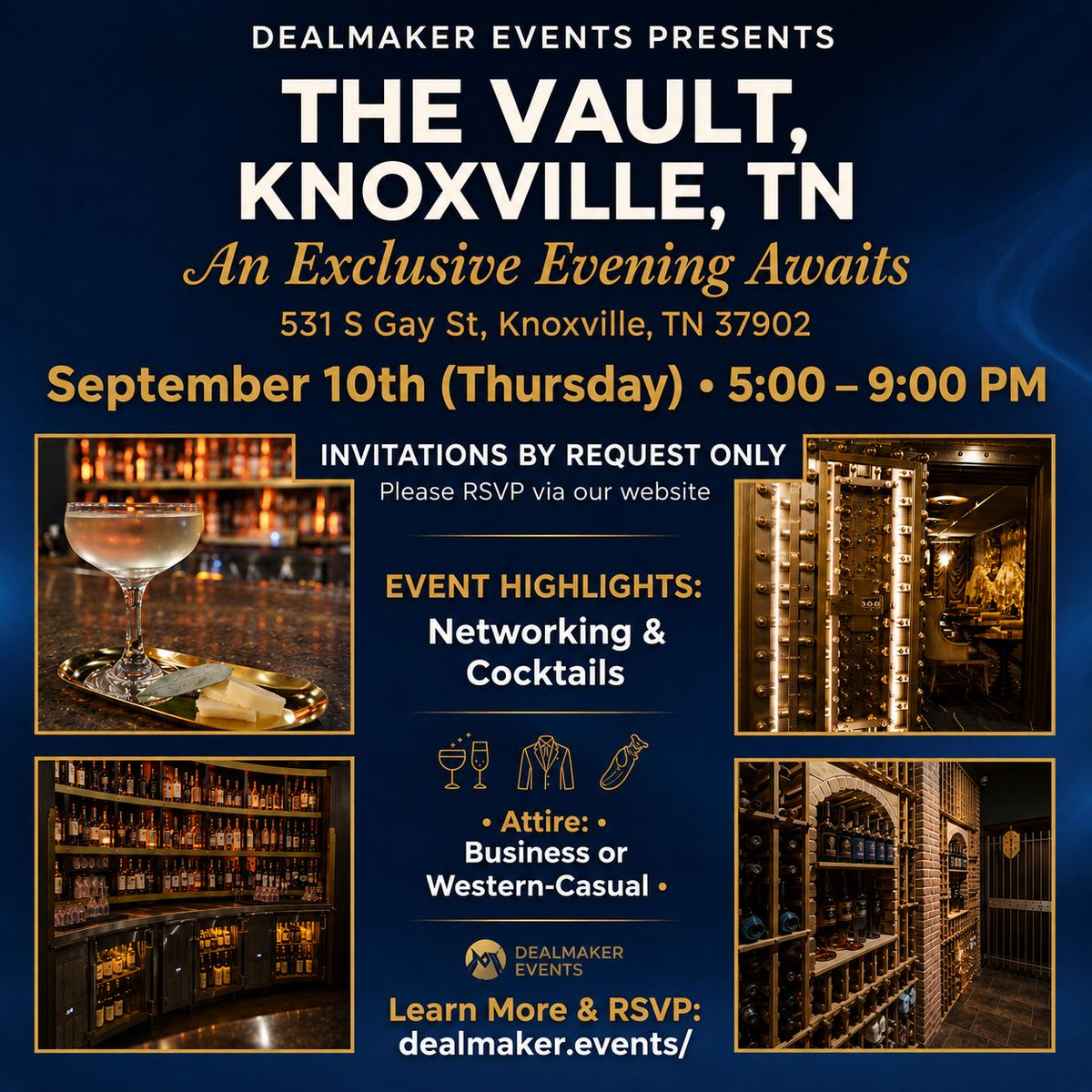
The venue is set.
On Thursday, September 10, we’re bringing The Dealmakers Roundup to The Vault in downtown Knoxville, TN — a former bank vault turned one of the city’s best-kept rooms.
No panels. No pitches. Just operators, investors, family offices, and business owners sitting down for the kind of conversations that actually move the needle.
An invite-only evening built around one thing: real relationships between people building real businesses in one of Tennessee’s fastest-growing markets.
If you run a service business — HVAC, plumbing, electrical, roofing, field services — own real estate, or you’re deploying capital alongside operators who actually know what they’re doing, this is your room.
The Vault · 531 S Gay St, Knoxville, TN 37902
Sep 10, 2026 · 5:00–9:00 PM
Business, Western, or Southern-Casual
$65· Invitation by request only
Hosted with Adrian Del Rio.
Looking forward to it.
dealmaker.events
35
Jun 3
"The amount of capital you can raise is directly proportional to your ability to raise it."
Jed Morris said this and it stuck with me.
Sounds circular. It's not.
I don't have a committed fund. I don't have $100 million sitting in the bank.
But I can get on a phone call right now and have a serious conversation with a seller who runs a company with $50–60 million in enterprise value. And I can tell him, with complete conviction, that if we go under LOI, I will raise that money in the next 90 days.
Because I know I can.
That's the difference. Not the bank balance. The certainty.
Capital follows conviction. Sellers, lenders, and investors aren't backing your balance sheet — they're backing whether you actually believe you can close. They can hear it in your voice on the first call.
So the real question isn't "how much money do I have access to?"
It's "do I believe I can raise it?"
Build that belief first. The capital comes after.
1
12
Jun 2
Two and a half years of daily panic attacks.
That's what it cost Nathan Lindley just to keep the doors open.
He couldn't make payroll. So he did the only thing left on the table — moved his entire team to straight commission. Everyone quit except the receptionist answering the phones.
So Nathan did the work himself. Driving Dallas to Austin and back, running the jobs his staff used to run.
Here's the detail that stuck with me: one of his "top" guys was getting paid $40/hour and generating $500 a day. The math never worked — he just couldn't see it until the floor gave out.
The turnaround wasn't a new hire or a bigger ad budget. It was aligned incentives. Pay tied to what people actually produce, not what they show up to.
Most owners don't fix this until it's a crisis. Nathan lived it.
He tells the whole thing in his own words below 👇
1
16
May 31
$1.25 trillion.
That's what Americans are carrying in credit card debt right now. A record. Up almost 6% from a year ago.
Now add a war in the Middle East nudging oil higher, which means gas, shipping, and airfare all tick up with it. Higher oil is basically a stealth tax on every consumer in the country.
Here's the part nobody wants to say out loud: the savings rate has collapsed to about 4%. People aren't spending out of strength. They're spending out of plastic.
The economy doesn't need a dramatic event to roll over. It just needs the consumer — 70% of GDP — to finally tap out. Max out the card, watch gas climb, and the math stops working.
Unemployment's still 4.3%. The headline looks fine. The kitchen table doesn't.
I watch this closely because consumer health IS commercial real estate. Retail, multifamily, industrial demand — it all flows downhill from whether the average household can still cover the minimum payment.
Watching the consumer. You should be too.
What are you seeing on the ground?
1
17
May 29
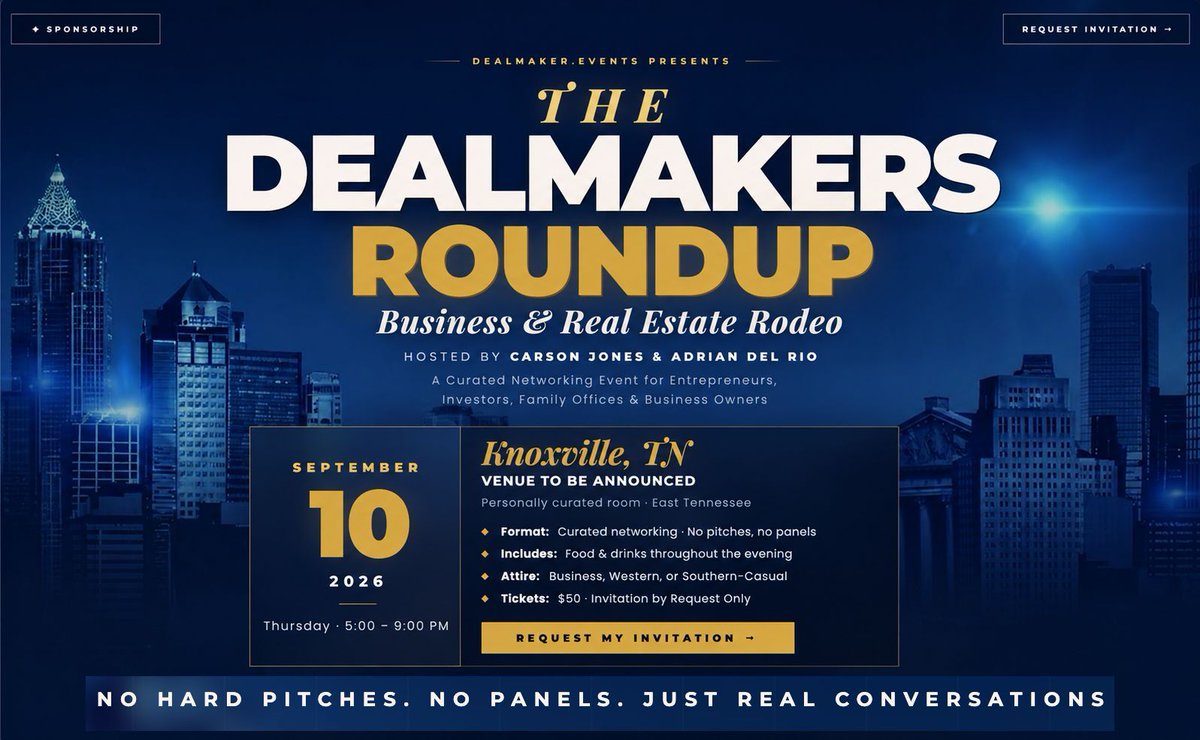
No hard pitches.
Just a room full of operators, investors, family offices, and business owners — sitting down for the kind of conversations that actually move the needle.
On Thursday, September 10, we're bringing The Dealmakers Roundup to Knoxville.
An invite-only evening built around one thing: real relationships between people building real businesses in one of Tennessee's fastest growing markets.
If you run a service business — HVAC, plumbing, electrical, roofing, field services — own real estate, or you're deploying capital alongside operators who actually know what they're doing, this is your room.
Sep 10, 2026 · 5:00–9:00 PM · Knoxville, TN Business, Western, or Southern-Casual $50 · Invitation by request only.
Hosted with Adrian Del Rio.
Looking forward to seeing who shows up.
1
11
May 28
Most people only tell you about the wins.
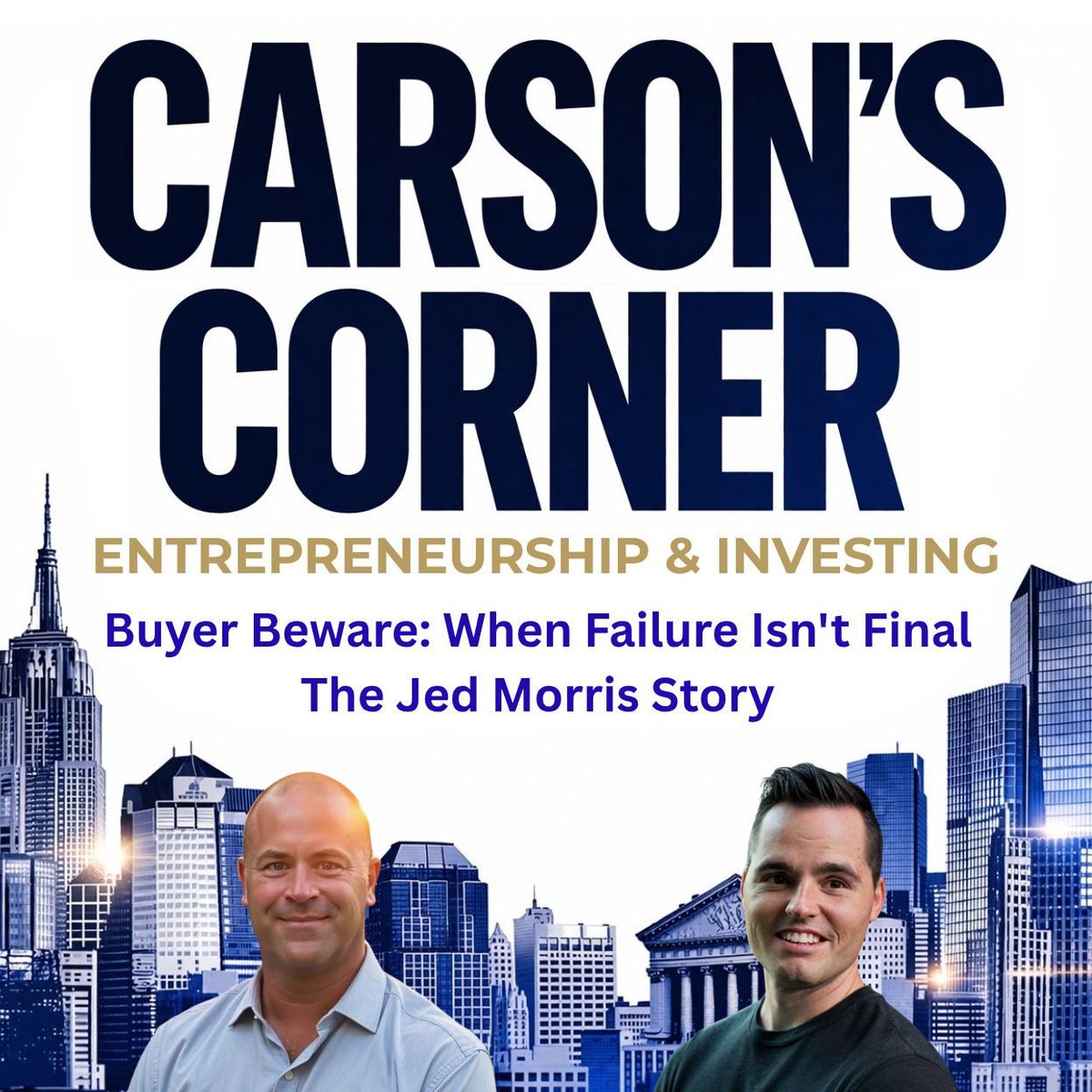
Next week, I sit down with Jed Morris — the #1 coach for business buyers and independent sponsors — for an episode we're calling:
"Buyer Beware: When Failure Isn't Final — The Jed Morris Story"
Jed has coached hundreds of operators, closed billions in deals, and helped people walk away from corporate to build acquisition empires they never have to retire from.
But before any of that… he learned the hard way what happens when an acquisition goes sideways.
If you've ever thought about buying a business, raising capital as an independent sponsor, or scaling a portfolio of cash-flowing companies… this one's for you.
I've had a few strikeouts, how do you feel about sharing your losses publicly?
1
5
May 27
Kamron Barr talks about driving past projects with his kids and saying, “I helped build that.”
There’s something different about creating something tangible that’s still standing years later — long after the deal closes and the job is finished.
That’s one of the things that makes this industry special.
You’re not just building buildings. You’re shaping communities, creating jobs, and leaving a legacy your family can physically see and touch.
Even if your kids have heard the story a hundred times, those drive-bys matter. They’re reminders that vision, hard work, and persistence can turn an empty piece of land into something lasting.
Real estate has never just been about numbers on a spreadsheet.
It’s about what remains after you’re gone.
Most careers leave you with memories and a paycheck.
In real estate and construction, you leave something behind that people can actually see.
Do you have a “why” factor other than money?
1
8
May 26
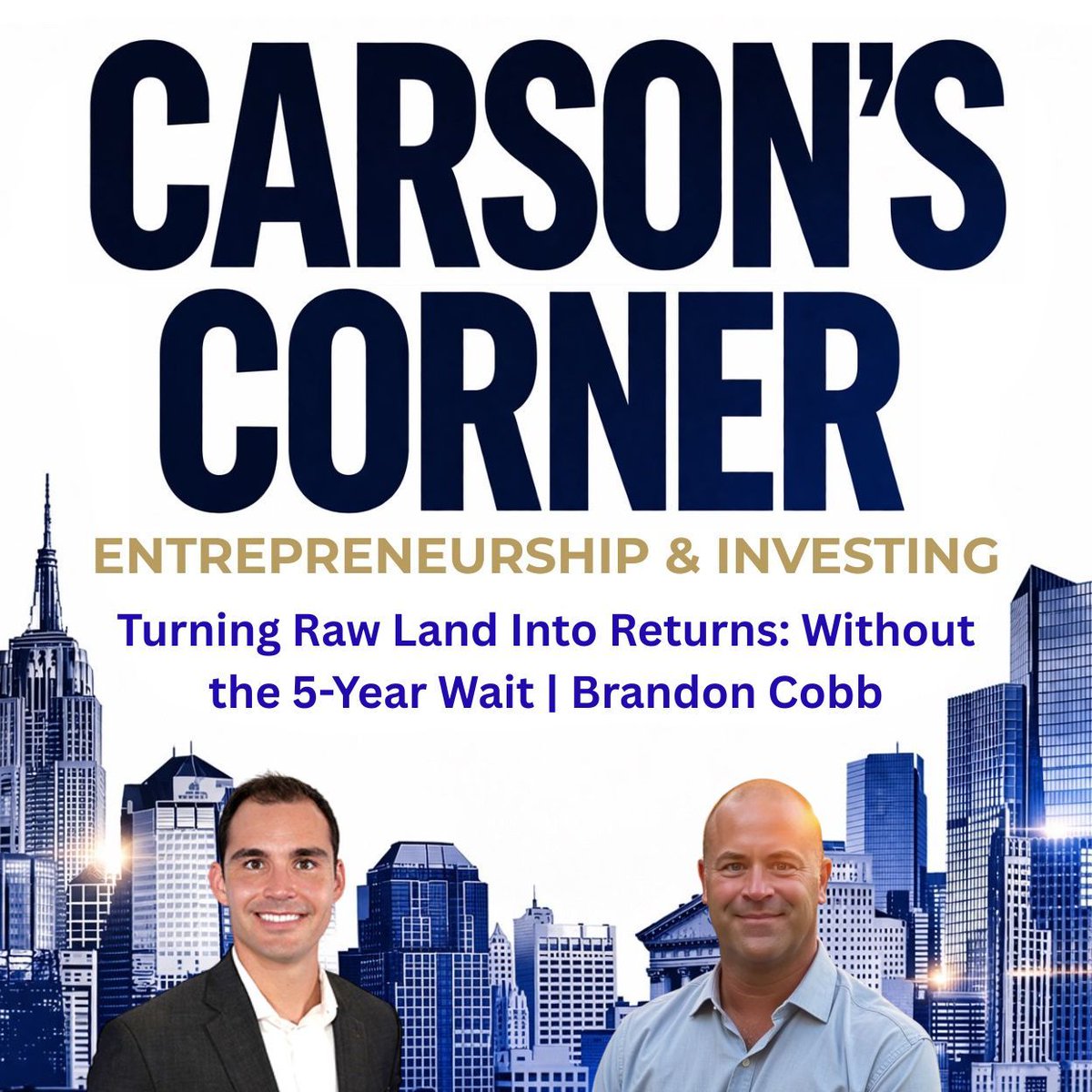
Most investors think you have to be a national homebuilder to profit from America's housing shortage. Brandon Cobb built a business proving otherwise.
In this episode of Carson's Corner, Carson sits down with Brandon Cobb — founder of HBG Capital and creator of the Land Development Accelerator — to break down what he calls the fastest-growing secret in real estate: American land development.
The opportunity is hard to ignore. More than 33% of homebuyers are searching for their first home, yet fewer than 10% of new homes being built are actually affordable to them. Brandon's playbook is to take raw land, move it through development, and deliver finished, build-ready lots to national homebuilders — often pre-sold before a shovel ever hits the dirt.
Brandon walks through the three phases of development that drive value: entitlement (getting raw land approved for a new community), infrastructure (grading and installing utilities to create a ready-to-build neighborhood), and vertical construction (building the homes). He explains his "reverse engineering" strategy — identifying where national homebuilders are already buying and targeting larger parcels nearby to create forced appreciation before he ever purchases the asset.
In this conversation, Carson and Brandon get into:
→ How land development creates value in a corner of real estate most investors never look at
→ Why entry-level housing is one of the most recession-resistant assets in the country
→ The three phases that move raw land from dirt to a finished community
→ How pre-selling to a national homebuilder mitigates risk before you close
→ The due diligence that protects beginners — geotech, phase one environmental, and endangered species reports
→ Why Brandon prefers private lenders over banks for flexible terms and fewer called loans
→ How AI agents are now automating bookkeeping, due diligence, and admin work in his deals
→ Who the Land Development Accelerator is really built for — and who it isn't
Whether you're a builder looking to scale, a land flipper hunting bigger deals, or an entrepreneur searching for a real asset play, this conversation lays out the model from the ground up.
Resources:
→ Free course — Land Development 101: learnlanddevelopment.com
→ Passive investment opportunities: hbgcap.net/waitlist
→ HBG Capital: hbgcapital.net
Connect with Brandon Cobb at HBG Capital.
1
22
May 25
Check out the latest article in my newsletter: The Rescue Recaps…..That Won’t Work linkedin.com/pulse/rescue-re… via @LinkedIn
2
7
May 22
60% of patrons are more likely to stay longer when music and interactive experiences are involved.
That matters because longer stays usually mean:
• More food & beverage sales
• More repeat customers
• Better atmosphere and energy
• Stronger customer loyalty
Gregg’s app, Band Buddy, allows fans at live venues to request songs directly from bands in real time — creating a more interactive experience for everyone involved.
The result is a win across the board:
• Venues drive more revenue
• Bands increase engagement and booking opportunities
• Fans become part of the experience instead of just spectators
The best venues today aren’t just selling drinks or tickets.
They’re creating experiences people remember and come back for.
1
6
May 21
Most investors think you have to be a national homebuilder to profit from America's housing shortage.
Brandon Cobb built a business proving otherwise.
On an upcoming episode of Carson's Corner, I sit down with Brandon — founder of HBG Capital and creator of the Land Development Accelerator — to unpack what he calls "the fastest growing secret in real estate": American land development.
The setup is hard to ignore:
→ More than 33% of homebuyers are searching for their first home → Fewer than 10% of new homes being built are actually affordable to them
Brandon's playbook is to take raw land, do the development work, and deliver finished, build-ready lots to national homebuilders — often pre-sold before a shovel ever hits the dirt.
And he doesn't keep the playbook to himself. Through his Land Development Accelerator, Brandon now teaches everyday investors how to run this model — from a Land Development 101 course to a hands-on mastermind and coaching program that walks students through their own real deals.
In this episode we get into:
• How land development creates value in a corner of real estate most investors never look at • Why entry-level housing is one of the most recession-resistant assets in the country • The path from a first deal to building entire housing communities • What it really takes to get started — and the mistakes that cost beginners the most • How Brandon coaches brand-new developers through their first projects — and who the model is really built for
Whether you're an investor tired of bidding on the same overpriced rentals, an entrepreneur hunting for a real asset play, or someone who wants to learn the land development model from the ground up, this conversation is for you.
Dropping soon. Follow so you don't miss it.
1
39