
Oregon's free market think tank: Based on the principles of individual liberty, personal responsibility, & economic opportunity.
Joined September 2009
- Tweets 7,619
- Following 1,417
- Followers 4,442
- Likes 1,566
1,067 Photos and videos





Are screens affecting educational outcomes? With the upsurge in using screens to teach, we're also seeing the decline in educational performance.
On June 25, the FCC is deciding whether to open a formal review of technology in the classroom and is seeking the public's opinion. What do you think?
bit.ly/4oiqbBS
@nypost
4
155
When New York officials calculated the true cost of their decarbonization mandates, they hit the brakes. Estimates showed household costs could exceed $4,100 per year by 2031.
Meanwhile, Oregon leaders continue pushing costly energy policies, Portland Public Schools continues pursuing all electric construction, and taxpayers are expected to absorb the bill.
Good policy starts with honest cost estimates, practical realities, and a willingness to change course when the numbers don't work.
4
9
45
1,071
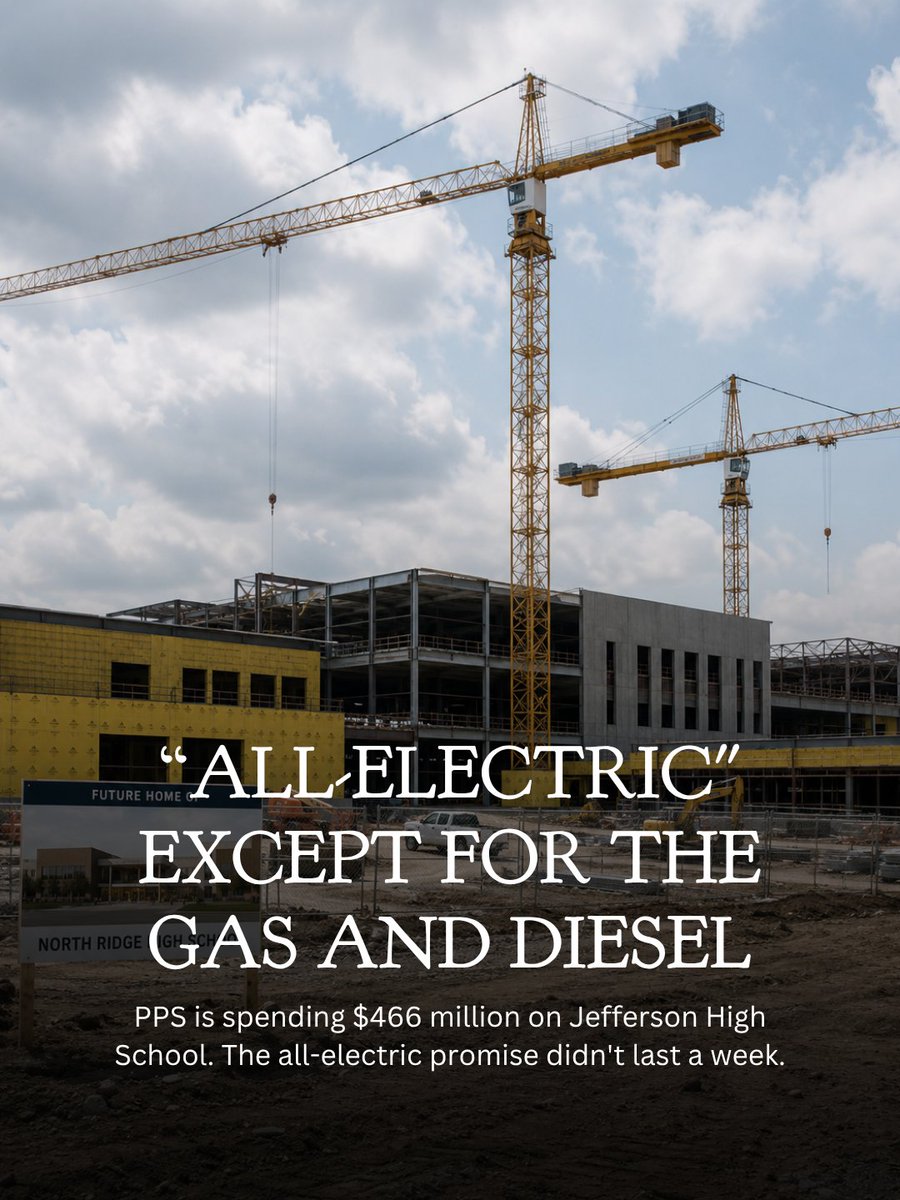
Portland Public Schools is spending $466 million on a new Jefferson High School promoted as "all electric."
Yet district officials have already acknowledged that science labs and emergency backup systems may still require natural gas and diesel equipment.
Public construction should be driven by performance, reliability, and cost effectiveness, not political branding. Taxpayers deserve transparency when ideology increases the price tag.
2
5
28
581
Portland Public Schools broke ground on an "all-electric" Jefferson High School. Days later, officials acknowledged the school will still need natural gas and diesel backup generators.
Reality has a way of catching up with political talking points. Taxpayers deserve honest discussions about costs, reliability, and what it actually takes to keep schools running.
1
2
107
New from Cascade: PPS celebrated the groundbreaking of a $466 million "all-electric" Jefferson High School. Days later, they quietly admitted natural gas is still required for science labs — and diesel for backup generators. John Charles breaks down the false promise.
Read the full article: bit.ly/4evJNyU
1
5
12
276
Every $1B in FSTC scholarships could fund tuition for 77,000 students or tutoring for 300,000 more. If Oregon doesn't opt in, that money goes to kids in other states.
5
8
259
The Federal Scholarship Tax Credit doesn't cut public school funding. It doesn't touch the state budget.
It creates a private giving incentive — potentially generating $24 billion in new scholarship funding nationwide.
If Oregon doesn't opt in, the money goes to other states. By saying yes, Gov. Kotek gives Oregon students more opportunities.
3
10
247
Oregonians can still claim the federal tax credit — by donating to SGOs in other states. If Kotek decides to opt-in, scholarship funding stays within the state for Oregon's students.
2
9
231
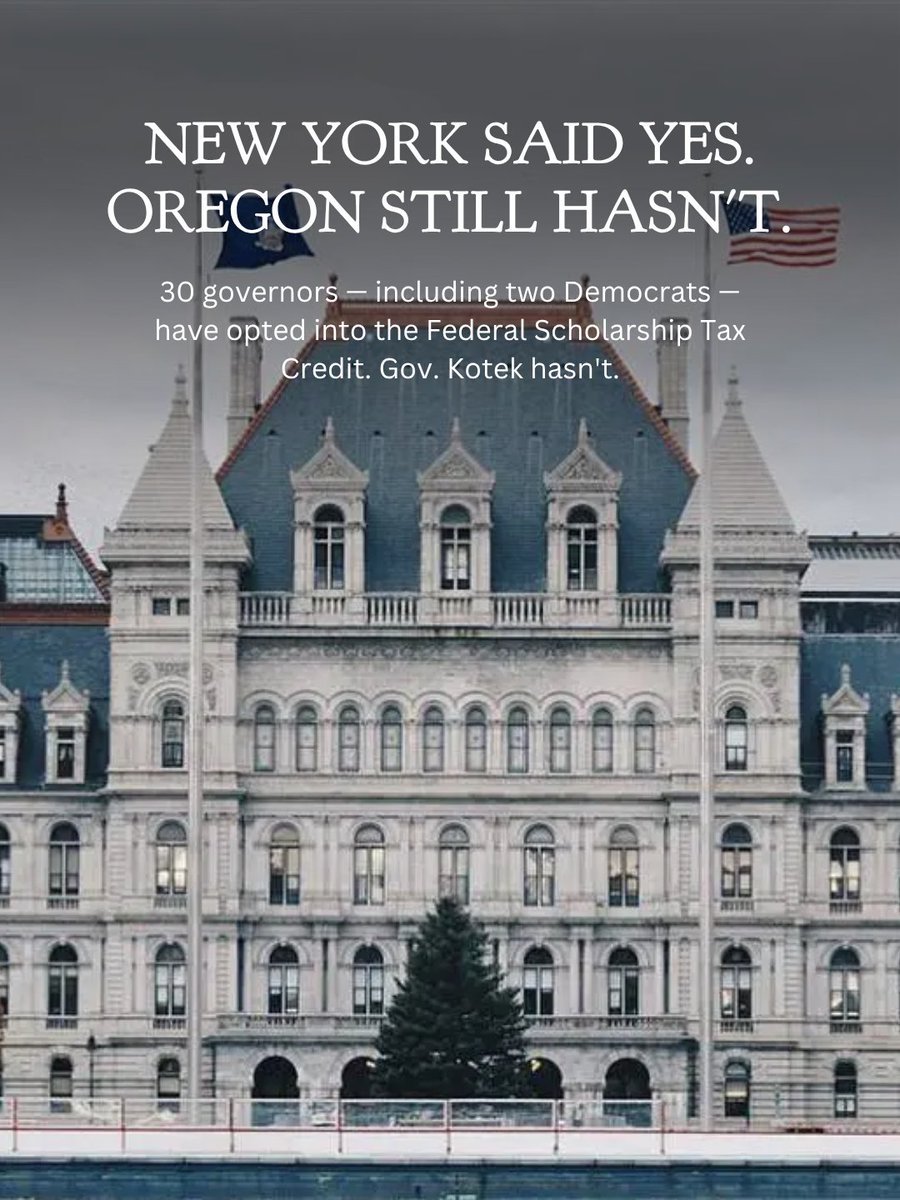
New York, led by a Democratic governor, just became the 30th state to opt into the Federal Scholarship Tax Credit program. Colorado with their Democratic governor was already in.
Oregon's Gov. Kotek is still saying "not determined." Meanwhile, charitable dollars earmarked for Oregon are headed to other states.
1
5
8
337
New York's Gov. Hochul just opted into the Federal Scholarship Tax Credit program. That's 30 governors in.
Oregon's Gov. Kotek is undecided — and Oregon kids are losing a valuable opportunity.
4
9
209
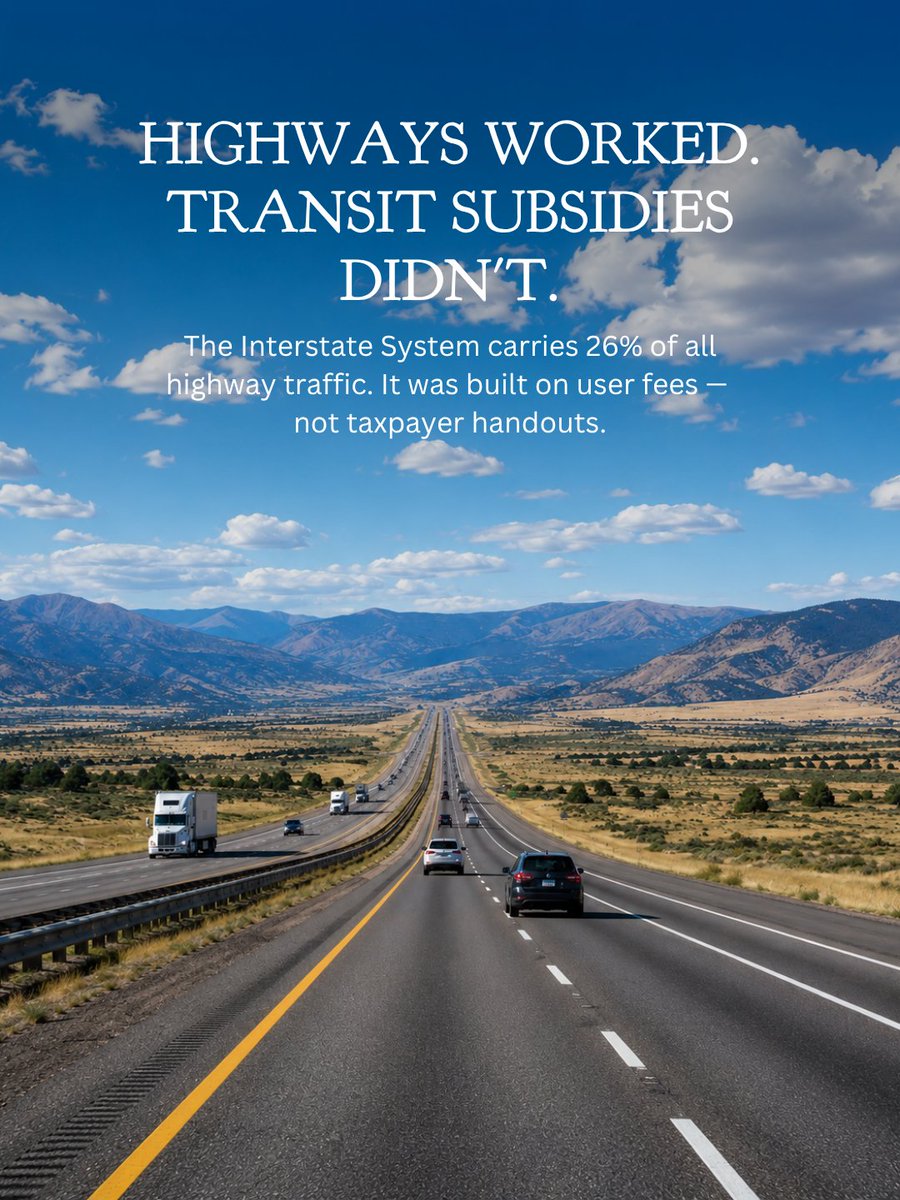
The Interstate Highway System is 1% of U.S. roadway miles — and carries 26% of all highway traffic and 18% of all freight.
It worked because user-fees covered the cost. In Oregon. transit failed because politicians funded it regardless of ridership numbers. Investing in highway systems builds more efficient infrastructure within the state and creates more commerce. Everyone wins.
Congress should restore the user-fee principle.
2
2
13
327
The Federal Scholarship Tax Credit doesn't touch public school funding.
It creates a private giving incentive — allowing Oregonians to fund scholarships for kids attending the school that works best for them, at any type of school.
Gov. Kotek should opt Oregon in.
1
6
296
U.S. public transit receives roughly 65% (or more) of operating costs from taxpayers, and costs riders $2.20 per passenger-mile. Draining tax-payer funds and still unable to compete with the cost of driving, is it worth it to pour more money into public transportation?
3
5
11
267
New from Cascade: New York's Democratic governor just announced she's opting into the Federal Scholarship Tax Credit — making her the 30th governor to say yes. Oregon's Gov. Kotek is still on the sidelines. Cascade explains what Oregon families stand to lose.
Read the full article:bit.ly/49TqGfA
3
10
322
Since the 1960s, governments have invested heavily in public transit, yet per‑person ridership has declined over time. Interstates make up about 1% of U.S. road miles but carry roughly a quarter of all vehicle travel.
As Congress works on transportation reauthorization, it’s worth asking how to fund systems in ways that actually match how people travel today.
5
6
31
705
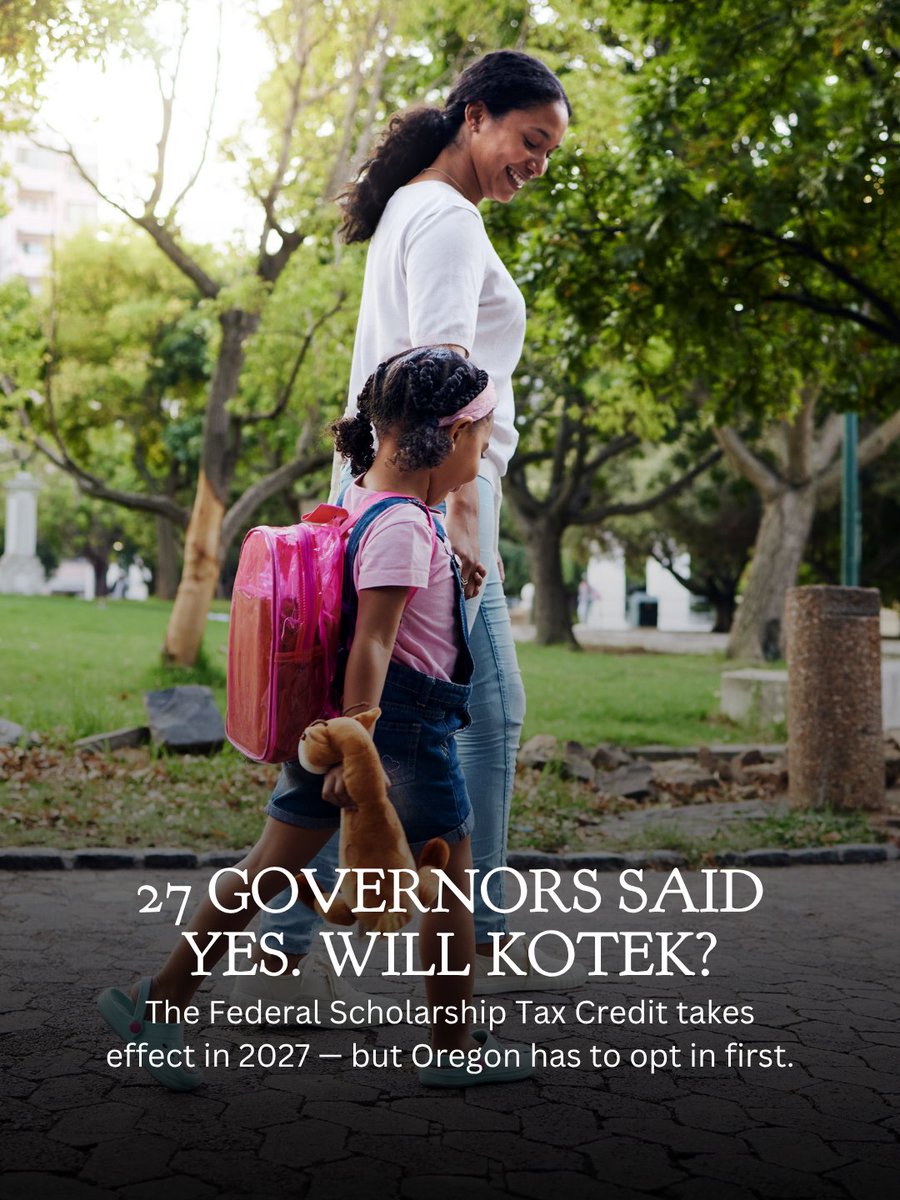
The FSTC gives individuals up to $1,700 in federal tax credits for donating to scholarship nonprofits. 27 governors have opted in. Oregon families are still waiting.
1
4
6
259
Since 1964, taxpayers have spent over $2 trillion subsidizing national transit. Highways continue to provide a better form of transportation and rely only on user fees for improvements, and it continues to be the backbone of mobility in Oregon.
2
19
50
1,211
Congress passed the first federal school choice tax credit. Individuals may claim up to $1,700 in donation credit to qualifying scholarship nonprofits.
To date, 27 governors have opted their states in. Our Gov. Kotek has not.
If she doesn't include Oregon, charitable giving will flow to students in other states.
9
30
74
2,807
This Memorial Day, we honor the courage and sacrifice of the men and women who gave their lives in service to our country.
From all of us at Cascade Policy Institute, we wish you a meaningful Memorial Day.
6
123
School choice programs let parents direct education funding to the school that works best for their child — public, private, or home. Oregon should make that possible too.
1
2
7
202