
investigative journalist specializing in rage bait | dead inside but at least I’ve got tats, research and $tsla |wondering why the HPA-axis chose violence
Joined March 2026
- Tweets 586
- Following 95
- Followers 47
- Likes 207
185 Photos and videos




Pinned Tweet

Safe borders. High UBI. Ai-assisted matchmaking.
1
112
After thousands of hours of research, the conclusion is this:
No matter what you did today, if you get up and go to the gym tomorrow things will get better.
BDNF is like miracle-gro for your brain. Stop chasing some artificial fix: work out your brain and body.
1
1
89
My current 🔬
Apr 22

Visual representation of someone pretending to help whilst causing pain.
63
Everyone blames chatbots for causing suicide but did you know that operators for crisis lines are trained to ask if you are considering self-harm?
If you want to talk about inception, find someone at their lowest and ask them questions. They will likely agree.
Pity.
40
You can't bend a spoon by forcing your will onto a separate object. You bend it when your brain stops classifying it as separate from you.
Apr 16

The Matrix spoon scene has been misread for 26 years. That kid was describing a neurological phenomenon documented in labs since 1996, and nobody noticed.
Most people hear "there is no spoon" and think it means reality is fake. Simulation talk. That misses the entire point.
The spoon exists. Neo exists. What doesn't exist is the boundary between them. The separation is the illusion. And neuroscience has the receipts.
Your brain maintains a real-time map called the body schema. It defines where "you" end and the outside world begins. A 2017 study at the Karolinska Institute tested 117 people. Hide someone's real hand behind a partition. Place a rubber hand where they can see it. Stroke both at the same time. In 23 seconds, the brain decides the rubber hand is part of the body. Threaten it with a needle and participants flinch.
In 1996, neuroscientist Atsushi Iriki gave macaque monkeys a rake. Within minutes, neurons in their parietal cortex expanded their receptive fields to include the full length of the rake. The brain stopped treating it as a held object. It reclassified the rake as a new finger.
Pianists' brains map piano keys inside the finger representation. Surgeons' brains represent scalpels as extended limbs. Blind people's cane tips register as sensory organs. A 2014 study showed that even imagining using a tool rewires the same neural map.
The kid figured out the punchline: you can't bend a spoon by forcing your will onto a separate object. You bend it when your brain stops classifying it as separate from you.
The separation was always the illusion.
46
The symptoms most people call "lack of motivation" are often just a dopamine deficit created by their own internal dialogue.
Third-person self-talk ("You've got this" instead of "I've got this") creates psychological distance that reduces amygdala reactivity. The amygdala is your brain's threat detector. By using your own name or "you" instead of "I," you activate the same prefrontal override used in cognitive reappraisal, the clinical technique therapists use to reframe negative thoughts.
Apr 16
Your brain processes self-talk through the same neural circuits it uses for actual speech. Broca's area, the auditory cortex, and the prefrontal cortex all fire when you're just thinking words silently.
This is where it gets wild.
When participants in an fMRI study repeated self-affirming phrases like "I am capable," their nucleus accumbens (the brain's reward hub) showed 30% greater activation compared to neutral phrases. The nucleus accumbens sits deep in the basal forebrain and receives dopamine signals that encode prediction errors. When you tell yourself something positive, your brain's reward circuitry interprets it as a success expectancy and primes the system to respond more vigorously to actual rewards.
The mechanism works in both directions. Negative self-talk suppresses dopamine release in that same circuit. Low tonic dopamine in the nucleus accumbens produces anhedonia, fatigue, and reluctance to start tasks. The symptoms most people call "lack of motivation" are often just a dopamine deficit created by their own internal dialogue.
Here's the practical piece. Ethan Kross at Michigan found that third-person self-talk ("You've got this" instead of "I've got this") creates psychological distance that reduces amygdala reactivity. The amygdala is your brain's threat detector. By using your own name or "you" instead of "I," you activate the same prefrontal override used in cognitive reappraisal, the clinical technique therapists use to reframe negative thoughts.
Your inner voice also activates the ventrolateral prefrontal cortex, which directly suppresses amygdala activity. A phrase as simple as "calm down, this is just a test" literally downregulates your fear response at the neural level.
About 25% of all human thought is inner speech. That means a quarter of your brain's daily processing is shaped by whether you're feeding it threat signals or reward signals. The circuitry doesn't distinguish between words you hear from someone else and words you generate internally. Both hit the same auditory processing regions.
You are, quite literally, your own most influential voice.
34
Dog mode and sentry mode can’t be active at the same time?
19
Roslin T. Castell | Regression Analyst retweeted

Apr 11
This guy explains why everything we know about addiction is actually wrong
[📹 Johann Hari | TED]
27
231
1,099
48,255

I really wish they could get around with gathering up their missionaries so ai can take over
22
Home and happy happy 😊 happy 😃
Now with pickleball too

1
42
You can only choose one
0%
Survival
0%
Pride
0 votes • Final results
31
It’s a holiday like doomsday
open.spotify.com/track/2mtMl…
28
Roslin T. Castell | Regression Analyst retweeted

24 Nov 2025
I HAVE PRAYED FOR TIMES LIKE THESE
1
4
173
Roslin T. Castell | Regression Analyst retweeted

Mar 18
Ben Schwartz and Friends- Don't Drink the Water
Improvisers- Eugene Cordero, Mary Holland, Lauren Lapkus.
Shot by Jill Petracek, edited by AJ Helfet.
2026 tour tickets are now on sale at Rejectedjokes.com/tour
1
9
133
15,902
😂 tell us you’re an auditor without telling us you’re an auditor
*conducts an audit*
linkedin.com/posts/castellrt…
1
2
37
Q1 earnings 11,191 taxable, dope glasses, sick cover-up tat and 14k interest savings.
Q2 prediction: 32k, two tattoos and learning to breathe while someone tries to fold me like a lawn chair.
1
2
29
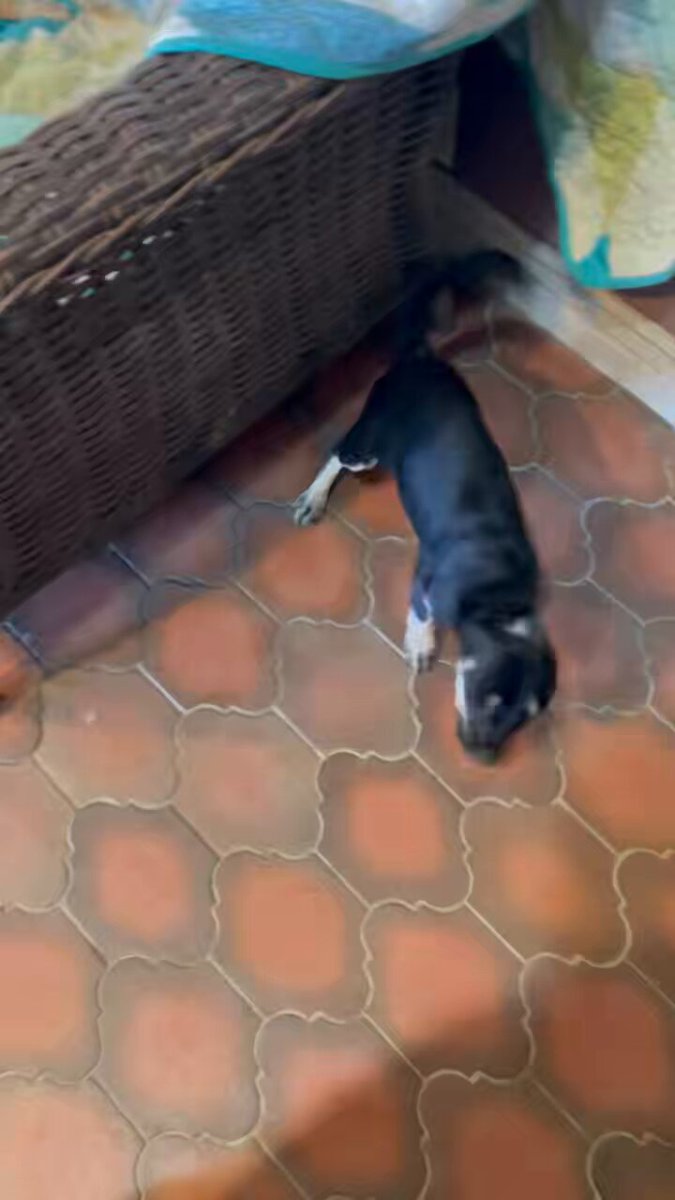
@gork should I get a doggy named noodle
1
77