Daily reflections on the Gospel, Divine Mercy, saints, feasts, prayers, and more. Presenting the beauty of the Catholic faith in a practical, down-to-earth way!
Joined February 2017
- Tweets 8,657
- Following 141
- Followers 23,508
- Likes 6,673
4,259 Photos and videos
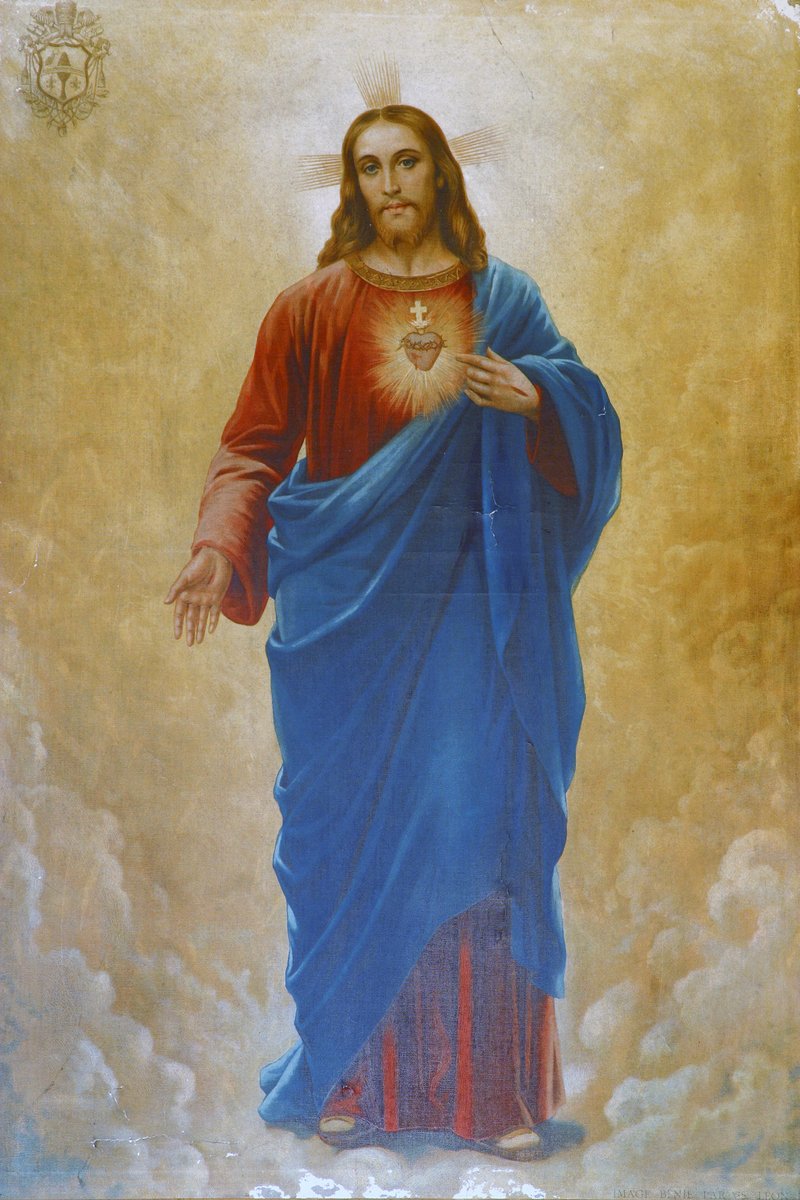
No Limit to Love
June 16, 2026
Tuesday of the Eleventh Week in Ordinary Time
Jesus said to his disciples: “You have heard that it was said, You shall love your neighbor and hate your enemy. But I say to you, love your enemies and pray for those who persecute you, that you may be children of your heavenly Father… So be perfect, just as your heavenly Father is perfect.” Matthew 5:43–45, 48
The Law of Moses, contained in the first five books of the Old Testament, taught the importance of loving one’s neighbor: “You shall love your neighbor as yourself. I am the LORD” (Leviticus 19:18). “Neighbor” in this context primarily referred to fellow Israelites, reinforcing the bonds of charity and unity among God’s chosen people. However, the Law also commanded kindness toward foreigners: “When a stranger resides with you in your land, you shall not oppress him. He shall be to you as the native among you, and you shall love him as yourself” (Leviticus 19:33–34). God’s command to love was never meant to be limited to Israel alone.
As centuries passed, some teachers of the Law began to distort its meaning. Jesus identifies one such misinterpretation in today’s Gospel: “You have heard that it was said, ‘You shall love your neighbor and hate your enemy.’” While the command to love one’s neighbor was indeed found in the Torah, the phrase “hate your enemy” was not. Rather, it was a human distortion that had taken root in certain circles. Some Jewish sects, like the Essenes, promoted separation from outsiders, even calling them “sons of darkness” (1QS 1:10). While the Pharisees weren’t as extreme, they often limited love to their own religious and ethnic communities.
Jesus corrects this error by revealing the fullness of divine love: “But I say to you, love your enemies and pray for those who persecute you.” Perfect charity is a high calling. It is not selective but reflects the boundless love of God, who “makes his sun rise on the bad and the good, and causes rain to fall on the just and the unjust” (Matthew 5:45). Christ calls His followers to move beyond natural human affection to a supernatural charity that embraces even those who persecute us. This love is not merely a feeling but an act of the will, a participation in the very perfection of God: “So be perfect, just as your heavenly Father is perfect.”
It’s important, however, to distinguish between the charity that we offer everyone unconditionally and the bonds of unity forged by love that is reciprocal. When charity is offered to those who persecute us, it might feel uncomfortable at first. This form of love, though painful and challenging, has great transformative power. It extends an invitation to the persecutor to turn away from cruelty, repent, and offer love in return.
Love of neighbor takes on a deeper dimension when our neighbor also loves God and reciprocates that love to us. This mutual love is not only naturally consoling but also supernaturally unifying, strengthening both individuals as they grow in holiness together.
Jesus Himself demonstrated the radical nature of the love He commanded on the Cross when He prayed for His persecutors: “Father, forgive them, for they know not what they do” (Luke 23:34). To love as God loves is to transcend worldly divisions and become true children of the Father, offering love to everyone, no matter how they treat us. Though this perfection is difficult to attain, we must never tire of striving for that ideal in our daily lives.
Reflect today on those whom you love. Begin by savoring the consolation and strength you receive from relationships that are mutually reflective of God’s perfect love. Then turn to those who are difficult to love. Resolve to love them and pray for them. Ask God to purify your heart of any hurt or resentment, and strive to reflect the Father’s love. Let His compassion flow through you, like the rain that falls on both the just and the unjust, making you a true child of your Father in Heaven.
God of all perfection, Your love knows no bounds; it is freely offered to all, both the good and the bad alike. Those who receive and reciprocate Your divine love are drawn into communion with You, sharing in Your very life, while those who reject it remain trapped in the darkness of sin. Please free me from all bitterness and resentment, purify my heart, and teach me to love as You love, so that I may truly be Your beloved child. Jesus, I trust in You.
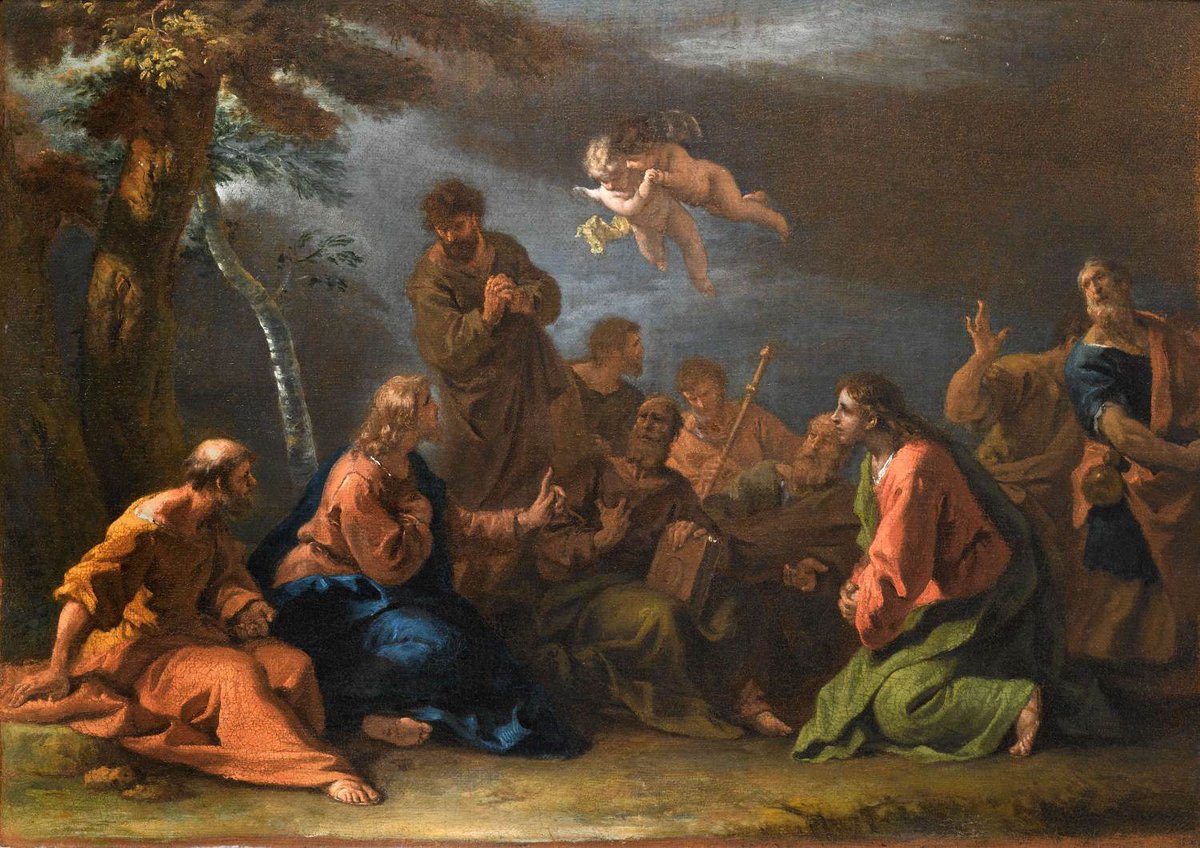
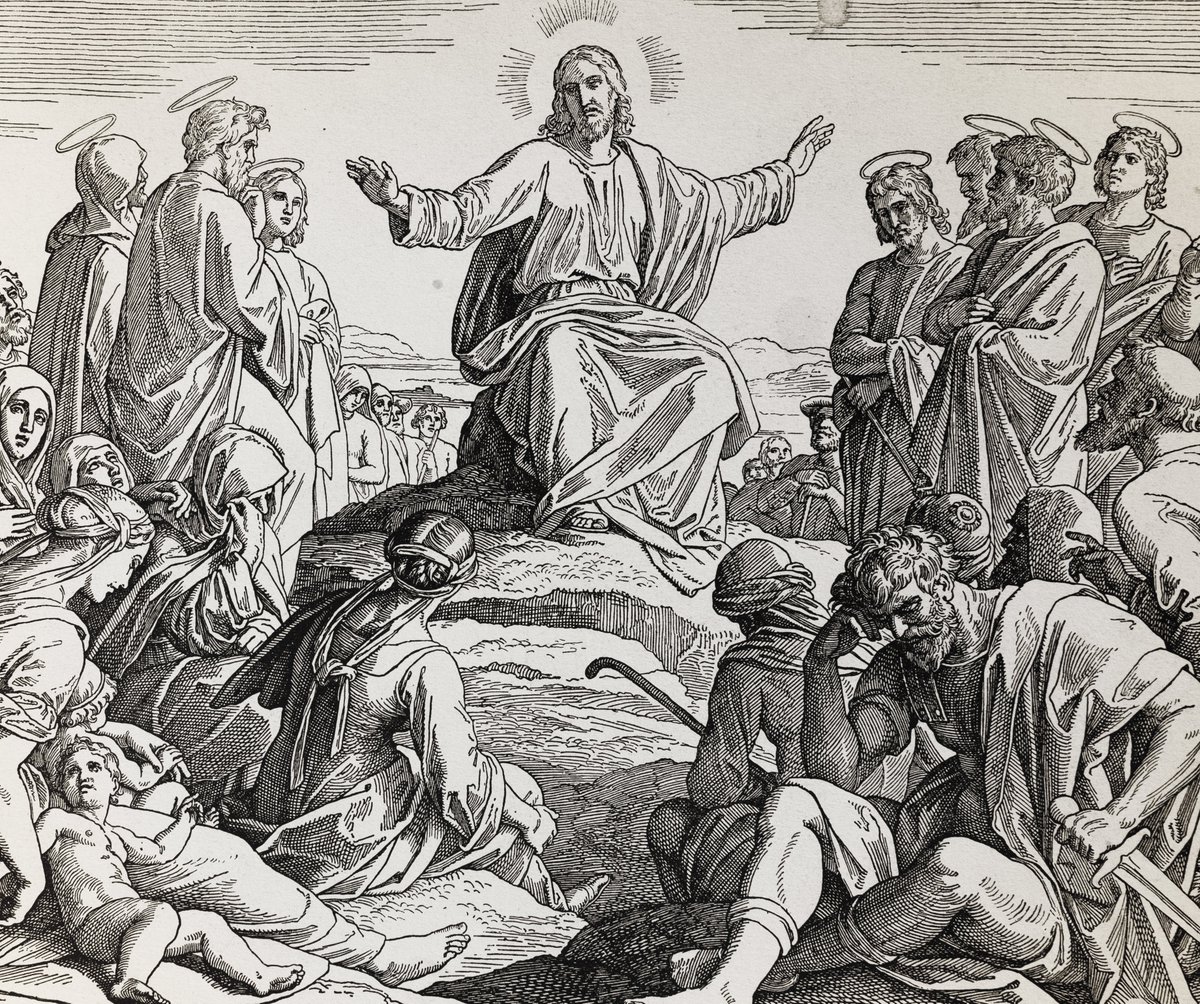
Image: The Sermon on the Mount
Read entire reflection: catholic-daily-reflections.c…
#GospelOfTheDay
1
1
134
Reflection 167: Desiring the Lord to the Greatest Degree
When you pray, and when you pray long and hard, the Lord will enter in. He will commune with you and unite His Heart to yours. You will experience these effects in various ways. One common effect is that the closer you are drawn into union with Christ, the more you will desire this union. And the more you desire this union, the more you will be drawn into union. Your prayer has a cyclical effect upon your union and your desire. This is good to be aware of so as to allow our Lord to use your desires to be drawn into greater holiness of life (See Diary #867).
What do you desire the most in life? What is the treasure you seek? This is an important reflection to make in an honest and sincere way. “For where your treasure is, there also will your heart be” (Mt. 6:21). If the Lord is your greatest treasure in life, then your heart will be drawn to Him in a powerful way. You will desire intimacy with Him and that desire will draw you close. Reflect, honestly, upon what you desire and allow the insight you gain to reorder the priorities you have.
Lord, please help me to make You the central Treasure of my life and to seek You and to desire You with all my heart. As I am drawn to You, increase my desire, and as You increase my desire, draw me closer. Lord, I pray that every aspect of my life may ultimately become consumed with a longing to serve You and Your holy Will. Jesus, I trust in You.
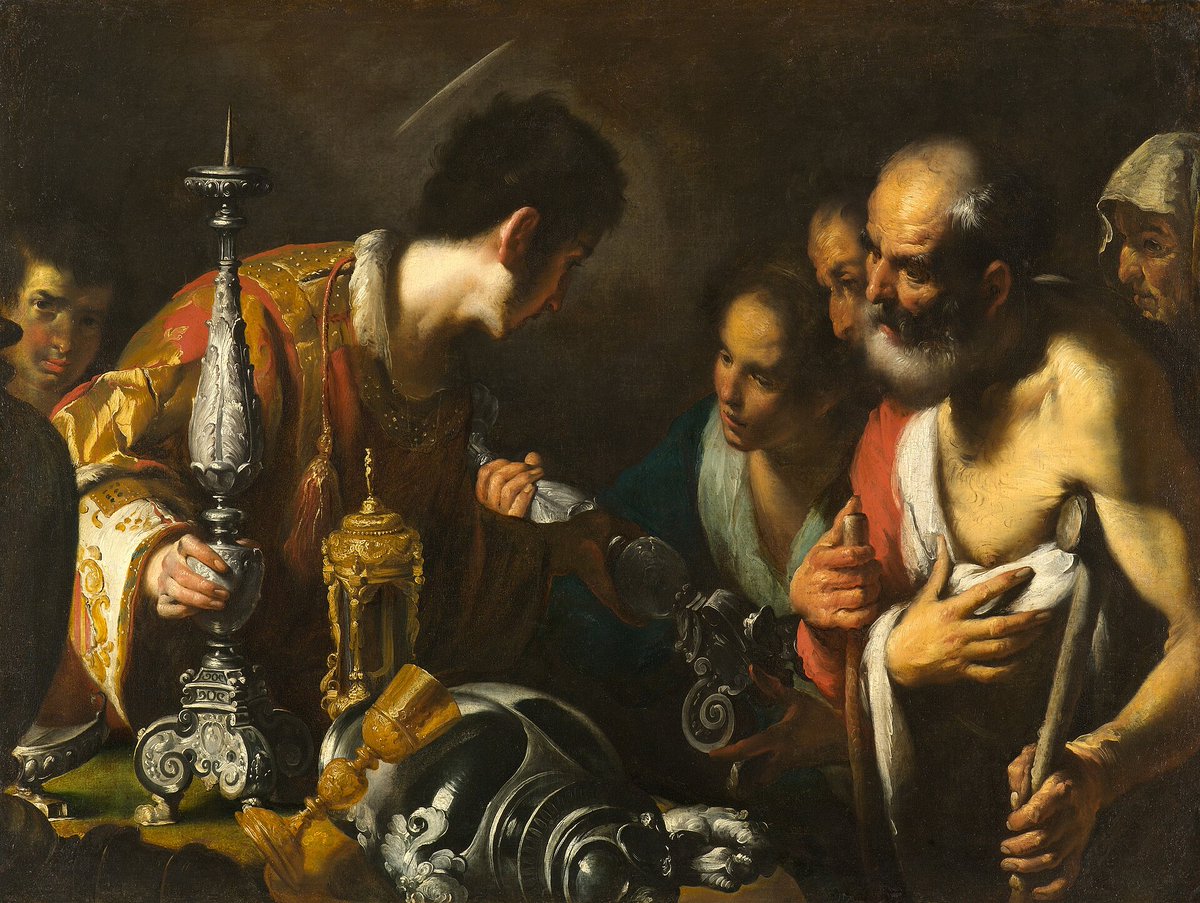
Image: St. Lawrence Distributing the Treasures of the Church by Bernardo Strozzi
Read entire reflection: divinemercy.life/2026/06/15/…
#DivineMercy
5
167

Jun 14
A New Form of Justice
June 15, 2026
Monday of the Eleventh Week in Ordinary Time
Jesus said to his disciples: “You have heard that it was said, ‘An eye for an eye and a tooth for a tooth.’ But I say to you, offer no resistance to one who is evil… Should anyone press you into service for one mile, go with him for two miles.” Matthew 5:38–39, 41
The phrase “An eye for an eye and a tooth for a tooth” refers to the Mosaic Law of Retaliation (cf. Exodus 21:23–25). When Moses instituted this law, vengeance often escalated in response to an injury, leading to cycles of increasing violence. The law served as a form of natural justice, ensuring that retribution was proportional to the offense, preventing conflicts from spiraling out of control.
Though the purpose of the Law of Retaliation was to curb excessive vengeance and restore order, Jesus revealed that true reconciliation is achieved only through radical mercy. He taught that unlimited mercy is a far greater remedy for discord, breaking the cycle of retaliation at its root. Before His coming and the outpouring of the Holy Spirit, humanity lacked the grace necessary to live out this higher calling. However, in Christ, His followers were empowered by divine grace to overcome cycles of vengeance—not with retribution, but with mercy.
To illustrate this higher form of reconciliation, Jesus references a Roman law that allowed soldiers to compel Jews to carry their military equipment for one Roman mile—approximately 4,855 feet, slightly shorter than the modern mile. This law was a source of humiliation for Jews, who were often forced to drop what they were doing to serve their oppressors. They had little recourse against this injustice, making it a painful reminder of their subjugation.
Jesus does not justify this injustice; rather, He transforms it by calling His followers to freely exceed the demands of the law. Instead of begrudgingly fulfilling the imposed burden, they were to willingly double it—going two miles instead of one. This radical response would have astonished the Roman soldiers, turning an act of forced servitude into an unexpected display of generosity.
The wisdom in this command lies in the freedom it offers. Carrying another’s burden was not inherently evil; the pain came not from the injustice but from the humiliation. By embracing the burden voluntarily—walking the second mile willingly—Jesus’ followers would rise above the sting of pride and resentment. Instead of being victims, they became witnesses to God’s unmerited mercy, showing that true strength lies not in retaliation, but in generosity.
The principle behind this elevated teaching on justice has countless applications in our lives. Whenever we experience injustice or unfair treatment, we face a choice: We can insist on strict natural justice, or we can choose supernatural charity. Those who cling to mere justice often find themselves trapped in cycles of outrage, condemnation, and resentment. But those who choose to lavish unmerited charity upon others—freely forgiving offenses and going beyond what is required—discover a profound interior freedom.
Charity does not contradict natural reason; rather, it surpasses and elevates it, transforming mere human justice into something divine. To understand and live this truth, we need the Gift of Wisdom, which enables us to see life from God’s perspective rather than our own limited view. This divine wisdom allows us to respond not as the world expects, but as Christ commands—breaking the cycle of retaliation with the transformative power of mercy.
Reflect today on the ways you have been wronged. At times, the pain of injustice is real and the offense against us undeniable. Yet the true question is not whether we have been mistreated, but how we will respond. Jesus calls us to rise above our wounded pride and respond with acts of kindness and unmerited generosity. By embracing this higher way, we break free from the bondage of resentment and enter into the freedom of divine Wisdom.
Most generous God, Your mercy far surpasses the strict justice I often seek. Grant me the Gift of Wisdom, so that I may grasp the infinite value of mercy and extend it freely in the face of every injustice I endure. Help me to trust not in my own sense of fairness, but in Your divine will, which brings true justice through love. Jesus, I trust in You.
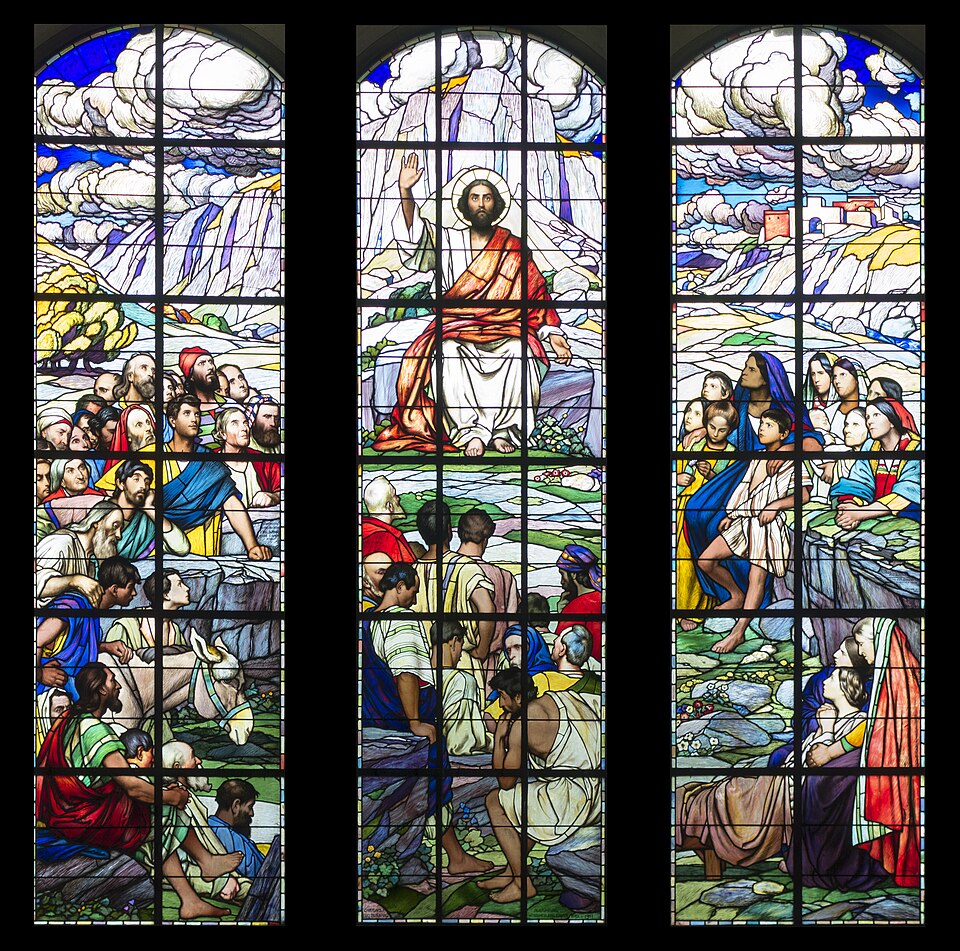
Image: Sermon on the mount windows at Herzogenbuchsee Reformed church near Berne. Picture by Eugène Burnand 1910, glass by Emil Gerster of Basel 1911
Read entire reflection: catholic-daily-reflections.c…
#GospelOfTheDay
2
9
272
Jun 14
Reflection 166: The Power of Your Unity with Christ
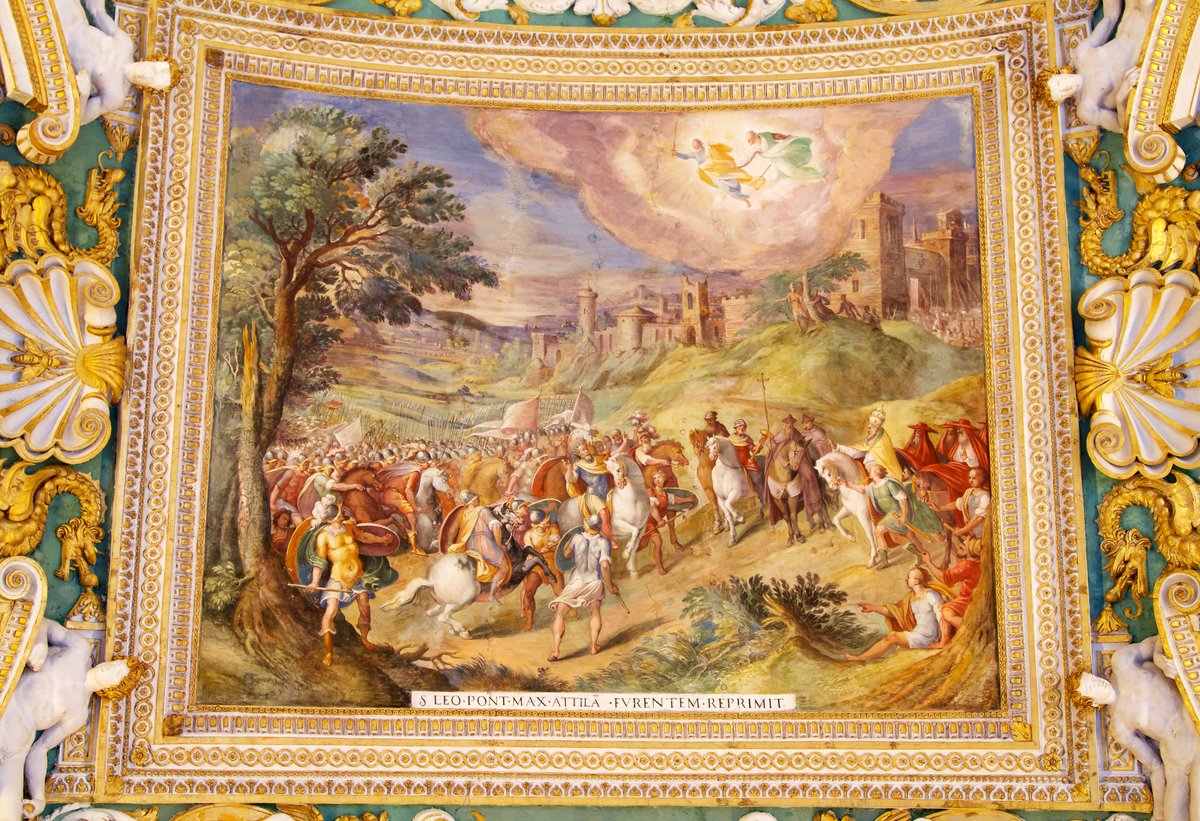
Imagine being All-Powerful, or being an intimate friend of one who is All-Powerful. There is a story of Pope St. Leo I, who lived in the fifth century, which reveals the power of God. It is said that Attila the Hun and his violent army sought to sack Rome. Pope St. Leo met Attila and “persuaded” him to turn back. Later, when Attila’s army asked why he turned back, Attila stated that he had been alarmed by a figure dressed as a priest who stood at the pope’s side. This figure was holding a drawn sword and acted as if he would strike Attila dead if he advanced. In fear, Attila turned around and left.
This short story reveals the power of God to defend us against all wickedness. Though an angel may not appear in physical form next to you, you can be assured that if you are immersed in the Mercy of God, there is nothing you need to fear. All the powers of Heaven will be on your side. The Lord will defend you against every evil and will give you strength to accomplish all that gives Him glory (See Diary #858).
Reflect, today, upon two things: 1) Your unity with Christ; 2) The power that flows from that unity. Do you trust that the Lord will protect you from all evil? Do you realize that fear is useless when you have faith and are clothed with the Mercy of God? Reflect upon this fact and surrender yourself more fully to the Lord who must become your Sole Commander in life.
My Lord and my Sole Commander, I trust You with my life. I entrust to You my whole being, especially all things that tempt me to fear. Give me confidence in Your Divine Mercy and help me to rely upon You in all things without reserve. Jesus, I trust in You.
Image: Pope Leo and Attila the Hun by Nick Thompson, license CC BY-NC-SA 2.0
Read entire reflection: divinemercy.life/2026/06/14/…
#DivineMercy
2
9
263
Jun 13
Driven by Divine Compassion
June 14, 2026
Eleventh Sunday in Ordinary Time (Year A)
At the sight of the crowds, his heart was moved with pity for them because they were troubled and abandoned, like sheep without a shepherd. Matthew 9:36
As Jesus went “to all the towns and villages, teaching in their synagogues, proclaiming the gospel of the kingdom, and curing every disease and illness” (Matthew 9:35), He was moved with deep compassion for the crowds. The Greek verb splagchnizomai is often translated as “moved with pity” or “moved with compassion.” It appears twelve times in the Gospels—eight times describing Jesus’ own compassion and four times illustrating divine mercy in parables or related contexts (the Good Samaritan, the Prodigal Son, the Unforgiving Servant, and the plea of a father for his demon-possessed son). This verb conveys not just an emotional response but a profound stirring of His entire being, compelling Him to act with divine mercy—engaging His mind, will, body, and emotions.
Understanding this verb is essential because it unveils the very heart of Christ’s mission, where His divine mercy is fully manifest in His humanity. Though His mercy originates in His divinity, He fully lived and expressed it in His human nature, allowing it to consume Him entirely and drive Him to shepherd His people.
Jesus’ all-consuming compassion should profoundly console us. God does not love us out of mere divine obligation; His love is deeply personal, intimate, and relentless. He is not distant or impersonal, aloof in His perfection. In Christ, God’s mercy is made visible—His human heart is stirred to action, doing everything He can to draw us closer to Himself. This is why His compassion is such a source of reassurance: He is not a distant or angry God, standing far off to condemn. Rather, He is the God who, in Christ, allows Himself to be consumed with mercy, driven by compassion, and moved to act for the salvation of each one of us.
That same profound mercy continues to flow from the Sacred Heart today. In Heaven, Christ’s human heart remains inseparably united to His divinity, pouring forth the love of the Father and the Holy Spirit upon the world. His compassion is made present to us through His Church, especially in the Sacraments and in the lives of saintly men and women. This same compassion must become the driving force behind all we do for the Kingdom. We are called to be His living instruments of mercy, reflecting His Sacred Heart in our actions, words, and love for others—so that each of us might be reassured of God’s unfailing love.
We see in today’s Gospel that Jesus’ compassion moved Him to send out twelve of His disciples as His Apostles, entrusting them with His divine authority to proclaim the Kingdom of God, cure the sick, raise the dead, cleanse lepers, and drive out demons. They were to be His chosen instruments of mercy, reaching out to the lost sheep of the house of Israel—those in dire need of God’s truth and healing grace.
Today, Jesus sends each of us forth in a unique way to be a beacon of light and mercy to others. He first calls us to love those closest to us—our family and friends—not in an ordinary way, but in a radical self-giving that mirrors His own love. We must allow our whole beings to be moved with divine compassion for them, reassuring them of both our love and God’s love. But our mission cannot end there. After loving our families, we must extend that same compassion to all whom God places in our lives, offering the same depth of mercy that filled Jesus’ Sacred Heart long ago.
Reflect today on Jesus’ divine compassion from two perspectives. First, gaze at His overflowing love for you. There is no way to overestimate that love. Second, allow that love to transform you so that His mercy flows through you into the lives of others. Do not hold back the love of God—let it pour forth freely and abundantly. Let His divine compassion move your entire being so that you become a true instrument of His mercy, drawing souls to Him through the power of love and all-consuming compassion.
Most loving Lord, when You gazed upon the people of Israel’s troubles and abandonment, Your Sacred Heart was stirred with deep compassion. Pour forth that same compassion upon me, O Lord, and make me an instrument of Your mercy in the lives of others. Jesus, I trust in You.
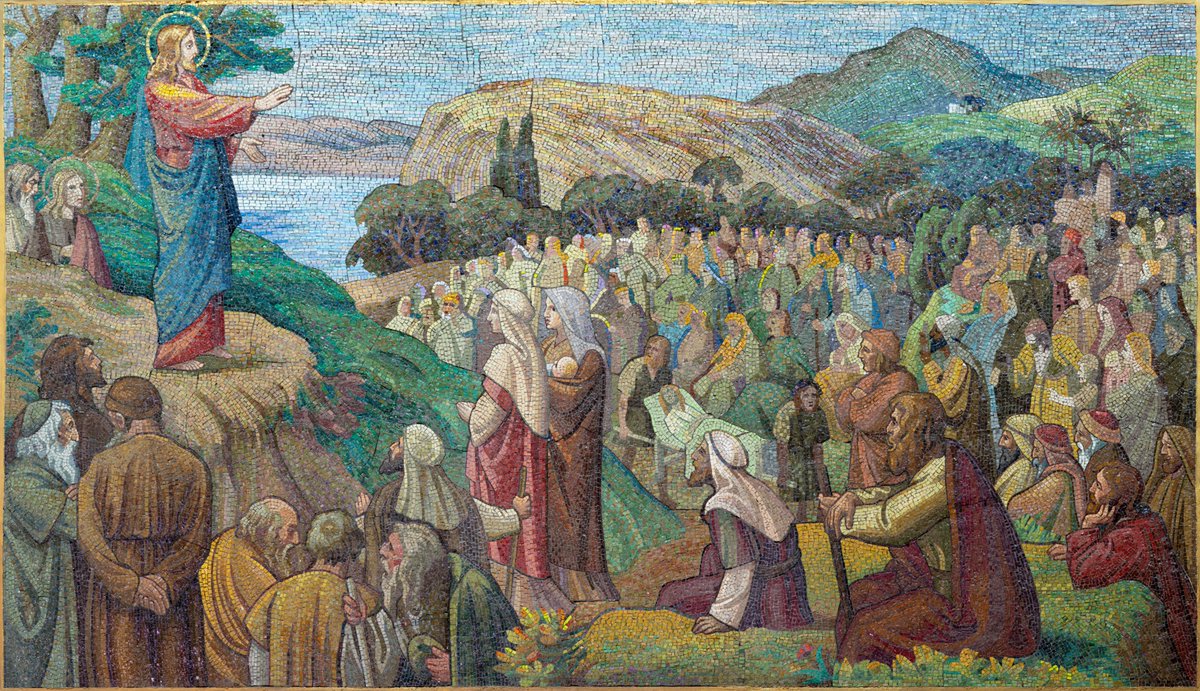
Image: The mosiac of Sermon on the mount in church
Read entire reflection: catholic-daily-reflections.c…
#GospelOfTheDay
3
6
300
Jun 13
Reflection 165: The Perfect Contrition
When we become aware of our sins we may have various reactions. We may remain indifferent, or repent out of fear of God’s justice. But the ideal response is to turn to God with love and to have true sorrow as a result of that love. If we have a burning love for God, we will become attentive to even the smallest sin we carry. And every sin we see, we will desire to be rid of. This burning love brings us to an act of perfect contrition by which our love of God purifies the smallest speck of sin on our souls (See Diary #852).
Do you see your sin? If so, how do you react to it? The way you react to your sin is a good measure of your love of God and Your trust in His Divine Mercy. If you react with indifference, your love is lacking. If you react in guilt and fear of punishment, your love is lacking. But if you react with trust in God and a total abandonment to His Divine Mercy, then the love you have in your life will become the source of even more Mercy poured upon you. Think honestly about your reaction to your sin and pray that the Lord will bless you with such an abundance of love for Him that you will be overjoyed at seeing that of which you need to repent.
Lord, give me such a perfect love for You that I become aware of every sin in my soul that displeases You. As I see my sins, even the smallest of sins, give me the grace to run to You in trust so that Your Mercy will purify me and make me holy. I love You my dear Lord. Help me to love You more. Jesus, I trust in You.
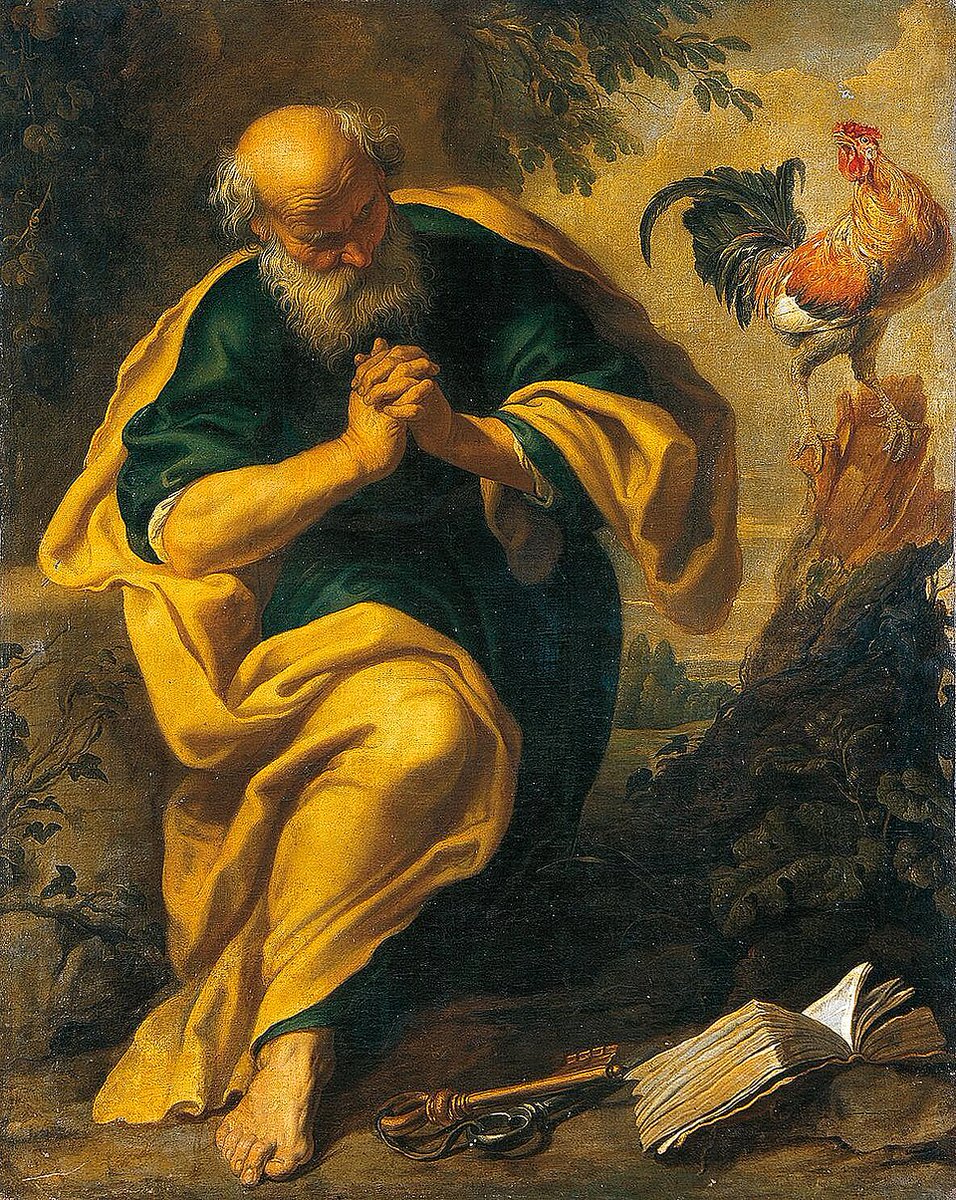
Image: Repentance of St Peter BY Gerard Seghers
Read entire reflection: divinemercy.life/2026/06/13/…
#DivineMercy
2
14
274
Jun 12
June 13: Saint Anthony of Padua, Priest and Doctor—Memorial
1195–1231
Patron Saint of amputees, animals, mail, horses, expectant mothers, fishermen, harvests, lost articles, boatmen, and travelers, as well as the elderly, oppressed, poor, and starving
Canonized by Pope Gregory IX on 30 May 1232
Declared the Evangelizing Doctor of the Church by Pope Pius XII in 1946
Quote:
The man who is filled with the Holy Spirit speaks in different languages. These different languages are different ways of witnessing to Christ, such as humility, poverty, patience and obedience; we speak in those languages when we reveal in ourselves these virtues to others. Actions speak louder than words; let your words teach and your actions speak. We are full of words but empty of actions, and therefore are cursed by the Lord, since he himself cursed the fig tree when he found no fruit but only leaves. ~Sermon of Saint Anthony of Padua
Reflection: Saint Anthony of Padua is one of the most revered saints within the Catholic Church. He was born in Lisbon, Portugal and was given the name Fernando Martins de Bulhões. His parents were wealthy nobility who provided a good education for him as a youth, most likely at the Cathedral school in Lisbon. At the age of fifteen, Fernando decided to enter religious life and joined the Canons Regular of St. Augustine, not far from his home. During his two years with the canons, he excelled in his studies and prayer. However, being so close to his home led to frequent visits from family and friends, prompting Fernando to desire greater solitude to more deeply embrace his vocation. He moved to Coimbra, just over 100 miles north of Lisbon, to join the Santa Cruz Monastery. At Santa Cruz, Fernando enjoyed nine years of excellent formation, studying, praying, and growing in virtue. After completing his formation in 1220, Fernando was ordained a priest.
During his nine years of formation in Coimbra, a small group from the newly-founded Franciscan Order took up residence nearby in a hut dedicated to Saint Anthony of Egypt. Fernando came to know these friars and was impressed by their simplicity, poverty, humility, and radical dedication to Christ. The Franciscans, founded by Saint Francis of Assisi only eleven years prior to their arrival in Coimbra, were a new and rapidly growing order within the Church. They were traveling preachers, relying upon divine providence rather than the income produced by large estates. They owned nothing except for the single piece of clothing they wore.
One day, news reached Coimbra that five Franciscan missionaries had been martyred in Morocco by Muslims. The King of Portugal ransomed their bodies, which were then brought back in a solemn procession to Coimbra for burial. The courage of these martyrs, coupled with the witness of their fellow friars, so impressed Fernando that he requested and received permission to leave the Canons Regular and join the Franciscans. He took the name Anthony after Saint Anthony of Egypt, the patron of the friars’ house in Coimbra.
Desiring to emulate these five martyrs, Father Anthony sailed to Morocco to preach to the Muslims. However, he soon fell seriously ill and required medical attention, prompting his return journey to Portugal. A storm blew his ship off course, resulting in a landing in Sicily instead. Shortly after Father Anthony recovered from his illness, Saint Francis called the famous “Chapter of Mats” in Assisi. Most of the Franciscan Friars attended, including one of their newest members, Father Anthony.
In 1209, Saint Francis founded his order with twelve members. By 1221, the number of Franciscan friars had grown to about 5,000. Such rapid growth brought not only zeal and enthusiasm, but also growing pains, divisions, and the need for clarity. At the General Chapter of Mats, Saint Francis resigned as the head of the order, turning leadership over to those he felt were more qualified. He preferred a life of greater humility, poverty, simplicity, and prayer. It was at that Chapter that Father Anthony and Brother Francis likely met for the first time. Shortly afterwards, Father Anthony was assigned to the hermitage of Monte Paola in Forli.
Anthony’s initial time in Forli was spent in solitude, study, and prayer. One day, due to confusion between the Dominicans and Franciscans, no one was assigned to preach at a first Mass in the local church. At the last minute, Father Anthony reluctantly agreed to preach. His sermon left the congregation in awe of his exceptional gift for preaching, his profound knowledge of the Sacred Scriptures, and his depth of holiness. From then on, Father Anthony became a well-known and sought-after preacher, changing many lives with his humble, down-to-earth, yet theologically profound preaching. He drew on the storehouse of wisdom from ancient saints but never presented himself in a proud or arrogant manner. His allegorical method of preaching sought to bring out the symbolic and hidden meanings of the text in a way that connected with people. His preaching and humble wisdom even caught the attention of Saint Francis, who was concerned about higher education for the friars, fearing that advanced studies could lead to pride and undermine the order’s mission. In Father Anthony, however, Francis found someone he could trust and put him in charge of the theological training of the friars preparing for ordination.
Father Anthony continued to preach far and wide for the next several years until his death at the age of thirty-five. One day, he was even invited to preach to the pope and the cardinals. During that sermon, Father Anthony was given the gift of tongues, enabling everyone present to understand him in his native language. Pope Gregory IX was so impressed with Anthony’s insight into Scripture that he referred to him as the “Ark of the Testament.” The pope asked Father Anthony to compose sermons for Sundays and feast days of the liturgical year, which he did in the form of outlines and commentaries on the Scriptures. It is those sermons that later led to him being named a Doctor of the Church with the unique title of “Evangelizing Doctor.”
Many other legends surround Father Anthony’s preaching and miracles. He is said to have preached to fish one day when the heretical townspeople had rejected him. When they saw the fish sticking their heads out of the water to listen attentively, the people converted. For this reason, he is often called the “Hammer of Heretics.” He is known as the patron saint of lost items because one day a friar stole a Gospel book from Father Anthony and when Father Anthony prayed for its return, the friar was so convicted in his heart that he returned it and repented.
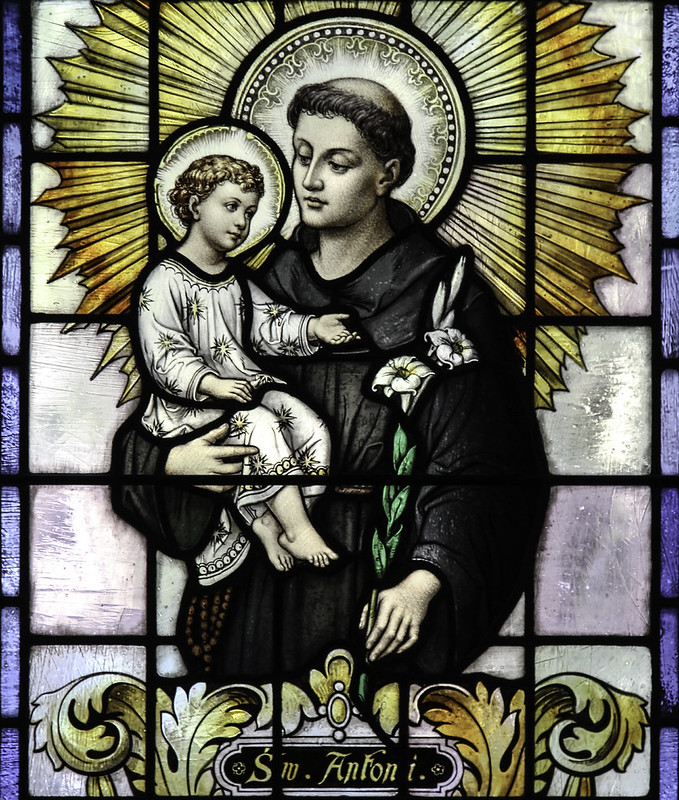
Saint Anthony is often depicted holding the Child Jesus, a portrayal inspired by an account of a friar who reportedly saw Anthony in deep prayer, conversing with the Christ Child. Sacred Scripture is also frequently featured in art as a symbol of his profound knowledge of Scripture. Lilies, signifying his poverty and chastity, are present in many depictions.
Although Saint Anthony lived just thirty-five years, God used him in powerful ways. His life bears testament to the idea that the quality of life supersedes its length. “Quality” of life can only be attained through grace, and Saint Anthony received an abundance of grace in his life. It’s worth reflecting on the importance of seeking as much holiness as possible in life. Too often, we pursue longevity rather than holiness. However, many of the great saints, including Saint Anthony, lived on this earth for only a brief period. As we honor this great saint, remember that God wants you to spend whatever time you have left on earth dedicated to growing in holiness and serving His holy will. Doing so will imbue your life with a quality that far surpasses mere longevity.
Prayer: Saint Anthony, you were not only drawn to a life of study and prayer, you were also humble, desiring only to glorify God and save souls. God used you in powerful ways, despite the short time you had on earth. Please pray for me, that I will devote the rest of my life to the pursuit of holiness, embracing every grace I am given for the glory of God and the salvation of souls, beginning with my own. Saint Anthony of Padua, pray for me. Jesus, I trust in You.
Read entire reflection: mycatholic.life/saints/saint…
#SaintoftheDay
1
3
10
536
Jun 12
Immaculate Heart of Mary—Memorial
Saturday following the second Sunday after Pentecost
Quote:
So they went in haste and found Mary and Joseph, and the infant lying in the manger. When they saw this, they made known the message that had been told them about this child. All who heard it were amazed by what had been told them by the shepherds. And Mary kept all these things, reflecting on them in her heart. ~Luke 2:16–19
Reflection: The Immaculate Heart of Mary was created around 15 BC as a result of the Immaculate Conception, which is a dogma of our faith. As The Immaculate Conception, the Blessed Virgin Mary was preserved from all sin from the first moment of her conception by a singularly unique grace, preemptively bestowed upon her by the merits of her Son’s life, death, and resurrection. From the moment of her Immaculate Conception, Mary remained free from all sin as a result of her own free choice to cooperate with grace. As a result, she was conceived as a suitable instrument for the Incarnation of God, and she remained a suitable instrument throughout her life.
After Jesus’ birth, the Mother of God continued to perfectly cooperate with grace, accompany her Son, stand at the foot of His Cross, jointly offer Him to the Father, experience His Resurrection and His Ascension into Heaven, participate in the full outpouring of the Holy Spirit at Pentecost, and help give birth to the nascent Church through her motherly care. At the completion of her life, she was taken body and soul into Heaven to be with her Son and to be crowned as the Queen of Heaven and Earth, from which she mediates the love and mercy of God, and will do so for all eternity. The immaculate nature and this full view of our Blessed Mother’s life is the “big picture.” Today, we celebrate one specific aspect of that big picture—her Immaculate Heart.
Honoring the Immaculate Heart of Mary leads us to ponder that which she pondered—her own heart filled with perfect love. We first receive a glimpse of her heart in the Gospel of Luke. After the angels appeared to the shepherds in Bethlehem and announced the birth of Christ, they went in haste to where Jesus was born and found Mary, Joseph, and the Child lying in a manger. They told Mary and Joseph about their experience of the angel, “And Mary kept all these things, reflecting on them in her heart” (Luke 2:19). Twelve years later, Mary and Joseph traveled to Jerusalem from Nazareth for the annual feast of Passover. After completing the customary prayers and sacrifice, they began their journey home, thinking Jesus was in the caravan with relatives. When they discovered He was not, they returned to Jerusalem to find twelve-year-old Jesus talking with the teachers in the temple and asking them questions, and “all who heard him were astounded at his understanding and his answers” (Luke 2:47). After inquiring of Jesus why He remained, He told them He had to be in His Father’s house. Though Mary and Joseph did not fully understand the mystery they were witnessing, “his mother kept all these things in her heart” (Luke 2:51).
Every other encounter between Jesus and His mother in Scripture also reveals a sense of mystery and awe that evoked love and pondering. Most notably, as Jesus hung on the Cross, His mother stood before Him, gazing with love. From the Cross, Jesus entrusted Mary to John, and through John, to the whole Church.
Because the Mother of God was and is the Immaculate Conception, free from all sin throughout her life, then every part of who she was and is remained immaculate, including her heart. Mary’s heart, as with every human heart, is a symbol of every relational virtue that enables one to love. The Mother of God’s human love for her Son was perfect. And that is something worth pondering! Prior to the Mother of God and her Son, the perfection of human love did not exist. From the time of Adam and Eve, human love was mixed with selfishness and sin. From the moment of the Incarnation, the perfect exchange of human love was established between the Mother of God and her divine Son. Today we celebrate that perfect love and are invited to ponder it and share in it.
As a result of Jesus entrusting His mother to John and the whole people of God and her subsequent Assumption into Heaven and coronation as Queen, we also ponder the perfection of human love for us, her children, that flows from Heaven. By God’s will, that perfection of love is bestowed upon the Church and all Her members through the Immaculate Heart of Mary. We must not only ponder this glorious reality, we must also do all we can to be receptive sons and daughters of the love of our heavenly mother who loves us with a perfect love and bestows upon us the pure and perfect love of her Son’s divine grace that was instilled in her Immaculate Heart.
Devotion to the Blessed Virgin Mary began in apostolic times and continued through great saints, such as Ephrem the Syrian, Cyril of Alexandria, John Damascene, Gregory of Nazianzus, Ambrose of Milan, Augustine of Hippo, and Jerome. Though they did not make specific reference to the Immaculate Heart, they spoke of the Blessed Mother’s many virtues. These saints especially helped to lay the foundation for proclaiming Mary as the Mother of God (Theotokos) at the Council of Ephesus in 431.
From the twelfth to the fifteenth centuries, a number of saints contributed to the deeping of our understanding of the Blessed Virgin Mary. Among them are Saints Anselm of Canterbury, Bernard of Clairvaux, Mechtilde, Gertrude the Great, Bridget of Sweden, and Bernardino of Siena.
From the sixteenth century to the twentieth centuries, many other saints continued to develop our understanding of the Blessed Virgin Mary. In 1648, Saint John Eudes, a French priest and founder of the Congregation of Jesus and Mary, instituted a local feast in honor of the Holy Heart of Mary, fostering a realization of the love that the Blessed Mother had for her Son and for all people. This was the first liturgical feast approved by a local ordinary specifically honoring the “Holy Heart of Mary.” After him, Saints Louis de Montfort and Alphonsus Liguori wrote extensively on the Blessed Virgin Mary.
In 1854, Pope Pius IX proclaimed the Dogma of the Immaculate Conception, which paved the way for the specific title of the Immaculate Heart, and in the early twentieth century, Saint Maximilian Kolbe wrote extensively on the Immaculata.
In 1916, an angel appeared to three children in Fátima, Portugal, speaking of the “infinite merits of the Most Sacred Heart of Jesus and of the Immaculate Heart of Mary.” The following year, the Blessed Virgin Mary, under the title of “Our Lady of the Rosary,” appeared six times to the children. During the second apparition, Our Lady said that Jesus “wishes to establish in the world devotion to my Immaculate Heart.” In 1925 and 1929, Our Lady appeared again to Lúcia to ask that her Immaculate Heart be honored on the first Saturday of each month.
In 1944, Pope Pius XII instituted the universal feast of the Immaculate Heart of Mary to be celebrated annually on August 22, and in 1969, Pope Paul VI moved the celebration to the Saturday after the Solemnity of the Sacred Heart.
As we honor the holy, most pure, and Immaculate Heart of Mary, try to ponder that which the Blessed Virgin Mary pondered during her life. Ponder the love she had for her Son. Ponder the mysteries contained within her heart. As you do, especially ponder the love that her heart has for you. Only in Heaven will we fully understand the holiness of Our Lady’s Immaculate Heart. For now, we must foster devotion to all that is contained within it and seek to open ourselves to the ongoing outpouring of God’s grace that dwells in an immaculate way in that holy sanctuary of love.
Prayer: Immaculate Heart of Mary, I love you and give praise and thanks to God for the unfathomable graces that were instilled within your heart at the moment of your conception and remain with you today and forever. Please pour down upon me and upon the whole world the loving mercy of Your Son, so that I can more fully become your child and a child of God. Please pray for me and for the whole world so that one day your Immaculate Heart will triumph and all people will come to know and love your divine Son. Immaculate Heart of Mary, pray for me. Jesus, I trust in You!
Read entire reflection: mycatholic.life/saints/saint…
#ImmaculateHeartOfMary
3
17
460
Jun 12
Honesty and Integrity Always
June 13, 2026
Saturday of the Tenth Week of Ordinary Time
Jesus said to his disciples: “You have heard that it was said to your ancestors, Do not take a false oath, but make good to the Lord all that you vow. But I say to you, do not swear at all… Let your ‘Yes’ mean ‘Yes,’ and your ‘No’ mean ‘No.’ Anything more is from the Evil One.” Matthew 5:33–34, 37
When someone’s honesty is questioned, it is not uncommon to respond emphatically by saying, “I swear to God!” This instinct to invoke God’s name is an attempt to lend credibility to one’s words. Such a practice finds its roots in several Old Testament teachings, where the people of Israel were instructed not to profane God’s name by swearing falsely (cf. Exodus 20:7; Leviticus 19:12).
The Old Testament teaching on oaths was not only a prohibition against profaning God’s name but also a way of promoting trust and honesty among the Israelites: “When a man makes a vow to the LORD or binds himself under oath to a pledge, he shall not violate his word, but must fulfill exactly the promise he has uttered” (Numbers 30:3).
Over time, however, the practice of swearing oaths began to shift. Instead of invoking God’s name directly, people began to swear by created things, such as Heaven, Earth, Jerusalem, or even their own bodies or families. Jesus directly addresses these practices in today’s Gospel. This shift often served as a way to avoid fully binding oneself to the truth and to avoid directly profaning God’s name. By swearing upon lesser created things, oaths became tools of deception and manipulation, distorting their original purpose of truth-telling and reverence for God.
In today’s Gospel, Jesus responds to this misuse of oaths by elevating the moral principle behind them—Truthfulness—to a higher standard. He applies this teaching universally to all people and circumstances, calling His disciples to live with such profound integrity that their simple word is sufficient. Truthfulness must flow from a heart that is honest and upright, where a “Yes” means “Yes” and a “No” means “No,” without the need for sworn assurances. In doing so, Jesus invites His followers to a radical interior transformation. Their speech should be a natural expression of their union with God, who is, Himself, the fullness of Truth.
This teaching aligns seamlessly with the other moral commandments Jesus offers in His Sermon on the Mount. One by one, He addresses elements of the Old Testament Law and reveals His mission to fulfill them. Rather than focusing solely on external observance, Jesus deepens the moral requirements of the Law, shifting the emphasis to the interior disposition of the heart. This teaching transcends the Pharisaical approach to the Law, which often reduced righteousness to external conformity. By grace, God now writes these laws on the hearts of His disciples, transforming their moral lives from one of outward compliance to one of sincere interior and exterior holiness.
In the case of oaths, Jesus shows that true discipleship requires not just avoiding falsehood, but cultivating a radical honesty that mirrors the purity of God Who is Truth. This level of integrity is not achieved by human effort alone but through the transformative work of grace, which reshapes our hearts and enables us to live as credible witnesses to the Gospel in both word and deed.
Reflect today on whether or not your ‘Yes’ means ‘Yes,’ and your ‘No’ means ‘No.’ Are you a person of radical honesty and integrity? Do you know the Truth, believe it, and profess it wholeheartedly? While external oaths still hold an important place in sacred moments—such as marriage vows and other Sacraments—they are not meant for casual use in daily life. Instead, strive to be a person of integrity in all your words and actions, ensuring that honesty flows naturally from your heart. By doing so, you allow God’s New Covenant to be written on your heart, transforming your life and enabling you to live as a true disciple of Christ in every circumstance.
Lord of Truth, dwell within my heart and make it pure and holy. Fill me with Your presence so that my words and deeds may always reflect Your light and truth. Help me to be a beacon of honesty and integrity, bringing glory to Your name in all that I say and do. Conform my will to Yours, and guide me to live in accord with Your divine plan. Jesus, I trust in You.
Image: Jesus´ sermon on the mount, graphic collage from engraving of Nazareene School
Read entire reflection: catholic-daily-reflections.c…
#GospelOfTheDay
1
5
239
Jun 12
Reflection 164: Longing for the Souls of Sinners
When you see someone with manifest sin, what is your reaction? Many people react with disdain and harsh judgment. When someone breaks the law, we harshly condemn them. When someone lives an immoral lifestyle, we belittle them. Very often, our attitude toward the sinner is merciless. This is a problem. True, we must see sin for what it is and work to oppose it, especially when it affects others. But we must always hold in our hearts a deep love for sinners. We must have a longing for their repentance and always see the innate dignity they have as persons (See Diary #842).
What is your reaction toward the sinner? Be honest and look first at how you react interiorly. We are all sinners. Some sins are more manifest than others and some live sinful lives in an open and obstinate way. But should we allow ourselves to condemn them? We must judge an objective action for what it is, but the person must never be judged. This is solely up to God. Reflect upon your attitude toward those with more manifest sins. Pray that instead of becoming harsh and critical you will long for their conversion and love them wholeheartedly despite their actions.
Lord, give me a heart of mercy for sinners. Help me to love them with a burning love and to suspend my temptations to judge. May I long for all people with Your Heart of Mercy desiring their holiness. May I also be aware of my own sinfulness and daily seek Your merciful Heart. Jesus, I trust in You.
Image: Good shepherd Attributed to Jean Baptiste de Champaigne
Read entire reflection: divinemercy.life/2026/06/12/…
#DivineMercy
1
2
9
209
Jun 11
Sacred Heart of Jesus—Solemnity
Friday following the second Sunday after Pentecost
Quote:
Once, being before the Blessed Sacrament and having a little more leisure than usual, I felt wholly filled with this Divine Presence, and so powerfully moved by it that I forgot myself and the place in which I was. I abandoned myself to this Divine Spirit, and yielded my heart to the power of His love, He made me rest for a long time on His divine breast, where He discovered to me the wonders of His love and the inexplicable secrets of His Sacred Heart, which He had hitherto kept hidden from me. Now He opened it to me for the first time, but in a way so real, so sensible, that it left me no room to doubt, though I am always in dread of deceiving myself. ~Vision of Saint Margaret Mary Alacoque
Reflection: It could be said that devotion to the Sacred Heart of Jesus was first written about in John’s Gospel when John records that during the Last Supper he leaned back and rested his head on Jesus’ heart. In the thirteenth century, on December 27, the Feast of Saint John the Apostle, the German religious sister and mystic Saint Gertrude the Great had a vision of Saint John with Jesus during which she discussed that moment at the Last Supper. In that vision, Saint John said to Saint Gertrude, “Come, Spouse of my Master, together let us lay our heads on the most tender bosom of the Lord, in which all the treasures of Heaven and earth are enclosed.” As she rested her head on Jesus’ Heart, her soul was deeply stirred with devotion, and she said to Saint John, “…did these harmonious beatings, which rejoice my soul, also rejoice yours when you reposed during the Last Supper on the bosom of the Saviour?” Saint John responded, “Yes, I heard them, and my soul was penetrated with their sweetness even to its very center.” Saint Gertrude inquired, “How come, then, in your Gospel you have spoken so little of the loving secrets of the Heart of Jesus Christ?” Saint John responded, “My ministry, in those early times of the Church, was confined to speaking of the Eternal Word…but to these latter times was reserved the grace of hearing the eloquent voice of the Heart of Jesus. At this voice the time-worn world will renew its youth, be roused from its lethargy, and again be inflamed with the warmth of Divine love” (Revelations of Saint Gertrude the Great).
About 400 years later, on December 27, 1673, the Feast of Saint John the Apostle, a French cloistered Visitation Nun named Sister Margaret Mary Alacoque received the first of four visions that took place over the next eighteen months in which Jesus revealed His Sacred Heart and His desire that a feast be instituted in its honor. Though she had other visions and mystical experiences throughout her life, these visions were directly related to the Sacred Heart.
My Divine Heart is so passionately in love with men that it can no longer contain within itself the flames of its ardent charity. It must pour them out by thy means, and manifest itself to them to enrich them with its precious treasures, which contain all the graces of which they have need to be saved from perdition. I have chosen thee as an abyss of unworthiness and ignorance to accomplish so great a design, so that all may be done by Me (from the first vision).
He was brilliant with glory; His five wounds shone like five suns. Flames darted forth from all parts of His sacred humanity, but especially from His adorable breast, which resembled a furnace, and which, opening, displayed to me His loving and amiable Heart, the living source of these flames (from the second vision).
Behold, this Heart which has so loved men that it has spared nothing, even to exhausting and consuming itself, in order to testify its love. In return, I receive from the greater part only ingratitude, by their irreverence and sacrilege, and by the coldness and contempt they have for Me in this sacrament of love. And what is most painful to Me, is that they are hearts consecrated to Me. It is for this reason I ask thee that the first Friday after the octave of the Blessed Sacrament be appropriated to a special feast, to honor My Heart by communicating on that day, and making reparation for the indignity that it has received. And I promise that My Heart shall dilate to pour out abundantly the influences of its love on all that will render it this honor or procure its being rendered (from the third vision).
In her visions, Jesus also made twelve promises to those who would honor the Sacred Heart:
I will give them all the graces necessary for their state of life. I will establish peace in their families. I will console them in all their troubles. They shall find in My Heart an assured refuge during life and especially at the hour of their death. I will pour abundant blessings on all their undertakings. Sinners shall find in My Heart the source of an infinite ocean of mercy. Tepid souls shall become fervent. Fervent souls shall speedily rise to great perfection. I will bless the homes where an image of My Heart shall be exposed and honored. I will give to priests the power of touching the most hardened hearts. Those who propagate this devotion shall have their names written in My Heart, never to be effaced. The all-powerful love of My Heart will grant to all those who shall receive Communion on the First Friday of nine consecutive months the grace of final repentance; they shall not die under my displeasure, nor without receiving their Sacraments; My heart shall be their assured refuge at that last hour.
When Sister Margaret Mary told her superior about her visions, her superior doubted their authenticity and had her meet with a spiritual director who also doubted them. Eventually, Jesuit Father and future saint Claude de la Colombiere became her confessor and spiritual director. He recognized the authenticity of the visions and devoted much energy to the spreading of this devotion.
Just five years before Saint Margaret Mary’s final vision, in another part of France, the future saint Father John Eudes, founder of the Society of Jesus and Mary, composed a Mass in honor of the Sacred Heart. Father Eudes had spent the previous forty-five years of his priesthood spreading an intimate devotion to the love of God and personal conversion. Twenty-two years earlier, he had written a Mass in honor of the Holy Heart of Mary, and in 1670, with the permission of the local bishop, he began celebrating his newly written Mass and Office of the Sacred Heart and continued to promote this devotion until his death ten years later. Though Father John Eudes and Sister Margaret Mary did not know each other, God knew them both and used them both to promote devotion to the burning love in His Sacred Heart.
Toward the end of Sister Margaret Mary’s life, her community began to celebrate the Feast of the Sacred Heart. In 1756, seventy-five years after Margaret Mary’s death, Pope Clement XIII approved devotion to the Sacred Heart of Jesus, paving the way for various ecclesiastical provinces throughout Europe to celebrate the feast. It wasn’t until 1856 that Pope Pius IX placed the Feast of the Sacred Heart on the universal Roman Calendar, to be celebrated on the Friday after Corpus Christi.
The central message of the devotion to the Sacred Heart of Jesus is the infinite and compassionate love exploding from the Heart of Jesus for all mankind. It emphasizes our Lord’s sacred Sacrifice for our salvation and invites us to respond to His love. The Sacred Heart also calls us to make reparation for sins, especially human indifference and ingratitude toward Him. The nature of our Lord’s love is that it cannot be contained within His Heart and necessarily bursts forth. When His love is received, He is consoled. When it is ignored, the love in His Heart expands and waits to gush forth in superabundance upon anyone who is willing to receive it.
As we honor the Sacred Heart of Jesus, ponder the fact that Jesus’ love must pour forth from His Heart. He needs willing recipients to receive that love. Console His heart by being one of those recipients and by loving Him in return. Doing so will win countless graces for you and for the whole world.
Prayer: Most Sacred Heart of Jesus, I love You, adore You, and desire to lay my head upon Your Sacred Heart so that the outpouring of Your love will be received and You will be loved all the more. I beg pardon for every sacrilege, indifference, and rejection You encounter and pray that I can make reparation to You. Most Sacred Heart of Jesus, I especially beg pardon for my sins and pray that my sins all be consumed by the fire of Your love. Most Sacred Heart of Jesus, I trust in You.
Read entire reflection: mycatholic.life/saints/saint…
#SacredHeartOfJesus
3
13
519
Jun 11
The Gentle Power of Divine Love
Friday, June 12, 2026
Solemnity of the Most Sacred Heart of Jesus
“Come to me, all you who labor and are burdened, and I will give you rest. Take my yoke upon you and learn from me, for I am meek and humble of heart; and you will find rest for yourselves…” Matthew 11:28–29
The words gentle and power do not often appear side by side. Yet when we contemplate the Sacred Heart of Jesus, these two seemingly opposite qualities unite perfectly within the divine mystery of Christ’s love.
In Year B of the liturgical cycle, we read from John’s Gospel the scene in which a soldier pierces our Lord’s Sacred Heart with a lance—“and immediately blood and water flowed out” (John 19:34). Today, in Year A, we hear a different but complementary revelation. In Matthew’s Gospel, Jesus opens His Heart to us not by the soldier’s lance but by His own words: “Come to me…” Spiritually speaking, we are invited to enter into His Heart—the same Heart that will be pierced for us, from which mercy will flow like a river of grace.
These tender, gentle, and powerful words are far more than a compassionate summons to draw near. They are a divine invitation to union—to rest in Him, to dwell in Him, and most profoundly, to live within His Sacred Heart. This Heart is not only a place of refuge, but a furnace of transforming love and strength.
To enter the Sacred Heart of Jesus is to enter the very center of God’s love—a love that is meek and humble, yet also all-powerful and eternal. In this Heart, we do not find a throne of earthly power, but the throne of divine mercy. We find not a king who rules with coercion, but the King of kings who governs through self-sacrifice and compassion. The One who holds the universe in existence invites us into rest, not by removing our burdens, but by sharing them and sanctifying them through His love.
When Jesus says, “Take my yoke upon you,” He does not mean we will escape from life’s labors but that those labors will be transformed by, with, and in Him. The yoke binds us to Him. He does not place it on us from without; rather, He invites us to share in His own yoke—to labor with Him, walk with Him, and suffer with Him. In so doing, we discover that His way is one of deep interior rest and peace. Why? Because His yoke is forged in love. His burden is light because it is borne together with grace.
The Sacred Heart is more than an object of admiration and devotion; it is a dwelling place for all who seek refuge, strength, and divine union. To rest in the Sacred Heart is to surrender our illusions of self-sufficiency, to cast our anxieties upon Him, and to entrust ourselves entirely to His providential will. It is to let go of striving alone and to begin walking in step with the One who is Himself the Way, the Truth, and the Life.
When we live in the Sacred Heart of Jesus, we live in union with Him, and He begins to act in and through us. Most importantly, we are drawn into His own prayer to the Father—the prayer He offered just before extending His invitation: “I give praise to you, Father, Lord of heaven and earth…” and “All things have been handed over to me by my Father” (Matthew 11:25, 27).
In Jesus, we give praise to the Father and hallow His name—His very essence—fulfilling the first petition of the Lord’s Prayer: “Hallowed be Thy name.” And in Christ, as those who dwell within His Sacred Heart, we can truly say that all things have also been handed over to us: the fullness of divine sonship, the inheritance of the Kingdom, and the joy of sharing in His mission of mercy. Nothing could be more glorious than this. On our part, we simply need to heed His gentle and powerful command: “Come to me…”
Reflect today on the invitation Jesus offers you. What burdens do you carry that He wants to bear with you? What anxieties must be surrendered into the furnace of His love? What would it mean for you to live in His Heart, and allow Him to live in yours? Come to Him, do not hesitate, and your burdens will be transformed by grace.
Most Sacred Heart of Jesus, I trust in You, love You, and adore You. Transform my understanding of today’s solemnity into something far greater than mere devotion—make it a way of life. I say “Yes” to Your invitation, dear Lord, and I come to You without hesitation. Enfold me in Your merciful Heart and teach me to live in union with You each day. Jesus, I trust in You.
Image: Sacred Heart of Jesus, altarpiece in the Holy Trinity Parish Church in Klenovnik, Croatia
Read entire reflection: catholic-daily-reflections.c…
#GospelOfTheDay
4
10
257
Jun 11
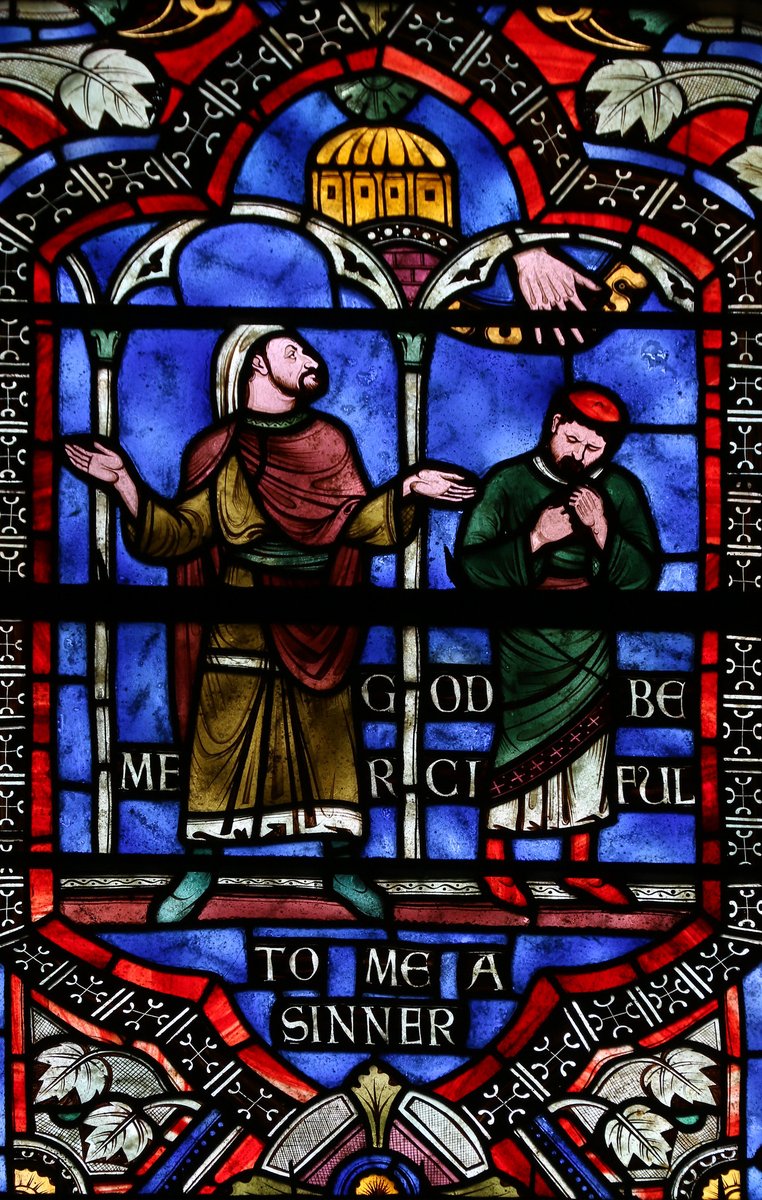
Reflection 163: Glorifying God in Your “Wretchedness”
Do you see the wretchedness of your own soul? Some may be offended by such a question. But if we understood the Mercy of God, and realized that it is our “wretchedness” that enables Him to be glorified the most, we would not shy away from such a thought. Many want to be holy and to see themselves as holy. It’s easy to think, “If I am good, God will be pleased.” But what we fail to realize is that God is glorified most when we see our littleness, our nothingness, and our wretchedness before Him. It is then that He can manifest His glory to the greatest extent through us. True, we have infinite dignity and value as persons as a result of being made in God’s image and as a result of God taking on our human nature. But in our actions, we are sinners incapable of doing anything good. When we realize this, we open the door for God to enter in and manifest His Mercy. We let Him act through our weakness and do glorious things. This is the way we give glory to God (See Diary #836).
When you consider your holiness, do you tend to think highly of yourself, as if you have done many good things for God? This is pride. Humility is the virtue that allows you to see your weakness and complete dependence upon the Mercy of God. It enables you to realize that without Him, you can do nothing. It enables you to cry out with St. Paul, “Wretched man that I am” (Romans 7:24). But in that cry, you also perceive the unlimited Mercy of God using you in your weakness and, thus, become an image of His glory.
Lord, help me to see clearly my weakness. Help me to humble myself before Your greatness and, in that act, to be open to Your transforming power in my life. I give my littleness to You, dear Lord. Manifest Your glory through me as You desire. Jesus, I trust in You.
Image: The Publican and the Pharisee by Lawrence OP, license CC BY-NC-ND 2.0.
Read entire reflection: divinemercy.life/2026/06/11/…
#DivineMercy
1
7
202
Jun 10
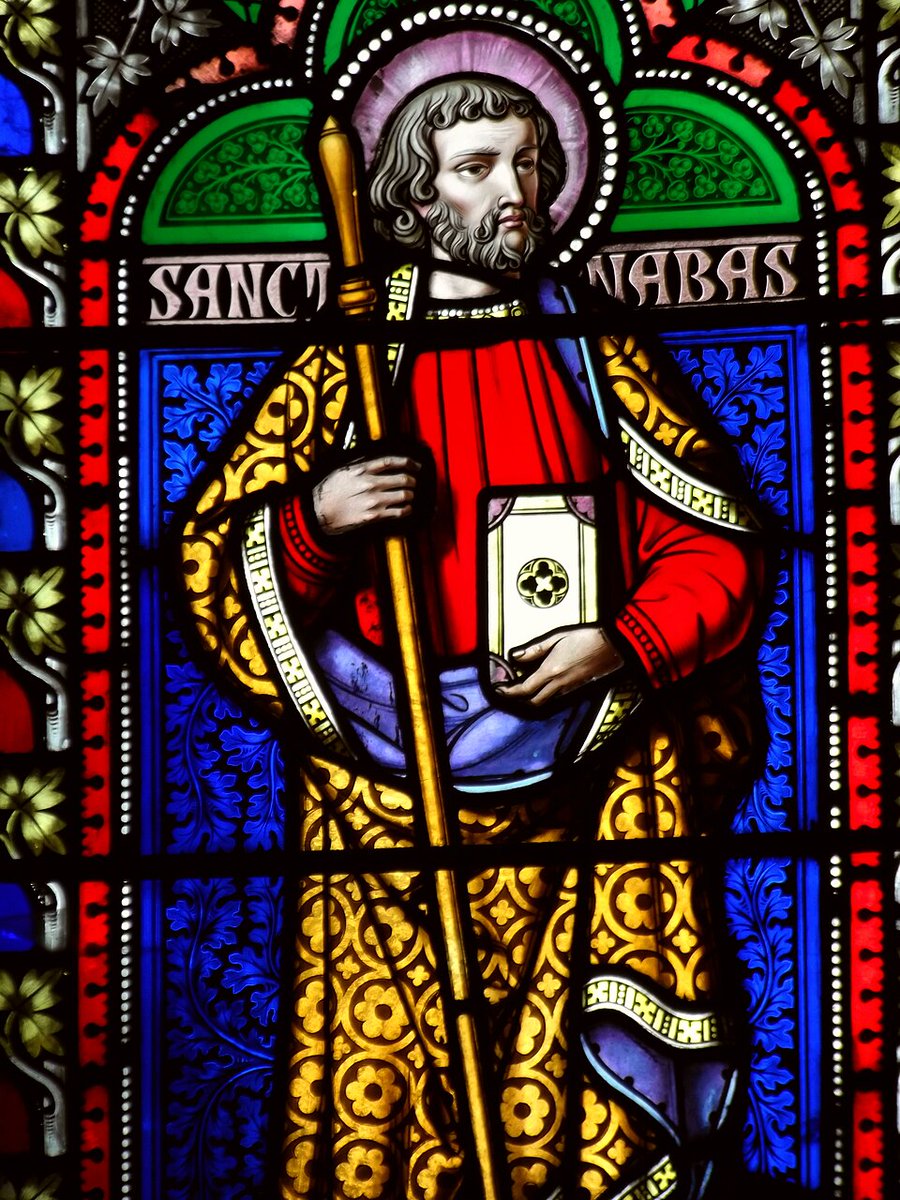
June 11: Saint Barnabas the Apostle—Memorial
Early First Century–c. 61
Patron Saint of Cyprus, Antioch, and peacekeeping missions
Invoked against hailstorms
Pre-Congregation canonization
Quote:
The news about them reached the ears of the church in Jerusalem, and they sent Barnabas to go to Antioch.When he arrived and saw the grace of God, he rejoiced and encouraged them all to remain faithful to the Lord in firmness of heart, for he was a good man, filled with the holy Spirit and faith. And a large number of people was added to the Lord. Then he went to Tarsus to look for Saul, and when he had found him he brought him to Antioch. For a whole year they met with the church and taught a large number of people, and it was in Antioch that the disciples were first called Christians. ~Acts 11:22–26
Reflection: Saint Barnabas, originally named Joseph, was born on the isle of Cyprus and was a Jew of the tribe of Levi (see Acts 4:36). Nothing else is known about his early life. During Jesus’ public ministry, Joseph became His fervent follower and might have been one of the seventy-two disciples whom Jesus sent out on a mission (see Luke 10:1–24). After Pentecost, as the Church in Jerusalem began to grow, the Apostles changed Joseph’s name to Barnabas, which means “son of encouragement.” His name change might have occurred because Barnabas supported the Church when he “sold a piece of property that he owned, then brought the money and put it at the feet of the apostles” (Acts 4:37). This is the first mention of Barnabas in the New Testament.
Three years later, after Saint Paul had undergone his conversion to the Christian faith and spent three years fasting and praying in Arabia, he traveled to Jerusalem to consult with the Apostles. The Apostles and the Christian community were at first hesitant to receive him, for they were aware of the persecutions he had issued against the Church. Barnabas, however, “brought him to the apostles, and he reported to them how on the way he had seen the Lord and that he had spoken to him, and how in Damascus he had spoken out boldly in the name of Jesus” (Acts 9:27). After spending a short period of time in Jerusalem, Saint Paul returned to his hometown of Tarsus to avoid persecution. He remained in Tarsus for the next several years.
During that time, some of the Christians who left Jerusalem after the martyrdom of Saint Stephen traveled north to Antioch in Syria, where many Greek Gentiles lived. In Antioch, the Greek-speaking Christians began to preach the Word of God to the Gentiles. As a result, many of the Gentiles converted and accepted the faith. When the Apostles in Jerusalem heard about this, they sent Barnabas to minister to these new converts. Barnabas was so impressed that he went to find Saint Paul in Tarsus and brought him back to Antioch to help share the Good News. It was there, in Antioch, that the word “Christian” was first used, perhaps because the new converts were Gentiles who converted not to the Jewish faith, but directly to Christ.
After a year in Antioch, Paul and Barnabas returned to Jerusalem on a relief mission to assist those suffering from a famine. They brought with them money that was raised among the Christians in Antioch. After returning to Antioch, the Holy Spirit revealed to the Christian community that Paul and Barnabas were to be “set apart” for a special mission. The two were then ordained as bishops and sent forth on a mission, bringing with them Barnabas’ relative, John Mark, the Gospel writer. Over the next year, they traveled to Seleucia, Cyprus, Salamis, Paphos, Perga of Pamphylia, Antioch of Pisidia, Lystra, Derbe, Iconium, and back to Antioch, Syria. During this journey, they won many converts; some Greeks even tried to worship the two as gods. They also encountered opposition, including an unsuccessful attempt to kill Paul by stoning. The two later returned to Jerusalem to help settle disputes about Gentile converts before being sent off on another mission. Before the second journey, Barnabas and Paul disagreed about John Mark’s involvement in the mission, since John Mark had previously abandoned them for an unknown reason while in Pamphylia. The disagreement was so severe that Paul and Barnabas parted ways. Barnabas took John Mark with him to Cyprus, and Paul took Silas with him to Syria and Cilicia.
Nothing else is known for certain about Barnabas’ missionary activity with John Mark in Cyprus. Based on Paul’s first letter to the Corinthians and his letter to the Colossians, the disagreement the two had over John Mark did not have any lasting effect on their friendship. Even John Mark is later affectionately mentioned by Paul.
The only source we have that details Barnabas’ martyrdom comes from the fifth century, which makes its historicity uncertain. According to that tradition, Barnabas was preaching the Gospel around the year 61 and was arrested, dragged out of the city, and either burned to death or stoned. One tradition states that John Mark found his remains and buried them.
Another legend holds that in the year 478, Saint Barnabas appeared to the Archbishop of Cyprus and revealed the location of his burial to him. Archbishop Anthemios then found Saint Barnabas’ body incorrupt, holding the Gospel of Matthew. The Roman emperor then erected a church at the site and buried Saint Barnabas there. Though the church was later lost to history, excavations of the site have found a tomb believed to be that of Saint Barnabas. Saint Barnabas is the patron saint of Cyprus because he was the first missionary bishop on that island.
As we honor this great apostolic bishop, ponder the impact his ministry has had over time. Although the number of converts during his lifetime might have only been in the hundreds or thousands, the effect those converts had on subsequent generations multiplied over and over again. Saint Barnabas traveled, preached, baptized, celebrated the sacraments, and founded many Christian communities. He endured rejection, hardship, violence, and martyrdom, but he pressed on. His fervor stemmed from knowing his Lord, not only through his firsthand witness of Jesus’ ministry but also through his life of prayer and his reception of the Holy Spirit. Try to see his mission as one similar to yours. You, too, are called to zealously preach the Gospel to others. Do not hesitate to do so, no matter the cost. Pray that God uses you as He wills, and offer yourself to His service in imitation of this holy Apostle.
Prayer: Saint Barnabas, you listened to the Gospel from the mouth of Christ Himself, witnessed His miracles, and allowed His saving message to transform your life. As a result, you spent the rest of your life preaching the Good News and saving many souls. Please pray for me, that I will follow your example and dedicate my life to the mission to which I am called. Saint Barnabas, pray for me. Jesus, I trust in You.
Image: Storye book, CC BY-SA 4.0, via Wikimedia Commons
Read entire reflection: mycatholic.life/saints/saint…
#SaintBarnabas
2
5
314
Jun 10
Humiliation Fosters Humility
June 11, 2026
Memorial of Saint Barnabas, Apostle
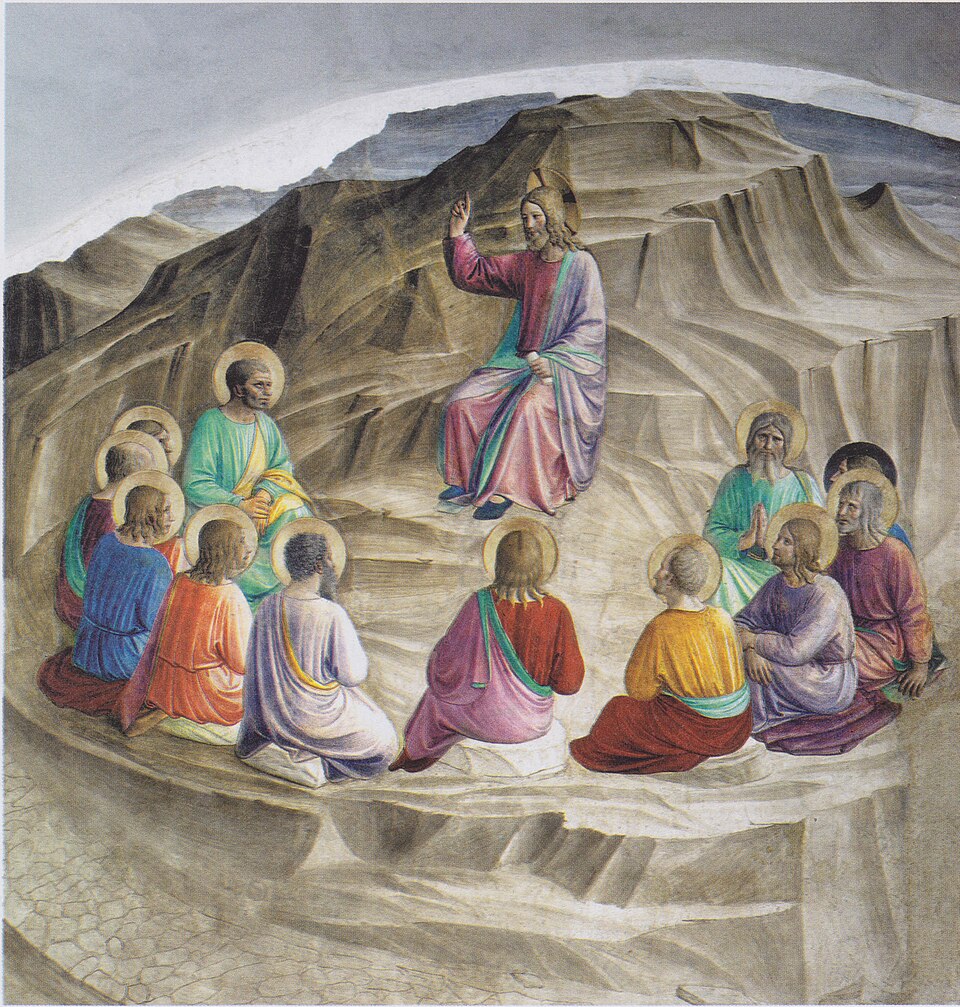
Jesus said to his disciples: “I tell you, unless your righteousness surpasses that of the scribes and Pharisees, you will not enter into the Kingdom of heaven.” Matthew 5:20
This statement would have been shocking to Jesus’ audience. At that time, the scribes and Pharisees were well-known for their meticulous observance of the Law of Moses, attending scrupulously to even the smallest details. They prided themselves on their strict adherence and often made their “righteousness” highly visible, earning them great respect among the people as models of holiness and fidelity to the covenant. However, their fidelity was often purely external, lacking the interior disposition of love and worship of God, which is the heart of the covenant. For this reason, Jesus spoke bluntly to the people, even in the presence of the scribes and Pharisees, declaring that their level of righteousness was insufficient to enter the Kingdom of Heaven.
Imagine the humiliation felt by these religious leaders. Jesus’ words would have stung deeply, confronting them with the inadequacy of their righteousness. Such a confrontation can lead to one of two responses: Either the sting of humiliation fosters the virtue of humility, repentance, and conversion, or it magnifies pride, leading to anger and rejection. While some of the scribes and Pharisees might have chosen the path of humility and repentance, the majority likely did not.
Jesus followed up this statement with a teaching on anger and how it can move from an interior disposition to severe hatred. While that teaching is important, it is also useful to pause and place ourselves in the shoes of the scribes and Pharisees, pondering how we would have reacted if we were them. Many of them had spent their whole lives studying the Law, following it, and teaching others to do the same. When Jesus came along, He essentially told them that much of what they had been doing was worthless and fruitless because they were not following the will of God. Place yourself in their shoes.
Consider your ability—or inability—to endure the humiliation that those religious leaders felt. Imagine that you had put great time and effort into cultivating a particular moral and spiritual attitude and approach to your faith, only for Jesus to reveal that you have not been listening to God at all, but have gone astray from His will. Hearing such a holy rebuke would be painful and humiliating, requiring profound humility to accept. Imagine further that you listened to all that Jesus said to you. You felt the sting of wounded pride and self-righteousness, but you humbled yourself, repented, and began to change. When that happens, external humiliation produces internal humility and bears an abundance of good fruit. When it doesn’t happen, we reject the truth and become even more obstinate in our ways, allowing pride to harden our hearts further.
In truth, none of us is righteous enough to attain the Kingdom of Heaven by our own efforts. We all fall short of fulfilling God’s will and cooperating with His grace. The real question is not whether we need ongoing change, but whether we are willing to receive Jesus’ loving rebuke and change our ways.
Saint Faustina, in her Diary, stated, “O my Jesus, nothing is better for the soul than humiliations” (#593). Humiliations are a gift from God because they reveal our self-righteousness and pride, and invite us to rely more fully on His grace. The sting of having that pointed out is itself a humiliation, but that humiliation has the power to lead us to profound humility, repentance, and ultimately, holiness.
Reflect today on the many humbling truths God desires to reveal to you. Each humiliation, though painful, is a step on the path to true righteousness and holiness, drawing us closer to the Beatific Vision in Heaven. Only in Heaven will we be fully purified of every sin. Until that day, we must embrace every humiliation God allows, recognizing these painful truths as gifts that correct us, purify us, and set us firmly on the path to true righteousness.
Lord of all Truth, there are many truths I need to hear, even when they are difficult. Please humble me by speaking directly to my soul and revealing my sin. As You do, grant me the grace to listen with an open heart and respond generously to Your call. Jesus, I trust in You.
Image: Sermon on the Mount by Fra Angelico
Read entire reflection: catholic-daily-reflections.c…
#GospelOfTheDay
1
1
7
230
Jun 10
Reflection 162: Light Dispels the Darkness
Light dispels the darkness. Scientifically speaking, we know that light and dark are not opposing forces; rather, dark is the absence of light. And when light enters in, the darkness is no more. So it is with the Mercy of God. Without Mercy, our souls are dark. We fall into doubt, confusion, fear and despair when Mercy is absent. In this case, we are left in utter darkness where the filth of sin can reign. But God desires to bring the light of His Mercy. When this happens, and when we open our souls to this gift, the darkness of doubt, confusion, fear and despair vanish. They cannot remain where the Light of Mercy resides (See Diary #831).
When you look at your soul, what do you see? Is there darkness? Do you see its foul effects? Do you see doubt, confusion, fear or despair? Do you see sin? If so, the Lord desires to dispel the darkness that breeds these burdens and bring forth His merciful Light. Reflect upon the part of your soul that appears to be in most need of His Mercy. Know that He wants to enter that area of your life and waits on you for the permission to do so. He will wait for you to let Him in.
Lord, please come into the darkness of my soul. Bring forth the bright rays of Your Light and dispel all that is not of You. Come refresh me and renew me, Lord. Help me to see and to know Your great love. I desire to live in the Light of Your Mercy, dear Lord. Jesus, I trust in You.
Image via Pixabay.
Read entire reflection: divinemercy.life/2026/06/10/…
#DivineMercy
2
10
216
The Law and the Prophets Made New
June 10, 2026
Wednesday of the Tenth Week in Ordinary Time
Jesus said to his disciples: “Do not think that I have come to abolish the law or the prophets. I have come not to abolish but to fulfill. Amen, I say to you, until heaven and earth pass away, not the smallest letter or the smallest part of a letter will pass from the law, until all things have taken place.” Matthew 5:17–18
Sometimes it can be challenging to reconcile the Old Testament with the New Testament. In addition to the Ten Commandments, the Old Testament is filled with countless other commandments. The Pharisees, in their attempt to preserve and interpret the Law of Moses, identified 613 specific commandments. While the Pharisees sought to preserve the Law through detailed commandments, the prophets continually called Israel back to a deeper fidelity to the covenant. Many of the prophets also spoke of the coming of the Messiah and foretold a new spiritual law that would be written on the heart.
In today’s Gospel, Jesus proclaims that He has not come to abolish the Law or the Prophets, but to fulfill them. To “fulfill” means that Jesus brings the Law and the Prophets to completion, perfecting them and elevating them into the New Covenant of grace. This fulfillment achieves the true meaning of the Law, moving beyond external observance to the interior transformation of the heart. Jesus fulfills the moral demands of the Law by addressing not only external actions but also the interior dispositions of the heart. For example, in this same Sermon on the Mount, Jesus transforms the commandment “You shall not kill” into a call to avoid even anger or hatred (cf. Matthew 5:21–22). In doing so, He reveals the fullness of God’s justice, which calls for not only outward obedience but also inward holiness rooted in love.
The sacrificial system of the Old Covenant centered on Temple worship, where animal sacrifices were ritually offered as atonement for sins. Those Old Testament sacrifices find completion in Jesus’ perfect sacrifice on the Cross. He became the new High Priest and offered Himself as the Lamb of God on the Altar of the Cross, a sacrifice that is perpetuated in the Eucharist. Once Christ offered Himself on the Cross, the animal sacrifices and other ceremonial aspects were fulfilled and are no longer required, having given way to the new and perfect worship in the perpetual Eucharistic Sacrifice.
The Law and the Prophets also pointed toward the coming of the Messiah and the establishment of the New Covenant. Jesus, as the Messiah, fulfills these prophecies. In Him, God’s plan to gather all nations into His family is accomplished, fulfilling the promises made to Abraham and proclaimed by the prophets. The symbols and foreshadowings of the Old Testament, such as the Passover lamb, find their ultimate meaning in Christ. Through Him, the promises of salvation are no longer future hopes but present realities.
Through this threefold fulfillment—moral, in transforming our hearts; liturgical, in perfecting worship; and prophetic, in realizing God’s promises—Jesus not only completes the Old Covenant but elevates it into something far greater. He reveals its true purpose: to lead humanity into a deeper relationship with God through love, grace, and truth.
Reflect today on Jesus as the fulfillment of all that God has revealed from the foundation of the world. Because the Old Testament is fulfilled in Christ, we turn our gaze upon Him as the full revelation of the Father and the only way to salvation. The study of the Old Testament reveals the unfolding of Salvation History, but in the Eucharist, we encounter its fulfillment and completion. Turn to Him in the Sacrifice of the Mass, where every promise made throughout salvation history is fulfilled and made present to you in the most precious gift of Christ Himself. In this perpetual Eucharistic Sacrifice, we are drawn into the mystery of divine love and receive a foretaste of the heavenly banquet, where God’s promises will one day be fully realized.
My Eucharistic Lord, You are the fulfillment of every promise made throughout salvation history. In the Sacrifice of the Mass, the final and perfect atonement for sins, those promises are made present to us today. Draw me deeper into worship, filling my heart with a profound love for You in the Eucharist. Transform me by this New Covenant of grace. Jesus, I trust in You.
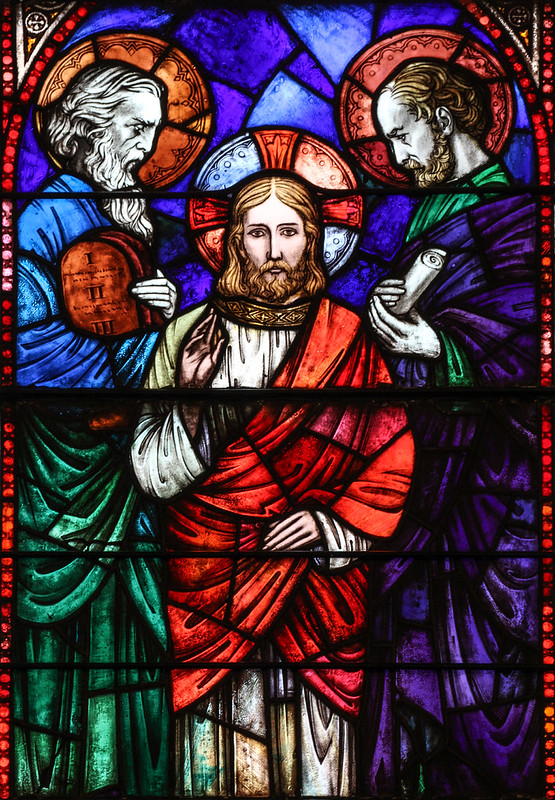
Image: Listen to Him by Lawrence OP, license CC BY-NC-ND 2.0.
Read entire reflection: catholic-daily-reflections.c…
#GospelOfTheDay
5
247
Reflection 161: The Singular Love Given to You
When pondering the love and the Mercy of God, it is tempting to see His love in a more general way, as if it were something evenly distributed to all people in the same way. But God’s love for you is something so much more than a general gift to all people. It is deeply personal and singular, being offered specifically for you, out of love for you. God does not see you as one of many; rather, He sees you as a singular focus of His love. Each and every person is loved by God in this singular and unique way. Thus, you are loved as His one precious child for whom He has offered His life. Know that God loves you as you. He knows every detail of your life and pours His grace upon you (See Diary #824).
How aware are you of the unique and singular love God has for you? His love is personal in that you are an object of His burning Heart of Mercy. God is fully capable of loving each and every person in this way, seeing each one as His precious child and loving each person in their uniqueness and even in their sins. Let yourself, today, experience this personal and abundant love of God in your life. It will sustain you in all things and help you to always know that you are loved above all.
Lord, I love You and adore You and thank You for loving me with a perfect love. Help me to receive Your unique gift of love offered to me as Your precious child. May I return this love for You by acknowledging You as my one and only Lord and God. Jesus, I trust in You.
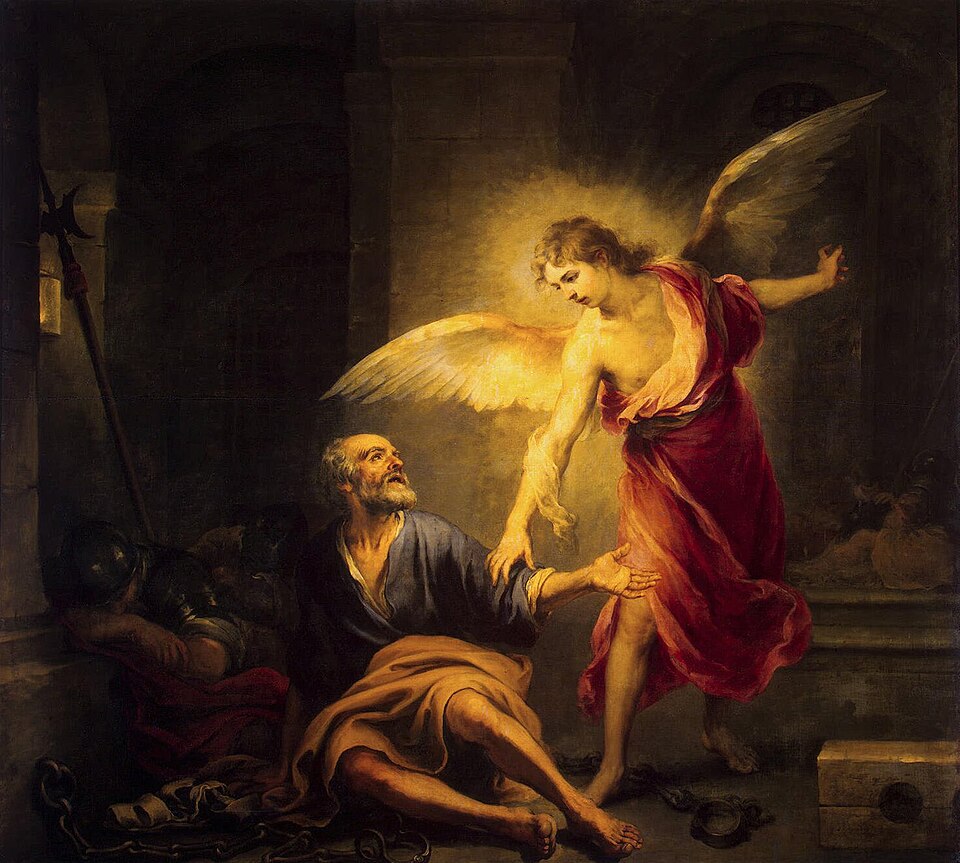
Image: Liberation of St Peter by Bartolomé Esteban Murillo
Read entire reflection: divinemercy.life/2026/06/09/…
#DivineMercy
2
16
304
June 9: Saint Ephrem, Deacon and Doctor—Optional Memorial
c. 306–373
Patron Saint of spiritual directors and spiritual leaders
Pre-Congregation canonization
Declared a Doctor of the Church by Pope Benedict XV in 1920
Quote:
I, Ephrem, am dying. With fear, but also with reverence, I entreat you, citizens of Edessa, not to bury me under the altar or elsewhere in the house of God. It is not fitting that a worm teeming with corruption be buried in the temple and sanctuary of God. But lay me out in the tunic and mantle which I used and wore daily. Accompany me with psalms and prayers. I had neither pouch nor staff, neither wallet nor silver and gold; nor did I ever acquire or possess anything else earthly. Work diligently at my precepts and doctrines; as my disciples, do not fall away from the Catholic faith. With regard to the faith, be especially constant. Guard against adversaries – I mean evildoers, boasters, and tempters to sin. And may your city be blessed; for Edessa is the city and mother of the wise. ~Testament of Saint Ephrem
Reflection: Ephrem was born in the town of Nisibis, near Syria’s border with present-day Turkey. At the time of Ephrem’s birth, Nisibis was part of the Roman Empire. Nisibis was a diverse city of Syrians, Arameans, Arabs, Greeks, Jews, Parthians, Romans, and Iranians. Among the religious beliefs were Judaism, Christianity, and polytheism. Aramaic was commonly spoken, and to a lesser extent, Greek and Latin.
When Ephrem was just a boy, Emperor Constantine the Great issued the Edict of Milan, legalizing Christianity throughout the empire. Ephrem likely learned the faith from his mother at an early age. Stories from his youth, however, suggest that even though he was raised in the Christian faith, he failed to practice it. One story relates that one day when Ephrem was walking through a field and saw a cow, he decided to have fun by throwing rocks at it, forcing the beast to run. Ephrem pursued the cow, pelting it all the more until the poor animal died. When Ephrem later encountered the cow’s owner, he denied ever seeing the animal. He would come to regret his double sin.
Some months later, Ephrem was spending time with a friend who was a shepherd. After the shepherd had too much to drink, he lost the sheep to thieves or wolves. As a result, the shepherd and Ephrem were arrested and imprisoned on the charge that they stole the sheep. Within that prison, something life-changing took place. An angel was sent to chastise Ephrem, explaining that even though he was innocent of the crime against the sheep, he was not innocent of other crimes, such as the death of the cow. The angel’s holy rebukes did wonders in Ephrem’s soul, and he was filled with remorse and repentance as he came face-to-face with Divine Justice. By God’s grace, when the sorrowful Ephrem was released from prison after two months, he vowed to turn his life around.
Some time after his release, Ephrem consulted with the local bishop-monk, Saint James of Nisibis, seeking spiritual direction. Bishop James took Ephrem under his wing and began to teach him in his school, mentoring him in the ways of monastic life. At that time, Syrian monasticism was different from the monastic life that was developing in Egypt. In Egypt, monks would escape into the wilderness, seeking silence and solitude from the Roman Empire and society, so that they could focus exclusively on God. Saint Anthony of the Desert is among the most renowned of these desert fathers. In northern Syria, where Ephrem lived, those who sought out the monastic life did so within the community of believers. They lived as ascetics, doing penance and praying devoutly, but they also remained servants of the local church, serving the community and addressing their needs. This is the life that Ephrem undertook after vowing to live in poverty and celibacy. As a hermit, he spent time in the solitude of caves and in the wilderness. Within the community, he performed good works.
Over the next forty to fifty years, Ephrem studied under Bishop James and lived an ascetic life of prayer, penance, and service. He used his many gifts for the glory of God. Ephrem’s enduring legacy is his writings. He was a prolific writer of hymns, poems, biblical commentaries, and homilies. It is believed that during his lifetime, he composed as many as 400 hymns and 3,000 poems that were tools for catechetics and worship. They were rich in imagery, theologically precise, insightful, melodic, and covered important topics such as the Incarnation, the Blessed Virgin Mary, the sacraments, and the purpose of the Christian life. His hymns and poems were also apologetical, meaning, a defense of the faith. At that time, numerous heresies abounded, and some heretics sought to push their beliefs on others by composing hymns, since a hymn was easily remembered. Ephrem took the same approach, only with orthodox poems and hymns that sought to dispel the heresies’ errors. Ephrem’s gifts of artistically presenting the deep truths of the faith led many over the centuries to refer to him as the “Harp of the Holy Spirit.”
Around the year 350, Ephrem’s mentor, Bishop James, formally opened the School of Nisibis, which became an important center for education within the Syriac church. Ephrem assisted the bishop, becoming a respected and influential teacher.
In 363, Roman Emperor Jovian lost a battle to the Persians and had to surrender the Roman town of Nisibis. All Christians were expelled from Nisibis. Ephrem settled in the town of Edessa, about 125 miles to the west, a flourishing Christian city. In Edessa, Ephrem continued to teach, write, and serve the community in any way he could. He founded a school there, which became another important Christian center for learning. In Edessa, Ephrem became known as the saint of daily living because he often came out of his solitude to teach people how to live the faith in a practical way. At some point, he was ordained a deacon, and as a deacon, he became a true servant of others. When famine hit Edessa, he helped distribute food to the poor. When a plague struck, he cared for the sick. During a plague in 373, Ephrem contracted the disease and became a martyr of charity.
Though Saint Ephrem died in the fourth century, he was declared a Doctor of the Church in 1920 by Pope Benedict XV. Saint Ephrem is the only Syrian Doctor of the Church and is not only highly revered in the Eastern Catholic Church but in the Orthodox Church as well. It might be that the 1920 declaration was done in part as a way of further bridging the gap between the Catholic Church and the Orthodox Church.
As we honor this great saint, ponder especially the powerful effect that music has upon the human person. What types of songs do you listen to? Consider following the example of Saint Ephrem by filling your mind with hymns that give praise and glory to God and do so in a clear and theologically rich way. Such a habit will certainly help you grow in holiness.
Prayer: Saint Ephrem, you offered yourself to the service of God, and God used you as an instrument to lead many to glorify Him. Please pray for me, that I may also become an instrument of the Holy Spirit, placing all my gifts at the service of God, for His greater honor and glory. Saint Ephrem, pray for me. Jesus, I trust in You.
Read entire reflection: mycatholic.life/saints/saint…
#SaintoftheDay #SaintEphrem
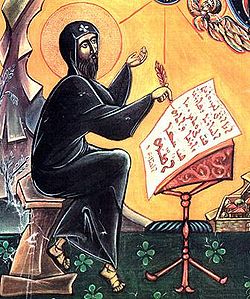
2
2
221
Radiating the True Light of Heaven
June 9, 2026
Tuesday of the Tenth Week in Ordinary Time
“You are the light of the world. A city set on a mountain cannot be hidden. Nor do they light a lamp and then put it under a bushel basket; it is set on a lampstand, where it gives light to all in the house. Just so, your light must shine before others, that they may see your good deeds and glorify your heavenly Father.” Matthew 5:14–16
Light and darkness are not opposing forces; rather, darkness is simply the absence of light. When light enters, darkness is dispelled. In a similar way, good and evil are not equal forces. Evil is the absence of God’s presence and grace, and where God’s light shines, evil is overcome.
Today’s Gospel is part of the Sermon on the Mount, one of Jesus’ most well known teachings. The simile of light follows the Beatitudes, in which Jesus reveals the paradox of true blessedness in the Kingdom of God compared to fleeting worldly blessings. After teaching that true happiness is found in spiritual poverty, holy sorrow, meekness, righteousness, mercy, purity, peacemaking, and love in the face of persecution, Jesus calls His followers to radiate this blessedness to the world. They are to shine as a light in the midst of darkness, becoming beacons of God’s presence and grace, dispelling evil by their witness to divine truth and love.
In John’s Gospel, Jesus proclaims, “I am the light of the world. Whoever follows me will not walk in darkness, but will have the light of life” (John 8:12). In today’s Gospel from Matthew, Jesus extends this mission to His followers, teaching that they are the light of the world. As bearers of His light, they must not hide this gift but allow it to shine brightly for others, so that through their good works, God may be glorified.
This invitation to be light in the world, dispelling darkness, resonates deeply within the natural longing of every human heart. As beings created in the image and likeness of God, we are naturally drawn to goodness, truth, and beauty. The desire to make a positive difference and to bring goodness into the world is inscribed into our very nature by God. No one living in accord with human reason seeks to make the world worse. Even those who choose evil often do so out of a distorted or misguided understanding of what is good. This confusion arises from the absence of God’s light in their hearts, leading them to pursue false or incomplete goods instead of the ultimate good, which is found in union with God.
This call to be light, therefore, is not simply a duty—it is a return to our truest selves, a fulfillment of our deepest purpose. In choosing to reflect the light of Christ through our good deeds, we not only dispel the darkness around us but also restore within ourselves the divine image that sin seeks to obscure. We become who we were made to be.
Yet, Jesus’ teaching points us beyond the fulfillment of a natural desire to make a positive difference. He elevates this longing by inviting us to participate in His supernatural mission, by which the Father is glorified. Through the grace of the Holy Spirit we are transformed into vessels of God’s light and love. It is not by our own power but through God’s light within us that we are able to radiate His truth and goodness to the world.
Reflect today on the desire God has placed within your heart to make a difference in the world. Begin with that desire but allow Christ to elevate it. Recognize that the greatest good you can do is to radiate God’s light. Jesus is the True Light, but He calls you to be a beacon, reflecting His love for all to see. When God’s light shines through us, we do not glorify ourselves but give glory to the Father, leading others to share in His glory. This mission—to be a lampstand for God’s light—is the highest calling of your life and the only way to fulfill the longing He has written into your heart. Embrace that mission, nourish it through prayer and the sacraments, and rejoice as God uses you to further His eternal glory.
Jesus, True Light of the World, You shine the radiance of Your truth and grace into my soul and call me to reflect Your light for others. Help me to magnify Your presence and glorify the Father through my life. Flood my soul with Your divine light, dispelling all darkness within me. Use me as Your instrument to renew the world in Your love and mercy. Jesus, I place all my trust in You.
Image: Let Your Light Shine by Lawrence OP, license CC BY-NC-ND 2.0.
Read entire reflection: catholic-daily-reflections.c…
#GospelOfTheDay
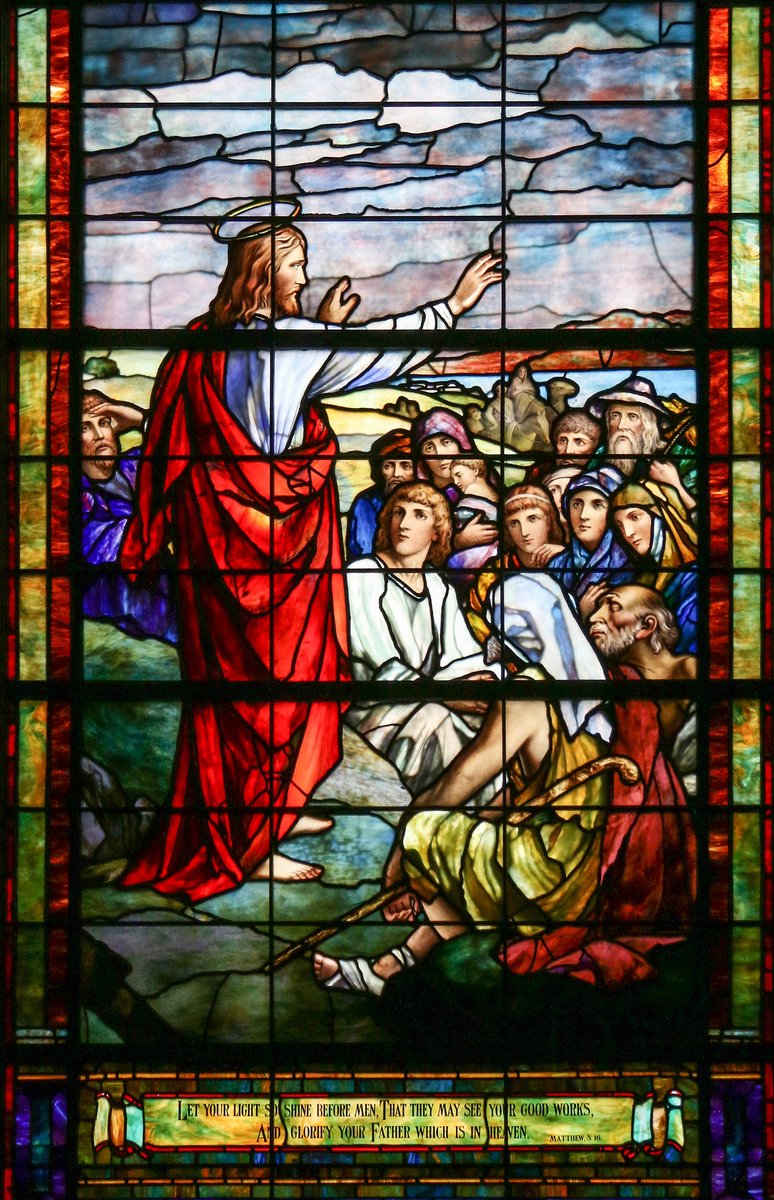
3
240