
Joined November 2017
- Tweets 302
- Following 29
- Followers 1,151
- Likes 155
75 Photos and videos





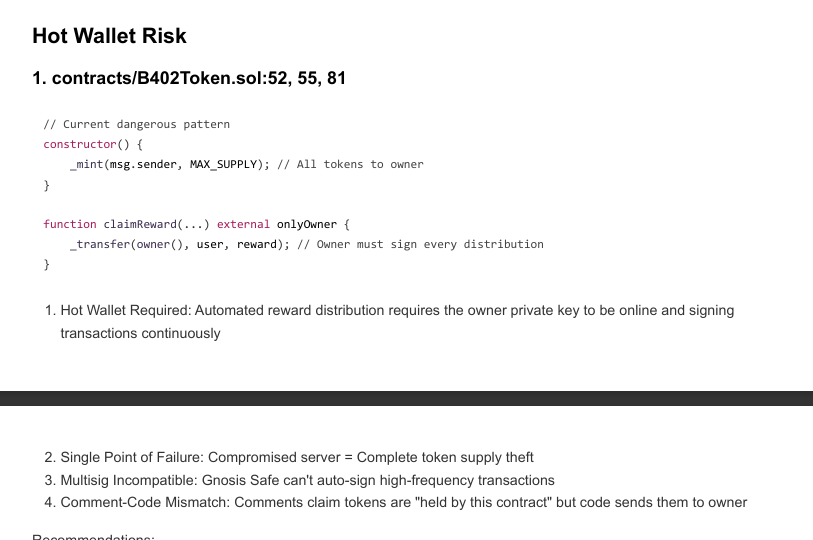
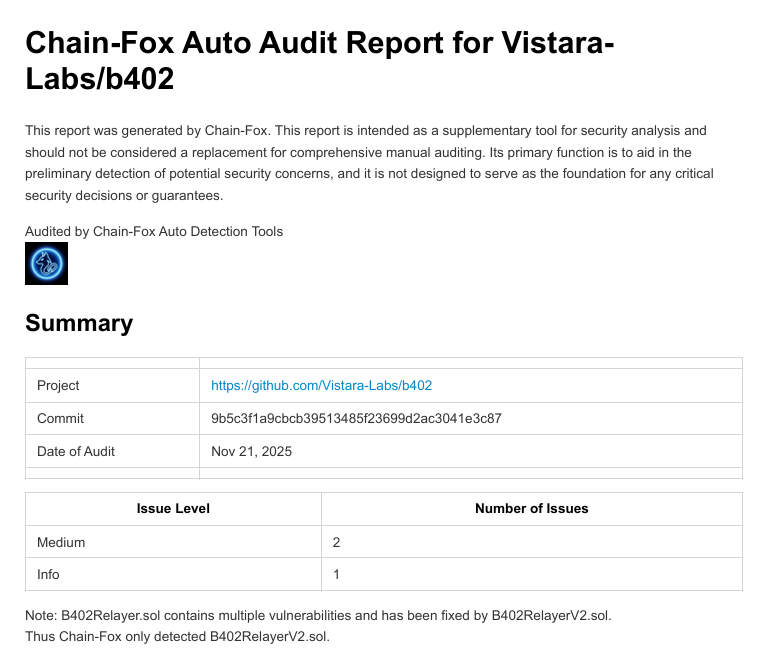
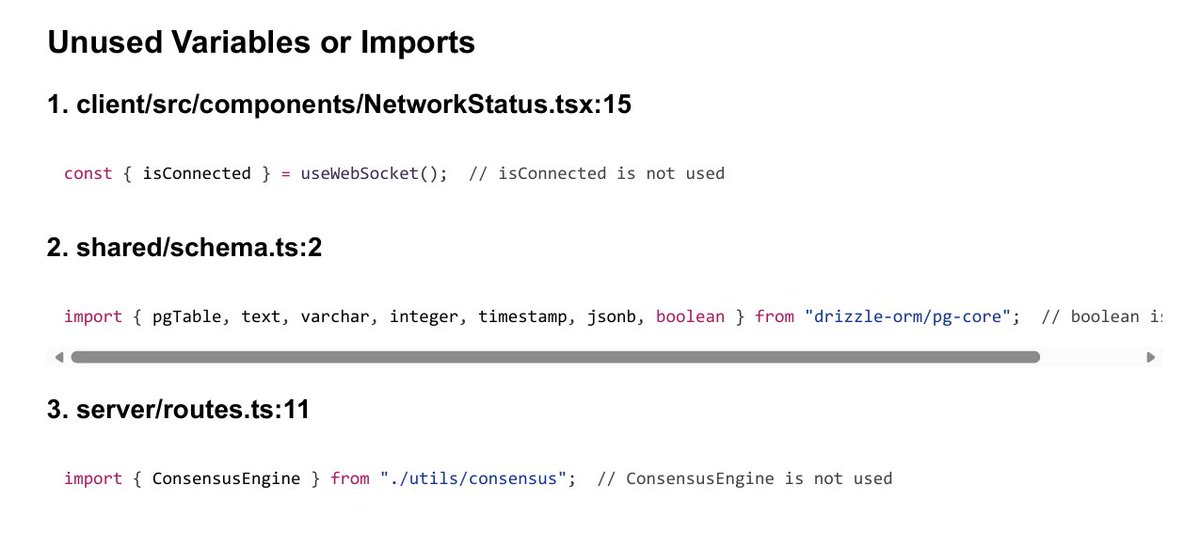
Pinned Tweet

Jan 16
Over the past weeks, we’ve been deep into experimenting with AI agents and skill-based workflows.
One clear takeaway:
Simply throwing a large model at audits doesn’t work well. Clear steps, structured workflows, and reusable skills matter much more. This is a big shift for Chain-Fox.
Expanding what Chain-Fox does
Until now, Chain-Fox has focused mainly on smart contract code checks.
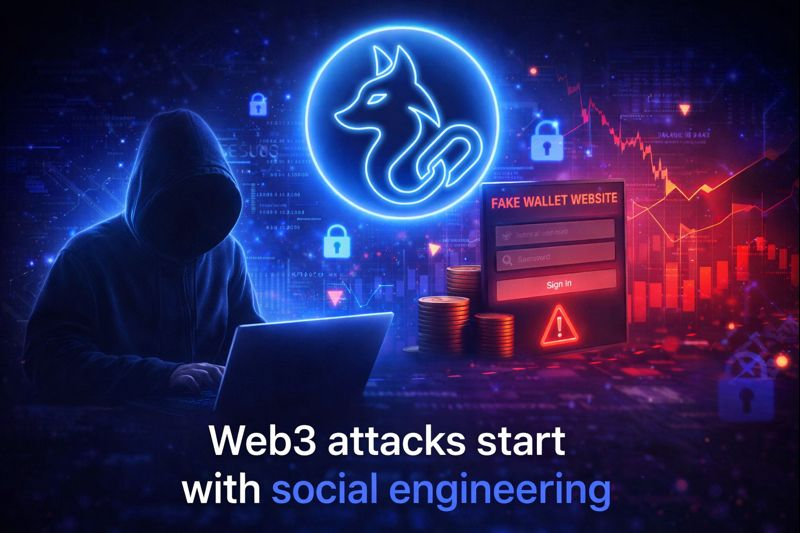
That’s important, but real Web3 attacks are rarely just about code.
Rug pulls, malicious behavior, and fake or compromised websites play a huge role.
Because of this, Chain-Fox is evolving from pure code checks into broader risk analysis that better reflects how real attacks happen.
6
9
25
3,075
Apr 14
To better understand the current Solana security ecosystem, We tested Fender, Eloizer, and X-Ray on over 200 real Anchor bugs.
The report is here:
github.com/Chain-Fox/Chain-F…
Here’s what we saw:
Fender catches almost everything with very high recall.
X-Ray gives cleaner output but misses quite a few bugs.
Eloizer lands somewhere in between.
But in real projects, precision drops to about 6%.
That means you need to look at 10 to 15 alerts to find one real issue.
So a practical workflow right now:
Run Fender, apply some filtering, then manually review.
It’s still early. Tools are getting better quickly.
We’re not done. We are testing other tools esp LLM-based ones.
4
13
452
Mar 27
At Chain-Fox, we’ve collected 150 bug-fixing commits across 1000 real-world Anchor projects.
We’re analyzing them to evaluate the effectiveness of existing Solana security analysis tools.
Our own agentic checker is also in progress.
1
6
494
Mar 27
I think this is real progress for Solana security. Respect to the researchers from Germany.
arxiv.org/abs/2603.16349
The ability to analyze deployed contracts without requiring source code makes the approach actually usable in practice.
Symbolic execution is powerful for uncovering low-level bugs, but business logic vulnerabilities remain difficult to detect.
The next step is clear: combining code-level analysis with intent-based LLM reasoning.
1
5
453
Mar 14
I just applied to the $4M @BagsHackathon with my project Chain-Fox on @BagsApp
Check it out here 👇
bags.fm/apps/5e9fca32-ac67-4…
4
2
9
609
Mar 13
The first step to building a reliable agentic checker is simple but often ignored: Data.
Most AI checkers and auto agents fail not because the model is weak, but because they lack real verification data.
1
3
5
573
Mar 13
Our approach is different: start small and collect real-world signals.
For the past week, an OpenClaw instance has been running 24/7, using cron jobs to continuously collect public information and build a real-world Solana security dataset.
Every command we issue improves the pipeline: Program discovery -> Data collection -> Automated analysis
1
1
3
327
Mar 13
The system is evolving every day.
Instead of chasing perfect agents, we are building the data foundation first.
Thanks to our partner @acedatacloud for providing affordable APIs that make running this continuous research infrastructure possible.
1
3
257
Mar 12
Those who are engaging web3 security should read the two articles by MagicGrants and Kleros.
Takeaway: AI can flag “bugs” that aren’t bugs, while tools miss real issues. Neither alone meets our auditing needs.
Chain-Fox leverages verification to get the best of both worlds: AI and expert tools.
magicgrants.org/2026/03/09/A…
blog.kleros.io/smart-contrac…
2
7
261
Mar 8
To test the ability of agentic checkers,
I tried running old Sealevel-Attacks demos on Anchor 0.32.1 in a restricted network.
Biggest headaches:
1. Downloads often fail: had to manually download and fix.
2. Old demos incompatible with new Anchor
Forked the project, fixing compatibility with Anchor 0.32. Will upstream once stable.
github.com/Chain-Fox/solana-…
1
9
264
Mar 6
I am rethinking what an agentic checker means.
Instead of building agents that guess bugs, we should build systems that:
prove properties of the program
The LLM helps fill the specification gap, but correctness is decided by formal methods.
github.com/Chain-Fox/solana-…
2
2
9
338
Chain-Fox retweeted

Feb 27
x.com/StepFinance_/status/20…
Pity to see such an influential company shut down after a treasury breach.
The problem wasn’t the chain itself, it was a compromised key or account.
Relying on a single signer is extremely risky.
Multisig and keeping keys in separate places is a must.
Feb 23

Today we are announcing that Step Finance, SolanaFloor, and Remora Markets will be winding down all operations.
Following the hack at the end of January we explored every possible path forward, including financing and acquisition opportunities.
Unfortunately, we were unable to secure a viable outcome and have made the difficult decision to end all operations effective immediately.
We are working on a buyback for STEP holders based on a snapshot prior to the incident, and a redemption process for Remora rToken holders. Remora tokens remain backed 1:1.
We are deeply grateful to our community for the support over the years and are confident that this is the best outcome given the circumstances. We want to thank our millions of customers over the years for joining us on this journey.
More details will be shared soon
2
4
7
648
Feb 27
Back from the holidays, now it’s time to work on the agentic checker!
1
5
277
Feb 14
Rug-Pull Detector: Initial Version Live
Try it now: chain-fox.com/rugpull-detect
1. Paste a contract address
2. Click Analyze Contract
3. Wait for the Rug-Pull Agent to generate a full analysis
This is just the beginning, more functions to be added.
Let’s make it stronger together.
2
5
13
512
Feb 14
While researching open-source rug-pull detectors, I found something worrying.
Some don’t work.
Some are outright malicious.
hippo7598/rug-pull-detector
Looks professional. README is clean.
At first glance, no obvious issue.
But check the raw file:
raw.githubusercontent.com/hi…
You’ll find:
Obfuscated bytecode
Encrypted payload
exec() on decrypted content
That’s NOT how security tools are written.
The byte-encoded payload expands to:
```
os.system('pip install cryptography')
os.system('pip install requests')
os.system('pip install fernet')
import requests
from fernet import Fernet
exec(Fernet(b'<key>').decrypt(b'<encrypted_payload>'))
```
Because the decrypted payload is executed directly:
Arbitrary code execution is possible
Credential theft is possible
Wallet key exfiltration is possible
The impact surface is unbounded.
Use a trustworthy tool in Chain-Fox. The rug-pull tool testing will be online in hours.
2
4
6
478
Feb 14
WARNING:
MALICIOUS CODE FOUND INSIDE
🦂github.com/hippo7598/rug-pul…
A reminder: malicious code often disguises itself as “security tools.”
Be careful what you run.
This is exactly why we’re building Chain-Fox: Open logic. Auditable code. No hidden execution.
Our rug-pull inner test will be online soon.
No fear of malicious detectors.
Stay safe.
2
5
7
303
Chain-Fox retweeted
Feb 13
Work these days:
Initial version of rug-pull detection will be out in 24h.
Pushing the checkers to be more agentic, not just rule-based flags.
Tried the newest doc to spec tools. Promising, but still needs manual work.
Step by step. Build the foundation right.
@ChainFoxAI
2
5
8
314
Feb 2
Chain-Fox is being built with a long-term view.
We’re focusing on designing security systems that reflect how real Web3 risks evolve, not just running surface-level checks.
Some phases take more groundwork than visibility. Updates will be shared when there’s something concrete to show.
15
6
17
728
Jan 29
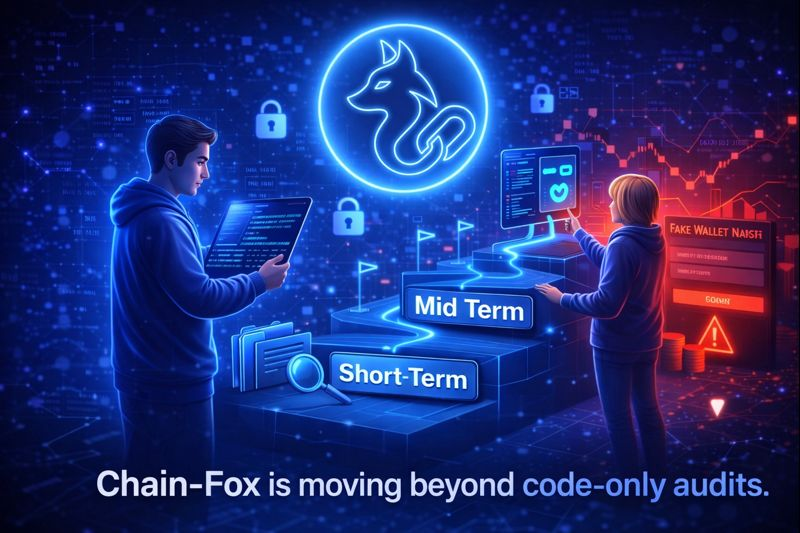
Chain-Fox is moving beyond code-only audits.
Most Web3 exploits don’t start with a single contract bug. They start with behavior, fake sites, and gradual risk signals.
That’s why our roadmap now focuses on agent-based risk analysis:
• Rug pull detection
• Web3 website risk checks
• Skill-based contract auditing
• Continuous signals, not yes/no labels
Full roadmap is live and development is underway.
3
6
10
483
Jan 27
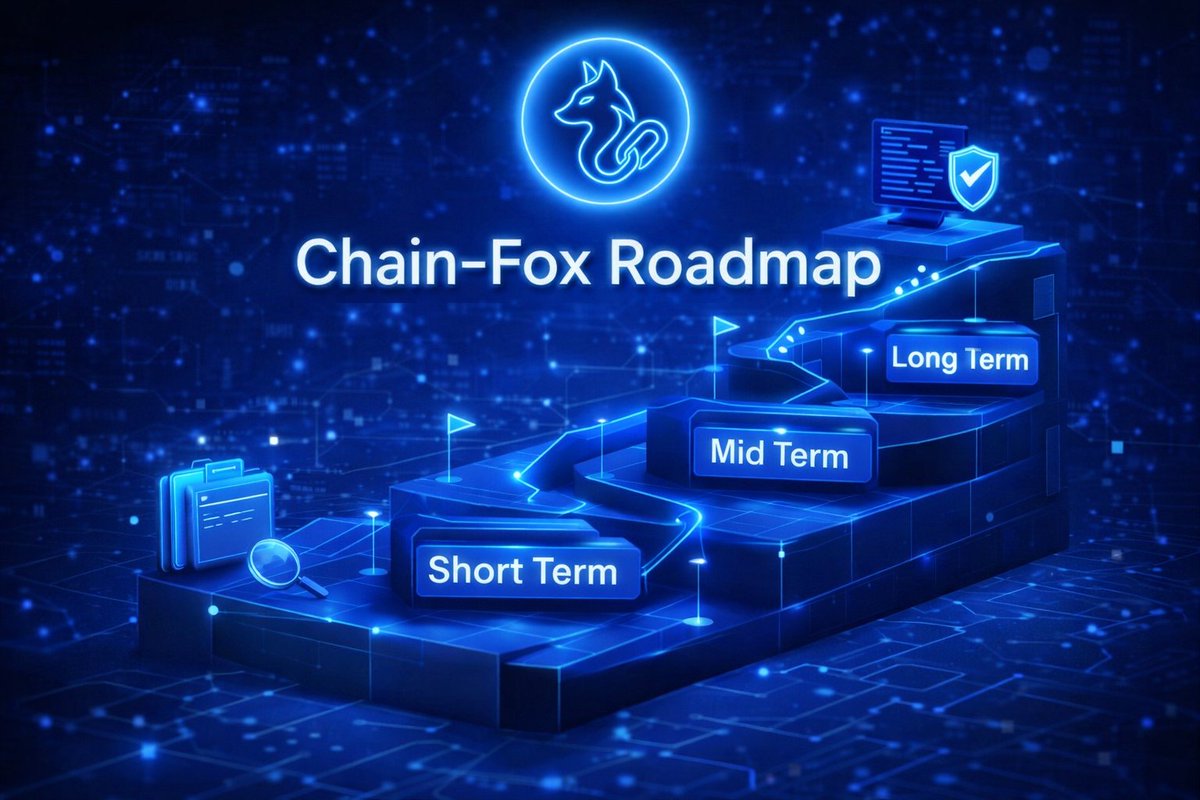
Chain-Fox roadmap is live.
We’re moving beyond code-only audits into full Web3 risk analysis using Skills and agents.
This is a phased build focused on detection, signals, and real-world attack patterns. 🧵
2
6
11
459
Jan 27
Full roadmap and technical details here:
github.com/Chain-Fox/Chain-F…
This roadmap is about building durable security systems. And that’s what Chain-Fox exists for.
2
4
6
271